
Sara Udon: A Local Specialty of Nagasaki Prefecture│Thorough Explanation of History, How to Make It, and the Differences Between Thick and Thin Noodles
Sara udon is known nationwide alongside champon as a local specialty representing Nagasaki Prefecture. Many people picture crispy thin noodles topped generously with vegetables and seafood. However, thick noodle sara udon also has strong popularity within Nagasaki Prefecture, and its depth is knowledge only locals possess. This article provides a thorough explanation of sara udon as a local specialty of Nagasaki Prefecture, from its history and origins to how to make it, how to eat it, and preservation efforts.
What is Sara Udon?│A Local Specialty Representing Nagasaki Prefecture
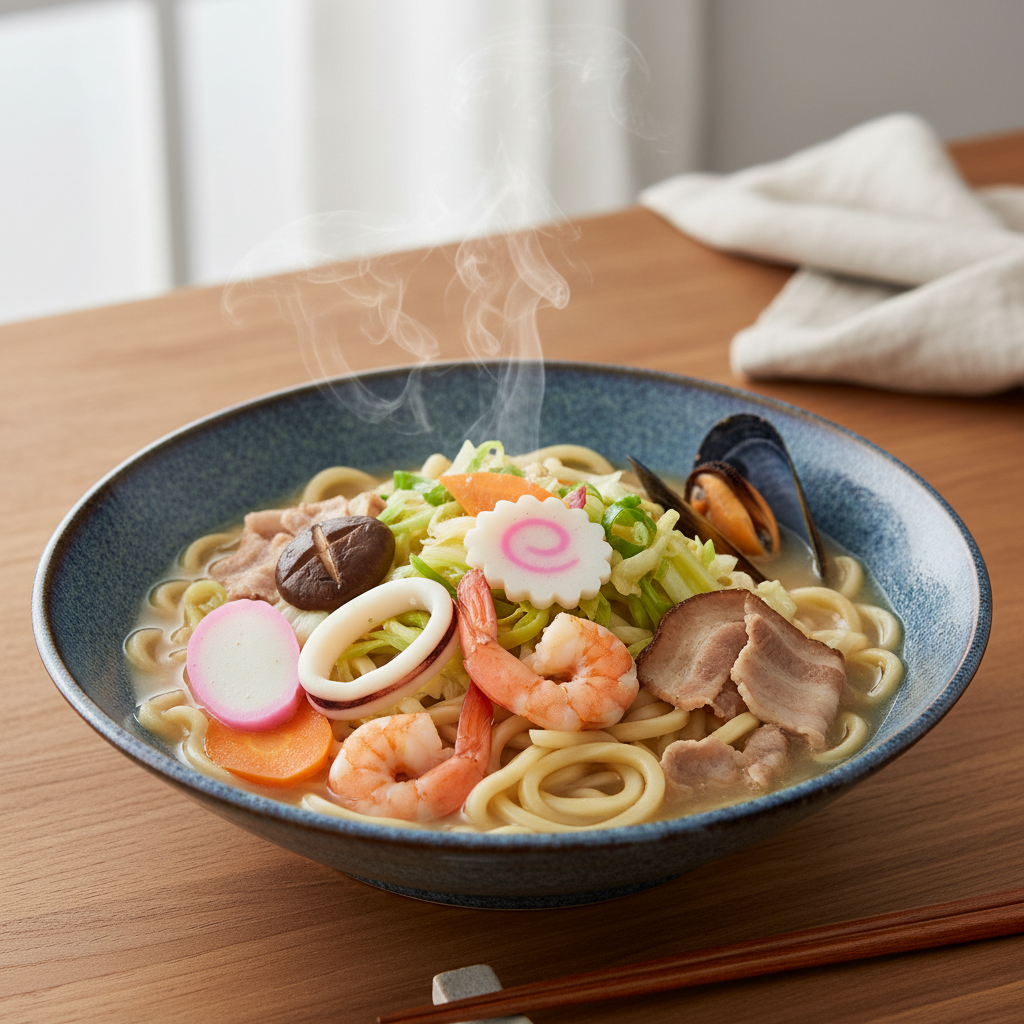
Sara udon (さらうどん) is a noodle dish born in Nagasaki Prefecture, featuring noodles generously topped with ingredients made by stir-frying vegetables, seafood, pork, and other ingredients. Known nationwide as a Nagasaki specialty, it ranks equally with champon as a soul food of Nagasaki Prefecture, beloved by both locals and tourists alike.
As the name “sara udon” suggests, it is an udon dish served on a plate; however, it is strongly influenced by Chinese cuisine and can be said to be a collaboration between Japan and China created by Nagasaki’s history and natural environment. It is a masterpiece symbolizing multicultural fusion food culture unique to Nagasaki, which as the only open port during Japan’s period of isolation accepted foreign cultures.
Main Traditional Areas
Sara udon is enjoyed throughout Nagasaki Prefecture as a local specialty, but it has developed particularly around Nagasaki City. Currently, it is provided in nearly all regions of Nagasaki Prefecture and is widely prepared not only in Chinese restaurants but also in general restaurants and homes. Many long-established Chinese restaurants exist in Nagasaki City, each continuing to preserve their unique flavors.
Main Ingredients Used
The main ingredients used in sara udon are as follows.
Noodles
- Thin noodles: Fried Chinese noodles (crispy texture)
- Thick noodles: Champon noodles (chewy texture)
Ingredients
- Pork (belly or thin-sliced)
- Seafood (shrimp, squid, fish cake)
- Vegetables (cabbage, bean sprouts, onion, carrot, wood ear mushroom)
- Other items (quail eggs, etc.)
Seasonings
- Chicken stock
- Soy sauce, salt, sugar
- Oyster sauce
- Cornstarch (for thickening)
- Worcestershire sauce (Kin-Chou sauce, etc., added when eating)
History and Origins of Sara Udon│A Nagasaki Specialty Born in the Meiji Era
The history of sara udon is closely connected to the birth of champon. In 1899 (Meiji 32), Chen Ping-shun (陳平順), founder of the Chinese restaurant “Shikai-ro” (四海樓) in Nagasaki City, invented champon. Subsequently, Chen Ping-shun is said to have developed sara udon as “champon without broth.”
From “Grilled Champon” to “Sara Udon”
Initially, sara udon was called “grilled champon” (焼きちゃんぽん). It was served as a dish using champon ingredients as-is, with less soup, stir-fried with noodles and ingredients. This “grilled champon” eventually became established under the name “sara udon.”
Thick Noodles as the Original Form
Actually, sara udon originally used thick noodles (champon noodles). The crispy thin noodles now known nationwide are a variation that came later. Currently in Nagasaki Prefecture, both thick and thin noodles are served, and among locals, “thick noodle sara udon” and “thin noodle sara udon” are clearly distinguished.
Birth of Thin Noodle Sara Udon
The crispy thin noodle type of sara udon is an evolved version that adds variety to texture by using fried Chinese noodles. This thin noodle type spread nationwide, and currently “sara udon = crispy noodles” has become the established image. However, within Nagasaki Prefecture, the thick noodle type remains popular, and some restaurants serve only thick noodles.
How to Make Sara Udon│A Authentic Recipe You Can Enjoy at Home
Here, we introduce a basic method for making sara udon that you can prepare at home. This recipe accommodates both thin and thick noodle types.
Ingredients (Serves 2)
Noodles
- Fried noodles (thin noodles): 2 portions
- Champon noodles (thick noodles): 2 portions
Ingredients
- Pork belly: 100g
- Shrimp: 6
- Squid: 50g
- Fish cake: 4 slices
- Cabbage: 150g (roughly chopped)
- Bean sprouts: 100g
- Onion: 1/2 (thinly sliced)
- Carrot: 1/4 (julienned)
- Wood ear mushroom: as needed (rehydrated)
- Quail eggs (canned): 4
Seasonings
- Chicken stock: 300ml
- Soy sauce: 1 tablespoon
- Salt: 1/2 teaspoon
- Sugar: 1 teaspoon
- Oyster sauce: 1/2 tablespoon
- Cornstarch: 2 tablespoons (dissolved in equal amount of water)
- Salad oil: as needed
- Worcestershire sauce (Kin-Chou sauce): to taste
Instructions
- Preparation
- Shell shrimp, remove veins
- Cut squid into bite-sized pieces
- Cut pork into bite-sized pieces
- Cut all vegetables into bite-sized pieces
- Rehydrate wood ear mushroom and remove hard stems
- Noodle Preparation
- Thin noodles: Place store-bought fried noodles on a plate
- Thick noodles: Boil champon noodles, drain, lightly stir-fry in oil, and place on a plate
- Stir-fry Ingredients
- Heat salad oil in a frying pan and stir-fry pork
- Once pork changes color, add shrimp and squid and stir-fry
- Once seafood is cooked, add harder vegetables (carrot, onion) first
- Add cabbage, bean sprouts, and wood ear mushroom and stir-fry everything together
- Add Stock
- Add chicken stock and bring to a boil
- Adjust taste with soy sauce, salt, sugar, and oyster sauce
- Add fish cake and quail eggs
- Thicken
- Pour in the cornstarch slurry, stirring constantly to thicken
- Remove from heat once thickened
- Serve
- Pour the ingredients and sauce generously over the noodles on the plate
- Add Worcestershire sauce (Kin-Chou sauce) to taste
Cooking Tips
- Make the sauce thick: The key is to make the sauce quite thick so it clings well to the noodles
- Keep vegetable texture: Be careful not to overcook vegetables to maintain a crisp texture
- Serve piping hot: Sara udon is best when served piping hot, so work quickly from placing noodles to pouring the sauce
Differences Between Thick and Thin Noodles│The True Sara Udon According to Nagasaki Residents
While thin noodle (crispy noodle) sara udon is standard outside Nagasaki Prefecture, within the prefecture thick and thin noodles are clearly distinguished, with both being popular.
Thick Noodle Sara Udon
Characteristics
- Uses champon noodles
- Chewy texture
- Flavors of noodles and sauce become unified
- The original form of sara udon
Recommended Points
Thick noodles have flavor themselves and blend well with the sauce, creating a unified taste experience. It offers satisfaction close to champon with sufficient volume.
Thin Noodle Sara Udon
Characteristics
- Uses fried Chinese noodles
- Crispy texture
- Gradually becomes soft once sauce is poured
- You can enjoy a change in texture
Recommended Points
Thin noodles are characterized by their crispy texture, allowing you to enjoy both the crispiness right after sauce is poured and the softer state after time passes. It is visually appealing and popular as a souvenir.
Which Should You Choose?
Many Chinese restaurants in Nagasaki Prefecture offer menus where you can choose between thick and thin noodles. For first-timers, it’s recommended to try both and find your preference. Among locals, there are “thick noodle fans” and “thin noodle fans,” each with dedicated followers.
How to Eat│The Nagasaki Way of Adding Worcestershire Sauce
Sara udon also has distinctive features in how it is eaten unique to Nagasaki Prefecture.
Adding Worcestershire Sauce (Kin-Chou Sauce)
In Nagasaki Prefecture, it is standard to eat sara udon with Worcestershire sauce. In particular, “Kin-Chou sauce” is a Worcestershire sauce beloved by Nagasaki residents, served at many restaurants as a sauce dedicated to sara udon.
This sauce pairs especially well with thin noodle sara udon; the sauce’s acidity and sweetness added to the crispy noodles adds depth to the flavor. Even with thick noodles, adding sauce partway through as a flavor change offers a different taste experience.
Adding Vinegar
Some restaurants serve vinegar on the side. Adding a small amount of vinegar creates a lighter taste, with the sweetness of vegetables becoming more prominent.
Adding Mustard
Those who like spicy flavors can add mustard or chili peppers. A peppery spiciness adds an accent to the dish.
Dining Occasions and Seasons│From Daily Meals to Special Days
Sara udon is a local specialty widely eaten year-round in Nagasaki Prefecture, not limited to specific seasons or occasions.
As an Everyday Meal
For Nagasaki residents, sara udon is one of the everyday dining options. It is provided not only in Chinese restaurants but also in general restaurants and eateries, becoming a standard menu item for lunch and dinner.
As Home Cooking
Using commercially available sara udon sets (with noodles and soup base included), you can easily make sara udon at home. In supermarkets throughout Nagasaki Prefecture, sara udon sets from various manufacturers are sold, and it has become established as home cooking.
As Hospitality for Tourists
For tourists visiting Nagasaki Prefecture, sara udon alongside champon is a must-try local specialty. Numerous restaurants serving sara udon exist around tourist attractions in Nagasaki City, playing an important role in hospitality cuisine.
As a Souvenir
Dried noodle type sara udon is popular as a standard Nagasaki souvenir. Since it stores well at room temperature and is simple to prepare, it is often chosen as a souvenir for people outside the prefecture.
Famous Restaurants in Nagasaki Prefecture│From Long-Established Establishments to Local Favorites
Many renowned sara udon restaurants exist throughout Nagasaki Prefecture. Here are some representative establishments.
Shikai-ro (四海樓)
A long-established Chinese restaurant known as the birthplace of sara udon. It continues to preserve the traditional flavor created by founder Chen Ping-shun. The location overlooking Nagasaki Harbor is also attractive and popular with tourists.
Address: 4-5 Matsugaemachi, Nagasaki City
Access: About 5 minutes on foot from Oura Tenshudo station on the Nagasaki Electric Tramway
Kouzan-ro (江山楼)
A long-established Chinese restaurant with multiple locations in Nagasaki City. Known for hearty sara udon, it is a favorite among locals.
Kyoka-en (京華園)
An established restaurant located in the Shinchi Chinatown. Both thick and thin noodles are well-regarded, with a characteristic balanced taste.
Local Eateries and Chinese Restaurants
Beyond tourist-oriented famous establishments, local eateries and Chinese restaurants also offer their own distinctive sara udon. Throughout not only Nagasaki City but all regions of the prefecture, restaurants serving delicious sara udon are scattered about.
Preservation and Transmission Efforts│Passing Down Local Flavors to Future Generations
Various efforts are underway in Nagasaki Prefecture to pass sara udon as a local specialty to future generations.
Training Successors
Chinese restaurants throughout Nagasaki Prefecture continue efforts to pass traditional sara udon preparation methods to younger generations. At long-established restaurants, cooking techniques have been inherited by new generations of chefs while maintaining the original manufacturing methods.
Commercialization and Dissemination
Sara udon has been commercialized as instant noodles and frozen foods, available for purchase at supermarkets nationwide. Manufacturers in Nagasaki Prefecture such as “Mirokujya” produce and sell sara udon sets that are easy to enjoy at home, contributing to the dissemination of local cuisine.
Use as a Tourism Resource
Sara udon plays an important role in Nagasaki Prefecture’s tourism promotion. In promotional campaigns by Nagasaki City and Nagasaki Prefecture, sara udon is actively introduced alongside champon, with efforts to increase nationwide recognition as “Nagasaki gourmet.”
Information Sharing on Social Media
In recent years, restaurants and tourism associations use SNS to disseminate the appeal of sara udon. Beautiful plating, eating methods, and shop information are shared on Instagram, Twitter, and similar platforms, reaching younger generations.
School Lunch Provision
Some schools in Nagasaki Prefecture serve sara udon as a menu item in school lunches. By creating opportunities for children to become familiar with local cuisine, transmission of food culture is promoted.
Hometown Tax Return Gifts
Municipalities throughout Nagasaki Prefecture offer sara udon sets as return gifts for hometown tax donations. Cities such as Minamisamata provide sara udon manufactured by local roadside stations as return gifts, contributing to nationwide dissemination and regional economic activation.
Conclusion│The Charm of Sara Udon, a Local Specialty Nagasaki Prefecture Takes Pride In
Sara udon is a local specialty born in Nagasaki in the Meiji era and beloved for over 120 years. Starting as “champon without broth” derived from champon, it has evolved into a unique dish with two styles: thick and thin noodles.
Sara udon, a fusion of Japanese and Chinese food culture born from Nagasaki’s history and natural environment, is a nutrient-rich dish abundantly using vegetables and seafood, enjoyed in diverse settings from everyday meals to hospitality for tourists.
The Nagasaki way of eating with Worcestershire sauce (Kin-Chou sauce), the pleasure of choosing between thick and thin noodles, and the traditional flavors preserved at each restaurant—all the depth of Nagasaki’s unique food culture is concentrated in sara udon.
When visiting Nagasaki Prefecture, please be sure to taste authentic sara udon. Why not also purchase sara udon sets as souvenirs and enjoy Nagasaki’s flavors at home? As a local specialty, sara udon will continue to be loved by Nagasaki residents and disseminate its charm nationwide.