Guzoni (具雑煮) – A Thorough Explanation of the History and Preparation of Shimabara, Nagasaki’s Local Cuisine
What is Guzoni – A Local Dish Representative of Shimabara, Nagasaki Prefecture
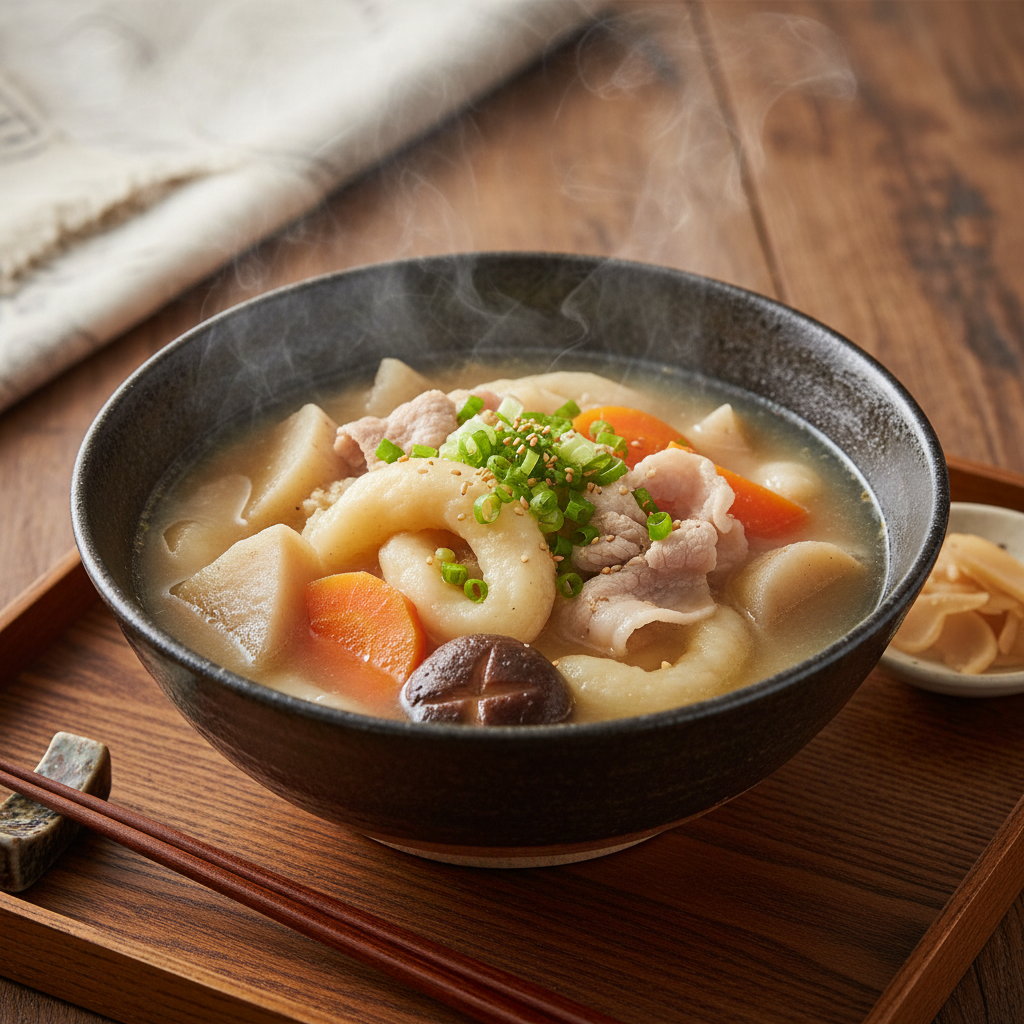
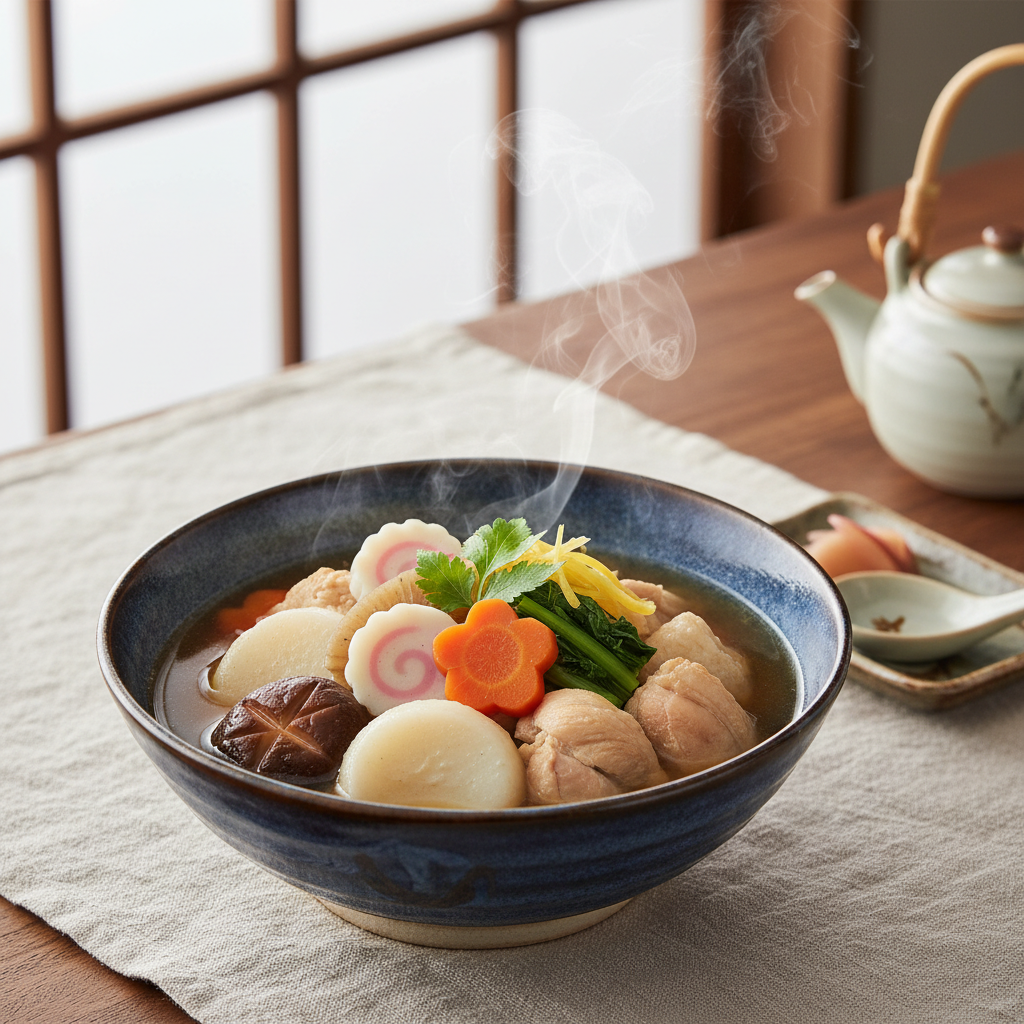
Guzoni (具雑煮) is a local dish passed down throughout the Shimabara Peninsula, centered on Shimabara City in Nagasaki Prefecture. True to its name, it is a “zoni” (soup dish) with many varied “ingredients” (gu), and it is characterized by its luxury and high nutritional value that sets it apart from the typical New Year’s zoni.
It was selected for the Ministry of Agriculture, Forestry and Fisheries’ “One Hundred Local Dishes from Rural, Mountain, and Fishing Villages,” and it is known nationwide as a traditional cuisine representing Nagasaki Prefecture. Using more than ten types of ingredients, the deep flavor created by the harmony of mountain and sea delicacies tells the story of Shimabara’s abundant nature and history.
Characteristics of Guzoni
The greatest characteristic of guzoni lies in its overwhelming abundance of ingredients. In a single bowl, ten to fifteen types of ingredients are packed together: chicken, Chinese cabbage, burdock, dried shiitake mushrooms, lotus root, freeze-dried tofu, rolled egg, fish cake, conger eel, and chrysanthemum greens. The umami components that dissolve from these ingredients intertwine in layers, creating a deep richness and savory flavor.
The broth uses ingredients such as ago (flying fish), kelp, and dried shiitake mushrooms, characterized by an elegant yet robust flavor. In Nagasaki Prefecture, round mochi is typically used, and the mochi is often boiled separately before being added to prevent it from disintegrating.
The History and Origins of Guzoni – Its Deep Connection to the Shimabara Rebellion
The Shimabara Rebellion and Amakusa Shiro
The origin of guzoni traces back to the “Shimabara Rebellion” that occurred in 1637 (Kannei 14), in the early Edo period. This uprising is known as the largest-scale rebellion in Japanese history, led by peasants suffering from Christian persecution and harsh tax collection.
Amakusa Shiro Tokisada, who became the supreme commander, was only sixteen years old at the time, yet he led approximately 37,000 Christian believers in an occupation of Hara Castle. This siege lasted about three months and became a protracted conflict, with food supply becoming a critical issue.
Birth as Food During the Siege
Amakusa Shiro ordered mochi to be stored in preparation for the siege and instructed his soldiers to gather various ingredients from the surrounding mountains and sea. To effectively utilize limited ingredients and increase nutritional value, he had a dish made by cooking mochi together with mountain and sea delicacies. This is said to be the beginning of guzoni.
The soldiers gained strength and spirit by eating this ingredient-rich zoni, and they fought through the prolonged siege. Although the Shimabara Rebellion ended tragically, the dish born at that time was passed down by the local people and has continued to be loved as Shimabara’s representative local cuisine to this day.
Development as a Local Cuisine
After the Shimabara Rebellion, guzoni became established as a home-cooked dish throughout the Shimabara Peninsula. Initially, the dish had the character of emergency wartime food, but over time it transformed into a dish for celebrations and special occasions. Particularly at New Year’s, it became an indispensable dish and has been inherited as a traditional taste passed down through generations in each household.
Main Ingredients and Nutritional Value of Guzoni
Basic Ingredients
The ingredients used in guzoni vary slightly depending on the household or establishment, but generally include the following items:
Main ingredients:
- Round mochi: Round mochi is mainstream in Nagasaki Prefecture and has the characteristic of not disintegrating easily when cooked
- Chicken: Forms the basis of umami and is an excellent source of quality protein
Vegetables:
- Chinese cabbage: A representative winter vegetable that adds sweetness and texture
- Burdock: Rich in aroma and dietary fiber, it adds depth to the broth
- Lotus root: Characterized by a crispy texture
- Chrysanthemum greens: A distinctive aroma that tightens the overall dish
- Taro root: Has a creamy texture and gentle sweetness
Protein and processed foods:
- Dried shiitake mushrooms: Rich in umami component guanylic acid
- Freeze-dried tofu: Concentrated plant-based protein and nutrients
- Rolled egg: Adds color and nutrition
- Fish cake: Provides an elastic texture and fish umami
- Conger eel: A representative seafood of Nagasaki
Characteristics of the Broth
The traditional broth for guzoni uses “ago broth” made from ago (flying fish). Ago broth is characterized by an elegant and clear flavor, and it is widely used in Kyushu, particularly in Nagasaki Prefecture. By adding kelp and dried shiitake mushrooms to this, three types of umami components—inosinate, glutamate, and guanylate—work synergistically to create a deep flavor.
Nutritional Value
Guzoni is an exceptionally nutritious dish from a nutritional standpoint. It contains carbohydrates (mochi), proteins (chicken, seafood, soy products), vitamins and minerals (various vegetables), and dietary fiber (root vegetables and mushrooms) in well-balanced proportions, allowing one to consume diverse nutrients in a single bowl.
It is particularly suited for nutritional supplementation during winter, and because it has a high warming effect on the body, it is a dish that aids in maintaining health during the cold season.
Traditional Guzoni Recipe and Preparation Method
Ingredients (Serves 4)
Main ingredients:
- Round mochi: 8 pieces
- Chicken thigh meat: 200g
- Chinese cabbage: 200g
- Burdock: 1 root (approximately 100g)
- Lotus root: 100g
- Taro root: 4 pieces
- Dried shiitake mushrooms: 4
- Freeze-dried tofu: 2 pieces
- Chrysanthemum greens: 1/2 bunch
- Rolled egg: as needed
- Fish cake: 8 slices
- Grilled conger eel: as needed
Broth:
- Dried ago (flying fish) or powdered ago broth: as needed
- Kelp: one 10cm square piece
- Water: 1.5 liters
- Soaking liquid from dried shiitake mushrooms: all of it
Seasonings:
- Light soy sauce: 3 tablespoons
- Mirin: 2 tablespoons
- Salt: 1/2 teaspoon
- Sake: 2 tablespoons
Preparation
- Rehydrate dried shiitake mushrooms: Soak in water the day before, and set aside the soaking liquid to use in the broth. Remove the stems and make decorative cuts.
- Prepare chicken: Cut into bite-sized pieces and season lightly with sake and a pinch of salt.
- Prepare vegetables:
- Scrape the skin off burdock, slice thinly at an angle, and soak in water
- Peel lotus root, slice into rounds, and soak in vinegared water
- Cut Chinese cabbage into bite-sized pieces
- Peel taro root and pre-boil
- Cut chrysanthemum greens into manageable lengths
- Prepare freeze-dried tofu: Rehydrate in water, squeeze dry, and cut into bite-sized pieces.
- Prepare rolled egg: Make a thick rolled omelet and cut into 1.5cm strips.
Preparation Steps
Step 1: Make the broth
Place water and kelp in a pot and let sit for 30 minutes before heating. Remove the kelp just before boiling and add the ago broth. Also add the soaking liquid from the dried shiitake mushrooms to complete the broth.
Step 2: Cook the ingredients
Once the broth is boiling, add items that take longer to cook first. Add chicken first and skim off any scum, then add burdock, lotus root, taro root, and dried shiitake mushrooms. Simmer over medium heat for about 10 minutes.
Step 3: Season
Once the vegetables are cooked through, season with light soy sauce, mirin, and salt. Shimabara guzoni is characterized by refined seasoning, so use salt sparingly.
Step 4: Add remaining ingredients
Add Chinese cabbage and freeze-dried tofu and simmer for another 5 minutes. Finally, add chrysanthemum greens and cook briefly.
Step 5: Prepare the mochi
In a separate pot, boil or grill the round mochi until soft. The key point is to prepare the mochi separately because it tends to disintegrate if cooked directly in the broth.
Step 6: Serve
Place mochi in a bowl and arrange the ingredients colorfully. Garnish with rolled egg, fish cake, and conger eel, then pour the hot broth over everything. Finish with chrysanthemum greens on top.
Tips for Delicious Preparation
- The broth is essential: If ago broth is unavailable, a combined broth of bonito and kelp can be substituted, but using ago broth will bring you closer to the authentic taste.
- Cutting vegetables: Cutting ingredients to uniform sizes improves both appearance and ensures even cooking.
- Simmering time: If vegetables are simmered too long, they lose their texture, so finish them at a point where they retain some crispness.
- Arranging the dish: Colorful plating makes the dish visually enjoyable as well.
Main Regions of Transmission and Occasions for Eating
Transmission Throughout the Shimabara Peninsula
Guzoni is widely transmitted throughout the entire Shimabara Peninsula, centered on Shimabara City in Nagasaki Prefecture. Particularly in areas that were part of the former Shimabara domain, it is cherished as a traditional dish passed down through generations in each household.
Within Shimabara City, there are numerous restaurants that serve guzoni, making it a popular menu item among tourists. Long-established restaurants continue to serve this local cuisine while maintaining traditional cooking methods that have continued since the Edo period.
Occasions and Seasons for Eating
New Year’s: The most common time to eat guzoni is New Year’s. Many households throughout the Shimabara Peninsula have the custom of eating guzoni on New Year’s morning. By eating nutritious guzoni at the beginning of the year, people wish for that year’s health and prosperity.
Celebrations and special occasions: Guzoni is also served at celebratory events such as weddings and sixtieth birthday celebrations, as well as at local festivals. Because it is a luxurious dish containing many ingredients, it is valued as a dish for entertaining guests.
As everyday food: In the Shimabara Peninsula, many households eat guzoni year-round, and it remains a local cuisine loved and eaten daily. Particularly during cold seasons, it is frequently served at the table as a dish that warms the body.
Ways of Eating and Enjoying
Guzoni is best eaten piping hot. First, one sips the broth to taste the flavor of ago and the umami that has dissolved from the ingredients. After that, one typically enjoys the various ingredients little by little, finishing with the mochi.
One can enjoy the different textures and flavors of each ingredient, and guzoni offers a diverse taste experience in a single bowl. At the family dinner table, it is customary to savor it slowly while enjoying conversation—the Shimabara way.
Efforts in Preservation and Transmission of Guzoni
Regional Transmission Activities
Shimabara City positions guzoni as a valuable cultural heritage and is making efforts to pass it on to the next generation. By including guzoni in school meals, opportunities are created for children to become familiar with local cuisine.
In cooking classes and community center activities in the region, lectures on how to prepare guzoni are held regularly, and cooking techniques are being passed on to younger generations. Not only recipes but also the history and feelings embedded in the cooking are transmitted together from the elderly to younger generations.
Utilization as a Tourism Resource
Shimabara City Tourism Association positions guzoni as an important tourism resource and conducts active promotional activities. “Shimabara Guzoni” has been registered as a trademark, and branding is progressing.
Multiple restaurants in the city that are members of the “Guzoni Association” set quality standards to preserve the traditional taste while serving authentic guzoni to tourists. While each establishment exercises its own ingenuity, the commitment to maintaining the fundamental traditional cooking methods and ingredients is consistent.
Commercialization and Modern Efforts
In recent years, frozen and retort-packaged guzoni products have been developed, allowing people from Nagasaki living far away and tourists to enjoy Shimabara’s flavor at home. Local food manufacturers produce and sell products that recreate the traditional taste, which are also available through internet mail order.
Information dissemination using social media is also active, with Shimabara City and local restaurants introducing the appeal of guzoni through photos and videos. On Instagram and Facebook, beautifully plated images of guzoni receive many likes and contribute to raising awareness among younger generations.
Transmitters and Chefs
Shimabara has chefs and households who have been making guzoni for many generations. Head chefs at traditional restaurants guard the secret methods of making broth and selecting ingredients passed down from their predecessors, while also incorporating innovations suited to modern times.
The existence of these transmitters serves as the foundation for maintaining the quality of guzoni as a local cuisine and ensuring it is reliably passed on to the next generation.
Guzoni and Shimabara’s Food Culture
The Shimabara Peninsula’s Rich Ingredients
The ability of guzoni to use such a diverse array of ingredients is possible because of the Shimabara Peninsula’s abundant natural environment. Facing Ariake Bay, Shimabara is blessed with fresh seafood, and fish such as conger eel are caught in abundance.
On the other hand, fertile land spread at the foot of Mount Unzen produces high-quality vegetables. Many vegetables essential to guzoni, such as Chinese cabbage, burdock, and lotus root, are locally produced, and their freshness and high quality support the dish’s flavor.
Relationship with Other Nagasaki Prefectural Local Dishes
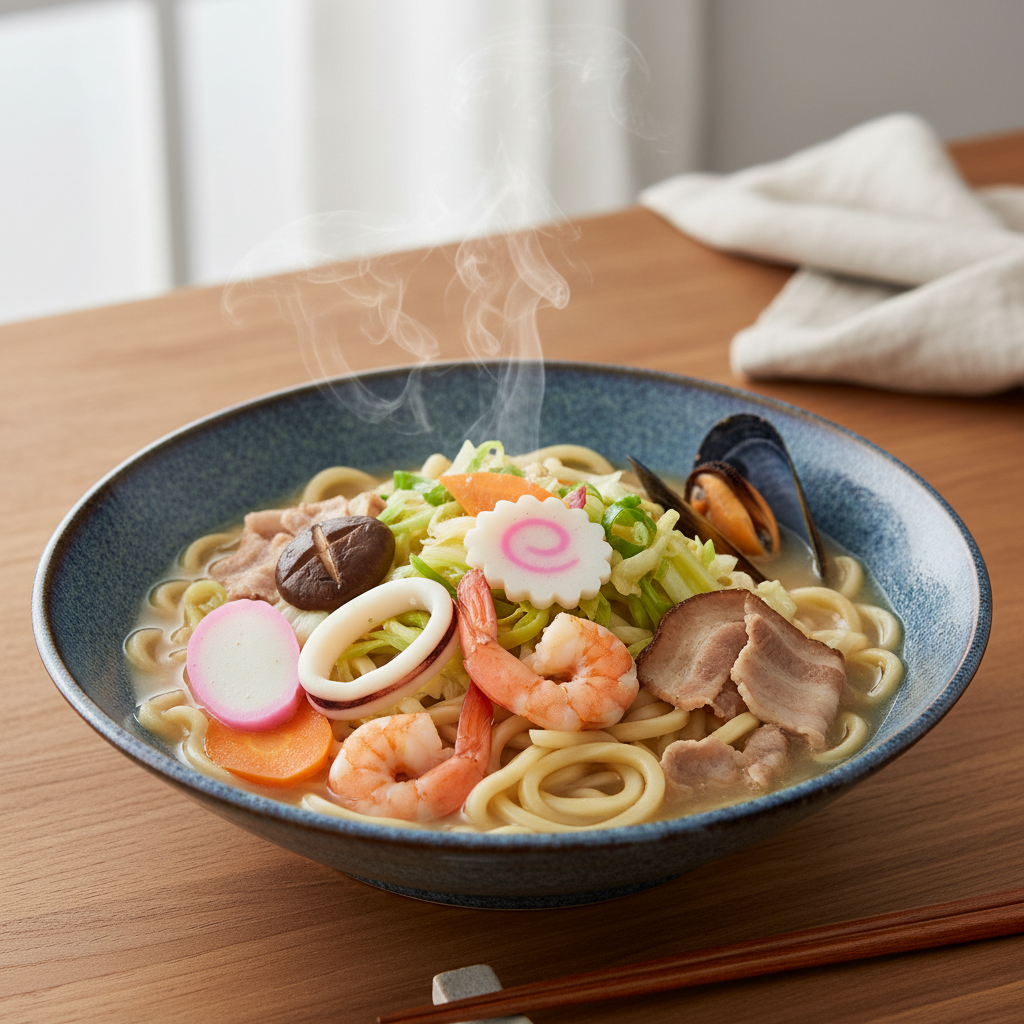
Nagasaki Prefecture has many distinctive local dishes besides guzoni. Champon, sara udon, and shippoku cuisine, all influenced by foreign cultures, are famous, but guzoni occupies a unique position as a cuisine born purely from Japanese history and natural environment.
Particularly in being directly connected to the Shimabara Rebellion, guzoni can be said to have cultural value that transcends being merely a food.
Seasonal Changes in Ingredients
Traditionally a winter dish, guzoni is now enjoyed with seasonally changing ingredients in many households. Spring might include bamboo shoots and rapini blossoms, summer eggplant and okra, and autumn mushrooms and similar items are added to enjoy seasonal ingredients.
However, the core ingredients such as chicken, mochi, burdock, and shiitake mushrooms that form the base remain unchanged, and seasonal ingredients are typically added as variations.
Famous Restaurants Where You Can Enjoy Guzoni
Specialty Restaurants in Shimabara City
There are several long-established restaurants in Shimabara City that feature guzoni as their signature menu. Among them, “Himematsuya” is a historic establishment continuing since the Meiji era, serving guzoni while maintaining traditional preparation methods.
Each restaurant has subtle differences in how the broth is made and how ingredients are combined, and many tourists enjoy comparing the different styles. Around Shimabara Castle and in shopping districts, there are casual restaurants where one can easily enjoy guzoni, and they are busy with both locals and tourists.
Diversity of Home Cooking
While restaurant guzoni is delicious, people of Shimabara say “each household’s taste is the best.” The home-cooked taste passed down from grandmother to mother to daughter has its own individuality, with subtle differences in the types of ingredients used, the intensity of the broth, the balance of seasonings, and more.
This diversity speaks to the richness of guzoni as a local cuisine, and it represents a form of tradition transmission that resists standardization.
Conclusion – Shimabara’s Taste Where History and Tradition Live On
Guzoni is a local cuisine with high historical value, born from the Shimabara Rebellion, an important event in Japanese history. Despite its tragic historical background, it has been loved by the people of Shimabara for nearly 400 years since then, and today it is known nationwide as a representative local cuisine of Nagasaki Prefecture.
It is a nutritious dish using more than ten types of ingredients, and its deep flavor created by the harmony of mountain and sea delicacies symbolizes the abundant blessings of the natural environment of the Shimabara Peninsula. From the fact that it is eaten not only on New Year’s and special occasions but also in everyday meals, one can feel the region’s deep affection for the dish.
The transmission to the next generation is being pursued while preserving tradition, and through modern initiatives such as commercialization and social media dissemination, active efforts to popularize the dish continue. When you visit Shimabara, be sure to taste authentic guzoni and reflect on its history and culture. Additionally, by making it at home using the recipe, you will be able to understand Shimabara’s food culture more deeply.
Guzoni transcends being a mere dish—it is a precious cultural heritage that conveys Shimabara’s history, culture, and the lives of its people to the present day.