
Hikado: Nagasaki Prefecture’s Local Cuisine | Complete Guide to History, Preparation, and Nutrition
What is Hikado? Characteristics of Nagasaki Prefecture’s Representative Local Dish
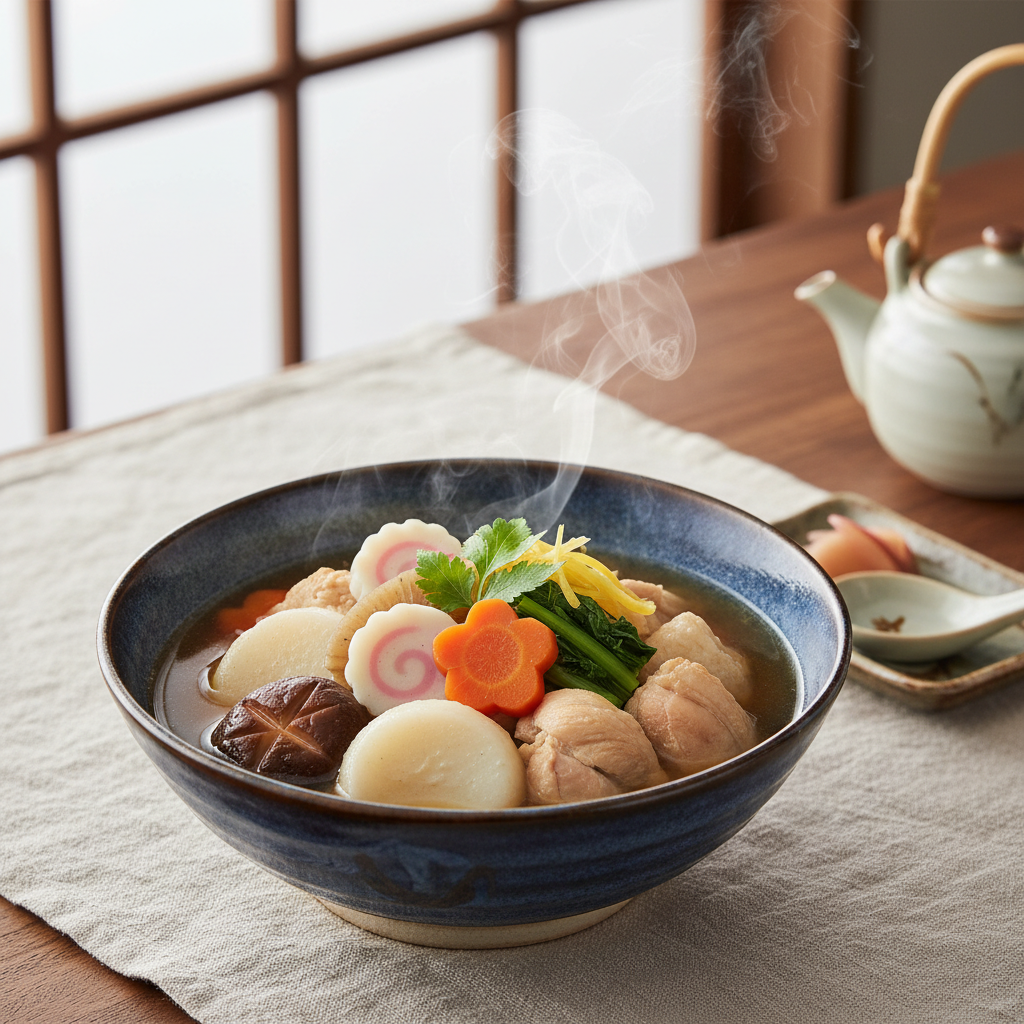
Hikado is a traditional local cuisine that has been passed down for over 400 years, centered in Nagasaki City, Nagasaki Prefecture. At first glance, it may seem like Western-style stew, but it is actually a unique braised dish that blends Japanese ingredients and cooking methods.
Its most distinctive feature is that grated sweet potato is used to create a thickening effect. Rather than potato starch or wheat flour, the natural sweetness and viscosity of sweet potato envelops the entire dish, creating a gentle and warm flavor. The ingredients include both meat (chicken and pork) and fish (yellowtail and tuna), with vegetables such as daikon radish, carrot, and shiitake mushrooms cut into fine dice and braised together.
While featuring soy sauce-based, Japanese-style seasoning, its unique flavor evoking an exotic atmosphere is emblematic of the food culture nurtured by Nagasaki as a place.
History, Origins, and Related Events of Hikado
Origins of Southern Barbarian Cuisine Transmitted from Portugal
The history of Hikado dates back to the early 1600s. At that time, Nagasaki was Japan’s only open port, visited by many missionaries and merchants from Portugal and Spain. To warm their bodies during cold seasons, they consumed braised meat dishes, or what we call stew, made with beef and pork.
This Western braised cuisine spread among the local population and gradually transformed to suit Japanese tastes. During the Edo period, Nagasaki was lined with foreign settlements and churches, with many Portuguese residents, and their food culture naturally permeated the region.
Etymology of the Name “Hikado”
The unusual name Hikado derives from the Portuguese word “Picado,” which means “finely chopped” or “cooked.” In fact, the preparation of Hikado is characterized by cutting all ingredients into fine dice, and the name perfectly aligns with the cooking method.
Changes in Ingredients During the Period of Isolation and Independent Evolution
As the Edo Shogunate’s policy of national isolation became more stringent, foreign ingredients became difficult to obtain in Nagasaki as well. Beef, pork, and Western spices became scarce.
The people of Nagasaki then made unique adaptations using locally available ingredients. Meat was replaced with locally available chicken, and fish with yellowtail and tuna caught in nearby Nagasaki waters. Additionally, as bread, which was originally used for thickening, became unavailable, sweet potato, which was cultivated locally, came to be used as a substitute.
Through such ingenuity and trial and error, the “Hikado” we know today—a local dish unique to Nagasaki—was established.
Occasions and Seasons for Consumption
Hikado is particularly favored during cold winter months. As a braised dish that warms the body from its core, it has been considered helpful for cold prevention and health maintenance. It is also often prepared during celebratory occasions such as New Year and family gatherings, and is carefully passed down as part of the region’s food culture.
In school lunches throughout Nagasaki Prefecture, it is served as a standard menu item, providing an important opportunity for children to experience their local food culture.
Primary Transmission Regions
Hikado is a local dish transmitted throughout Nagasaki Prefecture, particularly centered in Nagasaki City. Nagasaki City flourished as an international trading port from the Edo period onward, serving as a place where diverse cultures interacted. For this reason, Southern Barbarian cuisine like Hikado took root easily.
Today, it remains widely enjoyed as home cooking in Nagasaki City, and is served in local restaurants and school lunches. Additionally, it holds an important position alongside shippoku cuisine and champon in tourism promotion and introductions of local cuisine in Nagasaki Prefecture.
Primary Ingredients Used
The ingredients used in Hikado vary slightly depending on households and regions, but the basic ingredients are as follows:
Meat
- Chicken: The most commonly used meat. Thigh and breast meat are employed.
- Pork: Belly and loin cuts are sometimes used.
Fish
- Yellowtail: A representative fish caught in waters near Nagasaki. Winter yellowtail with good fat content is especially delicious.
- Bigeye Tuna: Its light flavor is well-suited to braised dishes.
Vegetables
- Sweet Potato: An important ingredient grated to create thickening.
- Daikon Radish: Cut into dice and used as an ingredient.
- Carrot: Adds color and nutrition.
- Dried Shiitake Mushrooms: Essential for bringing out umami and depth.
- Konnyaku: Sometimes added as a textural accent.
Seasonings
- Soy Sauce: Basic seasoning.
- Mirin: Adds mild sweetness.
- Sake: Used to eliminate odors and enhance flavor.
- Dashi: Kombu or bonito dashi forms the umami base.
How to Make Hikado (Ingredients for 4 servings)
Ingredients (4 servings)
- Chicken thigh: 200g
- Yellowtail or tuna: 150g
- Sweet potato: 300g (of which 100g for grating)
- Daikon radish: 200g
- Carrot: 1 (approximately 150g)
- Dried shiitake mushrooms: 4
- Konnyaku: 1/2 cake
- Dashi stock: 800ml
- Soy sauce: 3 tablespoons
- Mirin: 2 tablespoons
- Sake: 2 tablespoons
- Salt: a pinch
Directions
- Preparation
- Rehydrate the dried shiitake mushrooms in water and set aside the soaking liquid.
- Cut all ingredients into 1cm dice. This is characteristic of Hikado.
- Cut 200g of sweet potato into cubes and grate 100g.
- Blanch konnyaku and remove any bitterness.
- Begin Braising
- Pour dashi stock and the shiitake soaking liquid into a pot and heat.
- Once boiling, add chicken and remove scum while simmering for about 5 minutes.
- Add Vegetables
- Add daikon radish, carrot, shiitake mushrooms, and diced sweet potato.
- Braise until vegetables are tender, about 15–20 minutes.
- Add Fish and Konnyaku
- Add fish and konnyaku and simmer for another 5 minutes or so.
- Handle the fish gently as it breaks apart easily.
- Season
- Add soy sauce, mirin, and sake to adjust flavor.
- Make final adjustments to taste with salt.
- Add Thickening
- Add grated sweet potato and slowly stir everything together.
- Simmer on low heat for about 5 minutes until thickening is achieved, then it is complete.
Way of Eating
Hikado is served in bowls while hot. It can be enjoyed as a side dish with rice or as a soup on its own. Because of its thickening, it cools slowly and warms the body from its core.
It is said to pair well with bread, which may be a remnant of the original Southern Barbarian cuisine. Indeed, a tradition of eating it with bread remains in Nagasaki.
Nutrition and Health Benefits of Hikado
A Well-Balanced and Healthy Dish
From a nutritional standpoint, Hikado is an exceptionally well-balanced dish.
Protein: High-quality protein can be obtained from chicken and fish. Using both meat and fish creates an excellent amino acid balance.
Vitamins:
- Sweet potato provides abundant vitamin C, vitamin E, and dietary fiber.
- Carrot provides β-carotene (vitamin A).
- Shiitake mushrooms provide vitamin D.
Minerals: Daikon radish and carrot provide minerals such as potassium and calcium.
Dietary Fiber: Abundant dietary fiber is obtained from sweet potato, konnyaku, and vegetables, which helps improve intestinal health.
Cold Prevention and Immune Enhancement
Hikado has long been believed to be effective for cold prevention and physical recovery. In addition to warming the body with hot braised food, the nutrients from each ingredient work synergistically.
The vitamin C in sweet potato is resistant to heat and contributes to immune enhancement. Additionally, β-glucan found in shiitake mushrooms is known as a component that supports immune function.
Easy-to-Digest Meals
All ingredients are finely chopped and the whole dish is unified by sweet potato’s thickening, making it excellent for digestive absorption. It is a suitable dish for the elderly, children, and those in poor health.
Preservation and Transmission Efforts
Use in School Lunches and Food Education
Many schools throughout Nagasaki Prefecture incorporate Hikado into their lunch menus. This serves as an important opportunity for food education to convey local food culture to children.
School lunch recipes are partially adapted for cooking efficiency, such as adding sweet potato in cubes rather than grated, but the basic flavor remains the same as home cooking. Through school lunches, children learn about regional history and culture and deepen their interest in food.
Government Protection Activities for Local Cuisine
Hikado is introduced as an important local dish in the Ministry of Agriculture, Forestry and Fisheries’ “Our Local Cuisine” project and on Nagasaki Prefecture’s official website. Efforts are underway to broadly increase public awareness through recipe publication and historical explanation.
Use as a Tourism Resource
An increasing number of restaurants in Nagasaki City offer Hikado to tourists. Whether served as a part of shippoku cuisine or as a menu item at local cuisine specialty restaurants, it provides a valuable opportunity to experience Nagasaki’s food culture.
Transmission in Homes
The most important place of transmission remains the home. Recipes and cooking techniques passed down from grandmother to mother to child form the foundation for preserving the region’s food culture.
In recent years, there has been a movement to share Hikado recipes and preparation methods using social media. Searching for hashtags such as “#Hikado” or “#Nagasaki local cuisine” on Instagram, Twitter, and recipe sites reveals many posts.
Commercialization Efforts
Some food manufacturers have developed retort-packaged and frozen versions of Hikado. This has made it possible for people outside Nagasaki Prefecture to easily enjoy Hikado, leading to increased recognition.
Relationship Between Hikado and Other Local Dishes of Nagasaki
Nagasaki Prefecture is home to many local dishes in addition to Hikado.
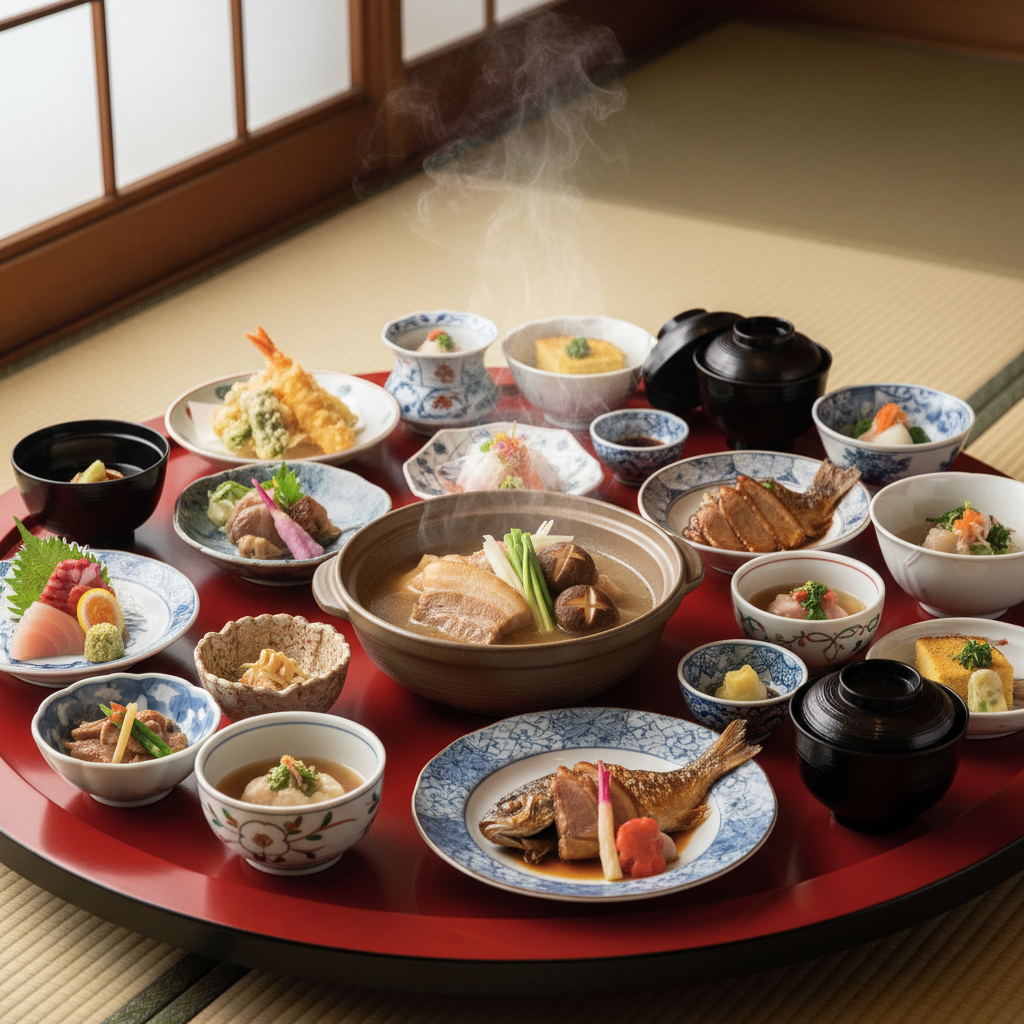
Shippoku Cuisine: Nagasaki’s unique banquet cuisine influenced by China, the Netherlands, and Portugal. Hikado is sometimes served as a dish in shippoku cuisine.
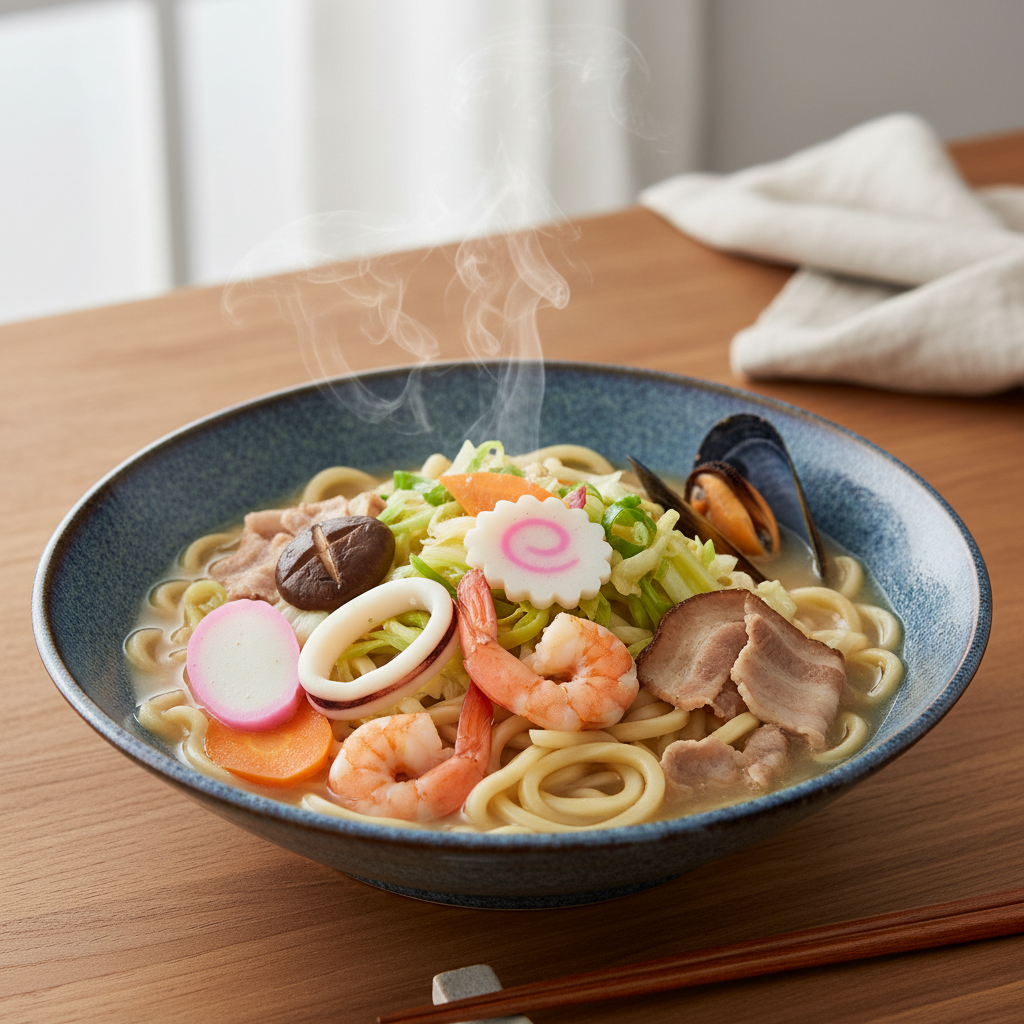
Champon: A noodle dish representative of Nagasaki. This dish too is influenced by multiple cultures.
Sara Udon: A dish of crispy noodles topped with vegetable-rich thickened sauce.
What these dishes have in common is that they have adopted foreign cultures while evolving with Nagasaki’s unique ingredients and cooking methods. Hikado is a prime example.
Significance of Hikado in Modern Food Culture
Symbol of Regional Identity
Hikado is more than just a dish; it is emblematic of Nagasaki’s history and culture. The openness of Nagasaki as an international trading port and its creativity in uniquely assimilating foreign cultures are concentrated in this single dish.
A Model of Multicultural Coexistence in Food Culture
In contemporary society, multicultural coexistence has become an important theme, and Hikado can be said to be its pioneering model. By accepting ingredients and cooking methods from different cultures and adapting them to regional circumstances, it has created new value.
Sustainable Use of Ingredients
Looking at the history of Hikado, we can see that the practice of substituting unavailable ingredients with local ones—what we now call “local production for local consumption” and “sustainable food”—was already being implemented.
Tips and Arrangements for Making Hikado
Points for Delicious Preparation
- Keep ingredient sizes uniform: Cutting all ingredients to the same size creates a beautiful appearance and ensures even cooking.
- How to grate sweet potato: Grated sweet potato releases moisture easily, so it is best to grate just before use.
- Handling fish: Fish breaks apart easily, so it is added last and cooked for a short time.
- Adjusting thickening: The amount of sweet potato can be adjusted to control thickening. Increase or decrease according to preference.
Modern Arrangements
- Western-style Hikado: Add butter and consommé for a more stew-like flavor.
- Curry-flavored: Adding a small amount of curry powder creates a flavor popular with children.
- Soy milk Hikado: Replacing part of the dashi with soy milk creates a milder flavor.
Conclusion
Hikado is a historical local dish transmitted to Nagasaki in the early 1600s. Derived from the Portuguese word “Picado” (finely chopped), it was born as a result of Western braised cuisine undergoing independent evolution in Nagasaki.
Its distinctive cooking method of creating thickening with sweet potato, the abundant ingredients of both meat and fish, and its soy sauce-based Japanese seasoning exemplify multicultural coexistence nurtured by Nagasaki as a place. Hikado, with its excellent nutritional balance, body-warming properties, and ease of digestion, is a valuable dish even in modern food culture.
Passed down through school lunches and home cooking and utilized as a tourism resource, Hikado is an important food culture heritage of Nagasaki Prefecture. Through this dish, one can learn about regional history and the importance of food education. Please try making Hikado at home and experience the rich food culture of Nagasaki.