What is Senbei Soup? A Complete Explanation of the History, How to Make It, and Appeal of This Local Dish Proud of Aomori Prefecture’s Hachinohe Region
What is Senbei Soup (Senbei Jiru)?
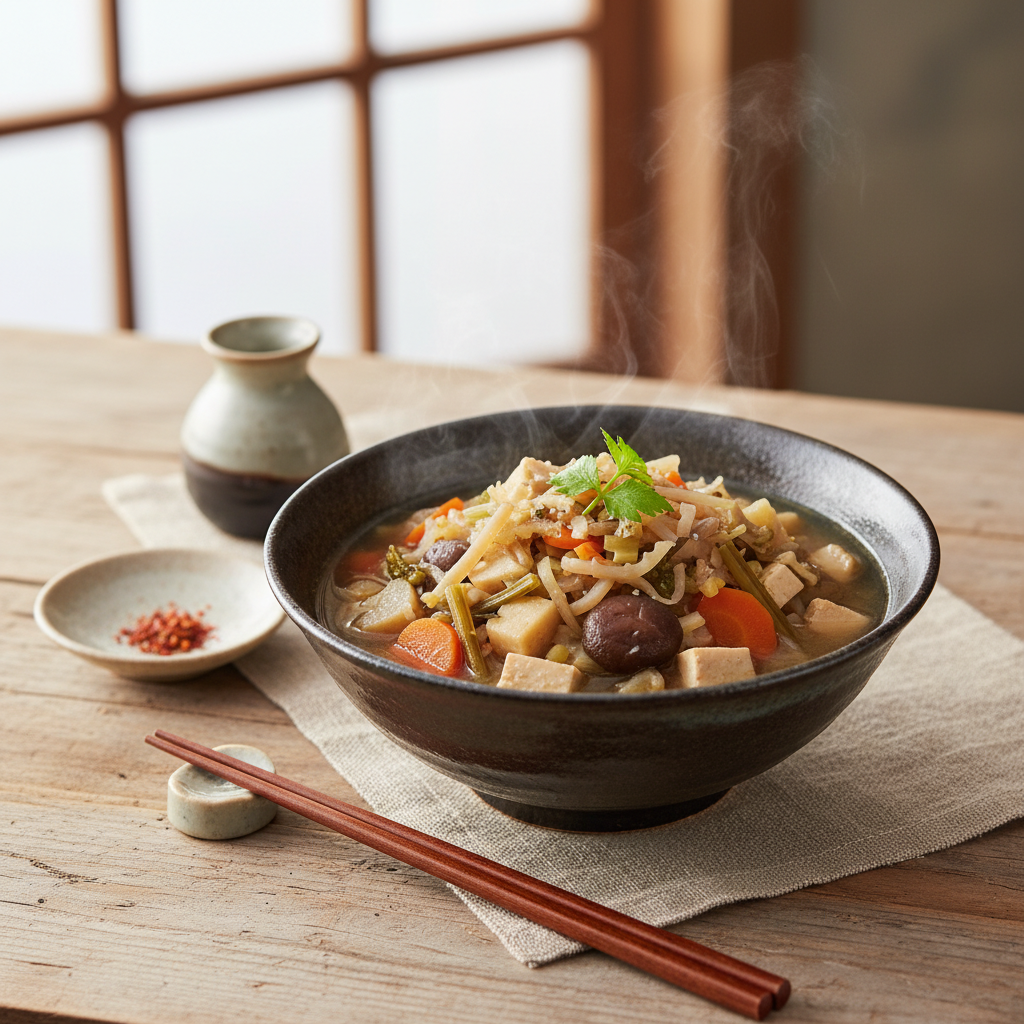
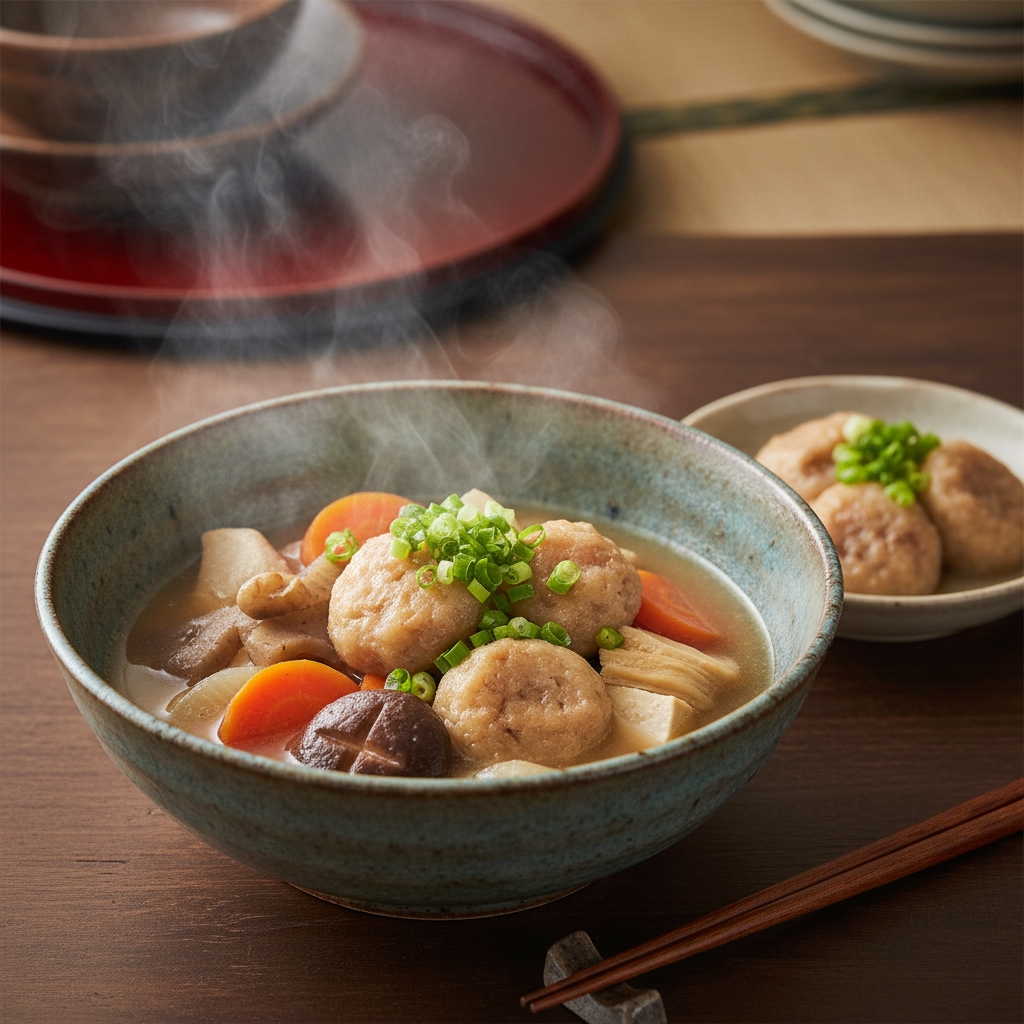
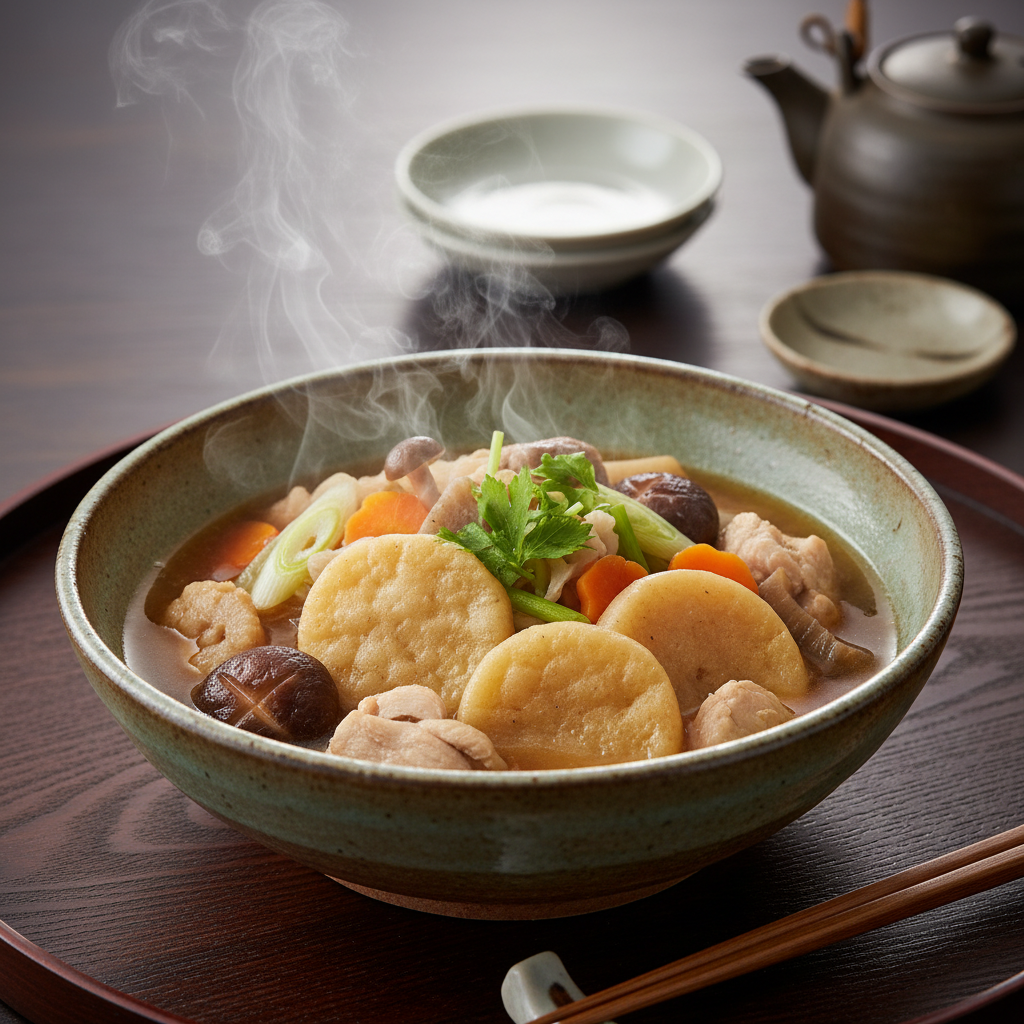
Senbei soup is a traditional local dish that has been eaten in the southern Aomori Prefecture region, centered around Hachinohe City, for approximately 200 years. It is a hot pot dish made by adding seasonal vegetables such as burdock, carrot, and mushrooms to broth made from chicken or fish, seasoning it with soy sauce or miso, and then simmering it after breaking in senbei crackers (nanbu senbei or white senbei) that are specially designed for soup.
The greatest characteristic of this dish comes from the unique, chewy texture created by using special nanbu senbei crackers that are difficult to dissolve even when simmered. Senbei crackers that have absorbed plenty of umami from the broth have a crispy bite like pasta al dente, and once you taste it, it’s a flavor you’ll never forget.
This is a food culture that developed in the territory of the former Nanbu clan, spanning from the southeastern part of Aomori Prefecture to the northern part of Iwate Prefecture. In 2007, it was selected for the Ministry of Agriculture, Forestry and Fisheries’ “100 Local Dishes of Rural Villages and Towns.” Currently, as a representative local dish of Hachinohe City, it has become a symbol of the region’s food culture.
Food Culture and Historical Background of the Hachinohe Region of Aomori Prefecture
Main Transmission Areas
Senbei soup has been passed down in the Pacific side of Aomori Prefecture, particularly in the southern part of the prefecture centered on Hachinohe City. Specifically, it is the area spanning from the southeastern part of Aomori Prefecture to the northern part of Iwate Prefecture, which was the territory of the former Nanbu clan. This area is also called the “Nanbu Region,” and has a history of developing a unique barley and buckwheat food culture.
In Hachinohe City, there are many restaurants serving senbei soup, and it is enjoyed by tourists as a representative local dish of the region. Similarly, this dish is also eaten in northern Iwate Prefecture, making it a food culture shared across prefectural boundaries.
History, Origins, and Related Events
The history of senbei soup traces back to the Tenpō Great Famine period (1833-1839) in the late Edo period. In the Nanbu clan, rice cultivation was unstable due to the influence of a cold wind called “yamase” that brought cool summers, and cold damage occurred frequently. In regions where rice crops were poor, the cultivation of wheat and miscellaneous grains was actively promoted as a countermeasure against poor harvests.
During times of famine and crop failure when poor farmers could not eat rice, a unique “barley and buckwheat food culture” developed in the Nanbu Hachinohe region. The birth of this culture saw the creation of half-baked wheat senbei and buckwheat senbei (tenpō senbei, mochi senbei), which are said to be the beginning of today’s “nanbu senbei.”
Before World War II, most farm families owned iron senbei molds, and senbei made by mixing wheat flour with salt and water and baking it in an iron mold was a precious preserved food in regions where cold damage was frequent and rice crops were poor. Putting this into miso soup or hot pot and simmering it became “senbei soup,” which was passed down as home cooking.
Currently, the “Senbei Soup Research Institute” has been established centered in Hachinohe City, actively promoting the regional food culture. It exhibits at events such as the annual “B-1 Grand Prix,” acquiring nationwide recognition.
Nanbu Senbei as a Food
Nanbu senbei is a simple-tasting cracker made mainly from wheat flour, salt, and baking soda (or water). Known as a specialty of Hachinohe and Morioka, the typical form is round-shaped senbei crackers with sesame or peanuts for snacking purposes, but senbei soup uses a specialized “white senbei” or “soup senbei.”
This soup-specific senbei has different manufacturing methods from regular snack senbei, and is made to remain firm when simmered and maintain a chewy texture. It is thick and has no seasoning, allowing it to fully absorb the flavor of the broth.
The traditional manufacturing method using iron molds is still being carried on, with each piece carefully made by skilled craftspeople. This nanbu senbei, as a food item, has become a symbol of the identity of the region, representing a traditional food material representing the food culture of Aomori and Iwate Prefectures.
How to Make Senbei Soup (Recipe)
Ingredients (Serves 4)
Main ingredients:
- Senbei soup nanbu senbei (white senbei): 4-8 pieces
- Chicken thighs: 200g (or fish such as mackerel)
- Burdock: 1/2 root
- Carrot: 1/2 root
- Long green onion: 1 stalk
- Shiitake mushrooms: 4 pieces (or other seasonal mushrooms such as maitake or enoki)
- Japanese parsley (or mitsuba): 1 bunch
- Broth: 1000ml (made from chicken bones, kelp, dried fish, etc.)
- Soy sauce: 3-4 tablespoons (or miso)
- Sake: 2 tablespoons
- Salt: a pinch
Point: It is traditional to use seasonal vegetables. Spring mountain vegetables, summer vegetables, autumn mushrooms, winter root vegetables, etc. Incorporating seasonal ingredients allows you to enjoy different flavors depending on the season.
Instructions
- Preparation
- Cut chicken thighs into bite-sized pieces
- Thinly shave burdock and soak in water
- Cut carrot into matchstick shapes
- Cut long green onion diagonally
- Remove stem ends from shiitake mushrooms and slice thinly
- Cut Japanese parsley into 3-4cm lengths
- Make the broth
- Put broth in a pot and heat
- Add chicken and simmer while removing scum
- Once chicken is cooked through, add burdock and carrot and continue simmering
- Season
- Once vegetables are soft, adjust flavor with soy sauce, sake, and salt
- Add long green onion and shiitake mushrooms and simmer further
- Add senbei
- Break nanbu senbei into 4-6 pieces by hand
- Add broken senbei pieces to the boiling broth
- Simmer for 2-3 minutes until senbei softens
- Finishing
- Add Japanese parsley and heat briefly
- Serve in bowls and complete
Cooking tips: Senbei becomes too soft if simmered too long, so it’s best to add it just before eating. For the ideal chewy texture, simmering for about 2-3 minutes is best. Also, using mackerel caught in the southern prefectures, not just chicken, is a traditional method for making the broth.
Food Customs and How to Eat Senbei Soup
Occasions and Seasons for Consumption
Senbei soup has traditionally been eaten as everyday home cooking. Particularly from autumn to winter, it is valued as a warming dish during cold seasons. Because nanbu senbei is a preserved food, it can be made year-round, but the warm senbei soup eaten especially during the cold winter months is exceptional.
In modern times, it is also served as a dish to welcome guests at family gatherings and social occasions. It also appears as a menu item at regional festivals and events, as well as in school lunches, becoming a beloved local dish across generations.
In Hachinohe City, there are many restaurants serving senbei soup to tourists year-round, providing abundant opportunities to experience the region’s food culture.
How to Eat
Senbei soup should be eaten while it’s hot. Once served in a bowl, scoop the senbei that has absorbed plenty of broth and the ingredients together and eat. You enjoy the harmony of the chewy texture of the senbei and the broth infused with the umami of vegetables and meat.
Depending on the region, there are variations with both soy sauce-based and miso-based seasoning, with each household having its own unique flavor. Some people also sprinkle seven-spice chili powder on it.
Since senbei serves as a staple food, senbei soup alone becomes a satisfying single dish. It may also be eaten with rice, but since senbei provides substantial fullness, it’s sufficient as a complete meal by itself.
Appeal and Characteristics of Senbei Soup
Unique Texture and Flavor
The greatest appeal of senbei soup is, without question, the unique texture of nanbu senbei. The chewy texture created through simmering is sometimes described as “like pasta al dente.” This texture can only be achieved because of the special senbei specifically developed for soup.
Senbei that has absorbed plenty of umami from the broth spreads its richness with every bite. The compatibility with the broth infused with complex flavors from chicken, fish, and vegetables is excellent, and it’s a deliciousness that makes you want it again and again once you’ve tasted it.
Nutritional Value and Health Benefits
Senbei soup is a nutritionally well-balanced dish. Nanbu senbei, made mainly from wheat flour, serves as a carbohydrate source, while chicken and fish provide protein, and vegetables and mushrooms provide vitamins, minerals, and dietary fiber.
Particularly with the use of many root vegetables, you can expect the effect of warming the body. The umami components in the broth (glutamic acid, inosinate, etc.) are abundant, making it a highly satisfying meal.
Value as Regional Food Culture
Senbei soup is the crystallization of food culture created by the history and climate of the southern Aomori region. Born from the ingenuity of our ancestors in the face of the harsh natural environment of cold damage, it has become a symbol of the region’s identity.
This dish concentrates the values of traditional Japanese food culture: the ingenuity of making delicious food from limited ingredients, the wisdom of utilizing preserved foods, and the care for seasonal ingredients.
Efforts in Preservation and Transmission
Overview of Transmitters and Preservation Societies
In Hachinohe City, the “Hachinohe Senbei Soup Research Institute” has been established for the purpose of preserving and promoting senbei soup. This organization, through collaboration between regional restaurants, food manufacturers, and the administration, conducts activities to promote the appeal of senbei soup throughout the nation.
The research institute has established a certification system for restaurants serving senbei soup, allowing authorized shops meeting certain standards to display “commemorative flags,” enabling tourists to enjoy authentic senbei soup. Additionally, it actively conducts senbei soup cooking instruction classes and food education activities in schools.
Long-established local senbei manufacturers continue to produce soup-specific senbei while maintaining traditional manufacturing methods. Efforts are also being made to pass on craftspeople’s techniques to the next generation, with continuous efforts to ensure that traditional food manufacturing techniques are not lost.
Using SNS and Information Dissemination
In modern times, information dissemination using SNS is also actively conducted. The Hachinohe City tourism association and restaurants post appetizing photos of senbei soup on Instagram, Twitter, and other platforms to increase awareness among younger generations.
Posts using hashtags such as “#senbei soup” and “#Hachinohe gourmet” capture the interest of food enthusiasts and travel lovers nationwide, also leading to increased tourists. Additionally, on YouTube, videos explaining how to make it are published, appealing that anyone can easily make it at home.
Commercialization and Other Modern Initiatives
Senbei soup has been commercialized in various forms. Souvenir senbei soup sets come with soup senbei, soup stock, and recipes, allowing people to enjoy authentic senbei soup easily at home. These products are available not only at souvenir shops in Hachinohe City but also on online shops.
Retort pouch senbei soup is also sold, popular for the convenience of just heating and eating. Additionally, cup noodle-type products have been developed, making it even easier to enjoy senbei soup flavor.
In addition to traditional senbei soup, restaurants are also introducing modern arrangements such as curry-flavored and tomato-flavored variations. By maintaining tradition while introducing new attempts, efforts are being made to communicate the appeal of senbei soup to more people.
Success at the B-1 Grand Prix
Hachinohe senbei soup actively participates in the “B-1 Grand Prix,” an event where local cuisine from across Japan gathers. At the “B-1 Grand Prix in Kitakyushu” held in 2012, it won the Gold Grand Prix (first place), greatly raising its nationwide recognition.
Through participation in this event, senbei soup has established itself as a representative local dish of Aomori Prefecture, and many tourists visit Hachinohe as a result. It has greatly contributed to regional economic activation and is noted as a successful example of regional revitalization through food culture.
Places to Enjoy Senbei Soup
Restaurants in Hachinohe City
There are numerous restaurants in Hachinohe City serving senbei soup. Around Hachinohe Station and the city center, you can enjoy authentic senbei soup at local cuisine specialty restaurants and izakayas. At restaurants certified by the “Hachinohe Senbei Soup Research Institute,” you can enjoy senbei soup prepared to unified standards.
Particularly at yatai villages such as “Miroku Yokocho,” multiple shops offer senbei soup, allowing you to compare the flavors of different restaurants while hopping from one bar to another.
Rest Areas and Tourist Facilities
Some rest areas and tourist facilities in Aomori Prefecture also serve senbei soup. Particularly at rest areas near Hachinohe City, you can enjoy senbei soup made with local ingredients, as well as purchase souvenir senbei soup sets.
At Hachinohe’s tourist facility “Hassyoku Center,” you can enjoy senbei soup along with fresh seafood, and can comprehensively experience Hachinohe’s food culture.
Enjoying at Home
Using commercially available senbei soup sets, you can easily prepare authentic senbei soup at home. Since they are available on online shops, you can enjoy Hachinohe’s taste from anywhere in the country.
You can also enjoy original senbei soup by choosing vegetables and meat to your preference. There’s also the pleasure of making it together as a family, and it has value from a food education perspective.
Conclusion: Rediscovering the Appeal of Senbei Soup
Senbei soup is a local dish with approximately 200 years of history, proud of the Hachinohe region of Aomori Prefecture. Born in a harsh natural environment, this dish is the crystallization of food culture packed with the wisdom and ingenuity of our ancestors, and continues to be loved by many people in modern times.
The unique chewy texture and deep flavor created using nanbu senbei, a distinctive ingredient, is a deliciousness you’ll never forget once tasted. By using seasonal vegetables, you can enjoy different flavors throughout the year, and it is a nutritionally well-balanced and healthy dish.
Through the efforts of regional preservation societies, restaurants, and food manufacturers, traditional manufacturing methods are being preserved while modern arrangements and product development are progressing. Through SNS information dissemination and success at the B-1 Grand Prix, nationwide recognition has increased, and enjoying senbei soup has become one of the reasons tourists visit Hachinohe.
Senbei soup has transcended mere local cuisine to symbolize regional identity and is a Japanese food culture worthy of pride worldwide, and will continue to be passed down in the future. When visiting Hachinohe, by all means try authentic senbei soup. Also, why not enjoy this traditional flavor at home using commercially available sets?