Is Ika-meshi a Local Dish of Aomori Prefecture? Complete Explanation from Origins to Cooking Methods and Regional Differences
Aomori Prefecture is known as one of Japan’s leading squid production areas, and in 2015 (Heisei 27) recorded the highest squid catch in Japan. Many traditional local dishes utilizing abundant squid exist, and among them, “ika-meshi” is a fascinating dish with distinctive characteristics that vary by region. This article provides a detailed explanation of Aomori Prefecture’s ika-meshi culture, including its history, regional characteristics, and cooking methods.
Background of Aomori’s Squid Culture and Local Cuisine
The Deep Relationship Between Aomori Prefecture and Squid
Aomori Prefecture is surrounded by sea on three sides, and due to this geographical characteristic, fishing has long been a thriving industry in the region. In particular, squid such as Japanese common squid and spear squid are abundantly caught at ports like Mutsu Bay, Tsugaru Strait, and Hachinohe Port on the Pacific side. Hachinohe Port’s landings of squid, mackerel, and sardine alone account for over 80% of the total catch in Hachinohe, with squid boasting the second-highest catch volume nationwide after Hokkaido.
Against the backdrop of these abundant squid resources, squid became a popular ingredient for Aomori residents, and under the principle of “leaving nothing to waste,” various cooking methods were developed. Regional specialties include goro (liver) grilled squid, salted squid, nama-pipi (sun-dried for one night), and squid cutlet, each with distinctive characteristics.
Definition of Ika-meshi and Easily Confused Dishes
When many people hear “ika-meshi,” they may think of the station bento “ikameshi” famous from Mori Town, Hokkaido. However, Aomori Prefecture has its own unique ika-meshi culture. Aomori’s ika-meshi varies greatly by region, and falls mainly into the following two types:
- Tsugaru Region Ika-meshi: A dish where rice is stuffed into squid body and simmered
- Shimokita Region Squid Sushi: A traditional local dish where rice and vegetables are stuffed into squid and fermented
While these are sometimes called by the same name “ika-meshi,” their cooking methods and flavors are completely different.
Tsugaru Region Ika-meshi: Traditional Simmered Dish
Characteristics of Tsugaru Region Ika-meshi
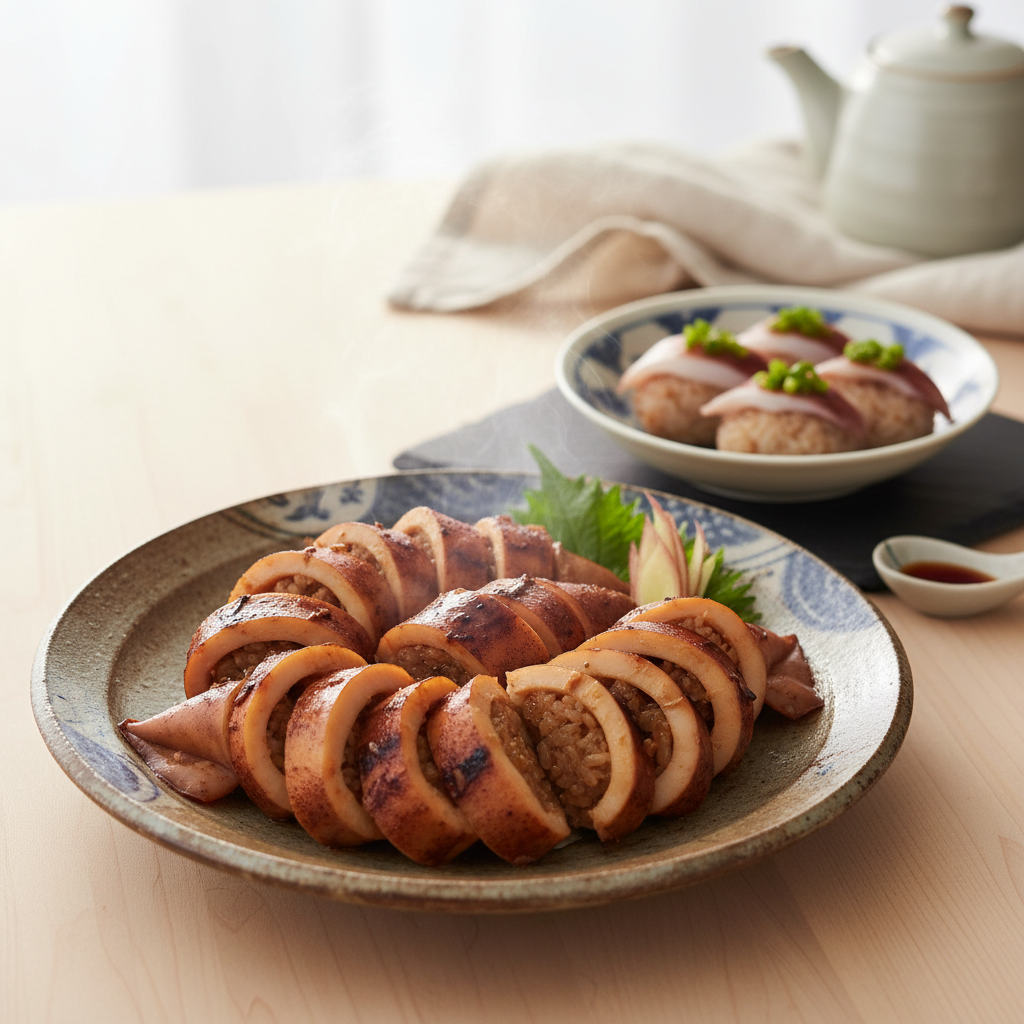
Tsugaru region ika-meshi is a dish where rice is stuffed into squid body and simmered in a sweet-savory sauce. It is a traditional home dish made in households throughout the Tsugaru Peninsula, including Goshogawara City, with slight variations in ingredients and preparation methods depending on the household.
The greatest characteristic of this dish is how the squid’s umami soaks into the rice, creating a deliciousness where squid and rice become one. Through simmering, the squid becomes tender, and the glutinous or regular rice absorbs the squid’s broth, resulting in an exquisite flavor.
How to Make Tsugaru Ika-meshi
Here is how to make traditional ika-meshi from the Tsugaru region. This basic recipe is based on the “Collection of Select Aomori Local Cuisine Recipes.”
Ingredients (serves 4)
- Japanese common squid: 4
- Glutinous rice or regular rice: 1 go (180ml)
- Soy sauce: 4 tablespoons
- Sugar: 3 tablespoons
- Mirin: 2 tablespoons
- Water: as needed
- Toothpicks: 4
Instructions
- Preparing the squid: Remove the squid’s tentacles and internal organs, and rinse the body thoroughly. Cut the tentacles into bite-sized pieces.
- Preparing the rice: Rinse the rice and soak it in water for about 30 minutes. Drain off the water.
- Stuffing the rice: Stuff rice into the squid body up to about 70% full. Be careful not to overstuff as the rice will expand during cooking.
- Closing the opening: Firmly close the squid’s opening with toothpicks. Secure tightly so the rice doesn’t spill out.
- Simmering: Put soy sauce, sugar, mirin, and water in a pot and bring to a boil. Add the squid. Place a drop lid and simmer over low heat for 30-40 minutes. Occasionally ladle the broth over the squid to infuse it with flavor throughout.
- Finishing: When the squid becomes tender and the rice is cooked through, it’s done. Cut into bite-sized pieces and serve.
Cooking Tips
- How to stuff the rice: Aim for about 70% full to prevent the squid from bursting if overstuffed.
- Heat: Cook over low heat for a long time, as high heat will make the squid tough.
- Adjusting the broth: If the broth reduces too much, add water and watch to prevent burning.
- Flavor variations: Some households add ginger or use sake for variations.
Shimokita Region “Squid Sushi”: Traditional Local Dish as Fermented Food
What is Squid Sushi?
In the Shimokita region, located in northern Aomori Prefecture, there is a tradition of eating “squid sushi” as a New Year’s dish. This is completely different from the Tsugaru region’s ika-meshi—it is a traditional food where rice and vegetables are stuffed into squid and fermented.
Despite the name “sushi,” it is different from modern nigiri sushi, and is a type of narezushi (fermented sushi). It is characterized by a distinctive sourness and umami that develops through fermentation, deeply reflecting Aomori Prefecture’s traditional fermented food culture.
History and Cultural Background of Squid Sushi
Squid sushi from the Shimokita region was born from wisdom about preserving fresh squid for long periods in an era before refrigeration technology. Using fermentation techniques allowed squid’s nutritional value to be preserved while increasing its shelf life.
The establishment as a New Year’s dish was based on squid being valued as a precious protein source during winter months, and the complex flavors unique to fermented foods being considered appropriate for celebratory occasions.
Characteristics of Squid Sushi: Stuffing with Vegetables Rather Than Rice
The greatest characteristic of Shimokita region squid sushi is that vegetables, not just rice, are stuffed inside. Thinly sliced cabbage is mixed with rice and stuffed into the squid body. The presence of these vegetables promotes fermentation and creates distinctive flavors.
Main Ingredients
- Japanese common squid
- Rice (cooked)
- Cabbage (julienned)
- Carrot (julienned)
- Ginger
- Salt
- Sugar
- Vinegar
- Koji (used in some regions)
The fermentation period is several days to about one week, stored in a cool, dark place. As fermentation progresses, sourness increases and the texture of the vegetables changes.
Overview of How to Make Squid Sushi
- Preparing the squid: Remove the internal organs and rinse thoroughly.
- Preparing the ingredients: Mix cooked rice, julienned cabbage and carrot, and seasonings together.
- Stuffing: Stuff the mixture into the squid body and close the opening with toothpicks.
- Fermenting: Place in a container with a weight and ferment in a cool, dark place.
- Completion: Once adequately fermented, cut into bite-sized pieces.
As a fermented food, the fermentation progress varies with season and temperature. Each household has cooking methods passed down through generations, and the flavors differ subtly.
Squid Cutlet: Another Specialty of Aomori’s Tsugaru Region
What is Squid Cutlet?
Alongside ika-meshi, “squid cutlet” (ikamennchi) is a representative squid dish of Aomori Prefecture. It is a home-cooked dish handed down in the Tsugaru region made by mincing the “geso” (tentacles) left over from sashimi squid, mixing it with vegetables like onion and carrot, binding it with wheat flour, and deep-frying.
Centered in the Hirosaki region, it is also called “igamenchi” and is loved by Aomori residents as a local soul food.
Historical Background of Squid Cutlet
It is said to have originated during the food shortage immediately after the war’s end, developed as a way to use every bit of precious squid without waste. It was also a way to deliciously use vegetable scraps.
This spirit of “eating without wasting ingredients” is an important concept that runs through all of Aomori’s squid dishes. Squid is said to have no waste—the body, tentacles, fins, and goro (liver) are all deliciously prepared.
How to Make Squid Cutlet
Ingredients (serves 4)
- Squid (tentacles and fins): 200g
- Onion: 1
- Carrot: 1/2
- Wheat flour: 4 tablespoons
- Egg: 1
- Salt and pepper: to taste
- Frying oil: as needed
Instructions
- Finely mince the squid’s tentacles and fins.
- Finely chop the onion and carrot.
- In a bowl, combine the squid, vegetables, wheat flour, egg, salt, and pepper, mixing well.
- Shape into appropriate sizes and deep-fry in oil at 170-180 degrees.
- When golden brown, it’s done.
Variations of Squid Cutlet
There are various adaptations depending on the household.
- Types of vegetables: Cabbage, bell pepper, green onion, and other vegetables in the refrigerator can be used.
- Flavoring: Some households add soy sauce or miso.
- Shape: In addition to round shapes, some households flatten and fry them.
Squid cutlet tastes good even when cold and is popular as a lunch box side dish.
Other Squid Dishes from Aomori Prefecture
Squid Liver Miso Stew
Many local people cite “squid liver miso stew” as a traditional dish they wish to preserve. Using fresh squid, the goro (liver) is simmered with miso, characterized by squid’s umami and the goro’s rich flavor.
Characteristics
- Squid liver is high in nutritional value and said to be good for strengthening health.
- It pairs perfectly with miso and is ideal as a rice side dish.
- It can only be made deliciously with fresh squid, making it a dish unique to the production area.
Squid Nama-pipi (Sun-dried for One Night)
“Nama-pipi” refers to sun-drying for one night—squid is split open and lightly dried. It has a texture between raw and dried, and is exquisite when grilled.
Squid Salted Squid
Aomori’s salted squid, made with fresh squid, has little odor and a mild flavor. Each household has secret recipes passed down, and it’s an indispensable item as a sake accompaniment.
Places Where You Can Eat Aomori Ika-meshi
Ika-meshi as Home Cooking
Aomori’s ika-meshi is basically a home-cooked dish. Particularly in households in the Tsugaru and Shimokita regions, it is made when fresh squid is available. Each household has recipes passed down through generations, enjoyed as “grandmother’s taste.”
Tasting at Local Restaurants
In cities like Aomori, Hirosaki, and Hachinohe, there are restaurants serving Aomori’s traditional local cuisine. Specialty local dish restaurants like “Kita no Ajidokoro Ippuku” offer “Aomori’s delicious things” featuring fresh seafood just caught at the dock and generously using local ingredients.
At such establishments, you can experience various squid dishes at once, including not just ika-meshi but also squid cutlet and squid liver miso stew.
Gourmet Spots Around Hachinohe Station
At Hachinohe Station, exiting the ticket gate and going right on the same floor, there are multiple restaurants serving ika-meshi and other dishes. Hachinohe specialty ika-meshi and uni rice are popular for their low price and generous portions. Many Aomori souvenirs are also available, making it a convenient spot for travelers.
Yokocho Alley Culture and Squid Dishes
Hachinohe has a rooted yokocho alley culture, where you can fully enjoy Hachinohe’s food with local cuisine and fresh seafood used in typical izakaya menus. The appeal lies in being able to enjoy authentic squid dishes while interacting with local people.
Nutritional Value and Health Benefits of Aomori Squid Dishes
Nutritional Components of Squid
Squid is a low-calorie, high-protein food suitable for a healthy diet.
Main Nutritional Components
- Protein: Rich in high-quality protein necessary for muscle formation.
- Taurine: Improves liver function and aids in fatigue recovery.
- Vitamin E: Has antioxidant properties and helps prevent aging.
- Zinc: An important mineral for maintaining immune function.
- DHA and EPA: Present in smaller amounts than in blue fish.
Health Benefits of Local Cuisine
Aomori’s squid dishes are characterized by using fresh ingredients and healthy cooking methods such as steaming, simmering, and fermenting. Especially squid sushi, being a fermented food, can be expected to have intestinal benefits from lactic acid bacteria.
Additionally, eating vegetables together improves nutritional balance. Squid cutlet and squid sushi are cleverly designed to use vegetables without waste, allowing simultaneous consumption of dietary fiber and vitamins.
Efforts to Preserve Aomori Ika-meshi Culture
Succession of Traditional Cuisine
Aomori Prefecture is implementing efforts to pass traditional local cuisine to the next generation. Various activities are underway, including the creation of “Collection of Select Aomori Local Cuisine Recipes,” provision in school lunches, and cooking classes.
Organizations like the Public Interest Incorporated Association Japan Dietetic Association also create articles introducing Aomori’s traditional foods and disseminate them nationwide. Through these activities, young generations are learning about Aomori’s squid cooking culture.
Utilization as a Tourism Resource
Aomori Prefecture’s tourism information website “Amazing AOMORI” actively introduces local cuisine, including squid dishes, as a tourism resource, featuring special articles like “devouring Hachinohe’s exquisite seafood.”
Regional tourism attendants for the Tsugaru Peninsula also introduce local cuisine in an approachable manner, mixing dialect while asking “Ika meshi, tsukutte minega?” (Would you like to try making ika-meshi?).
Promotion of Local Production and Consumption
Aomori Prefecture promotes local production and consumption, with active efforts to consume fresh squid caught locally within the region. This maintains squid dish quality and contributes to income stability for fishers.
Conclusion: The Charm of Aomori’s Ika-meshi Culture
Aomori’s ika-meshi is not merely a dish but a traditional local food packed with the region’s history, culture, and people’s wisdom. The simmered-style ika-meshi of the Tsugaru region and the fermented squid sushi of the Shimokita region, while both using squid, possess completely different characteristics and reflect each region’s food culture.
Including related dishes like squid cutlet, Aomori’s squid cooking culture is fundamentally rooted in ancestors’ wisdom of “using ingredients without waste” and gratitude for the ocean’s abundant blessings.
By all means, savor the taste unique to Aomori where fresh squid is available in the local area. When cooking at home, why not try reproducing Aomori’s flavors using the recipes introduced in this article? You can experience Japan’s rich food culture while enjoying the distinctive tastes of Tsugaru and Shimokita.