
Shimotsukarei (Sumitsukarei) – Traditional Ibaraki Prefecture Cuisine – Comprehensive Explanation of History, Preparation, and Regional Preservation Activities
What is “Shimotsukarei” in Ibaraki Prefecture?
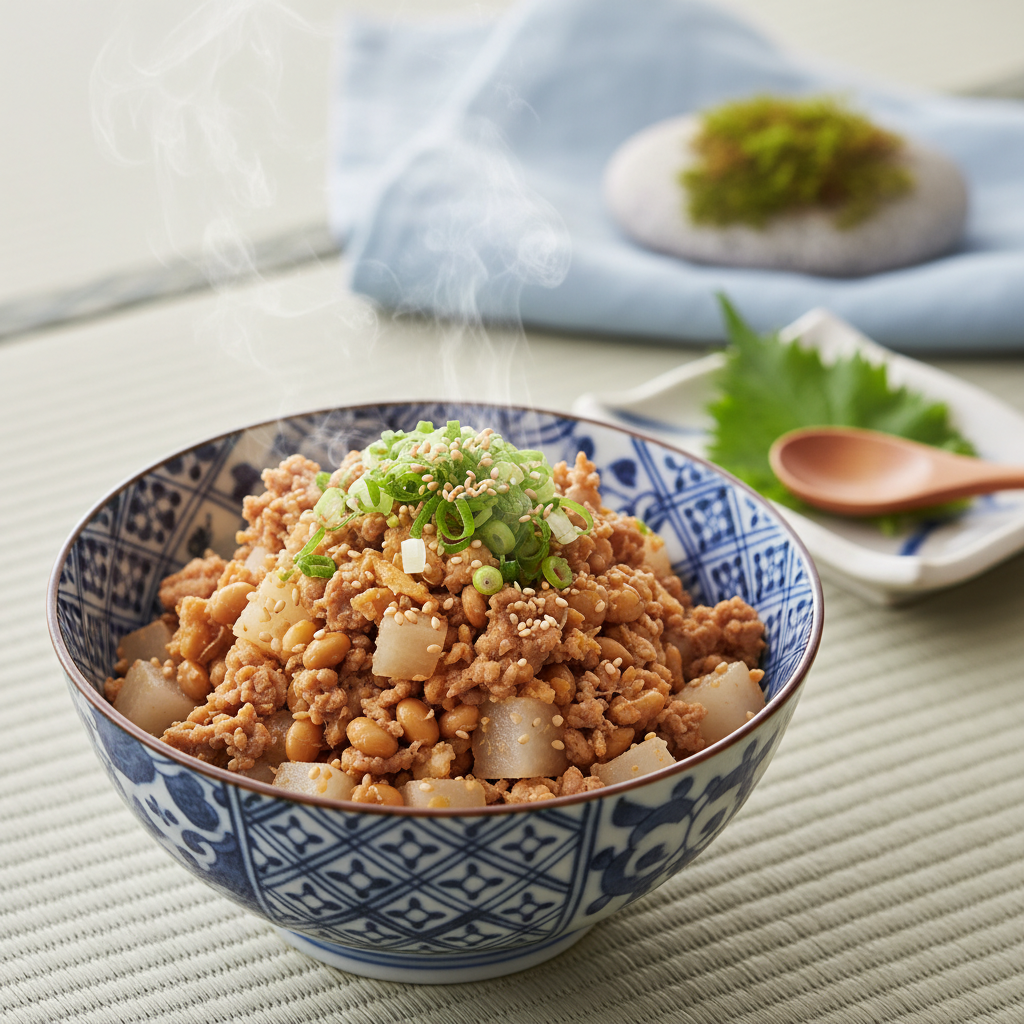
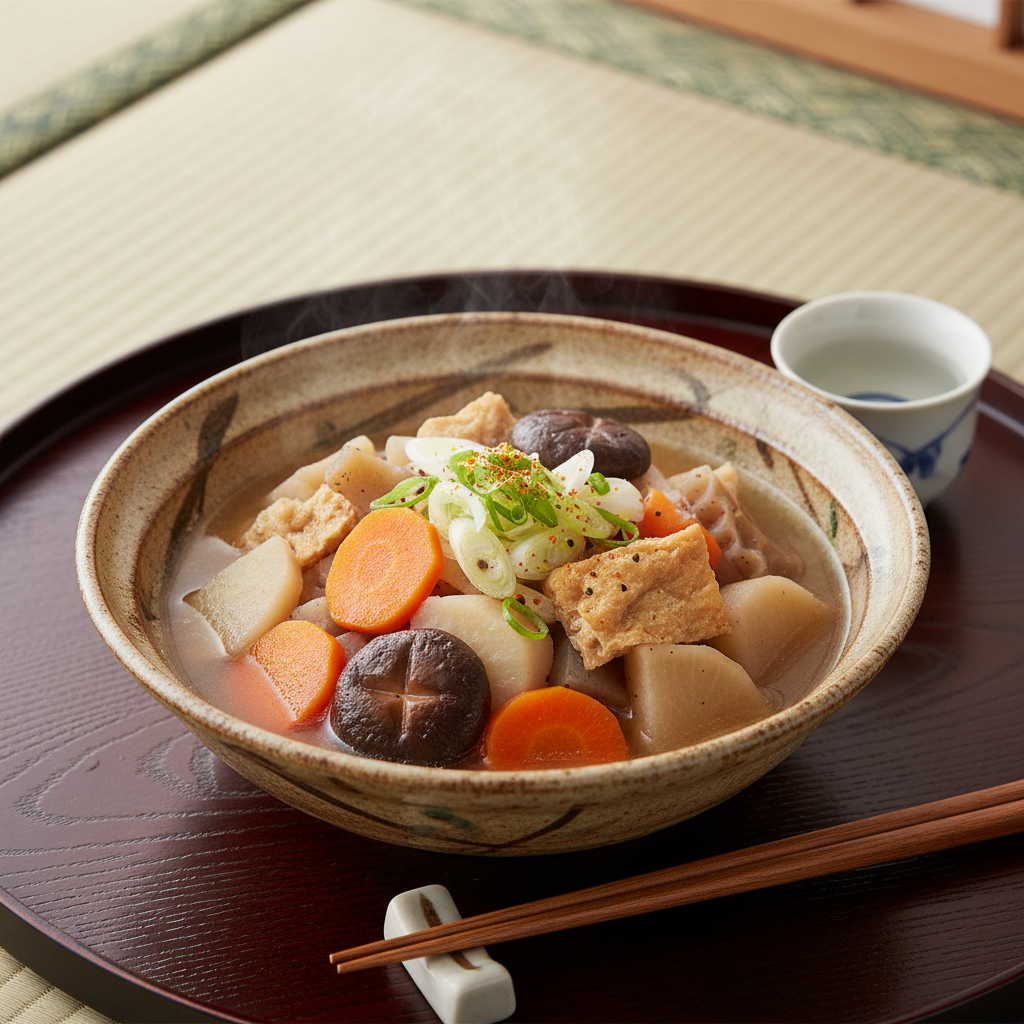
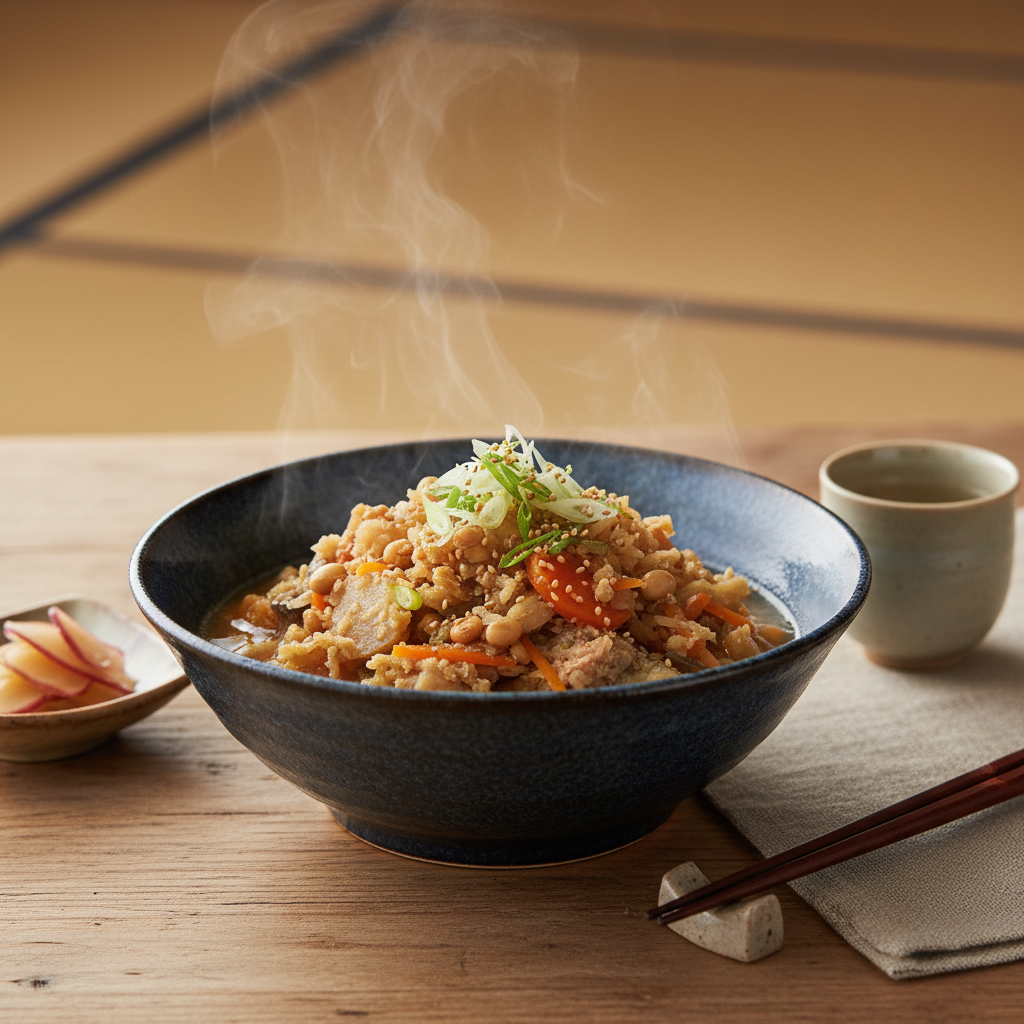
“Shimotsukarei” is a traditional local cuisine that has been passed down for generations in the western region of Ibaraki Prefecture. It is a uniquely cooked dish made with leftover salted salmon head from New Year’s, roasted soybeans used during Setsubun, root vegetables such as daikon radish and carrots, and sake lees. In Ibaraki Prefecture, it is also called “sumitsukarei.”
This dish has been cherished by local residents as a valuable source of nutrition during winter months and as a culinary embodiment of the wisdom of ancestors who wasted nothing. Though its appearance is not particularly glamorous, due to its simple taste and high nutritional value, it remains an important food culture heritage passed down in households throughout western Ibaraki Prefecture.
While the basic composition is the same as Tochigi Prefecture’s “shimotsukarei,” Ibaraki Prefecture exhibits subtle differences in ingredients and seasoning depending on the region, with each household maintaining its own unique flavor. Particularly in the Sensei region including Chikusei City, Koga City, and Yuki City, it continues to be made in many households as a winter phenomenon.
Main Transmission Regions
Distribution in Western Ibaraki Prefecture
The transmission regions of “shimotsukarei (sumitsukarei)” in Ibaraki Prefecture are concentrated mainly in the western prefecture area adjacent to Tochigi Prefecture. Particularly centered around Chikusei City, it has been widely made in regions including Yuki City, Koga City, Shimotsuma City, Joso City, Yachiyoda Town, and Sakuragawa City.
These regions are located in river valleys of the Kinugawa River, Kokai River, and Tone River. These were also areas where salmon used to migrate upstream, and it was natural that “shimotsukarei,” which uses salmon as a main ingredient, developed in these riverside regions.
Traditional Eating Customs in Rural Areas
Among farming families in western Ibaraki Prefecture, “shimotsukarei” held meaning beyond that of a simple dish. It was an important meal to supplement nutrition during agricultural work breaks and also served to bind community together.
There is a saying that “eating shimotsukarei from seven households will keep you from getting sick,” and there was a tradition where village residents would gather and share the “shimotsukarei” brought by each household. This was not merely about obtaining nutrition but served as an important event for deepening regional bonds.
Cultural Connections with Tochigi Prefecture
The “shimotsukarei” culture of western Ibaraki Prefecture has been strongly influenced by neighboring Tochigi Prefecture. Indeed, “shimotsukarei” is made throughout Tochigi Prefecture, and western Ibaraki Prefecture can be said to be an extension of that cultural sphere.
However, some regions of Ibaraki Prefecture commonly use the name “sumitsukarei,” and differences in ingredient proportions and cooking methods are observed by region. These subtle differences speak to the richness of local cuisine.
Main Ingredients Used
Basic Ingredients (Serves 4)
The basic ingredients for making “shimotsukarei” in Ibaraki Prefecture are as follows:
- Salted salmon head: 1 head (head of salted salmon eaten at New Year’s)
- Roasted soybeans: 1 cup (leftover lucky beans from Setsubun bean-scattering)
- Daikon radish: 500g (grated with an oni-oroshi coarse grater)
- Carrot: 1 piece (approximately 150g, grated with an oni-oroshi coarse grater)
- Sake lees: 150-200g
- Fried tofu: 2 pieces (cut into thin strips)
- Water: As needed
- Soy sauce: 2-3 tablespoons (adjust while tasting)
How to Select and Prepare Ingredients
The salted salmon head uses the head from salted salmon eaten at New Year’s, saved in the freezer. Salmon heads are rich in umami components and are the key to the taste of “shimotsukarei.” Before using, pour hot water over it to remove any odor, and remove the gills and eyes.
The roasted soybeans traditionally use leftover lucky beans from Setsubun bean-scattering. This embodies the wisdom of ancestors in “using leftover things carefully.” Soaking the beans in water beforehand makes them softer and shortens cooking time.
The daikon radish and carrots are grated with a tool called an “oni-oroshi,” a coarse grater. This rough grating creates the unique texture of “shimotsukarei.” Grating too finely releases too much water, so coarse grating is key.
The sake lees can be either sheet lees or paste lees. If using sheet lees, soaking them in water beforehand makes them easier to dissolve. The amount of sake lees can be adjusted to taste, but using more increases shelf life.
Ingredient Variations by Region
Even within western Ibaraki Prefecture, there are differences in ingredients depending on region and household. Some households use thick fried tofu instead of regular fried tofu, while others add burdock or konnyaku. Some households also add small amounts of sugar or mirin to the seasoning, each having their own “mother’s home cooking.”
Preparation Method
Preliminary Preparation
- Processing the salmon head: Pour hot water over the salmon head to remove odor and remove the gills and eyes. Then cut it into appropriately sized chunks.
- Preparing the beans: Soak the roasted soybeans in water overnight to soften them. If in a hurry, soak them in hot water for 1-2 hours.
- Preparing vegetables: Coarsely grate the daikon radish and carrot with an oni-oroshi grater. Pour hot water over the fried tofu to remove excess oil, then cut into thin strips.
- Preparing sake lees: If using sheet lees, break them apart and soak in a small amount of water to soften.
Cooking Steps
- Boil the salmon head: Place the salmon head and plenty of water in a large pot and boil over medium heat for about 30 minutes. Carefully remove any scum that rises.
- Add the beans: Add the soaked soybeans and continue simmering for another 20-30 minutes. It is important to cook until the beans are soft.
- Add vegetables: Add the grated daikon radish and carrot, and the thinly cut fried tofu. At this point, add more water if needed.
- Dissolve the sake lees: Lower heat and gradually add sake lees while dissolving. Stir well with a wooden spoon until the sake lees are completely dissolved.
- Season: Add soy sauce and adjust the taste. Because of the salt in the salmon, start with less soy sauce and adjust while tasting.
- Finish: Simmer over low heat for 15-20 minutes until everything is well combined, then remove from heat. The dish is ready once it has cooled slightly.
Cooking Tips
- Heat level: After adding sake lees, it scorches easily, so be sure to cook on low heat.
- Stirring: Stir from the bottom of the pot so the sake lees dissolves evenly.
- Water content: Too much water makes it mushy, too little makes it scorch easily. A slightly thicker consistency than porridge is ideal.
- Cooling: Once cooled, the flavors blend and it tastes even better the next day or later.
History, Origins, and Related Events
Origins of “Shimotsukarei”
There are various theories about the origins of “shimotsukarei,” but the most widely accepted is that it derives from “Shimotsuke no Kuni (Shimotsuke Province),” referring to present-day Tochigi Prefecture. It is said that a dish made in Shimotsuke Province was called “Shimotsuke-ni” and the name became corrupted into “shimotsukarei.”
Western Ibaraki Prefecture has historically had deep connections with Shimotsuke Province, and cultural exchange was active. It is believed that food culture from Tochigi Prefecture spread to western Ibaraki Prefecture and developed uniquely there.
Cuisine of Economy and Wisdom
The background to “shimotsukarei’s” creation lies in the Japanese spirit of treasuring things. Leftover salted salmon head from New Year’s, soybeans from Setsubun bean-scattering, and root vegetables stored through winter—ingredients that might seem like “leftovers” are combined to create a highly nutritious dish through ingenuity.
It is said that this began when people were poor and used every part of food without waste. Particularly in rural areas, it was valued as a precious source of nutrition during winter. Salmon head contains collagen and DHA, soybeans provide high-quality protein, root vegetables offer vitamins and dietary fiber, and sake lees provide B vitamins and enzymes—it can be called complete nutrition.
Connection with Hatsuuma
In Tochigi Prefecture, “shimotsukarei” has traditionally been made on Hatsuuma (the first day of the Horse in the old lunar calendar in February) as an offering to Inari shrines. Similar customs existed in western Ibaraki Prefecture, with many households making “shimotsukarei” to coincide with Hatsuuma.
Hatsuuma is an important event praying for a good harvest, and offering “shimotsukarei” to the deity expressed wishes for a bountiful year. In some regions, there were even taboos against making it outside the Hatsuuma season, though today it is enjoyed as a winter dish beyond that specific time.
The Saying of Seven Households
In western Ibaraki Prefecture, there is a saying: “Eating shimotsukarei from seven households will keep you from getting sick.” This is believed to have originated from empirical knowledge that eating “shimotsukarei” from multiple households in a community allows one to obtain various nutrients in a balanced way.
This saying also served to strengthen community bonds. Sharing “shimotsukarei” brought by each household deepened exchanges with neighbors and nurtured a spirit of mutual assistance.
Eating Occasions and Seasons
Traditional Eating Periods
“Shimotsukarei” has traditionally been made to coincide with Hatsuuma in the old lunar calendar’s February, corresponding to mid-February to early March in the modern calendar. This is a season when winter’s harsh cold persists, yet spring’s arrival is beginning to be felt.
Making “shimotsukarei” during Hatsuuma works because the salmon head from New Year’s and beans from Setsubun—ingredients used in winter events—are conveniently available at this timing. Also, this period corresponds to the agricultural off-season when farmers had the leisure to gather and enjoy meals.
Modern Ways of Eating
In modern times, “shimotsukarei” is made throughout the winter season, not limited to Hatsuuma. It is particularly enjoyed in homes as a warm local dish during the cold season from late January through March.
Additionally, opportunities for people to encounter “shimotsukarei” have increased with its inclusion in school lunches, sales at farmers’ markets and roadside stations, and service as a limited winter menu at some restaurants in western Ibaraki Prefecture.
Connection with Events
In western Ibaraki Prefecture, some regions continue the tradition of visiting local Inari shrines on Hatsuuma and offering “shimotsukarei.” After the offering, community members gather to share and eat “shimotsukarei,” praying for health and a good harvest that year.
This tradition is not merely a meal but an important opportunity to pass regional traditional culture to the next generation. When children participate in making “shimotsukarei,” they learn to value food ingredients and understand the meaning of seasonal events.
Eating Methods
Basic Ways to Eat
“Shimotsukarei” is delicious whether eaten warm or chilled. Traditionally, it is said to taste better when left overnight after making, allowing the flavors to blend. The sake lees’ aroma and umami of each ingredient combine to create a unique deep flavor.
When eating, it is typically served in a small bowl as a side dish. It pairs well with white rice, and some people eat it poured over warm rice. It is also suitable as a sake snack, and pairs especially well with Japanese sake.
Taste Changes by Temperature
“Shimotsukarei” changes flavor depending on temperature. When warm, the sake lees’ aroma stands out and creates a mellow flavor. When chilled, the sake lees’ flavor mellows and each ingredient’s taste becomes more distinct.
In summer, it is sometimes eaten chilled, and cold “shimotsukarei” surprisingly has a refreshing taste that is easy to eat even without appetite. However, since it was traditionally made as a winter dish, eating it warm is most common.
Storage Methods and Shelf Life
Due to the preservative effects of sake lees, “shimotsukarei” keeps relatively well. Stored in the refrigerator, it can be enjoyed for about a week. In fact, many people find it tastes better after 2-3 days when flavors have fully blended.
When storing, transfer to a clean container, cover tightly, and refrigerate. Portion out only what you will eat, returning the rest to the refrigerator to extend shelf life. It is also possible to freeze in small portions, keeping for about a month when frozen.
Arrangement Methods
Various arrangements of basic “shimotsukarei” are possible.
Miso soup arrangement: Adding broth to “shimotsukarei” and warming it, then seasoning with miso, creates a miso soup-style dish. Adding green onion or tofu is also delicious.
Gratin arrangement: Placing “shimotsukarei” in an oven-safe dish, topping with cheese, and baking in an oven creates a Western-style gratin dish that younger generations find more approachable.
Rice pilaf: Putting “shimotsukarei” in a rice cooker with rice creates a nutritious pilaf. Using slightly less water than usual is key.
Pasta sauce: “Shimotsukarei” can be used as a pasta sauce. Simply toss with cooked pasta for a Japanese-style creative pasta.
Preservation and Inheritance Efforts
Transmission Activities in Communities
Various efforts are underway in western Ibaraki Prefecture to pass “shimotsukarei” traditions to future generations. In cities like Chikusei and Yuki, “shimotsukarei cooking classes” are regularly held at community centers and meeting halls, where local elders teach younger generations how to make it.
These classes teach not only cooking methods but also the wisdom of ancestors embedded in “shimotsukarei,” the importance of valuing food ingredients, and the meaning of seasonal events. Participants learn about regional history and culture while actually making “shimotsukarei.”
Efforts in School Education
Schools in western Ibaraki Prefecture sometimes address “shimotsukarei” as part of lessons on local cuisine. Children encounter “shimotsukarei” in various ways—making it in home economics class or learning about regional food culture in social studies class.
Some regions include “shimotsukarei” in school lunches. While some children are initially taken aback by its unique appearance and taste, introducing it as a regional traditional dish cultivates affection for one’s hometown. When served in school lunches, adjustments are made such as reducing sake lees or making vegetables finer to suit children’s palates.
Promotion at Regional Events
Municipalities in western Ibaraki Prefecture hold events where “shimotsukarei” is introduced at local festivals. Some events hold “shimotsukarei contests” where households bring their homemade versions to compete.
Such events provide opportunities for community residents to gather and interact, while also introducing visitors from outside the prefecture to Ibaraki’s food culture. Tasting corners allow those eating “shimotsukarei” for the first time to experience its appeal.
Commercialization and Modern Initiatives
In recent years, there has been movement to commercialize “shimotsukarei.” Roadside stations and farmers’ markets in western Ibaraki Prefecture sell “shimotsukarei” made by local farmers and processing groups, allowing those without the opportunity or knowledge to make it at home to easily enjoy it.
Products in vacuum packs and retort pouches have been developed, with shelf-stable “shimotsukarei” now available. This enables shipping outside the prefecture, with people from Ibaraki seeking their hometown’s taste purchasing it.
Information Sharing Using Social Media
As a modern initiative, information about “shimotsukarei” is actively shared on social media. People post photos of homemade “shimotsukarei” on Instagram, Twitter, and Facebook, sharing recipes.
Posts using hashtags like #shimotsukarei #sumitsukarei #ibarakiprefecture have increased interest in “shimotsukarei” among younger generations. Particularly popular are posts about arrangement recipes, expanding ways to enjoy “shimotsukarei” beyond traditional preparation.
Activities of Preservation Societies and Organizations
In some areas of western Ibaraki Prefecture, local cuisine preservation societies and food culture inheritance groups work to protect “shimotsukarei” and other regional food culture. These organizations regularly hold cooking classes, create recipe collections, and conduct demonstration sales at regional festivals.
Particularly in aging rural areas, these preservation societies’ activities contribute to maintaining community cohesion. “Shimotsukarei” making creates intergenerational exchange and deepens regional bonds.
Ministry of Agriculture, Forestry and Fisheries “Our Local Cuisine” Project
“Shimotsukarei/sumitsukarei” is registered as an Ibaraki Prefecture local cuisine in the Ministry of Agriculture, Forestry and Fisheries’ “Our Local Cuisine” database. This project aims to document local cuisines nationwide and pass them to future generations, with “shimotsukarei” featured as part of this effort.
Through such public initiatives, “shimotsukarei” has become recognized as a representative local dish of Ibaraki Prefecture, with its value now widely known.
Differences from Tochigi Prefecture’s “Shimotsukarei”
Differences in Name
Both “shimotsukarei” and “sumitsukarei” are used in western Ibaraki Prefecture, while “shimotsukarei” is the standard term in Tochigi Prefecture. The name “sumitsukarei” can be said to be a dialect-specific expression unique to western Ibaraki Prefecture.
This naming difference likely arose from word corruption and pronunciation variations by region. That the same dish is called by different names in different regions is an interesting example of local cuisine diversity.
Differences in Ingredients
While basic ingredient composition is the same, there are subtle differences in details. Tochigi often lists recipes for “5 servings” while Ibaraki often lists “4 servings,” reflecting differences in family composition and eating customs.
Western Ibaraki frequently includes fried tofu while some Tochigi regions do not. Vegetable types and cutting methods also show subtle regional differences.
Differences in Seasoning and Cooking Methods
“Shimotsukarei” in western Ibaraki tends to have a stronger soy sauce flavor compared to Tochigi’s version. This may relate to Ibaraki being a soy sauce producing region. The amount of sake lees also varies greatly among households, with some using more and others less.
Cooking time and heat levels differ among regions and households, with each preserving their own “family flavor.”
Differences in Cultural Background
In Tochigi Prefecture, “shimotsukarei” is widely recognized as a representative local cuisine made throughout the prefecture. In Ibaraki, it is positioned as a local cuisine primarily of the western region, with lower overall prefecture recognition than in Tochigi.
However, “shimotsukarei” is equally precious to people of western Ibaraki, forming an important element of regional identity just as in Tochigi.
Conclusion
“Shimotsukarei (sumitsukarei),” a local cuisine of western Ibaraki Prefecture, is a nutritious traditional dish made with salted salmon head from New Year’s, soybeans from Setsubun, winter root vegetables, and sake lees. This dish, embodying ancestors’ wisdom in wasting nothing and serving as a precious winter nutrition source, carries cultural value beyond that of mere food.
In the Sensei region centered on Chikusei City, together with the saying “eating shimotsukarei from seven households will keep you from getting sick,” it has served to bind community together. Today, inheritance to future generations is pursued through various means including cooking classes, school lunches, commercialization, and SNS information sharing.
While its appearance is plain and newcomers might be hesitant, once they taste it, many are captivated by its deep umami and high nutritional value. When visiting western Ibaraki Prefecture, be sure to taste this traditional local cuisine. And if possible, share “shimotsukarei” with local people and discuss its history and culture.
“Shimotsukarei” is a precious food culture heritage of which western Ibaraki Prefecture is proud, embodying the heart to treasure food ingredients, seasonal events, and regional bonds.