Complete Guide to Sobolo Natto (Shobolo Natto) | History, How to Make, and How to Eat This Traditional Local Cuisine of Mito City, Ibaraki Prefecture
Sobolo natto, a representative local dish of Mito City, Ibaraki Prefecture, is a unique preserved food that combines natto (fermented soybeans) and sliced dried daikon radish. The traditional taste that has continued since the Edo period is still loved in many households and restaurants today. This article presents the complete appeal of this local cuisine, from its historical background to authentic recipes that can be made at home and modern arrangement methods.
Sobolo Natto / Shobolo Natto (そぼろなっとう / しょぼろなっとう) Explained
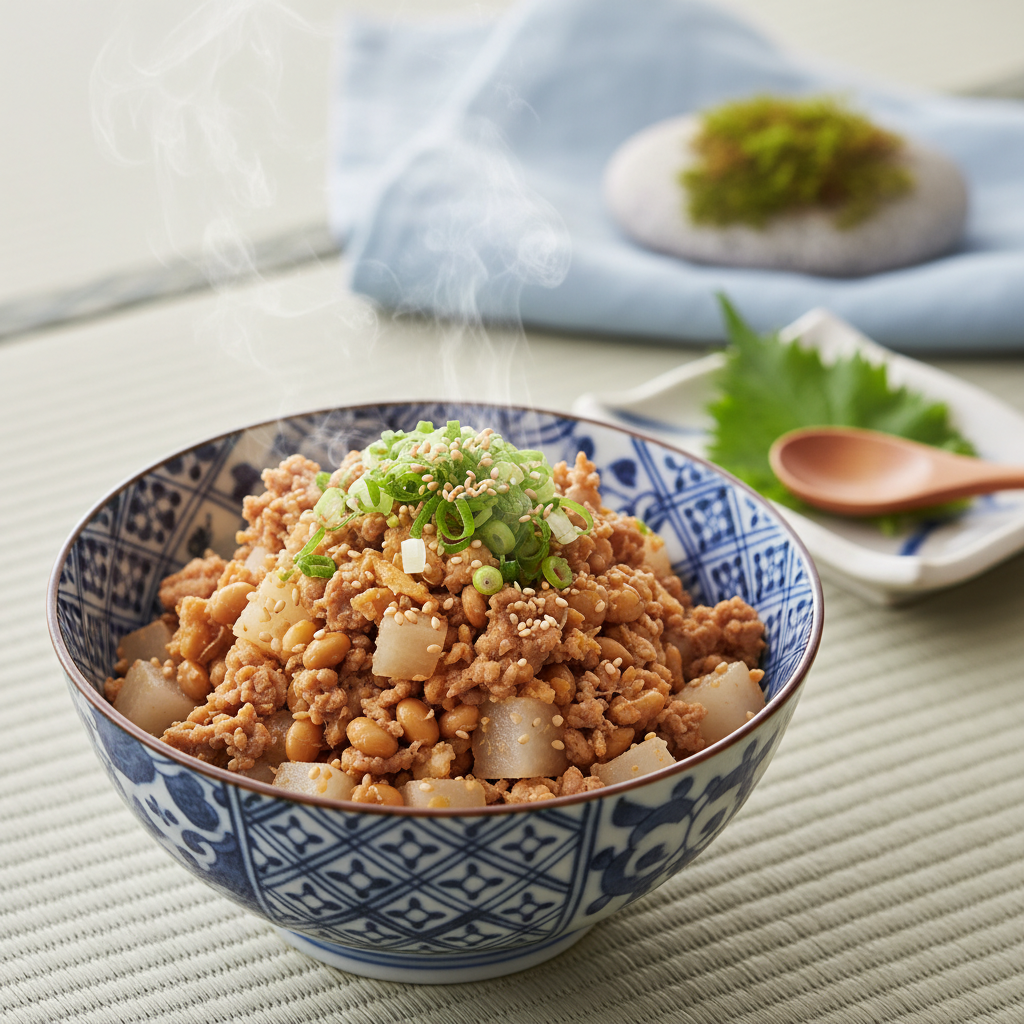
Sobolo natto is a traditional local dish from Mito City, Ibaraki Prefecture, made by combining natto with salt-pickled sliced dried daikon radish and seasoning it with soy sauce and other seasonings. It is also called “shobolo natto,” with “shobolo” deriving from the Ibaraki dialect pronunciation of “sobolo.” In some regions, it is also called “obolo natto.”
The greatest characteristic of this dish is the unique flavor created by combining the stickiness and umami of natto with the crispy texture and subtle sweetness of the sliced dried daikon radish. The taste differs completely from natto alone, and it is reputed to be easy to eat even for those who dislike natto.
It has been selected in the Ministry of Agriculture, Forestry and Fisheries’ “One Hundred Local Dishes of Rural Villages,” and is known nationwide as a representative food culture of Ibaraki Prefecture. Many natto manufacturers in Mito City have commercialized it, and it is popular as a souvenir.
The Relationship Between Mito City, Ibaraki Prefecture and Sobolo Natto
The Deep Connection Between Mito and Natto
Mito City is famous nationwide as the “Natto Town.” There is a natto monument in front of Mito Station, and numerous natto specialty shops and long-established manufacturers line the city streets. The local dish that holds a central position in this natto culture is sobolo natto.
The reason why natto production has been thriving since the Mito Domain era lies in climate conditions and the suitability for soybean cultivation. The Mito region has temperature and humidity environments suitable for natto bacteria activity, and is blessed with the cultivation of high-quality small-grain soybeans.
Main Transmission Areas
Sobolo natto has been transmitted mainly in the northern Ibaraki Prefecture region centered on Mito City. Particularly in the old families and farms in Mito City, each household has its own unique seasoning and manufacturing methods passed down through generations, which are received as the taste of home.
Currently, it has spread beyond Mito City throughout all of Ibaraki Prefecture and is recognized as a representative local dish of the prefecture. It is sold daily in supermarkets throughout the prefecture and has become a familiar food to Ibaraki residents.
History, Origins, and Related Events
The Background of Its Birth in the Edo Period
Sobolo natto was born during the Edo period. At that time, in the Mito Domain, the cultivation of early-maturing varieties of small-grain soybeans that could be harvested before the typhoon season was encouraged. This was an effort to avoid damage to crops from typhoons.
Natto production became popular as a way to deliciously eat the small soybeans harvested early. There are records showing that during the time of Tokugawa Mitsukuni, the domain lord of Mito (Mito Komon), natto was already established on the common people’s dining tables.
The Innovation of Preserved Food
The greatest reason sobolo natto was created was to improve shelf life. There was a custom of distributing natto made from soybeans harvested in autumn to neighbors and temples, but it was necessary to preserve any leftover natto for long periods.
This led to the development of a method of combining it with sliced dried daikon radish and pickling it in salt and soy sauce. Sliced dried daikon radish itself is a preserved food, and by mixing it with natto, the storage period of natto could be greatly extended. Additionally, the texture of the sliced dried daikon radish added substance, completing it as a full-fledged side dish.
Connection to Traditional Events
In the Mito region, there was a custom of making natto in cold winter weather and creating sobolo natto. Particularly during the period from late December through New Year, each household would make sobolo natto and keep it on hand as a preserved food.
Even today, events and festivals related to natto are held in Mito City, where sobolo natto tastings and sales are conducted. As an effort to pass on regional food culture to the next generation, it has also been incorporated into school lunches.
Main Ingredients Used and Their Characteristics
Basic Ingredients
The main ingredients for sobolo natto are very simple:
Natto: Mito’s specialty small-grain natto is traditionally used. Small soybeans are characterized by their small size and good compatibility with sliced dried daikon radish. While it can be made with large-grain natto, small-grain natto has superior texture balance.
Sliced Dried Daikon Radish (Split Dried Daikon Radish): Sun-dried sliced dried daikon radish is used. Sliced dried daikon radish made from Ibaraki Prefecture daikon is ideal. It is soaked in water to reconstitute from its dried state, then salt-pickled and used.
Seasonings: Soy sauce forms the base, with sake, mirin, and sugar used for seasoning. The proportions vary by household and manufacturer, and each has its own “secret taste.”
Tips for Selecting Ingredients
How to Choose Natto: Select fresh small-grain natto. Avoid natto with expiration dates approaching, and choose natto with strong stickiness and good soybean aroma. Using Mito-produced natto will result in a more authentic flavor.
How to Choose Sliced Dried Daikon Radish: Select sliced dried daikon radish that is white in color and uniform in thickness. Using domestic products, particularly those from Ibaraki Prefecture, will help you recreate the local flavor. If it is too thin, the texture will be lost, so select pieces of appropriate thickness.
Ingredients (Serves 4) and Instructions
Ingredients (Serves 4)
- Small-grain natto: 200g (approximately 4 packs)
- Sliced dried daikon radish: 50g (dried state)
- Soy sauce: 3 tablespoons
- Sake: 2 tablespoons
- Mirin: 1 tablespoon
- Sugar: 1 teaspoon
- Salt: 1/2 teaspoon
Basic Instructions
Step 1: Preparing the Sliced Dried Daikon Radish
Soak the sliced dried daikon radish in water. Immerse it in plenty of water for about 30 minutes until softened, then drain in a colander. Cut the sliced dried daikon radish into easy-to-eat lengths (approximately 2-3 cm).
Step 2: Salt Pickling
Sprinkle salt over the cut sliced dried daikon radish and rub it in lightly. Place a weight on top and let it sit for half a day to overnight to release the moisture. This process firms up the texture of the sliced dried daikon radish and increases its shelf life.
Step 3: Preparing the Seasoning Liquid
Mix soy sauce, sake, mirin, and sugar together to create the seasoning liquid. Bring it to a boil once to evaporate the alcohol, then cool it.
Step 4: Combining
Squeeze out the excess moisture from the salt-pickled sliced dried daikon radish. Put the natto in a bowl and mix well to develop its stickiness. Add the sliced dried daikon radish and mix until the entire mixture is uniform.
Step 5: Marinating
Place the mixed natto and sliced dried daikon radish in a storage container and pour the seasoning liquid over it. Make sure the entire mixture is submerged in the seasoning liquid and marinate in the refrigerator overnight or longer. It becomes even more delicious when marinated for 2-3 days.
Tips and Pointers for Making
Moisture Management of Sliced Dried Daikon Radish: It is important to squeeze out the moisture from the sliced dried daikon radish thoroughly. If there is too much moisture, the stickiness of the natto will weaken and shelf life will decrease.
How to Mix Natto: Mix the natto first to bring out its stickiness sufficiently before combining it with the sliced dried daikon radish. If the stickiness is insufficient, the entire mixture will be difficult to hold together.
Marinating Time: Marinate for at least overnight. The longer it sits, the better the flavors blend together and the sliced dried daikon radish absorbs the seasoning liquid, making it more delicious. However, avoid marinating for more than a week as the flavor will deteriorate.
Temperature Control: Always marinate in the refrigerator. At room temperature, fermentation may progress too far or the food may spoil.
Occasions and Seasons for Eating
Position in the Everyday Dining Table
Sobolo natto is eaten daily in Ibaraki Prefecture households. It frequently appears on the dinner table as an accompaniment to breakfast rice or as a side dish for dinner.
It is particularly often made in the cold winter months and has been valued as a preserved food during the cold season. Even today, the custom of making sobolo natto in fall and winter remains in some areas.
Connection to Special Events
Some families prepare it as a dish for New Year’s celebration. Because it keeps well, they make it in late December and keep it on hand to eat during the three days of New Year.
It is also used as a hospitality dish for visitors. By serving it as the local flavor of Ibaraki Prefecture to guests from outside the prefecture, it also serves the role of introducing the region’s food culture.
Ways of Eating and Arrangement Recipes
Basic Ways to Eat
Served over Rice: The simplest and most traditional way to eat it. Top freshly cooked hot rice with sobolo natto, mix well, and enjoy. The texture of the sliced dried daikon radish and the umami of the natto match exquisitely.
As Tea Rice: A popular way to eat it is as a tea rice by pouring hot tea or dashi broth over it. It can be eaten smoothly, making it ideal when you have no appetite or as a late-night snack.
As an Alcoholic Snack: It can also be enjoyed as-is served in a small bowl as an accompaniment to Japanese sake or shochu. The moderate saltiness and umami pair well with alcohol.
Modern Arrangement Methods
Sobolo Natto Pasta: Use it as an ingredient in Japanese-style pasta. Toss cooked pasta with sobolo natto and top with chopped shiso leaves or seaweed for an easy and delicious one-dish meal.
Sobolo Natto Omelet: Mix sobolo natto into beaten eggs and cook to make a nutritious omelet. It can also be used as a side dish for breakfast or lunch boxes.
Sobolo Natto Toast: Top sliced bread with sobolo natto, add cheese, and toast for a new Japanese-Western fusion flavor.
Sobolo Natto Fried Rice: Using it as an ingredient in fried rice allows the umami of the natto to spread throughout the rice, creating a rich-tasting dish.
Salad Topping: Topping a green salad with sobolo natto makes it serve as a dressing substitute and creates a nutritionally balanced dish.
Nutritional Value and Health Benefits
Rich in Nutrients
Sobolo natto is a highly nutritious dish as it combines two healthy foods: natto and sliced dried daikon radish.
Nutrients from Natto: Protein, Vitamin K2, nattokinase, dietary fiber, and isoflavones are abundantly present. Nattokinase in particular is an enzyme with potential blood clot prevention effects.
Nutrients from Sliced Dried Daikon Radish: Dietary fiber, calcium, iron, and B vitamins are abundant. Sun-drying concentrates the nutritional value compared to fresh daikon.
Expected Health Benefits
Improvement of Intestinal Environment: The synergistic effect of natto bacteria and dietary fiber can be expected to improve intestinal environment. It also helps with constipation relief and immune system enhancement.
Bone Health Maintenance: With abundant Vitamin K2 and calcium, it is effective in preventing osteoporosis.
Blood Thinning Effects: Nattokinase has the ability to dissolve blood clots and is expected to improve blood flow.
Conservation and Succession Efforts
Overview of Those Transmitting the Tradition
The manufacturing method of sobolo natto has been passed down through generations by long-established natto manufacturers in Mito City and local farmers. In particular, natto manufacturers with a history of over 100 years continue to follow the traditional methods from their founding.
At the household level as well, each family’s unique seasoning and manufacturing methods are being passed from grandmothers to mothers and from mothers to daughters. This transmission of “mother’s cooking” creates the diversity and richness of sobolo natto.
Commercialization and Modern Efforts
Commercialization Status: Many natto manufacturers in Mito City have commercialized sobolo natto, and it can be purchased at supermarkets and souvenir shops. Products with improved shelf life, such as vacuum-packed and frozen products, have also been developed.
Online shop sales are also thriving, making it possible to order authentic sobolo natto from anywhere in Japan. It is also handled as a popular product at Ibaraki Prefecture antenna shops.
Information Dissemination Using SNS
The tourism associations of Ibaraki Prefecture and Mito City, as well as local natto manufacturers, are using SNS to disseminate the appeal of sobolo natto. On Instagram and Twitter, arrangement recipes and eating method suggestions are regularly posted, and efforts are being made to expand awareness among younger generations.
Introductory videos by cooking YouTubers and influencers are also increasing, contributing to increased nationwide recognition.
Regional Events and Experience Programs
In Mito City, sobolo natto-making experience workshops are held regularly. Tourists and local children participate and can learn traditional manufacturing methods.
In the natto factory tour programs, visitors can observe the manufacturing process of sobolo natto and taste it. These hands-on approaches play a major role in the succession of local cuisine.
Educational Efforts in Schools
In elementary and middle schools throughout Ibaraki Prefecture, sobolo natto is covered as part of lessons on local cuisine. Through serving it in school lunches and having students make it in cooking classes, children are given opportunities to experience regional food culture.
By deepening children’s understanding of local ingredients and local cuisine, cultural transmission to the next generation is being promoted.
Places to Purchase and Recommended Shops
Specialty Stores in Mito City
Tengu Natto: A long-established store founded over 100 years ago and one of Mito’s representative natto manufacturers. Sobolo natto made using traditional methods has been loved by local people for years. It has a store near Mito Station and is popular with tourists.
Daruma Natto: Another natto manufacturer with a long history that manufactures sobolo natto with its own unique seasoning. It is characterized by its sweet taste and is reputed to be easy for children to eat.
Supermarkets
Supermarkets throughout Ibaraki Prefecture carry sobolo natto from multiple manufacturers. The prices are reasonable and it can be purchased on a daily basis. Comparing the flavors of different manufacturers is also recommended.
Online Purchases
Major e-commerce sites such as Rakuten Market, Amazon, and Yahoo! Shopping carry sobolo natto from Mito’s long-established manufacturers. As it is shipped nationwide by cold delivery, people in remote areas can also enjoy the authentic taste.
It is also handled in Ibaraki Prefecture’s official online shop and is recommended as a prefectural product.
Menu Proposals Using Sobolo Natto
Breakfast Menu
- White rice
- Sobolo natto
- Miso soup (tofu and wakame)
- Grilled fish (salmon)
- Pickles
A nutritionally balanced Japanese breakfast centered on sobolo natto. The protein from natto and dietary fiber from sliced dried daikon radish make it ideal for starting the day.
Dinner Menu
- Barley rice
- Sobolo natto
- Pork soup
- Grilled or simmered fish
- Spinach dressed with dashi broth
- Ibaraki Prefecture vegetable salad
A menu incorporating sobolo natto as a side dish that makes use of Ibaraki Prefecture ingredients.
Use in Lunch Boxes
Sobolo natto has little moisture and pairs well with rice, making it an excellent side dish for lunch boxes. If you put a small amount in a container and bring it with you, you can enjoy the taste of Ibaraki at lunchtime.
Sobolo Natto and Ibaraki Prefecture’s Food Culture
Relationships with Other Local Dishes of Ibaraki Prefecture
Ibaraki Prefecture has many local dishes other than sobolo natto. Dishes such as “anglerfish hot pot,” “kenchin soba,” and “shimotukare” are deeply rooted in the region’s climate and history and are numerous.
Sobolo natto is positioned among these local dishes as something eaten particularly frequently in daily life and is deeply embedded in the eating habits of Ibaraki residents.
Connection to Mito Domain Food Culture
As one of the Tokugawa Gosanke (Three Senior Houses of Tokugawa), the Mito Domain developed its own unique culture. Within the domain’s emphasis on simplicity and frugality, a natto culture flourished that utilized the accessible ingredient of soybeans.
Sobolo natto can be said to embody the spirit of the Mito Domain in that it keeps well, has high nutritional value, and is economical.
Contemporary Branding of Ibaraki Prefecture
Ibaraki Prefecture actively engages in branding itself as the “Natto Prefecture,” and sobolo natto is its emblematic symbol. It is introduced at almost every prefectural tourism PR event and product fair and is disseminated nationwide as a dish representative of Ibaraki’s food culture.
Conclusion: The Charm and Future of Sobolo Natto
Sobolo natto is a traditional local dish of Mito City, Ibaraki Prefecture, that has continued since the Edo period and has been loved by regional people throughout its long history. The wisdom of our ancestors in combining two preserved foods—natto and sliced dried daikon radish—is highly valued even in modern times.
With simple ingredients and preparation methods yet possessing deep umami and a unique texture, sobolo natto not only serves as a rice accompaniment but also has the potential to be adapted into a variety of dishes. In today’s era of heightened health consciousness, this dish rich in fermented foods and dietary fiber is sure to receive increasing attention.
While maintaining traditional manufacturing methods, modern efforts such as information dissemination through SNS and the development of new arrangement recipes are also underway. Through these endeavors, sobolo natto will surely be reliably passed on to future generations.
Please try making sobolo natto at home—it can be made easily. You can enjoy the traditional flavor filled with Ibaraki’s rich food culture and the wisdom of our ancestors at your own dining table.