Complete Guide to Shimotukare | History, Preparation Method, and Cultural Background of Tochigi Prefecture’s Signature Local Dish
What is Shimotukare?
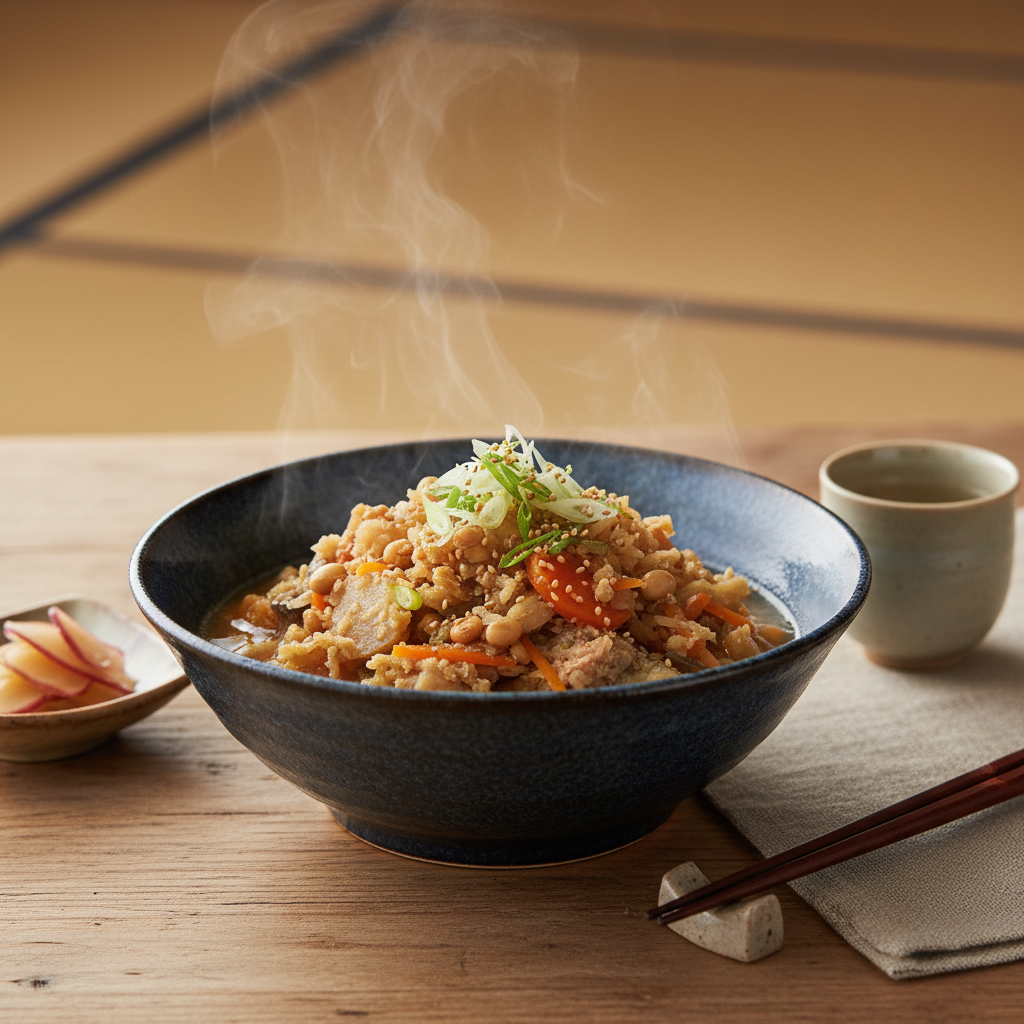
Shimotukare is a traditional local dish representative of Tochigi Prefecture. It is a dish made by simmering salmon head, daikon radish, carrot, soybeans, fried tofu, sake lees, and other ingredients, and is known as a ceremonial food primarily prepared on Hatsuuma (the first Day of the Horse) in February and offered to Inari shrines along with red rice.
This dish is enjoyed throughout Tochigi Prefecture and is also distributed across a wide region including the western part of Ibaraki Prefecture, Gunma Prefecture, the eastern part of Saitama Prefecture, northern Chiba Prefecture, southern Fukushima Prefecture’s Oku-Aizu area, and even the Tajima region of Hyogo Prefecture. In particular, in Tochigi Prefecture, it is recognized as a representative local dish of the prefecture and has become a deeply rooted food culture, even appearing in school lunches.
Origin of the Name Shimotukare
There are several theories about the etymology of the name shimotukare. The most prominent theory is that it derives from “Shimotsuké no Kuni” (Shimotsuké Province), the former provincial name of Tochigi Prefecture. “Shimotsuké” is said to have been corrupted into “shimotukare.”
Another theory suggests the name derives from a preparation method of “shaving the bottom (shimo wo karé).” The process of coarsely grating daikon and carrot using a special grater called an oni-oroshi (demon grater) is interpreted as the origin of this name.
In different regions, various pronunciations exist such as “sumitsukare,” “shimitsukare,” and “shimotukari,” with each area preserving its own unique pronunciation.
History and Origins of Shimotukare
Origins and Ancient Traditions
The origins of shimotukare are ancient, with some theories tracing it back to the Heian period. It developed in rural society as a valuable source of nutrition during winter and as an offering to express gratitude to the gods.
References to shimotukare appear in documents from the Edo period, revealing that it was widely enjoyed among the common people at that time. Farm families made large quantities and had the custom of distributing them to neighbors and relatives. A folk belief that remains today states: “If you eat shimotukare from seven different households, you will not fall ill.”
This folk belief is said to represent the wisdom of ancestors, as eating shimotukare from multiple households would provide nutritional balance through various ingredients and cooking methods.
Deep Connection with Hatsuuma
Shimotukare is closely tied to the Hatsuuma ceremony. Hatsuuma refers to the first Day of the Horse in February and is designated as the festival day of Inari shrines. This day is considered the day when the Great God Inari descended, and it is an important ceremony to pray for abundant harvests, prosperous business, and household safety.
In Tochigi Prefecture, shimotukare is prepared around the time of Hatsuuma in the lunar calendar and placed in a container woven from straw (called waradutso or Tsuttokko) along with red rice to be offered at Inari shrines. In the past, making shimotukare outside this period was considered taboo and strictly observed.
In modern times, it is sometimes made year-round, but in households that value tradition, the practice of making it around the time of Hatsuuma continues.
Wisdom of Using Leftover Materials
Shimotukare embodies the spirit of “waste not, want not.” The main ingredients are “leftovers” such as:
- Salted salmon heads used in New Year’s dishes (parts normally discarded)
- Roasted soybeans left over from Setsubun bean-scattering ceremonies
- Daikon and carrots preserved during winter
- Sake lees produced during sake brewing
The wisdom of ancestors is evident in making maximum use of these ingredients without waste, creating a nutritious dish. In particular, salmon heads, which are often discarded, are rich in collagen and calcium, and when simmered for long periods, their umami dissolves into the broth.
Ingredients and Nutritional Value of Shimotukare
Basic Ingredients (Serves 5-6 people)
The basic ingredients for shimotukare are as follows:
- Salted salmon head: 1 head (approximately 200-300g)
- Daikon radish: 1 radish (approximately 1kg)
- Carrot: 1-2 carrots (approximately 300g)
- Roasted soybeans: 1 cup (approximately 150g)
- Fried tofu: 2-3 sheets
- Sake lees: 200-300g
- Water: As needed
- Seasonings: Soy sauce, salt, sugar, etc. (varies by household)
The proportions of ingredients vary greatly by household and region, with the saying “there are as many flavors as there are hundred households.”
Regional Differences in Ingredients
Ingredients vary by region within Tochigi Prefecture:
Northern region: Tends to use more salmon and more sake lees.
Central region: Has a higher ratio of vegetables and relatively lighter seasoning preference.
Southern region: Many households use more fried tofu and create richer flavors.
Additionally, some regions use herring instead of salmon, or add konnyaku and burdock root. In recent years, as salmon heads become harder to obtain, more households use salmon fillets.
Nutritional Value and Health Benefits
Shimotukare is nutritionally well-balanced:
Protein: Obtain high-quality protein from salmon and soybeans.
Vitamins: Daikon and carrots provide abundant vitamins A, C, and dietary fiber.
Calcium: Calcium dissolved from salmon bones is abundant.
Fermented foods: Yeast and lactic acid bacteria in sake lees improve intestinal environment.
DHA and EPA: Omega-3 fatty acids in salmon support cardiovascular health.
It has been valued as an ideal dish for winter nutrition supplementation and has been cherished for its effect of warming the body during the cold season.
How to Make Shimotukare
Traditional Cooking Method
The traditional method of preparing shimotukare is as follows:
Preparation Process
- Salmon head preprocessing: Rinse the salted salmon head thoroughly with water and remove the gills. Cut into large pieces and blanch in hot water to remove any fishy smell.
- Vegetable preparation: Grate daikon and carrot using an oni-oroshi (demon grater), a coarse grater. If an oni-oroshi is unavailable, grate using a regular grater on the coarser side or chop finely.
- Soybean preparation: Use the roasted soybeans from Setsubun as is. If hard, soak in water to soften.
- Fried tofu preparation: Pour hot water over fried tofu to remove excess oil, then cut into thin strips.
Cooking Process
- Simmer the salmon: Place the salmon head and water in a large pot and simmer gently over low heat for 1-2 hours. It is important to cook carefully until the bones release their umami.
- Add vegetables: Add the grated daikon and carrot and simmer for approximately 30 minutes more.
- Add soybeans and fried tofu: Add roasted soybeans and fried tofu and simmer until everything blends well.
- Dissolve sake lees: Dissolve sake lees in a small amount of the cooking broth before adding it to the pot and mix well.
- Season: Adjust the taste with soy sauce, salt, and sugar. Some households finish with only the flavor of sake lees without seasoning.
- Finishing: Simmer over low heat for an additional 30 minutes to 1 hour until the entire mixture becomes thick and glossy—done.
Importance of the Oni-Oroshi
The oni-oroshi is an indispensable traditional cooking tool for making shimotukare. It is a coarse-grating grater made of bamboo or wood that differs from ordinary graters in that it coarsely shaves vegetables.
This coarse texture is characteristic of shimotukare, and the remaining vegetable fibers create a unique bite and mouthfeel. Additionally, coarse grating moderately damages vegetable cell walls, which is said to improve nutrient absorption.
In modern times, few households possess an oni-oroshi, but it can still be purchased at roadside stations and local specialty shops throughout Tochigi Prefecture.
Modern Arranged Recipes
While based on traditional preparation methods, arrangements suited to modern lifestyles are also spreading:
Time-saving version: Use a pressure cooker to shorten cooking time. Salmon head softens in approximately 30 minutes.
Western-style arrangement: Replace sake lees with white wine or cream for Western seasoning.
Healthy version: Use salmon fillet instead of head and reduce fried tofu to cut calories.
Soup style: Increase water content to make a soup and use as a sauce for pasta or risotto.
How to Eat Shimotukare and Ways to Enjoy It
Traditional Ways of Eating
Shimotukare can be enjoyed hot or chilled. Traditional ways of eating include:
Eaten as is: Enjoy freshly made warm or well-chilled.
Side dish with rice: Serve over white rice. The sake lees flavor goes perfectly with rice.
Sake accompaniment: Enjoy as a side dish with Japanese sake. It pairs particularly well with local Tochigi sake.
As soup: Some households eat it as a soup by adding broth.
Storage Methods and Shelf Life
Shimotukare is a highly preservable dish:
Refrigerator storage: Stored in a clean container in the refrigerator, it keeps well for about one week. As time passes, the flavors become more blended and increasingly delicious.
Freezer storage: Can be frozen in small portions. It keeps for 2-3 months.
Reheating: When reheating before eating, warm slowly over low heat to prevent scorching.
Modern Ways of Eating and Arrangements
In recent years, creative dishes using shimotukare have appeared:
Gratin: Shimotukare topped with cheese and baked in the oven.
Croquette: Croquettes made with shimotukare as the filling.
Pizza topping: Bake shimotukare on pizza dough as topping.
Pasta sauce: Dilute shimotukare with cream to make a pasta sauce.
These arrangements are introduced at schools and community events as efforts to familiarize younger generations with shimotukare.
Regional Differences and Characteristics
Regional Differences Within Tochigi Prefecture
Shimotukare has regional characteristics even within Tochigi Prefecture:
Nikko and Nasu region (northern prefecture): Due to the cold climate, there is a tendency to use more sake lees to increase alcohol content and nutritional value. More salmon is typically used.
Utsunomiya and Kanuma region (central prefecture): Well-balanced seasoning with approximately equal proportions of vegetables and salmon. More fried tofu is used in some households.
Oyama and Tochigi region (southern prefecture): Relatively lighter seasoning with a higher proportion of daikon.
Differences with Other Prefectures
Shimotukare is made in regions other than Tochigi, but each has its own characteristics:
Western Ibaraki Prefecture: Called “sumitsukare,” it is nearly the same as Tochigi’s version, though some households omit carrots.
Southern Fukushima Prefecture’s Oku-Aizu: Called “shimitsukare,” herring is sometimes used instead of salmon.
Gunma Prefecture: Made in some areas, but some households season with miso instead of using sake lees.
Eastern Saitama Prefecture: Modern ingredients are more often incorporated, and many versions are modern arrangements.
Hatsuuma Ceremony and Shimotukare
Meaning and History of the Hatsuuma Festival
Hatsuuma is the festival day of Inari shrines and is held nationwide. It is based on a legend that on the first Day of the Horse in February of 711 (Wado 4), the Great God Inari descended on Mount Inari in Kyoto.
The Inari deity is revered as the god of abundant harvests, prosperous business, and household safety, and was particularly important to those engaged in agriculture. On Hatsuuma, festivals are held at Inari shrines throughout the country, drawing many worshippers.
Meaning Embedded in the Waradutso
The “waradutso” container in which shimotukare is placed is made by bundling rice straw. This container itself carries deep meaning:
Sacredness of rice straw: Rice is considered a gift from the gods, and containers made of its straw are considered sacred.
Prayer for abundant harvest: Using the previous year’s straw to pray for that year’s abundant harvest.
Gratitude for nature: Reflecting gratitude through the complete utilization of straw, a gift of nature.
In modern times, fewer people can make waradutso, but traditional skill inheritance activities are still conducted in some regions.
Pairing with Red Rice
Shimotukare is always offered at Inari shrines alongside red rice. This combination also has meaning:
Yin-Yang balance: Shimotukare (yin) and red rice (yang) create a yin-yang balance.
Hare and Ke: Red rice represents celebratory food (hare), while shimotukare represents everyday food (ke).
Nutritional balance: Red rice (carbohydrates) and shimotukare (protein and vegetables) create nutritional balance.
Cultural Significance of Shimotukare
The Folk Belief of “Seven Households’ Shimotukare”
In Tochigi Prefecture, there is a folk belief: “If you eat shimotukare from seven different households, you will not fall ill.” This is not mere superstition but has deep meaning:
Community bonds: Visiting neighboring households and sharing shimotukare strengthens community ties.
Nutritional diversity: Since each household uses different seasonings and ingredients, various nutrients are obtained.
Food safety: Eating food from multiple households allows for risk distribution in case of food poisoning.
Social connection: Preventing elderly isolation and creating a system for the entire community to watch over health.
This practice continues in some regions today and helps maintain community vitality.
Flavor Differences by Household
The saying “there are as many flavors as there are hundred households” for shimotukare speaks to its charm in diversity:
Ingredient proportions: The ratios of salmon, vegetables, soybeans, and sake lees vary greatly by household.
Seasonings: Some use only soy sauce, others only salt, some add sugar, and some use no seasoning.
Texture: The coarseness of the oni-oroshi grater and simmering time change the texture.
Added ingredients: Some households add konnyaku, burdock, shiitake mushrooms, and other unique ingredients.
This diversity reflects each household’s history, preferences, and regional characteristics, with family stories being passed down through shimotukare.
Inheritance Across Generations
Shimotukare is a culture inherited across generations:
From grandmother to mother to daughter: The preparation method has primarily been passed down orally among women.
Family flavor: It remains in memory as “grandmother’s taste,” evoking memories of one’s hometown.
Connection with annual events: By being tied to the seasonal event of Hatsuuma, it naturally becomes part of the year’s calendar and is inherited.
Regional identity: It is an important cultural element that forms Tochigi Prefecture residents’ identity.
Modern Inheritance and Development of Shimotukare
School Lunch Initiatives
Many schools throughout Tochigi Prefecture incorporate shimotukare into their lunches:
Local cuisine education: Nutritionists explain the history and cultural significance of shimotukare to students.
Food education programs: Some schools conduct experiential learning in actually making shimotukare.
Local production and consumption: Using locally produced ingredients contributes to regional economic revitalization.
Taste adjustments: Accommodations are made such as adjusting the amount of sake lees or finely chopping ingredients to make it easier for children to eat.
Through these efforts, shimotukare culture is being inherited by younger generations.
Commercialization and Sales
In recent years, commercialization of shimotukare has progressed:
Retort pouches: Retort packages that can be stored at room temperature enable shipping outside the prefecture.
Frozen products: Freezing technology allows the fresh taste to be preserved long-term.
Roadside stations and specialty shops: Sold at roadside stations and specialty shops throughout Tochigi Prefecture and popular with tourists.
Online sales: Internet sales make it available for purchase nationwide.
Gift products: Gift packaging has been developed as a Tochigi Prefecture specialty.
Through this commercialization, people without time to make it at home and Tochigi Prefecture natives living outside the prefecture can enjoy shimotukare.
Events and Promotion Activities
Events aimed at promoting shimotukare are held throughout Tochigi Prefecture:
Shimotukare contests: Each household brings their special shimotukare to compete on taste.
Shimotukare festivals: Local festivals held around the time of Hatsuuma.
Cooking classes: Cooking classes for younger generations and newcomers to the prefecture.
Social media campaigns: Instagram and Twitter campaigns to post photos of shimotukare.
Recipe contests: Contests for creative dishes using shimotukare.
Through these activities, shimotukare culture is developing in new forms while preserving tradition.
Use as a Tourism Resource
Shimotukare is also gaining attention as a tourism resource for Tochigi Prefecture:
Food culture tourism: Tours visiting Tochigi Prefecture’s local dishes including shimotukare.
Experience programs: Programs allowing tourists to actually experience making shimotukare.
Restaurant offerings: Creative dishes using shimotukare are provided at restaurants throughout Tochigi Prefecture.
Media exposure: Recognition from outside the prefecture has increased through television and magazine coverage.
Preservation Societies and Inheritance Activities
Efforts to preserve shimotukare tradition are conducted in various regions:
Regional preservation societies: Activities to record traditional preparation methods and ceremonial formats and pass them to the next generation.
Recording elderly wisdom: Efforts to listen to and record traditional preparation methods from elderly people through video and documents.
Oni-oroshi making classes: Classes teaching how to make and use traditional cooking tools.
Waradutso weaving experience: Experience sessions teaching how to weave waradutso.
Through these activities, not only the form but also the spirituality and cultural background embedded in shimotukare are being inherited.
Nutritional Value of Shimotukare
Health Effects as a Fermented Food
Shimotukare, which uses sake lees, is also receiving attention for its health benefits as a fermented food:
Intestinal environment improvement: Yeast and lactic acid bacteria in sake lees regulate the intestinal microbiome.
Immune function enhancement: Components in fermented foods support immune function.
Skin beauty effects: Koji acid in sake lees inhibits melanin production.
Blood pressure reduction: Peptides in sake lees are said to have blood pressure-lowering effects.
Winter Nutrition Supplementation
Shimotukare is ideal for supplementing nutrition during winter:
Body warming: The alcohol in sake lees and root vegetables warm the body from within.
Vitamin supplementation: Contains abundant vitamins A, C, and E, which are often lacking in winter.
Protein: Obtain high-quality protein from salmon and soybeans.
Dietary fiber: Abundant dietary fiber from daikon, carrot, and soybeans.
Calcium: Calcium dissolved from salmon bones supports bone health.
Viewing Tochigi Prefecture’s Food Culture Through Shimotukare
Characteristics of Tochigi Prefecture’s Local Cuisine
Tochigi Prefecture has many local dishes besides shimotukare:
Chitake soba: Buckwheat noodles made with chitake (Lactarius deliciosus) mushrooms.
Imo fry: Potatoes skewered and fried, topped with sauce.
Yuba cuisine: A specialty of the Nikko region made from soy milk.
Kanpyo (dried gourd) dishes: Dishes featuring kanpyo, a dried gourd—Tochigi produces the most in Japan.
Common to these dishes is the complete utilization of local ingredients and simple yet highly nutritious cooking methods.
Food Culture Tied to Seasons
Tochigi Prefecture’s food culture is closely connected to seasonal ceremonies:
New Year: Ozoni, traditional New Year’s food
Setsubun: Bean-scattering ceremony, Ehomaki
Hatsuuma: Shimotukare, red rice
Spring: Mountain vegetable dishes, bamboo shoot dishes
Summer: Freshwater fish dishes, summer vegetable dishes
Autumn: New rice, mushroom dishes
Winter: Root vegetable dishes, hot pot dishes
In this way, a food culture has been formed throughout the year where seasonal ingredients and events are intertwined.
Food and Community
As symbolized by shimotukare, Tochigi Prefecture’s food culture is deeply connected to community:
Culture of shared meals: The custom of eating together as a family or community remains.
Food exchange: The custom of exchanging homemade dishes with neighbors.
Festival foods: The custom of preparing specific dishes for community events.
Intergenerational exchange: Interaction across generations through food.
These cultures play an important role in maintaining community ties, which tend to weaken in modern society.
Conclusion: Values That Shimotukare Conveys
Shimotukare is not merely a local dish. This dish embodies the wisdom of ancestors, a spirit of gratitude, community bonds, respect for seasons, and a sustainable way of living.
The spirit of “waste not, want not” in using leftovers, the culture of “osusowake” (sharing with neighbors), the faith in expressing gratitude to the gods, and above all, the joy of sharing meals with family and community. All of this is embedded in this single dish called shimotukare.
In modern society, efficiency and convenience are prioritized, and such traditional food cultures are being lost. However, in Tochigi Prefecture, the inheritance and development of shimotukare culture are being pursued in various forms including school education, commercialization, and event hosting.
Eating shimotukare is tasting the history and culture of Tochigi Prefecture. It is also rediscovering a sustainable and spiritually enriching way of living. Be sure to visit Tochigi Prefecture around Hatsuuma and taste authentic shimotukare. By preparing it at home, you can experience the depth of this traditional dish.
Shimotukare, a local dish of which Tochigi Prefecture is proud. In its simple flavor, the essence of Japan’s food culture is condensed.