Morioka Reimen: A Complete Explanation of the History and Charm of Iwate Prefecture’s Signature Local Cuisine
“Morioka Reimen,” the signature local dish of Morioka City in Iwate Prefecture, has now established itself as a well-known delicacy enjoyed throughout Japan. Counted as one of the “Three Great Morioka Noodles” alongside wanko soba and jajamen, this noodle dish evolved uniquely in Morioka based on traditional cold noodles from the Korean Peninsula.
In this article, we will comprehensively present the charm of this local dish representing Iwate Prefecture, from the birth story of Morioka reimen to the characteristics of its preparation methods and information about recommended restaurants. Let us thoroughly explore the authentic taste that continues to be loved by locals.
The History of Morioka Reimen: From the Korean Peninsula to Morioka
The Background of Morioka Reimen’s Birth
The history of Morioka reimen dates back to the 1950s. It is said to have begun when Teruhito Aoki, originally from North Korea, repeatedly experimented to recreate the flavors of his homeland in Japan. Aoki incorporated elements from both Hamhung reimen and Pyongyang reimen while adding his own unique arrangements to suit Japanese palates.
Initially recognized as Korean cuisine, these cold noodles gradually took root in Morioka and came to be loved as soul food by locals. From the post-war period of chaos through the period of high economic growth, they brought a fresh breeze to Morioka’s food culture.
Shokudoen: The Pioneering Restaurant of Morioka Reimen
Known as the birthplace of Morioka reimen, “Shokudoen” was opened by Teruhito Aoki in 1954. Following the name used during initial development, it still uses the name “Pyongyang Reimen.” This restaurant represents the origins of Morioka reimen and could be said to have established the foundation for the city’s cold noodle culture.
At Shokudoen, noodles are made by hand and kimchi is homemade, maintaining thorough commitment to quality. The level of spiciness is offered in three stages—regular, spicy, and extra spicy—plus separate spicy seasoning, allowing customers to enjoy it according to their preferences. Nearly 70 years after its opening, it continues to operate as a popular restaurant visited by many locals and tourists.
Morioka Reimen’s Establishment as a Local Specialty
There were various hardships before Morioka reimen became widely recognized as an Iwate Prefecture local specialty. Initially, it carried a strong image as “Korean cuisine” and was unfamiliar to ordinary Japanese people. However, as it began being served as a standard menu item in yakiniku restaurants, it gradually gained acceptance among the general public.
From the 1980s through the 1990s, the number of restaurants serving reimen in Morioka increased, and each competed with their own preparation methods and soup flavors. This competition led to quality improvements in Morioka reimen overall, eventually achieving nationwide recognition.
Today, as one of the “Three Great Morioka Noodles,” it is counted alongside wanko soba and jajamen as a signature local dish representing Iwate Prefecture. Whether during hot summer months or cold winters, Morioka reimen enjoyed in a warm restaurant offers an exceptional flavor experience and continues to be loved year-round.
Characteristics of Morioka Reimen: Differences from Other Cold Noodles
The Unique Chewiness Produced by Noodle Preparation Methods
The greatest characteristic of Morioka reimen lies in its uniquely strong chewiness. While typical Korean cold noodles are made primarily from buckwheat flour or starch, Morioka reimen is made by blending wheat flour with potato starch (katakuriko). This unique ratio creates a chewy, elastic texture unlike any other.
In the noodle-making process, the dough is thoroughly kneaded to strengthen gluten bonding. Furthermore, after boiling the noodles and cooling them in water, a dual texture is achieved—a smooth exterior and a chewy interior. These noodles are thicker than typical Chinese noodles, and the wheat flavor expands in the mouth as one chews.
Among locals, it is sometimes described as “noodles so chewy that chopsticks cannot cut them,” and first-time diners are often amazed by their strong elasticity. This unique texture is one reason why Morioka reimen has become popular nationwide.
The Deep Umami and Balanced Acidity of Beef Bone Broth
Another characteristic of Morioka reimen is its beef bone-based broth. Created by simmering beef bones for an extended period in a steam kettle, the broth is characterized by deep umami alongside a light, clean taste. Some restaurants add chicken, and each shop has developed its own unique broth.
The broth is characterized by its acidity, primarily from vinegar, with an exquisitely balanced interplay between beef bone umami and acidity. This combination of umami, acidity, and appropriate saltiness works in perfect harmony to complement the strong-chewing noodles.
The cold broth provides a refreshing sensation during hot summers and a unique flavor experience when eaten in a warm restaurant during winter. Each restaurant’s broth seasoning is a closely guarded secret, created using recipes developed and refined over many years.
The Importance of Kakuteki (Daikon Radish Kimchi)
An indispensable topping for Morioka reimen is kakuteki, a daikon radish kimchi. Made from daikon grown in the foothills of Mount Iwate and carefully pickled with Korean chili peppers, kakuteki combines spiciness with concentrated depth and umami.
Most reputable restaurants prepare their kakuteki homemade, and spice levels and flavors vary by establishment. The spicy components of kakuteki dissolve into the cold noodle broth, causing the flavor to gradually change as one eats. One first enjoys the light broth flavor, and as eating progresses, the kakuteki’s spiciness and umami add complexity, creating an unforgettable taste that never becomes monotonous.
Among locals, ordering separate spicy seasoning to adjust heat to personal preference is popular. The practice of gradually adding this spicy seasoning while enjoying how the flavor changes is a unique pleasure of Morioka reimen.
Other Toppings and Ingredients
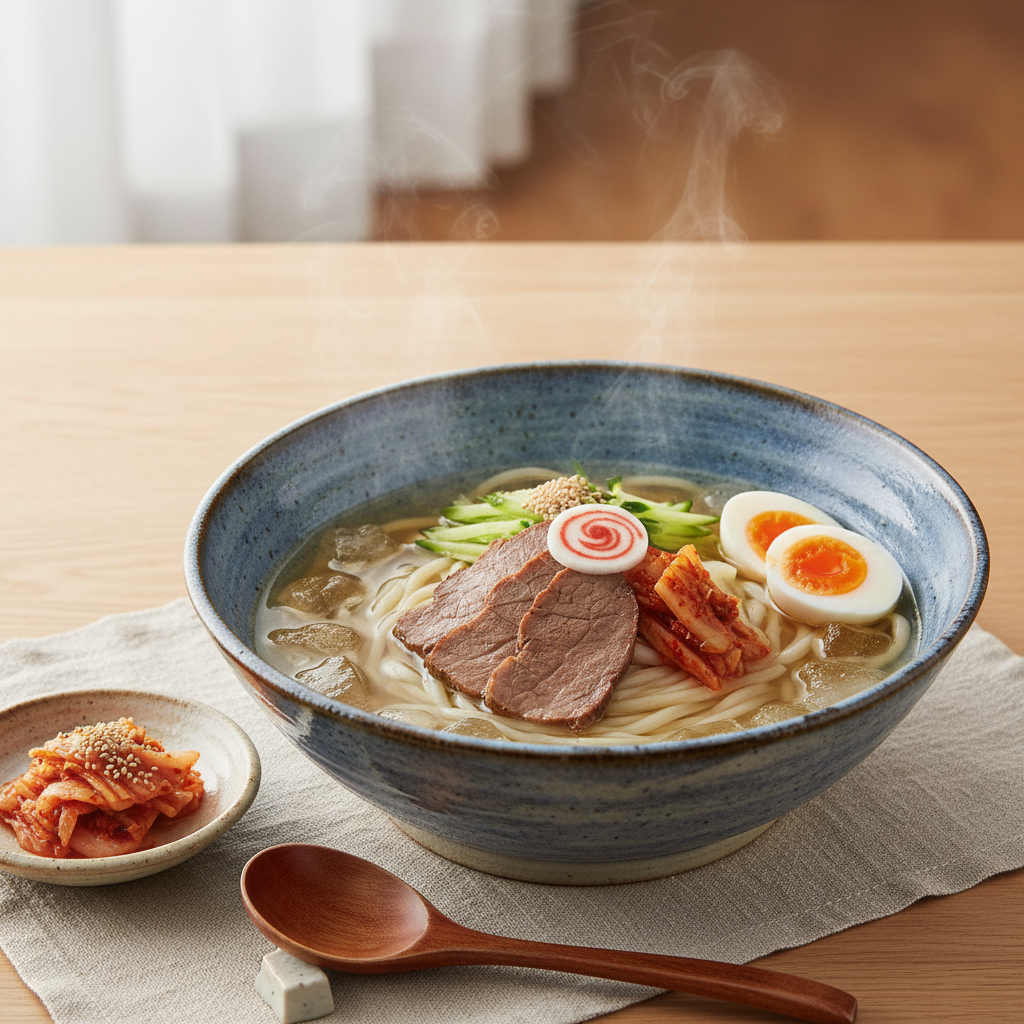
In addition to kakuteki, basic Morioka reimen is topped with half a boiled egg, sliced cucumber, beef chashu, and white scallions or Korean seaweed. Each ingredient plays a role in complementing the noodles and broth.
The crisp texture of cucumber creates a contrast with the chewy noodles, while the soft-boiled egg mellows the acidity of the broth. The beef chashu is important as an ingredient allowing direct appreciation of the beef bone that forms the broth’s base.
Some restaurants add fruit such as pear or apple as toppings, following Korean cold noodle traditions. The sweetness of fruit harmonizes with spiciness and acidity, creating a more complex flavor profile. In this way, Morioka reimen is a dish that allows enjoyment of the harmony created by various ingredients.
Popular Morioka Reimen Restaurants: Fan Favorites Among Locals
Yakiniku & Reimen Hige (Beard)
Receiving overwhelming local support is “Yakiniku & Reimen Hige,” a restaurant in Morioka. This establishment’s reimen is particularly renowned for the strong chewiness of its noodles, described as so elastic that “lifting the noodles with chopsticks lifts the entire bowl.”
The broth, based on beef bones with a unique blend, offers deep umami while maintaining a clean finish. The homemade kakuteki contains deep umami within its spiciness, pairing perfectly with the reimen. As a yakiniku restaurant, many locals enjoy a set of yakiniku and reimen together.
The restaurant is always bustling, with lines forming during lunch and weekends. With good access from Morioka Station, it has become popular with tourists as well.
Pyonpyonsha稲荷町本店 (Inaricho Main Store)
Widely known nationally as a premier Morioka reimen establishment is “Pyonpyonsha Inaricho Main Store.” This restaurant also operates as a noodle factory, serving reimen made from self-manufactured noodles. The noodles are characterized by chewiness and appropriate thickness, blending perfectly with the broth.
The broth, a unique recipe blending beef bone and chicken carcass, offers smoothness alongside deep umami. The beautiful presentation of toppings is visually appealing. The restaurant operates multiple locations throughout Morioka, each providing reimen of consistent quality.
Reimen sets for souvenir gifts are also available, allowing home enjoyment of the authentic taste.
Yakiniku & Reimen Yamato Morioka Branch
“Yakiniku & Reimen Yamato,” a long-standing yakiniku restaurant beloved by locals, features reimen notable for its exquisite balance of acidity and sweetness in the broth. The noodles, made in-house, offer appropriate chewiness and smooth texture.
The kakuteki can be adjusted for spiciness at ordering, allowing those uncomfortable with spice to enjoy it safely. The option to add separate spicy seasoning for personalized heat adjustment is a welcome feature.
Comprehensive set menus of yakiniku and reimen are available, particularly recommended for those wanting to fully enjoy a Morioka evening. Among locals, one hears remarks like “I grew up eating Yamato’s reimen,” reflecting how deeply the restaurant is rooted in the community.
Yamanakaya Morioka Ohdori Branch
“Yamanakaya,” a reimen specialty restaurant located in central Morioka, is characterized by the exceptional clarity of its broth and refined flavor. Through careful beef bone preparation and extended simmering, a clear yet deeply savory broth is achieved.
The noodles, while on the thinner side, maintain solid chewiness with excellent integration with the broth. The beef topping is tender and melts delightfully in the mouth.
The clean restaurant interior, with ample counter seating, welcomes solo diners. Lunch sets pairing reimen with mini bowls offer good value.
Other Notable Establishments
Numerous other reimen restaurants exist throughout Morioka. Besides Shokudoen, establishments like “Seirokaku” and “Pyongyang-gwan” offer distinctive characteristics.
Each operates with unique manufacturing methods and broth formulations, and comparing them reveals the depth of Morioka reimen. Reimen restaurants near and within Morioka Station building “Fesan” provide convenient access for travelers.
Among locals, many maintain favorite reimen establishments, often discussing their preferences enthusiastically.
How to Enjoy Morioka Reimen: Eating Tips and Ordering Methods
Basic Eating Method
For those trying Morioka reimen for the first time, we present the basic approach. First, taste the newly arrived reimen as is. Confirming the noodles’ chewiness and broth flavor in their natural state is important.
Next, gradually crumble kakuteki into the broth. As kakuteki’s spicy components dissolve, the flavor gradually transforms. Enjoying this transformation is one charm of Morioka reimen.
Since noodles possess such strong chewiness that chopsticks cannot cut them, rather than attempting to bite through forcefully, slurping is recommended. However, if noodles seem excessively long, some establishments provide scissors—feel free to ask staff.
Adjusting Spiciness
Many restaurants allow spiciness level selection at ordering. Typically, three levels are offered—”regular,” “spicy,” and “extra spicy”—with “separate spicy” additional seasoning available for those wanting even more heat.
For first-time diners, beginning with “regular” is recommended. Morioka reimen’s “regular” is often set slightly spicier than typical Korean cold noodles.
Separate spicy seasoning, typically served in a small dish, allows gradual addition at one’s own pace. Initially, add modestly and gradually adjust to preference. Since spiciness can be added but not decreased, cautious adjustment is wise.
Enjoying with Yakiniku
Morioka reimen is commonly served at yakiniku restaurants, with reimen and yakiniku pairing being the standard local style. Eating hot yakiniku followed by cold reimen to refresh the palate—this contrast makes both dishes more delicious.
The reimen’s clean broth washes away yakiniku’s richness, allowing enjoyment without fatigue through meal’s end. Additionally, the interplay between yakiniku sauce and reimen broth may reveal new flavor discoveries.
At most yakiniku establishments, reimen concludes the yakiniku course. Finishing a meal with reimen provides simultaneous satisfaction and refreshment—an ideal dining experience.
Seasonal Enjoyment
Despite the name “cold noodle,” Morioka reimen is enjoyed year-round. Summer provides escape from outdoor heat with cold reimen, while winter offers the unique experience of eating cold reimen in a warm restaurant. This contrast delivers different flavor experiences seasonally.
Summer’s light reimen stimulates appetite, energizing bodies tired by heat. Frosty broth and crisp cucumber make summer’s warmth fade away.
Winter dining in a warm restaurant before eating cold reimen provides a distinctive experience—cold reimen eaten in a warm state tastes different from summer’s version. Among locals, some claim “winter reimen is the true delicacy.”
Morioka Reimen and the Three Great Morioka Noodles: Iwate’s Noodle Culture
Morioka Wanko Soba: Traditional Single-Bite Noodles
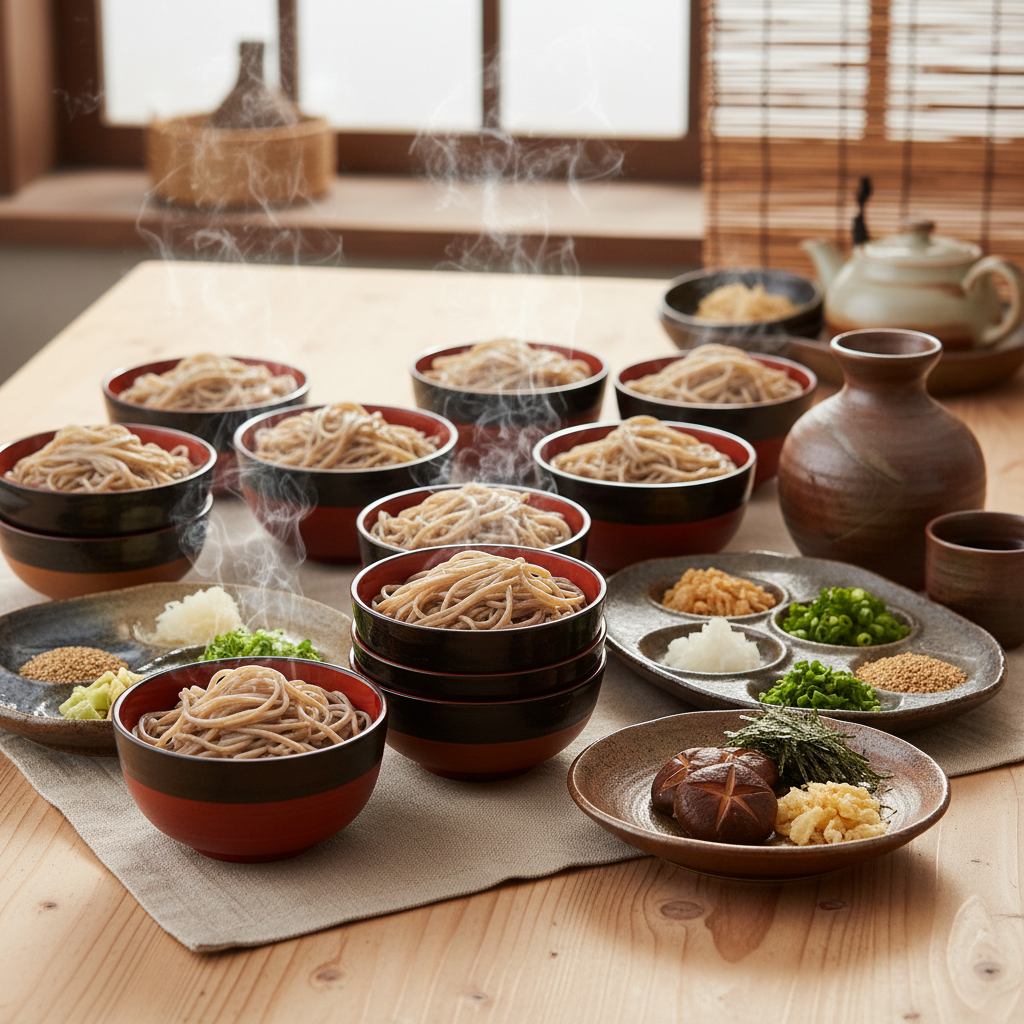
“Morioka Wanko Soba,” one of the three great Morioka noodles, features bite-sized soba bowls progressively served, representing an iconic Iwate dish. “Wanko,” meaning “bowl” in local dialect, characterizes the service style where attendants add soba with calls of “here we go, go ahead,” creating an interactive experience.
Wanko soba originated as entertainment for feudal lords, embodying the spirit of continuous warm noodle hospitality. Today, “wanko soba contests” test participants’ capacity, attracting tourists seeking experiential dining.
Multiple wanko soba specialty restaurants throughout Morioka each prepare unique condiments and accompaniments. Enjoying both wanko soba and reimen reveals the diversity of Morioka’s noodle culture.
Morioka Jajamen: Distinctive Miso Flavor
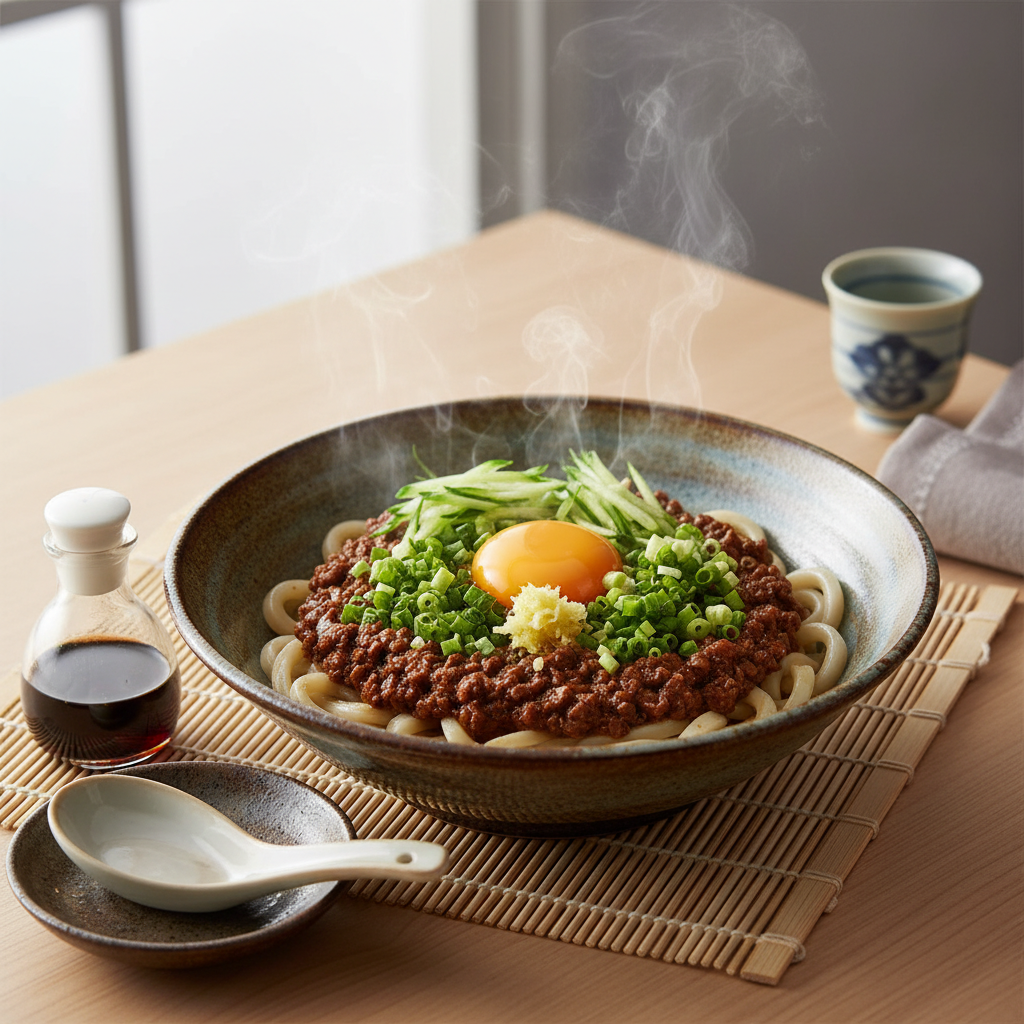
“Morioka Jajamen,” adapted from Chinese zhajiang noodles, represents Morioka’s unique noodle creation. Flat, thick noodles topped with special meat miso, cucumber, and scallion are mixed with optional rayu, vinegar, and grated garlic before eating.
Jajamen’s uniqueness lies in the “chii-tan-tan” experience following the noodles. Remaining meat miso receives a raw egg and broth, creating soup completing the meal. This distinctive conclusion is unique to Morioka jajamen.
More casual and everyday than reimen or wanko soba, jajamen enjoys popular local affection. Its volume and reasonable pricing attract many.
Experiencing the Three Great Noodles Comparison
Visiting Morioka offers the opportunity to taste all three noodle dishes. Each offers distinct characteristics, revealing Morioka’s diverse noodle culture.
The strong chewiness and light flavor of reimen, the traditional hospitality of wanko soba service, the rich meat miso of jajamen—these three dishes each reflect Morioka’s history and culture, deepening understanding of the city through consumption.
Concentrated near Morioka Station and downtown, establishments serving all three or specialty shops for each enable efficient touring. One-day completion of the three-noodle challenge is possible.
Enjoying Morioka Reimen at Home: Mail Orders and Arrangements
Mail Order for Authentic Home Enjoyment
Morioka reimen is currently available nationwide through mail order. Numerous famous establishments sell reimen as product sets, enabling home enjoyment of authentic taste.
Typical mail order sets include fresh or semi-dried noodles, broth, and kakuteki (or kimchi). Some include beef chashu or separate spicy seasoning, closely replicating restaurant quality.
Purchase through individual restaurant online shops or through Rakuten or Amazon. Reviews guide selection of preferred establishments.
Home Arrangement Recipes
Beyond basic preparation, Morioka reimen allows various arrangements. Adding seafood creates more luxurious preparations. Shrimp, squid, and octopus pair well with cold noodle broth, revealing new flavors.
Increased vegetables offer healthier options. Lettuce, water greens, and tomatoes improve nutritional balance and visual appeal.
Adding minimal chicken or Chinese broth to the existing broth enhances umami. Excessive addition risks losing authentic Morioka reimen flavor, requiring careful adjustment.
Storage Methods and Shelf Life
Mail-ordered reimen varies in storage requirements. Fresh noodle types require refrigeration, consumed within days, while semi-dried or dried varieties allow extended room-temperature storage.
Broth typically requires refrigeration, with prompt use after opening recommended. Some offer concentrated broth requiring water dilution.
Kakuteki should be refrigerated after opening and consumed promptly. Homemade kakuteki, stored in clean containers, keeps approximately one week.
A Morioka Reimen Journey: Tourism Information and Access
Access to Morioka City
The most convenient way to reach Morioka in Iwate Prefecture is via the Tohoku Shinkansen. Approximately 2 hours 10 minutes from Tokyo via Hayabusa, approximately 2 hours 30 minutes via Yamabiko. Approximately 40 minutes from Sendai, approximately 1 hour from Shin-Aomori.
By air, Iwate-Hanamaki Airport is the closest option. Airport to Morioka Station takes approximately 45 minutes by bus. Direct service operates from Sapporo, Nagoya, Osaka, and Fukuoka.
By car, utilize the Tohoku Expressway’s Morioka or Morioka-South IC. Approximately 6 hours from Tokyo, approximately 2 hours from Sendai.
Morioka Station Area Reimen Restaurant Map
Multiple reimen restaurants concentrate around Morioka Station within walking distance. A reimen shop exists within Morioka Station building “Fezan,” accessible before or after shinkansen travel.
Historic reimen establishments dot Morioka Station-front street and the main shopping street. These central areas feature tourism spots and shopping facilities alongside reimen.
For efficient restaurant touring, obtain Morioka Tourism Association’s “Morioka Reimen Map” indicating locations, hours, and characteristics of major establishments.
Combining Morioka Reimen with Tourism
A Morioka reimen visit becomes enriched when combined with city sightseeing. Morioka Castle Ruins Park (Iwate Park), renowned as a cherry blossom site, offers beautiful springtime blossoms.
Ishiwarisizakura, a roughly 360-year-old Edohiganzakura cherry tree growing from a giant granite split, holds national natural monument status. Located within Morioka District Court grounds, it attracts spring visitors.
Morioka retains numerous retro Western-style buildings from Meiji through Taisho eras. Iwate Bank Red Brick Hall and Morioka Takuboku and Kenji Youth Hall appeal to architecture enthusiasts.
The Nakatsugawa riverside promenade offers seasonal nature appreciation. Spring cherry tree-lined walkways create tunnel-like passages. Enjoying leisurely walks between reimen restaurant visits is recommended.
Morioka Reimen Festival
Morioka periodically hosts “Morioka Reimen Festival” events where multiple reimen restaurants participate, enabling comparisons. Essential for reimen enthusiasts.
Events feature store reimen and noodle-making demonstrations or historical exhibits. Locals and tourists collectively celebrate Morioka reimen’s appeal.
Check Morioka Tourism Association sites or restaurant information for event dates and details. Festival periods offer opportunities to economically sample multiple restaurants’ reimen.
Conclusion: Savor Morioka Reimen’s Appeal
Morioka reimen, evolving uniquely in Iwate’s Morioka City from traditional Korean Peninsula cold noodles, represents a distinctive local dish. The combination of wheat and potato starch-made chewy noodles, beef bone broth balancing umami and acidity, and homemade kakuteki creates an unforgettable experience.
As one of the three great Morioka noodles, counted alongside wanko soba and jajamen, Morioka reimen has become a nationally recognized Iwate representative dish. Numerous establishments from Shokudoen onward continue providing exceptional bowls through unique methodologies and dedicated craftsmanship.
When visiting Morioka, definitely experience authentic reimen. In legendary restaurants, chew the distinctively chewy noodles, savor the broth’s profound flavor, and enjoy kakuteki’s spiciness. This experience will undoubtedly become an unforgettable memory.
While home mail order offers enjoyment, experiencing freshly prepared reimen in Morioka restaurants surpasses all. Why not journey to Morioka, exploring the city while discovering your favorite reimen restaurant? Taste Iwate Prefecture’s acclaimed local dish, Morioka reimen, directly.