Complete Guide to Wanko Soba | History, How to Eat, and Recommended Restaurants for Iwate Prefecture’s Local Cuisine
Wanko soba, known nationwide as a local specialty dish representing Iwate Prefecture, is a traditional noodle dish where small bowls of bite-sized soba are continuously eaten in succession. This unique style has captivated many tourists. This article comprehensively covers everything from the historical background of wanko soba to the correct way to eat it and recommended famous restaurants, providing information to deepen understanding of Iwate Prefecture’s traditional culture.
What is Wanko Soba | Basic Knowledge of Iwate Prefecture’s Representative Local Cuisine
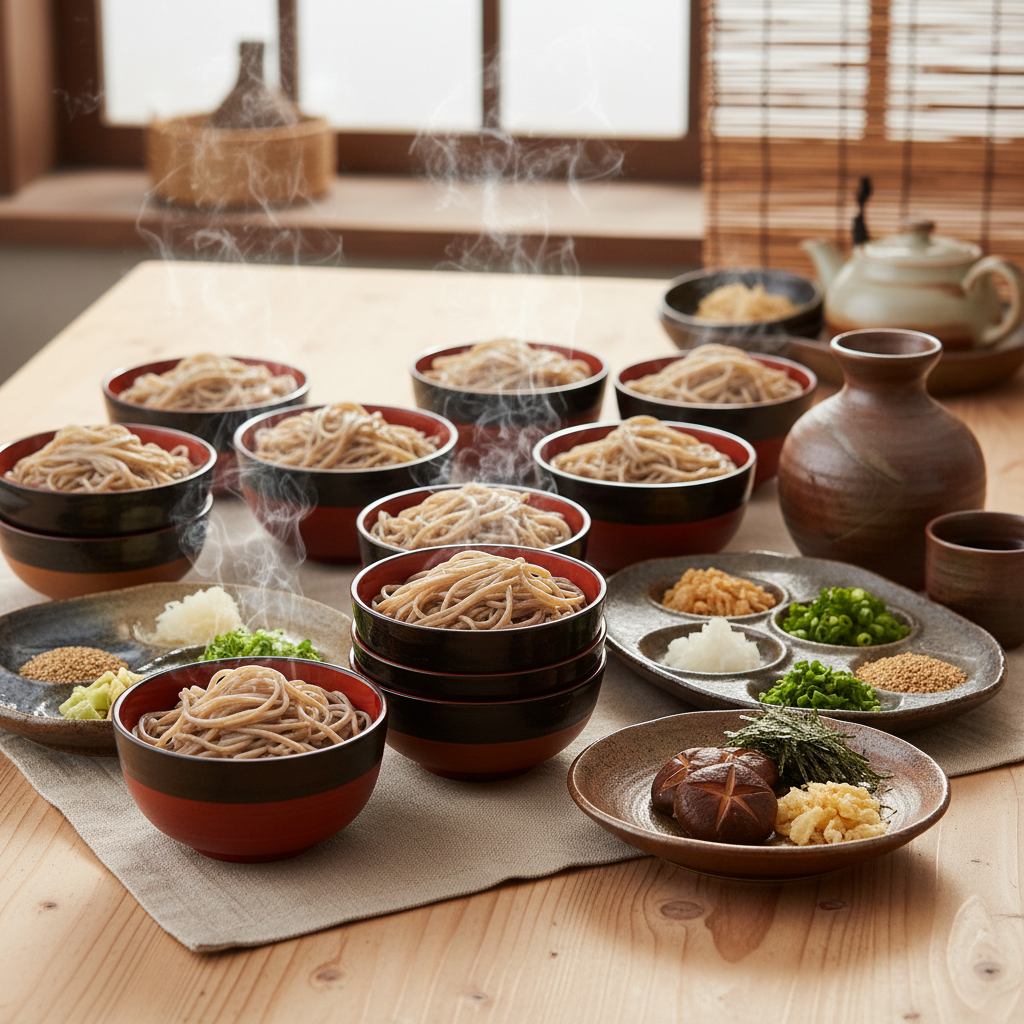
Wanko soba is a traditional local dish passed down through Morioka City and Hanamaki City in Iwate Prefecture. The term “wanko” means “bowl” in Iwate dialect, and the dish got its name because small portions of soba are served in small bowls.
Characteristics of Wanko Soba
Unlike ordinary soba, wanko soba has the following unique characteristics:
- Bite-sized portions: Approximately 15-20g of soba per bowl
- Serving style: As soon as a customer finishes eating, the next bowl of soba is tossed in
- Abundant toppings: Various condiments including green onions, seaweed, wasabi, grated radish, and pickled vegetables are provided
- Competitive element: A culture of competing to see how many bowls one can eat
Generally, 15 bowls of wanko soba are said to be equivalent to one serving of regular soba. Adult men typically eat 40-60 bowls, while women usually eat around 30-40 bowls.
History and Origins of Wanko Soba | A Tradition Continuing from the Edo Period
There are multiple theories about the origins of wanko soba, all deeply connected to Iwate Prefecture’s history.
Morioka Domain Lord Theory
One of the most credible theories involves an anecdote about an Edo period domain lord of Morioka. It is said that when the lord of the Morioka Nanbu clan toured his domain, he took a liking to soba offered by farmers and repeatedly asked for more. At the time, there were no facilities to cook large quantities of soba at once, so the practice of cooking small portions and serving them one after another began, which became the prototype of the current style.
Hanamaki Banquet Culture Theory
In the Hanamaki area, there was a custom of serving soba to large groups of people during work breaks or celebration gatherings by continuously providing small bowlfuls. This was a practical way to efficiently serve hot soba to many people.
Modern Development
From the Meiji period through the early Showa period, restaurants in Morioka and Hanamaki commercialized this traditional serving method and added entertainment elements for tourists, establishing the current wanko soba style. Particularly during the post-war high economic growth period, it became widely known nationwide as a representative tourism resource of Iwate Prefecture.
Correct Way to Eat Wanko Soba and Etiquette | A Guide for Beginners to Feel Comfortable
Here we introduce the basic way to eat wanko soba and proper etiquette for those experiencing it for the first time.
Basic Process
- Hold the bowl: Hold the bowl in your right hand and the lid in your left hand
- Eat the soba: Eat the soba in one bite
- Offer the bowl: Present the empty bowl to the server
- Next soba is added: With shouts like “Hai, janjan!” or “Hai, dondon!”, the next bowl of soba is placed in
- Repeat: Continue this process
Signal When You Want to Stop
When you want to stop eating, cover the bowl with its lid. The server will not add soba to a covered bowl, so time it carefully and place the lid on quickly. If you hesitate too long to put the lid on, the next soba may be tossed in.
How to Enjoy the Toppings
One of the charms of wanko soba is the abundant variety of toppings. The following toppings are typically provided:
- Green onions: Characterized by crisp texture and aroma
- Seaweed: A standard topping that adds flavor
- Wasabi: Adds spice as an accent
- Grated radish: Changes the taste to something refreshing
- Yam slime: Offers a smooth texture
- Tuna sashimi: A luxurious taste
- Nameko mushroom: Provides a slippery texture
- Pickled vegetables: Perfect for palate cleansing
By changing the toppings every few bowls, you can enjoy many bowls without getting bored.
Pacing Tips
For first-timers, it is important not to rush from the start. Keep the following points in mind:
- First 10 bowls: Eat slowly while savoring the taste
- Middle course: Develop a rhythm and maintain a steady pace
- Later stages: Change toppings to refresh your mood
- Hydration: Take appropriate water intake with soba broth or tea
Morioka and Hanamaki | The Two Holy Lands of Wanko Soba and Their Differences
Wanko soba in Iwate Prefecture is mainly served in Morioka City and Hanamaki City, but each has its own characteristics.
Morioka’s Wanko Soba
Morioka City is the prefectural capital of Iwate, and many wanko soba restaurants catering to tourists are concentrated there. Morioka’s wanko soba features:
- High entertainment value: Server shouts and atmosphere creation are refined
- Good accessibility: Many restaurants are concentrated around Morioka Station
- Combination with tourism: Abundant tourist spots including Morioka Castle Ruins Park and Iwate Bank Red Brick Building
- Slightly higher average prices: Tendency toward tourist area pricing
Hanamaki’s Wanko Soba
Hanamaki City is known as the hometown of Kenji Miyazawa and has a wanko soba culture more rooted in the local community:
- Traditional style: Maintains old-fashioned, simple atmosphere
- Many local customers: Loved by both tourists and local people
- Combination with hot springs: Can be enjoyed with Hanamaki Hot Spring area
- Relatively reasonable prices: Some restaurants offer local pricing
Both regions have their own unique charms, and if time permits, it is recommended to visit both for comparison.
Introduction to Famous Wanko Soba Restaurants | Recommended Iwate Prefecture Establishments
There are many wanko soba restaurants throughout Iwate Prefecture, but we introduce particularly highly-rated famous establishments.
Famous Restaurants in the Morioka Area
Azumaya
A long-established representative of Morioka wanko soba, founded in 1908. Traditional wanko soba can be enjoyed in a prestigious atmosphere. There are a main branch, a station-front branch, and a branch inside Morioka Castle Ruins Park, making it easy for tourists to access. The restaurant is particular about soba quality and uses Iwate Prefecture-produced soba flour.
Hatsukoma
A famous establishment founded in the early Showa period, beloved by local people. The serving rhythm is good and has a reputation for creating an atmosphere where even beginners can enjoy themselves. Characterized by a wide variety of toppings and various flavors to enjoy.
Naoriaan
Located near Morioka Station with good accessibility. Features a relatively casual atmosphere where even solo diners can enter comfortably. The soba has good fragrance and the broth flavor is highly regarded.
Famous Restaurants in the Hanamaki Area
Kajiya
A representative wanko soba restaurant of Hanamaki, long loved by local people. Traditional wanko soba can be savored in a simple and warm atmosphere. Located conveniently accessible from the Hanamaki Hot Spring area.
Yabuya
An old-established soba restaurant in Hanamaki city center. In addition to wanko soba, regular soba menu items are abundant, with many local customers. Particular care is taken with soba flour grinding, offering fragrant soba.
Reservations and Price Guide
Many wanko soba restaurants operate by reservation, and advance booking is recommended especially during peak tourism seasons (April-November) and weekends. Prices vary by restaurant, but the following are typical guidelines:
- All-you-can-eat course: Approximately 3,000-4,500 yen
- Time limit: No time limit at most restaurants, or 60-90 minutes
- Elementary school children: Approximately half of adult price
- Young children: Free or low-cost
Nutrition and Health Benefits of Wanko Soba | The Power of Soba
Soba, the star ingredient of wanko soba, is known as a highly nutritious food.
Main Nutritional Components of Soba
- Rutin: Expected to strengthen blood vessels and lower blood pressure
- Dietary fiber: Promotes intestinal health and helps relieve constipation
- B vitamins: Promotes energy metabolism and helps with fatigue recovery
- Protein: Plant-based protein with a good balance of essential amino acids
- Minerals: Rich in magnesium, iron, zinc, and other minerals
Health-Related Advantages of Wanko Soba Style
The wanko soba eating style of consuming small portions in succession has the advantage of being gentle on digestion. Compared to eating a large amount at once, eating little by little provides:
- Smooth digestion and absorption: Reduces stomach and intestinal stress
- Adjusted feeling of fullness: Prevents overeating by allowing eating at one’s own pace
- Varied nutritional intake: Diverse toppings provide various nutrients
However, attention should be paid to the salt content in the broth. By not drinking all the broth and leaving some remaining, sodium intake can be reduced.
Best Seasons for Wanko Soba Experience and Travel Plans
Knowing the charms of each season makes planning a trip to Iwate Prefecture to enjoy wanko soba easier.
Spring (April-June)
A beautiful season for cherry blossoms at Morioka Castle Ruins Park. Tourism combining wanko soba with flower viewing is popular. Golden Week is crowded, so early reservations are essential.
Summer (July-August)
Peak season for summer festivals like the Morioka Sansa Dance. Cold soba is easy to eat even in hot weather, attracting many tourists. Combination with Hanamaki Hot Spring area is also recommended.
Autumn (September-November)
The season for new soba with the best soba flavor. Autumn leaf viewing combined with tourism is also enjoyable. October to November is especially a perfect tourism season with beautiful natural scenery in Iwate Prefecture.
Winter (December-March)
A season when there are relatively few tourists and meals can be enjoyed leisurely. Experiencing wanko soba in a snowy landscape also has its own charm. Some restaurants offer winter-limited menus.
Sample Recommended Travel Plans
Morioka One-Day Course
- Morning: Morioka Castle Ruins Park tour
- Lunch: Wanko soba experience
- Afternoon: Iwate Bank Red Brick Building, Morioka History and Culture Museum visits
- Evening: Zaimokucho shopping district tour
Hanamaki Hot Spring Course
- Morning: Kenji Miyazawa Memorial Museum and Fairy Tale Village tour
- Lunch: Wanko soba experience
- Afternoon: Relax at Hanamaki Hot Spring area
- Accommodation: Hot spring inn
Wanko Soba Records and Competitions | History of Challenges
Wanko soba has a competitive element of “how many bowls can you eat,” and various records and competitions exist.
All-Japan Wanko Soba Championship
Held annually in Iwate Prefecture, this competition challenges participants to eat as many wanko soba bowls as possible within a time limit. Participants gather from across Japan in heated competition.
- Time limit: 5 minutes or 15 minutes (varies by competition)
- Records: Top competitors eat over 200 bowls in 5 minutes
- Eligibility: Multiple categories including men’s and women’s divisions
Celebrity Records
Many celebrities have challenged wanko soba, and their records sometimes become hot topics. Generally:
- Over 100 bowls: A respectable accomplishment
- Over 150 bowls: A remarkable record
- Over 200 bowls: Professional level
However, the important thing is enjoyment rather than records. Eating at your own pace without pushing yourself is recommended.
Other Iwate Prefecture Local Dishes Besides Wanko Soba
Here we introduce other Iwate Prefecture local dishes to enjoy along with wanko soba.
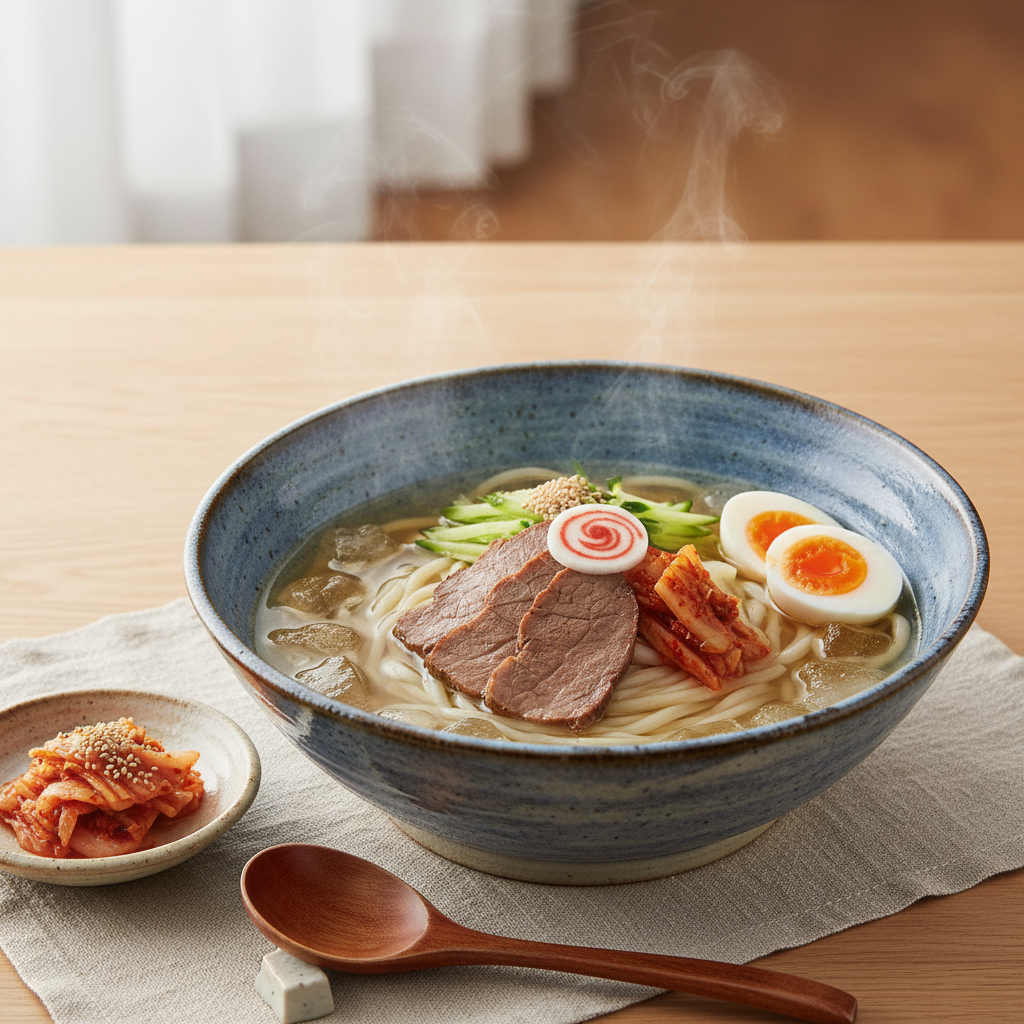
Morioka Cold Noodles
One of the Morioka Three Great Noodles, characterized by firm noodles and sour broth. Features a unique style with kimchi and fruit (watermelon or pear) as toppings.
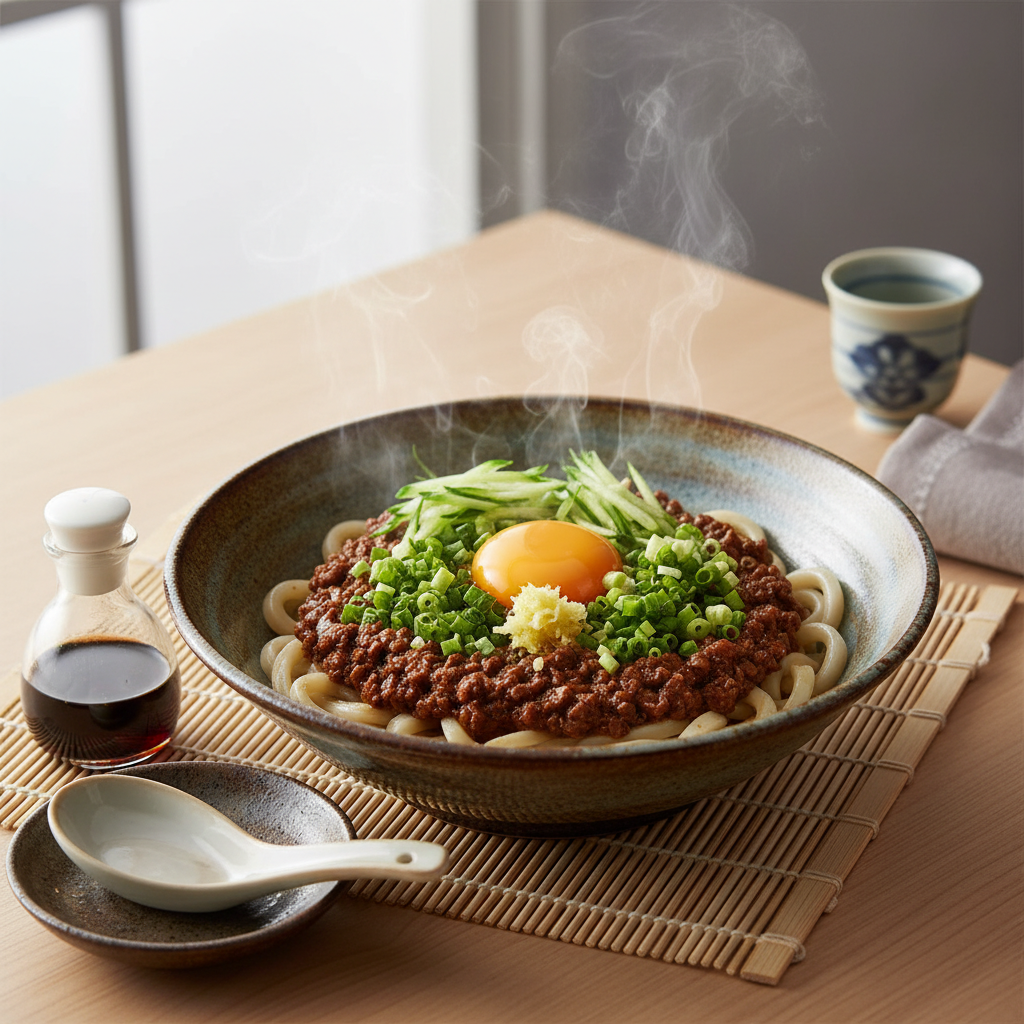
Morioka Jaja Noodles
A noodle dish adapted from Chinese zha jiang mian. Flat, thick noodles are topped with seasoned ground meat and cucumber, then mixed to eat. The dish’s specialty “chi-tan-tan,” which adds raw egg and broth after eating, is also famous.
Hittsumi
A local dish of southern Iwate Prefecture where dough made from wheat flour and water is hand-torn and boiled. A vegetable-rich soup with simple, hearty flavor.
Mame-bu Soup
A local dish of the Kuji area, a soup containing dumplings filled with walnuts and brown sugar. The unique sweet-savory taste becomes addictive.
Nanbu Senbei
Hard-baked crackers made from wheat flour. Available in various types including sesame and peanut varieties, popular as souvenirs.
How to Enjoy Wanko Soba at Home
For those unable to visit Iwate Prefecture or who want to experience wanko soba at home, here are ways to enjoy it at home.
Necessary Preparations
- Soba: Commercial dried noodles or fresh soba
- Small bowls: Can substitute with teacups or small dishes
- Toppings: Green onions, seaweed, wasabi, grated radish, etc.
- Broth: Diluted commercial mentsuyu
- Family or friends: More fun with someone serving and others eating
Home Version Wanko Soba Steps
- Cook soba: Cook slightly firmer than usual
- Divide into portions: Plate bite-sized portions in small bowls
- Prepare toppings: Arrange multiple toppings in small dishes
- Assign a server: Call out “Hai, dondon!” while serving bowls in succession
- Enjoy: Have fun with family and friends
Online Shopping
Some famous Morioka and Hanamaki restaurants sell wanko soba sets through online shops. Kits to recreate authentic flavors at home typically include:
- Dried or semi-fresh noodles using Iwate Prefecture soba flour
- Specialty broth
- Topping set
- Instructions for eating
Using mail order allows you to enjoy authentic flavors from home.
Wanko Soba Trivia and Fun Facts
Etymology of “Wanko”
“Wanko” means “bowl” in Iwate dialect, but it is believed that “wanko” comes from “wan’ko” (bowl-like), a dialectal corruption.
Why 15 Bowls Equal One Serving of Regular Soba
The equation of 15 wanko soba bowls to one regular soba serving includes not just the noodles but also the broth. Actual portion sizes vary by restaurant, so this should be considered a rough estimate.
Server Shouts
Different restaurants have different shouts such as “Hai, janjan!”, “Hai, dondon!”, and “Hai, motto motto!” These shouts are an important element in creating the wanko soba atmosphere.
Wanko Soba Day
November 11 has been designated as “Wanko Soba Day.” The lined-up “1”s evoke the image of soba’s thin, elongated shape.
World Record
Unofficially, the record for eating the most wanko soba bowls is said to exceed 500 bowls. However, as this was not accomplished with health considerations, general public should not attempt to replicate it.
Important Notes and Etiquette When Experiencing Wanko Soba
Here are important precautions to know when enjoying wanko soba.
Preparation Before Eating
- Visit on an empty stomach: Cannot fully enjoy when already full
- Wear comfortable clothing: Wear clothes considering the possibility of spills
- Allow plenty of time: Cannot enjoy when rushing, so visit with a relaxed schedule
Etiquette While Eating
- Don’t overexert yourself: Prioritize health and avoid eating unreasonable quantities
- Consideration for servers: Signal lid placement clearly
- Proper topping use: Handle shared toppings hygienically
- Making noise: Slurping soba is fine (even encouraged as expression of enjoyment)
Health Precautions
- Those with pre-existing conditions: Those with diabetes or gastrointestinal diseases should consult doctors
- Allergies: Those with soba allergies must absolutely avoid
- Salt content: Be careful not to drink too much broth, and remember to hydrate
- Post-meal exercise: Avoid strenuous exercise immediately after eating
Photography
Photography is permitted at most restaurants, but note the following:
- Consideration for other customers: Be careful not to photograph other diners’ faces
- Confirmation with servers: Confirm permission to photograph in advance
- Flash use: Use flash sparingly to avoid disturbing other customers
Wanko Soba and Iwate Prefecture Culture and Tourism
Wanko soba is not merely food but deeply connected to Iwate Prefecture’s culture and tourism.
Position in Iwate Prefecture’s Food Culture
Wanko soba is said to symbolize the “spirit of hospitality” in Iwate Prefecture. The style of continuously serving hot soba to customers, allowing them to eat until satisfied, expresses the warmth and generosity of Iwate’s people.
Value as a Tourism Resource
Wanko soba serves as a representative tourism resource of Iwate Prefecture through:
- Experience-based tourism: Can experience the unique serving style, not just eat
- Social media appeal: The unique dining scene is easily shared in photos and videos
- Memory creation: Creates fun memories with family and friends
- Repeat customer acquisition: The experience’s charm makes people want to revisit
Contribution to Regional Economy
Wanko soba significantly contributes to Iwate Prefecture’s regional economy:
- Job creation: Many wanko soba restaurants create local employment
- Supporting soba farmers: Demand for locally-produced soba flour supports farmers
- Related industry activation: Increased tourists activate accommodation and transportation industries
- Brand value: The “Iwate = Wanko Soba” image enhances overall prefectural branding
Conclusion | Experience Iwate Prefecture’s Charms Through Wanko Soba
Wanko soba is a traditional local dish that Iwate Prefecture is proud of, transcending mere food into cultural experience. The history continuing from the Edo period, the unique serving style, the taste variations from abundant toppings, and above all, the enjoyable atmosphere have captivated many people.
Centered in Morioka City and Hanamaki City, many famous restaurants continue to preserve tradition while adding new charm. Even first-timers can enjoy it confidently by understanding basic eating methods and proper etiquette.
The wanko soba experience is one of the highlights of Iwate Prefecture tourism. Combining it with nearby tourist spots including Morioka Castle Ruins Park, Kenji Miyazawa Memorial Museum, and Hanamaki Hot Spring area makes for a more fulfilling trip.
While competing to see how many bowls you can eat is fun, what matters most is enjoying at your own pace without overdoing it. Enjoy delicious soba, abundant toppings, lively server shouts, and conversation with those eating with you while feeling Iwate’s warm hospitality.
When visiting Iwate Prefecture, please experience wanko soba and savor the regional food culture and traditions unique to this area. It is sure to become an unforgettable memory.