Complete Guide to IkanagoNo KuginI | History, How to Make, and Culture of Hyogo Prefecture’s Representative Local Cuisine
Ikanagono kuginI, a local dish symbolizing spring in Hyogo Prefecture. From late February to April every year, the aroma of soy sauce and ginger drifts through the streets of the Hanshin-Awaji region centered on Kobe and Akashi, heralding the arrival of spring. This article provides a thorough explanation of Hyogo Prefecture’s proud local cuisine, including the history of ikanagoNo kuginI, the origin of its name, how to make it authentically, and recent fishing conditions.
What is Ikanagono KuginI? Hyogo Prefecture’s Representative Local Cuisine
“Ikanagonokunigni” is a seasoned dish made by simmering the larvae (shinko) of the small fish “ikanaago (sandeel)” belonging to the family Ammodytidae, in a sweet and salty reduction with soy sauce, sugar, mirin, ginger, and other ingredients. It is known as a local dish that has been made for centuries in the Seto Inland Sea coastal regions of Hyogo Prefecture, particularly around Kobe City, Akashi City, and Awaji Island.
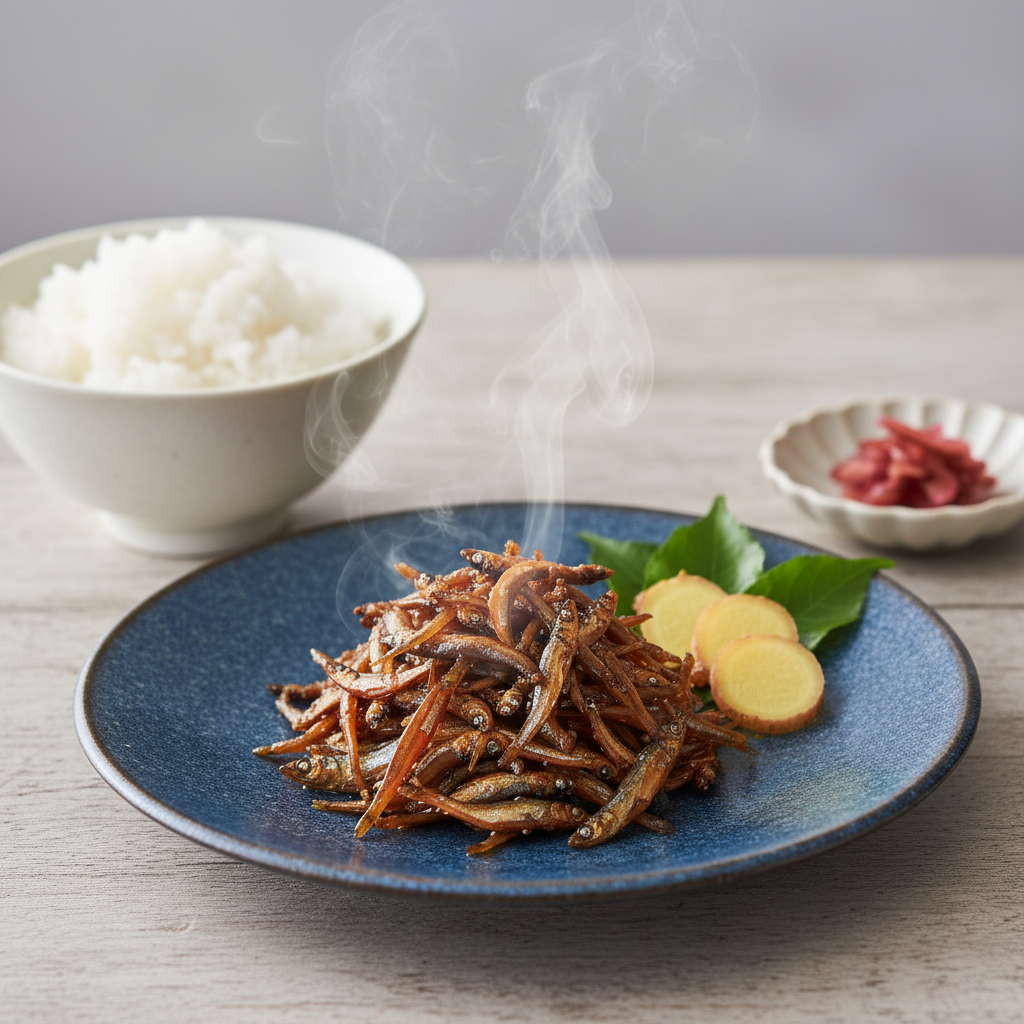
The dish gets its name “kuginI” (nail-simmered) because the cooked ikanaago curves into a “く” shape and takes on the appearance of a rusty old nail. This distinctive curved shape is evidence of using fresh ikanaago, as the freshness decreases and the fish remains straight, making it an indicator of freshness.
Food Culture Rooted in the Seto Inland Sea Coastal Region
While ikanagonokunigni is enjoyed throughout the Seto Inland Sea coastal region, it is particularly rooted in the culture of the Hanshin-Awaji region, where unique recipes are passed down through each household and has become a spring tradition deeply embedded in regional culture. It has been selected for the Ministry of Agriculture, Forestry and Fisheries’ “Local Dishes of Rural, Mountain and Fishing Villages Hundred Selection,” and has become Hyogo Prefecture’s representative local cuisine, attracting national attention.
About the Fish Ikanaago
Ecology and Distribution of Ikanaago
Ikanaago (sandeel, scientific name: Ammodytes personatus) is a small fish with a slender body belonging to the family Ammodytidae. Adult fish grow to about 15-25 cm in body length, but what is used for kuginI is the larvae (shinko) at about 2-4 cm in body length.
In Japan, they are widely distributed from Hokkaido to Kyushu, but are particularly abundant in enclosed bays such as the Seto Inland Sea, Ise Bay, and Tokyo Bay. They reach their spawning season from winter to spring, and the larvae born during this period become the target of “shinko fishing.”
Origin of the Name Ikanaago
There are several theories about the origin of the name “ikanaago,” with the most plausible being that it derives from “ikanaruKo” (いかなるこ, meaning “what kind of child”). Because the appearance of adult and larval fish differ greatly, the name is said to have originated from the question, “What kind of fish is this the child of?”
The name varies by region: “ikanaago” in the Kansai region, “kounaago” in the Kanto region, “kanagi” in the western Seto Inland Sea, and so on. In Hyogo Prefecture, the term “ikanaago” has become the standard.
The Origin and History of the Name KuginI
Why is it Called “KuginI”?
The distinctive name “kuginI” derives from the appearance of the cooked ikanaago. When fresh ikanaago is simmered in a sweet and salty sauce, the fish body curves into a “く” shape and turns tea-brown, resembling a rusty old nail (kugi), which is how it came to be called “kuginI.”
This characteristic curve is an important indicator of ikanaago freshness. With aged ikanaago, even after simmering, the fish remains straight and does not curve into a “く” shape. For this reason, local people have the tradition of going to the market early in the morning to seek freshly caught ikanaago and preparing it all at once the same day.
History and Development of KuginI
The origin of ikanagonokunigni lies in preserving food in fishing towns. It is said that the wives of fishermen along the Seto Inland Sea coast, facing the large catches of ikanaago in early spring, used the tsukudani (seasoned reduction) method—heavily seasoning and simmering with soy sauce and sugar for long-term preservation—which became the beginning.
Kobe City is said to be the birthplace, with the dish spreading particularly in fishing towns such as Tarumi and Suma wards. From around the 1960s, it began to be made in individual households, and by the 1970s it had spread throughout the Hanshin-Awaji region. While initially a preserved food for household consumption, it gradually gained popularity as a gift to relatives and acquaintances, and is now known nationwide as a local dish representative of Hyogo Prefecture.
History and Current Status of Ikanaago Shinko Fishing
Opening and Fishing Season of Shinko Fishing
Ikanaago shinko fishing is a spring tradition held annually from late February to April. In Hyogo Prefecture, fishing is mainly conducted in Harima Nada and Osaka Bay, with the opening date determined annually by the Hyogo Prefecture Fisheries Cooperative Federation from the perspective of resource conservation.
The fishing season lasts about one month, with fishing concentrated during this limited period. On the opening day, many fishing boats set out simultaneously, and the fresh-caught ikanaago is transported to markets throughout the region, where many people seek to purchase them from early morning.
Recent Fishing Conditions and Issues
In recent years, the catch of ikanaago has declined significantly. Even in Harima Nada, which once had annual catches of thousands of tons, extreme poor fishing conditions have continued since the 2020s. In Osaka Bay in particular, fishing itself has been suspended for consecutive years from 2022 onward for resource conservation purposes.
The 2024 shinko fishing season in Harima Nada opened on March 17 but ended in just two days, with shortened fishing seasons and declining catches becoming serious problems. This is attributed to rising seawater temperatures, decreasing plankton as food sources, and changes in the marine environment.
In response to these circumstances, Hyogo Prefecture and fishing-related parties are working to strengthen resource management, with efforts being made toward sustainable fisheries.
How to Make Authentic Ikanagonokunigni
Ingredient Preparation (for approximately 500g)
Main Ingredients:
- Ikanaago (shinko): 500g
- Dark soy sauce: 100ml
- Sugar: 80-100g
- Mirin: 50ml
- Japanese sake: 50ml
- Ginger: 30-40g (julienned)
- Malt syrup (or sugar): 1 tablespoon (for shine)
Key Points for Preparation
The most important aspect of making kuginI is using fresh ikanaago. It is ideal to obtain them on the morning of the day they are caught and to simmer them the same day.
- Washing the ikanaago: Fill a bowl with water and gently wash the ikanaago. Handle delicately to avoid damage, washing several times while changing the water.
- Draining: Place in a colander to drain thoroughly. Excess moisture causes the fish to disintegrate.
- Ginger preparation: Peel the ginger and julienne it. The amount can be adjusted to preference, but it plays an important role in removing fishiness and adding flavor.
Cooking Steps
- Bring seasoning to a boil: Place soy sauce, sugar, mirin, and Japanese sake in a large pot (preferably a shallow-bottomed pan) and bring to a boil over high heat.
- Add the ikanaago: Once the seasoning liquid is boiling, add all the ikanaago at once. It is important to spread them flat so they do not overlap.
- Add the ginger: Scatter the julienned ginger evenly throughout.
- Simmer at high heat all at once: Keep the heat high initially. Remove any scum that appears, but be careful not to stir the ikanaago as mixing causes the fish to disintegrate.
- Reduce the broth: Once the broth is reduced to about half, lower the heat to medium and continue reducing by shaking the pot. Do not stir at this stage either.
- Finishing: When the broth is nearly gone and the ikanaago has developed a shine, add malt syrup (or additional sugar) for extra shine. The dish is complete when the ikanaago curves into a “く” shape and turns tea-brown.
- Cooling: After turning off the heat, spread flat on a baking sheet or large plate to cool. Stacking causes condensation and reduces flavor quality.
Flavor Variations in Each Household
In the Hanshin-Awaji region, each household has unique recipes passed down through generations.
- Sweet style: More sugar for a gentle sweetness
- Savory style: More soy sauce for a strong soy flavor
- Strong ginger style: More ginger for a peppery kick
- With Japanese pepper: Powdered Japanese pepper added at the finish for extra aroma
- Wine instead of sake: Some households use white wine instead of Japanese sake
These flavor differences are passed down as “our family’s taste” along with family memories.
Storage Methods and Ways to Enjoy Ikanagonokunigni
Storage Methods
Thoroughly simmered kuginI has good keeping properties and can be enjoyed for a long time with proper storage.
Room temperature storage: If well-simmered, it can be stored in an airtight container in a cool dark place for 1-2 weeks.
Refrigerated storage: Stored in an airtight container or zippered bag in the refrigerator, it keeps well for about a month.
Frozen storage: Divide into portions, wrap individually in plastic wrap, and place in a freezer bag for storage of 3-6 months. Thaw naturally before eating.
Delicious Ways to Enjoy It
As a rice topping: The most popular way. Simply place on freshly cooked white rice and you can eat many bowls.
In bento boxes: Its good keeping properties make it ideal for lunch boxes.
In tea rice: Pour hot tea or broth over it for a refreshing meal.
As onigiri filling: Onigiri with kuginI mixed in is a Hyogo resident’s soul food.
As an alcoholic snack: Pairs excellently with Japanese sake or beer.
In pasta or fried rice: Modern adaptations include tossing with pasta or using as a fried rice ingredient.
Ikanagonokunigni and Hyogo Prefecture’s Spring Culture
KuginI as a Spring Tradition
In Hyogo Prefecture, particularly in Kobe and Akashi, from late February to April when ikanaago fishing opens, the aroma of simmering kuginI—soy sauce and ginger—drifts from homes throughout the area. It is said that “spring has arrived when you smell ikanaago,” and it has become deeply embedded as a spring tradition in the region.
During this season, fresh ikanaago appears on shelves of supermarkets and fishmongers, with many people seeking to purchase them from early morning. Additionally, special sections are set up for kuginI ingredients—soy sauce, sugar, and ginger—and the entire town becomes immersed in the kuginI season atmosphere.
KuginI as a Gift-Giving Culture
Ikanagonokunigni has transcended mere home cooking to form a unique gift-giving culture in Hyogo Prefecture. There is a tradition of distributing kuginI made in each household to relatives, friends, and acquaintances, with “sharing kuginI” becoming like a spring greeting.
When sending to distant family and friends, vacuum-sealed packages or frozen delivery are used, with the tradition of sending “I made kuginI this year” conveying the springtime of home to the recipient. Upon receiving, people enjoy the family’s unique flavor while experiencing the spring of Hyogo Prefecture.
Family Bonds Through KuginI
Making ikanagonokunigni is a family taste passed down from mother to daughter, grandmother to grandchild. In many households, the day of making kuginI involves the entire family working together, sharing tips and family stories passed down through generations as they monitor the heat and remove scum.
Through this experience, not only the technique of local cuisine but also family history and regional culture are inherited by the next generation. With recent poor fishing making it difficult to make kuginI, the cultural value of this tradition is being recognized anew.
Ikanaago Resource Protection and Sustainability
Resource Management Efforts
Faced with recent severe poor catches, Hyogo Prefecture and fisheries-related parties have implemented various resource management measures.
Shortened fishing seasons and moratoriums: Fishing seasons are shortened or complete moratoriums are implemented according to resource levels to protect spawning parents.
Size restrictions: Small larvae below a certain size are excluded from catch targets, allowing them to mature.
Catch limits: Daily catch amounts and number of fishing boats are restricted to prevent overfishing.
Marine environment surveys: Water temperature, salinity concentration, plankton conditions, and other factors are continuously surveyed, with research ongoing to clarify causes of resource fluctuations.
What Consumers Can Do
We consumers can also contribute to ikanaago resource protection.
- Purchase at fair prices: Understanding the current resource decline situation and purchasing at fair prices supports sustainable fisheries.
- Avoid food waste: It is important to plan purchases carefully and consume everything to avoid wasting precious resources.
- Use alternative ingredients: In poor fishing years, enjoying seasoned dishes made with other small fish and maintaining flexible food culture inheritance is important.
How to Purchase Ikanagonokunigni
Purchasing in the Production Area
In Hyogo Prefecture, particularly in Kobe City, Akashi City, and Awaji Island, fresh ikanaago and finished kuginI are sold at fishmongers and souvenir shops during the season. At established traditional tsukudani shops, authentic kuginI made using traditional methods can be purchased.
Online Shopping
Many shops offer online sales so you can purchase from anywhere in Japan. Major e-commerce sites such as Rakuten Marketplace, Amazon, and Yahoo! Shopping have numerous authentic Hyogo Prefecture-produced kuginI available when searching for “ikanagonokunigni.”
Many shops offer vacuum-sealed or frozen delivery, allowing you to receive fresh kuginI even from a distance. However, due to recent poor catches, inventory is often limited, so early-season ordering is recommended.
Selection Tips
- Origin labeling: Hyogo Prefecture products, particularly those from Harima Nada or Awaji Island, offer authentic taste.
- Manufacturing date: Choose the freshest available.
- Raw materials: Those made with simple ingredients (ikanaago, soy sauce, sugar, ginger, etc.) are traditional.
- Appearance: High-quality products are curved into a “く” shape with a glossy tea-brown color.
Conclusion: Hyogo Prefecture’s Treasure, Ikanagonokunigni
Ikanagonokunigni has been beloved by residents as a local dish symbolizing spring in Hyogo Prefecture for many years. The simple flavor of fresh ikanaago simmered in a sweet and salty reduction is enjoyed in various settings—as a rice topping, a lunch box side dish, and as a gift.
With recent poor fishing creating difficult circumstances surrounding ikanagonokunigni, the cultural value of this local cuisine is being recognized anew. As resource management efforts advance, passing this tradition to future generations in a sustainable manner has become our responsibility.
The “taste of our home” passed down in each household, the aroma of soy sauce and ginger announcing spring’s arrival, conversations around the family dinner table—ikanagonokunigni contains regional memory and culture that transcend mere food. When visiting Hyogo Prefecture, be sure to taste this local cuisine and experience the spring tradition that residents have treasured.