Complete Guide to Izushi Plate Soba | History, How to Eat, and Information on Famous Restaurants of Hyogo Prefecture’s Representative Local Cuisine
Izushi plate soba, a local dish passed down in Izushi Town, Toyooka City, Hyogo Prefecture, is known throughout Japan for its unique style of being served in small white porcelain dishes, one mouthful at a time. We introduce in detail the charm of Izushi plate soba, where tradition continuing from the Edo period and food culture rooted in the region still thrive, from its history to how to eat it and recommended famous restaurants.
What is Izushi Plate Soba? Hyogo Prefecture’s Proud Traditional Local Cuisine
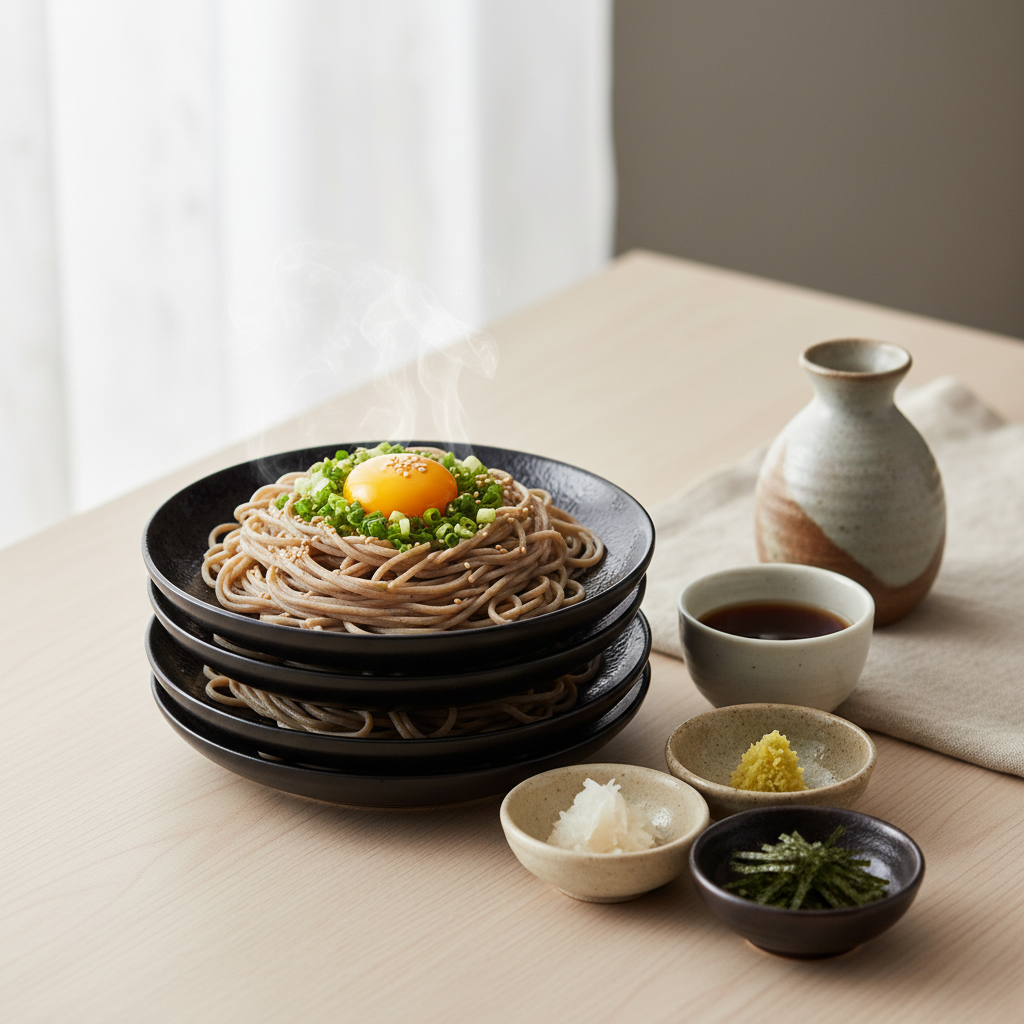
Izushi plate soba is a traditional buckwheat noodle dish that has continued since the middle of the Edo period in Izushi Town, Toyooka City, Hyogo Prefecture. Its greatest characteristic lies in its style of serving soba one mouthful at a time on a small white dish approximately 15 centimeters in diameter. Typically, five dishes are served as one portion, and customers enjoy the meal while seeing how many dishes they can eat.
Izushi Town is also called the “Little Kyoto of Tajima,” and is characterized by beautiful streets that retain the atmosphere of a castle town. Izushi plate soba, nurtured in this historic town, has become an existence that goes beyond mere dining to embody the region’s culture and history.
Basic Information about Izushi Plate Soba
- Birthplace: Izushi Town, Toyooka City, Hyogo Prefecture
- History: Approximately 300 years (from the middle of the Edo period)
- Characteristic: One-mouthful-sized soba served on white porcelain dishes
- Standard serving: Five dishes per person
- Type of soba: Coarse soba made from whole buckwheat flour is the mainstream
Currently, more than 50 soba restaurants line Izushi Town, which has become a representative tourist spot in Hyogo Prefecture, attracting approximately one million visitors annually.
History of Izushi Plate Soba | Buckwheat Noodle Culture Transmitted from Shinshu
The history of Izushi plate soba dates back to 1706 (Hoei 3) in the middle of the Edo period. It is said to have begun when Sengoku Masaaki, the lord of the Izushi Domain at the time, transferred from the Shinshiro Ueda Domain to Izushi and brought soba craftsmen from Shinshu with him.
Meeting with Shinshu Soba
The Sengoku family was a prominent feudal lord who governed Shinshiro Ueda for many years and was deeply familiar with the culture of Shinshu soba. By having soba craftsmen accompany them during the transfer to Izushi, Shinshu soba-making techniques were transmitted to the Tajima region.
Initially, soba was made in the Shinshu style, but as it merged with Izushi’s local climate and culture, the unique “plate soba” style was gradually born.
Establishment of the Plate Soba Style
There are various theories about when the practice of serving soba on small dishes began, but the following reasons are considered:
- Connection to Izushi ware: Izushi has been known since the Edo period as a production area for white porcelain, and there is a theory that small dishes of Izushi ware were utilized
- Spirit of hospitality: A theory that it originated from a hospitality culture where customers would enjoy seeing how many dishes they could eat
- Practical reasons for freshness: The practical reason that dividing into smaller portions prevents the soba from becoming overcooked and allows it to remain delicious until the end
From the Meiji period onward, the reputation spread among travelers visiting the castle town of Izushi, and from the Taisho and Showa periods, it became known nationally as “Izushi soba.”
Continuation to Modern Times
From the late Showa through the Heisei period, Izushi Town proceeded with development as a tourist destination, and the number of soba restaurants increased. Today, it has been registered as a trademark under the name “Izushi plate soba” and is established as a regional brand.
In 2007, it was selected by Hyogo Prefecture for the “One Hundred Selected Local Dishes of Mountain, Fishing, and Agricultural Villages,” firmly establishing its position as a nationwide local cuisine.
Characteristics of Izushi Plate Soba | Why Serve in Small Dishes
The “small dish serving” that is the greatest characteristic of Izushi plate soba has deep meaning beyond mere visual appeal.
Commitment to White Porcelain Dishes
Izushi ware is white porcelain pottery continuing from the late Edo period, and its pure white beauty is highly evaluated as “Izushi white porcelain.” By serving soba on small dishes of this local traditional craft, visual beauty and regional culture are united.
The grayish-green soba served on white dishes creates beautiful contrast and whets the appetite. Additionally, using small dishes gives each plate an appearance like a work of art.
Advantages of One-Mouthful Portions
The amount of soba served on each dish is just about one or two mouthfuls. This portion size offers the following benefits:
- Maintains freshness: By eating small portions, the soba can be finished before it becomes overcooked or dries out
- Variety in seasonings: The combination of condiments can be changed for each dish, allowing enjoyment of varied flavors
- Pleasure of eating: The enjoyment of counting how many dishes one can eat
- Social element: The social aspect of competing on dish count or sharing impressions
Quality of Soba
Most Izushi plate soba restaurants use coarse soba style made with whole buckwheat flour (soba flour ground with the husk). It is characterized by strong buckwheat flavor and rich aroma.
- Buckwheat flour ratio: Varies by restaurant, but 80% or more buckwheat flour “2-8 soba” is the mainstream
- Preparation method: Many restaurants are particular about hand-kneaded noodles
- Cooking method: “Freshly boiled” cooked after order is the basic approach
- Water: Uses clear water from Tajima
Dipping Sauce and Condiments
Izushi plate soba is basically eaten cold with dipping sauce, like zaru soba.
Characteristics of dipping sauce:
- Most use Kansai-style sauce, somewhat sweet, based on bonito flakes and kelp
- Each restaurant has its own unique blend, allowing enjoyment of flavor differences
Types of condiments:
- Wasabi
- Green onion
- Grated radish
- Egg (raw or soft-boiled)
- Tororo (grated mountain yam)
Particularly, the way of eating with egg is a unique Izushi style, where the local way is to enjoy a mellow flavor by dissolving egg into the dipping sauce.
Proper Way to Eat Izushi Plate Soba | Local Etiquette
Izushi plate soba has “manners for eating” that allow more delicious and enjoyable consumption. Master the way of eating that local people have passed down through generations.
Basic Way of Eating (For Beginners)
- First dish: First enjoy the taste of soba itself without anything added
- Add condiments: From the second dish onward, gradually add condiments such as wasabi or green onions
- Add egg: Around the third dish, dissolve a raw egg into the dipping sauce
- Add tororo: When wanting further flavor variation, add tororo
- Soba broth: Finally pour soba broth to finish the dipping sauce
Advanced Techniques the Local Way
Change condiment combinations:
- 1st dish: Dipping sauce only, to enjoy the soba’s aroma
- 2nd dish: Wasabi and green onions for a refreshing taste
- 3rd dish: Dissolve egg for a mellow flavor
- 4th dish: Add tororo for a smooth texture
- 5th dish: Grated radish for a light, fresh taste
By changing condiments for each dish in this way, you can enjoy five different flavors in one meal.
Eating pace:
It is recommended to eat Izushi plate soba slowly and savor it. Since the dishes are small, they cool slowly, allowing you to enjoy conversation while eating.
Additional orders:
If five dishes are not enough, additional orders are available. Many restaurants accept orders in the form of “how many more dishes,” and typically adult men eat 7–10 dishes and women eat 5–8 dishes on average.
Manners to Avoid
- Leaving soba on the dish: Since portions are one mouthful, it is proper etiquette to finish each dish
- Reusing dipping sauce: For hygiene, ask for fresh dipping sauce as needed
- Making excessive noise: Slurping soba is fine, but avoid excess noise from stacking dishes
Recommended Izushi Town Plate Soba Restaurants | From Famous Establishments to Hidden Gems
Izushi Town has more than 50 soba restaurants, and we introduce some of the most highly regarded among them.
Established Famous Restaurants
Kanbei (官兵衛)
- Founded: Meiji period
- Characteristic: Traditional hand-kneaded soba and calm atmosphere
- Recommendation: Basic 5-dish set
- Hours: 11:00–15:00 (closes when sold out)
Sakyo (左京)
- Founded: Taisho period
- Characteristic: Authentic soba enjoyed in a building with castle town charm
- Recommendation: Plate soba set meal (soba + small side dish)
Honke Ikkaku (本家一鶴)
- Founded: Late Edo period
- Characteristic: One of the oldest soba restaurants in Izushi
- Recommendation: Hand-kneaded soba made by traditional methods
Locally Popular Restaurants
Kinmata (近又)
- Characteristic: Popular restaurant frequented by locals, with strong soba aroma
- Recommendation: Plate soba set (soba + tempura)
Hanamizuki (花水木)
- Characteristic: Many local repeat customers as well as tourists
- Recommendation: Set with seasonal vegetable tempura
Teuchi Plate Soba Jinbei (手打ち皿そば 甚兵衛)
- Characteristic: Watch the owner make soba in front of you
- Recommendation: Freshly made and freshly boiled soba
Hidden Gem Restaurants
Soba Sho (そば庄)
- Characteristic: Small restaurant but highly rated locally
- Recommendation: Simple 5-dish set to appreciate ingredient quality
Izushi Castle Town Takumiya (出石城下町 たくみや)
- Characteristic: Offers soba-making experiences
- Recommendation: Enjoy soba you made yourself in plate soba style
Points for Choosing a Restaurant
- Waiting time: Popular restaurants may have 1–2 hour waits during lunch
- Hours: Most restaurants close around 3 PM, so early visits are recommended
- Closed days: Many restaurants are closed Wednesdays and Thursdays
- Reservations: Most restaurants do not accept reservations, but check for group reservations
Access to Izushi Town and Tourism Information
To taste Izushi plate soba, visiting Izushi Town, Toyooka City, Hyogo Prefecture is essential. We introduce access methods and nearby tourism information.
Access to Izushi Town
By train:
- Get off at “Toyooka Station” on the JR Sanin Main Line
- From Toyooka Station, take the Zen’tan Bus “Izushi bound” for approximately 30 minutes
- Get off at “Izushi” bus stop, immediately on foot
By car:
- From Osaka: Chugoku Expressway → Maizuru Wakasa Expressway “Kasuga IC” → Kita-Kinki Toyooka Expressway “Yachika Hyononosan IC” → Via National Route 312 approximately 20 minutes (approximately 2.5 hours from Osaka)
- From Kobe: Bantan Connection Road → Kita-Kinki Toyooka Expressway “Yachika Hyononosan IC” → Via National Route 312 (approximately 2 hours from Kobe)
- From Kyoto: Kyoto Vertical Expressway → Maizuru Wakasa Expressway → Via Kita-Kinki Toyooka Expressway (approximately 2.5 hours from Kyoto)
Parking information:
- Multiple paid parking lots around Izushi Castle ruins (approximately 400–500 yen per day)
- Weekends and holidays are congested, so morning arrival is recommended
Sightseeing Spots in Izushi Town
After enjoying Izushi plate soba, strolling through the castle town is also recommended.
Izushi Castle Ruins:
- Ruins of a castle governed by the Yamana and Koide clans
- Stone walls and gates remain, allowing you to feel the castle town’s past
- The castle tower base offers panoramic views of Izushi
Shinkorotei (辰鼓楼):
- A clock tower built in the Meiji period
- An iconic symbol of Izushi
- Still keeps time today
Izushi Meiji Hall:
- Western-style architecture from the Meiji period
- A museum introducing Izushi’s history and culture
Izushi Karō Residence:
- Opens a samurai house from the Edo period to the public
- You can experience the lifestyle of that era
Eirakukan:
- Kinki’s oldest theater (built in 1901)
- Still hosts Kabuki performances and other shows
Recommended Sightseeing Courses
Half-day course (3–4 hours):
- Arrival in Izushi (10:00)
- Castle town stroll (10:00–11:30)
- Lunch with Izushi plate soba (11:30–13:00)
- Visit Izushi Castle Ruins and Shinkorotei (13:00–14:00)
- Souvenir shopping and return journey (14:00–)
Full-day course (6–7 hours):
- Arrival in Izushi (10:00)
- Izushi Castle Ruins and Shinkorotei (10:00–11:30)
- Lunch with Izushi plate soba (11:30–13:00)
- Izushi Meiji Hall and Karō Residence (13:00–15:00)
- Castle town stroll and café break (15:00–16:30)
- Souvenir shopping and return journey (16:30–)
Izushi Plate Soba Souvenirs | How to Enjoy at Home
Izushi plate soba is also available as dried noodles and semi-fresh noodles for souvenirs, allowing you to enjoy it at home.
Types of Souvenir Soba
Dried noodle type:
- Shelf life: Approximately 1 year
- Price: Approximately 500–800 yen (for 2–3 servings)
- Characteristic: Can be stored at room temperature and easy to carry
Semi-fresh noodle type:
- Shelf life: Approximately 1 month (requires refrigeration)
- Price: Approximately 800–1,200 yen (for 2–3 servings)
- Characteristic: Texture and flavor close to fresh noodles
Fresh noodle type:
- Shelf life: Several days (requires refrigeration)
- Price: Approximately 1,000–1,500 yen (for 2–3 servings)
- Characteristic: Closest to restaurant flavor
Where to Purchase
- Soba restaurants in Izushi Town (most sell their own soba)
- Izushi Town Tourist Information Center
- Michi no Eki “Tajima no Mahoroba”
- Souvenir shops near Toyooka Station
- Online shops (some restaurants)
How to Cook at Home
What you need:
- Izushi soba (dried or semi-fresh noodles)
- Dipping sauce (commercial products are fine)
- Condiments (green onions, wasabi, egg, etc.)
- Five or more white small dishes
Cooking steps:
- Boil soba in plenty of water (see package for boiling time)
- When cooked, rinse in cold water
- Drain well
- Serve one mouthful at a time on small dishes
- Prepare dipping sauce and condiments and serve
Tips for enjoying authentically:
- Use Izushi ware dishes (available through online shopping)
- Reserve soba broth
- Prepare condiments generously and enjoy flavor variations
Cultural Value of Izushi Plate Soba | Food Culture Rooted in the Region
Izushi plate soba goes beyond mere cuisine to become an important presence supporting regional culture and economy.
Contribution to Regional Economy
Although Izushi Town has a population of approximately 5,000, it attracts approximately one million visitors annually. Most come for Izushi plate soba, making the soba industry a pillar of the regional economy.
- Direct employment in soba restaurants
- Promotion of related industries (Izushi ware, agriculture, tourism)
- Promotion of young people’s return migration and relocation
Inheritance of Traditional Skills
Izushi actively pursues efforts to pass soba-making techniques to the next generation.
- Soba-making experience classes
- Food education classes in local elementary and middle schools
- Soba craftsman training programs
- “Izushi Soba Master” certification system
Value as a Regional Brand
Since selection for the “One Hundred Selected Local Dishes of Mountain, Fishing, and Agricultural Villages” in 2007, Izushi plate soba has achieved nationwide recognition as a representative local cuisine of Hyogo Prefecture.
- Featured in tourism pamphlets and magazines
- Television program specials
- Social media dissemination (Instagram-worthy appearance)
- Increase in foreign tourists
Cultural Events
Izushi Soba Tasting Walk:
- Held: Spring and autumn
- Content: Stamp rally visiting multiple soba restaurants
Izushi Castle Festival:
- Held: Around November 3
- Content: Distributing Izushi plate soba and various events
New Soba Festival:
- Held: Late November
- Content: New soba sampling and sales
Izushi Plate Soba and Health | Nutritional Value of Soba
Soba, as a traditional Japanese food ingredient, has excellent health properties.
Nutritional Components of Soba
Main nutrients (per 100g):
- Protein: Approximately 12g
- Dietary fiber: Approximately 4g
- Vitamin B1, B2
- Rutin (a type of polyphenol)
- Minerals (magnesium, iron, zinc, etc.)
Health Benefits
Blood vessel health:
Rutin is said to strengthen capillaries and lower blood pressure.
Suppression of blood sugar spikes:
Soba is a low-GI food that suppresses rapid blood sugar increases.
Diet effect:
Rich in dietary fiber, providing easy satiety with relatively low calories.
Skin beauty effect:
B vitamins promote skin cell renewal.
Unique Health Benefits of Izushi Plate Soba
Prevents overeating:
Being divided into small dishes makes it easier to keep track of quantity eaten and feel satisfied with appropriate amounts.
Effects of condiments:
- Wasabi: Antibacterial action, appetite stimulation
- Green onions: Blood circulation promotion, fatigue recovery
- Grated radish: Digestive promotion, vitamin C supplementation
- Eggs: High-quality protein, vitamins
- Tororo: Digestive enzymes, nutritional fortification
Izushi Plate Soba Through the Seasons | How to Enjoy by Season
Izushi plate soba can be enjoyed year-round, but each season offers different charms.
Spring (March–May)
Characteristics:
- During cherry blossom season the castle town is beautifully colored
- Spring mountain vegetables tempura is recommended
- Relatively fewer tourists, allowing leisurely enjoyment
Recommended combinations:
- Plate soba + mountain vegetable tempura
- Soba broth after strolling to relax
Summer (June–August)
Characteristics:
- Cold soba is most delicious in this season
- Strolling the castle town with fresh green leaves feels wonderful
- Summer vacation brings crowds; weekdays are recommended
Recommended combinations:
- Cold plate soba + chilled tomato
- Grated radish for light, fresh taste
Autumn (September–November)
Characteristics:
- New soba season (late October–November)
- Beautiful autumn leaves, peak tourist season
- Strongest buckwheat aroma is felt
Recommended combinations:
- New soba + mushroom tempura
- Chestnut rice set meal
Winter (December–February)
Characteristics:
- Snow-covered castle town is magical
- Warm soba broth warms the body
- Fewer tourists, allowing calm appreciation
Recommended combinations:
- Plate soba + warm small side dishes
- Generous soba broth to warm the body
Planning a Trip Around Izushi Plate Soba
We propose travel plans centered on Izushi plate soba.
Day trip plan (departing from Osaka/Kobe)
8:00 Departure
10:30 Arrive in Izushi, go to parking lot
10:45 Begin castle town stroll
11:30 Early lunch with Izushi plate soba
13:00 Visit Izushi Castle Ruins and Shinkorotei
14:30 Café break, souvenir shopping
15:30 Leave Izushi
18:00 Arrive home
1-night 2-day plan (combined with Kinosaki Hot Spring)
Day 1:
- Morning: Arrive in Izushi
- Noon: Lunch with Izushi plate soba
- Afternoon: Castle town stroll
- Evening: Move to Kinosaki Hot Spring (approximately 30 minutes by car)
- Night: Enjoy Tajima beef at hot spring resort
Day 2:
- Morning: Kinosaki Hot Spring town stroll, outdoor bath tour
- Noon: Seafood cuisine in Kinosaki
- Afternoon: Return journey
2-night 3-day plan (touring Tajima region)
Day 1: Izushi (plate soba, castle town)
Day 2: Kinosaki Hot Spring (hot spring, crab cuisine)
Day 3: Takeda Castle Ruins (castle in the sky) → return journey
Budget estimate per person
Day trip:
- Transportation: 3,000–5,000 yen (highway and gas fees)
- Lunch (plate soba): 1,000–1,500 yen
- Souvenirs: 1,000–3,000 yen
- Total: 5,000–10,000 yen
1-night 2-day:
- Transportation: 5,000–8,000 yen
- Meals: 5,000–10,000 yen
- Accommodation: 10,000–30,000 yen
- Souvenirs: 2,000–5,000 yen
- Total: 22,000–53,000 yen
Conclusion | Fully Experience the Charm of Izushi Plate Soba
Izushi plate soba is a representative local cuisine of Hyogo Prefecture with a 300-year history. Shinshu soba-making techniques transmitted from Shinshu, buckwheat and other ingredients nurtured by the abundant nature of Tajima, and the unique style of serving in white porcelain dishes fuse together to create a one-of-a-kind food culture.
Summary of Izushi Plate Soba’s Charms
- Visual beauty: Artistic presentation served on white porcelain dishes
- Flavor variety: Multiple flavors to enjoy by changing condiments
- History and tradition: Cultural value continuing from the Edo period
- Harmony with region: Dining experience in harmony with castle town atmosphere
- Health-conscious: Soba nutrition and appropriate portion eating style
- Sociability: The enjoyment of counting dishes and sharing flavors
When visiting Izushi Town, be sure to visit multiple soba restaurants and enjoy the differences in flavor. Even the same “Izushi plate soba” has differences in noodle-making, dipping sauce flavor, and types of condiments for each restaurant, offering the pleasure of tasting and comparing.
Moreover, not only by savoring soba but also through experiences unique to Izushi such as strolling the castle town, purchasing Izushi ware dishes, and interacting with local people, you can develop a deeper understanding of the region’s culture.
“Izushi plate soba,” a local cuisine boasted by Hyogo Prefecture, offers a special experience you will not forget once tasted. Please visit Izushi and enjoy this traditional flavor with all five senses.