Akashi Yaki (Tamago Yaki) Complete Guide: Thorough Explanation of the History, How to Make, and Famous Restaurants of Hyogo Prefecture Akashi City’s Local Cuisine
“Akashi Yaki,” a local specialty dish representing Hyogo Prefecture’s Akashi City, is a nationally known delicacy known for its fluffy and melting texture and unique style of eating it dipped in dashi broth. Affectionately called “Tamago Yaki” (egg yaki) by locals, this dish, which is said to be the origin of takoyaki, contains nearly 200 years of history and Akashi’s unique food culture.
This article provides a thorough explanation of the charm of this local dish, from the historical background of Akashi Yaki to the characteristics of ingredients, authentic cooking methods, differences from takoyaki, and restaurant information within Akashi City.
What is Akashi Yaki (Tamago Yaki)? A Local Specialty of Hyogo Prefecture’s Akashi City
The True Identity of “Tamago Yaki” Loved by Locals
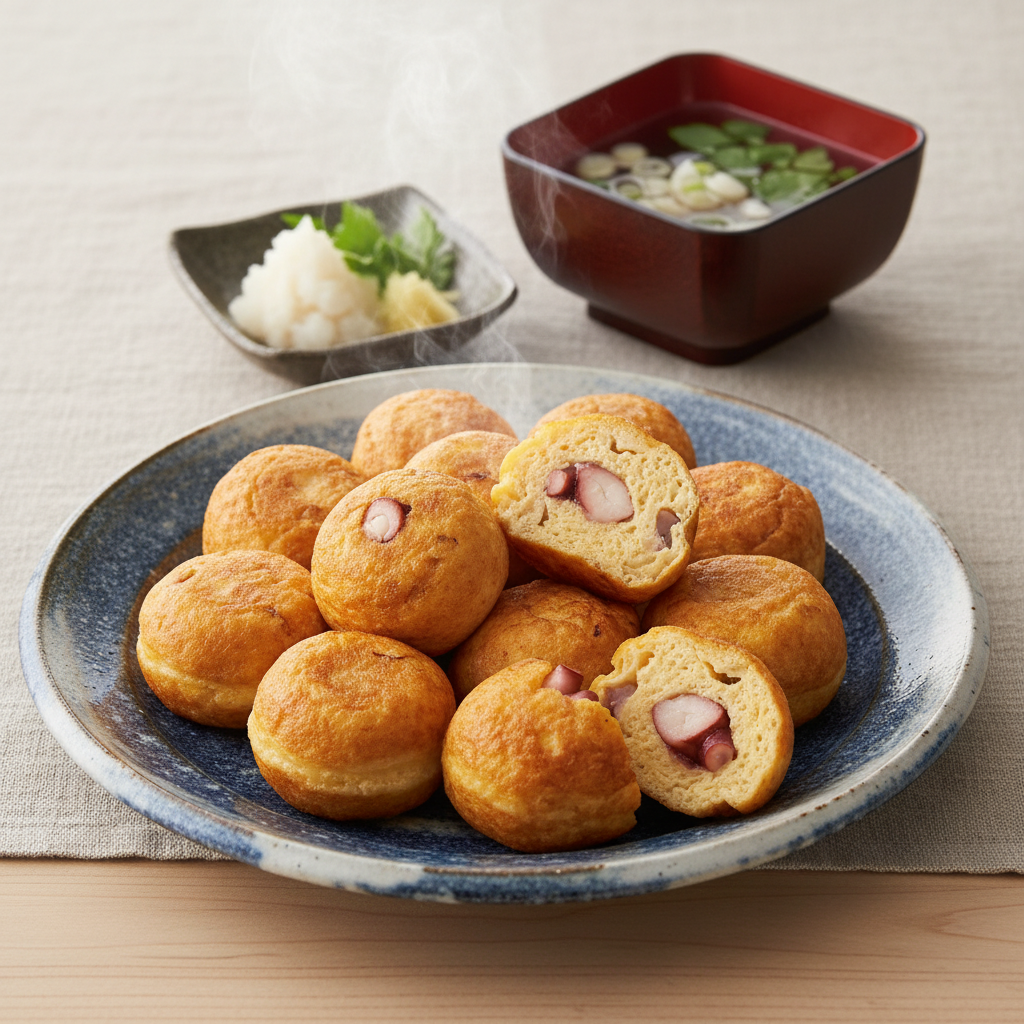
Akashi Yaki is a representative local dish of Akashi City made by mixing wheat flour, jin powder (floating flour), eggs, and dashi broth, adding octopus to the batter and cooking it, then eating it dipped in bonito and kelp dashi broth. In Akashi locally, the name “Tamago Yaki” is more common than “Akashi Yaki,” and it is enjoyed daily as the soul food of city residents.
Although it looks similar to takoyaki, the batter composition and eating method differ significantly, forming a unique food culture. There are approximately 70 tamago yaki specialty shops within Akashi City, with each shop offering its own unique touches.
Main Transmission Areas and the Spread of Food Culture
The main transmission area of Akashi Yaki is throughout Akashi City, with many specialty shops concentrated particularly around Akashi Station and the Uonotana shopping street. In recent years, shops offering it have increased in Kobe City and other areas of Hyogo Prefecture, and it has become widely recognized as a local specialty representing Hyogo Prefecture.
Akashi City faces the Seto Inland Sea, and it is a region abundant in fresh seafood caught in the Akashi Strait. In particular, Akashi octopus is famous nationwide, and the use of this high-quality octopus as a main ingredient in Akashi Yaki supports the deliciousness of this dish.
History and Origins of Akashi Yaki and Its Relationship with “Akashi Tama”
The Origin of Tamago Yaki Beginning in the Late Edo Period
The history of Akashi Yaki dates back to the late Edo period. At that time, Akashi prospered as a production site for “Akashi Tama,” decorative items made from coral. Akashi Tama were beautiful decorative items made by processing coral and became nationally popular crafts.
When making Akashi Tama, egg white was used as an adhesive to smoothly polish the surface of the coral. This resulted in a large surplus of egg yolks. To effectively utilize these leftover egg yolks, tamago yaki that used plenty of eggs was conceived—the prototype of the present-day Akashi Yaki, as the story goes.
Akashi Yaki as the Origin of Takoyaki
Akashi Yaki has a longer history than Osaka’s takoyaki and is said to be the origin of takoyaki. It is believed that Akashi Yaki eaten from the late Edo period through the Meiji period later spread to Osaka and developed into takoyaki eaten with sauce.
The fact that Akashi Yaki used octopus, a local specialty of Akashi, as an ingredient from its inception became the foundation of later takoyaki culture. However, the eating method and batter composition differ greatly, and each has undergone its own evolution to the present day.
Occasions and Seasons for Eating
Akashi Yaki is eaten daily throughout the year, not limited to specific events or seasons. Local people casually stop by for lunch or light meals, and it is loved by a wide range of people including families and tourists.
Particularly on weekends and during tourist season, it is not uncommon for specialty shops in Akashi City to have lines of customers. Additionally, since the opening of the Akashi Strait Bridge, the number of tourists has increased, and Akashi Yaki has attracted attention as a tourist gourmet representing Hyogo Prefecture.
Differences Between Akashi Yaki and Takoyaki: A Thorough Comparison of Batter, Eating Method, and Texture
Differences in Batter Ingredients and Composition
The most significant difference between Akashi Yaki and takoyaki lies in the batter ingredients and composition.
Akashi Yaki Batter:
- Uses wheat flour and jin powder (floating flour)
- Very high egg composition ratio
- Generous amount of dashi broth added
- Uses both egg yolks and whites
Takoyaki Batter:
- Uses mainly wheat flour
- Lower egg ratio than Akashi Yaki
- Water or dashi broth added
- Mixed with tempura scraps and pickled red ginger and other secondary ingredients
Jin powder (floating flour) is flour made by removing protein components (gluten) from wheat flour and extracting only the starch. Using this powder prevents gluten formation even when heated, creating a fluffy, soft texture.
Characteristics of Texture and Appearance
Akashi Yaki:
- Fluffy on the outside, melting on the inside
- Bright yellow color from eggs is prominent
- Shape so delicate it appears likely to crumble
- So soft it seems it will break when held with chopsticks
Takoyaki:
- Crispy outside, gooey inside
- Brownish color from wheat flour
- Maintains firm shape
- Hard enough to hold easily with chopsticks
The characteristic fluffy and melting texture of Akashi Yaki is created by the high composition ratio of jin powder and eggs. This unique texture can be said to be Akashi Yaki’s greatest appeal.
Eating Method: Dashi Broth vs. Sauce
The difference in eating method is also an important point distinguishing Akashi Yaki from takoyaki.
How to Eat Akashi Yaki:
- Eaten dipped in bonito or kelp dashi broth
- The dashi broth is warm and has a refreshing taste
- Sauce and seasonings are basically not used
- Sometimes garnished with Japanese parsley or green onion
How to Eat Takoyaki:
- Eaten with sauce
- Topped with mayonnaise, aonori seaweed powder, and bonito flakes
- Characterized by rich seasoning
The style of eating Akashi Yaki dipped in dashi broth reflects the “bringing out the flavor of ingredients” philosophy in Akashi’s food culture. The umami of the dashi broth brings out the delicate flavor of the batter, and its lightness allows you to eat many pieces.
Akashi Yaki Ingredients and Main Ingredients Used
Basic Ingredients (Serves 4)
The basic ingredients for making Akashi Yaki at home are as follows.
Batter:
- Jin powder (floating flour): 100g
- Wheat flour: 50g
- Eggs: 6 (medium size)
- Dashi broth (first dashi): 500ml
- Salt: a pinch
Filling:
- Boiled octopus: 200g (cut into bite-sized pieces)
Dipping Broth:
- Dashi broth (bonito and kelp): 800ml
- Light soy sauce: 2 tablespoons
- Mirin: 1 tablespoon
- Salt: a pinch
- Japanese parsley or green onion: to taste
Characteristics of Main Ingredients Used
Jin Powder (Floating Flour):
Jin powder is the most important ingredient in creating the unique texture of Akashi Yaki. It is starch flour made by removing gluten from wheat flour, and even when heated, it does not become hard and achieves a fluffy, light texture. It can be purchased at confectionery material stores or online.
Eggs:
The source of Akashi Yaki’s yellow color and rich flavor. Because the egg ratio is high, using fresh, high-quality eggs is the secret to deliciousness. Use both yolks and whites and mix them thoroughly.
Akashi Octopus:
Octopus caught in the Akashi Strait grows in a fast-flowing environment, so its meat is firm and has strong umami. To recreate the authentic taste, it is recommended to use the highest-quality octopus possible.
Dashi Broth:
The dashi broth used in both the batter and dipping sauce is a crucial element determining the flavor of Akashi Yaki. Use first dashi made from bonito flakes and kelp, and make clear umami without any off-flavors.
Authentic Akashi Yaki Cooking Method and Recipe
Preparation: How to Make Dashi
To make delicious Akashi Yaki, it is important to first prepare high-quality dashi broth.
- Preparing Kelp Dashi
- Place 10g kelp in 1 liter of water and soak for 30 minutes or more
- Heat over low heat and remove the kelp just before boiling
- Adding Bonito Dashi
- Add 20g bonito flakes after removing the kelp
- Heat again without boiling, and simmer over low heat for 2 to 3 minutes
- Turn off heat and wait for bonito flakes to settle, then strain with paper towel
- Divide into Batter and Dipping Broth
- Separate 500ml for batter use and 800ml for dipping broth use
- Season the dipping broth with light soy sauce, mirin, and salt
How to Make the Batter
- Prepare Dry Ingredients
- Place jin powder and wheat flour in a bowl and mix well
- Sifting helps prevent lumps
- Create Egg Mixture
- Crack 6 eggs into a separate bowl
- Beat thoroughly until yolks and whites are completely mixed
- Mix the Batter
- Add cooled dashi broth to the dry ingredients little by little while mixing
- Once lumps are gone, add the beaten eggs and mix further
- Add a pinch of salt to taste
- The ideal batter is smooth and runny like water
- Let Batter Rest
- Refrigerate for 30 minutes to 1 hour
- During this step, the flour absorbs water and becomes easier to cook
Cooking Tips
To cook Akashi Yaki authentically, use a special copper pan (Akashi Yaki pan), but a takoyaki maker can be used as a substitute.
- Prepare the Cooking Equipment
- Heat the takoyaki maker thoroughly (medium heat)
- Lightly oil each hole (vegetable oil or sesame oil)
- Pour in the Batter
- Mix the batter well before pouring, filling each hole to 80% full
- Immediately place one piece of octopus in each hole (cut octopus into small pieces beforehand)
- Cook
- When the edges of the batter solidify, flip with a bamboo skewer or special pick
- Since Akashi Yaki is soft, handle gently
- Turn 2 to 3 times until cooked through
- Complete when the surface becomes golden brown and cooked through
- Cooking Time Guidelines
- About 2 to 3 minutes per side, total 5 to 6 minutes
- Be careful not to use too high heat to avoid burning the outside while the inside remains undercooked
Plating and Eating
- Arrange on Wooden Board
- Akashi Yaki is typically served with 15 to 20 pieces arranged on a wooden board
- At home, arranging on a plate is fine
- Prepare Dipping Broth
- Heat the dipping broth and pour into a bowl
- Garnish with Japanese parsley or green onion
- How to Eat
- Dip Akashi Yaki in the dipping broth and eat
- Best eaten while hot
- Reheat the broth as needed if it cools down
Nutrition and Health Features of Akashi Yaki
A High-Protein, Low-Calorie Local Specialty
Akashi Yaki is rich in protein because eggs and octopus are its main ingredients. Eggs contain essential amino acids in a well-balanced manner, and octopus has the characteristics of being low in fat and high in protein.
Also, since it is eaten dipped in broth without sauce or mayonnaise, it is lower in calories and less salty compared to takoyaki. It is an appropriate local dish for those on diets or those concerned about their health.
Nutritional Characteristics
Egg Nutrition:
- High-quality protein
- Vitamins A, D, E, and B-complex
- Iron, zinc, and other minerals
- Lecithin (good for brain health)
Octopus Nutrition:
- High protein, low fat
- Taurine (recovery from fatigue, improved liver function)
- Zinc (improved immunity)
- Vitamin B12 (hematopoietic action)
Effects of Dashi Broth:
- Inosinate, glutamate (umami components)
- Minerals
- Low calorie with satisfying feeling
Digestibility and Application to Food Education
Akashi Yaki is easy to digest because of its soft batter. The fact that people of all ages from children to the elderly can enjoy it is one reason it has been loved locally for a long time.
In recent years, efforts to learn about regional food culture through Akashi Yaki cooking from the perspective of food education are being undertaken. The experience of making dashi, selecting ingredients, and going through cooking processes provides children with an opportunity to experience Japan’s traditional food culture.
Recommended Akashi Yaki Restaurants in Akashi City
Established Famous Restaurants
There are many long-established shops in Akashi City. Through the secret recipes for batter composition and dashi preparation passed down through generations, each shop maintains its own unique flavor.
There are particularly many specialty shops concentrated around the Uonotana shopping street, and you can enjoy comparing different flavors. The charm of established shops also includes the ability to observe traditional cooking methods using copper pans.
Characteristics of Popular Shops
Popular Akashi Yaki shops have the following characteristics:
- Batter Commitment: Each shop’s unique ratio of jin powder to wheat flour, amount of eggs, and strength of dashi broth
- Quality of Octopus: Using Akashi-produced octopus with attention to size and softness
- Taste of Dashi Broth: Type of bonito flakes, origin of kelp, balance of seasonings
- Cooking Method: Temperature management of copper pan, timing of cooking
- Service Style: Each shop’s individuality appears in dishes and plating
Akashi Station Area and Uonotana Shopping Street
The Uonotana shopping street within walking distance from Akashi Station can be said to be the holy place of Akashi Yaki. This approximately 400-meter arcade shopping street lines numerous Akashi Yaki specialty shops alongside fresh fish shops and processed food shops.
On weekends it is crowded with tourists, and lines are not uncommon at popular shops. Food hopping at various shops to find your favorite flavor is one way to enjoy the experience.
Takeout and Takeaway Information
In recent years, more shops have begun offering takeout options. Akashi Yaki placed in takeout containers is typically provided with dashi broth in a separate container so it can be enjoyed at home.
However, since Akashi Yaki’s texture changes over time, it is recommended to eat it as soon as possible. Eating freshly cooked Akashi Yaki in the shop is the most delicious way to eat it.
Preservation and Inheritance Efforts and Contemporary Development
Preservation Activities by the Community
Akashi City positions Akashi Yaki as an important tourism and cultural resource and is working on its preservation and transmission. Centering on the Akashi Tourism Association and Chamber of Commerce, the city develops Akashi Yaki maps and tourism promotion using Akashi Yaki.
Classes where students learn about the history and cooking methods of Akashi Yaki are held during comprehensive learning periods at local elementary and junior high schools, facilitating food culture transmission to the next generation.
Training of Akashi Yaki Craftspeople
Many cases are seen in established shops where techniques are inherited across generations of family members. Techniques cultivated through long experience—batter composition, how to make dashi, cooking feel—are passed on to younger generations.
Some shops have established apprenticeship and training systems to focus on successor development. Through such efforts, traditional methods are transmitted to the next generation without being lost.
Information Dissemination Using SNS
In modern times, information dissemination using SNS is actively conducted. Numerous attractive photos and videos of Akashi Yaki are posted on Instagram, Twitter, and other platforms, contributing to increased awareness among younger generations.
Searching hashtags like “#Akashi Yaki” and “#Tamago Yaki” reveals many posts, allowing you to learn about the characteristics of each shop and popular menu items. For tourists, it is a useful tool for gathering information before visiting.
Commercialization and New Developments
In recent years, frozen and retort Akashi Yaki products have been developed and can now be purchased at supermarkets and online shops nationwide. As a product allowing people to easily enjoy Akashi Yaki at home, it is gaining popularity.
Additionally, home-sized Akashi Yaki pans (copper pans) are also being sold, and more people are attempting to make authentic Akashi Yaki at home. Recipe books and online videos are abundant, and Akashi Yaki as a local dish is spreading throughout Japan.
Events and Tourism Promotion
Akashi City periodically holds events featuring Akashi Yaki. Events like “Akashi Yaki Festa” feature many shops from the city and provide opportunities for taste comparisons.
Such events contribute to regional economic revitalization and tourist attraction, with Akashi Yaki transcending mere local cuisine to become an important tool for regional promotion.
Conclusion: Experiencing Hyogo’s Food Culture Through Akashi Yaki
Akashi Yaki (Tamago Yaki) is a representative local specialty of Hyogo Prefecture’s Akashi City with nearly 200 years of history. Born in the late Edo period as a byproduct of Akashi Tama manufacturing, this dish stands apart from takoyaki with its appeal of unique batter made with generous amounts of jin powder and eggs and its style of eating dipped in dashi broth.
The combination of fluffy, melting texture, the umami of Akashi octopus, and the refined dashi broth of bonito and kelp united into one is a flavor one cannot forget once tasted. High in protein and low in calories with good nutritional balance, it is loved by people of all ages as a healthy local dish.
There are over 70 specialty shops in Akashi City, with each offering its own commitments. From the traditional flavors of long-established shops to new-style establishments, the pleasures of comparing flavors never end.
With jin powder, high-quality eggs, and fresh octopus at home, one can make authentic Akashi Yaki. The careful process from making dashi to cooking becomes a valuable opportunity to experience Japanese food culture.
When visiting Hyogo Prefecture, be sure to taste authentic Akashi Yaki in Akashi City. May you feel the history and culture embedded in this local dish, the skill of craftspeople, and the affection of the people of the region. Akashi Yaki is not merely food but a point of pride for Akashi City in Hyogo Prefecture and an existence symbolizing Japan’s rich food culture.