Houtou Complete Guide | Thorough Explanation of Yamanashi Prefecture’s Proud Local Cuisine: History, Recipes, and Famous Restaurants
What is Houtou? Yamanashi Prefecture’s Representative Local Dish
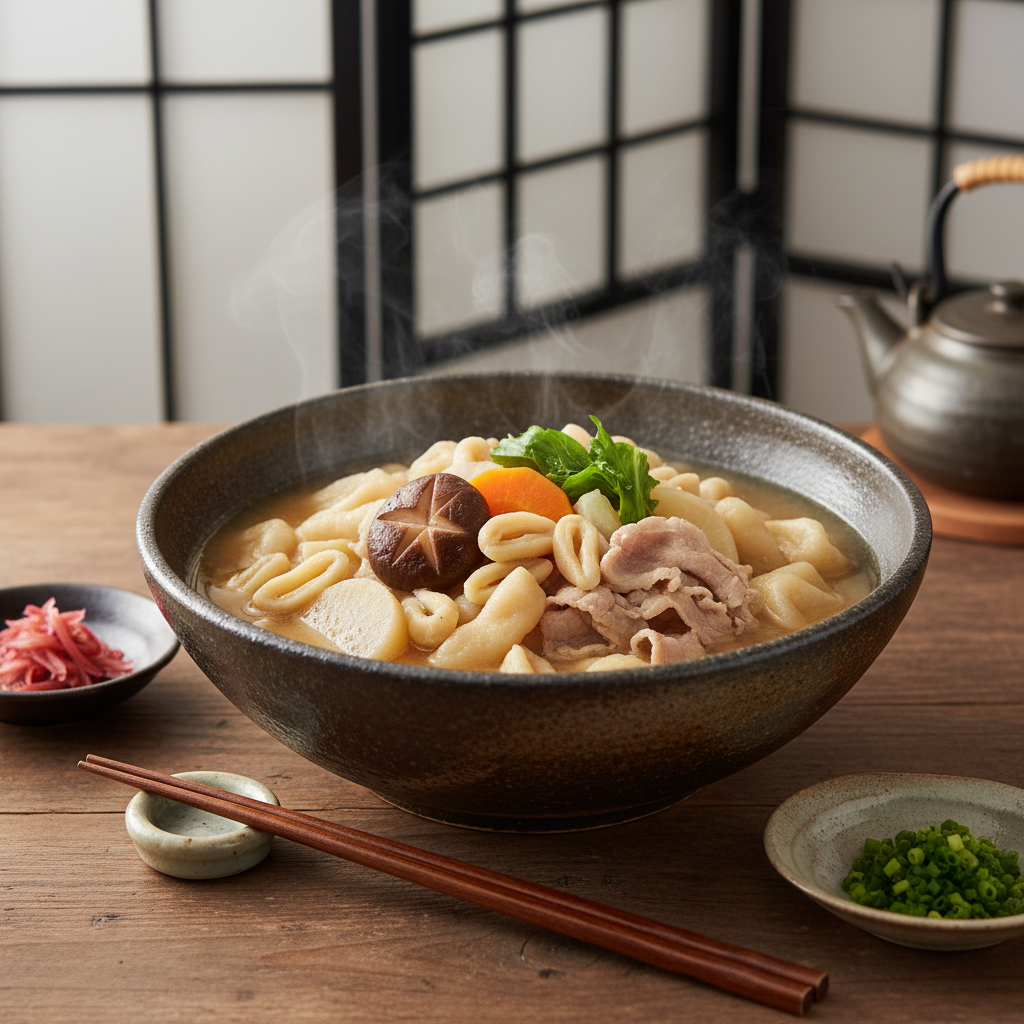
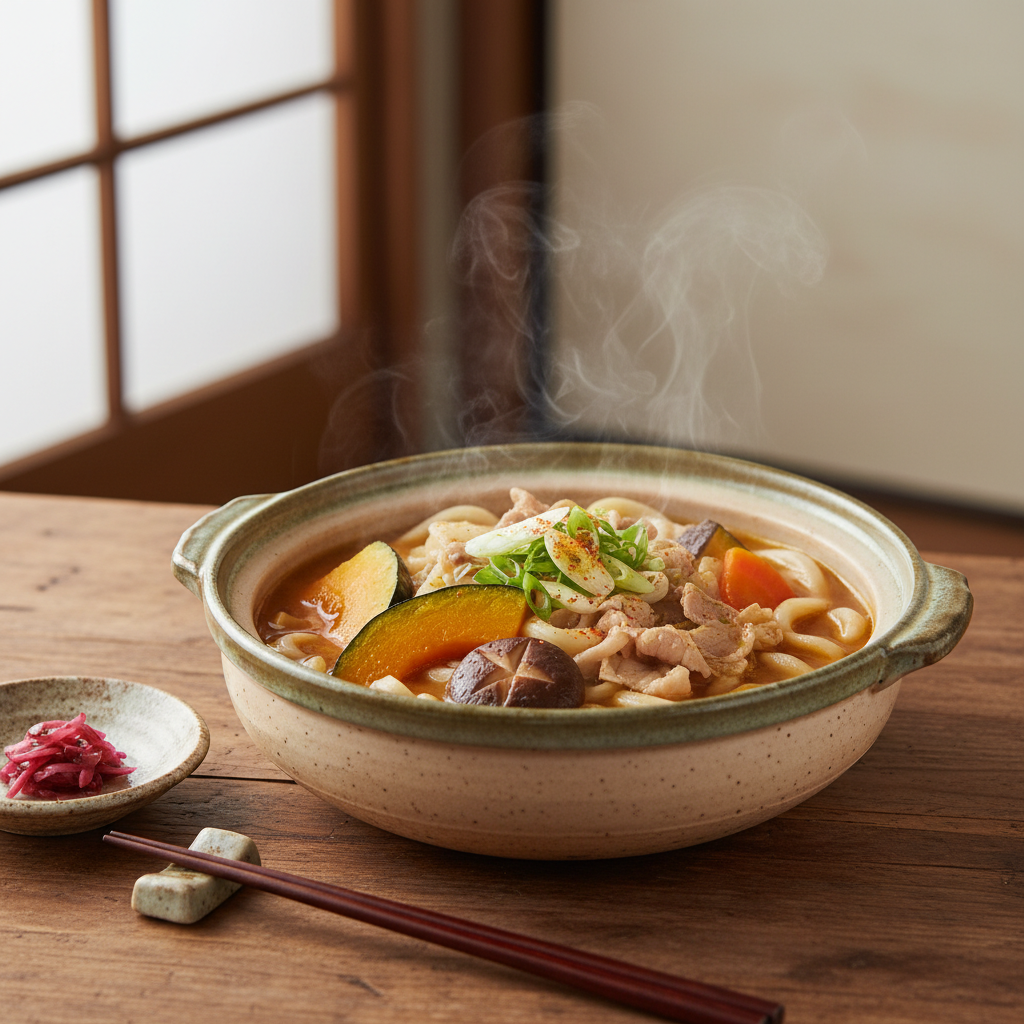
“Houtou” is a representative local dish of Yamanashi Prefecture in which thick, flat noodles (houtou noodles) made from kneaded wheat flour are simmered together with vegetables including pumpkin in a miso-based broth. In 2007, it was selected by the Ministry of Agriculture, Forestry and Fisheries as one of the “100 Local Dishes of Agricultural, Mountainous, and Fishing Villages,” and has become widely known nationwide as a symbol of Yamanashi’s food culture.
The phrase “It’s delicious, that pumpkin houtou,” which has been passed down in the prefecture for a long time, shows how houtou is cherished as the soul food of Yamanashi residents. While it has an image of being a dish to warm the body during cold winter months, it is actually eaten throughout the year as everyday food in households.
Characteristics of Houtou
The greatest characteristic of houtou is that the noodles are simmered raw together with vegetables and other ingredients without being boiled first. Through this cooking method, the starch that dissolves from the noodles thickens the broth, creating a dish that cools slowly and has excellent heat retention properties. Additionally, the flavor of wheat flour dissolves into the broth, creating a unique taste.
The noodles are thicker and flatter than regular udon, with a width of approximately 2-3 centimeters. They also have considerable thickness and provide a chewy texture. Unlike ordinary udon, they are made with only wheat flour and water without adding salt, so the noodles themselves have a simple taste.
History and Origins of Houtou
Connection to Takeda Shingen
There are various theories about the origins of houtou, but the most famous is a legend that it was devised by Takeda Shingen, a warlord of the Warring States period. He is said to have served it to his soldiers as field rations, and it was highly valued because it could be made easily, had high nutritional value, and could feed large numbers of people.
There is also a theory that it was named “Houtou” (宝刀, precious sword) because Shingen cut ingredients with a sword, and another theory that it originated from a Chinese dish called “Hakutaku” (餺飥). However, there is little documentary evidence supporting these legends, and since houtou appears frequently in documents from the Edo period onward, it is believed that it spread among common people from this period onward.
Food Culture Nurtured by Yamanashi’s Environment
Most of Yamanashi Prefecture is mountainous terrain with little flat land, making rice paddy development difficult. Therefore, rice was a precious food, and wheat and other grains were the staple foods in daily life. Wheat, which could be cultivated on sloped mountainous land, was an important crop supporting the diet of Yamanashi residents.
From these geographical and climatic conditions, dishes using wheat flour developed, and houtou became central to the dietary life of Yamanashi residents. In the past, there was a saying that “you are not an adult if you cannot make houtou noodles,” and daughters were taught to make it as their first step in bride training.
Differences in Regional Names
The name for houtou differs by region within Yamanashi Prefecture. In the Kyonan region, it is sometimes called “noshi-ire” or “noshi-komi.” These names derive from stretching the wheat flour (“noshi”) to make noodles and cooking them directly in the pot without boiling first.
Such regional differences in naming show that houtou was widely enjoyed throughout the prefecture and had taken root as a unique food culture in each region.
Differences Between Houtou and Udon
Differences in Preparation Method
The biggest difference between houtou and udon lies in their preparation methods. Udon is made by adding salt water to wheat flour, kneading it, letting it rest sufficiently, and then cooking by boiling. In contrast, houtou is made with only wheat flour and water without adding salt, and is cooked by simmering the raw noodles.
This difference in preparation method gives udon its characteristic chewy texture, while houtou has a soft, chewy feel. Additionally, since houtou does not involve a boiling step, it requires less effort and is easier to make in large quantities.
Differences in Cooking Method
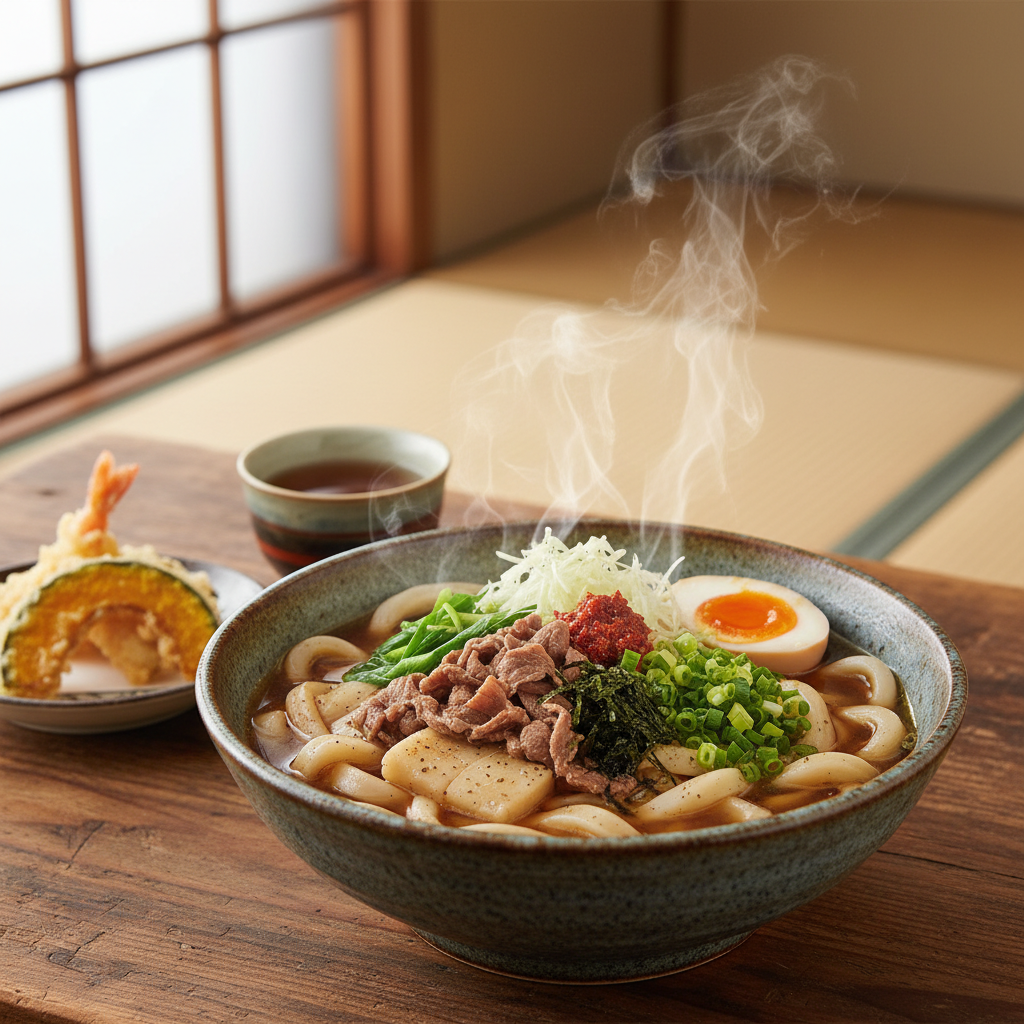
Udon is cooked separately by boiling, then placed in broth, but houtou is simmered together with vegetables and other ingredients as raw noodles. This cooking method allows starch from the noodles to dissolve into the broth, creating a unique texture and flavor.
While udon is mainly eaten in a soy sauce-based broth, houtou is fundamentally made with miso. In particular, using Koshu miso from Yamanashi Prefecture creates a deep flavor with rich umami.
Differences in Nutritional Value
Since houtou is simmered with plenty of vegetables, it has better nutritional balance than udon. It is particularly characteristic to be able to consume multiple vegetables at once, including pumpkin, daikon radish, carrot, green onion, and shiitake mushroom.
By simmering without boiling the noodles, vitamins and minerals dissolve into the broth, and since the dish is eaten with the broth, all nutrients are consumed without waste. During cold seasons, it is an ideal dish for warming the body and providing nutritional supplementation.
Main Ingredients Used in Houtou
Basic Materials
The basic materials for houtou are as follows:
Noodles (Houtou Noodles)
- Wheat flour: Medium or strong flour
- Water: approximately half the amount of wheat flour
Ingredients
- Pumpkin: The standard ingredient that adds sweetness and thickness
- Daikon radish: Provides texture and sweetness
- Carrot: Enhances color and nutritional value
- Green onion: Adds aroma and flavor
- Shiitake mushroom: Source of umami
- Taro or potato: Adds volume and texture
- Fried tofu or pork: Adds richness and umami
Broth and Seasonings
- Dried sardines or kombu: Broth base
- Koshu miso or Shinshu miso: Determines the flavor
- Soy sauce: For flavor adjustment
Seasonal Changes in Ingredients
In Yamanashi Prefecture, houtou is made with seasonal vegetables year-round. Spring features wild vegetables, summer includes eggplant and tomato, fall features various mushrooms, and winter includes Chinese cabbage and daikon radish. By incorporating the bounty of each season, it remains enjoyable throughout the year without becoming monotonous.
Particularly, winter pumpkin increases in sweetness through storage after harvest, becoming ideal for houtou. The phrase “It’s delicious, that pumpkin houtou” expresses the deliciousness of houtou made with this winter pumpkin.
How to Make Houtou (Serves 5)
Ingredients (Serves 5)
Noodles
- Medium or strong wheat flour: 500g
- Water: approximately 250ml
- Dusting flour (potato starch or wheat flour): as needed
Ingredients
- Pumpkin: 1/4 (approximately 300g)
- Daikon radish: 1/4 (approximately 200g)
- Carrot: 1
- Green onion: 2
- Shiitake mushroom: 5-6
- Taro: 3-4
- Fried tofu: 1 sheet
- Pork (thinly sliced): 150g (optional)
Broth and Seasonings
- Water: 2 liters
- Dried sardines: 20g (or kombu 10cm square 1 piece)
- Miso: 5-6 tablespoons (approximately 100g)
- Soy sauce: 1 tablespoon
How to Make the Noodles
- Make the dough: Put wheat flour in a bowl and gradually add water while mixing with chopsticks. Once somewhat combined, knead by hand until the texture resembles an earlobe.
- Rest the dough: Form the dough into a ball, cover with a damp cloth, and let rest for 30 minutes to 1 hour.
- Stretch the dough: On a surface dusted with flour, use a rolling pin to stretch the dough to 3-4mm thickness.
- Cut the noodles: Fold the dough and cut into 2-3cm widths. Dust the cut noodles with flour to prevent sticking.
Cooking Procedure
- Make the broth: Place water and dried sardines (or kombu) in a pot and let sit for about 30 minutes. Heat over medium heat and remove the sardines just before boiling.
- Prepare the ingredients:
- Remove seeds and strings from pumpkin and cut into bite-sized pieces
- Cut daikon and carrot into thick ginkgo-shaped slices
- Peel taro and cut into bite-sized pieces
- Remove stems from shiitake mushrooms and slice thinly
- Slice green onion diagonally
- Blanch fried tofu and cut into thin strips
- Cook the ingredients: Add vegetables that take longer to cook (daikon, carrot, taro, pumpkin) to the broth in order and simmer over medium heat.
- Add the noodles: Once vegetables are soft, add noodles one at a time while separating them. Occasionally stir to prevent sticking and simmer for 10-15 minutes.
- Season: Once noodles are soft, dissolve miso into the broth. Add green onion, shiitake mushroom, fried tofu, and pork, and simmer for another 5 minutes. Adjust flavor with soy sauce and complete.
Cooking Tips
- Since noodles contain no salt, they spoil easily, so use them immediately after making
- When adding noodles to the pot, spread them out gently so they cook evenly
- Simmer thoroughly until the broth becomes thick, which makes it cool more slowly
- Don’t let the miso boil too much as it loses flavor, so add it at the end as a key point
Major Traditional Regions and Opportunities for Food Traditions
Transmission Throughout the Prefecture
Houtou is eaten throughout Yamanashi Prefecture, but it is particularly prominent in the Kofu Basin area, Fuji Kitago region, and Kyonan region. Each region has slight variations in ingredients and seasoning, with each household passing down its own “family taste.”
In the Kunaka region centered on Kofu City, the standard houtou with plenty of pumpkin is the mainstream. In the Fujiyoshida area, there is a tendency to use more cabbage. In the Kyonan region, called “noshi-ire” or “noshi-komi,” the taste is more rustic.
Occasions and Seasons for Food Traditions
While houtou was once eaten frequently as everyday food, it is still made on various occasions in modern times:
As everyday food: It has become established as family cooking eaten on weekends and holidays. Since it can be made in large quantities at once, it is valued for large families and when entertaining guests.
Life events: Houtou is sometimes served at legal services and family gatherings. Particularly in rural areas, this tradition still remains.
Seasonal events: Many households eat pumpkin houtou at the winter solstice, and it remains a staple dish of the cold season.
Tourism and events: Events such as “Shosenkyo Houtou Taste Competition Serious Battle (Houtou Festival)” are held in various locations throughout the prefecture, becoming an opportunity to promote local food culture.
Nutritional Value and Health Benefits of Houtou
A Complete Meal with Excellent Nutritional Balance
Houtou is a highly nutritious dish containing carbohydrates, protein, vitamins, minerals, and dietary fiber in good balance.
Carbohydrates: Obtain carbohydrates from noodles as an energy source.
Vitamins: From pumpkin, β-carotene (Vitamin A), Vitamin C, and Vitamin E. From carrot, also β-carotene. These have antioxidant properties and immune-boosting effects.
Minerals: Obtain minerals such as potassium, calcium, and iron from vegetables and miso.
Dietary fiber: Obtain abundant dietary fiber from vegetables and mushrooms, which improves intestinal environment.
Protein: Obtain protein from pork, fried tofu, and miso.
Effect of Warming the Body
Miso has the effect of warming the body, and broth with thickness has high heat retention properties, cooling slowly and warming the body from the core. Eating houtou during cold winter months or at the beginning of a cold helps warm the body and aids recovery.
Easy to Digest
Since noodles are simmered until soft and vegetables are thoroughly cooked, the dish is easily digested and absorbed, making it gentle on the stomach and intestines. It is suitable for those who are unwell or elderly.
Preservation and Succession Efforts
Successors and Preservation Society Activities
Various efforts are being made throughout Yamanashi Prefecture to pass down the tradition of houtou to the next generation.
Cooking classes: Cooking classes teaching how to make houtou are regularly held at community centers and food education centers throughout the region. Activities to pass on noodle-making techniques to younger generations are particularly active.
School lunches: In elementary and junior high schools throughout the prefecture, houtou appears in school lunches as a local dish. It becomes a valuable opportunity for children to experience their local food culture.
Local cuisine research associations: Local cuisine research associations and food life improvement volunteers in each region conduct recipe recording and promotion activities.
Commercialization and Contemporary Efforts
Instant products: Numerous instant houtou products are sold for easy enjoyment. Products with noodles and miso soup in a set are popular as souvenirs.
Frozen and retort products: Frozen houtou and retort packages that allow families to recreate authentic flavors have been developed.
Specialty shop expansion: Houtou specialty shops including “Kosaku” have expanded throughout the prefecture and provide Yamanashi’s flavors to tourists.
SNS dissemination: Young chefs and food culture researchers disseminate the appeal and preparation methods of houtou through SNS such as Instagram and YouTube, acquiring new fan bases.
Creative houtou: While maintaining tradition, creatively arranged houtou such as tomato and curry flavors have appeared and are accepted by younger generations.
Famous Houtou Restaurants in Yamanashi Prefecture
Koshu Houtou Kosaku
A local cuisine restaurant operating 9 locations centered on Yamanashi Prefecture. On weekends and holidays, lines form outside this popular establishment. The signature “pumpkin houtou” features plenty of vegetables and the deep flavor of Koshu miso. Known as a favorite among locals and tourists alike.
Houtou Kura Bussei
A popular restaurant in the Shosenkyo area. The signature “golden houtou” won the “Shosenkyo Houtou Taste Competition Serious Battle (Houtou Festival)” three times in a row and was inducted into the hall of fame. It is valued for its highly refined flavor created through carefully selected ingredients and unique miso blend.
Other Notable Restaurants
Throughout the prefecture, houtou restaurants featuring local characteristics are scattered in various locations. In the Fujiyoshida area, you can enjoy regional houtou with abundant cabbage. Additionally, restaurants in renovated traditional buildings and restaurants operated by local farmers with attached direct sales shops are increasing, allowing enjoyment of the atmosphere as well.
Dining Methods and Etiquette
Basic Way of Eating
Houtou is typically made in a large pot and each person takes a portion to eat. Eating it piping hot is the secret to enjoying its deliciousness, so the pot is often kept on the fire or kept warm while eating.
Since the noodles are thick and long, it is acceptable to cut them to an appropriate length with chopsticks while eating. Because the broth has thickness, eating the noodles and vegetables together by scooping them up together allows balanced flavor experience.
Condiments and Accompaniments
Basically eaten as is without condiments, though some add seven-spice chili pepper or single-spice chili pepper according to preference. Additionally, serving with pickles (especially shallow-pickled Chinese cabbage or Nozawana pickles) refreshes the palate and allows more delicious eating.
Using Remaining Broth
The remaining broth after eating contains concentrated vegetable umami and miso flavor, so it should not be discarded but can be used. It can be enjoyed waste-free by adding rice to make congee or reheating the next day to use as a base for another dish.
Trivia for Enjoying Houtou
Seasonal Ways to Enjoy
Spring: Spring houtou with wild vegetables (warabi, zenmai, fuki-no-tou) is a dish that captures the bounty of the mountains.
Summer: Summer houtou using summer vegetables (eggplant, tomato, zucchini) has a refreshing taste that is easy to eat during hot seasons.
Autumn: Mushroom houtou generously using mushroom varieties (shimeji, maitake, enoki) is rich in umami with deep flavor.
Winter: Standard pumpkin houtou warms the body from the core and is optimal for nutritional supplementation.
Home Storage Methods
Handmade noodles without salt do not keep long, but if leftover noodles cannot be eaten the same day, freezing is possible. Thoroughly dust with flour and divide into small portions, then place in sealed bags and freeze for approximately one month storage. When using, cook from frozen without thawing.
Houtou as a Souvenir
When visiting Yamanashi Prefecture, various houtou products are sold as souvenirs, including fresh noodle type, dried noodle type, and instant type. Fresh noodle type allows enjoyment of authentic flavor but does not keep long, so dried or instant types are recommended for souvenirs to distant locations.
Summary
Houtou is a local dish nurtured by Yamanashi Prefecture’s environment and history, and continues to be loved as the soul food of the prefecture’s residents. The deep flavor born from simple ingredients of wheat flour and vegetables, excellent nutritional balance, and the warmth of gathering with family and friends are the charms of houtou.
While maintaining traditional preparation methods, it continues to evolve through contemporary arrangements and commercialization, becoming accepted by new generations. When visiting Yamanashi Prefecture, be sure to taste authentic houtou in its homeland and try making it at home to experience the charm of this wonderful local cuisine.
As the phrase “It’s delicious, that pumpkin houtou” suggests, houtou transcends being merely a dish, reflecting Yamanashi’s culture and the lives of its people as an irreplaceable food culture heritage.