What is Shippoku Cuisine? A Comprehensive Explanation of the History, Characteristics, and Etiquette of Nagasaki Prefecture’s Wa-Ka-Ran Local Cuisine
Nagasaki Prefecture has a unique local cuisine not found in other regions of Japan. It is “Shippoku cuisine (しっぽくりょうり).” This traditional dish, which has continued since the Edo period, is a wonderful fusion of Japanese, Chinese, and Western cuisine—a uniquely Nagasaki “hospitality cuisine” that has been passed down to the present day.
This article provides a detailed explanation of Shippoku cuisine, Nagasaki’s representative local food culture, covering everything from its historical background, the characteristics of the dishes, unique dining etiquette, to actual restaurants where you can experience it.
History and Origins of Shippoku Cuisine
International Cuisine Nurtured by Nagasaki During the Period of National Isolation
Shippoku cuisine was born in the early Edo period. At that time, Japan pursued a policy of national isolation, but Nagasaki was an exception, being permitted to engage in overseas trade. Through Dejima in particular, there was active exchange with Western countries such as the Netherlands and Portugal, as well as with China.
This unique historical background created Shippoku cuisine, a food culture unparalleled anywhere in the world. The cuisine is said to have its roots in the hospitality meals that Chinese people (Tōjin) living in Nagasaki served to their guests, to which Japanese food culture and Western ingredients and cooking methods were added, leading to Nagasaki’s unique development.
The Meaning of the Word “Shippoku”
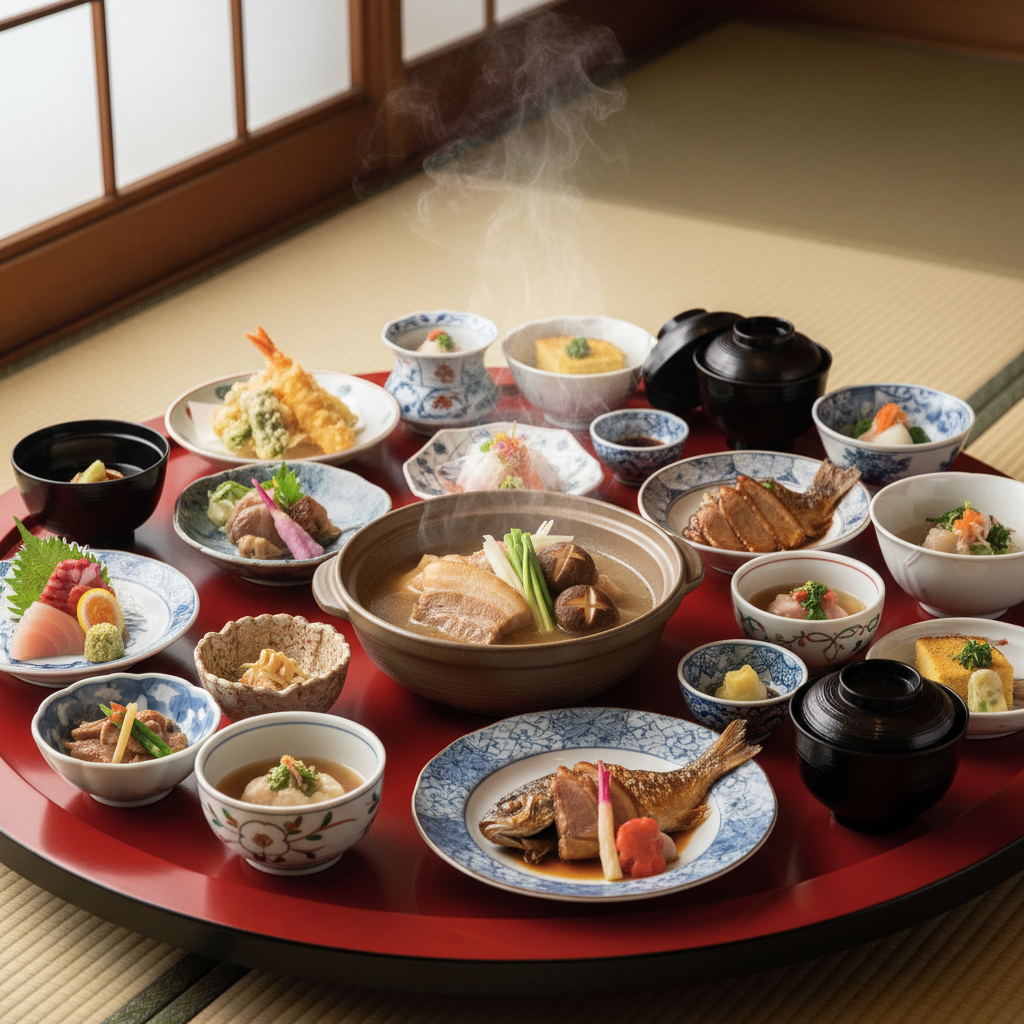
The word “Shippoku” itself carries meaning. “Shoku” (卓) refers to a round Chinese-style table, and “Hoku” (袱) refers to a tablecloth. In fact, Shippoku cuisine typically still uses lacquered red round tables, and eating together as a group surrounding this round table is a defining characteristic.
Connection with Putai Cuisine
The serving style of Shippoku cuisine also shows the influence of Putai cuisine (a type of Buddhist vegetarian cuisine) brought by Ingen Zenji and others. The serving format of Putai cuisine received menus mixing Japanese, Chinese, and Dutch elements created among Nagasaki townspeople, creating a unique Nagasaki food culture. This is said to be the beginning of Shippoku cuisine.
Characteristics of Shippoku Cuisine
Wa-Ka-Ran (Japanese-Chinese-Dutch) Fusion Cuisine
Shippoku cuisine is also called “Wa-Ka-Ran cuisine.” This expresses how elements of Wa (Japanese cuisine), Ka (Chinese cuisine), and Ran (Dutch and Portuguese Western cuisine) are beautifully fused together.
On a single table, Japanese sashimi, Chinese braised pork, and dishes incorporating Western cooking methods are laid out, with a menu composition that brings out the best of each culture. This multicultural fusion is the greatest characteristic and appeal of Shippoku cuisine.
Large-Plate Dishes and Round-Table Style
Shippoku cuisine does not have individual servings prepared for each person like kaiseki cuisine, but rather dishes plated on large plates are arranged on a round table, and the people surrounding it eat by taking servings from the shared dishes.
This style allows those gathered around the table to experience a sense of unity, truly embodying the spirit of “hospitality.” The sight of people surrounding a round table enjoying conversation while eating can be said to be the prototype of modern family gatherings and banquets.
Menu Utilizing Seasonal Ingredients
Shippoku cuisine makes generous use of fresh Nagasaki ingredients. In particular, fresh seafood caught in waters near Nagasaki is an indispensable ingredient in Shippoku cuisine. By incorporating seasonal ingredients with each season, you can enjoy flavors that differ with the four seasons.
Sashimi, simmered dishes, fried foods, steamed dishes, and other various cooking methods are employed, allowing you to savor a variety of tastes and textures within a single meal—another major appeal of Shippoku cuisine.
Representative Dishes of Shippoku Cuisine
O-Hire (お鰭)
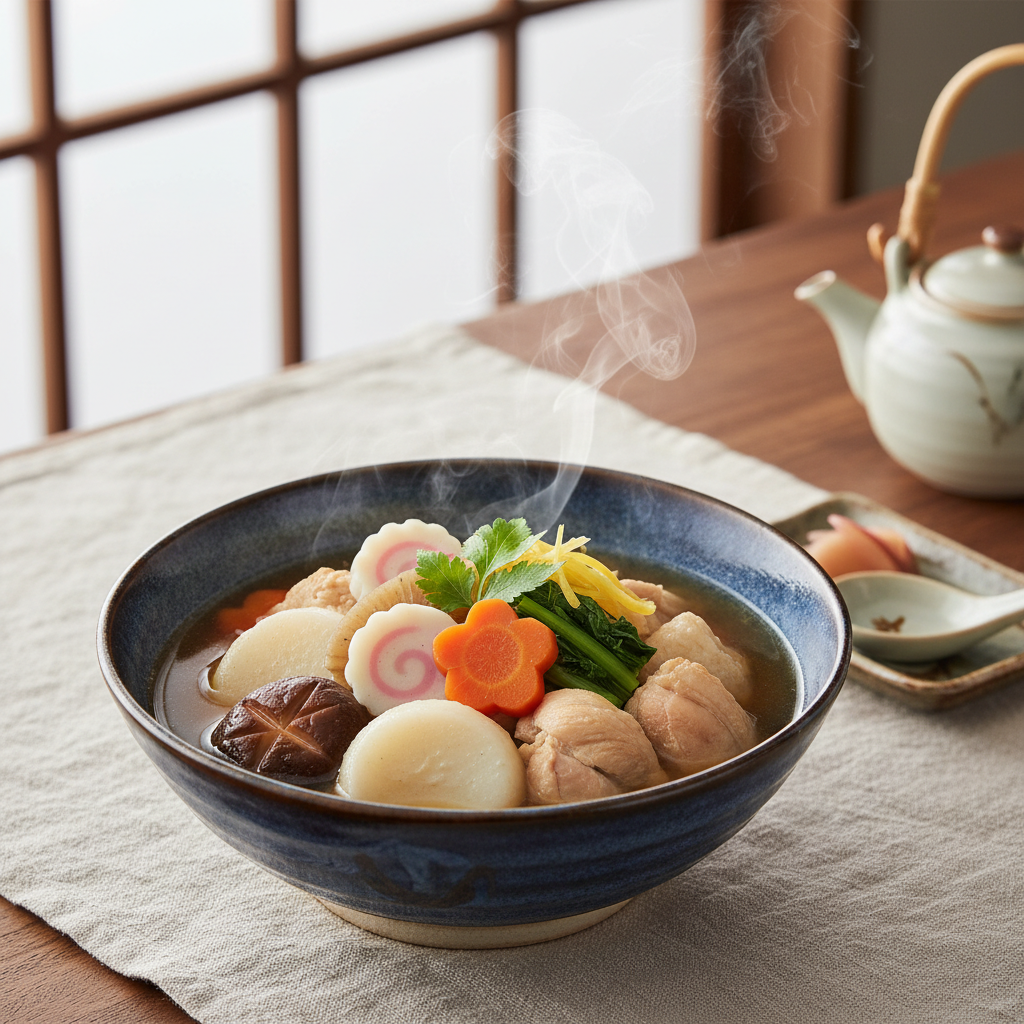
Shippoku cuisine always begins with the greeting “Please enjoy the o-hire.” O-hire is a soup made with fish such as sea bream and is the first dish served in Shippoku cuisine. This greeting is unique to Shippoku cuisine and serves as the signal announcing the beginning of the meal.
Sashimi
Fresh seafood sashimi caught in waters near Nagasaki is a standard in Shippoku cuisine. The types of fish used vary by season, allowing you to taste the most delicious fish of the season.
Tōba-ni (Braised Pork) and Kakuni
Tōba-ni, a dish heavily influenced by Chinese cuisine, is braised pork belly cooked with a sweet and salty flavor. It is also famous as a Nagasaki local specialty. The pork, simmered until tender, easily shreds with chopsticks, and is characterized by a rich flavor.
Hatoshi
Hatoshi, white bread sandwiched with shrimp paste and fried, is also a representative dish of Shippoku cuisine. It is a dish that can be enjoyed for its crispy texture and shrimp flavor, representing a fusion of Western bread and Chinese cooking methods.
Kōshao-gyo (Braised Fish with Sweet and Sour Sauce)
A whole fish is used and cooked with sweet and sour sauce. With its stunning appearance, it is a dish befitting Shippoku cuisine as a banquet dish.
Lotus Root Dishes
Lotus root dishes are also a standard in Shippoku cuisine in Nagasaki. Various cooking methods are used, including lotus root stuffed with mustard and lotus root dumplings.
Soups and Rice Dishes
The meal is concluded with soups and rice dishes. Seasoned rice dishes with seasonal ingredients and well-flavored broths finish off the meal.
Unique Dining Etiquette and Protocol of Shippoku Cuisine
Guidance by “Okatsutsama”
Shippoku cuisine has unique dining etiquette. At traditional Shippoku cuisine gatherings, a woman called “Okatsuttsama” serves as the server, explaining the dishes and instructing guests on how to eat. The existence of this “Okatsuttsama” is also a unique feature of Shippoku cuisine.
Beginning with “Please Enjoy the O-hire”
As mentioned above, Shippoku cuisine always begins with the greeting “Please enjoy the o-hire (御鰭).” In response, guests say “Thank you for the o-hire.” This ritualistic exchange conveys the formality and tradition of Shippoku cuisine.
Dishes Are Taken with Your Own Chopsticks
In Shippoku cuisine, when taking servings from the large plates, the formal etiquette is to use your own chopsticks (direct chopsticks) rather than serving chopsticks. This expresses a sense of unity and intimacy among those sharing the same table, embodying the spirit of Shippoku cuisine to “enjoy without regard to social standing.”
Two Serving Plates
In Shippoku cuisine, each guest is provided with two serving plates. One is for taking portions of dishes, and the other is for placing finished bones and such. This use of two plates is also a unique etiquette of Shippoku cuisine.
Seating Around the Round Table
When seated around a lacquered red round table, while the concepts of upper and lower seating positions exist, the shape of the round table itself symbolizes “equality.” The spirit of Shippoku cuisine is that people of different social statuses and positions gather around the same table and share the same food.
Difference Between Shippoku Cuisine and Kaiseki Cuisine
Shippoku cuisine is often confused with kaiseki cuisine. While both are traditional Japanese banquet dishes, there are several major differences between them.
Difference in Serving Style
Kaiseki cuisine provides individual place settings for each person, with dishes served one at a time in sequence. In contrast, Shippoku cuisine features large plates of food arranged on a round table, with everyone taking portions and eating together.
Difference in Origins of Cuisine
Kaiseki cuisine is pure Japanese food that developed from Japanese tea ceremony culture, while Shippoku cuisine is an internationally flavored cuisine that fuses Japanese, Chinese, and Dutch elements.
Difference in Dining Atmosphere
Kaiseki cuisine is often enjoyed in a quiet, formal atmosphere, while Shippoku cuisine is characterized by enjoying lively conversation while gathered around the round table.
Restaurants in Nagasaki City Where You Can Experience Shippoku Cuisine
Ryotei Kagetsu
Ryotei Kagetsu, located in Maruyama-cho, Nagasaki City, is a long-established restaurant representing Shippoku cuisine. You can enjoy authentic Shippoku cuisine while viewing historic buildings and beautiful gardens continuing from the Edo period. Reservations are required in advance, with reservations needed by the previous day. The experience of dining in a historic room offers a valuable opportunity to experience Nagasaki’s culture with all your senses.
Nagasaki Shippoku Hamakatu
A restaurant that maintains the traditions of Shippoku cuisine spanning over 300 years while also incorporating arrangements suited to modern tastes. Using seasonal ingredients from Nagasaki, it offers different menus depending on the season. It also provides catering, takeout, and mail-order services, allowing you to enjoy Shippoku cuisine at home.
Other Shippoku Cuisine Restaurants
Several other restaurants and eateries in Nagasaki City serve Shippoku cuisine. With varying price ranges, you can experience Shippoku cuisine at relatively affordable prices at some establishments. It’s nice to have options to choose from depending on your budget and purpose.
Tips for Enjoying Shippoku Cuisine
Reservations Are Essential
Shippoku cuisine is basically completely reservation-only. Reservations are required by the previous day at most restaurants due to the time needed for preparation. At long-established restaurants in particular, reservations may be needed several days in advance, so book with plenty of time to spare.
Multiple People Are Recommended
Shippoku cuisine uses a style of surrounding a round table and sharing large plates, so dining with multiple people is recommended. With a group of four or more, you can enjoy more varieties of dishes.
Allow Plenty of Time
Since Shippoku cuisine is served as a course meal, meals typically take about two hours. Rather than eating in a hurry, the real joy of Shippoku cuisine lies in savoring it slowly while enjoying conversation.
Enjoy Seasonal Differences
Since Shippoku cuisine emphasizes seasonal ingredients, the menu changes depending on when you visit. Since there are new discoveries each time you visit, it’s recommended to experience it multiple times in different seasons.
Inheritance and Evolution of Shippoku Cuisine in Modern Times
Modernization While Preserving Tradition
Shippoku cuisine restaurants in Nagasaki preserve traditions spanning over 300 years while making ingenuities suited to modern tastes. For example, menus are created with consideration for health-conscious preferences, such as reducing oil usage or increasing the proportion of vegetables.
Catering and Takeout Services
In recent years, restaurants have increasingly offered catering and takeout services in addition to dining at the restaurant. This allows people to enjoy Shippoku cuisine at home or at the office, making it a more accessible experience.
Mail Order Available Nationwide
With the development of internet commerce, Nagasaki’s Shippoku cuisine can now be ordered online from anywhere in Japan. Advances in freezing technology have made it possible to recreate the restaurant’s taste at home.
Value as a Tourist Resource
Shippoku cuisine has garnered attention as a tourist resource representing Nagasaki. It has been selected as part of the “100 Local Dishes of Agricultural and Fishing Villages,” and has become one of the must-experience cultural experiences for tourists visiting Nagasaki.
Understanding Nagasaki’s History and Culture Through Shippoku Cuisine
History of Nagasaki as an International Port
Savoring Shippoku cuisine is not merely enjoying delicious food, but also experiencing Nagasaki’s history. Nagasaki’s tolerance and flexibility in being the only open window during the period of national isolation and accepting various cultures are reflected in this cuisine.
Symbol of Cross-Cultural Exchange
Shippoku cuisine, where the different cultures of Wa, Ka, and Ran fuse without conflict, demonstrates an ideal form of cross-cultural exchange. The attitude of recognizing the strengths of each culture, incorporating them, and creating something new is an important lesson that applies to modern society as well.
Spirit of Hospitality
The style of Shippoku cuisine—gathering around a round table and sharing the same food without regard to social standing—embodies the warm “spirit of hospitality” of Nagasaki’s people. This spirit continues to flow through the foundation of Nagasaki’s culture today.
Conclusion: Shippoku Cuisine Is a Cultural Heritage That Nagasaki Takes Pride In
Shippoku cuisine is a precious cultural heritage that transcends being merely a local dish, embodying Nagasaki’s history and culture. With its wonderful fusion of Japanese, Chinese, and Dutch elements, this cuisine is unique in the world and offers a special experience that can only be tasted in Nagasaki.
The time spent gathering around a lacquered red round table, with meals beginning with the greeting “Please enjoy the o-hire,” is a luxurious moment to contemplate Nagasaki’s history while enjoying delicious food and pleasant conversation.
When visiting Nagasaki, be sure to experience Shippoku cuisine. And through this traditional cuisine, why not touch the internationally colored culture Nagasaki has nurtured and the spirit of hospitality it embodies. With over 300 years of history, Shippoku cuisine is sure to leave you with special memories.