
Complete Guide to Funankogui | History, How to Make, and Cultural Background of a Traditional Local Dish from Kashima City, Saga Prefecture
What is Funankogui?
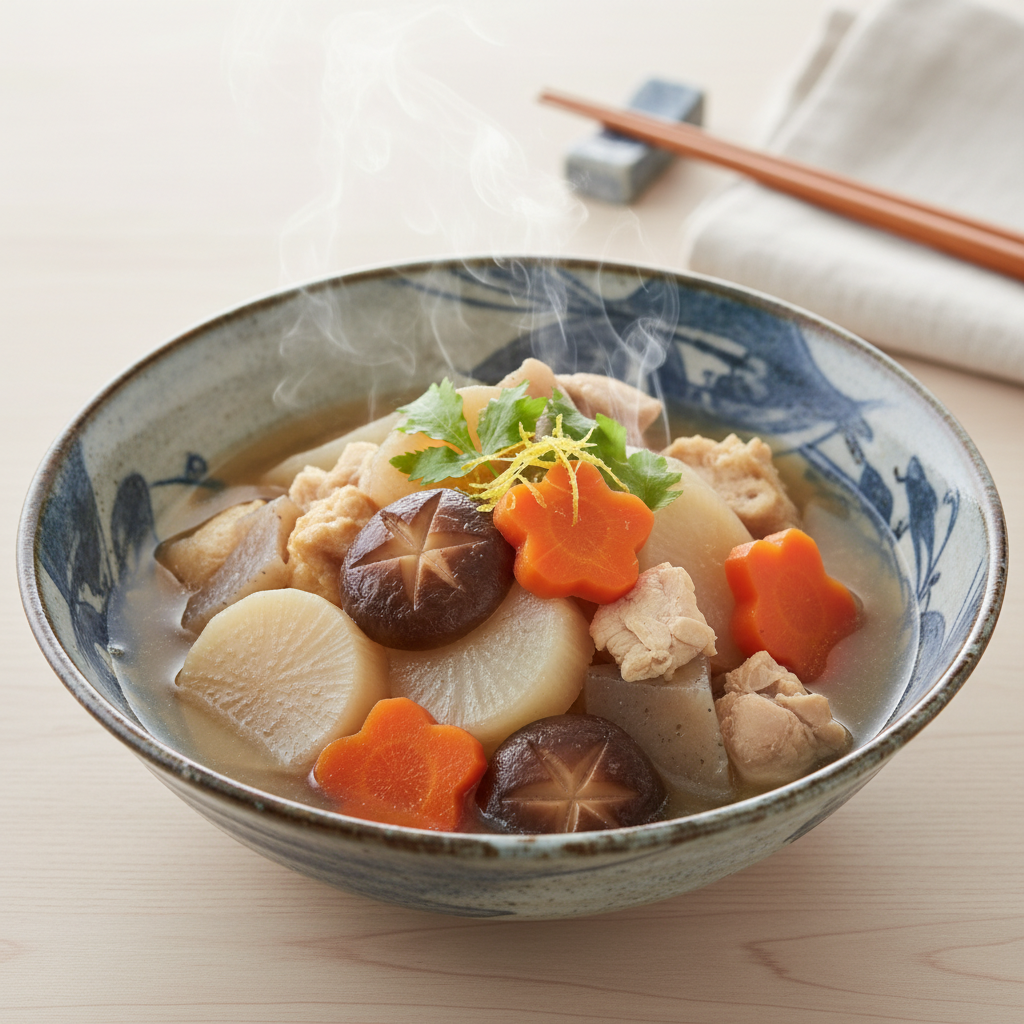
“Funankogui” is a traditional local dish with a history of over 300 years, centered in Kashima City, Saga Prefecture. Formally meaning “kombu-wrapped crucian carp,” it is made by wrapping live crucian carp in kombu seaweed and simmering it for an extended period with vegetables such as daikon radish and burdock root. Its characteristic feature is that even the bones become soft enough to eat.
This dish is not merely a home-cooked meal, but rather a symbol of food culture deeply connected to the region’s history, culture, and the lives of its people. In 2022, it was officially recognized by the Cultural Affairs Agency as one of the “100-Year Foods.” It is truly representative of Saga Prefecture’s local cuisine, born from the convergence of the water channel culture unique to the Saga Plain, the abundant natural environment of the Ariake Sea, and merchant customs dating back to the Edo period.
History, Origins, and Related Events of Funankogui
Background to Its Creation and the Substitute for Sea Bream
The origins of funankogui trace back to the Edo period. At that time, merchants, sake brewery owners, and fishing net operators in Kashima City, Saga Prefecture had a custom of honoring their servants and storehouse workers on the twentieth day of the lunar new year (January 20th) by seating them in places of honor and treating them to special dishes.
While sea bream dishes would normally be served at celebratory occasions, sea bream was rarely caught in the Ariake Sea and was extremely expensive, making it an ingredient beyond the reach of ordinary people. Thus, crucian carp, which had a similar appearance to sea bream, came to be used as a substitute, marking the beginning of funankogui.
Connection to the Hori-boshi Drainage Culture of the Saga Plain
The Saga Plain has a unique topography with agricultural water channels and drainage ditches arranged like a network. In autumn, work called “hori-boshi” (draining the ditches) is performed, during which large quantities of crucian carp, carp, and other freshwater fish are caught.
Using the fresh crucian carp caught during this hori-boshi drainage, funankogui began to be made as a winter preserved food through extended simmering. In an era without refrigeration technology, the method of slow simmering increased shelf life, softened the bones to enable complete nutritional absorption, and represents the accumulated wisdom of ancestors.
The 300-Year Tradition of the “Funa Market”
Every January 19th, early in the morning, the “Funa Market” is held along Hizen Hama-shuku Sake Brewery Street (Nakamachi Street) in Hamamachi, Kashima City. This market is a traditional event that has continued for over 300 years, where crucian carp and vegetables to be offered to Ebisu and Daikoku deities on the following day of the twentieth day of the lunar new year are sold.
At the Funa Market, everything needed to make funankogui is available in one place: live crucian carp, daikon radish, burdock root, lotus root, kombu seaweed, and other ingredients. Not only local residents but also people from distant places visit, continuing to preserve the region’s food culture. In recent years, tasting events have also been held, and activities to pass down the tradition to younger generations have become increasingly active.
Main Areas of Transmission
Funankogui is a local dish known throughout Saga Prefecture, but it is particularly strongly preserved in areas centered on the Hamamachi district of Kashima City.
Hamamachi District of Kashima City
The Hamamachi district is known as Hizen Hama-shuku, an area where historic streetscapes from the Edo period remain. This was a place that flourished through sake brewing and commerce from the Edo period onward. In this area, the custom of the twentieth day of the lunar new year remains strong even today, and the culture of making funankogui in individual households is being passed down.
Spread Throughout Saga Prefecture
Beyond Kashima City, in areas throughout the Saga Plain such as Saga City, Ogi City, and Shiraishi Town, funankogui is made as a dish for hare no hi (celebration days or special occasions). While there are slight differences in seasoning and vegetables used depending on the region, the basic method of wrapping crucian carp in kombu and simmering it for an extended period is common.
The custom of making large quantities in a big pot and distributing it to neighboring households also remains, and the dish serves a role in binding the community together.
Main Ingredients Used
Funankogui uses ingredients nurtured by the abundant nature of the Saga Plain.
Crucian Carp (Funa)
The main ingredient is fresh crucian carp caught during hori-boshi drainage. Species such as silver crucian carp and Gengoroubunas are used, and the traditional method involves using live fish for cooking. Crucian carp about 15 to 20 centimeters in body length are considered most suitable.
Kombu Seaweed
The kombu used to wrap the carp plays an important role in drawing out the dish’s umami flavor. High-quality kombu from Hokkaido is most often used, with kombu about 3 to 4 centimeters wide and 30 centimeters long prepared for each fish.
Vegetables
Daikon Radish: The most commonly used vegetable, cut into thick rounds. When simmered for an extended period, it absorbs the umami of the carp and becomes soft and tender.
Burdock Root: An essential ingredient for adding aroma and texture. It is sliced diagonally or cut into irregular pieces.
Lotus Root: An ingredient added depending on the region and household, which enhances texture and nutritional value.
Seasonings
Miso: Barley miso or rice miso from Saga Prefecture is often used, giving the dish a deep, rich flavor.
Malt Syrup or Sugar: Used to add sweetness and gloss. Traditionally, malt syrup is preferred.
Soy Sauce: Used for flavoring and color.
Sake or Mirin: Added to remove unpleasant odors and enhance flavor.
Ingredients (Serves 10-15 People)
Funankogui is traditionally made in large quantities in a big pot. The following are standard proportions.
- Crucian carp (live): 10 to 15 fish (approximately 150-200g each)
- Kombu seaweed: As needed depending on the number of fish (approximately 30cm per fish)
- Daikon radish: 2 to 3 roots (approximately 2kg)
- Burdock root: 500g to 1kg
- Lotus root: 500g (optional)
- Miso: 300 to 400g
- Malt syrup: 5 to 6 tablespoons (or 150 to 200g sugar)
- Soy sauce: 100 to 150ml
- Sake: 200ml
- Water: As needed (enough to submerge ingredients)
How to Make It
Cooking funankogui is time-consuming and labor-intensive, but the effort produces a deep, rich flavor.
Preparation
- Processing the Carp: Prepare live crucian carp and remove the scales. The traditional method involves leaving the internal organs intact, though modern households increasingly remove them.
- Preparing the Kombu: Gently wipe the kombu with water and cut it to a size that can wrap around one fish.
- Preparing the Vegetables: Cut daikon radish into 2 to 3 centimeter-thick rounds, slice burdock root diagonally, and slice lotus root into 1 centimeter-thick rounds.
Cooking Steps
- Wrapping the Carp in Kombu: Wrap the body of the carp firmly with kombu and secure it with kanpyo (dried gourd strips) or cotton string. The key is to wrap it so that the head and tail protrude.
- Adding Ingredients to the Pot: Line the bottom of a large pot with daikon radish, arrange the kombu-wrapped carp on top, and fill the gaps with burdock root and lotus root.
- Adding Seasonings: Add water until ingredients are submerged, then add miso, malt syrup, soy sauce, and sake.
- Simmering with a Drop Lid: Bring to a boil over high heat, then reduce to low heat and cover with a drop lid. Remove scum while simmering slowly for 12 to 24 hours. If the broth reduces too much, add more water.
- Finishing: The dish is complete when the carp’s bones become soft and easily cut with chopsticks. Turning off the heat and letting it sit overnight allows the flavors to penetrate further.
Cooking Tips
- Heat Control: Simmering slowly over low heat is the most important factor. High heat will cause the flesh to fall apart.
- Broth Management: Maintain the broth by adding water as needed to prevent it from reducing too much.
- Removing Fishy Odors: Extended simmering naturally removes fishy odors, though adding sake or ginger makes it even more effective.
Occasions and Seasons for This Dish
Twentieth Day of the Lunar New Year (January 20th)
Funankogui is most commonly made around the twentieth day of the lunar new year. In the Hamamachi district of Kashima City, people purchase ingredients at the Funa Market on January 19th, offer the dish to Ebisu and Daikoku deities on the morning of the 20th, then eat it with family and relatives.
Dishes for Hare no Hi (Special Occasions)
Beyond the twentieth day of the lunar new year, funankogui is made for other hare no hi such as New Year’s, seasonal festivals, and Okunchi (autumn festivals). It has been valued as a special dish and as a way to entertain guests.
Winter Preserved Food
Some households make funankogui as a preserved food during autumn and winter when hori-boshi drainage occurs. Extended simmering increases its shelf life, and it remains delicious for several days.
How to Eat It
Eaten Warm
The most common way is to eat it warm, fresh from cooking. The carp flesh is tender and delicate, infused with the umami of kombu and the aroma of miso. Since the bones are soft, the entire fish can be eaten whole.
Also Delicious Cold
Funankogui that has been left overnight and cooled is also extremely delicious, with flavors thoroughly absorbed. The broth, which has become a gelatin-like consistency, has a rich, concentrated umami.
As a Rice Dish Topping
With its strong flavor, it pairs excellently with white rice. Some people pour the broth over rice to eat it.
As a Sake Accompaniment
Kashima City is also known as a sake-producing region, and the combination of local sake with funankogui is considered the ultimate pairing.
Nutritional Value and Health Benefits
Funankogui has gained attention as a highly nutritious dish.
Abundant Calcium
By simmering the bones until soft, the calcium contained in the carp’s bones can be efficiently absorbed. Kombu seaweed also contains abundant calcium, making it effective for osteoporosis prevention.
High-Quality Protein
Crucian carp is a source of high-quality protein with well-balanced essential amino acids.
Vitamins and Minerals
Root vegetables such as daikon radish, burdock root, and lotus root provide dietary fiber, vitamin C, potassium, and other nutrients.
DHA and EPA
Crucian carp contains unsaturated fatty acids such as DHA and EPA, which contribute to blood health and brain function maintenance.
Efforts for Preservation and Transmission
Continued Hosting of the Funa Market
The Funa Market, which has continued for over 300 years, is held annually without fail as an important cultural event in the community. It is operated primarily by the Kashima City Tourism Association and local shopping districts, with tasting events and recipe distribution also conducted.
Cultural Affairs Agency “100-Year Foods” Recognition
In 2022, funankogui was recognized by the Cultural Affairs Agency’s “100-Year Foods” program. This is a system aimed at preserving diverse food cultures passed down in communities, and this recognition has increased its national awareness.
Provision in School Lunches
Elementary and middle schools in Kashima City provide funankogui in school lunches as part of local cuisine education initiatives. This serves as an important opportunity to convey the region’s food culture to children.
Cooking Classes and Experience Events
Cooking classes and experience events for making funankogui are regularly held at community centers and tourist facilities in the area. Local elderly people serve as instructors, passing down traditional cooking methods to younger generations and tourists.
Information Sharing on SNS
Kashima City and Saga Prefecture tourism-related accounts share images of the Funa Market and the appeal of funankogui on social media. Through Instagram and Facebook, they aim to raise awareness among younger generations.
Commercialization Efforts
In recent years, there have been moves to commercialize funankogui as retort-packed and frozen foods. By providing the traditional flavor while adapting to modern lifestyles, the scope of preservation is being broadened.
Food Culture of the Ariake Sea and Saga Plain
Funankogui is one example of food culture created by the unique natural environment of the Ariake Sea and the Saga Plain.
Blessings of the Ariake Sea
The Ariake Sea, with a tidal range of about 6 meters, reveals vast mudflats extending 5 to 7 kilometers offshore at low tide. These mudflats are home to unique organisms such as mudskippers, polka-dot gobies, and gem clams, which are not found elsewhere and have greatly influenced Saga Prefecture’s food culture.
Water Channel Culture of the Saga Plain
The Saga Plain is one of Japan’s premier grain-producing regions, and the irrigation system developed since the Edo period continues to function today. These water channels are home to abundant freshwater fish such as crucian carp and common carp, which have served as important sources of protein.
Preservation of Freshwater Fish Food Culture
While the custom of eating freshwater fish has faded in modern times, Saga Prefecture maintains a strong tradition of freshwater fish cuisine, including funankogui, carp sashimi, and grilled eel, among others.
Issues and Prospects in Modern Times
Difficulty in Securing Crucian Carp
In recent years, the amount of crucian carp caught during hori-boshi drainage has decreased due to agricultural modernization and waterway maintenance. Additionally, the increase in invasive species affects the habitat of native crucian carp. At the Funa Market, cases of sourcing carp from outside the prefecture have increased, making it a challenge to secure locally-sourced fish.
Time and Effort Required for Cooking
The extended simmering required for funankogui does not easily accommodate modern, busy lifestyles. For passing down the tradition to younger generations, simplification of cooking methods and development of time-saving recipes are being considered.
Utilization as a Tourism Resource
Funankogui has potential as a valuable tourism resource for Saga Prefecture. Development of tourism routes combining the historic streetscapes of Hizen Hama-shuku and expansion of experiential tourism programs are anticipated.
Appealing to Younger Generations
Rather than merely preserving tradition, developing modern-style recipe variations and suggesting stylish presentations are important for capturing the interest of younger generations.
Conclusion
Funankogui is a traditional local dish that has been passed down for over 300 years in Kashima City, Saga Prefecture. This dish, made by wrapping crucian carp in kombu and simmering it for an extended period with vegetables, concentrates the abundant nature of the Ariake Sea and the Saga Plain, merchant culture dating from the Edo period, and the bonds of community ties.
The Funa Market, held annually on January 19th, has become an important venue for passing this tradition to future generations, and its recognition by the Cultural Affairs Agency’s “100-Year Foods” program has also brought national attention.
While modern challenges exist, such as securing ingredients and the time-consuming nature of cooking, various preservation and transmission efforts continue through school lunch provision, cooking classes, and commercialization initiatives.
Funankogui is not merely food but rather a valuable cultural heritage that conveys the region’s history, culture, and people’s lives. Preserving this traditional flavor and passing it on to future generations holds tremendous significance in maintaining the diversity of Saga Prefecture’s food culture.
When visiting Saga Prefecture, be sure to visit the Funa Market and taste funankogui. This deep flavor packed with 300 years of history will surely become an unforgettable experience.