What is Suko Sushi? Complete Explanation of the History, Characteristics, and How to Make This Traditional Local Dish Passed Down for 500 Years in Shiraishi Town, Saga Prefecture
In the Suko district of Shiraishi Town, Kishima County, Saga Prefecture, there is a traditional local dish that has been passed down for over 500 years. It is called “Suko Sushi (すこずし).” This pressed sushi, featuring unique vinegared rice made with glutinous rice, beautifully arranged with treasures from the Ariake Sea and mountain bounty, is an indispensable specialty that continues to be cherished by local people at festivals and celebrations.
This article provides a detailed explanation of Suko sushi, from its historical background and characteristics to its specific preparation method and where you can actually taste it.
Basic Information About Suko Sushi
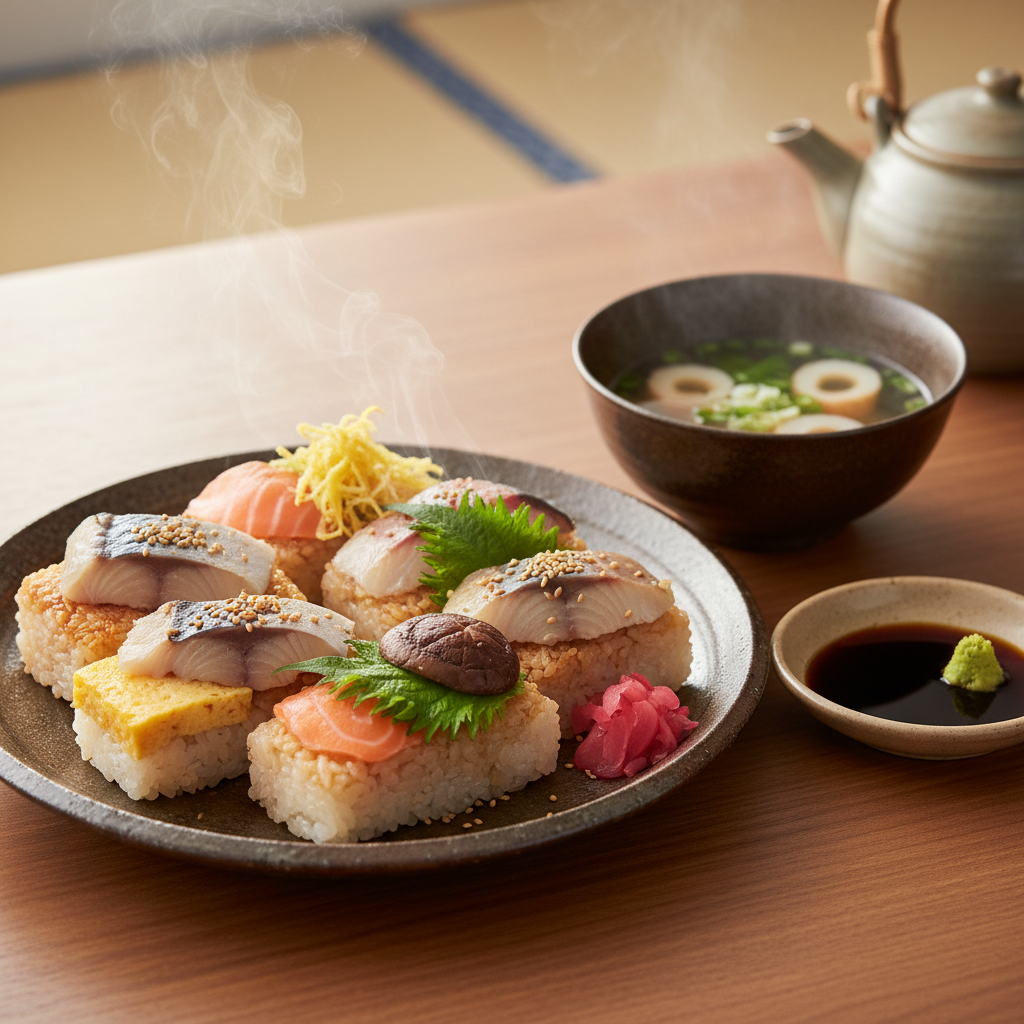
Suko sushi is a traditional box sushi (pressed sushi) passed down in the Suko district of Shiraishi Town, Saga Prefecture. It has been selected by the Ministry of Agriculture, Forestry and Fisheries as one of the “100 Selected Local Dishes of Agricultural, Mountain, and Fishing Villages,” and is widely recognized as one of Saga Prefecture’s representative local dishes.
Characteristics of Suko Sushi
The greatest characteristic of Suko sushi lies in its unique vinegared rice and luxurious combination of ingredients.
Characteristics of the vinegared rice:
- A unique method of cooking regular rice mixed with glutinous rice
- The stickiness and sweetness of glutinous rice give deep flavor to the entire sushi
- Carefully crafted to taste delicious even when cooled
Characteristics of the ingredients:
- Egg strips: Golden egg strips that add vibrancy to the entire sushi
- Shaved burdock root: An accent of texture and flavor
- Nara pickles: Unique sweetness and crisp texture
- Kamaboko: Adds red and white coloring
- Pickled red ginger: Bright color and refreshing flavor
- Shiitake mushrooms: Sweet and savory seasoned mushrooms with concentrated umami
- Denbu: Lightly sweet pink fish flakes
- Mutsugorou: Grilled specialty from the Ariake Sea
- Shrimp: Adds festive elegance appropriate for celebrations
These ingredients are packed into a wooden box and pressed firmly with a weight, creating a beautiful layered pressed sushi.
History and Origins of Suko Sushi
Several legends remain regarding the origins of Suko sushi.
Warring States Period Origin Theory
The most widely known legend dates back to the Warring States period. It is said that a local lord of the Suko district at that time served this sushi to his soldiers when departing for battle to boost their morale. Pressed sushi with high preservation and nutritional value was an ideal portable food for soldiers heading to battle.
Theory of Offering to the Lord
According to another legend, more than 500 years ago, the local lord of the Suko district cared for the farmers in his domain and devoted himself to improving rice quality. In gratitude, the local people made sushi using treasures from the sea and mountains and offered it to the lord. This is said to be the beginning of Suko sushi.
In this account, a strong bond and mutual respect between the lord and the people form the background for Suko sushi’s creation. The gratitude for the lord’s efforts to improve the farmers’ lives was expressed in the form of this beautiful sushi.
Tradition from the Muromachi Period
Historical records confirm that Suko sushi is a traditional dish continuing from the Muromachi period. Over more than 500 years, passed down through generations, this local dish has transcended being mere food to become a manifestation of the region’s culture and history.
Reasons Suko Sushi Took Root in the Community
The reasons Suko sushi has taken root in the community over the years are deeply connected to the geographical and cultural background of Shiraishi Town.
Abundant Food Resources
Shiraishi Town as a rice producer:
Shiraishi Town is located on fertile land in the Saga Plain and has long been known as a producer of high-quality rice. It is also famous as a producer of onions and lotus roots, and agriculture thrives in the region. This rich rice-growing tradition provided the foundation for the delicious vinegared rice that is the basis of Suko sushi.
Blessings of the Ariake Sea:
Shiraishi Town faces the Ariake Sea, where unique marine products such as mutsugorou are abundant. This seafood unique to the Ariake Sea gives Suko sushi its distinctive character.
Festival and Celebration Culture
In the Suko district, there has long been a custom of making this box sushi and serving it to guests at festivals and celebrations. In particular, Suko sushi has played an important role in the following situations:
- Hospitality to visitors at the local temple (Nichirinzan Suido Anshuji)
- A welcome feast for a daughter’s homecoming visit
- Serving at local festivals
- Presenting at family celebrations
By being positioned as a dish for these “special occasions,” Suko sushi became deeply connected to the region’s identity and was passed down through generations.
How to Make Suko Sushi
Here is a detailed explanation of the traditional way to make Suko sushi. Use this as a reference when making it at home.
Ingredients (for approximately 6 people)
For the vinegared rice:
- Regular rice: 3 cups
- Glutinous rice: 1 cup
- Vinegar: 4 tablespoons
- Sugar: 3 tablespoons
- Salt: 1 teaspoon
Ingredients:
- Eggs: 3 (for egg strips)
- Burdock root: 1 piece
- Dried shiitake mushrooms: 5-6 pieces
- Nara pickles: to taste
- Kamaboko (red and white): to taste
- Pickled red ginger: to taste
- Denbu: to taste
- Grilled mutsugorou: to taste (can substitute with conger eel if difficult to obtain)
- Shrimp: 6 pieces
Seasonings:
- Soy sauce: 2 tablespoons
- Sugar: 2 tablespoons
- Mirin: 1 tablespoon
- Dashi stock: to taste
Step-by-Step Instructions
1. Preparing the Vinegared Rice
- Wash regular rice and glutinous rice together and cook slightly firmer than usual
- Mix vinegar, sugar, and salt together to make the vinegar mixture
- Pour the vinegar mixture over the cooked rice and mix with a wooden spatula using a cutting motion
- Cool to body temperature while fanning with a fan
2. Preparing the Ingredients
Egg strips:
- Beat eggs well and add a small amount of sugar and salt
- Cook thinly and cut into thin strips
Burdock root:
- Cut into thin shavings and soak in water to remove bitterness
- Simmer in dashi stock, soy sauce, and sugar until sweet and savory
Shiitake mushrooms:
- Reconstitute dried shiitake in water
- Simmer in soaking liquid, soy sauce, sugar, and mirin until sweet and savory
- Slice thinly
Shrimp:
- Remove the dark vein and boil in salt water
- Remove shells and butterfly open
Other ingredients:
- Slice Nara pickles thinly
- Slice kamaboko thinly
- Cut grilled mutsugorou into bite-sized pieces
3. Assembling the Sushi
- Prepare a wooden box (or use a sushi mold or deep container)
- Wet the inside of the box with water
- Place half of the vinegared rice in the box and flatten
- Scatter cooked shiitake mushrooms, burdock root, and other cooked items evenly
- Fill with the remaining vinegared rice and flatten
- Press evenly from above using a pressing lid or similar
- Cover the surface completely with egg strips
- Arrange Nara pickles, kamaboko, pickled red ginger, denbu, mutsugorou, shrimp, and other items on top with colorful balance
- Press lightly again to blend the ingredients together
4. Finishing
- Let sit for a while to allow flavors to blend
- Cut into bite-sized pieces
- Plate and serve
Tips and Pointers for Making
- Glutinous rice ratio: Adding glutinous rice increases stickiness and sweetness, making it delicious even when cooled
- Pressing force: Do not press too hard or the rice will become crushed; appropriate pressure is important
- Ingredient placement: Arranging ingredients while considering color balance results in beautiful presentation
- Storage method: Letting it sit for a while after making allows the ingredients and vinegared rice to blend better, making it more delicious
Places to Taste Suko Sushi
For those who want to actually taste traditional Suko sushi, here are places that serve it.
Specialty Restaurant “Toko no Toko”
In 2023, a specialty restaurant “Toko no Toko” opened in the Suko district of Tsutsumi, Shiraishi Town, making Suko sushi easy to enjoy. Previously, the opportunity to eat Suko sushi was limited to festivals and celebrations, so this development is a significant event for the region.
While preserving local tradition, it presents Suko sushi in ways suited to contemporary needs, widely disseminating the charm of Suko sushi.
Local Catering Shops and Supermarkets
Catering shops in Shiraishi Town provide Suko sushi in response to orders for festivals and celebrations. Additionally, local supermarkets sometimes sell it depending on the season.
Particularly during festival and event seasons, many shops sell Suko sushi, making it available not only to local residents but also to tourists.
Transmission in Homes
To this day, many households in the Suko district continue the tradition of making Suko sushi at home for celebrations. Recipes passed down from mothers to daughters and from grandmothers to grandchildren vary slightly in each household, treasured as each family’s unique taste.
Suko Sushi and Saga Prefecture’s Local Food Culture
Suko sushi is part of Saga Prefecture’s rich local food culture.
Characteristics of Saga Prefecture’s Local Cuisine
Saga Prefecture faces two seas—the Ariake Sea and the Genkai Sea—and encompasses the fertile Saga Plain. This blessed environment has given birth to diverse local dishes.
- Dishes utilizing seafood: Dishes using fish and shellfish unique to the Ariake Sea such as mutsugorou, warasbo, and kuchizoko
- Dishes utilizing rice: As a producer of high-quality rice, sushi and mochi dishes have developed
- Dishes utilizing agricultural products: Dishes using specialties such as onions, lotus roots, and asparagus
Suko sushi can be said to be a representative local dish of Saga Prefecture that beautifully integrates these elements.
100 Selected Local Dishes of Agricultural, Mountain, and Fishing Villages
Suko sushi was selected by the Ministry of Agriculture, Forestry and Fisheries in 2007 as one of the “100 Selected Local Dishes of Agricultural, Mountain, and Fishing Villages.” This selection aims to pass regional food culture to the next generation and connect it to regional revitalization, meaning that the cultural value of Suko sushi has been nationally recognized.
Modern Significance of Suko Sushi
Despite having a history of over 500 years, Suko sushi continues to hold important significance in modern times.
Symbol of Regional Identity
Suko sushi is a symbol of regional identity for the people of the Suko district. By making and eating this sushi, people reaffirm their history and culture, nurturing pride in their region.
Role in Connecting Generations
The method of making Suko sushi, passed down from grandmothers and mothers to daughters and grandsons, transmits not only cooking techniques but also family histories and memories. Through this process of transmission, bonds between generations deepen and family connections strengthen.
Value as a Tourism Resource
In recent years, Suko sushi has also attracted attention as an important tourism resource for Shiraishi Town. The increase in tourists seeking historical local cuisine contributes to revitalizing the regional economy.
Protection of Food Culture Diversity
In contemporary times when food culture is becoming standardized, preserving regional local dishes like Suko sushi is extremely important in protecting the diversity of food culture. The unique food culture nurtured by a region’s climate, terrain, and history is an irreplaceable cultural heritage.
Efforts to Pass Suko Sushi to the Next Generation
Various initiatives are underway to pass the tradition of Suko sushi to future generations.
Use in School Education
Local schools conduct classes where students learn about the history and preparation of Suko sushi as part of local food education. Through the experience of actually making Suko sushi, children deepen their understanding of the region’s food culture.
Introduction at Community Events
Shiraishi Town introduces Suko sushi at various community events and provides tasting opportunities. This increases chances for people outside the region to learn about Suko sushi’s appeal.
Recording and Publishing Recipes
Efforts are also underway to accurately record and publish traditional preparation methods. Detailed recipes are published on websites such as Saga Village Hiroba, allowing anyone to attempt making Suko sushi.
Opening of Specialty Shops
The opening of specialty shops like “Toko no Toko” mentioned earlier makes Suko sushi more accessible and strengthens the foundation for its transmission by creating an environment where it can be enjoyed on a daily basis.
Conclusion: The Heart of the Region Conveyed Through Suko Sushi
Suko sushi is not merely pressed sushi. It is an irreplaceable cultural heritage containing over 500 years of history, the bond between lord and people, the blessings of the Ariake Sea and the Saga Plain, and the heart of a region passed down through generations.
Each element—from the unique vinegared rice made with glutinous rice, to the mutsugorou from the Ariake Sea, to the colorfully varied ingredients—carries the history of this region and the feelings of its people. When Suko sushi is served to honor guests at festivals and celebrations, it expresses the warm heart of the region’s people who wish to treat those they care for with sincerity.
If you have the opportunity to visit Shiraishi Town in Saga Prefecture, be sure to taste Suko sushi. In each bite, you will feel 500 years of history and the pride of the region’s people. Moreover, by making it at home, you can experience the depth of traditional local cuisine and the warmth of homemade food.
Suko sushi, continuing from the past through the present and into the future, will surely continue to be loved, cherished, and preserved by the people of Shiraishi Town as a symbol of the region’s food culture.