Dabu (Saga Prefecture Local Cuisine) Complete Guide: Thoroughly Explained History, How to Make It, and Regional Differences
Dabu, a local dish representing Saga Prefecture, is a traditional simmered dish that is indispensable on special occasions such as celebrations and funerals. It is a nutritious dish packed with ingredients, with various variations depending on the region and household. This article thoroughly explains the appeal of this local cuisine loved by Saga residents, from the history and origins of dabu to detailed cooking methods and regional differences.
What is Dabu? Basic Knowledge of Saga Prefecture’s Signature Local Cuisine
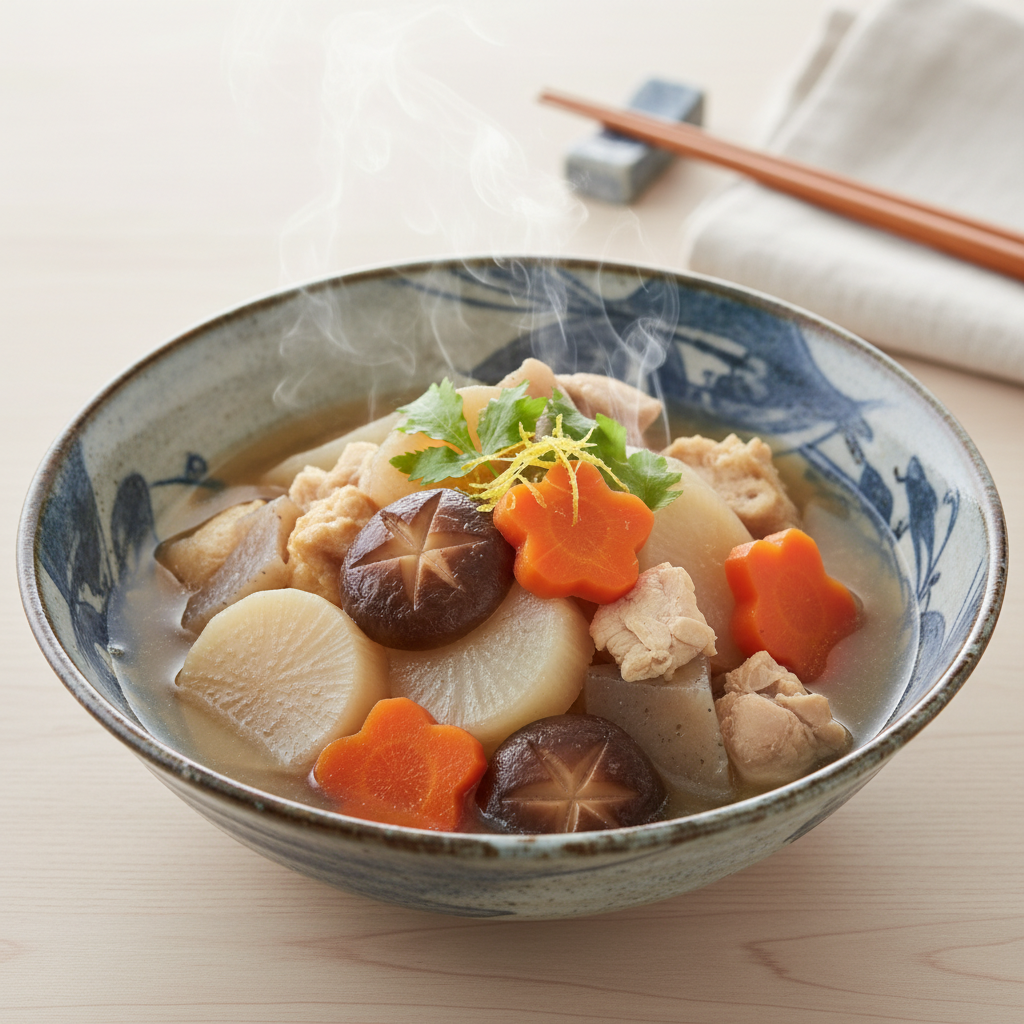
“Dabu” is a traditional simmered dish enjoyed throughout Saga Prefecture. It is characterized by simmering ingredients such as chicken, vegetables, and konjac in a soy-based broth and finishing with potato starch for a thickened consistency.
Characteristics of Dabu
The greatest characteristic of dabu is the abundance of ingredients and good nutritional balance. Generally, the following ingredients are used:
- Chicken: The main ingredient that forms the base of umami
- Taro: Doesn’t fall apart when simmered, with a fluffy texture
- Konjac: Rich in dietary fiber with a textural accent
- Burdock: Adds aroma and crunchiness
- Carrot: Adds color and sweetness
- Shiitake mushroom: Brings depth to broth and flavor
- Bamboo shoot: Offers seasonal feel and texture
- Fish cake: Adds color and umami
By carefully simmering these ingredients and adding thickener, dabu can retain heat and stay warm even as it cools, which is one of dabu’s clever features.
The Origin and History of Dabu’s Name
The unique name “dabu” has several theories behind it.
Various Theories About the Name’s Origin
The “dabu dabu” Theory
The most widely accepted theory is that the name comes from the appearance of the dish being full of broth, “dabu dabu” (overflowing). It is thought to express the image of thickened broth coating the ingredients abundantly.
The “Taifuku” Theory
Another theory suggests that “dabu” is a corruption of “taifuku” (many fortunes), meaning that many ingredients bring accumulated good fortune. This theory carries weight given that the dish is served at celebrations and funerals as an auspicious dish.
Portuguese Language Origin Theory
Given Saga Prefecture’s interaction with Nagasaki, there is also a theory that the name comes from the Portuguese word “dobrar” (to double, to overlap). This interpretation suggests the name comes from the cooking method of layering and simmering ingredients.
Historical Background of Dabu
Dabu is said to have been eaten in the Saga domain since the Edo period. It was a high-class dish served at celebrations for samurai and wealthy people, but gradually spread among the common people, becoming a beloved local cuisine throughout Saga Prefecture today.
It became established as an indispensable dish at celebrations and funerals, playing an important role in connecting regional communities. It has been passed down as a “special occasion” dish that deepens bonds between people by eating it together.
Occasions When Dabu Is Eaten and Its Cultural Significance
Role in Celebrations and Funerals
Dabu is an important dish marking life’s transitions in Saga Prefecture:
Weddings and Receptions
Dabu is served to attendees at celebrations of a newlywed couple’s new beginning. The multiple ingredients make it a welcomed auspicious dish representing “accumulated good fortune.”
Memorial Services and Buddhist Rites
Dabu is also a standard dish at services honoring the deceased. Serving warm food to attendees expresses hospitality and respect.
Local Festivals and Events
Dabu made in large pots is sometimes served at local festivals and community events.
Dabu as Home Cooking
Beyond celebrations and funerals, dabu is also cooked regularly in homes. Particularly in cold seasons, it appears on tables as a warming home-cooked dish. Being able to make large quantities and enjoy it the next day is a welcome feature for busy households.
Basic Dabu Recipe and Cooking Method
Here is a basic dabu recipe you can make at home.
Ingredients (Serves 6)
Main Ingredients
- Chicken thigh: 300g
- Taro: 400g
- Konjac: 1 sheet
- Burdock: 1 root
- Carrot: 1
- Dried shiitake mushrooms: 5-6
- Bamboo shoot (canned): 150g
- Fish cake: 1/2
- Snow peas: as needed (for garnish)
Seasonings
- Broth: 1200ml (including shiitake reconstitution liquid)
- Soy sauce: 4 tablespoons
- Mirin: 3 tablespoons
- Sugar: 2 tablespoons
- Sake: 2 tablespoons
- Salt: 1/2 teaspoon
- Potato starch: 3-4 tablespoons (dissolved in equal amount of water)
Preparation
- Reconstitute dried shiitake: Soak in water the day before; use the reconstitution liquid as broth.
- Prepare chicken: Cut into bite-sized pieces and blanch in hot water to remove odors.
- Prepare taro: Peel, cut into bite-sized pieces, salt and rub to remove sliminess, then rinse.
- Prepare konjac: Tear by hand or with a spoon into bite-sized pieces, blanch to remove impurities.
- Prepare other vegetables: Slice burdock thinly, cut carrot into irregular chunks, cut bamboo shoots into manageable sizes.
Cooking Steps
Step 1: Stir-fry ingredients
Heat oil in a large pot and stir-fry chicken. Once the chicken changes color, add burdock and carrot and stir-fry together.
Step 2: Add broth
Pour in broth (shiitake reconstitution liquid + dashi), then add taro, konjac, shiitake, and bamboo shoots. After bringing to a boil, remove scum and add seasonings (soy sauce, mirin, sugar, sake, salt).
Step 3: Simmer slowly
Cover with a drop lid and simmer over medium heat for 20-30 minutes until taro becomes tender. Check the taste midway and adjust seasonings as needed.
Step 4: Add thickener
Once ingredients are cooked, gradually add the potato starch mixture while stirring to achieve desired consistency.
Step 5: Finish
Add fish cake and bring to a boil once more. Plate and garnish with cooked snow peas.
Tips for Delicious Dabu
- Cut ingredients larger: Prevents disintegration and creates a more satisfying result.
- Watch heat carefully: Cooking over high heat will cause ingredients to fall apart; simmer slowly over medium heat.
- Add thickener last: Adding it too early can cause scorching.
- Let it rest overnight: The dish tastes better the next day as flavors have blended.
Regional Variations of Dabu in Saga
Dabu’s preparation varies by region and household throughout Saga Prefecture.
Dabu in and Around Saga City
The Saga city area is characterized by abundant ingredients and a luxurious finish. Some households use pork in addition to chicken, and sometimes use fried fish cake instead of regular fish cake.
Dabu in the Karatsu Area
Near Karatsu city, variations with seafood are sometimes seen due to proximity to the sea. In winter, some households add oysters for a unique umami flavor from the sea.
Dabu in the Takeo and Ureshino Areas
In the western part of the prefecture, mountain vegetables are sometimes added. Households use extra bamboo shoots in spring, with a tradition of emphasizing seasonal ingredients.
Dabu in the Kashima and Tara Area
In areas facing the Ariake Sea, variations with seaweed scattered on top are seen. There is also a tendency to use more soy sauce for a richer flavor.
Dabu and Similar Local Dishes from Other Prefectures
Various Kyushu prefectures have simmered dishes similar to dabu.
Nagasaki’s “Shippoku Cuisine”
Nagasaki’s shippoku cuisine sometimes includes simmered dishes similar to dabu. Influenced by Chinese and Dutch cultures, shippoku generally uses more diverse ingredients.
Fukuoka’s “Gameni (Chikuzen-ni)”
Fukuoka’s “gameni” has a similar cooking method to dabu, but the main difference is the absence of thickener. Ingredients are nearly identical, reflecting common food culture in northern Kyushu.
Combination with Kumamoto’s “Ikinari Dango”
While Kumamoto has “ikinari dango” as a local specialty, simmered dishes similar to dabu are enjoyed as “ni-shime.”
Nutritional Value and Health Benefits of Dabu
A Nutritionally Well-Balanced Dish
Dabu is an excellent nutritional dish due to its diverse ingredients:
Protein
High-quality protein from chicken helps maintain muscle and body tissue.
Dietary Fiber
Abundant fiber from burdock, taro, and konjac benefits intestinal health.
Vitamins and Minerals
Balanced vitamins and minerals including beta-carotene from carrots and vitamin D from shiitake mushrooms.
Health Benefits
Easy to Digest
The thickened texture puts minimal strain on the digestive system, making it easy for the elderly and children to eat.
Warming Effect
Warm simmered dishes warm the body from the core, helping with poor circulation and immune system improvement.
Low Calorie with Satisfying Quality
Vegetable-based and providing satiety through thickened broth, it’s also recommended for those on diets.
Where to Eat Dabu
Restaurants in Saga Prefecture
Dabu is served at local cuisine restaurants and izakayas throughout Saga Prefecture. It can be enjoyed at:
Local Cuisine Specialty Shops
Local restaurants in Saga city specialize in authentic dabu.
Inns and Hotels
Dabu is sometimes served at banquets or breakfast buffets at Saga inns and hotels.
Roadside Stations
Dabu made by local mothers is sometimes sold at roadside stations throughout the prefecture.
Places to Purchase
Supermarkets
Prepared dabu is sometimes available in prepared food sections of supermarkets in Saga.
Regional Product Shops
Retort-packaged dabu can be purchased at Saga’s antenna shops and regional product stores.
Online Shops
Recently, retort and frozen dabu are available through online shops specializing in Saga products.
Arranged Dabu Recipes
Modern arrangements can be enjoyed based on traditional dabu.
Dabu Udon
Adding udon to leftover dabu creates a nutritious “dabu udon.” The thickened broth coats the noodles beautifully.
Dabu Rice Bowl
Serving dabu over rice as a donburi is a popular arrangement. Perfect for busy mornings or solo lunches.
Dabu Gratin
A Western arrangement with dabu topped with cheese and baked in the oven creates a Japanese-Western fusion dish children enjoy.
Dabu Croquettes
Mashing leftover dabu ingredients to use as croquette filling makes for delicious zero-waste cooking.
Q&A for Making Dabu at Home
What if the thickening doesn’t work properly?
When adding potato starch mixture, it must be added gradually to boiling liquid. Adding too much at once causes clumping. Adjust while observing the result.
Storage method and shelf life?
Refrigerated dabu keeps about 3 days. Frozen in portions, it keeps about 1 month. After thawing, reheat and readjust thickener with potato starch mixture as needed.
Can ingredients be substituted?
Basic ingredients are interchangeable. Substitute potatoes for taro or daikon radish for bamboo shoots if needed. Use available vegetables from the refrigerator.
Can it be arranged for vegetarians?
Replace chicken with thick fried tofu or soy meat and use kombu or shiitake-based dashi for a vegetarian version of dabu.
The Meaning of Dabu’s Transmission
Local Cuisine Connecting Generations
Dabu means more than just food. The cooking methods and flavoring passed from grandmother to mother to child contain family history and love.
Community Bonds
Dabu served to many at celebrations and funerals plays an important role connecting regional people. Sharing a table deepens community bonds.
Inheritance of Food Culture
Modern lifestyles favor eating out and convenience foods, reducing opportunities to prepare traditional local cuisine at home. However, transmitting local dishes like dabu to future generations preserves regional identity.
Dabu and Saga Prefecture’s Food Culture
The Richness of Saga’s Food Ingredients
Saga Prefecture is blessed with diverse ingredients: seafood from the Ariake Sea, agricultural products from the fertile Saga Plain, and mountain provisions from the Sefuri Mountains. Dabu developed as a dish to enjoy all these regional treasures at once.
Relationship to Other Saga Local Dishes
Beyond dabu, Saga has many unique local dishes including “Suko sushi,” “Gozu tofu,” and “Mutsugoro eel.” These dishes, along with dabu, form important elements of Saga’s food culture.
Dabu as a Tourism Resource
Recently, local cuisine has gained attention as a tourism resource. For tourists visiting Saga Prefecture, dabu offers a valuable opportunity to experience regional culture. It contributes to regional revitalization through food.
Dabu Making Events and Experiences
Cooking Classes
Cooking classes teaching local cuisine are regularly held throughout Saga Prefecture, where you can learn dabu-making. Learning from local homemakers and culinary experts reveals household tricks and techniques.
Food Culture Experience Tours
Food culture experience tours organized by tourism associations and regional groups offer dabu-making programs. Actually cooking with local ingredients and tasting results on the spot is popular as a memorable travel experience.
School Lunch Initiatives
Schools throughout Saga incorporate local cuisine into lunch programs. Serving dabu in school lunches educates children about regional food culture.
Conclusion: The Appeal and Future of Dabu
Saga Prefecture’s local dish “dabu” is a wonderful cuisine with abundant ingredients, good nutritional balance, and cultural significance connecting regional people. While it’s a special dish served at celebrations and funerals, it’s also approachable and easy to make at home.
The warm thickened simmered dish warms the body in cold seasons and stimulates appetite in warm seasons, making it a versatile dish enjoyed year-round. The diversity of regional and household variations speaks to dabu’s depth.
While modern lifestyle changes have reduced opportunities to prepare traditional local cuisine, transmitting dishes like dabu to future generations is vital for preserving regional identity and inheriting food culture.
When visiting Saga Prefecture, please try authentic dabu. Also consider trying it at home and creating your own arrangements while enjoying this traditional local cuisine. Dabu, filled with many ingredients, is a wonderful dish whose preparation and enjoyment can be shared with family and friends.
Through dabu, we hope you experience Saga Prefecture’s rich food culture and the warm hospitality of its people.