Botan Nabe | Complete Explanation of the History, Preparation Method, and Famous Restaurants of Tamba Sasayama’s Local Cuisine
What is Botan Nabe?
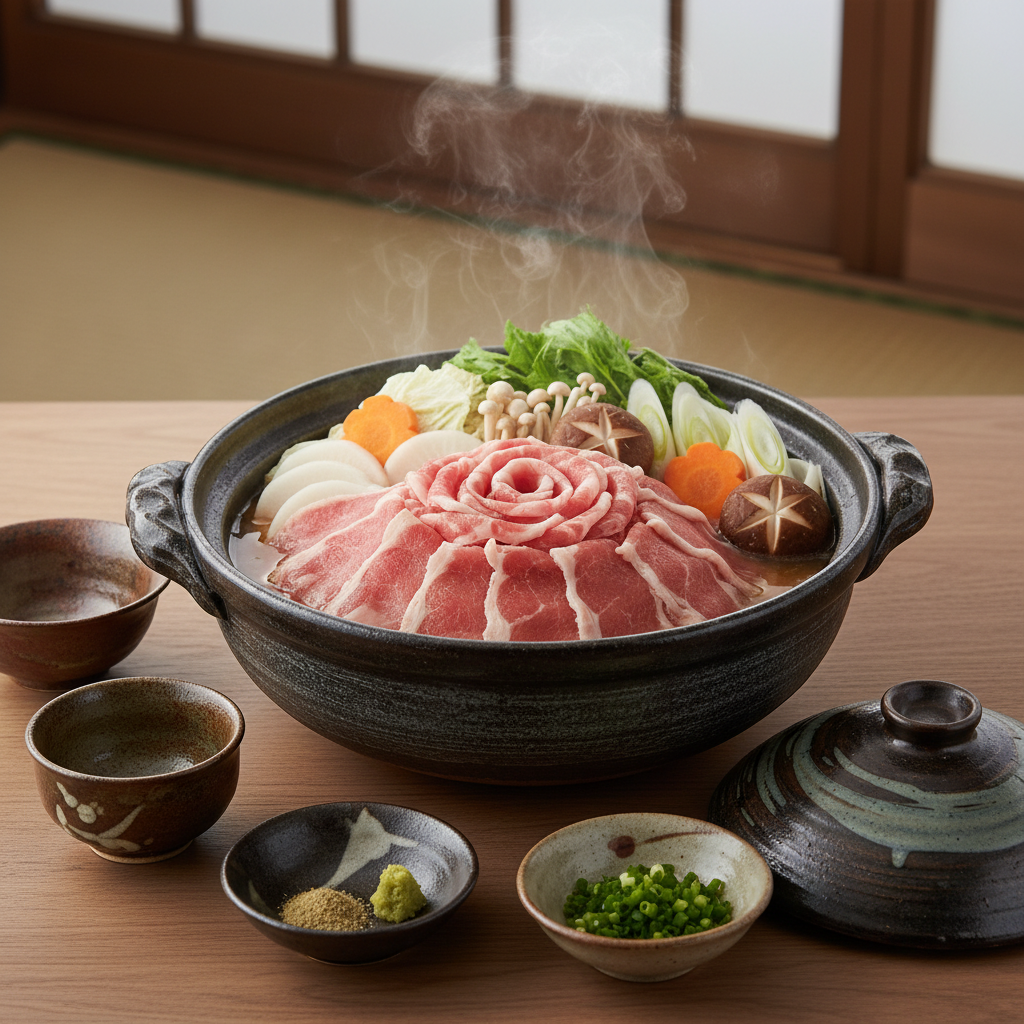
Botan nabe (猪鍋) is a signature local dish of Tamba Sasayama City in Hyogo Prefecture, a hot pot dish made by simmering wild boar meat and seasonal vegetables in a combination of white and red miso. The dish is called “botan nabe” because the wild boar meat is arranged beautifully like peony flower petals.
In 2007, it was selected as a representative dish of Hyogo Prefecture in the “100 Selected Local Dishes of Agricultural, Mountain, and Fishing Villages” hosted by the Ministry of Agriculture, Forestry and Fisheries. In 2022, it was chosen as one of the “100-Year Foods” certified by the Agency for Cultural Affairs and also received a special award from experts, with its cultural value highly evaluated.
Tamba Sasayama is known as one of Japan’s three major wild boar meat production areas. Wild boar meat raised in the region’s rich natural environment has little odor and is characterized by deep umami flavor and tender texture. Currently, approximately 40 restaurants in Tamba Sasayama City serve botan nabe, and it has become a beloved autumn and winter tradition for both local residents and tourists.
The Relationship Between Hyogo Prefecture and Botan Nabe
The Geography and Food Culture of Hyogo Prefecture
Hyogo Prefecture stretches from the Japan Sea in the north to the Seto Inland Sea in the south and continues to the Pacific Ocean via Awaji Island, featuring diverse climates and terrain. Composed of various regions ranging from major cities to agricultural and mountain villages to remote islands, it is sometimes called “Japan in miniature.” This diversity has fostered a rich food culture and produced numerous famous dishes including okonomiyaki (Hiroshima-style), Kobe beef, and botan nabe.
Characteristics of the Tamba Sasayama Region
The Tamba Sasayama region is located in the central-eastern part of Hyogo Prefecture and is characterized by high elevation and a basin climate with large daily temperature fluctuations. This environment has produced nationally branded agricultural products such as Tamba chestnuts, Tamba black soybeans, and mountain yams, while its abundant forests provide an ideal environment for wild boar breeding.
As a castle town that flourished from ancient times, Tamba Sasayama developed a unique food culture that blends samurai and agricultural village cultures. Botan nabe has become a symbolic dish representing the region’s identity.
History, Origins, and Related Events of Botan Nabe
Origins and Development
Botan nabe is said to have originated around 1908 (Meiji 41), when the Imperial Army’s 70th Infantry Regiment was stationed in Sasayama Town, Taki County (present-day Tamba Sasayama City). According to one account, wild boar meat captured during training was cooked in miso soup, marking the beginning of the dish.
Another account suggests that soldiers brought wild boar meat to cooking inns and had it prepared as a miso-based hot pot, gradually establishing it as a regional specialty. Initially enjoyed as military food and a nourishing dish for locals, its deliciousness gradually became renowned, and it began to be served at cooking inns as well.
Origin of the Name
The name “botan nabe” derives from the beautiful presentation of the wild boar meat. Thinly sliced wild boar is arranged in a circular pattern like peony petals, giving the dish its name. The red-and-white contrast created by lean meat and fat creates a stunning appearance reminiscent of peony flowers.
This plating method is not merely decorative but also a technique to maximize the meat’s flavor. Slicing thinly ensures even heat distribution and a tender finish.
Dining Occasions and Seasons
Wild boar hunting season is defined as November 15 to March 15, and botan nabe has traditionally been enjoyed as a winter game meat dish. The meat’s fat content peaks from December to February during the coldest season, making this the most flavorful period.
In recent years, advances in freezing technology have enabled most restaurants in Tamba Sasayama to serve botan nabe year-round. However, the taste of fresh wild boar meat eaten during its peak season is exceptional, and many food enthusiasts visit Tamba Sasayama during winter.
In the region, meals centered around botan nabe serve as gathering places for family and friends, functioning as a nourishing food to endure cold winters and as a dish that strengthens community bonds.
Ingredients and Main Ingredients for Botan Nabe
Ingredients (Serves 4)
Main ingredients:
- Wild boar meat (sliced): 600–800g
- Chinese cabbage: 1/4 head
- Japanese leek: 2 stalks
- Chrysanthemum greens: 1 bunch
- Shiitake mushrooms: 8
- Enoki mushrooms: 1 package
- Tofu: 1 block
- Shirataki noodles: 1 package
- Burdock root: 1 piece
- Carrot: 1 piece
Broth and seasonings:
- Kelp: 1 piece (10cm square)
- Bonito flakes: 20g
- White miso: 100g
- Red miso: 50g
- Sake: 3 tablespoons
- Mirin: 2 tablespoons
- Sugar: 1 tablespoon
- Water: 1200ml
Characteristics of Main Ingredients
Wild boar meat:
Wild boar meat from Tamba Sasayama is considered the highest grade. Meat from boar raised eating acorns and mountain vegetables has little odor, deeper umami than pork, and fat with strong sweetness. Rich in B vitamins and iron and containing abundant collagen, it is gaining attention as an ingredient with excellent beauty and health benefits.
Seasonal vegetables:
Vegetables from Tamba Sasayama, grown in a climate with large temperature fluctuations, have high sugar content and concentrated flavor. Winter Chinese cabbage especially becomes sweeter and pairs perfectly with botan nabe. Using locally produced vegetables allows full enjoyment of the region’s flavors.
Miso blend:
Combining white and red miso creates a well-balanced taste with mellow richness and depth. The sweetness of white miso reduces the boar meat’s gaminess, while red miso’s deep umami highlights the meat’s flavor.
How to Make Botan Nabe (Authentic Recipe)
Preparation
- Wild boar meat preparation:
Remove the wild boar meat from the refrigerator 30 minutes before use and bring to room temperature. If concerned about gaminess, soak in sake and ginger juice for about 10 minutes.
- Vegetable preparation:
- Divide Chinese cabbage into stem and leaves; slice stems and chop leaves roughly
- Cut Japanese leek diagonally; cut chrysanthemum greens to 4cm lengths after trimming roots
- Remove shiitake mushroom stems and score decoratively
- Julienne burdock root and soak in water; slice carrot thinly
- Cut tofu into bite-sized pieces; parboil shirataki noodles
How to Make the Broth
- Place water and kelp in pot and let sit for 30 minutes to extract umami
- Heat over medium flame and remove kelp just before boiling
- Add bonito flakes and simmer 1–2 minutes, then strain
- In a separate container, combine white and red miso and gradually dissolve in broth
- Add sake, mirin, and sugar to adjust seasoning
Cooking Steps
- Prepare the clay pot:
Pour broth into a clay pot and heat over medium flame
- Cook vegetables first:
Add vegetables that take longer to cook (burdock root, carrot, Chinese cabbage stem) first
- Add wild boar meat:
Once vegetables are cooked, add wild boar meat one slice at a time, spreading it out. Cook meat only until the color changes as overcooking makes it tough
- Add remaining ingredients:
Add tofu, mushrooms, Chinese cabbage leaves, and chrysanthemum greens; dish is complete when everything is heated through
How to Enjoy
Eating tips:
- The key is not overcooking the meat. Light cooking like shabu-shabu is sufficient
- Vegetables become sweeter when simmered, but add chrysanthemum greens last to enjoy its fragrance
- For finishing, adding udon or rice to make ochazuke (rice in broth) is traditional. The broth infused with boar meat umami is exquisite
Compatible beverages:
- Local sake: Tamba Sasayama sake pairs excellently with botan nabe
- Beer: Well-chilled beer complements boar meat’s fat well
- Shochu: Sweet potato or barley shochu served hot is also recommended
Main Traditional Areas and Restaurants
Notable Restaurants in Tamba Sasayama City
Ryokan Takasago:
A long-established inn founded in Kaei 1 (1848) that continues to uphold botan nabe traditions. The interior decorated with ancient Tamba pottery and antiques has a gallery-like atmosphere, with dishes served on Tamba-ware. Using vegetables from local Sasayama, it provides a space to experience Tamba Sasayama with all five senses.
Tamba Sasayama Local Cuisine Nukumori:
A popular restaurant serving botan nabe year-round. It uses fresh wild boar meat and is known for many repeat customers. Lunch service is also available for casual enjoyment of botan nabe. Seasonal menus are abundant, and pairings with local sake are well-received.
Regional Expansion
The number of restaurants serving botan nabe has increased throughout Hyogo Prefecture, centered on Tamba Sasayama City. Tourist destinations and hot spring areas especially feature variations of botan nabe with regional characteristics while maintaining traditions and continuing new efforts.
Approximately 40 restaurants in the city serve botan nabe, each with its own miso blend and cooking methods. Some establishments require advance reservations, so checking before visiting is recommended.
Preservation and Transmission Efforts
Overview of Tradition Bearers
Botan nabe traditions have been passed down through generations by restaurant and specialty restaurant chefs. Particularly in long-established inns, detailed techniques from selecting premium wild boar to unique miso blends have been inherited to preserve the original flavor.
Recently, younger chefs are learning traditions while attempting new approaches suited to contemporary food culture. While maintaining traditional cooking methods as the foundation, they innovate in presentation and performance to make the dish accessible to younger generations.
Regional Preservation Activities
Efforts by Tamba Sasayama City:
Tamba Sasayama City positions botan nabe as an important tourism resource and actively promotes it. The official tourism website “Gururi! Tamba Sasayama” features a special botan nabe page with detailed information on serving restaurants and history.
Each winter, events like “Botan Nabe Fair” are held with multiple city restaurants participating to energize the entire region. This increases tourism and contributes to local economic vitality.
Educational activities:
Botan nabe appears in school lunch menus, providing children opportunities to experience local cuisine. The National School Nutrition Association introduces it as Hyogo’s local cuisine and utilizes it as educational material for food education.
SNS Use and Contemporary Efforts
Digital marketing:
Many serving restaurants use Instagram, Facebook, and other SNS to share beautiful presentations and cooking scenes. Photos of wild boar meat arranged like peony flowers particularly have strong visual impact and attract young people’s attention as SNS-worthy dishes.
Product development and sales:
Products bundling wild boar meat, special miso sauce, and recipes allow home enjoyment of botan nabe. Online shopping enables people nationwide to experience Tamba Sasayama flavors. Advanced freezing technology allows nationwide delivery maintaining freshness, becoming popular as homecoming tax return gifts. This increases nationwide awareness of botan nabe and contributes to the region’s brand value.
Tourism coordination:
Tamba Sasayama City is developing tourism routes centered on botan nabe. After enjoying botan nabe, visitors can tour Sasayama Castle ruins and samurai residences or visit Tamba pottery kilns with food and culture-combined experiential tourism expanding.
Nutritional Value and Health Benefits of Botan Nabe
Nutritional Components of Wild Boar Meat
Wild boar is high in protein and low in calories, making it suitable for health-conscious modern people. Compared to pork, it contains less fat and is rich in B vitamins (especially B1, B2, B12). Vitamin B1 aids fatigue recovery, while B2 maintains healthy skin and mucous membranes.
It also contains abundant iron, effective for anemia prevention, particularly as iron is often lacking in women. Containing abundant collagen, it also promises skin beauty effects.
Value as Winter Nourishment
Botan nabe has high body-warming effects and is an ideal nourishing food for enduring cold winters. Fermented components in miso improve intestinal environment and contribute to immune system enhancement. With abundant vegetable consumption, it offers excellent nutritional balance.
Wild boar fat has a low melting point and is easily absorbed in the body. This makes it efficiently utilized as an energy source, helping maintain body temperature in winter.
Differences from Botan Nabe in Other Regions
Botan Nabe Culture Nationwide
Wild boar hot pot dishes exist throughout Japan, but Tamba Sasayama’s botan nabe has unique characteristics. While other regions typically use soy sauce or salt-based broth, Tamba Sasayama traditionally uses a white and red miso blend.
Hiroshima Prefecture:
Hiroshima offers “Hiroshima-style botan nabe” with variations including oysters and local vegetables.
Mie Prefecture:
Mie has established “Ise botan nabe” style using Ise udon for finishing.
Distinctive Features of Tamba Sasayama
The greatest distinction of Tamba Sasayama’s botan nabe from other regions is thorough quality control throughout the entire region. With well-equipped wild boar processing facilities and rigorous sanitation management, high-quality wild boar can be consistently provided.
Additionally, using locally produced vegetables and Tamba pottery creates the appeal of experiencing entire regional culture through food. Rather than merely a hot pot dish, it is presented as a comprehensive experience tasting Tamba Sasayama’s history and culture.
Access Information for Enjoying Botan Nabe
How to Get to Tamba Sasayama City
By train:
- Approximately 70 minutes from Osaka Station on the Fukuchiyama Line to Sasayama-guchi Station
- Approximately 15 minutes from Sasayama-guchi Station by Shinki Green Bus to Sasayama Terminal
By car:
- From Osaka: Approximately 60 minutes via Chugoku Expressway and Maizuru-Wakasa Expressway
- From Kobe: Approximately 50 minutes via Chugoku Expressway
- From Kyoto: Approximately 60 minutes via Kyoto Longitudinal Expressway and Maizuru-Wakasa Expressway
Tourist Information
Tamba Sasayama City is a tourist destination retaining castle town charm with abundant attractions beyond botan nabe. Sasayama Castle ruins, samurai residences, and Tamba pottery villages with historical and cultural appeal are scattered throughout.
Accommodations are abundant, and cooking inns serving botan nabe also offer kaiseki dinners using regional ingredients. Day-use hot spring facilities are available, enabling enjoyable trips combining tourism and cuisine.
Conclusion: The Appeal and Future of Botan Nabe
Botan nabe, a signature local dish of Tamba Sasayama City in Hyogo Prefecture, has been cherished through over 100 years of history to the present day. The flavor created by wild boar meat’s deep umami, seasonal vegetables, and the exquisite balance of miso blend is unforgettable once tasted.
Official recognition of its cultural value through the Ministry of Agriculture, Forestry and Fisheries’ “Local Dish Selection” and the Agency for Cultural Affairs’ “100-Year Foods” designation has affirmed it as regional pride worthy of transmission. While preserving traditions, it continues evolving toward acceptance by new generations through contemporary initiatives like SNS promotion and product development.
When visiting Tamba Sasayama, be sure to savor authentic botan nabe. A bowl filled with regional history, culture, and nature’s bounty will surely become an unforgettable memory. Botan nabe enjoyed on a cold winter day surrounded by family and friends is truly a local flavor that warms not just the body but the heart as well.