Complete Guide to Yoshida Udon | Thorough Explanation of the History, Characteristics, and Famous Restaurants of This Local Cuisine in Fujiyoshida City, Yamanashi Prefecture
What is Yoshida Udon?
Yoshida udon (よしだのうどん) is a traditional local cuisine eaten primarily in Fujiyoshida City, Yamanashi Prefecture, and the Gunai region including this city. In 2007, it was selected for the “100 Selected Local Dishes of Agricultural, Mountain, and Fishing Villages” designated by the Ministry of Agriculture, Forestry and Fisheries, and was officially recognized as one of “Yamanashi’s Foods” that the prefecture wishes to pass on to future generations.
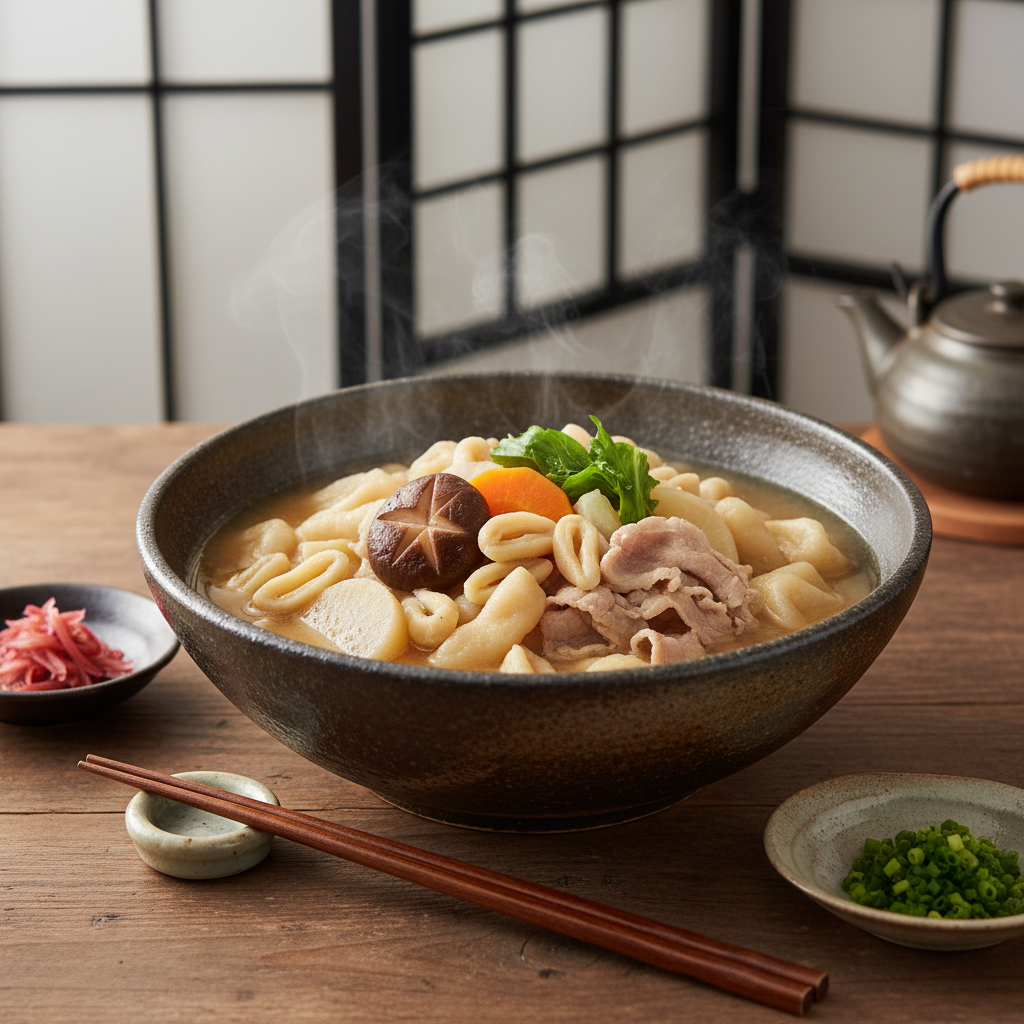
Its greatest characteristic is the remarkably hard texture and strong chewiness that cannot be found in other udon. Also called “Japan’s hardest udon,” first-time diners are shocked by the chewy mouthfeel with comments like “What?! It’s hard!” However, this powerful noodle is the essence of Yoshida udon, and as you chew more and more, the wheat’s umami and the broth’s flavor spread throughout your mouth, captivating many people.
Fujiyoshida City at the base of Mount Fuji, with an elevation of 700-900 meters and a cool climate with volcanic ash soil, was historically unsuitable for rice cultivation. This harsh natural environment nurtured a culture centered on wheat as a staple food and provided the foundation for developing a unique udon culture.
History and Origins of Yoshida Udon
Deep Connection with the Textile Industry
The history of Yoshida udon is inseparably linked to the textile industry, the core business of Fujiyoshida City. From the Edo period through the Showa era, Fujiyoshida City flourished as a production center for “Gunai textiles,” with many households engaged in weaving as their livelihood.
Textile work was primarily undertaken by women. For the women working long hours from early morning to late night at their looms, family members sought an easy-to-prepare meal that was nutritious and filling. This is said to be the origin of Yoshida udon.
Udon Culture as a Staple Food
The volcanic ash soil at the base of Mount Fuji had such good drainage that it was unsuitable for rice cultivation, making rice a precious commodity. As a result, wheat and barley, which could grow in the cool climate, became the main grains, and udon became established as a daily staple food. Especially during agricultural off-seasons and at festivals, families would make udon together and share it with neighbors and relatives.
Continuation to Modern Times
From the 1950s onward, as the textile industry declined, udon restaurants increased in number. Udon that was once made at home began to be offered commercially, and numerous restaurants opened. Today, more than 60 udon restaurants operate within Fujiyoshida City. Many of these are small establishments converted from family homes, continuing to preserve the traditional flavors through family management.
Characteristics of Yoshida Udon
Extremely Thick and Hard Noodles
The greatest characteristic of Yoshida udon is its overwhelming hardness and strong chewiness. While typical udon noodles are about 3-4mm thick, Yoshida udon mainly features extremely thick noodles of 5-10mm or more.
This is completely different from the “smooth, easily swallowed texture” characteristic of Sanuki udon and other famous regional udon. The thick, strong (kowai) noodles surprise many people with the first bite. However, this unique texture is the charm of Yoshida udon, and there is an addictive deliciousness where the wheat flavor emerges the more you chew.
The hardness of the noodles varies by restaurant, with some maintaining the traditional extremely hard noodles while others have recently adjusted to relatively easier-to-eat hardness. However, all restaurants serve noodles that are definitely harder than standard udon with strong chewiness.
Broth Blending Miso and Soy Sauce
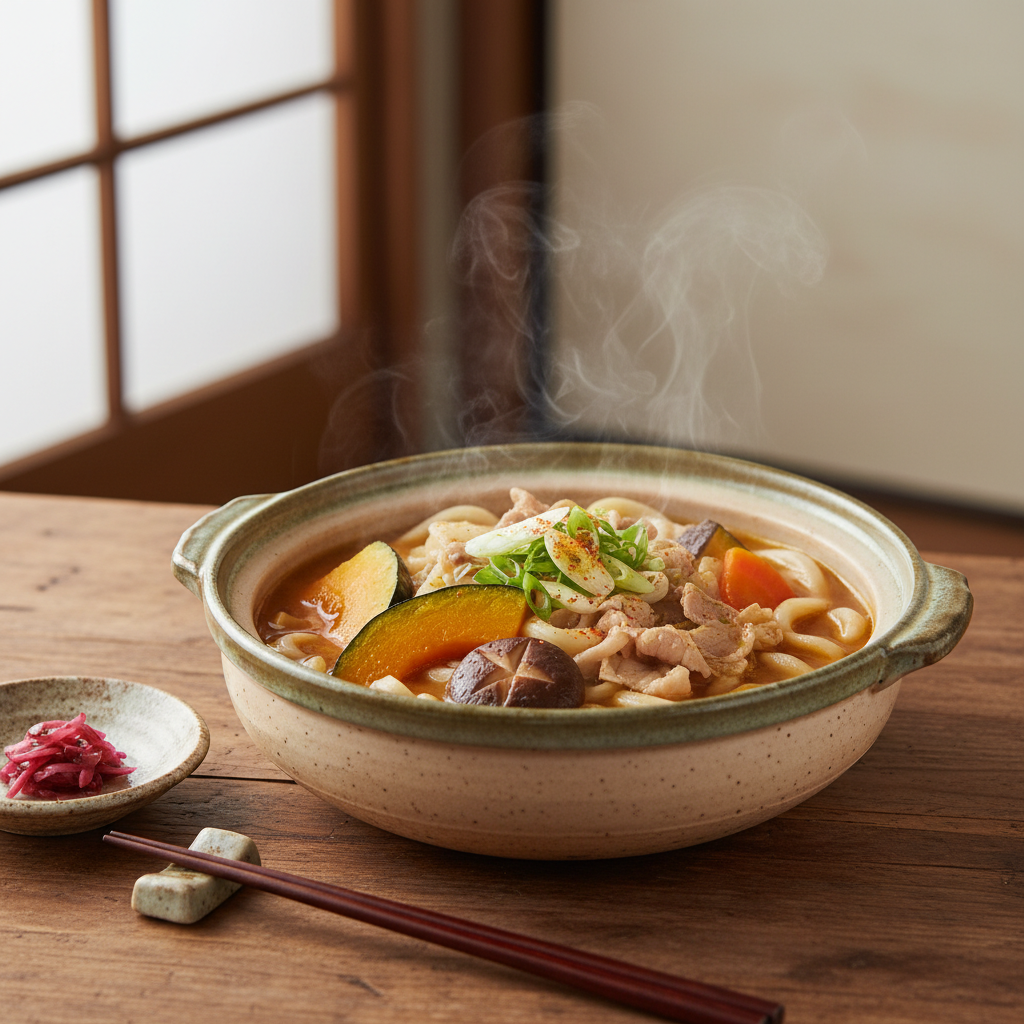
Yoshida udon broth basically comes in two types: soy sauce-based and miso-based, but many restaurants use their own broth blending soy sauce and miso. The broth uses dried sardines, bonito flakes, kelp, and other ingredients, with each restaurant having its own secret proportions.
The broth with effective dried sardine flavor matches excellently with the powerful noodles. Warm udon eaten in the cool climate has warmed the local people’s bodies from the core.
Cabbage and Horse Meat Toppings
The standard toppings for Yoshida udon are boiled cabbage and horse meat. The cabbage has sweetness and provides a pleasant textural contrast with the hard noodles. Horse meat is placed on top of the noodles as “okazu” (side dish) and has played an important role in supplementing protein.
The Fujiyoshida area has a long history of using horses for agriculture and transportation, with a culture of eating horse meat deeply rooted. Even today, many restaurants offer horse meat toppings, making it an indispensable part of Yoshida udon.
Suridane (Spicy Seasoning)
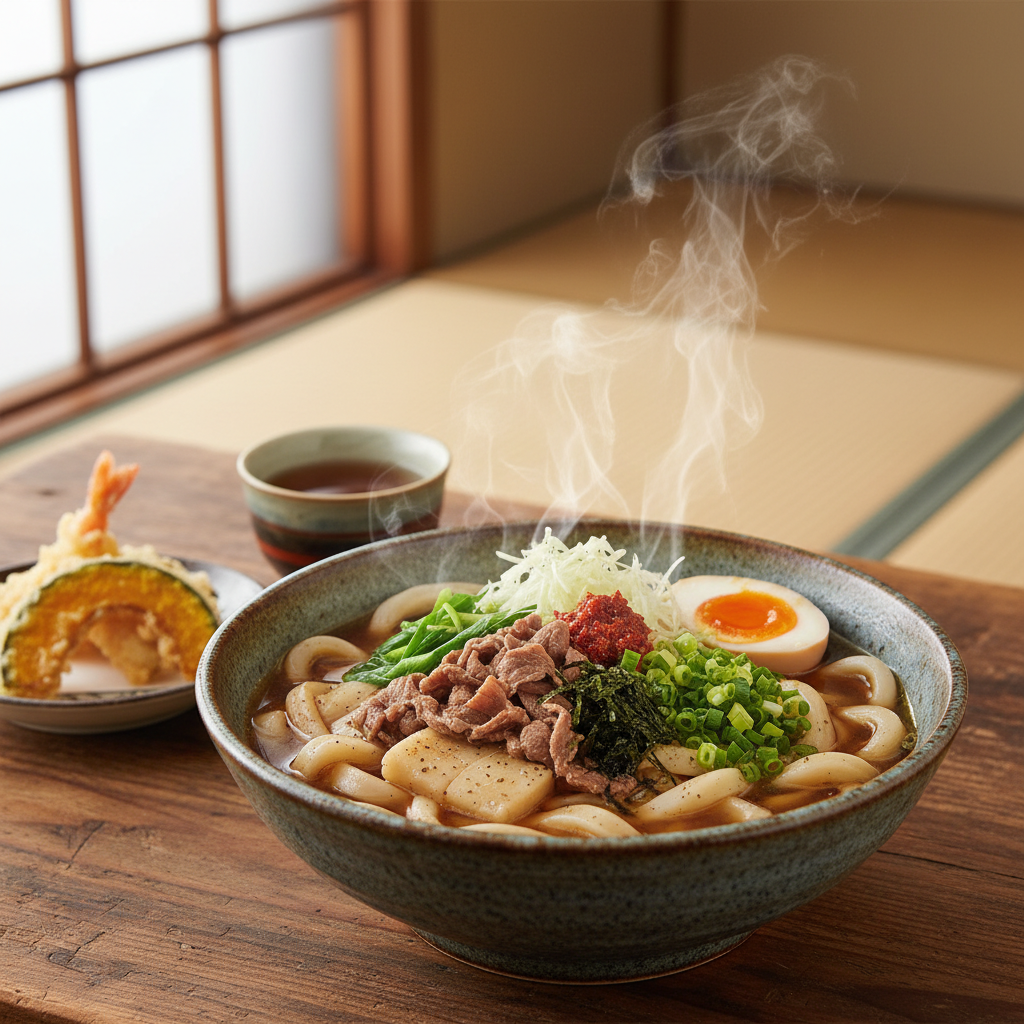
When discussing Yoshida udon, one cannot overlook the spicy seasoning “suridane” placed on the table. This is a condiment made from red chili peppers with added sesame, Japanese pepper, chili oil, and other ingredients, sometimes stir-fried in oil.
The composition of suridane differs by restaurant and is the part where each establishment’s individuality is most expressed. By dissolving the desired amount into the broth, spiciness and fragrance are added, deepening the udon’s flavor further. Locals are said to be seasoned eaters if they add a large amount of suridane when eating.
Main Transmitted Regions and Ingredients
Transmitted Regions
Yoshida udon is widely eaten throughout the Gunai region (Fujiyoshida City, Tsuru City, Otsuki City, Uenohara City, Fujikawaguchiko Town, Nishizakura Town, Oshino Village, Yamanakako Village, Narusawa Village, Doshi Village, Kosuge Village, and Tabayama Village), centered on Fujiyoshida City in Yamanashi Prefecture.
Particularly within Fujiyoshida City, more than 60 udon restaurants are concentrated, and the number of udon restaurants per capita is said to be the highest in Japan. Famous restaurants are scattered in neighboring Oshino Village and Fujikawaguchiko Town, making them popular spots with tourists.
Main Ingredients Used
Noodles
- Wheat flour (medium or strong flour)
- Water
- Salt
Broth
- Soy sauce
- Miso
- Dried sardines
- Bonito flakes
- Kelp
- Sugar
- Mirin
Toppings
- Cabbage
- Horse meat (or pork, beef)
- Fried tofu
- Green onion
- Wakame seaweed
Seasonings
- Suridane (red chili pepper, sesame, Japanese pepper, etc.)
How to Make Yoshida Udon
Ingredients (Serves 8)
Noodles
- Medium or strong flour: 1kg
- Water: 400-450ml
- Salt: 30g
Broth
- Dried sardines: 50g
- Bonito flakes: 20g
- Kelp: one 10cm square piece
- Water: 2 liters
- Soy sauce: 4 tablespoons
- Miso: 2 tablespoons
- Mirin: 2 tablespoons
- Sugar: 1 teaspoon
Toppings
- Cabbage: 1/2 head
- Horse meat or pork: 200g
- Fried tofu: 2 pieces
- Green onion: 2 stalks
Instructions
How to Make the Noodles
- Making the dough: Place flour and salt in a bowl, gradually add water while mixing. Knead thoroughly until no powdery texture remains and form into one mass.
- Treading: Place the dough in a plastic bag and trample it with your feet to strengthen it. Repeat this for 30 minutes to 1 hour to develop strong chewiness. Traditionally, the dough is folded and then trampled repeatedly.
- Resting: Place the trampled dough in a plastic bag and let it rest for 2-3 hours (ideally overnight). This process allows the dough to settle and develop even stronger chewiness.
- Stretching: On a dusted work surface, use a rolling pin to stretch the dough to about 3-5mm thickness. Since Yoshida udon is characterized by thicker noodles, slightly thicker is acceptable.
- Cutting: Fold the stretched dough and cut it with a knife into 5-10mm wide noodles. Dust the cut noodles with flour to prevent sticking.
How to Make the Broth
- Pour water into a pot and soak dried sardines and kelp for 30 minutes or more.
- Heat over medium heat and remove the kelp just before boiling.
- Once boiling, add bonito flakes and simmer for 3-5 minutes, then strain.
- Add soy sauce, miso, mirin, and sugar to the strained broth and adjust the taste.
Finishing
- Cut the cabbage into bite-sized pieces and boil briefly.
- Slice the horse meat thinly and simmer with soy sauce and sugar until sweet and savory.
- Boil plenty of water in a large pot and cook the noodles. Cooking time is about 15-20 minutes. Since the noodles are hard, cook thoroughly.
- Place the cooked noodles in a bowl and pour the warmed broth over them.
- Top with cabbage, horse meat, fried tofu, and green onion to complete.
- Serve with suridane.
Cooking Tips
- The most important step in noodle making is the “treading” process. Thorough treading creates the unique hardness and chewiness characteristic of Yoshida udon.
- Allow sufficient resting time for the dough so gluten forms, creating stronger noodles.
- Cooking time is longer than standard udon. However, overcooking will lose Yoshida udon’s characteristic hardness, so caution is needed.
- Yoshida udon style emphasizes strong dried sardine flavor in the broth.
Dining Occasions and Seasons
Yoshida udon is a local cuisine eaten daily throughout the year, not limited to specific seasons or occasions. Historically, it was particularly eaten in the following circumstances.
As Daily Food
During the height of the textile industry, Yoshida udon was a daily staple. It was made at home for breakfast and lunch and eaten by entire families. Particularly during agricultural off-seasons or when textile work had paused, families would make large quantities of udon together.
At Festivals and Ceremonial Occasions
Large quantities of udon were served at local festivals and ceremonial occasions. Especially at major regional events like “Mount Fuji Opening Festival,” udon was served to many people, playing a role in deepening community bonds.
Modern Food Culture
Today, it has become established as a daily casual dining menu for local people. Especially on weekends, udon restaurants are busy with families and tourists. Additionally, during the Mount Fuji climbing season, many climbers enjoy Yoshida udon before and after their climb.
Dining Methods and How to Enjoy
Basic Way to Eat
- First, plain: Take the first bite before adding suridane, to enjoy the pure taste of the broth and noodles themselves.
- Add suridane: Dissolve the desired amount of suridane into the broth. Locals often add a large amount, but first-timers are advised to start with a small amount.
- Chew well: Since the noodles are hard, thorough chewing is important. The more you chew, the more the wheat’s sweetness and umami spread.
- Eat with toppings: Enjoying the toppings with the cabbage and horse meat provides variety in texture and flavor.
How to Order at Restaurants
Most restaurants offer menus such as “kake” (simple udon), “niku udon” (with horse meat or pork), and “tempura udon.” For first-timers, “niku udon” is recommended as it showcases the basics of Yoshida udon.
Some restaurants allow you to choose noodle hardness, but it’s worth trying the traditional hardness if you have the chance.
Chilled Udon Also Popular
Many restaurants offer “chilled udon” during summer months. Eating it dipped in cold broth brings out the texture of the hard noodles even more.
Famous Yoshida Udon Restaurants
With more than 60 udon restaurants in Fujiyoshida City, each maintains its own unique flavors. Here are some of the most popular establishments locally.
Long-Established Shops Preserving Traditional Flavors
Long-established shops with histories spanning decades offer extremely hard noodles and broth rich with dried sardines made using traditional methods. Most are small establishments converted from family homes, allowing you to experience authentic Yoshida udon in a homey atmosphere.
Popular Shops with Lines
Many popular shops have lines of customers on weekends. Shops featured in gourmet magazines and on television attract many fans from other prefectures. Particularly, establishments like “Watanabe Udon” are famous shops known to have been featured in gourmet manga.
Individualistic New Shops
More restaurants are emerging that preserve tradition while adding new twists. Some increase topping variations or allow customers to choose noodle hardness, working to help more people enjoy Yoshida udon.
Using the Yoshida Udon Map
The Fujiyoshida City Tourism Association publishes a “Yoshida Udon Map” that comprehensively covers information on udon restaurants in the city. Those who visit all 43 restaurants are awarded the title of “Yoshida Udon Meister,” a unique initiative.
Preservation and Transmission Efforts
Yoshida Udon Promotion Association
The “Yoshida Udon Promotion Association,” organized by local udon restaurant owners, works to promote Yoshida udon and pass on its traditions. Regular events are held to share the appeal of Yoshida udon inside and outside the prefecture.
Efforts in Educational Institutions
Yamanashi Prefectural Hibari ga Oka High School has an “Udon Club” where students learn about the history and production methods of Yoshida udon and experience making udon firsthand. In fiscal year 2018, the club was certified as a “Food Transmission Meister,” actively working on transmission to younger generations.
The “Food Transmission Meister” is a certification system by Yamanashi Prefecture for individuals and organizations actively working to pass on superior techniques and knowledge regarding “Yamanashi’s Foods.”
Utilization as a Tourism Resource
Fujiyoshida City positions Yoshida udon as an important tourism resource, incorporating “udon tours” into tourism courses. The number of tourists enjoying Yoshida udon in combination with Mount Fuji sightseeing increases year by year.
Information Sharing via SNS
Many udon restaurants use SNS to share daily business information and new menu information. Particularly on Instagram, the distinctive visuals of Yoshida udon receive many “likes,” contributing to increased awareness among younger generations.
Product Commercialization Efforts
Yoshida udon dried noodles, semi-fresh noodles, and cup noodles have been commercialized and sold as souvenirs. Suridane is also sold in bottled form, allowing people to recreate Yoshida udon’s taste at home.
It is also adopted as a local revitalization tax return gift from Fujiyoshida City, spreading the appeal of Yoshida udon throughout Japan.
Experience Classes
Some shops and facilities offer Yoshida udon-making experience classes. Participants experience the entire process from treading the dough and can eat the udon they make themselves. This has become a popular activity with tourists.
Differences Between Yoshida Udon and Other Udon
Comparison with Sanuki Udon
Comparing with Sanuki udon, Japan’s representative udon, the differences become clear.
Noodle Characteristics
- Sanuki udon: Good throat feel, smooth texture, moderate chewiness
- Yoshida udon: Extremely thick and hard, strong, robust chewiness, chewy texture
Broth
- Sanuki udon: Clear broth from dried sardines and kelp, light soy sauce
- Yoshida udon: Rich dried sardine broth, soy sauce and miso blend
Toppings
- Sanuki udon: Tempura, wakame, green onion, etc.
- Yoshida udon: Cabbage, horse meat, suridane
Comparison with Inaniwa Udon
Akita Prefecture’s Inaniwa udon has characteristics opposite to Yoshida udon.
- Inaniwa udon: Thin noodles, smooth texture, delicate flavor
- Yoshida udon: Extremely thick noodles, wild texture, powerful flavor
Comparison with Mizusawa Udon
Gunma Prefecture’s Mizusawa udon also features beautiful transparent noodles, but contrasts sharply with Yoshida udon.
- Mizusawa udon: Transparent white noodles, smooth texture
- Yoshida udon: Yellowish-tinged noodles, rough texture
Nutrition and Health Benefits of Yoshida Udon
Nutritional Value
Yoshida udon is a carbohydrate-centered dish made primarily from wheat flour, but contains well-balanced nutrition.
Carbohydrates: Noodles provide sufficient energy.
Protein: Horse meat or pork toppings supply protein. Horse meat is high in protein, low in fat, and rich in iron.
Vitamins and Minerals: Cabbage provides vitamin C, dietary fiber, calcium, and other nutrients.
Broth Nutrition: Dried sardines and bonito flakes release calcium, DHA, EPA, and other nutrients into the broth.
Health Benefits
Effects of Chewing: Thoroughly chewing hard noodles stimulates the satiety center, helping prevent overeating. Additionally, chewing is said to be beneficial for brain activation.
Good Satiety: The hard, chewy noodles take longer to digest, providing sustained energy supply.
Body-Warming Effect: The warm broth and noodles warm the body from the core, making it suitable for Mount Fuji’s cool climate.
Tourism Plans to Enjoy Yoshida Udon
Udon Tour Around Fujiyoshida City
With numerous udon restaurants scattered throughout Fujiyoshida City, “udon tours” visiting multiple establishments in one day are popular. You might aim to visit one restaurant in the morning and one to two in the afternoon, tasting each restaurant’s individual character.
Combined with Mount Fuji Sightseeing
Located at the base of Mount Fuji, Fujiyoshida City is also a hub for Mount Fuji tourism. Plans combining Mount Fuji sightseeing to the fifth station, Fuji-Q Highland, Lake Kawaguchi, Oshino Hakkai, and other tourist spots with Yoshida udon are recommended.
Before and After Mountain Climbing
For those climbing Mount Fuji via the Yoshida route starting at Fujiyoshida City, Yoshida udon is ideal as a pre-climb meal or post-descent recovery food. It provides balanced carbohydrates and protein, helping restore physical strength.
Access Information
By Train
- Approximately 2 hours from Shinjuku Station on the Fujikyu Railway
- Get off at Fujiyama Station or Tsukigoe Station
By Car
- Approximately 10 minutes from Lake Kawaguchi IC on the Chuo Expressway
- Approximately 5 minutes from Fujiyoshida IC on the East Fuji Five Lakes Expressway
Most udon restaurants have parking available, but popular establishments may have full parking lots, so visiting with time to spare is recommended.
Conclusion
Yoshida udon is a traditional local cuisine of which Yamanashi Prefecture’s Fujiyoshida City is proud, characterized by extremely thick and hard noodles, soy sauce and miso blended broth, cabbage and horse meat toppings, and the unique spicy seasoning suridane.
Born from the harsh natural environment at Mount Fuji’s base and the historical background of the textile industry, this udon embodies not merely a meal but the very culture of the region. The powerful noodles that release more flavor the more you chew seem to symbolize the tenacity of those living at Mount Fuji’s base.
Today, beyond being a daily food for local people, it is gaining attention as a tourism resource, with many visitors coming to Fujiyoshida City specifically for Yoshida udon. Selected for the Ministry of Agriculture, Forestry and Fisheries’ “100 Selected Local Dishes of Agricultural, Mountain, and Fishing Villages,” it has become known nationwide as one of Japan’s representative local cuisines.
Various efforts continue to preserve tradition while ensuring transmission to new generations and capitalizing on tourism. Yoshida udon’s unique texture and deep flavor create an unforgettable experience. When visiting Mount Fuji, be sure to taste authentic Yoshida udon. You might be surprised by the hard noodles initially, but as you chew, the wheat’s umami and broth’s flavor will surely captivate you as well.