Complete Guide to Yobuko’s Live Squid Sashimi|Introduction to Saga Prefecture’s Traditional Cuisine and Famous Restaurants
Yobuko Town in Karatsu City, Saga Prefecture, is a small port town facing the Genkai Sea, yet it is known throughout Japan as the sacred site of “live squid sashimi.” The translucent gleaming squid meat, its unique crispy texture, and the sweetness that spreads across the palate are flavors that, once tasted, are never forgotten. This article provides a comprehensive guide to this traditional cuisine representing Saga, from its history to how to enjoy it and information about famous restaurants.
What is Yobuko’s Live Squid Sashimi? Saga Prefecture’s Representative Traditional Cuisine
Yobuko’s live squid sashimi is a sashimi dish made with fresh squid served in Yobuko Town, Karatsu City, Saga Prefecture. Upon receiving an order, a skilled craftsman scoops a living squid from a tank and quickly prepares it before your eyes—a truly luxurious experience unique to a port town.
The Greatest Characteristic of Live Sashimi
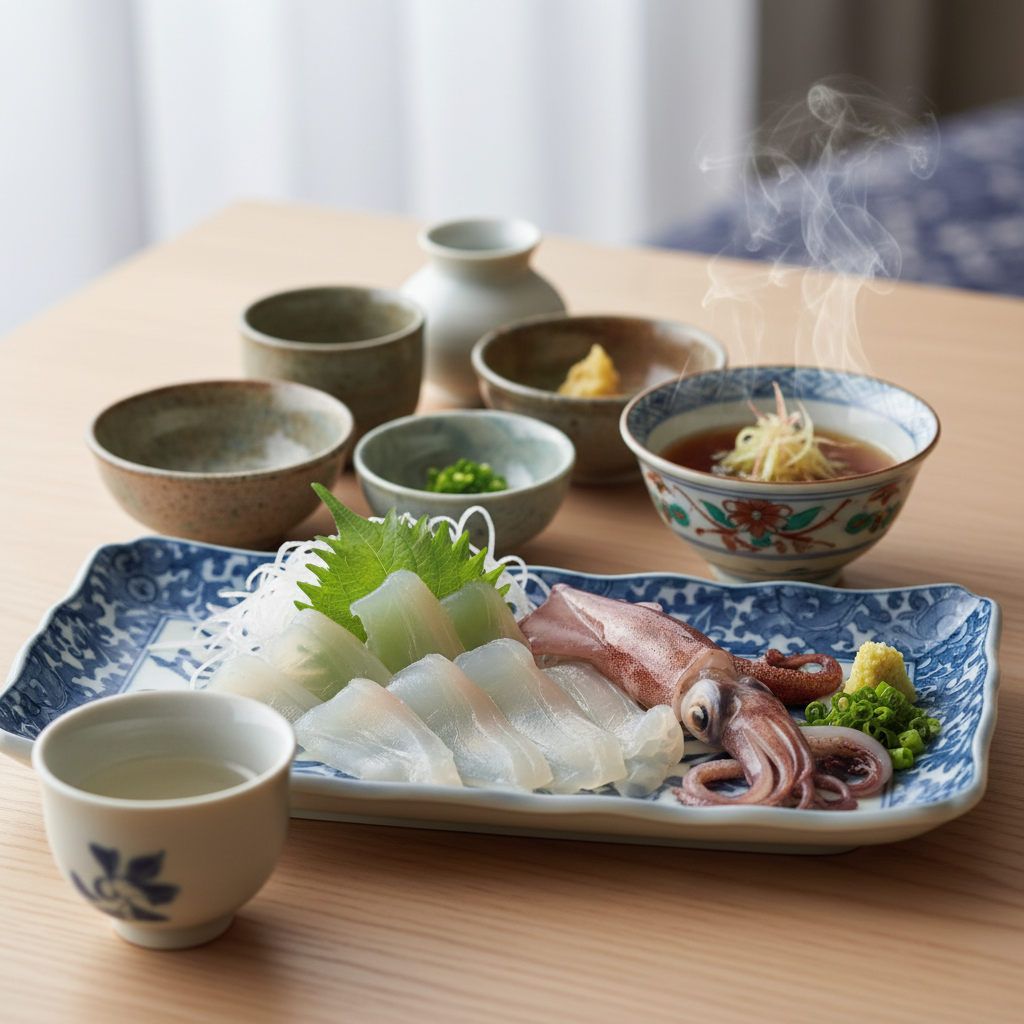
What sets Yobuko’s live squid sashimi apart from squid dishes in other regions is its exceptional freshness. Because the squid is prepared alive, the meat on the plate shines transparently, displaying a beauty like fine glasswork. This transparency serves as proof of freshness and has become synonymous with Yobuko’s live squid sashimi.
The texture is characterized by a crispy, chewy bite, and as you chew, sweetness spreads throughout your mouth. Unlike ordinary sashimi, you can experience freshness so vibrant that the meat seems to move—this is the true pleasure of live sashimi.
Selected for the Rural Village Traditional Cuisine 100 Selection
Yobuko’s live squid sashimi has been selected as one of the “Rural Village Traditional Cuisine 100 Selection” designated by the Ministry of Agriculture, Forestry and Fisheries, and is nationally recognized as a representative gourmet of Saga Prefecture. It plays an important role both in preserving regional food culture and as a tourism resource.
The History and Origins of Yobuko’s Live Squid Sashimi
“Kawataro,” the Birthplace of Live Squid Sashimi
The history of Yobuko’s live squid sashimi dates back to 1973 (Showa 48). That year, “Kawataro” opened as Japan’s first specialty shop for live squid sashimi in Yobuko. However, its origins go back even further—to 1961 (Showa 36), when the founder first filleted freshly caught spear squid from the Genkai Sea and was amazed by the transparent brilliance and delicious chewy texture of the fresh-caught squid, leading him to decide to start the business.
Kawataro is also known as the first restaurant in Japan to offer “live fish cuisine,” establishing a style of preparing and serving live fish on the spot. This innovative service method became established as a specialty of Yobuko, and as many other shops followed suit, the entire town of Yobuko developed into “the town of live squid sashimi.”
The Reason Yobuko Became a Squid Town
The background to Yobuko Town thriving as “the squid town” lies in geographical factors. Positioned on the ria coast of the Genkai Sea, Yobuko has long been a port town with active coastal fisheries. Squid fishing in particular was flourishing, with abundant catches of Swordtip squid (Spear squid) and Japanese red squid (Clear squid).
This blessed fishing ground, combined with cooking techniques that take advantage of fresh seafood, created a unique squid culture in Yobuko. Today, it attracts many tourists throughout the year and has become a representative tourism gourmet spot in Saga Prefecture.
Types of Squid Available in Yobuko and Their Peak Seasons
The types of squid offered in Yobuko differ by season. Each squid has unique characteristics, and you can enjoy different flavors depending on the time of year—another attraction of Yobuko’s squid.
Swordtip Squid (Spear Squid)|March to November
Swordtip squid is the most commonly served squid in Yobuko, with peak season from March through November. Locally called “spear squid,” it is characterized by its elongated shape.
The meat features moderate chewiness and strong sweetness. It has high transparency, and when prepared as live sashimi, you can enjoy its beautiful appearance. Known as the “king of squid” due to its particularly strong sweetness, it is a premium ingredient. Fishermen carefully catch them one by one, preserving freshness and quality.
Japanese Red Squid (Clear Squid)|December to March
From winter through early spring, Japanese red squid takes center stage. Locally called “clear squid,” it is characterized by thicker meat and greater volume compared to Swordtip squid.
Reaching peak season during the cold months from December through March, Japanese red squid has firm meat and rich umami. It offers a more substantial texture than Swordtip squid and is very filling. When visiting Yobuko in winter, be sure to sample live Japanese red squid sashimi.
Other Squid Species
Depending on the season and fishing conditions, Yobuko sometimes offers spear squid, Japanese common squid, and other varieties. Some restaurants provide the freshest squid landed that day, so you might encounter different squid species each time you visit.
How to Enjoy Yobuko’s Live Squid Sashimi
How to Eat Live Sashimi
Yobuko’s live squid sashimi is first served in translucent, gleaming sashimi form. It is typically eaten with soy sauce or ponzu, but enjoying it simply with salt or wasabi-soy sauce is also recommended. Savor the crispy texture and sweetness to the fullest.
Grilled or Fried Squid Legs (Geso)
After eating the body meat from the live sashimi, the remaining geso (legs) are often served grilled with salt or deep fried. Grilling adds a savory aroma, offering a different deliciousness from the sashimi. Enjoying two different cooking methods from a single squid is the luxury unique to live sashimi.
Side Menus Like Squid Shumai
Many restaurants also offer various side dishes using squid, such as squid shumai, squid salted innards, and fried squid. Set meals often include these small dishes, allowing you to enjoy squid cuisine from multiple angles.
Live Sashimi Price Range
The average price for live squid sashimi in Yobuko is around 3,000 to 4,000 yen per squid. Set meals typically range from 4,000 to 5,000 yen. Prices vary depending on the restaurant, season, and squid size, but being able to enjoy supreme freshness and craftsmanship at these prices is extremely reasonable.
Famous Restaurants Serving Yobuko’s Live Squid Sashimi
Numerous squid restaurants line the streets of Yobuko Town, and here we introduce particularly highly-rated establishments.
Kawataro Yobuko Branch|The Birthplace of Live Squid Sashimi
“Kawataro,” founded in 1961, is known as Japan’s first live fish cuisine restaurant. The restaurant features traditional techniques passed down from its origins and unchanged deliciousness.
Both single dishes and set meals are available, with the “Live Squid Sashimi Set Meal” being the most popular. It comes with small side dishes and squid shumai, allowing you to enjoy squid’s deliciousness from multiple perspectives. The meat is sweetly delicious with a superb crispy texture. It’s a must-visit shop when you come to Yobuko.
Squid Specialty Restaurant Ika Douraku
“Ika Douraku,” operated by Limited Company Miyamoto Suisan, is a squid specialty restaurant. They carefully select only Swordtip squid caught one by one by fishermen, allowing you to fully experience the sweetness and rich flavor called “the king of squid.”
They also sell a product called “Alive and Well” (活きてるまんま), where live squid is shipped in special poly bags with artificial seawater and oxygen, so you can enjoy Yobuko’s taste at home. Skilled craftsmen prepare the dishes before your eyes at the restaurant, giving you a firsthand experience of live sashimi.
Live Fish Cuisine Kabeshima
“Kabeshima,” where you can enjoy squid dishes while overlooking Yobuko’s harbor, is popular for its excellent location. In addition to fresh squid, the menu features various dishes using seafood caught in the Genkai Sea.
The interior overlooks Yobuko’s beautiful sea, enhancing the tourist experience. In addition to live squid sashimi, seasonal fish dishes are available, making it ideal for group visits.
Live Fish Cuisine Gyobi
“Gyobi,” beloved by local residents, is characterized by a welcoming atmosphere and dependable taste. In addition to squid’s freshness, they deliciously prepare every part, including grilled and fried squid legs.
Prices are relatively reasonable, making it easy to enjoy authentic local flavors. With many regular local customers alongside tourists, it’s recommended for those seeking genuine deliciousness.
Seaside Inn Kiyoriki
“Kiyoriki,” which doubles as a lodging facility, serves fresh squid dishes. By staying overnight, you can enjoy freshly caught morning squid in breakfast and dinner—a special attraction.
For those wishing to savor squid cuisine slowly while viewing Yobuko’s sea, staying overnight is recommended. The menu is rich with seasonal seafood dishes, allowing you to deeply experience Saga’s food culture.
Marine Restaurant Banbou
“Banbou,” located at the base of Yobuko Bridge, is a unique restaurant with an underwater observation room. You can enjoy live squid sashimi while observing fish in the sea—an experience found nowhere else.
Particularly popular with families and tourists, it offers food and sightseeing simultaneously. Beyond squid dishes, it’s worth visiting as a Yobuko tourist attraction.
Kaishu Main Branch
“Kaishu” offers live squid sashimi along with diverse dishes using locally caught fresh seafood. It’s recommended for those wanting to enjoy seafood beyond just squid.
The spacious interior accommodates group reservations. With banquet plans available, it’s suitable for group trips.
Fish Restaurant Genkai
“Genkai” allows you to fully savor the bounty of the Genkai Sea. Squid live sashimi is complemented by an extensive menu of seasonal fish dishes.
Using fresh seafood sourced directly from local fishermen, the day’s special recommendations are particularly excellent. Perfect for those wanting to enjoy sea’s bounty beyond just squid.
Live Squid Sashimi Yamato
“Yamato” pursues squid’s deliciousness simply. By eliminating unnecessary embellishment, it maximizes squid’s natural flavor.
With attention to squid’s freshness and craftsman technique, they serve beautifully transparent live sashimi. Recommended for those wanting to taste pure squid deliciousness.
Access to Yobuko and Tourism Information
How to Access Yobuko
By Car
- From Fukuoka City: Via Fukuoka Urban Expressway → West Kyushu Expressway → Karatsu, approximately 1 hour 30 minutes
- From Taku IC on Nagasaki Expressway: Via National Route 203, approximately 50 minutes
By Public Transportation
- From JR Karatsu Station: Showa Bus “Yobuko” bound, approximately 30 minutes, get off at “Yobuko” bus stop
- From Fukuoka Airport: High-speed bus “Karatsu-go” to Karatsu in approximately 1 hour 30 minutes, then transfer to local bus
Sightseeing Spots Near Yobuko
Yobuko Morning Market
The Yobuko morning market is counted as one of Japan’s three major morning markets, operating from around 7:30 AM to noon daily. Fresh seafood, dried fish, and local vegetables line the stalls, creating a lively atmosphere.
Yobuko Bridge
The 728-meter Yobuko Bridge connects Yobuko and Kabe Island as a landmark. From the bridge, you can enjoy a panoramic view of the Genkai Sea, making it popular as a driving course.
Nanatsu Gama (Seven Caves)
Designated a National Natural Monument, Nanatsu Gama consists of seven sea caves formed by erosion of basalt by the rough waves of the Genkai Sea. Sightseeing boat tours through the caves are popular, allowing close experience of nature’s sculptural beauty.
Hado Cape
Located at the northwestern tip of Kyushu’s main island, Hado Cape features beautiful coastline and a distinctive lighthouse. The observation deck offers panoramic views of the Genkai Sea, and on clear days, you can even see Iki Island.
How to Enjoy Yobuko’s Squid at Home
Even if you can’t visit Yobuko, you can enjoy Yobuko’s squid at home through mail order services.
Live Delivery Service
Restaurants like “Ika Douraku” offer services that ship live squid in special poly bags with artificial seawater and oxygen. Squid is shipped the same day it’s caught, so you receive it in fresh condition at home.
Frozen Squid and Processed Squid Products
While live sashimi is difficult, frozen fresh squid or processed products like squid shumai and salted squid innards allow easier enjoyment of Yobuko’s flavors. Popular as souvenirs, they’re available at Saga Prefecture antenna shops and online retailers.
Important Notes When Enjoying Yobuko’s Squid
Reservations Are Recommended
Especially on weekends, during tourist season, Golden Week, and Obon, it gets extremely crowded. To secure a seat reliably, advance reservations are recommended. Popular restaurants can fill up weeks in advance, so early planning is important.
Confirm Business Hours and Closures
Hours and days off vary by restaurant. Additionally, temporary closures may occur due to weather or fishing conditions, so confirm via the official website or phone before visiting.
Squid Supply Status
Since fishing depends on nature, some days may see limited squid deliveries. Special caution is needed during typhoon season and winter storms. If worried, contact the restaurant in advance.
Frequently Asked Questions About Yobuko’s Live Squid Sashimi
Q1: Why is Yobuko’s live squid sashimi transparent?
A1: Squid meat is naturally transparent but turns white and cloudy over time. Live sashimi is prepared on-site from live squid, maintaining extremely fresh condition and preserving the transparent appearance. This transparency is proof of freshness and the defining characteristic of Yobuko’s live squid sashimi.
Q2: What’s the best time of year to visit?
A2: Yobuko offers squid year-round, but spring through autumn Swordtip squid season is particularly popular. May through September is peak season, with especially strong sweetness. Winter brings peak season for Japanese red squid, with thick, satisfying meat.
Q3: Can children eat it?
A3: Yes, children can eat it. However, as it’s extremely fresh raw sashimi, judge based on young children’s health and preferences. Many restaurants also serve grilled or fried squid legs as alternatives if raw is unsuitable.
Q4: Can solo diners enter?
A4: Most restaurants welcome solo diners. However, live squid sashimi orders are typically by whole squid, which may be too much for one person. Asking staff about smaller sizes or combining with other dishes is a good option.
Q5: What’s the difference between Yobuko squid and squid from other regions?
A5: Yobuko squid is special due to its exceptional freshness and cooking technique. Fresh-caught squid from the Genkai Sea’s abundant fishing grounds, prepared by skilled craftsmen, achieves high transparency and beauty. Additionally, Yobuko’s long-established live sashimi culture has developed superior cooking techniques that maximize squid’s natural sweetness and texture.
Q6: Is there parking when driving?
A6: Most restaurants have dedicated parking, though it may fill during tourist season. Public parking is available near Yobuko’s morning market area. Confirming parking availability with the restaurant in advance provides peace of mind.
Q7: Can you take leftovers home?
A7: Taking live sashimi itself is difficult, but many restaurants sell processed products like dried squid, squid shumai, and salted squid innards. Using mail order services, you can also have live or frozen squid shipped home.
Q8: What if a companion is vegetarian or dislikes seafood?
A8: Specialty squid restaurants may have limited alternatives, though some offer other menu options. Contacting the restaurant in advance may result in substitute meals. Other restaurants in the Yobuko area serve different cuisine, which you can also consider.
Conclusion: Experience Saga’s Food Culture Through Yobuko’s Live Squid Sashimi
Yobuko’s live squid sashimi, as a representative traditional cuisine of Saga Prefecture, has been beloved by many for years. The translucent gleaming meat, crispy texture, and spreading sweetness—all are masterpieces born from the Genkai Sea’s bounty, craftsmen’s skill, and Yobuko’s food culture.
The live squid sashimi culture beginning with “Kawataro,” its birthplace, has spread throughout Yobuko, becoming the town’s identity. With different squid varieties enjoyable by season, it’s a gourmet tourism destination worth visiting year-round.
When visiting Yobuko, be sure to savor live squid sashimi alongside sightseeing at morning markets and sea caves. Fresh seafood, beautiful scenery, and warm hospitality will create unforgettable travel memories.
Through this traditional cuisine representing Saga Prefecture, why not rediscover Japan’s rich food culture and regional charm? Yobuko’s live squid sashimi promises flavors so special that once tasted, you’ll surely want to visit again.