Buri Daikon: A Signature Dish of Toyama Prefecture | History, Cooking Method, and the Charm of Himi Cold-Water Yellowtail Explained Thoroughly
What is Buri Daikon?
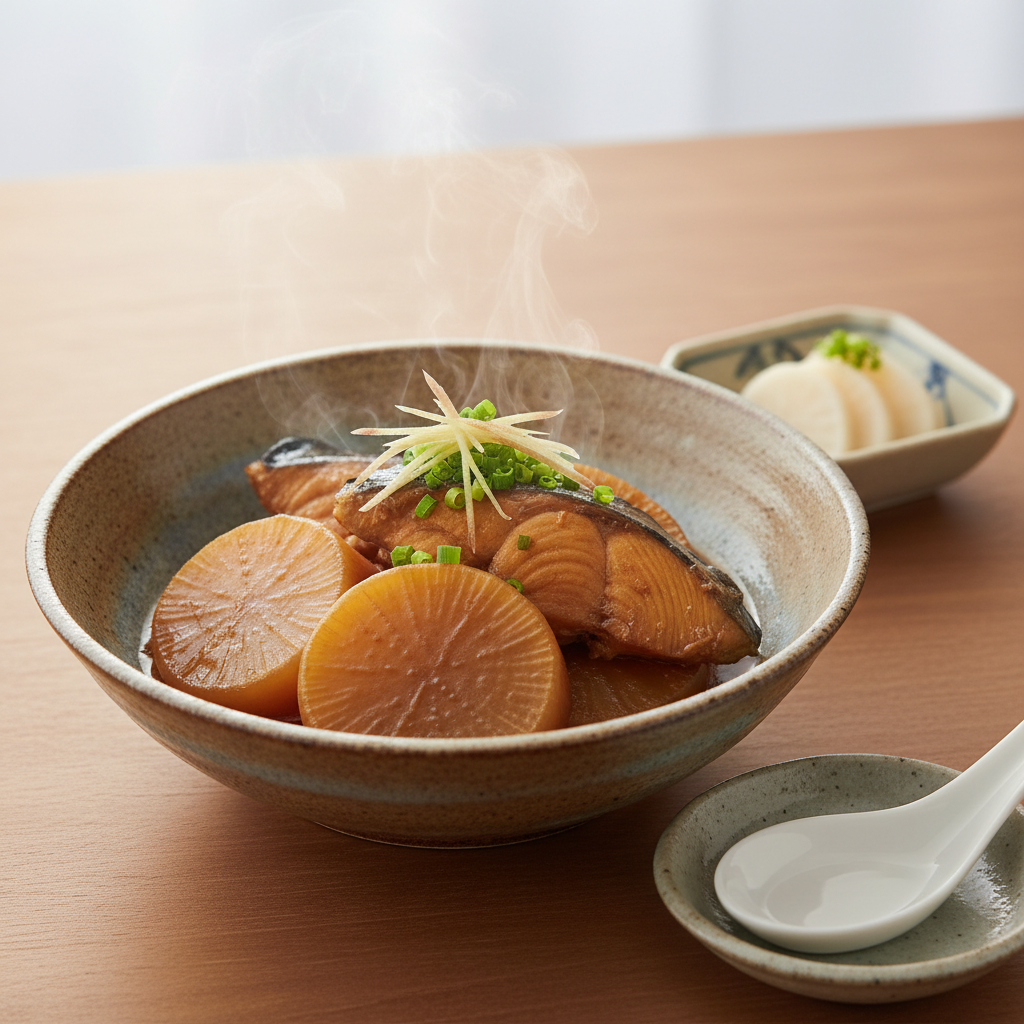
Buri daikon is one of the representative local dishes of Toyama Prefecture, made by simmering buri (yellowtail) ara—the head, bones, and other parts left after removing the meat—together with daikon radish in a sweet-savory broth made with soy sauce, sugar, and dashi stock. Though it is now enjoyed as a home-cooked meal throughout Japan, its roots lie in the Hokuriku region, centered on Toyama and Ishikawa prefectures.
Toyama Bay is called a “natural fish farm” due to its abundant seafood resources, and the cold-water yellowtail caught in winter is known as the “King of Toyama Bay.” This high-quality wild yellowtail, combined with daikon that becomes sweeter in winter, has long been cherished as a dish symbolizing Toyama’s food culture.
Yellowtail is known as a “fish of ascension” that changes its name as it grows, and is considered an auspicious fish. In Toyama Prefecture, due to this good fortune, yellowtail dishes are traditionally served at year-end and New Year celebrations and auspicious occasions, with buri daikon being one of the most representative dishes.
The Deep Connection Between Toyama Prefecture and Yellowtail Fishing
The Natural Phenomenon of “Buriokoshi”
From late autumn to early winter, Toyama Prefecture experiences a unique meteorological phenomenon of fierce winds blowing fiercely and violent thunder roaring. This phenomenon is called “buriokoshi” by locals and has long been passed down as a signal that yellowtail fishing in Toyama Bay is about to begin in earnest.
Buriokoshi is a phenomenon caused by the Japan Sea side’s distinctive winter pressure patterns. During this period, high-quality cold-water yellowtail with well-fattened meat circulates into Toyama Bay. Fishermen have relied on this natural signal for generations to determine the right timing for yellowtail fishing.
Geographic Characteristics of Toyama Bay
Toyama Bay has great depth, and abundant nutrient-rich water from the Tateyama Mountains flows into the sea, creating an environment rich in plankton and ideal as a feeding ground for fish. This natural environment fattens the yellowtail circulating through Toyama Bay and develops high-quality yellowtail with firm flesh.
In particular, yellowtail caught in Himi City has been branded as “Himi cold-water yellowtail” and receives high acclaim nationwide. Himi’s fixed-net fishing is known as a method that doesn’t damage the fish body, and landing the catch in a fresh state also contributes to the high quality of Himi cold-water yellowtail.
The History and Cultural Background of Buri Daikon
Tradition in Toyama Prefecture
In Toyama Prefecture, yellowtail has been called the “messenger of God” and treated as a special fish. Since the Edo period, yellowtail caught in Toyama Bay was offered as a tribute to the Kaga clan, and there was a custom of using it as a year-end gift during the late year.
Yellowtail is also known as a fish with almost no waste. The meat is used for sashimi and grilled dishes, the ara (head and bones) is used in stewed dishes, and dashi made from organs and bones is used in vegetable preparations—knowledge has been passed down on how to use an entire fish without waste.
Buri daikon is also a dish born from this “mottainai” (waste not) spirit. The expensive meat portion of the yellowtail is used for sashimi or grilled dishes, while the ara is simmered with daikon, allowing one to enjoy the flavorful meat around the bones and the delicious daikon that has absorbed the yellowtail’s fat.
The Good Fortune of a Fish of Ascension
Yellowtail changes its name according to growth stages and is a “fish of ascension.” In Toyama Prefecture, from smallest to largest, it is generally called “Tsubaiso,” “Fukuragi,” “Gando,” and “Buri.” This name change suggests human success and growth, making it a prized fish at celebratory occasions.
In particular, there is a custom called “yome buri” (bride’s yellowtail) where a daughter is given yellowtail to take to her new home upon marriage as a prayer for the daughter’s health and the son-in-law’s success, and buri daikon was a representative dish served at such celebrations.
How to Make Buri Daikon
Ingredients (Serves 4)
Main Ingredients:
- Yellowtail ara (head, center bone, collar, etc.): 400–500g
- Daikon radish: 600–800g (about 1 medium radish)
Seasonings:
- Soy sauce: 4–5 tablespoons
- Sugar: 3–4 tablespoons
- Mirin: 3 tablespoons
- Sake: 3 tablespoons
- Dashi stock: 400–500ml
- Ginger: 1 piece (thinly sliced)
For Preparation:
- Salt: as needed
- Hot water: as needed
Preparation
Preparing the Daikon:
- Peel the daikon thickly and cut into half-moon or round slices 2–3cm thick
- Place the daikon in a pot and parboil in rice-washing liquid (or water with a small amount of uncooked rice added) for 20–30 minutes
- When a bamboo skewer passes through easily, rinse with water and drain
Parboiling daikon in rice-washing liquid removes the daikon’s characteristic bitterness and prevents it from falling apart during cooking. This step is a crucial point for making delicious buri daikon.
Preparing the Yellowtail Ara:
- Cut the yellowtail ara into bite-sized pieces
- Lightly salt the entire surface and let sit for about 10 minutes to release any strong flavors
- Pour hot water over it to blanch; when the surface turns white, transfer to cold water
- Carefully remove blood streaks and any remaining scales, and pat dry thoroughly
This blanching step removes the yellowtail’s distinctive strong flavor, keeps the cooking broth clear, and ensures a clean taste.
Cooking Process
- Arrange the parboiled daikon in a deep pot or earthenware pot
- Add dashi stock and heat over medium heat
- Once boiling, add sake, mirin, and sugar and simmer for about 5 minutes
- Add the prepared yellowtail ara and thinly sliced ginger
- Add soy sauce, place a drop lid on top, and simmer over medium heat for 15–20 minutes
- Occasionally ladle the cooking liquid over the ingredients and continue simmering until the liquid reduces
- When the daikon is well-flavored and the yellowtail meat crumbles softly, it is done
Tips for Delicious Results
Adjusting Cooking Time:
If simmered too long, the yellowtail meat becomes dry; adjust based on observation around 15–20 minutes as a guide. Since the daikon is already soft, you can shorten the simmering time with the yellowtail.
Using a Drop Lid:
Using a drop lid allows the flavor to permeate evenly even with less cooking liquid. Aluminum foil or parchment paper can be used as a substitute.
Cooling and Reheating:
Cooling allows the flavor to permeate further; if time allows, making it the day before and letting it sit overnight makes it even more delicious.
The Effect of Ginger:
Ginger not only removes the yellowtail’s strong flavor but also tightens the overall taste. Thinly slicing it and simmering it together spreads the aroma throughout the dish.
Variations of Buri Daikon
Miso-Based Buri Daikon
In some areas of Toyama Prefecture, buri daikon made with miso instead of soy sauce is also prepared. Using red miso or blended miso creates a richer flavor. Replace 2–3 tablespoons of soy sauce with miso and cook as usual.
Variations with Other Vegetables
Adding carrots, burdock, or konjac to the daikon creates a more nutritionally balanced dish. Konjac, in particular, pairs well as it absorbs the yellowtail’s fat and becomes delicious.
Other Yellowtail Dishes in Toyama Prefecture
In Toyama Prefecture, various yellowtail dishes are traditionally prepared beyond buri daikon.
Yellowtail Teriyaki
Fatty yellowtail fillets glazed with soy sauce and mirin. A simple yet flavorful dish that lets you fully enjoy the yellowtail’s umami.
Buri no Anjya Namasu
“Anjya” is a Toyama dialect term for juvenile yellowtail used in this vinegared dish. Thinly sliced yellowtail is mixed with daikon and carrots and flavored with sweet vinegar.
Yellowtail Shabu-Shabu
Thinly sliced yellowtail is quickly swished in kombu dashi and eaten. It is typically enjoyed with ponzu or sesame dipping sauce.
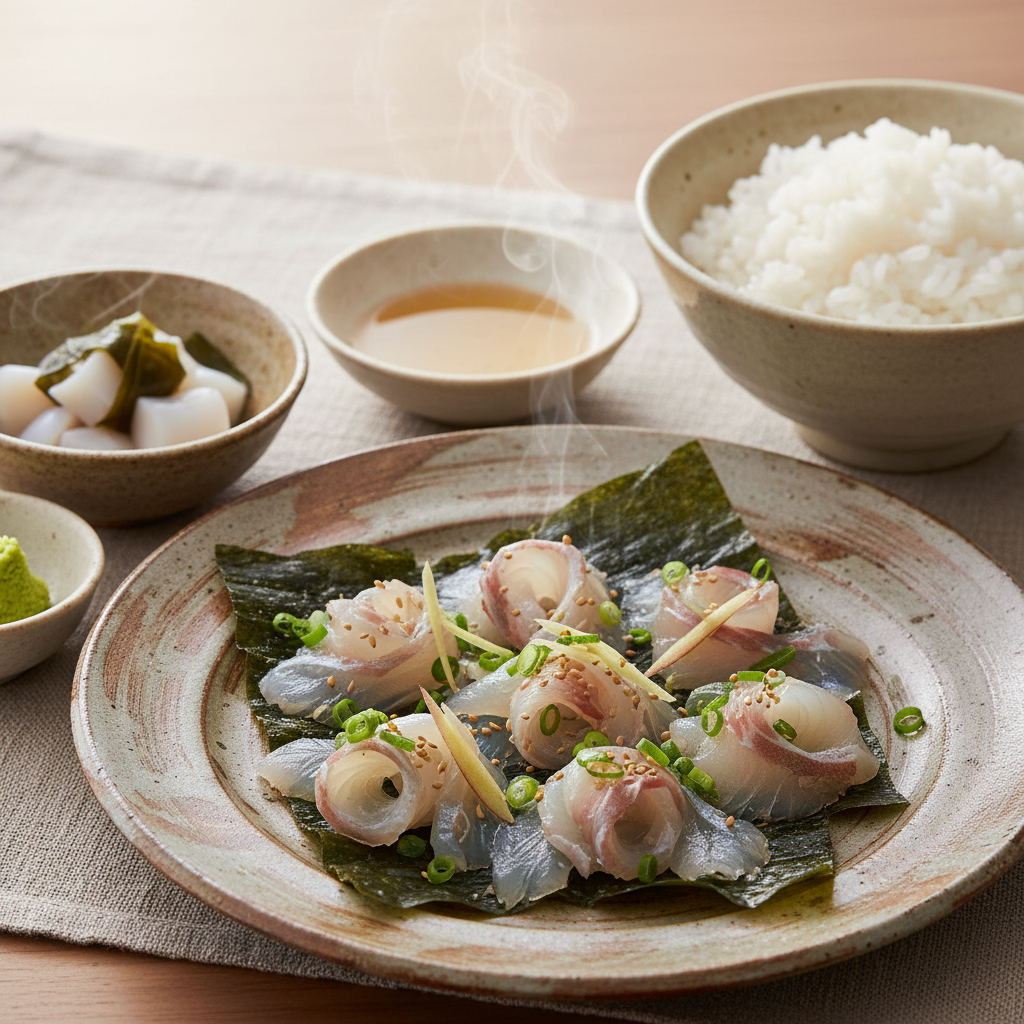
Yellowtail Sashimi and Sushi
Fresh cold-water yellowtail sashimi offers exquisite fatty umami. It is a popular winter staple at Toyama sushi restaurants.
Nutritional Value and Health Benefits
Nutritional Components of Yellowtail
Yellowtail is rich in high-quality protein and especially abundant in omega-3 fatty acids such as DHA (docosahexaenoic acid) and EPA (eicosapentaenoic acid). These nutrients are said to help thin the blood, activate the brain, and prevent arteriosclerosis.
It also contains B vitamins, vitamin D, and iron, which are effective for fatigue recovery and anemia prevention.
Nutritional Components of Daikon
Daikon is rich in diastase, a digestive enzyme that aids digestion. It is also abundant in vitamin C and dietary fiber, which help boost immunity and improve intestinal health.
Winter daikon is particularly sweet and has increased nutritional value. Daikon that has absorbed yellowtail fat increases in calories but becomes very delicious with concentrated umami.
Menu Ideas and Serving Suggestions
Basic Menus
Buri daikon is substantial enough as a main dish, so typical menus are as follows.
Menu Idea 1 (Home Table):
- Buri daikon
- White rice
- Miso soup (tofu and wakame)
- Small dish (spinach seasoned with dashi, etc.)
- Pickles
Menu Idea 2 (Entertaining Guests):
- Buri daikon
- Yellowtail sashimi
- White rice or mixed rice
- Clear soup
- Chawanmushi (steamed egg custard)
- Vinegared dish
Pairing with Sake
Buri daikon pairs exceptionally well with Japanese sake. Toyama Prefecture is also known as a sake-producing region, and pairing it with local brands like “Tateyama,” “Masuzumi,” and “Katsukoma” allows you to enjoy the dish even more.
Slightly dry junmai or hon-mirin sake pairs well with the yellowtail fat and sweet-savory flavor. In winter, enjoying it warmed makes it pleasant.
Places to Enjoy Buri Daikon in Toyama Prefecture
Around Himi City
Himi City is known as the home of “Himi cold-water yellowtail” and offers fresh yellowtail dishes at many restaurants. Especially during the cold-water yellowtail season from November to February, various yellowtail dishes including buri daikon are served.
Local Cuisine Restaurants in Toyama City
Many specialty restaurants serving Toyama’s local cuisine are located in Toyama City, and buri daikon is offered as a standard menu item. You can enjoy authentic flavors using local ingredients.
Roadside Stations and Tourist Facilities
Some dining areas at roadside stations and tourist facilities throughout Toyama Prefecture offer seasonal buri daikon. Stopping by while sightseeing is recommended.
Tips for Selecting Ingredients When Cooking at Home
How to Choose Yellowtail
How to Identify Fresh Yellowtail:
- Eyes are clear and dark
- The meat is firm and bounces back when pressed
- The blood line is a vibrant red color
- The cut surface is moist with no liquid dripping
Points When Selecting Ara:
When using ara for buri daikon, choose the freshest possible. Those with blood line remaining intact tend to have stronger odors, so careful preparation is important.
How to Choose Daikon
How to Identify Delicious Daikon:
- White and glossy
- Heavy and substantial
- Hair root holes are aligned in a straight line
- Leaves at the base are fresh green
Winter daikon is sweeter and ideal for buri daikon. Daikon from December to February particularly has high sugar content and is suited for simmered dishes.
Storage and Shelf Life
Refrigerator Storage
Buri daikon can be refrigerated for 2–3 days. Allow it to cool completely, place in an airtight container, and refrigerate. When reheating, transfer to a pot and warm slowly over low heat; the flavor will permeate further and become even more delicious.
Freezer Storage
Freezing is also possible, though the daikon’s texture may change slightly. If freezing, divide into portions and place in airtight containers or freezer bags; aim to eat within about 2 weeks. Thaw in the refrigerator gradually and reheat in a pot.
Understanding Toyama’s Food Culture Through Buri Daikon
Buri daikon is not merely a stewed dish but a local cuisine that condenses Toyama Prefecture’s natural environment, history, and culture. The abundant gifts of Toyama Bay, the fishermen’s wisdom developed through living alongside the natural phenomenon of buriokoshi, the knowledge of using ingredients without waste, and the cultural background of valuing the good fortune of a fish of ascension—various elements combine to create this dish.
Though buri daikon can now be eaten anywhere in Japan, experiencing the authentic taste in Toyama Prefecture, its birthplace, holds special meaning. Visiting Toyama during the cold-water yellowtail season and savoring authentic buri daikon made with local ingredients is a valuable opportunity to deeply understand Toyama’s food culture.
When cooking at home, using yellowtail from Toyama Prefecture and Toyama local sake can bring you closer to the authentic taste. Why not experience Toyama’s rich food culture through buri daikon?