What is Konbu-jime (Kelp-pressed)? A Thorough Explanation of the History, Preparation Method, and Charm of Toyama Prefecture’s Traditional Local Cuisine
Konbu-jime (kelp-pressed), a representative local dish of Toyama Prefecture, is a traditional cooking method that creates a unique flavor and texture by sandwiching fresh seafood between kelp and letting it rest, transferring the umami of the kelp to the ingredients.
This article provides a detailed explanation of everything about this profound local dish, from the historical background of konbu-jime to specific preparation methods, how to select ingredients, storage methods, and even modern arrangements.
What is Konbu-jime? Basic Knowledge of Toyama Prefecture’s Local Cuisine
Definition and Characteristics of Konbu-jime
Konbu-jime (kelp-pressed) is a cooking method in which ingredients such as fish or shellfish are sandwiched between kelp and left to rest for a certain period of time, transferring the umami components of the kelp to the ingredients. Through this technique, the ingredients take on the flavor of the kelp, and as moisture is appropriately removed, the flesh becomes firm and develops a unique texture and deep flavor.
The main characteristics of konbu-jime are as follows:
- Synergistic Umami Effect: The glutamic acid in kelp combines with the inosinate in seafood, doubling the umami
- Texture Change: As moisture is appropriately removed, the flesh becomes firm and takes on a chewy texture
- Improved Shelf Life: The antibacterial properties of kelp allow it to keep longer than raw fish
- Refined Flavor: The aroma of kelp transfers to the ingredients, adding an oceanic flavor
Why Konbu-jime Developed in Toyama Prefecture
The establishment of konbu-jime as a local dish in Toyama Prefecture has geographical and historical roots.
Toyama Prefecture faces the Japan Sea, and Toyama Bay is called “nature’s fish farm” due to its abundant marine life. Meanwhile, Toyama thrived as a port of call for the Kitamae-bune (northern trading ships), with high-quality kelp transported from Hokkaido flowing in large quantities. During the Edo period, Toyama became a major consumer of kelp, with kelp handling volumes among the highest in the nation.
This environment, where both “fresh seafood” and “high-quality kelp” were abundantly available, nurtured the unique food culture of konbu-jime.
History and Cultural Background of Konbu-jime
History of the Kitamae-bune and Kelp Trade
The history of the Kitamae-bune and kelp trade is essential to understanding the history of konbu-jime.
From the Edo period through the Meiji period, the Kitamae-bune sailed along the Japan Sea coast from Hokkaido to Osaka, transporting various goods. Among these, kelp was one of the most important commodities. Toyama Prefecture was a major port of call for these ships, and in particular, Iwase Port (present-day Toyama City) on Toyama Bay thrived as a kelp distribution center.
At that time, many kelp wholesalers in Toyama processed and sold kelp throughout the nation, and kelp culture took root. This abundant distribution of kelp became the foundation for creating Toyama’s unique kelp cuisine.
The Position of Konbu-jime in Toyama’s Food Culture
In Toyama Prefecture, konbu-jime has become established not merely as a cooking method, but as a culture expressing the spirit of hospitality.
On special occasions such as celebrations, weddings, and New Year, konbu-jime often appears on the dinner table, and in particular, konbu-jime made with premium ingredients such as white shrimp, turban shells, and sea bream has been valued as an essential hospitality dish for guests.
Even today, konbu-jime is offered as a standard menu item in restaurants and sushi shops throughout Toyama Prefecture and has become a popular local dish among tourists. It is also regularly made in homes and is cherished as a traditional cooking technique passed down through generations.
Types and Selection of Kelp Used in Konbu-jime
Types of Kelp and Their Characteristics
The main types of kelp used in konbu-jime include the following:
Makomb (True Kelp)
- Origin: Southwestern Hokkaido
- Characteristics: Refined sweetness and strong umami, considered the highest grade
- Suitability for konbu-jime: Very high. Best for delicate seafood
Rausu Kelp
- Origin: Rausu region, Hokkaido
- Characteristics: Characterized by rich umami and aroma
- Suitability for konbu-jime: High. Suitable for fish with a robust flavor
Rishiri Kelp
- Origin: Around Rishiri Island, Hokkaido
- Characteristics: Clean, refined flavor
- Suitability for konbu-jime: High. Ideal for white fish and mild-flavored ingredients
Hidaka Kelp (Mitsuishi Kelp)
- Origin: Hidaka region, Hokkaido
- Characteristics: Soft and easy to cook. Relatively affordable
- Suitability for konbu-jime: Moderate. Easy to use at home
How to Select Kelp Best Suited for Konbu-jime
When selecting kelp for konbu-jime, consider the following points:
- Thickness: Thin kelp doesn’t release enough umami, so choose kelp with adequate thickness
- Width: For easier wrapping, look for kelp at least 10cm wide
- Color: Dark brown with a lustrous appearance indicates high-quality kelp
- White powder on surface: The white powder (mannitol) on the kelp’s surface is a umami component, so don’t wash it away
Traditionally in Toyama Prefecture, true kelp and rausu kelp have been preferred, but hidaka kelp works well for home cooking.
Fish and Shellfish Suitable for Konbu-jime and Other Ingredients
Traditional Ingredients for Konbu-jime
Here are the representative ingredients traditionally used for konbu-jime in Toyama Prefecture:
White Fish
- Sea Bream: With refined flavor, perfect compatibility with kelp umami. Used for celebratory occasions as a premium ingredient
- Flounder: Mild flavor allows the kelp aroma to shine
- Flatfish: The chewy texture is further enhanced by konbu-jime
- Sea Bass: Summer delicacy. The clean flavor pairs beautifully with kelp umami
Blue Fish
- Mackerel: Fall mackerel with good fat content has its fishy smell reduced through konbu-jime
- Horse Mackerel: Easily available and simple to prepare at home
Toyama Bay Specialty Seafood
- White Shrimp: Called the jewel of Toyama Bay. Its natural sweetness becomes concentrated through konbu-jime
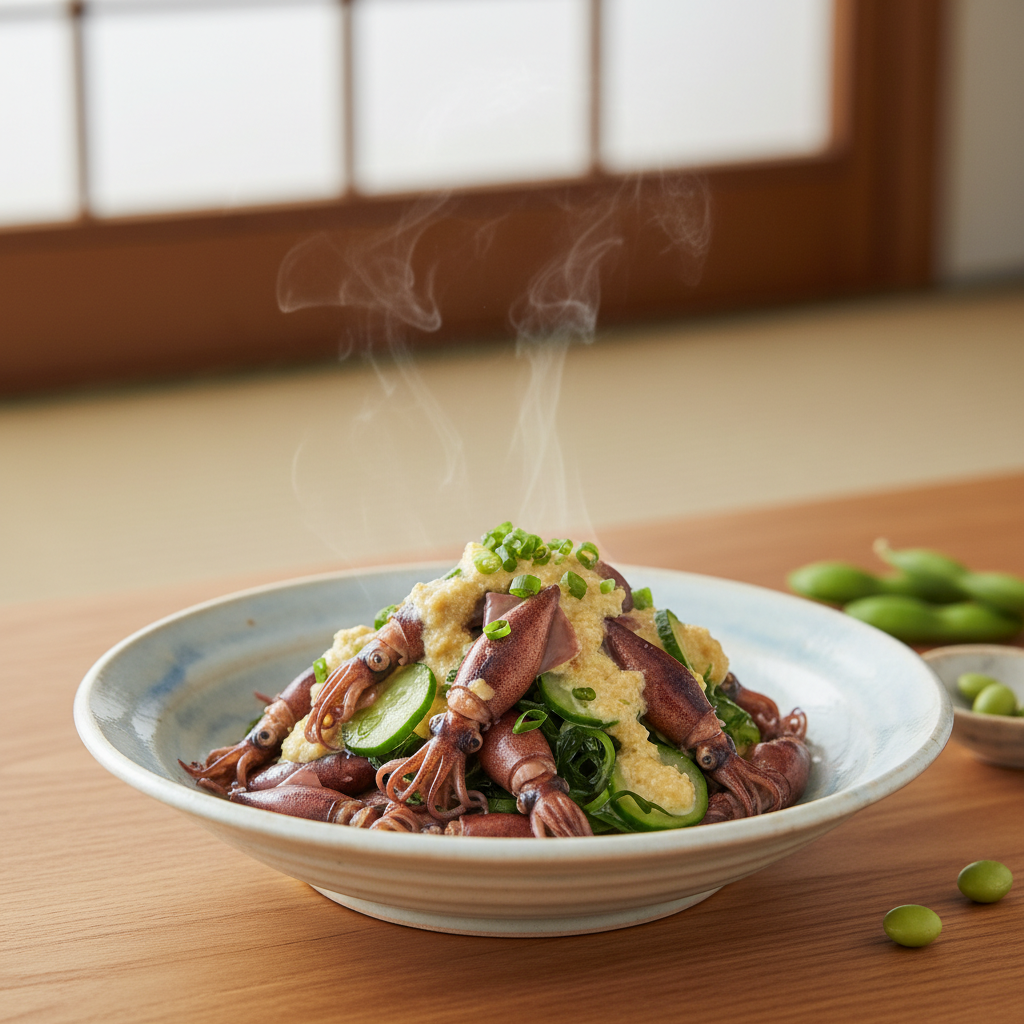
- Firefly Squid: A spring delicacy. With kelp flavor added, it becomes more intensely flavored
- Turban Shell: Its crispy texture and the kelp’s umami create an exquisite match
- Sweet Shrimp: Its creamy sweetness is brought out through konbu-jime
Modern Arrangement Ingredients
In recent years, various ingredients beyond traditional seafood have been used for konbu-jime:
Meat
- Chicken Breast: Becomes moist and can be used in salads and sandwiches
- Pork Loin: Thin slices can be prepared shabu-shabu style
Vegetables and Other Ingredients
- Avocado: Creamy texture combined with kelp umami takes on a Japanese flavor
- Tomato: An unexpected combination, but the synergistic umami makes it delicious
- Cheese: Mozzarella cheese treated with konbu-jime takes on a Japanese flavor
- Tofu: Wood-firm tofu treated with konbu-jime develops a rich, cheese-like taste
The key to selecting ingredients is choosing those that readily absorb kelp umami and become more delicious as moisture is removed.
Basic Method for Preparing Konbu-jime
Necessary Materials and Tools
Ingredients
- Preferred fish or shellfish (sushi-grade): About 200g
- Kelp: 2 pieces large enough to wrap the ingredients (about 30cm)
- Sake: 2 tablespoons (to moisten the kelp)
Tools
- Cutting board
- Knife
- Paper towels
- Plastic wrap
- Baking tray (large enough to lay out kelp)
- Weight (optional)
Preparation: Preparing the Kelp
The first step to successful konbu-jime is proper kelp preparation.
- Wipe the kelp: Gently wipe the kelp’s surface with a damp cloth wrung out well. The white powder (mannitol) is a umami component, so avoid wiping it away strongly. Avoid washing with water.
- Moisten the kelp: Apply sake to the entire surface of the kelp with a brush or spray. This softens the kelp and allows it to adhere better to the ingredients. The sake aroma also enhances flavor.
- Lay out the kelp: Place the kelp on a baking tray and let sit for about 5 minutes to allow the sake to blend in.
Preparing the Seafood
Proper preparation of ingredients is also important.
For sushi-grade fish
- Prepare a sushi-grade fish block (pre-sliced sashimi is also acceptable)
- Thoroughly pat the surface dry with paper towels
- Slice at about 5mm to 1cm thickness (too thick prevents adequate kelp penetration)
For shellfish
- Prepare sushi-grade shelled meat
- Pat dry with paper towels
- Cut to bite-size pieces if large
For shrimp
- Peel the shells and remove the vein
- Use raw if sushi-grade, or lightly boil and cool if for cooking
- Thoroughly pat dry
Steps for Wrapping with Kelp
- Arrange ingredients on kelp: Place the ingredients on the prepared kelp without overlapping. Placing them 2-3cm from the kelp’s edge makes wrapping easier.
- Place the second kelp on top: Cover the ingredients with the second piece of kelp and gently press to adhere.
- Wrap in plastic wrap: Tightly wrap everything in plastic wrap. Ensuring no air pockets and creating a complete seal is key.
- Apply a weight (optional): Place the tray in the refrigerator and apply a light weight (500g to 1kg) on top. This improves adhesion between kelp and ingredients and allows better umami penetration. If no weight is available, a water-filled plastic bottle can serve as a substitute.
- Rest in the refrigerator: Place in the refrigerator to rest. The resting time varies depending on the ingredients and preference (see below).
Recommended Resting Times
The finish of konbu-jime varies greatly depending on resting time.
2-3 hours:
- Kelp flavor subtly transfers
- Best when preserving the ingredient’s original taste
- Suitable for delicate items like white shrimp
6-12 hours (half day):
- Kelp umami penetrates thoroughly
- Texture becomes appropriately firm
- Most common time setting
- Ideal for white fish and shellfish
24 hours (1 day):
- Kelp flavor comes through strongly
- Flesh becomes quite firm
- Suitable for fatty fish like mackerel
- Best for longer storage
48 hours or more:
- Kelp taste becomes very pronounced
- Texture becomes quite firm
- Results that divide opinion
For first-time preparation, try 6-12 hours and discover your preferred timing.
Finishing and Plating
- Remove from kelp: After resting, unwrap and remove the ingredients from the kelp. If the kelp sticks to the ingredients, gently slice it away rather than tearing.
- Cut into portions: Cut into bite-sized pieces. The firmed flesh of konbu-jime cuts easily.
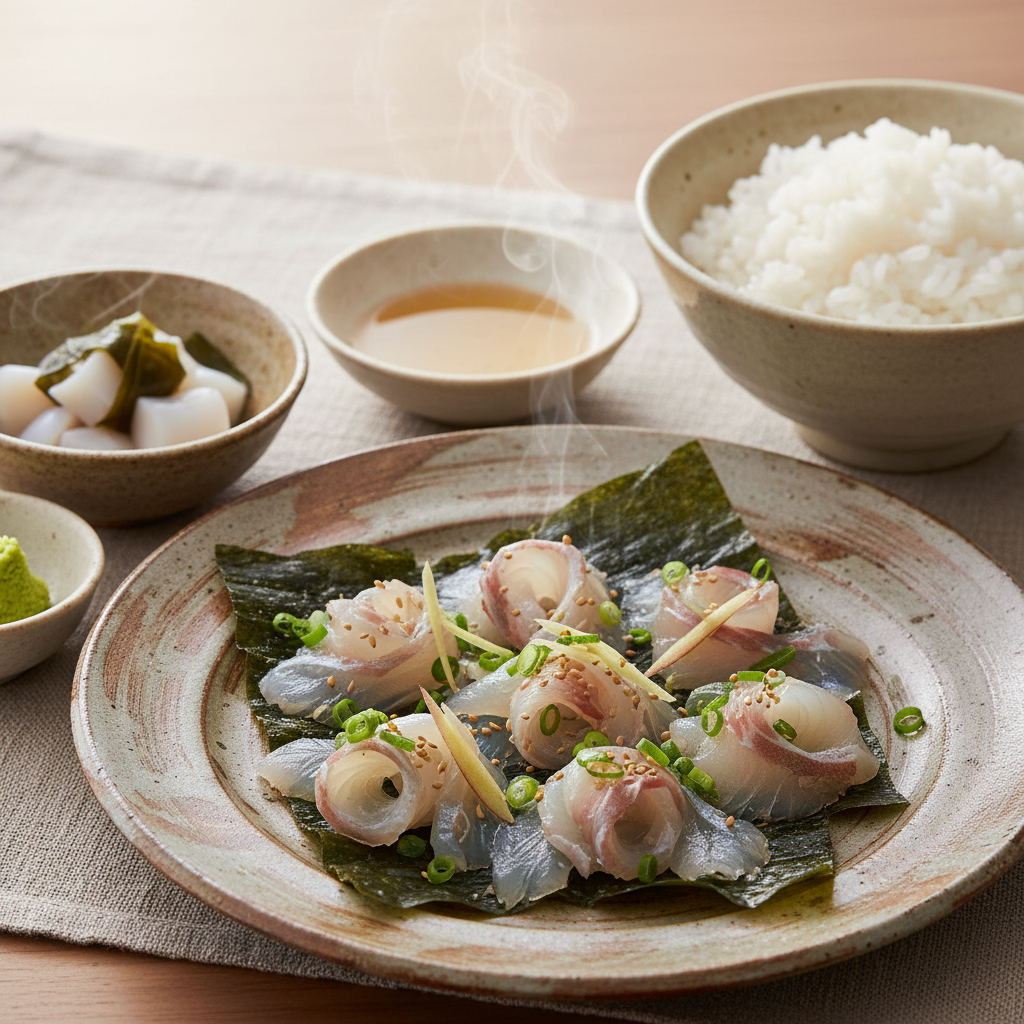
- Plate: Arrange beautifully on a serving dish. While konbu-jime ingredients are delicious on their own, the following accompaniments add sophistication:
- Wasabi soy sauce
- Citrus like sudachi or lemon
- Daikon radish thread
- Herbs like shiso or myoga
- Finely shredded kelp from the konbu-jime (edible)
Applications and Arrangements of Konbu-jime
Konbu-jime Sushi
Fish prepared as konbu-jime is ideal for sushi topping.
Preparation:
- Slice the konbu-jime fish thinly
- Form small portions of vinegar rice
- Place the konbu-jime fish on top and form nigiri sushi
- Top with wasabi and complete
In Toyama Prefecture, konbu-jime sushi is enjoyed as “konbu-jime sushi” and offered in many sushi restaurants. White shrimp and turban shell konbu-jime sushi are exceptional.
Seared Konbu-jime
Lightly searing konbu-jime fish adds a smoky aroma and creates a different delicious experience.
Preparation:
- Slice the konbu-jime fish thickly
- Lightly sear the surface with a torch (pan-searing also works)
- Immediately plunge into ice water to cool
- Pat dry and plate
- Complete with ponzu sauce, sudachi, or grated momiji radish
Konbu-jime Tea Rice
A dish that fully showcases the umami of konbu-jime.
Preparation:
- Finely chop the konbu-jime fish
- Place on warm rice
- Add chopped shiso, green onion, and wasabi
- Pour hot dashi (or green tea) over and complete
The kelp umami dissolves into the dashi, creating a deep-flavored tea rice.
Konbu-jime Carpaccio Style
A Western-style arrangement of konbu-jime.
Preparation:
- Thinly slice konbu-jime white fish
- Arrange in a circle on the plate
- Drizzle with dressing made from olive oil, lemon juice, salt, and pepper
- Garnish with arugula, baby greens, tomato, and complete
Enjoy this fusion of Japanese and Western flavors.
Konbu-jime Pasta
Creative pasta using konbu-jime.
Preparation:
- Cook pasta
- Finely chop the konbu-jime fish
- Heat olive oil and garlic in a pan
- Add cooked pasta and konbu-jime fish and toss
- Add a small amount of soy sauce and scatter shiso leaves to complete
The kelp umami coats the pasta, finishing in a Japanese flavor.
Storage Methods and Shelf Life of Konbu-jime
Proper Storage Methods
Since konbu-jime uses raw seafood, proper storage is important.
Refrigerated storage:
- Keep wrapped in plastic wrap in the state of being sandwiched between kelp
- Ideal temperature is 0-5°C
- If available, use the chilled section for better preservation
Choosing a storage container:
- Use sealable containers or zip-lock bags
- Keep away from air to prevent oxidation
- Use clean containers
Shelf Life Guidelines
Konbu-jime’s shelf life varies depending on ingredient freshness and storage conditions.
General guidelines:
- White fish: 2-3 days refrigerated
- Blue fish: 1-2 days refrigerated (shorter due to fat oxidation)
- Shellfish: 2-3 days refrigerated
- Shrimp: About 2 days refrigerated
Cautions:
- The above are merely guidelines. Always check appearance and smell before eating
- Do not eat if discolored or smells off
- Since raw fish is used, eat as soon as possible
Can Konbu-jime Be Frozen?
Konbu-jime can be frozen, but the texture changes after thawing, so it’s not particularly recommended.
If you must freeze:
- Wrap each piece of konbu-jime separately in plastic wrap
- Place in a sealed zip-lock bag and freeze
- Consume within one month
- Thaw slowly in the refrigerator
Frozen konbu-jime is better used for seared or cooked dishes rather than eaten fresh as sashimi.
Common Failures in Konbu-jime Preparation and Solutions
Common Failures and Their Causes
Failure 1: Fish developed a fishy smell
Causes:
- Fish wasn’t fresh enough
- Inadequate preparation
- Low-quality kelp
Solutions:
- Always use sushi-grade fresh fish
- Thoroughly pat the fish surface dry
- Use high-quality kelp
- Moisten kelp with sake to suppress fishy odor
Failure 2: Kelp flavor was too strong
Causes:
- Resting time was too long
- Kelp was too thick or used a type with overly strong umami
Solutions:
- Start with shorter times (3-6 hours)
- Use refined-flavored kelp like true or rishiri for delicate fish
- Use only one kelp sheet for single-side pressing
Failure 3: Fish became too tough
Causes:
- Resting time was too long
- Weight was too heavy
- Fish was sliced too thin
Solutions:
- Shorten resting time
- Use a lighter weight (500g-1kg)
- Slice fish to 5mm-1cm thickness
Failure 4: Kelp stuck to fish and won’t come off
Causes:
- Resting time was too long
- Kelp was over-moistened
Solutions:
- Moisten kelp in moderation
- Gently slice away the stuck kelp with a knife
- Stuck kelp cut finely is delicious eaten together
Failure 5: Kelp umami didn’t transfer to ingredients
Causes:
- Kelp dried out too much
- Kelp and ingredients didn’t adhere properly
- Resting time was too short
Solutions:
- Moisten kelp appropriately with sake
- Wrap tightly in plastic wrap for good adhesion
- Use a light weight to improve adhesion
- Rest for at least 6 hours minimum
Renowned Konbu-jime Restaurants in Toyama Prefecture
Toyama Prefecture has numerous renowned konbu-jime restaurants. Be sure to taste the authentic flavor when visiting as a tourist.
Restaurants in Toyama City
Sushi Tama Toyama Station Branch
- Convenient for tourists, directly connected to Toyama Station
- Exquisite white shrimp konbu-jime sushi
- Fresh seafood from Toyama Bay konbu-jime available
Sushijin
- Popular local sushi restaurant
- Seasonal fish konbu-jime available
- Watch craftsmanship from the counter
Restaurants in Takaoka City and Himi City
Himi Kitokito Sushi
- Fresh seafood direct from Himi fishing port
- Himi yellowtail konbu-jime is a winter-season specialty
- Conveyor belt sushi style for casual enjoyment
Takaoka Daibutsu-mae Sushi Sakae
- Established traditional sushi restaurant
- Maintains traditional konbu-jime techniques
- Seasonal fish konbu-jime available
Konbu-jime as Souvenirs
Vacuum-packed konbu-jime is sold in souvenir shops, stations, and airports throughout Toyama Prefecture.
Recommended souvenir konbu-jime:
- White shrimp konbu-jime
- Turban shell konbu-jime
- Sea bream konbu-jime
- Firefly squid konbu-jime (spring limited)
These are sold chilled or frozen with relatively long shelf lives, making them convenient to take home.
Nutritional Value and Health Benefits of Konbu-jime
Nutritional Components of Kelp
Kelp is known as a nutrient-rich ingredient.
Main nutrients:
- Dietary Fiber: Improves intestinal environment
- Iodine: Necessary for thyroid hormone production
- Calcium: Maintains bone and tooth health
- Potassium: Regulates blood pressure
- Iron: Prevents anemia
- Alginic Acid: Suppresses cholesterol absorption
- Fucoidan: Expected to boost immunity and provide anti-cancer effects
Nutritional Value of Seafood
Seafood used in konbu-jime is also nutrient-rich.
White fish:
- High protein, low fat
- Rich in B vitamins
- Good digestibility
Blue fish:
- Rich in EPA and DHA, omega-3 fatty acids
- Blood-thinning effects
- Brain health maintenance
Shrimp and shellfish:
- Rich in taurine
- Fatigue recovery effects
- Liver function improvement
Health Benefits of Konbu-jime
Konbu-jime offers greater health benefits than consuming kelp and fish separately.
- Synergistic Umami Effect: The combination of kelp’s glutamic acid and fish’s inosinate creates satisfaction with less salt, providing salt-reduction benefits.
- Improved Digestibility: Kelp enzymes break down fish protein more easily, aiding digestion and absorption.
- No Preservatives: Kelp’s antibacterial properties allow longer keeping without artificial preservatives.
- Concentrated Nutrition: Moisture loss concentrates nutrients.
Cautions
Watch for Excessive Iodine Intake:
Kelp contains high amounts of iodine. Eating konbu-jime as part of normal meals poses no problem, but daily large quantities should be avoided. Those with thyroid conditions should consult their doctor.
Allergies:
Those allergic to seafood or kelp should be careful.
Pregnant Women:
Since raw fish is used, pregnant women should consult their doctor before consuming.
FAQ for Enjoying Konbu-jime at Home
Can the Kelp Be Reused?
Kelp used in konbu-jime can be reused once, though its umami becomes weaker than the first use.
To reuse:
- Rinse used kelp lightly with water and pat dry
- Store in the refrigerator and use within 2-3 days
- For the second use, extend resting time since kelp flavor is weaker
- Beyond the third use is not recommended as umami is nearly exhausted
Used kelp can be finely cut for tsukudani (sweetened simmered dish) or used for making dashi.
Can Something Other Than Sake Be Used to Moisten Kelp?
While sake is most common, these alternatives work:
- Mirin: Adds sweetness and creates a mellow flavor
- Japanese sake: Most common. Also eliminates fishy odor
- Water: Simple way to enjoy pure kelp flavor. However, lacks odor elimination
- White wine: Suitable for Western arrangements
Avoid strongly flavored seasonings like vinegar or soy sauce as they damage kelp’s natural flavor.
Is Salt Unnecessary in Basic Konbu-jime?
Salt isn’t typically used in basic konbu-jime. Kelp’s natural salt and umami are sufficient for delicious results.
However, salt can be lightly applied in these cases:
- When using strong-smelling fish like mackerel (apply salt for 10 minutes, wipe away released moisture before wrapping)
- For longer storage needs
- For those preferring bolder flavoring
When using salt, apply about 1-2% of the fish’s weight as a light dusting.
Are There Fish That Don’t Suit Konbu-jime?
The following seafood doesn’t work as well for konbu-jime:
- Fatty tuna portions: Kelp umami is overpowered by fat
- Squid: Flesh tends to become too firm
- Octopus: Already firm texture becomes overly tough
- Sea Urchin: Delicate flavor loses out to kelp
- Fish Roe: Eggs crush easily and texture is compromised
However, these can still be prepared deliciously depending on preference and method.
Can the Kelp from Konbu-jime Be Eaten?
The kelp used in konbu-jime can be eaten.
Eating as-is:
- Slice finely and eat with the sashimi
- Kelp umami and fish flavor combine deliciously
- However, firm kelp may be difficult to eat
Using in Cooking:
- Finely shred for tsukudani (sweetened simmered dish)
- Use for making dashi
- Add to simmered dishes
- Mix chopped into rice
Since the used kelp has absorbed fish umami, it’s recommended not to discard it.
Conclusion: Enjoy Toyama’s Food Culture Through Konbu-jime
Konbu-jime is a traditional local dish of which Toyama Prefecture is proud, representing food culture born from the fusion of kelp culture brought by Kitamae-bune trade and the abundant bounty of Toyama Bay—truly unique to Toyama.
The distinctive flavor and texture created when kelp’s umami transfers to seafood is an unforgettable deliciousness. Be sure to taste authentic konbu-jime when visiting Toyama Prefecture.
Additionally, konbu-jime can be relatively easily prepared at home. With high-quality kelp and fresh seafood, you can enjoy authentic konbu-jime without special tools or techniques.
Beyond traditional white fish and shellfish, modern arrangements with meat and vegetables are equally interesting. Discover your preferred ingredients and resting time to create original konbu-jime.
Through konbu-jime, we hope you appreciate Toyama’s rich food culture and the wisdom of traditional Japanese cuisine. Please try konbu-jime preparation at home and enjoy its profound flavors.