
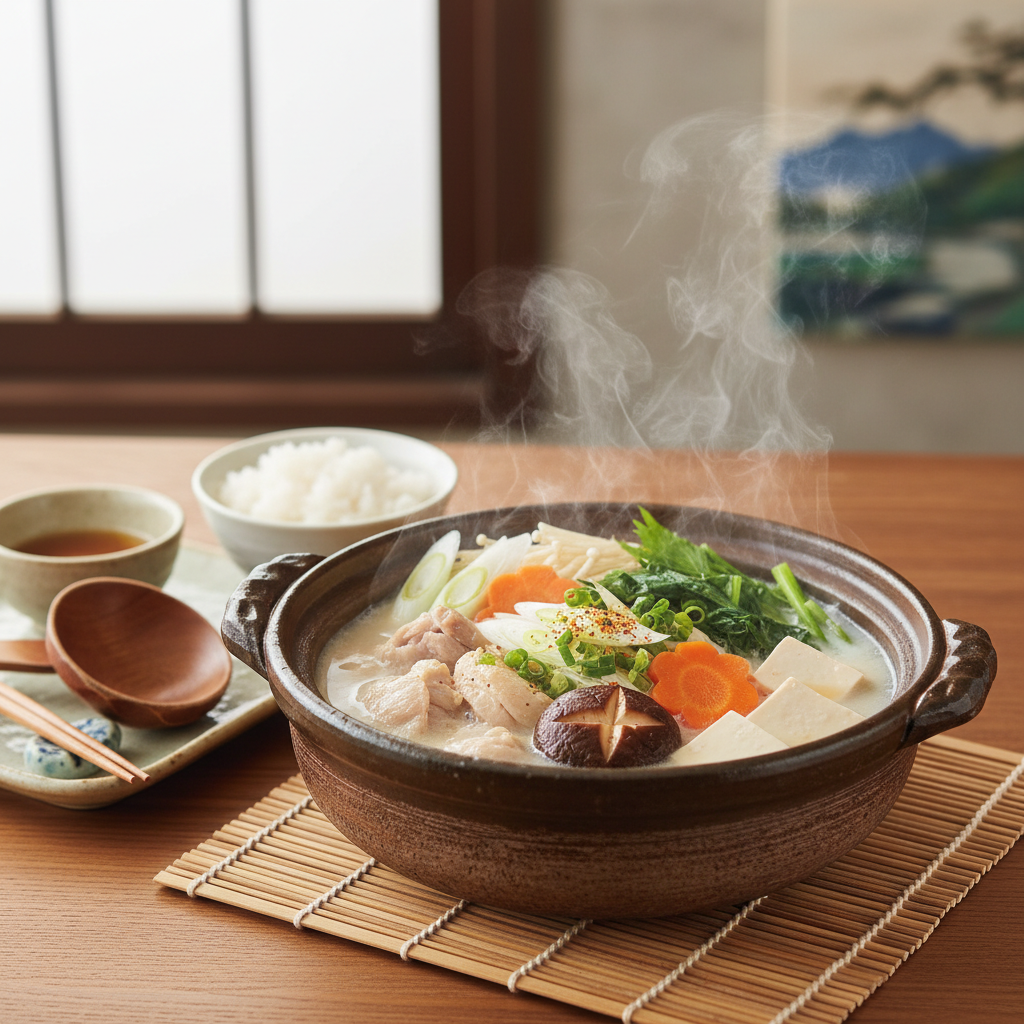
What is Asuka Nabe? Complete Explanation of Nara Prefecture’s Local Cuisine: History, Recipe, and Recommended Restaurants
Asuka nabe (飛鳥鍋) is a traditional local dish passed down in the Asuka and Kashihara regions of Nara Prefecture. It is characterized by a unique style among Japanese hot pot dishes, featuring white soup made with milk as the base, simmered with chicken and vegetables. The mellow and creamy flavor is an unforgettable taste once experienced.
This article provides a detailed explanation of this fascinating local cuisine, from the historical background of Asuka nabe to recipes that can be made at home and recommended specialty restaurants in Nara Prefecture.
History and Origins of Asuka Nabe
Dairy Product Culture Dating Back to the Asuka Period
The history of Asuka nabe traces back approximately 1,400 years to the Asuka period. Around 650 CE, when emissaries to Tang China and monks who came to Nara from Tang China (China) transmitted the methods of dairy product production to Japan, this is said to be the beginning.
At that time, when a dairy product similar to condensed milk called “so” (蘇) that was transmitted from Tang was presented to Emperor Kotoku, the taste was greatly appreciated, and dairy cattle began to be raised in the imperial court. As a result, Nara became the earliest land in Japan where milk was consumed.
Wisdom to Overcome Cold
Asuka nabe became established as a dish when a monk from Tang created a hot pot dish using goat’s milk to survive the harsh winter cold. Using dairy products with body-warming effects was a groundbreaking idea for the time.
Asuka Village (present-day Asuka Village, Takaichi District, Nara Prefecture) had long been a region where dairy farming was thriving, with milk and eggs being important industries for the area. Born from this regional characteristic is Asuka nabe, this local dish.
Traditional Taste Passed Down to Modern Times
The dairy product culture continuing from the Asuka period has been passed down through generations as part of Nara Prefecture’s food culture. Asuka nabe has continued to be loved by local people throughout its long history and is now a famous local dish representing Nara Prefecture, with many people visiting from both inside and outside the prefecture.
Characteristics and Appeal of Asuka Nabe
Creamy Soup with Milk as Base
The greatest characteristic of Asuka nabe is the white soup made with milk as the base. While typical hot pot dishes take dashi from kelp, soy sauce, miso, and other ingredients, Asuka nabe adds milk to chicken bone broth and seasons it with white miso, soy sauce, and sugar.
This unique soup is mellow and rich in flavor while surprisingly light in taste. The gentle sweetness of milk and umami of chicken bone broth harmonize exquisitely, creating a creamy yet never tiresome deliciousness.
Healthy and Nutrient-Rich
Another appeal of Asuka nabe is that it is low in calories while being high in nutritional value. Milk is rich in calcium and protein, and chicken is a high-protein, low-fat ingredient. Furthermore, by adding plenty of vegetables, one can obtain a balanced intake of vitamins, minerals, and dietary fiber.
It is particularly popular with women and is attracting attention as a local dish recommended for those concerned about beauty and health.
Main Ingredients Used
The main ingredients used in Asuka nabe are as follows:
- Chicken: Using thigh or breast meat. The main ingredient that is the source of umami
- Milk: The base of the soup. Creates mellowness and richness
- Chinese cabbage: A winter vegetable staple. Appealing sweetness and texture
- Japanese leek: Adds aroma and sweetness
- Garland chrysanthemum: Provides a distinctive aroma as an accent
- Tofu: Supplements protein
- Mushrooms: Shiitake, enoki, shimeji, etc.
- Carrot: Adds color and nutrition
Ingredients can be arranged according to season and preference, with various variations depending on region and household.
How to Make Asuka Nabe (Recipe)
Here is a recipe for making authentic Asuka nabe at home.
Ingredients (Serves 4)
Soup
- Milk: 600ml
- Chicken bone broth (or water + chicken bone broth stock): 400ml
- White miso: 2-3 tablespoons
- Soy sauce: 1-2 tablespoons
- Sugar: 1-2 teaspoons
- Salt: to taste
Ingredients
- Chicken thigh: 300-400g
- Chinese cabbage: 1/4 head
- Japanese leek: 2 stalks
- Garland chrysanthemum: 1 bunch
- Tofu (silken or firm): 1 block
- Shiitake mushrooms: 4-6
- Enoki mushrooms: 1 bag
- Carrot: 1/2
- Other vegetables as desired
Instructions
- Preparation
- Cut chicken into bite-sized pieces and lightly salt them
- Roughly chop Chinese cabbage and slice Japanese leek diagonally
- Cut garland chrysanthemum to an easy-to-eat length
- Cut tofu into easy-to-eat sizes
- Remove stems from shiitake mushrooms and cut decoratively
- Slice carrots thinly or cut with a mold
- Make the soup
- Pour chicken bone broth into a pot and heat
- Once boiling, add chicken and remove scum while simmering
- Once chicken is cooked, add milk (be careful not to boil)
- Season
- Dissolve white miso into the soup
- Add soy sauce and sugar and adjust the taste
- Do final adjustment with salt (keep slightly under-seasoned to bring out the natural sweetness of the milk)
- Simmer the ingredients
- Add vegetables that take longer to cook (carrot, Chinese cabbage core, etc.) first
- Add tofu and mushrooms
- Finally add garland chrysanthemum and simmer briefly
- When vegetables are wilted, it’s ready
Tips for Delicious Preparation
- Don’t boil the milk: Boiling causes separation, so warm on low to medium heat
- Bring out umami with chicken bone broth: Store-bought chicken bone broth stock makes it delicious enough
- Adjust taste with white miso quantity: Adjust the amount of miso according to region or preference
- Add ingredients just before eating: As an advantage of hot pot cuisine, it’s also recommended to add ingredients while eating
Dining Methods and Eating Occasions
Points on How to Eat
Asuka nabe is typically eaten using a clay pot or specialized hot pot with a tabletop burner. Enjoying the ingredients and soup together in a piping hot state is the best way to eat it. The soup is delicious until the very end, so please enjoy it without leaving any.
For the finale, adding udon or rice to make a rice porridge is also recommended. The milk-based soup coats the rice or udon well and can be enjoyed to the end without getting tired of it.
Dining Occasions and Seasons
Asuka nabe is particularly favored during the cold winter months, but restaurants in Nara Prefecture serve it year-round. In households, it is often made on the following occasions:
- Winter family gatherings: As a hot pot dish that warms the body
- Entertaining guests: As a local Nara dish
- Dinner on cold days: As a nutritious and warming dish
- Special day meals: As an opportunity to taste regional tradition
Major Areas of Transmission and Preservation and Succession Efforts
Major Areas of Transmission
Asuka nabe is primarily transmitted in the following areas:
- Asuka Village: Provided in many restaurants as the birthplace of Asuka nabe
- Kashihara City: As the central city of the Asuka region, carrying on the local cuisine
- Nara City: As the prefectural capital, many establishments serve it to tourists
- Sakurai City: As a neighboring area, some restaurants serve Asuka nabe
Preservation and Succession Efforts
Various efforts are being made to protect the tradition of Asuka nabe and pass it on to future generations:
Government Initiatives
- Registration with the Ministry of Agriculture, Forestry and Fisheries “Our Local Dishes”
- Information dissemination of local cuisine by Nara Prefecture
- PR activities as a tourism resource
Regional Initiatives
- Succession of traditional recipes by restaurants in Asuka Village
- Serving Asuka nabe at regional events
- Introduction into school meals for food culture education
Commercialization and Modern Approaches
- Sales of retort and hot pot set products
- Information sharing via SNS
- Experience-type events for tourists
- Standardization and promotion of recipes by Nara Prefecture Nutritionists Association
Recommended Restaurants Where You Can Eat Asuka Nabe in Nara Prefecture
There are many restaurants in Nara Prefecture where you can enjoy authentic Asuka nabe. Here are some particularly recommended establishments.
Asuka Village Area
As the birthplace of Asuka nabe, Asuka Village has gathered restaurants that continue to preserve traditional flavors. It is recommended to visit along with sightseeing.
Characteristics of Asuka Nabe
- Authentic flavor using local ingredients
- Served as Asuka nabe set meals with ancient rice and local side dishes
- Enjoying local cuisine in a historical atmosphere
Nara City Area
In Nara City, particularly around Kintetsu Nara Station, there are many restaurants that tourists can casually visit.
Menu Characteristics
- Rich selection of Asuka nabe courses and set menus
- Restaurants with private rooms and tatami mats where you can relax
- Many restaurants open in the evening, perfect for dinner
Kashihara City Area
As the central city of the Asuka region, Kashihara has several restaurants loved by local people.
Recommended Points
- Experience authentic local taste at community-focused restaurants
- Various restaurants to choose from according to budget
- Many restaurants have parking and convenient car access
Asuka Nabe and Nara Prefecture’s Food Culture
Other Famous Local Dishes in Nara Prefecture
In addition to Asuka nabe, Nara Prefecture has many fascinating local and famous dishes:
- Persimmon leaf sushi: Pressed sushi wrapped in persimmon leaves
- Nara pickles: Traditional pickles preserved in sake lees
- Miwa somen: Considered Japan’s oldest somen noodles
- Tea rice porridge: A rice porridge dish using Yamato tea
- Yamato chicken: A Nara Prefecture branded chicken
Enjoying these dishes together while savoring Nara’s food culture is also recommended.
What Asuka Nabe Tells About Nara’s History
Asuka nabe holds significance beyond being just a local dish. This dish reflects Japan’s ancient history’s importance to Nara, cultural exchange with the continent, and regional industries.
The fact that a dish using milk—a rare ingredient at the time—has been passed down for more than 1,400 years to the present day tells of the richness of Nara Prefecture’s food culture and the depth of its history.
Arrange Recipes to Enjoy at Home
Variations Using Seasonal Vegetables
Asuka nabe is a dish that can be enjoyed year-round by arranging ingredients according to the season:
Spring Arrangement
- Add rapeseed flowers, new onions, and bamboo shoots
- A light flavor that enjoys spring aromas
Summer Arrangement
- Add tomatoes, zucchini, and okra
- Also good as chilled Asuka nabe eaten cold ◎
Fall Arrangement
- Abundantly use mushrooms, add chestnuts and ginkgo nuts
- Fully enjoy autumn flavors
Winter Arrangement
- Plenty of Chinese cabbage, radish, burdock and other root vegetables
- Traditional style that warms the body from the core
Modern Arrangements
Modern arrangements that incorporate contemporary ingredients and cooking methods while keeping traditional recipes as the base are also popular:
- Soy milk Asuka nabe: Using soy milk instead of milk for a healthier version
- Curry-flavored Asuka nabe: Adding a small amount of curry powder for a spicy taste
- Cheese Asuka nabe: Adding cheese at the end for added richness
- Seafood Asuka nabe: Using seafood instead of chicken
Nutritional Value and Health Effects of Asuka Nabe
A Dish with Excellent Nutritional Balance
Asuka nabe is an ideal menu that allows you to consume diverse nutrients in a single dish:
Protein
- Chicken: High-quality protein rich in essential amino acids
- Milk: Milk proteins such as casein
- Tofu: Plant-based protein
Calcium
- Milk: A highly absorbable source of calcium
- Important for maintaining bone health
Vitamins and Minerals
- Vegetables: Vitamins A, C, K, folate, etc.
- Mushrooms: Vitamin D, dietary fiber
Health Benefits
- Low calories: Milk-based but with modest caloric content
- High protein: Effective for muscle maintenance and growth
- Warms the body: Improves cold sensitivity and boosts immunity
- Gentle on digestion: The creaminess of milk is gentle on the stomach and intestines
- Beauty effects: Rich in nutrients that aid collagen production
Conclusion: Enjoy Asuka Nabe and Experience Nara’s History and Flavor
Asuka nabe is a representative local dish of Nara Prefecture with a history of over 1,400 years. This dish, with its unique soup made with milk as the base and simmered with chicken and vegetables, is characterized by a mellow and creamy flavor and boasts excellent nutritional balance.
The fact that dairy product culture transmitted from Tang during the Asuka period has been continuously passed down to the present day demonstrates the richness of Nara’s food culture and the depth of its history. When visiting Nara Prefecture, be sure to taste authentic Asuka nabe from its origin. Also, it is relatively easy to make at home, so trying the recipe is recommended.
Why not rediscover the profundity of Japanese food culture and the charm of Nara Prefecture through Asuka nabe, this traditional local cuisine?


