Noppé (Niigata Prefecture Local Cuisine) Complete Guide | History, How to Make, Regional Differences and Thorough Explanation
Noppé, a local dish representing Niigata Prefecture, is a hearty stew made with taro root as the main ingredient. Similar dishes called “noppeijiru” exist throughout Japan, but Niigata’s “noppé” is closer to a stew than a soup and has built its own unique “noppeí culture.” This article thoroughly explains the appeal of this local cuisine, covering the history and origins of noppé, how to make it, regional differences, and efforts to preserve and pass it down.
Niigata Prefecture’s Local Cuisine “Noppé”
Basic Characteristics of Noppé
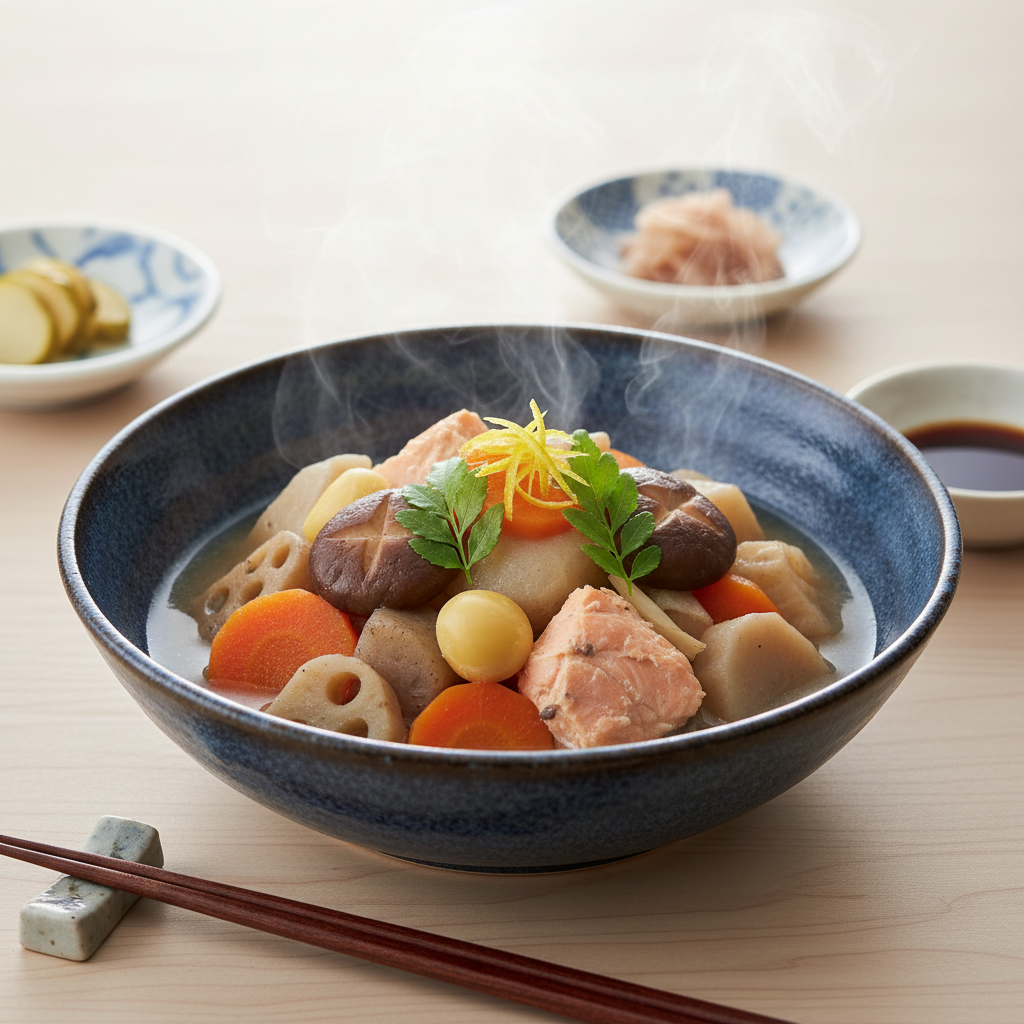
“Noppé” is a representative home-cooked dish enjoyed throughout Niigata Prefecture. Its greatest characteristic is that taro root is the main ingredient, and the unique stickiness creates natural thickening throughout the dish. Unlike “noppeijiru” found scattered throughout Japan, Niigata’s “noppé” has less broth and takes a form closer to a stew.
Vegetables, mushrooms, chicken, fish cake, salmon, and other ingredients are simmered in a light seasoning, with snow peas typically added for color. There is a custom of using an odd number of ingredients for good luck, and there are subtle differences in the ingredients and cooking methods used depending on the region and household.
Differences from “Noppeijiru” Throughout Japan
Throughout Japan, from Kyushu and the San’in region to Aomori, similar dishes called “noppé,” “noppeijiru,” and “nuppe” exist. However, Niigata’s “noppé” has the following unique characteristics:
Less broth: While “noppeijiru” in other regions is a soup, Niigata’s “noppé” is closer to a stew
Importance of taro root: Taro root is the star ingredient, and its stickiness determines the dish’s characteristics
Cultural positioning: It is established as a dish always made for year-round events, celebrations, and hospitality when people gather
Widespread adoption throughout the region: Widely enjoyed throughout Niigata Prefecture and also called “Echigo noppé”
In 2007 (Heisei 19), it was selected as a local dish of Niigata Prefecture in the “100 Selected Local Dishes of Japan,” and its cultural value was officially recognized.
History, Origins, and Related Events of Noppé
Historical Background and Name Origins
There are various theories about the origins of noppé, but geography and climate were major factors in its development in Niigata Prefecture. The Niigata region in winter was deeply snowed and travel was difficult. This led to the custom of making large quantities of dishes using preserved root vegetables and storing the pot itself in the snow.
The name “noppé” is believed to come from the “nopperi” (slimy) texture created by the stickiness of taro root. There is also a legend that “noppeí” derives from the name of a person called “Nōhei,” but this is unconfirmed.
Year-Round Events and Eating Occasions
In Niigata Prefecture, noppé is deeply connected to specific seasons and events.
New Year: The most important occasion, made in most households. Since many people gather, the custom is to make large quantities in a large pot
Celebrations and funerals: Served as a hospitality dish at weddings, funerals, and other gatherings
Memorial services and Buddhist rites: An essential dish for events honoring ancestors
Local festivals: Made during regional traditional events and festivals
Casual gatherings: A hospitality dish when relatives and neighbors gather
In this way, noppé is deeply connected to the lives of Niigata Prefecture’s people and holds cultural significance beyond mere food.
Main Tradition Areas and Regional Differences
Transmission Throughout Niigata Prefecture
Noppé is made in virtually all regions of Niigata Prefecture and is enjoyed in the Jōetsu region, Chūetsu region, Kaetsu region, and Sado region. It is one of the local dishes most widely transmitted throughout Niigata Prefecture.
Characteristics and Differences by Region
Jōetsu Region
- Characterized by relatively strong flavor
- Many households use chicken
- Commonly eaten while hot
Chūetsu Region
- Many households add salmon
- Tendency to use abundant mushrooms
- Sometimes made with slightly more broth
Kaetsu Region (around Niigata City)
- Ikura (salmon roe) may be used as topping
- Many households always add fish cake
- Tradition of eating it chilled
Sado Region
- Seafood often used
- Has its own unique flavoring and ingredient combinations
In this way, while called the same “noppé,” regions differ in how ingredients are selected, cut, seasoned, and eaten, with each region’s characteristics reflected.
Main Ingredients and How to Select Them
Essential Ingredients
Taro root: The star ingredient of noppé. Varieties like “Kinuotome” from Niigata are preferred. The sticky component provides natural thickening to the entire dish
Carrots: Add color and sweetness. Often cut into thick rings or half-moon slices
Konjac: Important for textural contrast. Torn by hand or cut with a knife
Broth: Made from kelp and dried small fish or bonito flakes. Forms the basis of umami flavor
Soy sauce, sake, and mirin: Seasonings for achieving a light taste
Ingredients Selected by Region or Household
Protein sources
- Chicken (thigh or breast meat)
- Salmon (salted or fresh)
- Fish cake (red and white for good luck)
- Deep-fried tofu
Vegetables and mushrooms
- Shiitake mushrooms
- Shimeji mushrooms
- Burdock root
- Lotus root
- Daikon radish
- Bamboo shoots (canned)
Garnish and toppings
- Snow peas
- Ikura (salmon roe, especially around Niigata City)
- Trefoil
Points for Selecting Ingredients
There is a custom of using an odd number of ingredients for good luck. Many households have a set number, such as 5, 7, or 9 types. Using Niigata Prefecture ingredients will result in a more authentic flavor. Especially with taro root, selecting Niigata varieties improves the quality of stickiness and significantly enhances the overall dish.
How to Make Noppé (Basic Recipe)
Ingredients (Serves 6)
- Taro root: 600g
- Carrot: 1 (150g)
- Konjac: 1 sheet (250g)
- Chicken thigh: 200g
- Fish cake: 1 piece (100g)
- Shiitake mushrooms: 6
- Snow peas: as needed
- Broth: 1000ml
- Soy sauce: 3 tbsp
- Sake: 3 tbsp
- Mirin: 2 tbsp
- Salt: to taste
Preparation Steps
Prep work
- Peel taro root and cut into large bite-sized pieces. Lightly rinse away the sliminess
- Cut carrots into thick rings or half-moon slices
- Tear konjac by hand or into bite-sized pieces with a spoon. Blanch and remove any bitter taste
- Cut chicken into bite-sized pieces
- Cut fish cake into thick half-moon slices
- Remove stems from shiitake mushrooms; cut in half if large
- Remove strings from snow peas and blanch in salted water, then plunge in cold water
Cooking steps
- Pour broth into a pot and bring to a boil, then add chicken and skim off any scum
- Add taro root, carrots, konjac, and shiitake mushrooms and cook over medium heat
- When vegetables begin to soften, season with soy sauce, sake, and mirin
- Add fish cake and simmer for another 5 minutes
- Taste and adjust seasoning with salt
- Transfer to serving bowls and garnish with snow peas
Cooking Tips and Points
Handling taro root: Taro root breaks down easily when cooked, so cut it into large pieces. Don’t completely rinse away the sliminess; retaining some creates natural thickening
Heat level: Use medium heat to avoid breaking down the vegetables; avoid high heat
Seasoning: Light seasoning is essential. It’s important to bring out the natural flavors of the ingredients
Order of adding ingredients: Add harder ingredients first. Add easily cooked items like fish cake last
Adjusting thickness: The stickiness of taro root creates natural thickening, but if needed, you can add cornstarch dissolved in water
How to Eat and Enjoy Noppé
Eating Hot
In most regions of Niigata Prefecture, noppé is typically eaten while hot. It is especially valued in winter as a dish that warms the body. It pairs wonderfully with freshly cooked rice and is often the main dish on the table.
Eating Chilled
Particularly in the Kaetsu region (around Niigata City), there is a custom of eating it chilled. On hot days and in summer, chilled noppé provides a refreshing sensation. Chilling allows flavors to blend better, offering a different deliciousness.
Storage Methods and Shelf Life
Historically, the pot was stored in snow, but in modern times it is kept in the refrigerator. With proper storage, it can be enjoyed for 3-4 days. In fact, many believe the longer it sits, the better the flavors blend, making it an excellent make-ahead dish.
When reheating, warm gently over low heat to prevent the vegetables from breaking down.
Arrangement Methods
Adding broth: Add additional broth to make it soup-like
Over rice: Eat as a bowl, pouring it over rice
With udon noodles: Enjoy as noppé udon
Adding mochi: Arrange it like ozoni (New Year’s soup)
Restaurants Offering Noppé (Within Niigata Prefecture)
Several restaurants in Niigata Prefecture serve authentic noppé.
Restaurants in Niigata City
Many local cuisine restaurants and izakayas in Niigata City feature noppé on their menus. Especially at established restaurants around Furumachi and Bandai, you can enjoy noppé prepared using traditional methods.
Service at Tourist Facilities
Road stations and tourist facility cafeterias also serve noppé as a local dish. It provides opportunities for tourists visiting Niigata to easily enjoy authentic flavors.
Importance of Home-Cooked Taste
However, noppé is originally a home-cooked dish, and each household has its own traditional flavoring. While restaurant noppé is delicious, for Niigata residents, their “mother’s flavor” and “grandmother’s flavor” are what matter most.
Preservation and Transmission Efforts
Regional Transmission Activities
Various efforts are underway throughout Niigata Prefecture to pass down the tradition of noppé to the next generation.
Cooking classes: Regular cooking classes are held at community centers and local facilities where elderly residents teach younger generations how to prepare it
School lunch offerings: Noppé is often served in school lunches for elementary and middle school students to learn about local cuisine
Food education activities: Noppé is frequently featured in cooking practices using local ingredients
Commercialization and Modern Efforts
Retort products: Food manufacturers in Niigata Prefecture sell retort-packaged noppé, making it easy for people outside the prefecture to enjoy the authentic taste
Frozen foods: Products developed using freezing technology enable long-term storage
Souvenir products: Noppé seasoning packets and cooking sets are sold at souvenir shops at Niigata Station and the airport
SNS and Media Promotion
In recent years, younger generations have actively promoted noppé’s appeal through SNS. Sharing photos of homemade noppé on Instagram and Twitter with hashtags like “#新潟のっぺ” and “#越後のっぺ” has become increasingly common.
Additionally, numerous recipe blogs and YouTube cooking videos are published, making it easier for people outside the prefecture to prepare it.
Government Initiatives
In the Ministry of Agriculture, Forestry and Fisheries’ “Our Local Cuisine” project and in Niigata Prefecture’s tourism promotion, noppé holds an important position. Efforts to widely share its value as a local dish help preserve the region’s food culture.
Noppé and Niigata Food Culture
Relationship with Rice-Growing Niigata
Niigata Prefecture is one of Japan’s premier rice-growing regions, and noppé developed with consideration for its compatibility with delicious rice. The light-seasoning cooking method that brings out natural flavors also plays a role in enhancing rice flavor.
A Dish Born from Snow Country Wisdom
In Niigata Prefecture, a snowy region in winter, dishes developed that used preserved root vegetables and were made and stored in large quantities. Noppé is the prime example, a dish filled with the wisdom of living in snowy country.
A Dish Expressing Hospitality
In Niigata Prefecture, the custom of “making noppé when people gather” is deeply rooted. This is not merely food provision but a cultural act expressing respect for guests and hospitality through the effort of making large quantities in a large pot.
Conclusion: Noppé is a Local Dish Conveying Niigata’s Heart
Niigata Prefecture’s local cuisine “noppé” is a hearty stew with taro root as the main ingredient. Unlike “noppeijiru” throughout Japan, it has less broth and a form closer to stew, enjoyed throughout Niigata Prefecture.
This dish, made whenever people gather for New Year celebrations or celebrations and funerals, distills the wisdom of snow country living, the spirit of hospitality, and regional food culture. The ingredients and preparation methods differ by region and household, with each family’s unique taste carefully passed down.
In modern times, preservation and transmission activities continue through new forms such as retort products and SNS promotion. However, what matters most is preparing it at home and sharing it with family and friends, passing down the culture of this local cuisine to future generations.
If you have the opportunity to visit Niigata, be sure to taste authentic noppé. And if possible, try making it at home. The gentle thickening created by taro root’s stickiness and the light-seasoned stew infused with vegetable umami will surely warm both your heart and body.