Kuri Kinton: A Traditional Gifu Confection – The History and Heritage of Japan’s Premier Chestnut Sweet from Its Birthplace in Nakatsugawa
“Kuri kinton,” a representative local dish of Gifu Prefecture, is a refined Japanese confection that allows one to fully savor the flavor of chestnuts themselves, distinctly different from the kuri kinton found in traditional New Year’s osechi meals. This local confection, passed down for centuries in the Tono region of eastern Gifu, centered around Nakatsugawa and Ena cities, is known as a remarkable delicacy made from just two simple ingredients—chestnuts and sugar—yet possessing deep historical and cultural significance.
What is Kuri Kinton: Differences from Osechi Cuisine
When people hear “kuri kinton,” many imagine the New Year’s osechi meal. However, the kuri kinton that is a local specialty of Gifu Prefecture is an entirely different Japanese confection from that found in osechi.
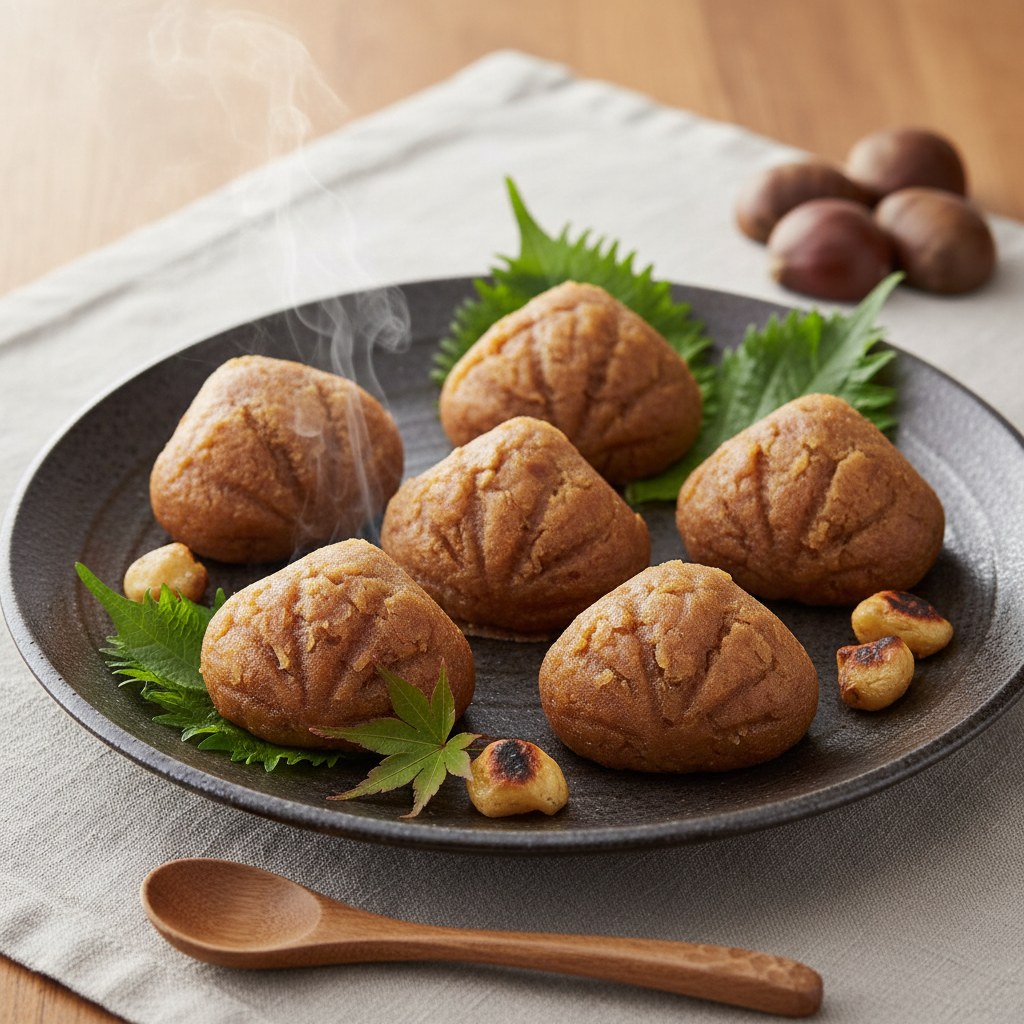
The kuri kinton in osechi cuisine is a dish made primarily from sweet potato, with candied chestnuts added and finished in golden color. In contrast, kuri kinton from the Tono region of eastern Gifu is a pure chestnut confection made by sieving steamed chestnut kernels, cooking them with sugar, and shaping them into chestnut forms using a cloth wrapping technique called chakinshぼり.
Despite using only chestnuts and sugar as ingredients, this refined confection is characterized by a sophisticated taste that maximizes the natural flavor and sweetness of the chestnuts themselves. As a Japanese confection representing autumn flavors, it has earned high acclaim not only from local residents but also from chestnut confection enthusiasts throughout Japan.
Primary Regions of Transmission: The Tono Area Centered on Nakatsugawa and Ena Cities
The primary regions where kuri kinton tradition is preserved are the Tono area (Tomi-Mino) of eastern Gifu Prefecture, particularly Nakatsugawa and Ena cities. This region is one of Gifu Prefecture’s premier chestnut-producing areas, and chestnut-based food culture has been rooted here since ancient times.
A stone monument inscribed with “Birthplace of Kuri Kinton” stands in front of JR Nakatsugawa Station, officially recognizing this area as the birthplace of kuri kinton. In October 2019 (Reiwa 1), “Nakatsugawa Kuri Kinton” was registered as a regional collective trademark, formally protecting the region’s brand.
The Tono region, located in mountainous terrain, benefited from an environment where chestnuts grew wild. Mountain chestnuts in particular were familiar food items with strong connections to the region’s life and culture. Even today, from September through January of the following year, numerous confectionery shops centered in Nakatsugawa and Ena cities sell kuri kinton, which has become an autumn fixture in the region.
History and Origins: A Confection Born from Nakasendo Post Towns
The history of kuri kinton dates back to the Edo period. Nakatsugawa flourished as a post town on the Nakasendo, an important route connecting Edo and Kyoto. Reaching the Nakatsugawa post town required crossing mountain passes, making it a difficult journey for travelers.
It is believed that kuri kinton was originally made as a preserved food. By steaming chestnuts and mixing them with sugar, the preservation quality was enhanced, and it served as a valuable nutritional source in mountainous regions. This preserved food gradually evolved into a Japanese confection.
Kuri kinton began to be sold commercially by confectionery shops in the mid-Meiji period. For travelers visiting Nakatsugawa post town, sweet kuri kinton was offered to help relieve the fatigue of crossing mountain passes. The natural sweetness and refined flavor of the chestnuts themselves became renowned as the perfect confection to soothe travel weariness.
The combination of Nakasendo culture continuing from the Edo period and the rich chestnut-producing environment of the Tono region created this unique local confection called kuri kinton. Today, it has been selected for the Ministry of Agriculture, Forestry and Fisheries’ “One Hundred Select Local Dishes of Japan’s Rural Communities,” and is known nationwide as a representative local dish of Gifu Prefecture.
Primary Ingredients Used: Only Carefully Selected Chestnuts and Sugar
The ingredients for kuri kinton are remarkably simple. Basically, only two things are used: fresh chestnuts and sugar. The quality of these materials determines the quality of kuri kinton.
Chestnuts
Chestnuts cultivated in the Tono region, particularly mountain chestnuts, have been traditionally used. Today, improved varieties are also used, but high-quality chestnuts with strong natural flavor and sweetness are carefully selected. Since the taste varies depending on the chestnut variety and harvest timing, confectionery craftspeople determine the optimal preparation time by assessing the condition of the chestnuts.
Sugar
To enhance the chestnut flavor, white sugar or granulated sugar is used. The amount of sugar is adjusted according to the sweetness of the chestnuts and is added only to the degree that does not compromise the chestnuts’ natural taste. The characteristic of Gifu’s kuri kinton is that it avoids excessive sweetness while valuing the chestnuts’ natural flavor.
Because they are made with only these two ingredients, the quality of the materials is directly reflected in the taste. Each confectionery shop procures carefully selected chestnuts through its own channels and creates individualized flavors through innovations in sugar ratios and cooking methods.
Preparation Method: Traditional Techniques and Recipe
The preparation of kuri kinton is simple yet requires skilled technique. Here we explain the traditional method in detail.
Ingredients (Makes approximately 30 pieces)
- Fresh chestnuts: 1 kg (with shells)
- Sugar: 20-30% of chestnut weight (adjusted according to chestnut sweetness)
- Water: a small amount
Basic Preparation Method
1. Chestnut Preparation
Wash fresh chestnuts well in water with their shells on. Fill a large pot with plenty of water, add the chestnuts, and bring to a boil over high heat. Reduce to medium heat and simmer for approximately 40-50 minutes until the chestnuts become soft. When a bamboo skewer passes through easily, the chestnuts are fully cooked.
2. Extracting Chestnut Kernels
While the cooked chestnuts are still hot, carefully remove both the outer shell (kunitsuwa) and inner skin (shibugawa). Use a spoon to scoop out the inside. This task should be performed while the chestnuts are still hot, as they become difficult to peel once cooled.
3. Sieving
Gently sieve the extracted chestnut kernels through a sieve. This process creates the smooth texture characteristic of kuri kinton. Although sieving is time-consuming, it is a crucial step that determines the quality of kuri kinton.
4. Cooking with Sugar
Place the sieved chestnuts in a pot and add sugar. Add a small amount of water, heat over low heat, and continuously stir with a wooden spatula while cooking. Be careful not to scorch while evaporating the moisture. When it reaches the appropriate firmness, remove from heat.
5. Shaping
Take an appropriate amount of the cooked chestnut mixture, wrap it in a dampened cloth (chakinshぼり), and gently squeeze it to form a chestnut shape. This cloth-wrapping technique creates the distinctive shape and texture of kuri kinton.
6. Completion
Cool the shaped kuri kinton to complete. It is recommended to eat it as soon as possible to enjoy its fresh flavor.
Craftspeople’s Skills
In confectionery shops, craftspeople’s expertise shines through every step, from chestnut selection to controlling the cooking heat and adjusting the pressure of the cloth-wrapping technique, all based on years of experience. The charm of kuri kinton lies partly in how each shop creates distinct flavors—whether to retain a granular chestnut texture or refine it to smoothness, how to adjust sweetness—varying by establishment.
Occasions and Seasons for Consumption: An Autumn Fixture
Kuri kinton is a seasonal confection sold from September through January of the following year. The autumn season, particularly from September through November, is the peak season, when freshly made kuri kinton using newly harvested chestnuts can be enjoyed.
Reasons for Sales Timing
Manufacturing is coordinated with chestnut harvest timing, making autumn the optimal season for obtaining fresh chestnuts. Additionally, since kuri kinton is made without preservatives using only chestnuts and sugar, it has a short shelf life and is sold exclusively during cooler seasons.
Demand as Gifts
During the autumn leisure travel season, visitors to Nakatsugawa and Ena cities purchase kuri kinton as souvenirs. It is also popular as a gift for Respect for the Aged Day, autumn equinox observances, and year-end gifts. As Gifu Prefecture’s representative local confection, it is valued as a gift to take when traveling outside the prefecture.
Regional Cultural Events
In Nakatsugawa city, events such as “kuri kinton tours” may be held to coincide with the kuri kinton season. Many tourists enjoy visiting multiple confectionery shops for comparative tastings, and kuri kinton has become an autumn fixture in the region.
How to Enjoy: Ways to Savor Kuri Kinton
Kuri kinton is traditionally eaten as-is as a Japanese confection, but there are tips for enjoying it more fully.
Basic Way of Eating
It is typically eaten at room temperature or slightly chilled. If chilled too much, the chestnut flavor becomes muted. Removing it from the refrigerator and allowing it to reach room temperature slightly before eating allows one to better appreciate the chestnuts’ natural aroma and sweetness.
Pairing with Tea
The refined sweetness of kuri kinton pairs excellently with Japanese tea. When combined with sencha, gyokuro, or hojicha, the tea’s astringency complements the chestnut sweetness, creating a deeper flavor experience. It is sometimes served with matcha in formal tea settings.
Storage Method and Shelf Life
Since kuri kinton contains no preservatives, its shelf life is approximately 2-3 days. It is recommended to eat it as soon as possible after purchase. If storing, keep it in the refrigerator and wrap it to prevent drying.
Pleasure of Comparative Tasting
In Nakatsugawa city alone, more than a dozen confectionery shops manufacture kuri kinton, with variations in chestnut texture, sweetness, and moisture content at each shop. Finding your preferred flavor by comparative tasting at multiple shops is another way to enjoy kuri kinton.
Preservation and Inheritance Efforts: Passing Tradition to the Future
The kuri kinton tradition is carefully maintained by regional confectionery craftspeople. In the modern era, various initiatives continue to preserve and transmit this culture.
Practitioners and Confectionery Shops
Nakatsugawa and Ena cities are home to several long-established confectionery shops that have operated since the Edo and Meiji periods. Shops such as “Suya,” “Kawakami,” and “Ena Kawakami-ya” maintain traditional manufacturing methods while incorporating modern techniques in producing kuri kinton.
Young-generation craftspeople learn techniques from their predecessors and continue to maintain the traditional flavor. It takes many years of apprenticeship to become a full-fledged craftsperson, and through this technical transmission, kuri kinton quality is preserved.
Regional Collective Trademark Registration
In October 2019 (Reiwa 1), “Nakatsugawa Kuri Kinton” was registered as a regional collective trademark. This legally protects the kuri kinton brand of Nakatsugawa and safeguards the region’s tradition and quality.
Utilization as a Tourism Resource
Gifu Prefecture and Nakatsugawa city position kuri kinton as an important tourism resource and actively promote it. Kuri kinton is featured on Gifu Prefecture’s official tourism website, and during autumn tourism seasons, many visitors come to the Tono region specifically for kuri kinton.
Product Development and Modern Initiatives
In addition to traditional kuri kinton, product development addressing modern consumer needs continues. Individual packaging, enhanced online sales, and development of products with extended shelf life are among the efforts to bring kuri kinton to more people. Social media promotion is also popular, with each confectionery shop using Instagram and Facebook to communicate kuri kinton’s appeal and promote awareness among younger generations.
Ministry of Agriculture, Forestry and Fisheries’ One Hundred Select Local Dishes
Kuri kinton has been selected for the Ministry of Agriculture, Forestry and Fisheries’ “One Hundred Select Local Dishes of Japan’s Rural Communities,” receiving national-level recognition as an important local dish of Gifu Prefecture. This has advanced nationwide recognition and protection of its cultural value.
Nakatsugawa City’s Kuri Kinton Culture
Nakatsugawa city, as the “birthplace of kuri kinton,” has cultivated a unique food culture centered on this local confection.
Monument to the Birthplace of Kuri Kinton
A stone monument inscribed with “Birthplace of Kuri Kinton” stands in front of JR Nakatsugawa Station, telling visitors that this is the birthplace of kuri kinton. It is also a popular photo spot for tourists.
Multiple Renowned Shops
More than a dozen confectionery shops in Nakatsugawa city manufacture and sell their own unique kuri kinton. A “kuri kinton tour” enjoying each shop’s individuality has become a standard autumn touring route in Nakatsugawa.
Contribution to Regional Economy
Kuri kinton has become an important regional industry for Nakatsugawa city, bringing broad economic benefits from chestnut production through confectionery manufacturing to tourism. During the autumn season, many visitors from outside the city come, contributing to regional revitalization.
Ena City’s Chestnut Culture
Alongside Nakatsugawa city, Ena city is also a major kuri kinton producing area. Ena city likewise possesses its own unique food culture centered on chestnuts.
Ena city is home to renowned confectionery shops such as “Ena Kawakami-ya,” which manufacture high-quality kuri kinton. Tourist routes combining sightseeing with scenic spots like Enakyo Gorge are also popular, allowing visitors to enjoy both natural beauty and traditional flavors simultaneously.
Kuri Kinton and Gifu Prefecture’s Food Culture
Kuri kinton is a local dish born from Gifu Prefecture’s rich natural environment and historical background. A unique confection culture was cultivated through the convergence of geographic conditions in a mountainous region, the history of Nakasendo post towns, and characteristics as a chestnut-producing area.
Gifu Prefecture has other diverse local dishes such as hoba miso, Hida beef, and sweetfish cuisine, but kuri kinton, among these, possesses particularly strong nationwide recognition as the prefecture’s representative local confection, becoming a symbol of the prefecture’s food culture.
Conclusion: The Ultimate Japanese Confection Made from Chestnuts and Sugar
“Kuri kinton,” a local specialty of the Tono region of eastern Gifu Prefecture, is a Japanese confection made from only two simple ingredients—chestnuts and sugar—yet possessing deep historical and cultural significance. Born from Nakasendo post towns in the Edo period, established as a confection in the Meiji era, and now known throughout Japan as Gifu Prefecture’s representative local confection, kuri kinton has a rich heritage.
Centered in Nakatsugawa and Ena cities, numerous confectionery craftspeople maintain traditional techniques while creating fresh kuri kinton using new-harvest chestnuts each autumn. The flavor variations reflecting each shop’s individuality can be enjoyed, and the refined sweetness maximizing the chestnuts’ natural flavor is its appeal.
Natural manufacturing without preservatives, the special feeling of seasonal limitation, and above all, the taste achieved by maximizing chestnut flavor itself continue to captivate many people. When visiting Gifu Prefecture in autumn, be sure to taste this traditional local confection.