Goheimochi: A Complete Guide to Gifu Prefecture’s Local Cuisine | History, How to Make It, and Regional Differences in Shape and Flavor
What is Goheimochi (御幣餅)? Gifu Prefecture’s Representative Local Dish
Goheimochi is a representative local dish of Gifu Prefecture made by crushing cooked rice, wrapping it around a skewer, coating it with a special sauce, and grilling it. It has been cherished as a traditional food primarily in the Tono region of Gifu Prefecture, the Kiso and Ina regions of Nagano Prefecture, and the Mikawa region of Aichi Prefecture—mountainous areas in the Chubu region that have preserved this dish for centuries.
In Gifu Prefecture, a region known for rice cultivation, simple and fragrant goheimochi made with harvested rice was once highly valued as an offering to deities, a dish for celebratory occasions, and the greatest delicacy for entertaining guests. Today, it has become a local cuisine enjoyed by tourists as well, available at roadside stations, tourist attractions, and restaurants.
History, Origins, and the Name of Goheimochi
Multiple Theories Exist About the Name’s Origin
There are various theories about the origin of the name “goheimochi,” with different traditions in different regions. The most prominent theory is that it was named for its resemblance to the “gohei” (御幣), a sacred object used in Shintoism. The gohei is a wooden stick adorned with paper streamers (shide) used in offerings and religious rituals, and the sandal-shaped goheimochi’s form closely resembles this, leading to it being called “gohei-mochi” as a sacred food.
Another prominent theory attributes the name to a person called “Gohei.” According to legends preserved in various regions, a woodcutter or mountain laborer named Gohei invented the dish or was fond of eating it, and the dish was named after him. There is also a theory that because Gohei was a common name among commoners at the time, it came to represent the food of common people.
History as a Labor Food and Celebratory Dish in Mountainous Regions
Goheimochi originally served as an energy source for people engaged in forestry and agricultural work in mountainous areas such as the Tono and Hida regions of Gifu Prefecture. It was eaten as a portable food during breaks in mountain work and as a special meal during harvest festivals and religious ceremonies, becoming deeply rooted in the region’s food culture.
In areas like Ena City and Nakatsugawa City in the Tono region, goheimochi was offered as the finest hospitality for guests, and women in households competed to create their own unique flavors. The sauce recipes passed down through generations in each household are cherished as family flavors.
Main Regions Where Goheimochi is Transmitted and Its Distribution in Gifu Prefecture
Gifu Prefecture’s Tono Region (Around Nakatsugawa and Ena Cities)
The Tono region of Gifu Prefecture is where goheimochi culture is most deeply rooted. Centered around Nakatsugawa City and Ena City, goheimochi has been enjoyed as a local dish since ancient times. Goheimochi in this region is predominantly sandal-shaped, characterized by a rich flavor with miso or soy sauce-based sauce containing peanuts and walnuts.
Goheimochi can be enjoyed at many locations including roadside stations, tourist facilities, and long-established specialty shops, and has become established as a representative tourist gourmet food of the region.
Gifu Prefecture’s Hida Region
Goheimochi is also eaten as a local dish in the Hida region, but it differs in shape and sauce from the Tono region. In the Hida region, dumpling-shaped goheimochi is also seen, featuring sauce made with Hida miso that reflects the region’s unique miso culture.
Food Culture Across Prefectural Borders
Goheimochi culture extends beyond Gifu Prefecture to the Kiso and Ina regions of Nagano Prefecture and the Mikawa region of Aichi Prefecture. These regions are connected by mountains, and with historical exchange of people and goods, a shared food culture of goheimochi developed. However, each region has unique characteristics in shape, sauce flavor, and rice-crushing methods, which have become regional attractions.
The Shape of Goheimochi | Individual Styles That Vary by Region
One of the greatest characteristics of goheimochi is that its shape varies significantly by region. Even within Gifu Prefecture, unique forms are preserved in each area.
Sandal-Shaped (Oblong-Shaped)
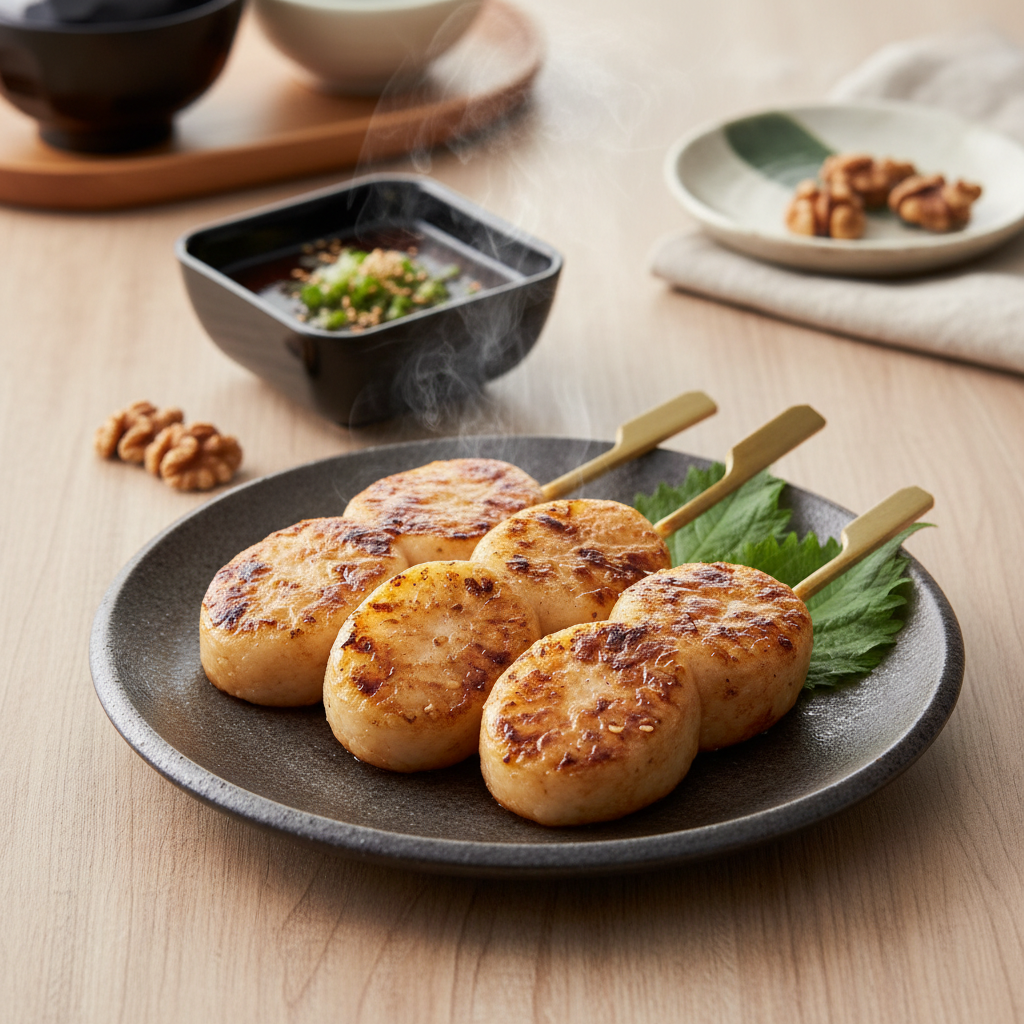
The most common shape in Gifu’s Tono region is the sandal-shape (oblong-shape). Rice flattened and shaped into an oval, wrapped around a skewer, looks just like a straw sandal (waraji) and also resembles the shape of a gohei. This shape has a large surface area, allowing the sauce to cling well, and the grilled fragrance stands out.
The sandal-shape also has visual impact and is popular with tourists. One serving provides satisfaction with sufficient substance.
Dumpling-Shaped (Round-Shaped)
Multiple round, dumpling-shaped balls of rice threaded on a skewer is a shape seen in the Hida region and some other areas. With a cute appearance like dango on a skewer, it is characterized by being bite-sized and easy to eat. The dumpling shape has the advantage of minimal uneven browning, with heat passing uniformly through the entire piece.
Kiritanpo-Shaped (Stick-Shaped)
Some regions shape the mixture into a long, thin stick. With a form similar to kiritanpo, it is easy to hold and eat. This shape is said to have been born from the practicality of eating with one hand during a break from mountain work.
Main Ingredients and Materials for Goheimochi (Serves 4)
Rice as the Basic Ingredient
The main material of goheimochi is rice. In some cases, glutinous rice and regular rice are mixed, while in others only regular rice is used. Using high-quality rice harvested locally, such as Gifu-produced Koshihikari, results in more delicious goheimochi.
Ingredients (Serves 4)
- Cooked rice: 600g (warm, cooked slightly firm)
- Skewers: approximately 8 (bamboo skewers or split chopsticks)
Sauce Ingredients
The sauce is the key to goheimochi’s flavor. It is basically miso-based or soy sauce-based, with fragrant ingredients like peanuts, walnuts, or sesame added.
Miso-Based Sauce (Basic)
- Miso: 4 tablespoons
- Sugar: 3 tablespoons
- Mirin: 2 tablespoons
- Soy sauce: 1 tablespoon
- Peanuts (or walnuts): 50g (finely crushed)
- Ground sesame: 2 tablespoons
- Water: as needed (for consistency adjustment)
Soy Sauce-Based Sauce (Alternative)
- Soy sauce: 3 tablespoons
- Sugar: 3 tablespoons
- Mirin: 2 tablespoons
- Peanuts (or walnuts): 50g
- Ground sesame: 2 tablespoons
Regional Differences in Ingredients
Even within Gifu Prefecture, regions differ in their choice of ingredients. The Tono region often uses peanuts, while the Hida region sometimes adds Hida miso or Japanese pepper. Sauce made with perilla is also popular, and unique recipes are passed down in each household and establishment.
How to Make Goheimochi | An Authentic Recipe You Can Make at Home
Step 1: Preparing and Crushing the Rice
- Cook the rice: Prepare rice cooked to a slightly firm consistency. If mixing glutinous rice, a typical ratio is about 7 parts regular rice to 3 parts glutinous rice.
- Crush the rice: Place warm rice in a mortar and partially crush it with a pestle. The key is not to crush it completely but to leave some grain texture. As a guideline, crushing about 70% makes it easier to shape and leaves an appropriate texture when eaten.
Step 2: Shaping on the Skewer
- Wet your hands: Wet your hands with water so the rice doesn’t stick.
- Wrap rice around the skewer:
- For sandal-shape: Form rice into a flat oval shape and insert the skewer through the center by pressing.
- For dumpling-shape: Round the rice into balls and thread onto the skewer, arranging 2-3 balls.
- Adjust the shape: Press with your hands to refine the shape and secure it firmly to the skewer.
Step 3: Preparing the Sauce
- Mix the ingredients: Place miso, sugar, mirin, and soy sauce in a pot and mix over low heat.
- Add nuts: Add finely crushed peanuts or walnuts and ground sesame and mix well.
- Adjust consistency: Add water gradually to achieve the right consistency for brushing. It should be neither too thick nor too runny.
Step 4: Grilling
- Initial grilling: First, grill without sauce over low heat, lightly drying the rice surface. Use charcoal, a fish grill, an oven toaster, or similar, and grill until the surface becomes slightly dry.
- Apply sauce: Generously brush sauce with a brush.
- Main grilling: Grill the sauced side until fragrant browning appears. Flip and apply sauce again, grilling both sides until golden and fragrant.
- Finishing: When the surface is crispy and fragrant, it’s done. Enjoying it fresh and hot is the best way to eat it.
The Charm of Charcoal Grilling
Traditional goheimochi is grilled over charcoal. The far-infrared effect of charcoal creates an ideal texture—crispy outside and chewy inside—with added distinctive fragrance. If charcoal is difficult at home, a fish grill, oven toaster, or hot plate works well, but attempting charcoal grilling is worthwhile if possible.
Occasions and Seasons for Eating Goheimochi
A Special Dish for Celebratory Days
Goheimochi was once not everyday food but a dish for “special occasions” (hare no hi). It was positioned as a luxury meal made for harvest festivals, religious ceremonies, celebrations, and entertaining guests.
Connection with Autumn Harvest Season
Particularly during the autumn harvest season, goheimochi made with new rice was prepared, incorporating meanings of celebrating a good harvest and expressing gratitude to deities. Even today, goheimochi is often served at autumn festivals and community events, becoming a seasonal symbol.
Modern Ways of Eating
Today, goheimochi has become a local cuisine available year-round at tourist sites, roadside stations, and restaurants. It is also casually made in homes as a weekend snack or light meal, becoming more accessible. For tourists, it is a must-try gourmet food when visiting Gifu Prefecture.
How to Enjoy and Eat Goheimochi
Enjoying It Freshly Grilled is Fundamental
The best way to eat goheimochi is piping hot right after grilling. The contrast between the crispy surface and the chewy rice inside, combined with the fragrant sauce aroma, creates an ideal moment to enjoy.
Eating It Boldly Right Off the Skewer
Since it is served threaded on a skewer, the traditional way to eat it is to hold the skewer and bite into it heartily. The skewer keeps your hands clean and makes it suitable for eating while walking.
Pairing with Tea and Coffee
The sweet and savory goheimochi pairs excellently with Japanese tea or roasted tea. Surprisingly, it also pairs well with coffee and is sometimes offered as a modern café menu item.
As Both a Meal and a Snack
Goheimochi can be enjoyed as a light snack or a full meal if you eat multiple pieces. Its flexibility allows it to be enjoyed in various situations by adjusting size and quantity.
Recommended Places to Enjoy Goheimochi in Gifu Prefecture
Specialty Shops in the Tono Region
Nakatsugawa and Ena cities have numerous specialty shops and long-established establishments serving goheimochi. Roadside stations like “Shizumo” and “Kirira Sakashita” offer authentic goheimochi made by locals. Areas near tourist sites like Magome-juku and Tsumago-juku have many shops serving goheimochi.
Restaurants in Gifu City
Restaurants and izakayas in Gifu City offering local cuisine also feature goheimochi on their menus. Around Meitetsu Gifu Station, there are establishments where tourists can casually enjoy Gifu Prefecture’s local dishes.
Roadside Stations and Tourist Facilities
Many roadside stations and highway service areas in Gifu Prefecture sell goheimochi, allowing visitors to enjoy it easily during drives. Many facilities offer freshly grilled servings, and you can appreciate the differences in regional flavors.
Festivals and Events
Food stalls at local festivals and events often sell goheimochi, where you can experience local homemade flavors. Especially at autumn harvest festivals and tourism events, goheimochi is sold as a featured product.
Preservation and Inheritance Efforts and Contemporary Developments
Regional Preservation Societies and Transmission Activities
Various regions of Gifu Prefecture conduct preservation and transmission activities to protect goheimochi traditions and pass them to the next generation. Local women’s groups and food culture preservation organizations lead workshops and events to pass techniques to younger generations.
Application in School Education
Elementary and middle schools in the region hold goheimochi-making experiences as part of lessons on local cuisine. Learning about local ingredients and food culture deepens children’s attachment to their region.
Product Development and Contemporary Efforts
Goheimochi is sold as frozen food and retort products, making it easy to enjoy at home. Information sharing through social media has also spread goheimochi’s appeal to younger generations. Many posts are seen on Instagram using hashtags like “#goheimochi” and “#Gifu gourmet,” attracting tourists.
New Arrangements and Creative Goheimochi
While preserving traditional flavors, creative versions of goheimochi with modern twists have emerged. Adding cheese, using Western-style sauces, or arranging it like a dessert attract younger generations’ interest.
Utilization as a Tourism Resource
Goheimochi is positioned as an important tourism resource for Gifu Prefecture, actively promoted in tourism brochures and websites. Many tourists visit Gifu Prefecture specifically for goheimochi, contributing to regional economic vitalization.
Differences Between Goheimochi and Other Local Dishes
Difference from Mitarashi Dango
Goheimochi is often compared to mitarashi dango, but there are significant differences. While mitarashi dango consists of rice flour dumplings with sweet-savory sauce, goheimochi is made from cooked rice that has been crushed, leaving grain texture. Also, the sauce contains nuts like peanuts or walnuts, offering a richer and more fragrant flavor.
Difference from Kiritanpo
Kiritanpo, a local dish of Akita Prefecture, is also rice crushed and wrapped around a skewer, but differs from goheimochi in cooking method. While kiritanpo is mainly used in hot pot dishes, goheimochi is characterized by being coated with sauce and grilled.
Difference from Onigiri
Onigiri is simply shaped rice, but goheimochi involves crushing rice, shaping it, and grilling it with sauce applied. This grilling process creates fragrance and unique texture while improving shelf life.
Experiencing Gifu Prefecture’s Food Culture Through Goheimochi
Goheimochi carries meaning beyond a simple local dish. It symbolizes the wisdom and ingenuity of people living in Gifu’s mountainous regions, gratitude toward nature, and the bonds of family and community.
The technique of transforming rice, Japan’s staple food, into a festive delicacy. The gratitude to deities embedded in the gohei shape. Secret sauce recipes passed down through families. All of these tell the story of Gifu’s rich food culture.
Today, goheimochi has become widely known as popular gourmet food for tourists, but beneath this lies the traditions and pride that the region’s people have carefully preserved. When visiting Gifu Prefecture, be sure to taste goheimochi while also reflecting on the history and culture behind it.
Conclusion: Goheimochi is the Traditional Taste of Which Gifu Prefecture is Proud
Goheimochi is a local dish long cherished primarily in Gifu’s Tono region. It is a simple dish of crushed rice wrapped around a skewer and brushed with miso or soy sauce-based sauce before being grilled fragrant, yet its depth is immeasurable.
The shape varies by region, unique sauces are passed down through families, and the traditional charcoal-grilling method. All of these make goheimochi special.
In modern times, while preserving traditions, new initiatives have been added, and goheimochi continues to evolve. Its value as a tourism resource grows, and it is enjoyed by many as representative gourmet food of Gifu Prefecture.
Goheimochi is relatively easy to make at home. Please try making it yourself and experience Gifu’s rich food culture. When you have the chance to visit Gifu Prefecture, taste authentic goheimochi and enjoy the regional differences. Through goheimochi, you will surely be able to feel Gifu’s history and culture, as well as the warmth of its people.