Complete Guide to Hittsuimi | Thorough Explanation of the History, How to Make, and Regional Differences of Iwate Prefecture’s Representative Local Cuisine
What is Hittsuimi?
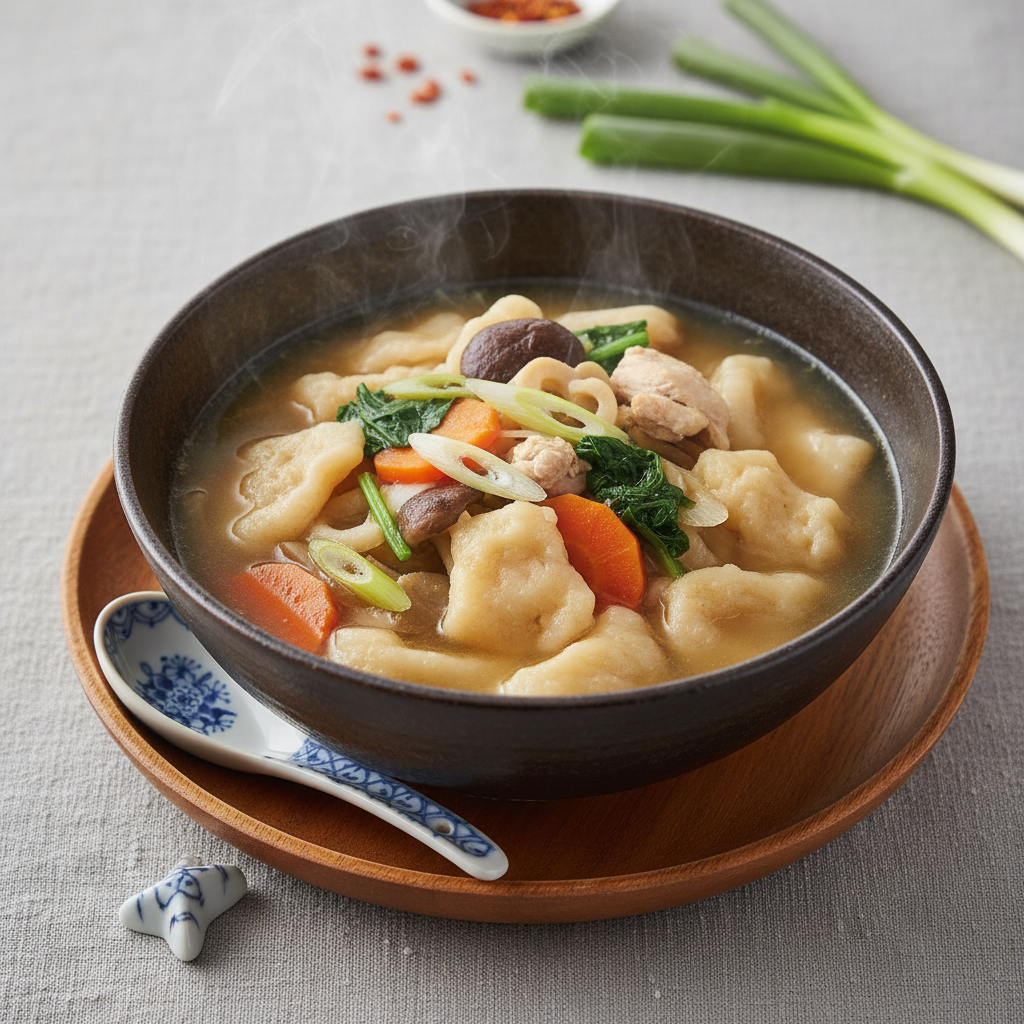
“Hittsuimi” is a traditional local cuisine representative of Iwate Prefecture. It is a home-cooked dish characterized by a simple yet deeply flavorful taste, made by tearing dough kneaded from wheat flour and water by hand, then simmering it together with seasonal vegetables and chicken or other proteins.
The greatest characteristic of this dish lies in its cooking method of “tearing the dough by hand” rather than cutting it with a knife. By tearing the dough by hand, unevenness forms on the surface of the dough, allowing the broth to cling well, making it possible to enjoy deep flavor even with simple seasoning.
Within Iwate Prefecture, this dish is particularly favored during the cold winter months, and has long supported the lives of local people as a warming main dish and, in years of poor rice harvests, as a valuable substitute food.
The Etymology of “Hittsuimi” and Regional Variations in Names
The Origins of the Name “Hittsuimi”
The name “hittsuimi” comes from the Iwate Prefecture dialect “hittsumabu” or “hittsumu,” which means “to tear with one’s hands” or “to pull and pinch.” The cooking method itself has become the name of the dish.
The unique name emerged from the scene of thinning out wheat flour dough and tearing it into bite-sized pieces to place in a pot. The fact that this warm dialect name became established as the dish’s name tells us that this cuisine was deeply rooted in the lives of ordinary people.
Variations in Regional Names
The names vary by region within Iwate Prefecture, reflecting the culture and history of each area.
Tottenage (Totte Nage – Pick and Throw)
A term used mainly in northern Iwate Prefecture, named from the action of tearing off dough and throwing it into the pot.
Hatto
A term used in Iwate’s coastal areas and northern Miyagi Prefecture, said to derive from “hatto” (law/prohibition). According to legend, because it was so delicious that people would eat too much, it was forbidden as an excess, and this anecdote is said to be the origin of the name.
Kiribatto
In some regions, it is called “kiribatto” from the cooking method of cutting the dough.
These differences in naming show how the same dish has developed unique culture and traditions in each region.
The History and Cultural Background of Hittsuimi
The History of Wheat Cultivation in Iwate Prefecture
The central region of Iwate Prefecture has long been an area of active rice farming, but has frequently suffered from poor rice harvests due to cold damage. Therefore, wheat cultivation was also actively promoted as risk distribution.
The cool climate characteristic of the Tohoku region is also suitable for wheat cultivation, and in particular, in the Nanbu region (present-day northern Iwate Prefecture to southern Aomori Prefecture), a food culture using wheat developed. Hittsuumi can be said to be the crystallization of wisdom born from this region’s climate and agricultural practices.
A Main Dish to Survive Winter
Winters in Iwate Prefecture are severe, and in snowy mountainous regions, securing food was sometimes difficult. Hittsuimi, which could be made with storable wheat flour and preserved vegetables such as root vegetables, was treasured as a valuable main dish during winter months.
During periods of rice shortage and busy agricultural work seasons, hittsuimi, which was easy to prepare and nutritionally rich, was an indispensable home-cooked dish. The rationality of being able to consume both main and side dishes simultaneously in a single pot is also one of the reasons this dish has been loved for so long.
A Culture of Inheriting Home Flavors
Hittsuimi is a dish that has been passed down through generations in each household, with subtle differences in dough thickness, tearing method, combination of ingredients, and seasoning varying from family to family.
The “taste of our home,” passed down from grandmother to mother and from mother to daughter, has become an important cultural element that deepens family bonds. Particularly, sharing hittsuimi hot pot on cold winter days is a special dish for Iwate residents that is connected to fond memories.
Ingredients for Hittsuimi and Basic Preparation Methods
Basic Ingredients (Serves 4)
Hittsuimi Dough
- Cake flour: 300g
- Water: Approximately 150ml (adjust while observing dough consistency)
- Salt: 1/2 teaspoon
Broth Ingredients
- Chicken thigh: 200g (or pork, river fish, etc.)
- Daikon: 200g
- Carrot: 1
- Burdock root: 1/2
- Japanese leek: 1
- Shiitake mushroom: 4 (or other mushrooms)
- Fried tofu: 1 (optional)
Seasonings
- Dashi broth: 1200ml (traditional kombu and dried sardine combination dashi)
- Soy sauce: 3 tablespoons
- Sake: 2 tablespoons
- Mirin: 1 tablespoon
- Salt: to taste
How to Make Hittsuimi Dough
- Knead the Dough
Place cake flour and salt in a bowl, and gradually add water while mixing. Knead thoroughly until the dough reaches the consistency of an earlobe. The amount of water needs to be adjusted depending on the season and type of flour.
- Let the Dough Rest
Gather the dough into one mass, wrap with plastic wrap, and let rest at room temperature for 1-2 hours. This process allows gluten to form, resulting in a chewy texture. The longer the resting time, the easier the dough becomes to handle.
- Thin Out the Dough
Gently stretch the rested dough by hand to a thickness of 2-3mm. If too thin, it will fall apart easily when simmered; if too thick, it will be difficult for heat to penetrate, so making it uniform in thickness is key.
How to Make the Broth and Finish
- Prepare the Ingredients
Cut daikon and carrot into thin strips or ginkgo shapes, shave burdock root, slice Japanese leek diagonally, and slice shiitake mushrooms thinly. Cut chicken into bite-sized pieces.
- Make Dashi Broth
Put dashi broth in a pot and bring to a boil, then add chicken and skim off any scum. Add root vegetables (daikon, carrot, burdock), and simmer until vegetables are tender.
- Season
Season with soy sauce, sake, and mirin. The traditional seasoning from Iwate is relatively simple, featuring a gentle flavor that brings out the taste of the ingredients.
- Add Hittsuimi
Pinch and tear the thinned dough into bite-sized pieces with your thumb and forefinger, and add to the boiling broth. Sliding the dough in from the edge of the pot prevents it from falling apart.
- Finish
Once all the dough has been added, simmer for 5-7 minutes. When the dough becomes translucent and floats to the surface, it is cooked through. Finally, add mushrooms and Japanese leek, simmer briefly, and serve.
Tips for Making Hittsuimi and Points to Avoid Failure
Important Points in Dough Making
Adjusting Water Content
The dough consistency varies depending on the season, type of flour, and humidity. Using an earlobe as a reference, gradually add water and adjust. If too hard, it becomes difficult to thin out; if too soft, it will fall apart when simmered.
Knead Thoroughly
It is important to knead the dough for at least 10 minutes or more. By kneading until the surface becomes smooth and elasticity develops, you will achieve delicious hittsuimi with good chewiness.
Allow Sufficient Resting Time
Skipping the dough resting step will result in stiff dough that is difficult to thin out. Even if time is short, allow at least 30 minutes for resting.
Precautions During Cooking
Make Dough Thickness Uniform
If dough thickness is uneven, heat will cook unevenly. Particularly thick portions may remain partially cooked, so attention is necessary.
Add When Broth is Boiling
Add dough when the broth is at a rolling boil. If the temperature is too low, the dough pieces will stick together.
Don’t Add Too Much at Once
Dough expands when simmered, so adding too much at once will overflow the pot. It is important to add dough in appropriate amounts while judging quantities.
Variations in Ingredients and Seasoning by Region
Hittsuimi in Inland Areas
In inland Iwate Prefecture, hittsuimi with chicken in a soy sauce-based broth is common. It features abundant root vegetables and a satisfying, hearty finish. The seasoning is relatively strong, prioritizing nutrition and energy to survive the cold winter.
Hittsuimi in Coastal Areas
In coastal areas, salt-based hittsuimi that takes advantage of fresh seafood is also made. Using fish and shellfish dashi, it features a light flavor. River fish and river crab versions are also traditionally prepared, taking advantage of river bounty.
Hittsuimi in Mountainous Areas
Mountainous regions are characterized by hittsuimi with abundant mushrooms. In autumn, wild mushrooms are used, offering unique flavor and aroma. Wild vegetable versions are also enjoyed as a spring delicacy.
Modern Arrangements
In recent years, modern arrangements have appeared, such as miso-based, curry-flavored, and tomato-based versions. There is also evolution to match the times, including healthier versions with plenty of vegetables and creamy versions using soy milk.
Nutritional Value and Health Benefits of Hittsuimi
A Well-Balanced All-in-One Dish
Hittsuimi is an ideal dish allowing balanced intake of carbohydrates, protein, vitamins, minerals, and dietary fiber. The wheat flour dough serves as the main dish, chicken or fish provides protein, and vegetables supply vitamins, minerals, and dietary fiber.
Easy-to-Digest Characteristics
Wheat flour dough becomes easier to digest when simmered and is gentle on the stomach and intestines. Also, eating it as a hot soup warms the body and helps maintain health during winter. It is also an appropriate dish for when you have a cold or are feeling unwell.
Low-Calorie and Healthy
Because it is prepared without oil, calories are relatively low. Using plenty of vegetables provides satiety, making it recommended for those on diets. However, calories vary depending on the amount of flour, so caution is needed against overeating.
Recommended Restaurants in Iwate Prefecture Where You Can Eat Hittsuimi
Enjoying Authentic Hittsuimi at Specialty Restaurants
There are restaurants specializing in hittsuimi and local cuisine restaurants throughout Iwate Prefecture. Particularly in Morioka, there are multiple restaurants serving traditionally prepared hittsuimi, popular with tourists as well.
In restaurants housed in renovated old houses, you can enjoy the experience of eating hittsuimi while gathered around a traditional hearth. Some restaurants focus on local ingredients and change the ingredients seasonally.
Offerings at Roadside Stations and Tourist Facilities
Many roadside stations and tourist facilities throughout Iwate Prefecture serve hittsuimi. Homemade hittsuimi made with fresh local vegetables provides an opportunity to easily enjoy local cuisine during travels.
Preservation and Inheritance Efforts for Hittsuimi
Serving in School Lunches
Many schools throughout Iwate Prefecture serve hittsuimi in school lunches to introduce local cuisine. This provides a valuable opportunity for children to experience regional food culture and plays an important role in passing it on to the next generation.
In school lunches, arrangements are sometimes made while considering nutritional balance, using more vegetables. Some schools also have students experience hittsuimi-making in cooking practice, learning the fun and tradition of cooking through actually kneading and tearing dough.
Cooking Classes and Experience Events
Cooking classes and experience events for hittsuimi-making are regularly held at community centers and tourist facilities throughout the region. Local elders serve as instructors, passing on traditional cooking methods to younger generations and tourists.
Through these efforts, not only recipes are passed down, but also the history, culture, and wisdom of ancestors embedded in the cooking are conveyed together.
Commercialization and Promotion Activities
In recent years, products such as dried hittsuimi and frozen hittsuimi sets have been developed, allowing people to easily enjoy it at home. These can be purchased at Iwate Prefecture antenna shops and through online shopping sites, allowing people outside the prefecture to experience Iwate’s taste.
Retort-pack hittsuimi broths and instant-type products have also appeared, allowing busy modern people to easily enjoy local cuisine.
Information Sharing on Social Media
Among younger generations, there is active sharing of hittsuimi recipes and how-to videos on social media. On Instagram and YouTube, information ranging from traditional methods to modern arrangements is shared, advancing new forms of cultural inheritance.
Searching with hashtags like “#hittsuimi” and “#iwate local cuisine” reveals many posts, and interest in local cuisine is spreading among younger generations.
Comparison of Hittsuimi with Other Tohoku Region Local Cuisines
Differences from Suiutton
The nationally known “suiutton” is similar, but while hittsuimi involves thinning dough and tearing it, suiutton involves rolling dough and dropping it. Also, hittsuimi dough is thinner, featuring a smooth texture.
Differences from Houtou (Yamanashi Prefecture)
Yamanashi Prefecture’s local cuisine “houtou” is also a dish using wheat flour noodles, but houtou uses thick-cut noodles and is typically miso-based. Hittsuimi differs in its unique shape from hand-tearing and soy sauce-based seasoning being the mainstream.
Relationship with Kiritanpo (Akita Prefecture)
As a local cuisine of the same Tohoku region, there is Akita Prefecture’s “kiritanpo,” but this is a rice-based dish. The difference between Akita’s rice culture and Iwate’s wheat culture is reflected in the cuisine itself.
Creative Dishes and Arranged Recipes Using Hittsuimi
Gratin-Style Hittsuimi
A Western-style arrangement of traditional hittsuimi with white sauce and cheese added, then baked in an oven. Popular with children and easy to make at home.
Curry Hittsuimi
A modern arrangement using curry roux, popular among younger generations. The spicy flavor and chewy dough texture create new deliciousness.
Chilled Hittsuimi
As a summer arrangement, cold hittsuimi served with chilled dashi broth is emerging. It has a light flavor and is easier to eat during hot seasons.
Hittsuimi Salad
A healthy menu where cooled hittsuimi is served as a salad with vegetables. It is a new style eaten with dressing or ponzu sauce.
Conclusion: The Food Culture of Iwate That Hittsuimi Conveys
Hittsuimi is the crystallization of wisdom and ingenuity born from Iwate Prefecture’s severe natural environment and agricultural history. While a simple dish made with wheat flour and seasonal vegetables, it contains the region’s climate, history, and culture in concentrated form.
The unique cooking method of hand-tearing also provides the joy of making it together as a family. The “taste of our home,” passed down from grandmother to mother to child, holds significance beyond mere cooking, becoming an important cultural element that deepens family bonds.
In modern times, while preserving traditional methods, various arrangements and new serving methods have emerged. Hittsuimi culture continues to be passed to the next generation through diverse forms including school lunch service, inheritance through cooking classes, and popularization through commercialization.
When visiting Iwate Prefecture, be sure to taste authentic hittsuimi. And at home, why not try making homemade hittsuimi with reference to this article? In the simple act of hand-tearing dough, you will be able to feel the food wisdom and warmth that Iwate’s people have cherished.
Hittsuimi is a local cuisine symbolizing the rich food culture of Iwate Prefecture, continuing from the past through the present and into the future.