What is Dago Soup? A Comprehensive Explanation of Kumamoto’s Local Cuisine: History, How to Make It, and Regional Differences
“Dago soup,” an indispensable local dish on Kumamoto Prefecture dining tables. With its unpretentious yet deep flavor and excellent nutritional balance, it has been loved by local people for many years. This article provides a thorough explanation of Kumamoto’s soul food, from the history of dago soup to how to make it, regional characteristics, and modern arrangements.
What is Dago Soup?
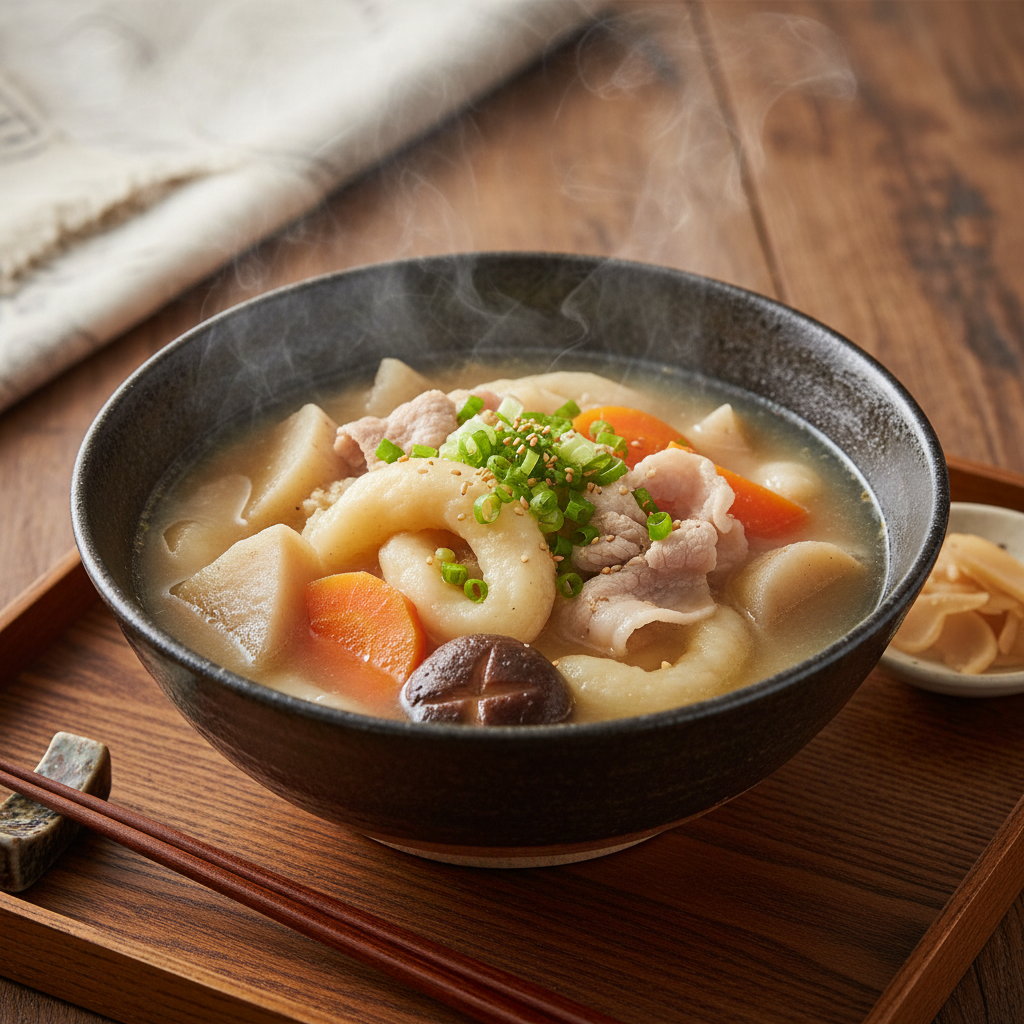
Dago soup is a representative local dish of Kumamoto Prefecture made with “dago (dango),” wheat flour kneaded with water and flattened thin, and seasonal vegetables simmered with miso or soy sauce. The name “dago” comes from the corruption of “dango” (dumplings) and is a dialect widely used throughout the Kyushu region.
Basic Characteristics of Dago Soup
- The star ingredient “dago”: Chewy dumplings made from kneaded wheat flour and rolled out thin
- Ingredients: Local seasonal vegetables such as daikon radish, carrots, taro, burdock, and fried tofu
- Seasoning: Generally miso-based or soy sauce-based
- How to eat it: Eaten daily as a home-cooked dish
Dago soup is a nutritionally well-balanced dish that provides carbohydrates, vegetables, and protein in one bowl, and has been valued as a meal to soothe bodies tired from farm work.
History and Cultural Background of Dago Soup
Origins and Development
The origins of dago soup are said to date back to the Edo period. In an era when rice was precious, wheat flour was relatively easy to obtain and was an important ingredient supporting the common people’s tables. Kumamoto Prefecture, centered on the Aso region, had thriving wheat cultivation, which led to the development of wheat flour-based dishes.
Connection to Agricultural Culture
Dago soup played an important role as a meal during breaks in farm work and during busy farming seasons. Because it could be made quickly and had high nutritional value and the effect of warming the body, it was an essential dish during rice planting and harvesting seasons.
At “yui” (community cooperative labor), dago soup was often served to large numbers of people, and it functioned as a dish that deepened community bonds.
Position as Local Cuisine
Today, dago soup is positioned as a representative local dish of Kumamoto Prefecture and is served in school lunches and regional events. In 2007, it was selected by the Ministry of Agriculture, Forestry and Fisheries for “One Hundred Local Dishes of Agricultural, Forestry and Fishing Villages,” and its cultural value has been widely recognized.
Basic Recipe for Dago Soup
Ingredients (Serves 4)
Dago (dumplings)
- Wheat flour: 200g
- Water: approximately 100ml
- Salt: a pinch
Soup ingredients
- Daikon radish: 150g
- Carrot: 1
- Taro: 3-4
- Burdock: 1/2
- Fried tofu: 1 piece
- Japanese leek: 1
- Dashi stock: 1000ml
- Miso: 3-4 tablespoons (adjust to taste)
Step-by-Step Instructions
1. Making dago (dumplings)
- Put wheat flour and salt in a bowl, gradually add water while kneading
- Knead well until it reaches the softness of an earlobe, wrap in plastic wrap and let rest for about 30 minutes
- Roll out the dough thin and tear into bite-sized pieces (approximately 3-4cm square)
Tip: The thinner you roll out the dago, the more chewy it becomes. The ideal thickness is about 2-3mm.
2. Prepare the vegetables
- Cut daikon radish and carrots into matchsticks or thin slices
- Peel taro and cut into bite-sized pieces
- Shred burdock with a vegetable shredder and soak in water
- Pour hot water over fried tofu to remove excess oil, then cut into thin strips
- Slice Japanese leek diagonally
3. Simmer
- Pour dashi stock into a pot and bring to a boil, adding vegetables that take longer to cook (daikon radish, carrot, burdock, taro) in order
- Once the vegetables become soft, add the dago pieces one at a time (being careful not to let them stick together)
- When the dago floats to the surface and becomes translucent, add the fried tofu and Japanese leek
- Dissolve in the miso and adjust the taste
- Simmer over low heat for about 5 minutes and it’s done
Cooking tips: When adding dago, carefully add one piece at a time so they don’t overlap in the pot. Be careful not to overcook as it will dissolve.
Regional Differences and Characteristics
There are various variations of dago soup depending on the region within Kumamoto Prefecture.
Aso Region Dago Soup
In the Aso region, there is a tendency to make dago thicker, resulting in a more substantial finish. Due to the cool highland climate, many root vegetables are used to warm the body, and the miso is made on the darker side. Aso takana (mustard greens) may also be added.
Amakusa Region Dago Soup
In the Amakusa region, which faces the sea, dago soup may be made with fish and seafood stock. Dashi is often made from dried sardines or small fish, and soy sauce-based seasonings are common, allowing you to enjoy flavors unique to coastal areas.
Kumamoto City Area Dago Soup
In the area around Kumamoto City, the prefectural capital, relatively light seasoning is preferred. Many households use a variety of vegetables and incorporate seasonal vegetables throughout the year.
Kuma Region Dago Soup
In the Kuma region, dago made with buckwheat flour mixed in is sometimes used. The flavor of buckwheat flour is added, creating a unique taste. Also, there is a tendency to use many mountain vegetables.
Nutritional Value and Health Benefits of Dago Soup
Superior Nutritional Balance
Dago soup is a single dish with excellent nutritional balance.
- Carbohydrates: Appropriate energy source from wheat flour dago
- Dietary fiber: Abundant dietary fiber from root vegetables and burdock
- Vitamins: Vitamins A and C from carrots and daikon radish
- Minerals: Potassium and magnesium from taro and vegetables
- Protein: Plant-based protein from miso and fried tofu
Health Benefits
- Easy to digest: Wheat flour dago is easy to digest and gentle on the stomach and intestines
- Warms the body: The hot soup warms you from your core
- Low fat: Hardly any oil is used, making it a healthy dish
- Satiety: The dago has good staying power in the stomach, providing a satisfying feeling of fullness
- Adjustable salt content: The amount of miso can be adjusted when cooking at home
Modern Arrangement Recipes for Dago Soup
While traditional dago soup is delicious, modern arrangement recipes are also popular.
Soy Milk Dago Soup
By replacing part of the dashi stock with soy milk, you get a milder, creamier flavor. It goes well with miso and is popular with women.
Tomato Dago Soup
A Western-style arrangement with the addition of tomato or tomato juice. If you use consommé instead of miso, it becomes Italian-style soup.
Curry Dago Soup
An arrangement using curry powder or curry roux instead of miso. Popular with children, the spicy flavor stimulates appetite.
Mushroom Dago Soup
A version using plenty of mushrooms such as shiitake, shimeji, and enoki. The umami of the mushrooms adds depth of flavor.
Chicken Dago Soup
Adding chicken thighs or chicken breast increases protein and adds volume. Recommended for households with growing children.
Tips and Pointers for Making Delicious Dago Soup
Success Points in Making Dago
- Water ratio: The amount of water in relation to flour needs adjustment depending on the season and humidity. A slightly softer consistency than earlobe softness is the goal
- Resting time: Resting the dough allows gluten to form and increases the chewy texture
- Thinness: The thinner you roll it out, the better the texture, but don’t tear it
- Shape: Tearing by hand creates indentations on the surface, allowing flavors to adhere better
Tips for Seasoning the Broth
- Importance of dashi: Kombu and dried sardine combination dashi is basic. Granulated dashi works too if time is short
- Type of miso: Barley miso or blended miso is common in Kumamoto, but choose according to preference
- How to cut vegetables: Cutting to uniform size ensures even cooking
- Simmering time: Cook vegetables thoroughly until soft, but don’t overcook the dago
Points to Avoid Failure
- Don’t add too much dago or the broth becomes too thick
- Stir gently after adding dago (vigorous stirring causes it to break)
- Add miso just before turning off the heat to preserve the aroma
- When storing, keep dago and broth separately for better results
Differences Between Dago Soup and Other Local Dishes
Differences from Suiuton (Water Dumplings)
The nationally known “suiuton” is similar but dago soup’s dago is rolled out thin and flat, while suiuton is scooped with a spoon and dropped, so the shape differs. Also, dago soup is basically miso-flavored while suiuton is often soy sauce-based.
Differences from Houtou (Yamanashi Prefecture)
“Houtou” from Yamanashi Prefecture is another local dish using wheat flour noodles, but houtou is characterized by cutting the noodles with a knife and simmering them raw. Dago soup’s dago is torn by hand with irregular shapes.
Differences from Dango Soup (Oita Prefecture)
Oita Prefecture also has a local dish called “dango soup,” but Oita’s dango soup is often rolled out into long thin noodle-like shapes, differing in form from Kumamoto’s dago soup.
Where to Eat Dago Soup
Restaurants in Kumamoto Prefecture
Many local cuisine restaurants and set meal shops in Kumamoto Prefecture serve dago soup. Authentic dago soup can be enjoyed especially at the following places:
- Local cuisine specialty restaurants
- Roadside station restaurants
- Farm restaurants
- Traditional set meal restaurants
Enjoying at Home
The most common way is to make and enjoy it at home. In Kumamoto supermarkets, “dago soup base” and “dago soup sets” are also sold, making it easy to prepare.
At Events and Festivals
Dago soup made in large pots is sometimes served at agricultural festivals and community events throughout Kumamoto Prefecture. Eating dago soup together with community members has an exceptional taste.
How to Store and Reheat Dago Soup
Storage Method
Refrigerator storage
- Cool completely, then place in an airtight container and refrigerate
- Storage period: about 2-3 days
- Dago absorbs the broth and swells, so making it with extra broth is good
Freezer storage
- It’s best to freeze dago and broth separately
- Freeze dago flat for easy use
- Storage period: about 1 month
How to Reheat
- For refrigerated storage, transfer to a pot and warm over low heat
- If moisture is insufficient, add dashi stock
- For frozen, thaw naturally before warming
- When microwaving, heat while occasionally stirring
Convenient Tools and Ingredients for Making Dago Soup
Basic Cooking Equipment
- Large pot: 4-5 liter size is convenient for 4 servings
- Bowl: For making dago
- Rolling pin: For rolling out dago (rolling by hand is also fine)
- Cutting board: For vegetable prep work
- Ladle: Convenient for dissolving miso
How to Choose Ingredients
Wheat flour
- Medium flour is optimal, but cake flour also works
- Mixing in bread flour increases the chewy texture
Vegetables
- Using seasonal vegetables is basic
- Root vegetables are cut smaller as they take longer to cook
- Using frozen vegetables is convenient for time-saving
Miso
- Barley miso is traditional in Kumamoto
- Blended or red miso also tastes good
- Using reduced-salt miso is healthier
Enjoying Dago Soup by Season
Spring Dago Soup
In spring, light-flavored dago soup using new potatoes, new onions, and spring cabbage is recommended. Adding rapini greens or bamboo shoots brings out the seasonal feel.
Summer Dago Soup
Cold dago soup is also delicious in summer. Add dago to chilled broth and garnish with summer vegetables like cucumber and tomato. The light seasoning is perfect for when you lack appetite.
Autumn Dago Soup
Autumn’s bounty with plenty of mushrooms, sweet potato, and chestnut added to dago soup. High in nutrition and ideal for maintaining health.
Winter Dago Soup
Using plenty of root vegetables to warm the body is the winter standard. Also delicious with added Chinese cabbage or chrysanthemum greens, perfect for winter dinner on cold days.
Culture and Customs Related to Dago Soup
Role in Households
In Kumamoto homes, dago soup is cherished as “mother’s home cooking.” Each household has its own individuality in seasoning and ingredients, and many people have an attachment to their family’s version being “the best.”
Intergenerational Transmission
The method of making dago soup is passed down from grandmother to mother to daughter. Since dago-making centers on handwork, making it together becomes an opportunity for communication.
Role in Community
Dago soup eaten in large quantities at community gatherings and cooperative work has served to connect people. Today, dago soup preparation is still included in community cultural festivals and school events.
The Future and Succession Activities of Dago Soup
Succession to Younger Generations
Kumamoto Prefecture incorporates dago soup as a local dish into school cooking classes and introduces it as part of food education activities to pass it on to the next generation.
Utilization as a Tourism Resource
Dago soup is being introduced as part of Kumamoto Prefecture’s tourism PR efforts. Some facilities offer hands-on dago soup cooking experiences as a form of experiential tourism.
Spread of Modern Arrangements
Through social media and other channels, new arrangement recipes by younger generations are being shared, allowing the traditional dish to continue evolving.
Conclusion: Dago Soup is a Local Cuisine That Conveys Kumamoto’s Spirit
Dago soup is a local dish filled with Kumamoto’s history and culture. While using simple ingredients and preparation methods, it reflects regional individuality and household creativity, producing diverse flavors.
Made from the simple ingredients of wheat flour and vegetables, dago soup is unpretentious yet nutritionally balanced, warms the body, and satisfies the heart. Nurtured within agricultural culture and passed down through generations, this dish carries the wisdom of living and warmth of Kumamoto’s people.
Today, while preserving traditional methods, new arrangements continue to emerge. When visiting Kumamoto, be sure to taste authentic dago soup. When making it at home, why not use this article as a reference to create your own original dago soup?
Dago soup is not merely a dish but an important food culture that conveys Kumamoto’s spirit and heritage. It will continue to be loved by many and passed on to future generations.