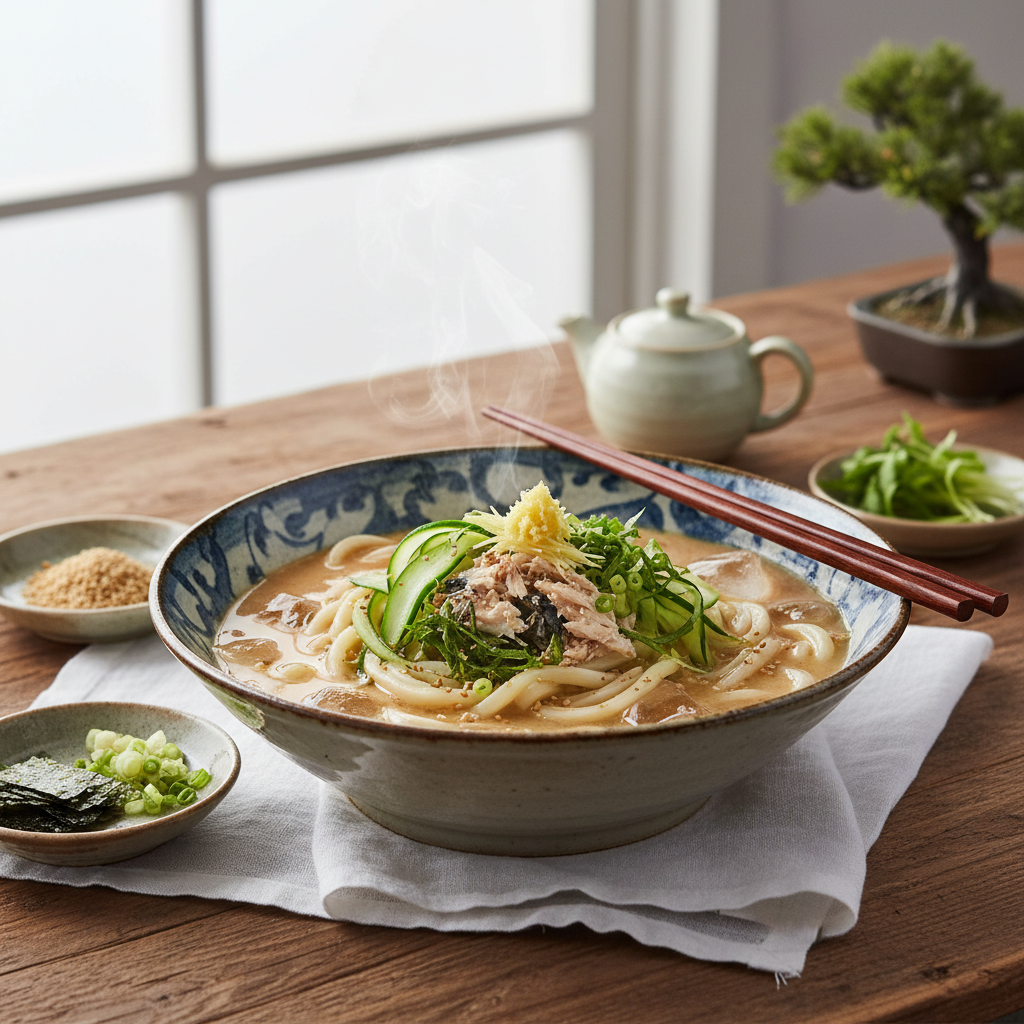
Hiyajiru Udon | A Complete Explanation of the History, Preparation Method, and Recommended Restaurants of Saitama Prefecture’s Local Cuisine
Hiyajiru udon, a signature local dish representing Saitama Prefecture’s summer, is a refreshing dish that whets the appetite during hot seasons. In this dish, freshly boiled udon noodles are dipped in a cold sesame-based broth, a nutritious traditional food that has been beloved by local people for many years as an effective means of preventing summer fatigue.
In this article, we will comprehensively convey the appeal of this local cuisine, from the origins of hiyajiru udon to its history up to the present day, traditional preparation methods, recipes that can be easily made at home, and recommended restaurants in Saitama Prefecture where you can enjoy authentic hiyajiru udon.
What is Hiyajiru Udon? A Local Dish Coloring Saitama Prefecture’s Summer
Hiyajiru udon is a local dish passed down mainly in the northern to central parts of Saitama Prefecture, a cold noodle dish eaten during the summer season. Its greatest characteristic is the special broth called “hiyajiru,” made by grinding sesame, combining it with miso, and diluting it with cold dashi broth.
In this broth, boiled and chilled udon noodles are dipped, and served with an abundance of condiment vegetables such as cucumber, myoga (Japanese ginger), shiso leaves, and green onions. The fragrant aroma of sesame, the richness of miso, and the crispy texture of vegetables harmonize exquisitely, making this a refreshing dish that can be eaten smoothly even in hot summer.
Nutritional Value and Health Benefits of Hiyajiru Udon
Hiyajiru udon is not only delicious but also excellent from a nutritional perspective. The main nutrients and health benefits include the following:
- Sesame: Rich in sesamin, vitamin E, calcium, and iron, with antioxidant and fatigue recovery effects
- Miso: As a fermented food, it contains lactic acid bacteria that improve intestinal health, as well as protein and B vitamins
- Cucumber: High water content with a body-cooling effect, and rich in potassium for alleviating swelling
- Myoga and shiso leaves: Appetite-stimulating effects with vitamins and minerals
- Udon: Carbohydrates serve as an energy source and are easily digestible, making them easy to eat even during summer fatigue
Through the combination of these ingredients, hiyajiru udon efficiently replenishes nutrients that are often lost in summer heat and is an ideal local dish that is easy to eat even when one has no appetite.
History and Cultural Background of Hiyajiru Udon
Origins of Hiyajiru Culture in Saitama Prefecture
There are various theories about the origins of hiyajiru udon, but it is said to originate from simple meals eaten in Saitama Prefecture’s agricultural villages during summer farm work. From the Edo period through the Meiji era, wheat cultivation was flourishing in farming communities, and making homemade noodles from self-milled wheat flour was common.
The demand for cold, nutrient-rich meals during breaks from hot summer farm work led to the development of the custom of eating udon in a cold broth made from ground sesame and miso. Even in an era without refrigerators, the broth could be cooled with well water, and its shelf-stability using miso and sesame allowed it to become established as a practical summer meal.
Regional Variations of Hiyajiru Udon in Saitama Prefecture
Even within Saitama Prefecture, hiyajiru udon has subtle differences depending on the region. The main regional differences are as follows:
Northern Saitama (Kumagaya and Gyoda areas)
- Characterized by generous use of sesame and rich flavor
- Traditional preparation methods remain strong in farming-heavy areas
- Often served at summer festivals and community events
Central Saitama (Kawagoe and Higashimatsuyama areas)
- Lighter flavor with a higher proportion of dashi broth
- Greater variety of vegetables with active incorporation of seasonal produce
- Increased menu items tailored for tourists
Chichibu Region
- Local mountain vegetables may be added
- “Hiyajiru soba,” a cold broth buckwheat noodle dish, also exists
These regional differences reflect variations in each area’s climate, agricultural products, and food culture, speaking to the diversity and depth of hiyajiru udon.
Contemporary Positioning of Hiyajiru Udon
In recent years, Saitama Prefecture has actively pursued the reassessment and regional revitalization of local cuisine, with hiyajiru udon being reevaluated. Various initiatives are underway, including local and municipal promotion activities, expanded provision in restaurants, and inclusion in school lunches.
Particularly with the rise in health consciousness, its value as a traditional food with excellent nutritional balance has been recognized, becoming more accepted by younger generations. With information sharing through social media, the number of tourists from outside the prefecture visiting specifically for hiyajiru udon has increased.
Traditional Preparation Method for Hiyajiru Udon
Basic Ingredients (Serves 4)
Udon
- Fresh udon: 4 portions (or 400g dried noodles)
Hiyajiru (Broth)
- Ground white sesame: 6-8 tablespoons
- Miso (barley or blended): 3-4 tablespoons
- Dashi broth (bonito and kelp): 600ml
- Sugar: 1-2 teaspoons (to taste)
- Soy sauce: 1 teaspoon
Condiments and Ingredients
- Cucumber: 2
- Myoga: 3-4
- Shiso leaves: 10 leaves
- Green onions: as needed
- White sesame (for finishing): as needed
How to Make Hiyajiru (Broth)
- Grind the sesame: Place ground white sesame in a mortar and grind thoroughly. The key to making fragrant hiyajiru is to grind until the sesame’s oils emerge and it becomes paste-like. If you don’t have a mortar, you can use a food processor or blender.
- Add miso: Add miso to the ground sesame and mix well. Mix thoroughly until the sesame and miso combine uniformly. At this stage, the miso’s saltiness integrates with the sesame, creating a mellow taste.
- Extend with dashi broth: Gradually add cooled dashi broth while dissolving the sesame-miso. Add small amounts initially to create a smooth paste-like consistency, then gradually increase the amount of dashi broth to prevent lumping.
- Adjust seasoning: Add sugar and soy sauce to taste. Taste as you go and balance the sesame aroma, miso richness, and dashi umami. You may also add a pinch of salt if desired.
- Chill: Refrigerate the finished hiyajiru for at least one hour. Thorough chilling allows the flavors to blend, resulting in a refreshing taste perfect for summer.
Preparation of Udon and Condiments
- Boil the udon: Bring a large pot of water to boil and cook the udon. For fresh udon, follow the indicated time; for dried noodles, cook slightly firmer than usual.
- Chill in cold water: Drain the cooked udon in a colander and wash thoroughly under running water while cooling. Remove the starch and bring out the chew by rubbing gently by hand. Final chilling in ice water further strengthens the chew.
- Cut the condiments: Slice cucumber into thin rounds or julienne, myoga into thin slices, shiso leaves into julienne, and green onions into small rounds. Cutting condiments fine improves their integration with the hiyajiru.
Plating and Eating Method
- Place udon in a bowl
- Pour hiyajiru so the udon is submerged
- Top generously with condiment vegetables
- Sprinkle white sesame and serve
When eating, slurp the udon, condiments, and hiyajiru together. This traditional eating style allows you to enjoy the fresh aroma of the condiments, the sesame fragrance, and the smooth texture of the udon all at once.
Arranged Hiyajiru Udon Recipes That Can Be Easily Made at Home
Quick Version: Hiyajiru Udon Using Store-Bought Items
Here we present a quick recipe for enjoying hiyajiru udon even on busy days.
Ingredients (Serves 2)
- Frozen udon: 2 portions
- White sesame paste: 3 tablespoons
- Miso: 2 tablespoons
- Mentsuyu (3x concentrate): 2 tablespoons
- Water: 300ml
- Cucumber, myoga, shiso leaves, etc.: as needed
Preparation
- Mix sesame paste and miso in a bowl
- Gradually add mentsuyu and water to dilute
- While chilling in the refrigerator, boil frozen udon per instructions and chill in cold water
- Cut condiments and plate to finish
Using sesame paste saves the effort of grinding sesame in a mortar, and using mentsuyu eliminates the need to make dashi. Authentic hiyajiru udon can be completed in approximately 10 minutes.
Nutrition-Enhanced Version: Hiyajiru Udon with Tofu and Natto
An arrangement that strengthens protein content with even greater nutritional value.
Additional Ingredients
- Silken tofu: 1/2 block
- Natto: 1 package
- Poached egg: 2
Cut tofu into small dice and mix the natto well. Add tofu and natto to basic hiyajiru udon and top with poached eggs. The addition of soy products increases protein and isoflavones, creating an even more nutritionally balanced dish.
Summer Vegetable Version
A colorful arrangement using abundant seasonal summer vegetables.
Additional Vegetables
- Tomato: 1 medium (diced)
- Eggplant: 1 (sliced and deep-fried)
- Okra: 4 (boiled and sliced into rounds)
- Corn: 1/2 cob (boiled and kerneled)
Adding summer vegetables increases vitamins and minerals further while making the presentation more vibrant. The sourness of tomato especially adds freshness to the hiyajiru, while fried eggplant adds richness.
Spicy Version: Korean-Style Hiyajiru Udon
An arrangement adding spice for a stimulating taste.
Additional Seasonings
- Gochujang: 1 tablespoon
- Ground garlic: 1/2 teaspoon
- Chili oil: to taste
- Kimchi: to taste
Add gochujang and ground garlic to the basic hiyajiru and finish with chili oil. Top with kimchi for the synergistic effect of fermented foods. Recommended for those who enjoy spicy food or seek more stimulating flavors.
Recommended Restaurants in Saitama Prefecture Serving Hiyajiru Udon
Recommended Restaurants Around Kumagaya City
Kumagaya City is known as one of the hottest regions in Saitama Prefecture, where hiyajiru udon culture remains deeply rooted. Multiple udon restaurants and eateries in the city serve traditional hiyajiru udon.
Local established udon shops serve hiyajiru udon made with unchanged methods since their founding. Thick homemade noodles with strong chew and rich hiyajiru made with generous sesame are the characteristics. These are often offered as seasonal summer-limited menus, so prior confirmation is recommended.
Recommended Restaurants Around Kawagoe City
Kawagoe City is popular as a tourist destination with well-equipped restaurants serving local cuisine. Taking a break for hiyajiru udon after strolling the historic streets called “Little Edo” is especially delightful.
Atmospheric restaurants utilizing traditional storehouse buildings serve traditional hiyajiru udon as well as arranged menus using Kawagoe’s specialty sweet potatoes. Service is attentive to tourists, making it recommended even for first-time hiyajiru udon eaters.
Recommended Restaurants Around Gyoda City
Gyoda City, known for “Nobunaga’s Castle,” is a historic city where wheat cultivation has flourished since ancient times. Eateries and udon restaurants in the city serve hiyajiru udon made with handmade udon using locally grown wheat.
Particularly at farm restaurants and eateries attached to direct farm stores, you can enjoy hiyajiru udon made with abundant fresh local vegetables. The simple yet robust flavor unique to farms is appealing.
Service at Roadside Stations and Agricultural Product Markets
Some roadside stations and agricultural product direct sales outlets in Saitama Prefecture also serve hiyajiru udon during summer. These locations have become popular among both local residents and tourists as places where you can casually enjoy local cuisine made with local ingredients.
Particularly at places like “Michi-no-Eki Okabe” and “Michi-no-Eki Hanazono,” hiyajiru udon may appear as a seasonal limited menu. It’s recommended to stop by while driving and enjoy Saitama’s local flavors.
Tips for Enjoying Hiyajiru Udon Deliciously
Sesame Selection and Grinding Method
Sesame is the most crucial element determining the taste of hiyajiru udon. Self-grinding raw sesame rather than purchasing pre-ground sesame significantly enhances aroma and flavor.
How to Select Sesame
- White sesame is standard, but golden sesame creates a more fragrant aroma
- Purchase sesame in small packages to ensure freshness, and store opened packages in the refrigerator
- Domestic sesame has strong aroma with stable quality
Grinding Tips
- When using a mortar, grind slowly in circular motions
- Grind until sesame granules completely disappear and oils emerge into a paste
- Over-grinding produces bitterness, so taste as the aroma develops and adjust
Dashi Preparation Method
Since hiyajiru udon dashi is served cold, a clear flavor without off-notes is required.
Basic Dashi Preparation
- Prepare 10g kelp and 20g bonito flakes per 1 liter of water
- Soak kelp in water for 30 minutes or longer
- Heat over medium flame, removing kelp just before boiling
- Once boiling, add bonito flakes and immediately remove from heat
- Once bonito flakes have settled, strain through paper towels
- Once cooled, refrigerate thoroughly before using
If time is limited, store-bought dashi packets or granulated dashi work, though making it slightly lighter than indicated helps balance the overall hiyajiru flavor.
Condiment Cutting and Combinations
Condiments are important elements bringing variation to hiyajiru udon’s taste.
How to Cut Condiments
- Cucumber: Thin rounds provide good texture; julienne allows better flavor integration
- Myoga: Slice along the fiber and soak in water to mellow the spiciness
- Shiso leaves: Julienne just before eating to preserve aroma
- Green onion: Slice into rounds, soak in water, then drain well
Recommended Condiment Combinations
- Standard: cucumber, myoga, shiso leaves, green onion
- Fresh: cucumber, myoga, shiso leaves, fresh ginger
- Hearty: cucumber, tomato, eggplant, okra
- Aromatic: myoga, shiso leaves, Japanese parsley, wasabi
Hiyajiru Consistency Adjustment
Hiyajiru consistency can be adjusted to personal preference.
- Rich style: More sesame and miso with less dashi broth. Clings better to noodles with substantial flavor.
- Light style: More dashi broth with less sesame and miso. Better throat feel and easier to eat on hot days.
- Standard: Use recipe proportions as base and adjust while tasting.
Since hiyajiru tightens when chilled, making it slightly thin when fresh allows for perfect flavor once cooled.
Relationship Between Hiyajiru Udon and Other Local Dishes
Differences from Miyazaki Prefecture’s Hiyajiru
The nationally famous cold broth dish is Miyazaki Prefecture’s “hiyajiru.” Though similar, Saitama’s hiyajiru udon has several differences.
Characteristics of Miyazaki Hiyajiru
- Uses fish (such as horse mackerel or sardine) grilled and shredded
- Miso is grilled for enhanced fragrance
- Typically served over rice
- Generally diluted with water rather than dashi broth
Characteristics of Saitama Hiyajiru Udon
- Sesame is the star with no fish used
- Miso is used raw without grilling
- Served with udon
- Uses bonito and kelp dashi broth
Thus, despite the same “hiyajiru” name, regional contents differ greatly. This reflects regional differences in climate, ingredients, and food culture, exemplifying local cuisine diversity.
Relationship to Other Saitama Noodle Dishes
Saitama is recognized as a wheat-producing area with deeply rooted udon culture. Beyond hiyajiru udon, various regional noodle dishes exist.
Musashino Udon
- Thick, chewy handmade udon served cold, dipped in warm sauce
- Passed down in southwestern Saitama and Tokyo’s Tama region
- Like hiyajiru udon, eaten during farm work breaks
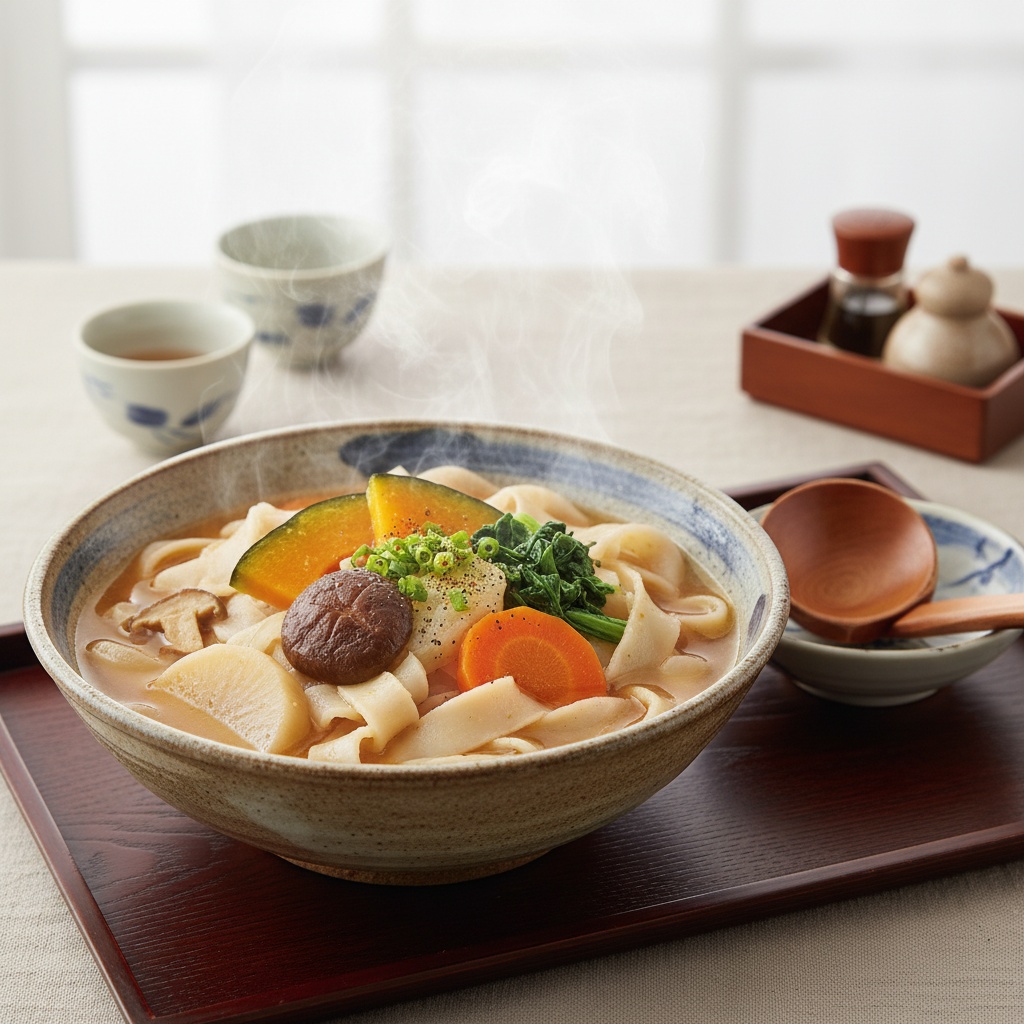
Nikuboutou
- Wide noodles simmered with vegetables as a warm dish
- Eaten in winter, primarily in the Chichibu region
- The opposite of hiyajiru udon, warming the body
Hiyajiru Soba
- Hiyajiru udon’s buckwheat noodle version seen in areas like Chichibu
- Characterized by soba’s flavor combined with hiyajiru
These noodle dishes demonstrate Saitama’s rich wheat culture and seasonal food wisdom.
Storage Methods and Optimal Eating Time for Hiyajiru Udon
Storage of Hiyajiru (Broth)
Hiyajiru can be made ahead and actually tastes better after sitting overnight as flavors blend.
Storage Tips
- Store in clean, sealed containers in the refrigerator
- Remains delicious for 2-3 days when refrigerated
- May separate; mix well before using
- Can be frozen for long-term storage (approximately one month)
If frozen, thaw in the refrigerator overnight and mix well before use. Use thawed portions on the same day.
Udon Storage and Cooking Method
Fresh Udon
- Use unopened udon within its refrigerated storage period
- Use opened udon the same day
- Cooked udon keeps in the refrigerator for about one day if wrapped in plastic wrap
Dried Noodles
- Can be stored long-term at room temperature
- Store in sealed containers away from moisture
- Cook slightly firmer than normal for hiyajiru udon
Frozen Udon
- Can be stored long-term in the freezer, ready anytime
- Many can be boiled without thawing
- Thorough chilling in cold water after cooking is important
Optimal Eating Time
Hiyajiru udon is most delicious when all elements are at appropriate temperatures.
Ideal Condition
- Hiyajiru: 5-10°C, very cold
- Udon: Just after chilling in cold water, cold with strong chew
- Condiments: Freshly cut with vibrant aroma
Preparation Before Eating
- Remove hiyajiru from refrigerator and mix well
- Boil udon and chill in cold water (or use pre-chilled)
- Cut condiments (cutting ahead dulls aroma, so just before is ideal)
- Combine all elements and eat immediately
Since udon absorbs broth with time and becomes soft, eating immediately after preparation is best. For larger groups, serving udon, hiyajiru, and condiments separately for individual plating is recommended.
Regional Revitalization Efforts Through Hiyajiru Udon
Saitama Prefecture’s Local Cuisine Promotion Projects
Saitama Prefecture actively pursues regional revitalization using local cuisine. Hiyajiru udon is a target of various projects as a cuisine representing the prefecture’s food culture.
Main Initiatives
- Recognition as “Saitama Prefecture local cuisine” and promotion activities
- Recipe collection creation and distribution
- School lunch service promotion
- Feature in tourism materials and websites
- Support for food event participation
These efforts have increased resident interest in local cuisine while providing tourists opportunities to learn about Saitama’s food culture.
Regional Events and Hiyajiru Udon
Various hiyajiru udon-themed events occur in Saitama during summer.
Event Examples
- Hiyajiru udon comparison tasting events
- Local cuisine cooking classes
- Serving at community summer festivals
- Restaurant hopping stamp rallies
Such events contribute to community formation and tourist attraction. Particularly, hands-on cooking classes remain popular as opportunities to learn the history and culture behind the dish.
New Restaurant Initiatives
While preserving traditional hiyajiru udon, contemporary restaurants pursue innovative approaches.
Innovative Efforts
- Vegan hiyajiru udon (non-animal dashi)
- Gluten-free versions (using rice flour noodles)
- Senior-friendly softer udon
- Visually striking plating for social media
- Take-out hiyajiru udon kits
These initiatives allow more people to enjoy hiyajiru udon, broadening the local cuisine’s reach.
Q&A for Enjoying Hiyajiru Udon at Home
Q1: Can I use store-bought ground sesame or sesame paste instead of grinding sesame in a mortar?
A: Yes, you can. When using store-bought ground sesame, lightly toast it in a frying pan before use to enhance aroma. Sesame paste works well, mixing easily with miso for convenient rich hiyajiru. However, self-grinding provides superior aroma and flavor. If time permits, definitely try it.
Q2: What can I substitute if I don’t have time to make dashi?
A: You can use mentsuyu diluted with water, store-bought white dashi, or granulated dashi. When using mentsuyu, make it lighter than indicated and adjust for miso saltiness. Water-only versions work, slightly increasing miso and sesame to prevent bland taste.
Q3: What side dishes pair well with hiyajiru udon?
A: Hiyajiru udon itself serves as both main and side dish, but if wanting more, these work well:
- Tempura (vegetables or seafood)
- Grilled fish or chicken
- Cold tofu
- Pickles
- Edamame
- Onigiri rice balls (eaten alongside hiyajiru udon)
Q4: How should I arrange it for children to enjoy?
A: These arrangements help:
- Reduce miso amount, slightly sweeten
- Reduce strong-aroma condiments like myoga, use more child-friendly vegetables like cucumber and tomato
- Cut udon into manageable lengths
- Add child-favorite ingredients like tuna, ham, or corn
- Make lighter hiyajiru, serve dipping-style
Q5: Can hiyajiru udon be eaten outside summer?
A: Absolutely. Traditionally a summer dish, modern times allow year-round enjoyment. Winter versions use warm dashi, creating “warm broth udon” with the same sesame-miso base in warm dashi with warm udon. This warming winter version is equally delicious.
Q6: Are there substitute ingredients for those with sesame allergies?
A: For sesame allergies, consider:
- Peanut or almond butter (if no nut allergy)
- Soy milk with increased miso in soy milk-based hiyajiru
- Olive oil mixed with miso
These differ from traditional flavor. Without sesame, strengthen dashi flavor to reduce the sense of something missing.
Conclusion: Enjoy Saitama’s Summer Flavor, Hiyajiru Udon
Hiyajiru udon is a local dish symbolizing Saitama Prefecture’s rich food culture. The fragrant sesame, rich miso, fresh condiment vegetables’ refreshing quality, and thick udon’s smooth throat feel—their harmonious unity embodies ancestral wisdom for surviving hot summers, a nutrient-rich traditional food.
As introduced in this article, hiyajiru udon is relatively simple to prepare at home. Mastering the basic recipe allows free personal variations. Additionally, numerous restaurants throughout Saitama serve traditional hiyajiru udon.
Local cuisine concentrates a region’s climate, history, and culture in food heritage. Through hiyajiru udon, experience Saitama’s food culture and enrich your summer table.
Whether local rediscovering regional flavors, outsiders discovering new tastes, or the next generation inheriting important food culture—we hope hiyajiru udon continues being loved by many.
Enjoy Saitama’s flavor with hiyajiru udon this summer.