A Complete Guide to Miso Potato|History, How to Make, and Famous Restaurants of this Local Cuisine from the Chichibu Region of Saitama Prefecture
“Miso Potato,” a representative local cuisine of the Chichibu region in Saitama Prefecture, is a traditional taste that, despite its simplicity, has a profound flavor and has been loved by local people for many years. This dish, made by coating steamed potatoes with batter, frying them, and drizzling a sweet and savory miso sauce over them, has also attracted nationwide attention as a B-class gourmet food. This article provides a comprehensive explanation of all aspects of miso potato, from its history and origins to how to prepare it at home and introducing famous restaurants where it can be eaten in Chichibu.
What is Miso Potato? A Local Cuisine of the Chichibu Region in Saitama Prefecture
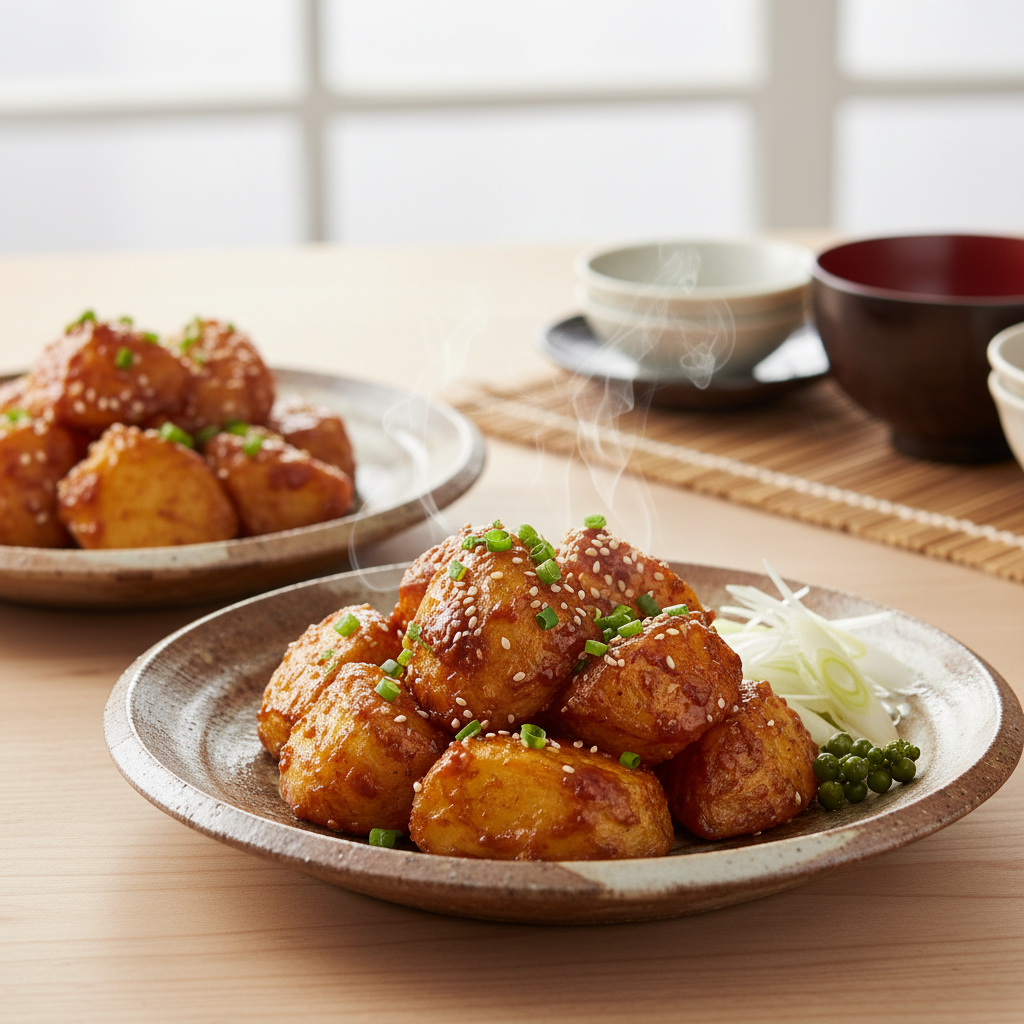
Miso potato is a local cuisine that has long been enjoyed in the Chichibu region of Saitama Prefecture. It is a dish made by coating bite-sized pieces of steamed potato with wheat flour batter, frying them, and generously pouring a sweet and savory miso sauce over them, and is characterized by a crispy exterior and fluffy interior.
This dish is not merely a “B-class gourmet food,” but rather a genuine traditional local cuisine nurtured by the climate, landscape, and way of life of the Chichibu region. Its nationwide recognition increased after winning the “5th Saitama B-class Local Gourmet Championship in Chichibu” held in fiscal year 2009, but its history dates back to before World War II.
Main Ingredients Used
The main ingredients for miso potato are as follows:
- Potatoes: Local potatoes harvested in the Chichibu region. Varieties with a fluffy texture such as Danshaku and Meikuin are suitable
- Wheat flour: Used as batter for tempura
- Miso: The basic ingredient for the sweet and savory miso sauce
- Sugar: Adds sweetness to the miso sauce
- Sake and mirin: Add richness and depth to the miso sauce
- Frying oil: Oil for frying the tempura
All of these are basic ingredients commonly used in Japanese cuisine, but in the Chichibu region, a unique combination and cooking method create a flavor rooted in the region.
History and Origins of Miso Potato
Field Crop Culture and Small Midday Meals in the Chichibu Region
The origin of miso potato is deeply connected to the geographical and climatic characteristics of the Chichibu region. The Chichibu region is a basin surrounded by mountains, and because there is little flat land, field crop agriculture has been practiced since ancient times. In this area, the cultivation of potatoes, wheat, and grains rather than rice was common, and potatoes were an important food source.
Farm work continues from early morning to evening and is grueling physical labor. Therefore, in the Chichibu region, there was a custom of eating a light snack called “ko-chuhhan” (small midday meal) to satisfy hunger between farm work. Miso potato developed as a type of this small midday meal.
Born from the Hearth
It is said that miso potato originated from the wisdom of utilizing small, non-standard potatoes from the harvest. The original form is said to have been small potatoes roasted over a hearth and eaten with homemade miso sauce.
In farming households of the time in Chichibu, miso was made in each home, and the sauce made by adding sugar and sake to the homemade miso to make it sweet and savory was an ideal food to replenish energy to tired bodies. The carbohydrates in potatoes, the protein in miso, and the sugar in the sauce quickly restored the physical strength exhausted by farm work.
Evolution to Tempura Style
As time progressed, the cooking method evolved from roasting over a hearth to the tempura style of steaming potatoes, coating them with batter, and frying them. This change created the unique texture of a crispy exterior and fluffy interior, establishing the current form of miso potato.
Deep-frying also improved preservation, making it delicious even when cooled, which led to its widespread adoption not only during breaks in farm work but also as a snack for children and everyday food in households.
Major Areas of Transmission and Occasions of Eating
Transmission Throughout the Chichibu Region
Miso potato is a local cuisine transmitted throughout the Chichibu region of Saitama Prefecture. Centered in Chichibu City, it has long been eaten in various areas of Chichibu County, including Yokoze Town, Minano Town, Nagatoro Town, and Ogano Town.
There are subtle differences in the ratio of miso sauce, sweetness, and potato size between households and regions, and each household’s taste is passed down. In the Chichibu region, it is said that there are hardly any people who don’t know about it, and it is truly worthy of being called the soul food of Chichibu.
Occasions and Seasons for Eating
Miso potato is eaten throughout the year without being limited to specific seasons or events. The main occasions for eating it are as follows:
- During farm work: Its traditional role as a small midday meal. Even now, it is eaten during busy farming seasons as a break snack in the fields
- Everyday snack: As a light snack when feeling a bit hungry, enjoyed by both children and adults
- Home cooking: Also appears on dinner tables as one of the side dishes
- Festivals and community events: Sold at food stalls at various Chichibu events and festivals and enjoyed as a regional taste
- Hospitality for tourists: Provided as a representative local cuisine to tourists visiting Chichibu
From early summer to autumn, the potato harvest season, there is an increased opportunity for families to make miso potato using fresh potatoes.
How to Make Miso Potato (Home Recipe)
Here is a detailed explanation of how to make authentic miso potato at home. This is a recipe that can reproduce the traditional taste of Chichibu.
Ingredients (Serves 4)
For potatoes and batter:
- Potatoes: 4-5 medium-sized ones (approximately 600g)
- Wheat flour: 4-5 tablespoons
- Water: As needed (approximately the same amount as the flour)
- Frying oil: As needed
For miso sauce:
- Miso: 3 tablespoons (approximately 50g)
- Sugar: 3-4 tablespoons
- Sake: 2 tablespoons
- Mirin: 2 tablespoons
- Water: 3-4 tablespoons
- Sesame seeds, ground white: 1 tablespoon (optional)
Instructions
1. Preparing the Potatoes
Peel the potatoes and cut them into bite-sized pieces (3-4 cm cubes). After rinsing them in water to remove any debris, steam them in a steamer for 15-20 minutes until a bamboo skewer passes through easily. They can be boiled instead of steamed, but steaming results in a fluffier texture without becoming watery.
2. Preparing the Miso Sauce
Place all ingredients for the miso sauce in a small pot and mix well. Heat over medium heat and stir with a wooden spatula until it thickens, about 3-5 minutes. Be careful with the heat as it burns easily, and keep stirring constantly. Once thickened, remove from heat and let cool slightly.
3. Preparing the Batter and Frying
In a bowl, mix wheat flour and water to make tempura batter. The batter should be slightly loose (flowing like a liquid). Lightly drain the steamed potatoes and dip them in the batter.
Heat frying oil to 170-180°C, add the battered potatoes and fry for 3-4 minutes until the surface turns golden brown and becomes crispy. Be careful not to have the oil temperature too high as it will burn easily.
4. Plating
Place the freshly fried potatoes in a serving dish and generously pour the warmed miso sauce over them. Sprinkle with sesame seeds if desired to enhance the aroma.
Tips for Delicious Preparation
- Steam the potatoes: Steaming rather than boiling prevents them from becoming watery and maintains a fluffy texture
- Apply batter thinly: If the batter is too thick, it becomes heavy, so apply it thinly and evenly
- Temperature control of frying oil: Maintaining 170-180°C results in a beautiful golden brown color
- Adjust the sweetness of the miso sauce: The amount of sugar can be adjusted to taste. The traditional taste of Chichibu is on the sweet side, but modern arrangements are also delicious
- While hot: By pouring warm miso sauce over freshly fried potatoes, the flavor is absorbed well
Eating Method and Variations
Traditional Eating Method
Miso potato is basically eaten by hand. It is often served on a skewer, and the skewer style is common at festival food stalls and tourist attractions.
It is most delicious eaten while warm, but it is also quite tasty when cooled, which is a characteristic feature of miso potato. Given its development as a small midday meal for farm work, it is designed to be easy to carry and store.
Modern Arrangements
While based on traditional miso potato, various arrangements are also enjoyed in modern times:
- Cheese topping: Melt cheese on fried potatoes and pour miso sauce over it
- Seven-spice chili pepper: Add a spicy kick to the miso sauce
- Added green onions and sesame: Top with chopped green onions and white sesame seeds to enhance the aroma
- Variations of miso sauce: Use different types of miso such as red or white miso
- Adding vegetables: Mix potatoes with other vegetables such as sweet potatoes or pumpkin
These arrangements are particularly supported by younger generations as attempts to pursue new flavors while maintaining tradition.
Famous Restaurants in Chichibu Where You Can Eat Miso Potato
When visiting the Chichibu region, be sure to try authentic miso potato. Here are some popular restaurants and facilities in the area.
Specialty Shops and Long-established Restaurants
“Miso Potato Honpo” is a limited company that specializes in manufacturing and selling miso potato and has greatly contributed to the preservation of miso potato culture in the Chichibu region. While maintaining traditional manufacturing methods, it implements modern sanitation and quality management to provide consistent delicious taste.
In Chichibu City, there are multiple miso potato specialty shops and restaurants that include miso potato on their menus. Each restaurant has its own unique characteristics in the ratio of miso sauce and frying method, making taste comparisons another fun activity.
Provision at Festivals and Events
At various festivals and events in the Chichibu region, miso potato food stalls are almost always present. In particular, many vendors set up at the following events, where you can enjoy the authentic taste:
- Chichibu Night Festival (December 2-3): A representative festival of Chichibu registered as a UNESCO Intangible Cultural Heritage
- Cherry Blossom Festival (Mid-April to early May): A spring tourism event held at Hitsujiyama Park
- Chichibu Kawase Festival (July 19-20): A summer festival representative of Chichibu
At these events, you can taste miso potatoes from multiple vendors and enjoy the differences in their flavors.
Rest Areas and Tourist Facilities
Miso potato can also be purchased and eaten at rest areas and tourist facilities in the Chichibu region. In particular, “Michi no Eki Chichibu” and “Michi no Eki Arakawa” serve freshly made miso potato and are popular with tourists.
Additionally, souvenir shops in the Chichibu region sell frozen miso potato and miso sauce sets, allowing people to recreate the taste of Chichibu at home.
Preservation and Transmission Efforts
Community-wide Preservation Activities
Miso potato, as a valuable food culture heritage of the Chichibu region, is being preserved and transmitted through community-wide efforts.
The victory at the “5th Saitama B-Class Local Gourmet Championship in Chichibu” in fiscal year 2009 was a major turning point in raising nationwide awareness of miso potato. Following this success, Chichibu City and local chambers of commerce and tourism associations have worked together to actively promote miso potato as a tourism resource for Chichibu.
Registration in the Ministry of Agriculture, Forestry and Fisheries “Our Local Cuisine”
Miso potato is officially registered in the “Our Local Cuisine” database operated by the Ministry of Agriculture, Forestry and Fisheries. This is a project aimed at recording and preserving local cuisines from throughout Japan and transmitting them to the next generation.
Through this registration, miso potato is officially recognized not simply as a regional B-class gourmet food but as an important local cuisine that forms part of Japanese food culture. The database contains detailed information about miso potato’s history, how to prepare it, and its significance as food culture, and is accessible to people throughout the country.
Product Development and Modern Efforts
The transmission of miso potato relies not only on preserving tradition but also on product development adapted to modern lifestyles.
The development of frozen products has made it possible for families to enjoy miso potato easily at home. These products are available not only at souvenir shops in the Chichibu region but also at online shops, allowing people throughout the country to enjoy the taste of Chichibu.
Social media usage is also being actively promoted. Chichibu City’s official tourism account, local restaurants, and miso potato enthusiasts share beautiful photos of miso potato and recipes on Instagram, Twitter, and other platforms. This has been particularly effective in appealing to younger generations and has led to an increase in tourists wanting to “eat miso potato when visiting Chichibu.”
School Education Efforts
In elementary and middle schools in the Chichibu region, opportunities to learn about miso potato as a local cuisine are provided. Students learn about this regional food culture by conducting cooking practice in home economics classes or studying regional food culture in social studies classes.
Miso potato also appears in school lunches, creating opportunities for children to become familiar with local cuisine on a daily basis. Through such efforts, reliable transmission to the next generation is being pursued.
Miso Potato and Chichibu’s Food Culture
The Importance of Small Midday Meal Culture
Miso potato is a dish symbolizing the “small midday meal” culture of the Chichibu region. Small midday meals are snacks eaten between farm work, and rather than being mere treats, they were important opportunities for nutritional supplementation supporting grueling physical labor.
This culture emerged from the fact that agriculture in the Chichibu region was primarily field crop-based, the harsh working environment characteristic of mountainous areas, and the wisdom of maximizing the use of locally available ingredients. In addition to miso potato, the Chichibu region has various small midday meal menu items, each enriching the region’s food culture.
Local Production and Consumption and Sustainability
Miso potato is a dish that utilizes locally harvested potatoes and miso made in individual households, embodying the “local production and consumption” spirit. This spirit is attracting attention as an approach to sustainable food in modern times.
In the Chichibu region today, many restaurants that serve miso potato insist on using locally grown potatoes, which also supports regional agriculture. Additionally, by using miso made using traditional methods without chemical seasonings, safe and healthy food is provided.
Relationship with Other Chichibu Local Cuisines
Although miso potato is the most famous among Chichibu’s local cuisines, the Chichibu region has many other traditional dishes:
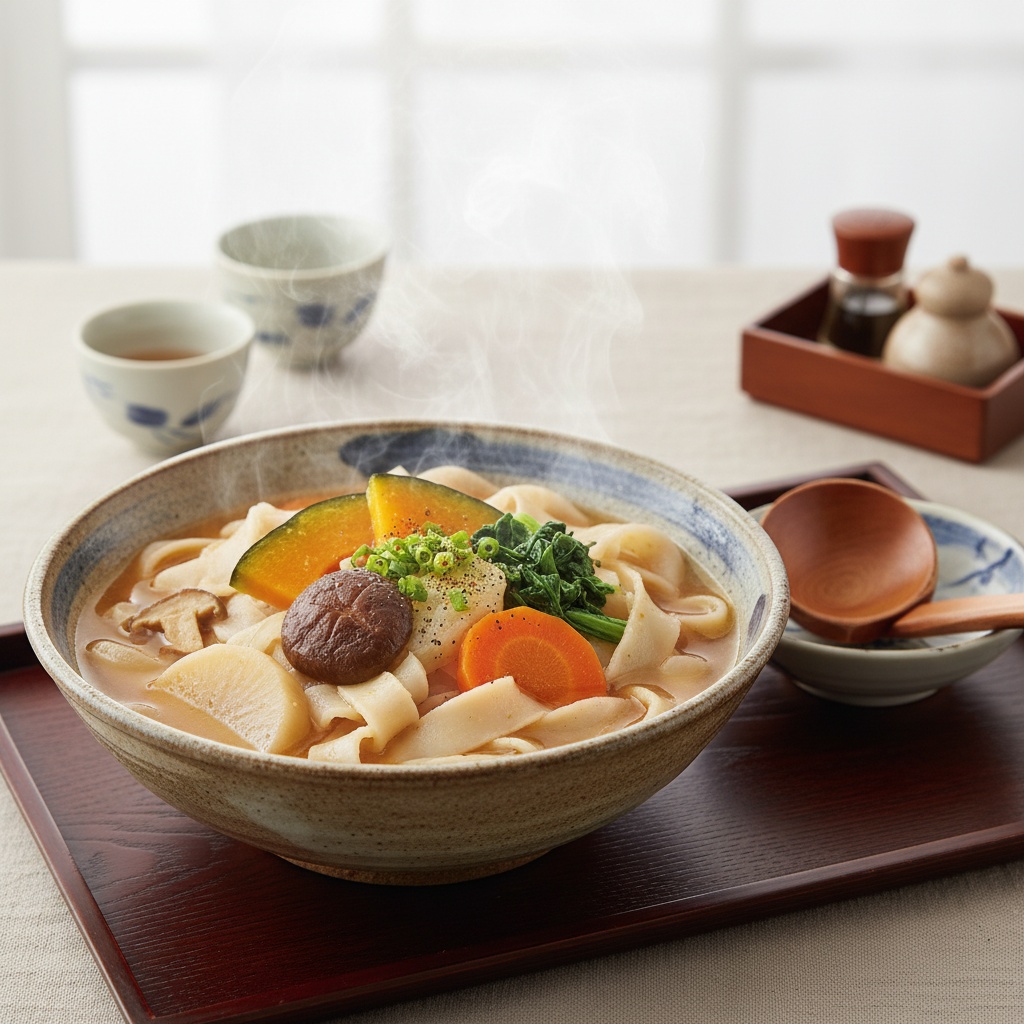
- Okkiri Komi: Wide noodles simmered with vegetables
- Shakushi-na Pickle: A pickle made with “shakushi-na,” a vegetable specialty of Chichibu
- Chichibu Soba: Hand-made buckwheat noodles made with locally grown buckwheat flour
- Salt-grilled Iwana: Iwana (Japanese char) raised in Chichibu’s clear streams
These dishes and miso potato are important elements forming Chichibu’s rich food culture, and each reflects the region’s history and landscape.
Nutritional Value and Health Aspects of Miso Potato
Nutritional Composition
Miso potato is a dish that excels at providing energy. The main nutritional components are as follows:
- Carbohydrates: Abundant in potatoes, serving as a source of immediate energy
- Vitamin C: Potatoes are a good source of vitamin C. Characteristic of potatoes is that relatively little is lost through cooking
- Potassium: Found abundantly in potatoes, it regulates salt balance in the body
- Protein: Plant-based protein contained in miso
- Dietary fiber: Found abundantly near potato skins
Nutritional Balance Suitable for Farm Work
There are nutritionally sound reasons why miso potato developed as a small midday meal for farm work breaks.
The carbohydrates in potatoes are easily digested and absorbed, quickly converting to energy. Additionally, the sugar in the miso sauce is also an immediate source of energy and is effective for recovery from fatigue. The protein and amino acids in miso aid in muscle fatigue recovery.
Furthermore, as a fried food, it also provides fat, enabling sustained energy supply. This nutritional balance is why miso potato was selected as an ideal food to support long hours of farm work.
Modern Eating Adaptations
Traditional miso potato has sweet seasoning and is fried, so it is relatively high in calories. The following adjustments are also proposed to suit modern health-conscious lifestyles:
- Baking instead of frying: Reduce oil usage by baking in an oven or toaster
- Using less sugar in the miso sauce: Lower calories by reducing sweetness
- Serving with vegetables: Eat salad or vegetable sticks alongside to balance nutrition
However, preserving traditional preparation methods and flavors is also important from a cultural transmission perspective, and enjoying the original taste occasionally is recommended.
Tourism Promotion Through Miso Potato
Success as B-Class Gourmet Food
Miso potato has achieved great success as B-class gourmet food. Its victory at the “5th Saitama B-Class Local Gourmet Championship in Chichibu” in fiscal year 2009 dramatically increased the recognition of miso potato and the Chichibu region.
Following this victory, the number of tourists visiting Chichibu increased, creating a new tourist motivation of “going to Chichibu to eat miso potato.” In the B-class gourmet boom, miso potato was evaluated not as a fleeting trend but as a genuine local cuisine with a long history, maintaining sustained popularity.
As a Highlight of Chichibu Tourism
Currently, miso potato has become an important element of Chichibu tourism. Many tourists visiting the Chichibu region include eating miso potato as one of their trip’s purposes.
The Chichibu region has diverse tourism resources including historically significant shrines and temples such as Chichibu Shrine, Mitsumine Shrine, and Hodosan Shrine, the cherry blossoms at Hitsujiyama Park, and boat rides down Nagatoro. Eating miso potato has become a standard part of the itinerary when visiting these tourism spots, providing charm where tourism and food culture are integrated.
Economic Effects and Regional Revitalization
The popularity of miso potato has had positive effects on the economy of the Chichibu region. Economic effects are visible in many areas, including increased numbers of restaurants serving miso potato, development and sales of related products, and increased revenue at accommodation facilities and souvenir shops due to increased tourist numbers.
In particular, using locally grown potatoes contributes to increased farmer income and also promotes regional agriculture. In this way, a single local cuisine has become a prime example of revitalizing the economy of an entire region.
The Future and Challenges of Miso Potato
Training of Successors
In considering miso potato’s future, training of successors is an important task. To maintain traditional flavors, cooking techniques and miso sauce ratios must be reliably transmitted to the next generation.
Currently, in the Chichibu region, transmission of techniques is emphasized not only in restaurants but also as home cooking. Recipe transmission within families from grandparents to grandchildren and from parents to children preserves miso potato flavor throughout the region.
Balance Between Tradition and Innovation
In miso potato transmission, balancing the preservation of traditional flavors with innovation adapted to modern needs is important.
While maintaining traditional cooking methods and flavors, responsiveness to health-conscious preferences and proposals for new eating methods are also necessary. Additionally, by incorporating modern methods such as social media promotion and enhanced online sales, the appeal of miso potato can be communicated to more people.
International Promotion
With increasing numbers of foreign tourists visiting the Chichibu region, there are also growing opportunities to promote miso potato internationally. As Japanese regional cuisine and a dish where visitors can experience regional food culture, miso potato is also popular with foreign tourists.
Providing multilingual information and addressing diverse needs such as Halal and vegetarian options can further increase international recognition of miso potato.
Conclusion
Miso potato is a local cuisine of which the Saitama Prefecture’s Chichibu region is proud, and is the crystallization of food culture nurtured by the region’s history, landscape, and way of life. This simple dish, which began as a small midday meal during farm work, has continued to be loved across generations and currently enjoys nationwide popularity as B-class gourmet food.
Despite its simple preparation method of coating steamed potatoes with batter, frying them, and drizzling sweet and savory miso sauce over them, it is charming for its unique texture of a crispy exterior and fluffy interior, as well as the deep flavor of the miso. The flavor passed down through local food ingredients and individual households has become part of the identity of Chichibu region residents.
Currently, miso potato is reliably being transmitted to the next generation through community-wide preservation and transmission efforts. This valuable food culture is protected through multifaceted approaches including registration with the Ministry of Agriculture, Forestry and Fisheries’ “Our Local Cuisine” database, product development, social media promotion, and school education efforts.
Additionally, miso potato functions as an important element of Chichibu tourism and contributes to regional economic revitalization. By maintaining tradition while demonstrating flexibility to meet modern needs, miso potato will continue to be loved by many people in the future.
When visiting Chichibu, be sure to taste authentic miso potato. One bite will allow you to feel Chichibu’s history, people’s way of life, and rich food culture. Furthermore, since it can be easily made at home, why not try to recreate Chichibu’s traditional flavor using the recipe in this article?
Miso potato is not merely food, but a precious local cuisine packed with the culture, history, and wisdom of the Chichibu region.