Complete Guide to Katsuo no Tataki | History, How to Make, and Delicious Ways to Enjoy This Local Specialty of Kochi Prefecture
“Katsuo no Tataki,” a local specialty dish representative of Kochi Prefecture, is known throughout Japan. This dish, where the fragrant aroma of straw-grilled bonito harmonizes exquisitely with the umami of fresh bonito, is a masterpiece born from the rich sea and food culture of Tosa. This article comprehensively conveys the charm of this local specialty, from its historical background and authentic preparation methods, to delicious ways to enjoy it, nutritional value, and must-visit restaurants in Kochi.
What is Katsuo no Tataki? Basic Knowledge About Kochi’s Representative Local Dish
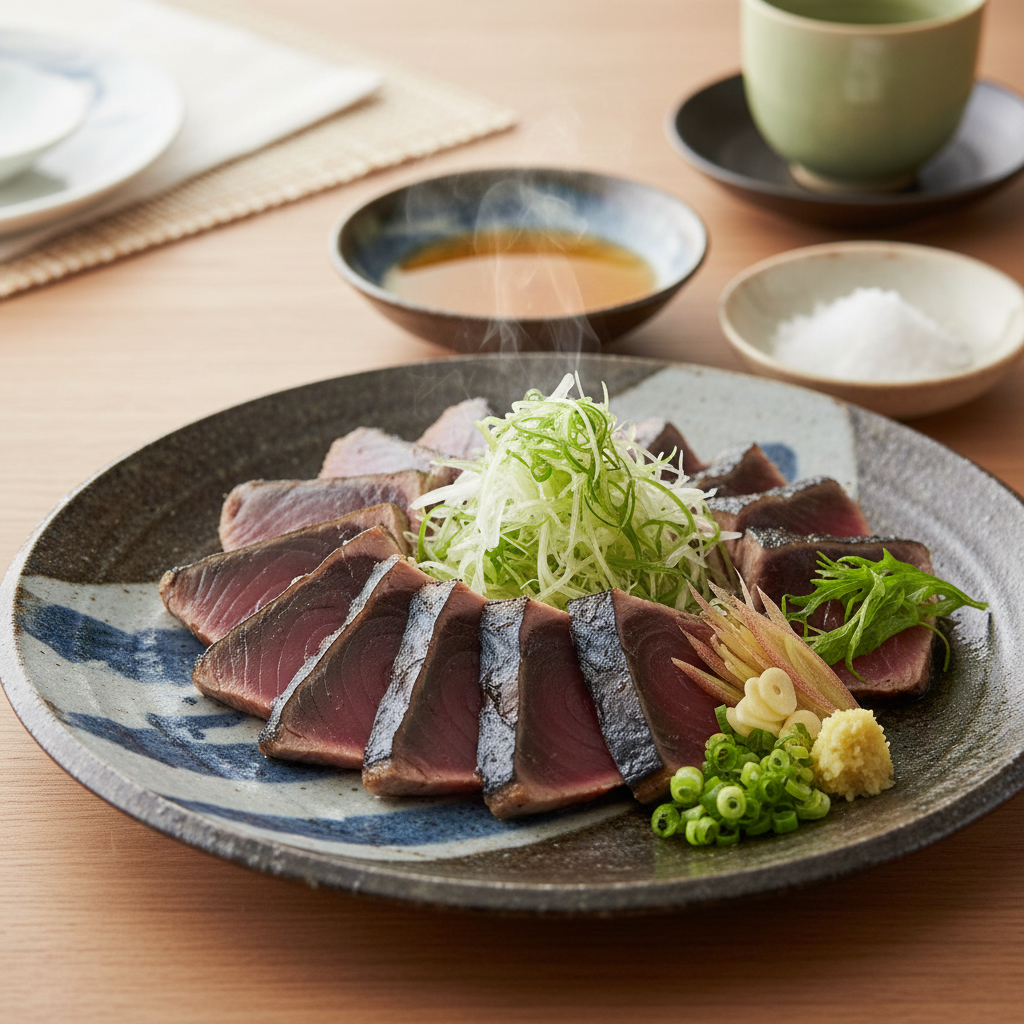
Katsuo no Tataki is a dish made by searing the surface of fresh bonito over high heat, rapidly cooling it, and slicing it thinly. The surface develops a fragrant char, while the interior maintains a raw state—this unique cooking method is characteristic of this Kochi representative local dish, which is savored with condiments and sauce.
Definition and Characteristics of Katsuo no Tataki
Katsuo no Tataki is not simply “seared bonito.” In the traditional preparation method in Kochi Prefecture, the surface is rapidly seared with intense flames from burning straw, creating a unique fragrance and flavor. This aroma from straw-grilling is the greatest characteristic of authentic Katsuo no Tataki from the region.
The surface turns white from the burn and develops a fragrant char, while the center maintains a vivid red color. This perfect balance of “exterior seared and interior raw” adds depth to both texture and taste.
The Deep Connection Between Kochi Prefecture and Bonito
Kochi Prefecture faces the Pacific Ocean, where the Kuroshio Current flows, and bonito fishing has been active here since ancient times. Particularly, Tosa Bay is known as a fishing ground for high-quality bonito. During the bonito migration season in spring and autumn twice yearly, excitement fills the prefecture.
The “hatsu-gatsuo (early bonito)” that migrates north in spring has a light, fat-free taste, while the “modori-gatsuo (returning bonito)” that migrates south in autumn is rich with fat and has an intense flavor—enjoying different deliciousness depending on the season is one of the charms of Kochi’s bonito.
History of Katsuo no Tataki | A Tradition Born from Tosa’s Food Culture
Various theories exist about the origins of Katsuo no Tataki, but its history is deeply connected to Kochi’s food culture.
Various Theories About Its Origins
The most famous theory traces back to the era of Kazutoyo Yamauchi, the first daimyo of the Tosa clan. At that time, eating raw fish was prohibited to prevent food poisoning, so the surface was seared to maintain the appearance of “not raw,” though it was actually a workaround with the interior remaining raw.
Another theory suggests it was devised by fishermen on boats to quickly and deliciously eat fresh bonito. They would sear the surface using straw as fuel and cool it in seawater, which is said to be where it began.
There is also a practical explanation that the surface was seared to eliminate the fishy smell of bonito. In any case, this dish was undoubtedly born from the rich bounty of the sea surrounding Kochi and the food curiosity of the Tosa people.
The Origin of the Name “Tataki”
The origin of the name “tataki” also has several theories. One suggests it comes from tapping the seared bonito with the blade of a knife to blend in the condiments. Another theory states it derives from rubbing salt on the bonito’s surface while tapping to absorb the flavor.
In modern times, the tapping process is often omitted, but this name has become established as a Kochi local specialty, and today it is known nationwide.
Cultural Position in Kochi Prefecture
For Kochi residents, Katsuo no Tataki is more than just a dish. During the early bonito season in spring, “hatsu-gatsuo festivals” are held, and events celebrating Katsuo no Tataki are conducted throughout the prefecture.
There is also a custom in homes of serving Katsuo no Tataki on special occasions or when entertaining guests, making it an important “hospitality dish.” It is also the leading choice when Kochi natives who have moved away mention what they want to eat upon returning home, making it a food that symbolizes regional pride.
Authentic Preparation Method | Traditional Straw-Grilled Katsuo no Tataki
The traditional preparation method of Katsuo no Tataki in Kochi Prefecture is characterized by a unique technique called straw-grilling.
The Straw-Grilling Technique and Its Importance
Straw-grilling involves bundling rice straw, burning it, and searing the bonito’s surface with intense flames all at once. When straw burns, temperatures reach approximately 800–1000 degrees Celsius, and these high temperatures sear only the bonito’s surface in a short time.
The excellence of this technique is that by searing the surface quickly, the temperature increase in the interior is minimized. Furthermore, the unique aroma of burning straw transfers to the bonito, creating a flavor that cannot be achieved by any other method.
While gas burners or grills can sear the surface, the distinctive fragrance and flavor of straw-grilling cannot be replicated. This straw-grilling is the single greatest element that makes authentic Kochian Katsuo no Tataki special.
How to Make Katsuo no Tataki (Traditional Method)
1. Preparing the Bonito
Fillet fresh bonito into three pieces and remove the blood line. In Kochi, large bonito called “binnaga” are preferred, but regular bonito can also be prepared deliciously.
2. Skewering
Insert a metal skewer into the meat. This stabilizes the fish during grilling and ensures even cooking.
3. Straw-Grilling
Light the bundled straw and sear the bonito’s surface with intense flames. Begin from the skin side, rotating to ensure the entire surface is seared. The grilling time per side is approximately 30 seconds to 1 minute. Grilling too long will cook the center, so speed is essential.
4. Rapid Cooling
Immediately after searing, submerge in ice water to cool rapidly. This fixes the sear and preserves the raw interior.
5. Wiping Away Moisture
Remove from ice water and thoroughly pat dry with a clean cloth.
6. Slicing
Slice into approximately 1cm-wide pieces. If too thick, it is difficult to eat; if too thin, the texture is compromised, so this thickness is ideal.
Tips for Making It at Home
It is difficult to replicate straw-grilling at home, but the following methods allow you to enjoy similar flavors.
Using a Gas Burner
A culinary torch (cartridge gas burner) allows home searing. Skewer the bonito on a metal skewer or secure it with aluminum foil-wrapped chopsticks, and sear all sides evenly.
Using a Frying Pan
Heat a frying pan until smoking, and sear the bonito without oil. Sear each side for 10–15 seconds until browned. Immediately cool in ice water after searing.
Using a Fish Grill
Sear in a fish grill preheated to high temperature until the surface browns. However, as the heat output is weaker, the interior may cook through, so caution is necessary.
In all methods, “high heat for a short time” is the key to success.
Delicious Ways to Enjoy | Condiment and Sauce Combinations
The flavor of Katsuo no Tataki changes significantly depending on the combination of condiments and sauce. Various eating methods are passed down in Kochi, differing by region and household.
Traditional Kochi-Style Eating
The most common way to eat Katsuo no Tataki in Kochi is with abundant condiments and ponzu-based sauce.
Basic Condiments
- Garlic slices (essential)
- Onion slices (essential)
- Green onion (thinly sliced)
- Ginger (julienned or grated)
- Shiso leaf (julienned)
- Japanese ginger flower (julienned)
Particularly, garlic and onion are indispensable to Kochi-style preparation. Garlic is sliced thinly and soaked in water; onion is also thinly sliced and soaked in water to remove the sharp taste. These condiments are generously heaped on top of the Katsuo no Tataki in Kochi style.
Sauce
The basic sauce is ponzu-based, though families sometimes use their own unique sauces:
- Tosa Vinegar: A mixture of citrus juice (yuzu or sudachi) and soy sauce
- Salt Sauce: A simple sauce mixing coarse salt, lemon juice, and sesame oil
- Garlic Soy Sauce: Soy sauce blended with grated garlic
Salt Tataki
In Kochi Prefecture, “salt tataki” is also popular. This involves sprinkling salt on seared bonito, using minimal condiments, and enjoying the fish’s natural flavor.
Particularly during the fat-rich returning bonito season, it is considered delicious with only salt and is favored by locals. Coarse salt is used, and the dish is typically eaten with squeezed lemon or sudachi.
Regional Variations
Even within Kochi, eating methods differ by region.
Hata Region (West)
Uses more garlic and prefers richer flavoring.
Kochi City Area (Central)
Values balance among condiments, with a refined ponzu style being mainstream.
Muroto Region (East)
True to its fishing town character, a hearty salt-based style is preferred.
Recommended Combinations
For Early Bonito (Spring)
With less fat and a lighter taste, generously using garlic and ginger with a solid ponzu seasoning is recommended.
For Returning Bonito (Autumn)
With rich fat content, enjoying with salt and lemon simply, or adding grated daikon for a refreshing taste, is delicious.
Nutritional Value and Health Benefits of Katsuo no Tataki
Katsuo no Tataki is not only delicious but also nutritionally excellent.
Nutrients Contained in Bonito
Protein
Bonito is rich in high-quality protein, containing approximately 25g per 100g. It is essential for muscle maintenance and growth.
B Vitamins
Particularly rich in vitamin B12, which helps prevent anemia and maintain nervous system function. Also abundant in vitamin B6, which aids protein metabolism.
Niacin
An important vitamin involved in energy metabolism that also contributes to the health of skin and mucous membranes.
Iron
Bonito contains heme iron, which is easily absorbed, making it effective for anemia prevention.
DHA and EPA
Abundant in omega-3 fatty acids unique to blue fish, contributing to blood circulation and brain health.
Taurine
An amino acid believed to improve liver function and aid fatigue recovery.
Differences in Nutritional Value Between Raw and Grilled
Since Katsuo no Tataki has its surface seared, its nutritional value differs slightly from completely raw sashimi.
Some B vitamins decrease with searing, but with the “tataki” method of grilling only the surface, this loss is minimized. Rather, grilling provides sterilization benefits, reducing foodborne illness risks. Additionally, searing denatures proteins, slightly improving digestive absorption.
Tips for Healthy Consumption
Utilizing the Health Effects of Condiments
Garlic has antioxidant and blood circulation-promoting properties; ginger warms the body and promotes digestion. Using these condiments together provides complementary health benefits.
Attention to Salt Intake
When using ponzu or soy sauce, be cautious of excess salt. Using more condiments allows reducing sauce quantity while maintaining satisfaction.
Choosing Fresh Items
Since Katsuo no Tataki’s interior is raw, freshness is critical. Choose fresh items and eat as soon as possible after purchase.
Tasting Katsuo no Tataki in Kochi | Recommended Restaurants and Sightseeing Spots
To enjoy authentic Katsuo no Tataki in Kochi, the following places are recommended.
Hirome Market (Kochi City)
“Hirome Market,” located in central Kochi, is a popular stall-village-style market favored by tourists and locals alike. Multiple vendors serve Katsuo no Tataki, and some shops offer live straw-grilling demonstrations.
The appeal is enjoying authentic Katsuo no Tataki alongside locals in a vibrant atmosphere. Prices are relatively reasonable, making it easy to visit casually.
Michi no Eki Katsura (Shimanto Town)
A roadside station near the Shimanto River serving fresh local bonito Katsuo no Tataki. Regular events offer straw-grilling experiences where you can grill and eat your own bonito tataki.
Kuroshio Honin (Naka-Tosa Town, Kure)
Adjacent to Kure’s Taisho-cho Market, this facility uses fresh bonito landed at nearby Kure Port. The second-floor dining area allows viewing straw-grilling demonstrations while enjoying freshly made Katsuo no Tataki.
Kure is known as “bonito town,” hosting an annual “bonito festival” in May, establishing it as bonito’s sacred ground.
Tosa Ryori Tsukasa (Kochi City)
An established restaurant in Kochi serving traditional Tosa cuisine alongside high-quality Katsuo no Tataki. Recommended for those wishing to leisurely savor authentic flavor in a calm atmosphere.
Myojin-maru (Kochi City)
A popular restaurant inside Hirome Market offering dynamic straw-grilling demonstrations right before customers’ eyes. The sight of soaring flames is spectacular, and freshly grilled Katsuo no Tataki is incomparably delicious.
Katsuo no Tataki Experience Facilities
Several facilities throughout Kochi offer hands-on Katsuo no Tataki-making experiences.
Kuroshio Kobo (Tosashimizu City)
Offering authentic straw-grilling experiences unique to fishing towns. Self-grilled Katsuo no Tataki can be eaten on-site or taken home.
Katsuosen (Kochi City)
A tourist-oriented experience facility with live straw-grilling demonstrations and tastings. Reservations are required; advance confirmation is necessary.
Enjoying Katsuo no Tataki at Home | Purchasing Methods and Storage Tips
Even without visiting Kochi, you can purchase Katsuo no Tataki via mail order or local supermarkets to enjoy at home.
How to Choose When Purchasing
Freshness Checkpoints
- Flesh displays vivid red color
- Sear marks are well-defined on the surface
- No drip (liquid) is present
- Packaging is not inflated
- Expiration date has adequate time remaining
Confirming Origin
When possible, choose Kochi Prefecture products for taste closest to the original. However, bonito from other origins also tastes delicious if fresh.
Purchasing via Mail Order
Many Kochi businesses sell frozen Katsuo no Tataki via mail order. Modern freezing technology allows enjoying high-freshness quality even after thawing.
Benefits of Mail Order Purchase
- Enjoying authentic Kochi flavor at home
- Obtaining straw-grilled products
- Better cost performance through bulk purchasing
- Usable as gifts
Cautions
- Follow proper thawing methods (slow refrigerator thawing is standard)
- Specify a delivery date you can definitely receive
- Confirm total cost including shipping
Storage Methods and Shelf Life
Refrigerated Storage
Fresh Katsuo no Tataki is perishable, so after purchase, store in the refrigerator and eat preferably on the same day. Eat by the following day at the latest.
Freezing
Freezing is possible, but thawed texture changes slightly. When freezing, seal tightly in plastic wrap, then place in a freezer storage bag, removing air. Frozen storage lasts approximately two weeks.
Thawing Method
Slow refrigerator thawing is best for delicious eating. When time-pressed, cold-water thawing is possible, but avoid microwave thawing.
Katsuo no Tataki Arrangement Recipes
While traditional preparations are delicious, contemporary variations have also emerged.
Katsuo no Tataki Donburi
Generously heaping Katsuo no Tataki over rice, topped with condiments and sauce. Voluminous and popular with men. Adding a hot spring egg makes it even more delicious.
Katsuo no Tataki Carpaccio
A Western-style arrangement. Thinly sliced Katsuo no Tataki is arranged on a plate and seasoned with olive oil, lemon juice, salt, and black pepper. Adding arugula or baby leaves creates an elegant appetizer.
Katsuo no Tataki Tea Rice
Katsuo no Tataki served over rice with hot dashi poured over it. The charred surface’s compatibility with dashi is excellent, allowing easy consumption. Adding wasabi or nori enhances flavor.
Katsuo no Tataki Salad
Served alongside lettuce, tomato, cucumber, and other vegetables, dressed with dressing. A healthy, nutritionally balanced menu. Pairs well with Japanese or sesame dressing.
Katsuo no Tataki Yukhoe-Style
Finely chopped Katsuo no Tataki mixed with sesame oil, gochujang, soy sauce, garlic, and egg yolk—a Korean-style arrangement. Perfect as a drinking snack.
Frequently Asked Questions About Katsuo no Tataki
Can those uncomfortable with raw fish eat it?
Katsuo no Tataki, with its seared exterior, may be easier to eat than completely raw sashimi. However, since the interior is raw, those uncomfortable with raw fish may find it unsuitable.
For those truly uncomfortable with raw fish, grilling more thoroughly to create a “rare steak” state is an option. This represents a different preparation from traditional Katsuo no Tataki, however.
Can it be eaten during pregnancy?
Regarding consuming raw fish during pregnancy, consultation with a physician is recommended. While bonito has relatively low mercury content, the raw portion presents foodborne illness risks requiring consideration.
If concerned, options include eating versions cooked through entirely or abstaining during pregnancy.
Is it safe for children?
Timing for introducing raw fish to children varies by household and region. Generally, around age three when digestive function develops is considered the guideline, though individual differences exist.
When introducing for the first time, start with small amounts and observe reactions. Choose fresh products and monitor post-consumption health changes.
What is the difference between Katsuo no Tataki and bonito sashimi?
Katsuo no Tataki has a seared exterior, while bonito sashimi is sliced raw without searing.
Tataki gains fragrance from searing, reducing fishiness. Searing also provides sterilization benefits. Sashimi, being completely raw, allows directly experiencing the fish’s natural flavor.
In Kochi, where fresh bonito is readily available, sashimi is also popular, but for shipment outside the prefecture and tourism, tataki’s shelf-life makes it more suitable.
What is the difference between straw-grilling and gas burner searing?
Straw-grilling’s 800–1000-degree high temperatures sear the surface rapidly all at once, making it easier to maintain a raw interior while searing the exterior. The unique aroma from burning straw transfers to the bonito, becoming crucial to authentic taste.
While gas burners can sear the surface, they cannot match straw-grilling’s firepower and aroma. For home preparation, however, gas burner results are sufficiently delicious.
Can Katsuo no Tataki be frozen?
Freezing is possible, though thawed texture changes slightly. When freezing, tightly wrap in plastic wrap and place in freezer storage bags, removing air.
Thawing in the refrigerator is ideal. Refreezing significantly lowers quality and should be avoided.
Conclusion | Katsuo no Tataki: Kochi’s Greatest Local Specialty
Katsuo no Tataki is a masterpiece born from the Kochi sea’s bounty and food culture cultivated over long years. The straw-grilling technique, abundant condiments and sauce combinations, and fresh bonito’s umami work in unison to create incomparable flavor unavailable elsewhere.
When visiting Kochi, definitely taste authentic Katsuo no Tataki. Experiencing watching straw-grilling demonstrations while eating at renowned restaurants like Hirome Market or Kuroshio Honin will certainly become unforgettable memories.
You can also enjoy it at home by purchasing through mail order or local supermarkets. Finding your preferred eating method through sauce and condiment adjustments or trying arrangement recipes is enjoyable too.
Being highly nutritious and a healthy ingredient, Katsuo no Tataki is a dish I hope many more people will experience. Enjoying different tastes with spring’s early bonito and autumn’s returning bonito offers additional appeal.
Katsuo no Tataki—Kochi’s greatest local specialty, cultivated by the Tosa sea. Please definitely experience its profound charm yourself.