Complete Guide to Inaka-zushi | The Charm and How to Make Kochi Prefecture’s Vegetable Local Dish
What is Inaka-zushi (Country Sushi)?
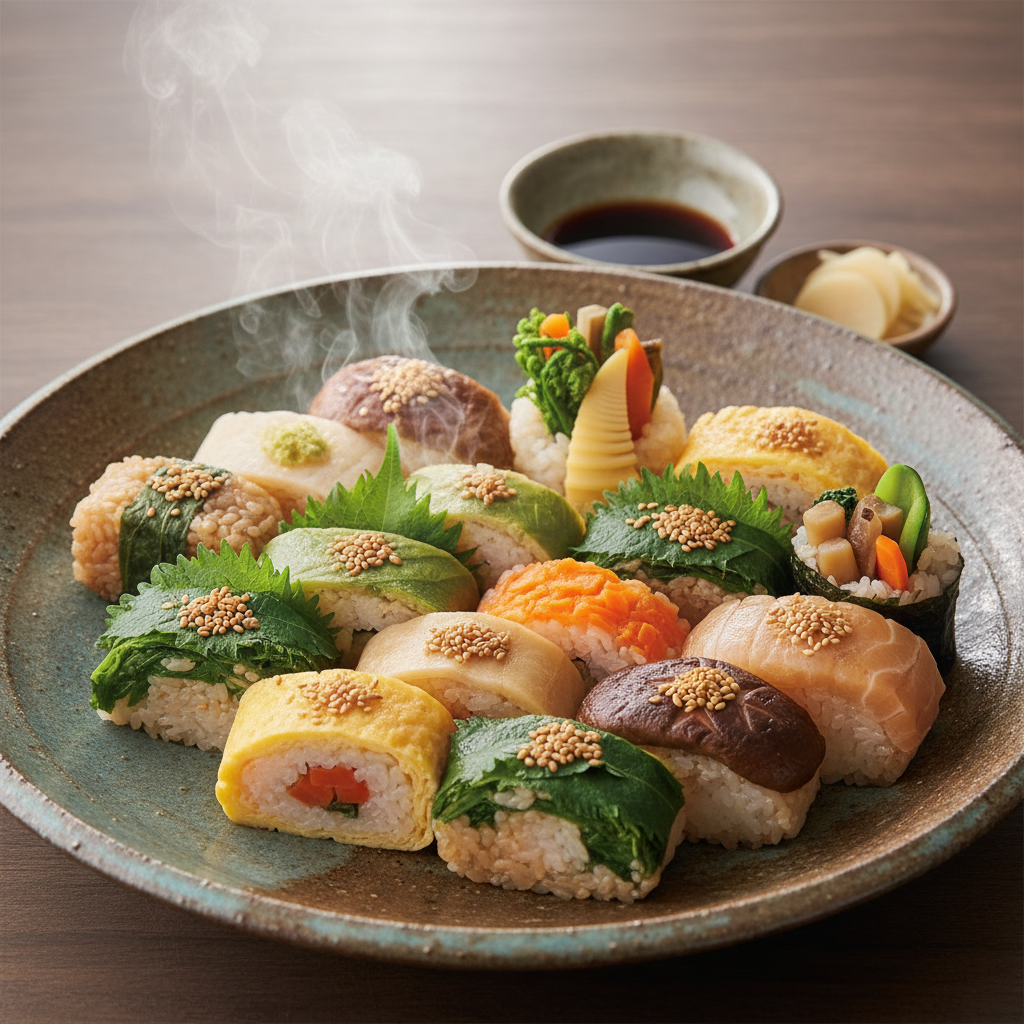
Inaka-zushi (田舎寿司) is a local dish that has been passed down for generations in the mountainous areas of Kochi Prefecture. Its greatest characteristic is that, unlike typical sushi, it uses vegetables rather than seafood as the sushi toppings. This extremely rare style nationwide can be said to be the crystallization of wisdom born from Kochi Prefecture’s abundant natural environment and mountain life.
The colorful vegetables displayed in inaka-zushi create a brilliant and vibrant visual impression. The vivid red of ryuukyu (taro stems), the pale pink of myoga, the deep brown of shiitake mushrooms, and the white of konnyaku—this harmonious blend of natural colors is like a work of art expressing the blessings of the mountains.
Positioning of Inaka-zushi in Kochi Prefecture
For the people of Kochi Prefecture, inaka-zushi is more than just a local dish. It is an essential menu item at banquets, celebrations, and community events, loved across generations as a standard dish whenever people gather for special occasions.
Today, packaged inaka-zushi can be easily purchased at supermarkets, Sunday markets, and agricultural product direct sales shops throughout Kochi Prefecture, and it has become established as an affordable dish to enjoy in daily life. While deeply rooted in the dining tables of Kochi residents, it has also gained popularity among tourists from outside the prefecture as a distinctly Kochi flavor.
Main Transmission Regions
Inaka-zushi is a local dish that originally developed in Kochi Prefecture’s mountainous areas. Particularly in the Reiho region (Otoydo Town, Motoyama Town, Tosa Town, Okawa Village) and the mountainous areas of the Yodo River basin and the upper reaches of the Shimanto River, it has been traditionally prepared in regions far from the sea.
In these regions, fresh seafood was difficult to obtain. Therefore, the people utilized the nearby mountain bounty to create “sushi,” a special dish. Today it has spread throughout Kochi Prefecture, and each region shows its own character in the ingredients and seasonings used. It is interesting to note that within Kochi Prefecture itself, unique inaka-zushi cultures have developed in different areas such as Tosa City, Ino Town, Ochi Town, Sakawa Town, and Yodo River Town, with subtle differences in ingredients and cooking methods.
Main Ingredients Used
The ingredients used in inaka-zushi center on vegetables and wild plants harvested in Kochi Prefecture’s mountainous areas. Let’s examine the representative ingredients in detail.
Ryuukyu (Taro Stems)
The ingredient that could be called the very symbol of inaka-zushi is ryuukyu. This is the stem portion of hasui mo (taro), characterized by its vivid red color. Its crispy texture and subtle acidity pair perfectly with vinegared rice. It is typically used as a sweet vinegar pickle, and its vivid color creates the brilliance of inaka-zushi as a whole.
Hasui mo has been cultivated in Kochi since ancient times and is a traditional vegetable, with both the stems and tubers being edible. This locally unique ingredient becomes the crucial element that determines inaka-zushi’s individuality.
Myoga (Japanese Ginger Bud)
Kochi Prefecture is known as Japan’s leading myoga producer. In inaka-zushi, myoga is used as a sweet vinegar pickle. Its distinctive aroma and refreshing flavor harmonize with vinegared rice to create an elegant taste. Its pale pink color is also beautiful, enhancing visual appeal.
Shiitake Mushroom
Thick shiitake mushrooms are used simmered with sweetness and spice. When simmered together with kombu, the umami increases and a deep richness is born. Using the cap portion of the shiitake as a sushi topping creates a generous piece. Dried shiitake rehydrated and used is also common, resulting in an especially rich flavor.
Bamboo Shoot
Bamboo shoot, the representative mountain bounty of spring, is also an important ingredient in inaka-zushi. It is simmered until soft and finished with soy sauce-based seasoning. Its crispy texture is enjoyable, and it serves as a valued ingredient for adding seasonal character.
Konnyaku
Konnyaku is a unique ingredient particular to inaka-zushi. Thinly sliced and simmered with sweetness and spice, it is used as a sushi topping. Its distinctive springy texture creates an accent different from other vegetables.
Other Ingredients
Depending on the region and household, mountain vegetables such as shiho-chiku (four-sided bamboo), zenmai (ostrich fern), warabi (bracken), and fuki (buttock) are also used. Additionally, the vinegared rice is characterized by incorporating not just rice vinegar but Kochi’s specialty yuzu vinegar generously. The refreshing aroma of yuzu brings out the sweetness and umami of the vegetables, realizing a crisp aftertaste.
History, Origins, and Related Events
The origins of inaka-zushi emerged from the wisdom of life in Kochi Prefecture’s mountainous areas. From the Edo through Meiji periods, regions far from the sea had difficulty obtaining fresh fish. However, during celebrations and events, there was a desire to serve “sushi,” a special dish.
The ancestors then came up with the creative idea of utilizing nearby mountain bounty and making vegetables the sushi topping. This is said to be the beginning of inaka-zushi. The ingenuity, humor, and hospitality spirit of those times—making the finest service with “what we have”—is embedded in this dish.
Role as Festival Food
Inaka-zushi was positioned as an important festival food in Kochi’s mountainous areas. It appeared at occasions when people gathered—ceremonial rites including rites of passage and funerals, festivals, turning points in agricultural work such as rice planting and harvesting, and local gatherings.
Particularly at banquets, the presence of inaka-zushi brightened the atmosphere and enlivened conversation among participants. The sight of colorful vegetables arrayed together expressed gratitude for abundant harvest and welcome for the gathered people.
Inaka-zushi Changing with the Times
As time progressed, inaka-zushi also changed. It was once common for each household to make it by hand, but in modern times commercialization has advanced, making it accessible to a wider range of people. In supermarkets throughout Kochi Prefecture, packaged inaka-zushi is sold routinely, deeply permeating the food life of Kochi residents.
Its value as a tourism resource has also increased, with more restaurants and lodging facilities catering to tourists from outside the prefecture. While protecting tradition, it continues to evolve in response to the needs of the new era—this is the face of modern inaka-zushi.
Ingredients (Serves 5)
Here are the basic ingredients for making inaka-zushi at home.
Vinegared Rice
- Rice: 3 cups
- Yuzu vinegar: 4–5 tablespoons (rice vinegar also acceptable)
- Sugar: 2 tablespoons
- Salt: 1 teaspoon
Sushi Toppings
- Ryuukyu (taro stems): 200g
- Myoga: 5–6 pieces
- Shiitake mushrooms: about 10 pieces
- Bamboo shoot (canned): 200g
- Konnyaku: 1 sheet
Sweet Vinegar (for ryuukyu and myoga)
- Vinegar: 100ml
- Sugar: 3 tablespoons
- Salt: 1/2 teaspoon
Simmering Liquid (for shiitake, bamboo shoot, and konnyaku)
- Dashi stock: 300ml
- Soy sauce: 3 tablespoons
- Mirin: 2 tablespoons
- Sugar: 2 tablespoons
- Kombu: one 5cm square piece
Instructions
Preparation
- Preparing Vinegared Rice
- Cook the rice as usual
- Mix yuzu vinegar, sugar, and salt together to make combined vinegar
- Pour the combined vinegar over freshly cooked rice and mix with cutting motions using a shamoji (wooden rice paddle)
- Fan with a uchiwa (fan) while cooling to finish with glossy vinegared rice
- Preparing Ryuukyu
- Peel ryuukyu and cut into 5–6cm lengths
- Boil in water for 2–3 minutes and place in cold water
- Drain well and immerse in sweet vinegar (30 minutes or longer)
- Preparing Myoga
- Cut myoga in half lengthwise
- Briefly blanch in hot water and place in cold water
- Drain well and immerse in sweet vinegar (30 minutes or longer)
Cooking Ingredients
- Simmering Shiitake
- Remove the stem base from shiitake and use the cap portion
- Place the simmering liquid ingredients, kombu, and shiitake in a pot and bring to medium heat
- Once boiling, reduce to low heat, place a drop lid (otoshibuta), and simmer 20–30 minutes
- Reduce until liquid is minimal and let cool
- Simmering Bamboo Shoot
- Slice bamboo shoot thinly
- Simmer in the same way as shiitake (15–20 minutes)
- Once flavored, remove from heat and let cool
- Simmering Konnyaku
- Slice konnyaku thinly and make a crosshatch pattern on the surface
- Parboil to remove any strong flavors
- Simmer in the simmering liquid to infuse flavor (about 15 minutes)
Shaping
- Forming the Sushi
- Dampen hands with vinegar water
- Take a bite-sized amount of vinegared rice (about 20g) and shape lightly
- Place each topping on the vinegared rice and adjust the shape
- Remove ryuukyu and myoga from the sweet vinegar, lightly drain, and use
- Plating
- Arrange on a large plate considering color balance
- Position ingredients alternately for a colorful appearance
- Finely cut yuzu peel to place alongside for added fragrance and color
Occasions and Seasons for Eating
Inaka-zushi is made year-round, though there are particular seasons when it is eaten more frequently.
Spring (March–May)
Spring, when bamboo shoots come into season, is an important season for inaka-zushi. Inaka-zushi made with fresh bamboo shoot is welcomed as a dish expressing the arrival of spring. Also, during rice-planting season, inaka-zushi is sometimes served to entertain those who helped with agricultural work.
Summer (June–August)
Summer, the harvest season for myoga, is also when inaka-zushi appears on the table. The refreshing quality of yuzu vinegar combined with myoga’s aroma provides a perfect cooling sensation for the hot season.
Autumn (September–November)
Autumn, with more events when people gather such as rice harvesting and autumn festivals, sees increased inaka-zushi. Inaka-zushi made with abundant mountain bounty is prepared in gratitude for the harvest.
Winter (December–February)
Winter, with many special occasions including year-end and New Year celebrations and ceremonial rites, is when inaka-zushi is essential. Many households include inaka-zushi in their New Year celebratory meal, making it established as a dish celebrating the new year.
How to Eat
The way to eat inaka-zushi is basically the same as regular nigiri sushi, though there are some characteristic ways to enjoy it.
Enjoying as Is
Since each ingredient in inaka-zushi is carefully seasoned, the basic way is to eat it without soy sauce. The yuzu vinegar-infused vinegared rice and the flavors of the sweet vinegared and simmered toppings harmonize, allowing you to enjoy a complete flavor.
With Yuzu Added
For those seeking further freshness, finely cut yuzu peel can be added alongside, or a small amount of yuzu juice can be drizzled. The aroma of yuzu is further enhanced, increasing its Kochi character.
With Warm Tea
Though inaka-zushi is a cold dish, it pairs wonderfully with warm tea. Particularly when combined with bancha (coarse tea) or green tea, the sweetness and umami of the vegetables are further brought out.
Enjoyment at Banquets
At banquets, inaka-zushi served on a large plate is portioned out by each person as they eat. The pleasure of selecting colorful sushi pieces is a distinctive appeal of inaka-zushi. Savoring it slowly while enjoying conversation is the Kochi way.
Preservation and Succession Efforts
Various efforts are underway in Kochi Prefecture to pass on the tradition of inaka-zushi to the next generation.
Preservation Society Activities in Communities
In each region, preservation societies and women’s associations dedicated to protecting local cooking continue activities to pass the art of making inaka-zushi to younger generations. They work to continue cultural succession through diverse means including holding cooking classes, providing school lunch offerings, and demonstration sales at local events.
Popularization Through Commercialization
Packaged sales of inaka-zushi at supermarkets and agricultural product direct sales shops have created an environment for enjoying inaka-zushi daily. Easy and affordable availability has made it familiar to younger generations as well.
Additionally, long-term storage products using vacuum-pack technology have been developed, responding to demand for shipments outside the prefecture and as souvenirs.
Utilization as a Tourism Resource
Inaka-zushi occupies an important position in Kochi Prefecture’s tourism PR. Facilities offering inaka-zushi-making classes as experiential programs for tourists are increasing. The experience of actually making it deepens understanding of Kochi’s food culture and also leads to acquiring repeat visitors.
Dissemination via SNS and Media
In recent years, information dissemination using SNS has become more active. The attractive appearance of inaka-zushi photographs well on Instagram and Twitter and similar platforms, with many posts visible. New forms of dissemination by younger generations are raising interest in traditional cooking.
Furthermore, through television program introductions, magazine features, and how-to videos posted on YouTube, the appeal of inaka-zushi is being transmitted nationwide through diverse media.
Efforts in Educational Settings
Elementary and middle schools throughout Kochi Prefecture implement programs where students experience inaka-zushi preparation as part of lessons learning about local cuisine. Learning about local ingredients and traditional cooking methods becomes a chance for children to develop pride in their hometown.
Nutritional Value and Health Benefits of Inaka-zushi
Inaka-zushi, being a vegetable-based dish, possesses excellent nutritional characteristics.
Rich in Dietary Fiber
Shiitake mushrooms, bamboo shoots, and konnyaku contain abundant dietary fiber, which helps improve intestinal environment. The fact that dietary fiber, often lacking in modern diets, can be consumed deliciously is a significant merit.
Low Calorie and Low Fat
Because it doesn’t use seafood, it is lower in calories and fat compared to typical sushi. It is an appropriate dish for those on diets or who care about their health.
Provides Vitamins and Minerals
Various vegetables provide vitamins B group, vitamin C, potassium, calcium, and numerous other nutrients. Myoga in particular contains antioxidant compounds.
Health Benefits of Yuzu
The yuzu vinegar used in vinegared rice contains abundant vitamin C and citric acid. It is said to be helpful for fatigue recovery and immune system improvement.
Places to Enjoy Inaka-zushi
Here are places to sample inaka-zushi when visiting Kochi Prefecture.
Kochi City
At Kochi’s Sunday Market, you can purchase inaka-zushi made by local producers. Also, local cuisine restaurants and inns serve it, making it easily accessible to tourists.
Roadside Stations in Mountainous Areas
At roadside stations in the Reiho region and Yodo River basin, locally made inaka-zushi is sold. Stopping by during a drive and enjoying the authentic flavor is recommended.
Farm Restaurants
The mountainous areas have restaurants operated by farmers, where inaka-zushi served there is exceptional. You can savor the fresh taste of vegetables picked that day.
Supermarkets
Packaged inaka-zushi is routinely sold at supermarkets throughout Kochi Prefecture. You can purchase and enjoy it just as local people do.
Conclusion
Inaka-zushi, a local dish of Kochi Prefecture, is a creative sushi using vegetables that emerged from the wisdom of mountain life. Using abundant mountain bounty such as ryuukyu (taro), myoga, shiitake mushrooms, bamboo shoots, and konnyaku, finished with refreshing yuzu vinegar, this traditional flavor is loved across generations.
As a standard dish at banquets and events, and as a food culture enjoyed daily, inaka-zushi is deeply embedded in Kochi residents’ lives. Its beautiful appearance, rich aroma, gentle flavor, and varied textures possess a charm once tasted that is unforgettable.
In modern times, succession through new forms continues—supermarket sales, utilization as a tourism resource, and dissemination via SNS. Inaka-zushi, continuing to evolve while protecting tradition, will surely continue to be loved by many people as a treasure of Kochi’s food culture.
When visiting Kochi Prefecture, be sure to taste this distinctive local dish. And if possible, try making it at home. Inaka-zushi, which allows you to discover new appeal in vegetables, is a dish that makes you appreciate the diversity and richness of Japan’s food culture.