What is Ichigo-Ni? A Thorough Explanation of the History, How to Make, and How to Enjoy This Premium Local Dish from Hachinohe, Aomori Prefecture
What is Ichigo-Ni (いちご煮)?
“Ichigo-ni” is a traditional local dish passed down in Hachinohe City, Aomori Prefecture, and the surrounding Sanriku coastal region. It is a luxurious clear broth that uses sea urchin and abalone, two premium ingredients. It has nothing to do with the fruit strawberry (ichigo), and the origin of its name lies in the appearance of the dish.
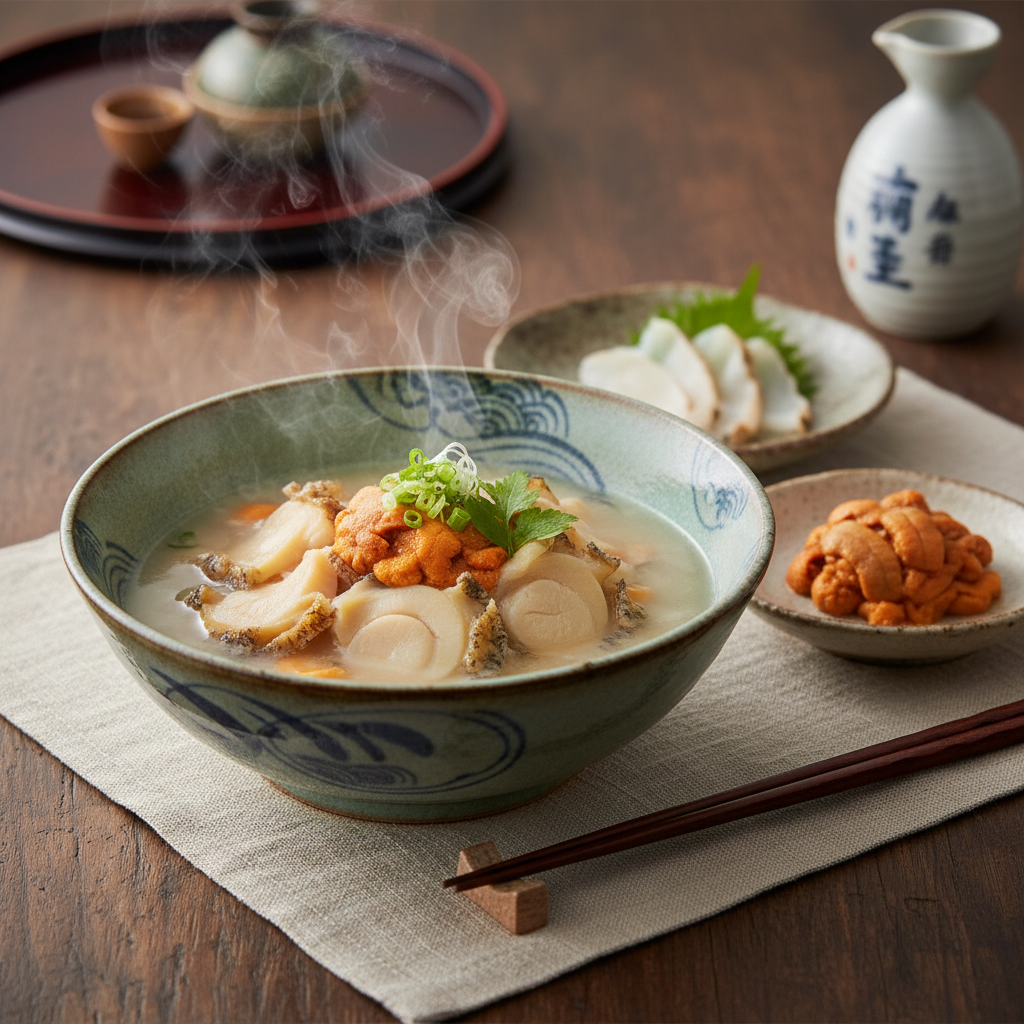
The golden-colored sea urchin roe floating in the milky-white broth looks like wild strawberries shrouded in morning dew, which is how the poetic name “ichigo-ni” came about. This poetic naming symbolizes the aesthetic sensibility of Japanese cuisine and has become a signature dish representing Aomori Prefecture today.
On December 18, 2007, the Ministry of Agriculture, Forestry and Fisheries officially selected it as a representative local dish of Aomori Prefecture alongside senbei-jiru in the “100 Selected Local Dishes of Rural Japan.”
Main Regions of Transmission and Position within Aomori Prefecture
Ichigo-ni has been passed down mainly in Hachinohe City, Aomori Prefecture and the Pacific coastal areas such as Hashikami Town, which represent local dishes of this region. This area is located at the northern end of the Sanriku coast and is a fishing region blessed with abundant bounties from the sea.
In Hashikami Town especially, ichigo-ni holds an important position as a symbol of regional identity and remains an essential clear broth for celebrations and special occasions. Centered in Hachinohe City, it is beloved throughout the southern Aomori region and appears almost without fail at celebrations such as New Year’s and weddings. It has become widely recognized throughout Aomori Prefecture as a local dish unique to the Hachinohe area.
History, Origins, and Related Events
Origin in Fishermen’s Beach Cuisine
The origin of ichigo-ni lies in beach cuisine where fishermen boldly cooked freshly caught sea urchin and abalone right on the beach. It began as a fishermen’s meal unique to this region, blessed with abundant catches of fresh sea urchin and abalone against the backdrop of the abundant Pacific Ocean.
At the time, it is said to have been a simpler stewed dish rather than the refined clear broth of today. It was a luxurious dish eaten by fishermen in gratitude for the sea’s bounty during breaks in their labor.
Elevation to Fine Dining Cuisine in the Taisho Era
In the Taisho era, the second-generation proprietor of an established traditional Japanese restaurant and inn called Ishidaya in Hachinohe City refined this fishermen’s dish and began serving it to guests as fine dining cuisine. By being beautifully plated in bowls, ichigo-ni established itself as a premium local dish.
During this period, the poetic fancy of describing the appearance of sea urchin floating in the milky-white broth as “wild strawberries shrouded in morning mist” was added, and it is believed that the poetic name “ichigo-ni” became established. With frequent morning mist along the coast of this region, the landscape and the dish’s appearance must have seemed to overlap.
Ichigo-Ni Festival
Hashikami Town holds the “Ichigo-Ni Festival” every late July. This event is the town’s largest festival and aims to promote the transmission and exchange of ichigo-ni. At the festival, ichigo-ni prepared in large pots is served, drawing many tourists and local residents.
This festival has become an important opportunity for passing the local dish on to the next generation while promoting the region’s attractions.
Main Ingredients and Characteristics of Materials
The stars of ichigo-ni are two premium ingredients: sea urchin and abalone.
Sea Urchin
Sea urchin caught around Hachinohe is often a variety with strong red coloring, characterized by its rich flavor and vivid golden color. Fresh sea urchin roe has a rich ocean scent and melts in the mouth with a tender texture.
In ichigo-ni, the lump of sea urchin flesh appears like wild strawberry fruit, which is the origin of the name, and the visual beauty is also an important element.
Abalone
Abalone caught on the Sanriku coast is characterized by its thick meat and crispy texture. In ichigo-ni, it is usually used sliced thin, and the abalone’s essence dissolves into the broth, creating the distinctively milky-white clear broth.
The umami components of abalone harmonize exquisitely with the sweetness of sea urchin, creating a deep flavor.
Other Ingredients
The broth is typically made from kombu and bonito flakes for an refined taste. Seasoning is done with salt and a small amount of soy sauce, with the simple seasoning characteristic of bringing out the ocean scent of sea urchin and abalone to the maximum.
In modern times, Japanese parsley and citron skin shreds are sometimes added for color.
Authentic Recipe and Instructions (For approximately 5 people)
Ingredients
- Fresh sea urchin: 200g
- Abalone: 3 medium-sized
- Kombu broth: 1000ml
- Bonito flakes: as needed
- Salt: 1 to 1.5 teaspoons
- Light soy sauce: 1 to 2 teaspoons
- Japanese parsley: as needed (for garnish)
- Citron peel: a small amount (julienned, for garnish)
Instructions
- Preparation: Remove the abalone from its shell, discard the liver, and slice the meat thinly. Use fresh sea urchin and handle it carefully to avoid breaking it.
- Make the broth: Soak kombu in water and heat slowly over low heat, removing the kombu just before it comes to a boil. Add bonito flakes, remove from heat, and strain to make clear broth.
- Cook the abalone: Return the broth to the heat and bring to a boil. Add the thinly sliced abalone. Since abalone becomes tough if overcooked, cook it just enough to heat through.
- Season: Adjust the flavor with salt and a small amount of light soy sauce. Simple seasoning is essential to bring out the flavors of sea urchin and abalone.
- Add the sea urchin: Reduce the heat before adding the sea urchin. Since overheating the sea urchin dulls its flavor, simply warming it is sufficient. The abalone’s essence will make the broth turn milky white, and the golden color of the sea urchin will appear beautifully.
- Plate: Carefully plate in bowls and add Japanese parsley and citron zest to finish.
Cooking Tips
- Fresh ingredients: Sea urchin and abalone are only as good as their freshness. Use the freshest ingredients possible.
- Heat control: Since sea urchin loses its flavor if overheated, add it last and warm it only slightly.
- Simple seasoning: It is important to use seasoning sparingly to bring out the natural flavors of the ingredients.
Occasions and Seasons for Eating
Ichigo-ni is positioned in southern Aomori as a dish eaten on special occasions.
Celebratory Occasions
New Year’s, weddings, celebrations, and other special occasions when family and relatives gather. As a luxurious clear broth using premium ingredients, it becomes a dish that expresses hospitality.
Seasonal Connection
While sea urchin’s season is spring through summer, ichigo-ni is distributed in canned and jarred forms, so it can be enjoyed year-round. In particular, during late July’s “Ichigo-Ni Festival,” it is an excellent opportunity to taste authentic ichigo-ni made with fresh ingredients.
In modern times, it has become possible to enjoy ichigo-ni at home simply by heating a canned version, making it familiar even in everyday cooking.
How to Eat and Enjoy
Basic Way to Eat
Ichigo-ni is served warm in a bowl. First, enjoy the beauty of the golden sea urchin floating in the milky-white broth with your eyes, then sense the ocean scent with your nose.
When you take a sip, the deep flavor of the broth infused with the umami of sea urchin and abalone spreads throughout your mouth. The contrast between the melting texture of sea urchin and the crispy bite of abalone is also part of the enjoyment.
Modern Arrangements
Beyond the traditional way of enjoying it as a clear broth, modern adaptations have emerged.
- Takikomi gohan (rice cooked with ingredients): Arranging ichigo-ni as takikomi gohan creates a luxurious dish where the umami of sea urchin and abalone soaks into the rice.
- Tea rice: Pouring ichigo-ni over warm rice tea-bowl style is also popular.
- Pasta: Pasta using ichigo-ni as a sauce offers a new fusion taste of Japanese and Western styles.
- Zosui (rice soup): Adding egg to ichigo-ni to make zosui creates a gentle-flavored finishing dish.
Enjoyment with Canned and Jarred Versions
Ichigo-ni canned and jarred versions sold by food manufacturers in Hachinohe City are popular as souvenirs. Simply warming the can in hot water makes it easy to enjoy authentic ichigo-ni at home.
Preservation and Transmission Efforts
Community Transmission Activities
In Hashikami Town and Hachinohe City, various efforts are being made to pass ichigo-ni on to the next generation. By incorporating ichigo-ni into school lunches and holding cooking classes, local people are conveying the appeal of local cuisine to children.
Commercialization and Modern Efforts
Local food manufacturers and traditional restaurants manufacture and sell ichigo-ni in canned and jarred forms to promote it nationwide. Established manufacturers such as Aji no Kakuya work to preserve traditional flavors while developing products suited to modern dining tables.
Online shop sales are also actively conducted, making it easy for people outside Aomori Prefecture to enjoy the authentic taste.
Information Sharing on SNS
In recent years, information sharing through SNS has become active. People share photos and impressions of the dish using hashtags such as “#ichigo-ni” and “#hachinohe gourmet,” spreading the appeal of ichigo-ni. Tourism associations and local governments actively share information through official accounts, making efforts to increase awareness among younger generations.
Use as a Tourism Resource
Hachinohe City and Hashikami Town are also working to utilize ichigo-ni as a tourism resource. Cooking experience programs for tourists and dining plans at local restaurants have been arranged, creating an environment where visitors can savor the authentic taste.
The “Ichigo-Ni Festival” has become established as the region’s largest tourism event, attracting many tourists each year.
Places to Eat Ichigo-Ni and Where to Purchase
Traditional Restaurants and Dining Establishments in Hachinohe City
There are numerous traditional restaurants and dining establishments in Hachinohe City that serve ichigo-ni. At established kaiseki restaurants, you can taste authentic ichigo-ni made using traditional methods.
Souvenir Shops and Local Product Centers
Ichigo-ni canned and jarred versions are sold at souvenir shops around Hachinohe Station and Hachinohe Port, roadside stations, and similar locations. It is also available for purchase at tourism facilities such as “VISITHachinohe.”
Online Purchase
Ichigo-ni canned and jarred versions can be purchased through local manufacturers’ official online shops and major e-commerce sites. People from distant areas can easily enjoy the authentic taste.
Nutritional Value and Health Benefits of Ichigo-Ni
Ichigo-ni is not only made with premium ingredients but is also an excellent dish nutritionally.
Nutrition in Sea Urchin
Sea urchin contains abundant B vitamins, vitamin E, zinc, and iron. Vitamin B12 in particular is an important nutrient for maintaining nervous system health. It also contains high-quality protein, making it effective for building stamina and vitality.
Nutrition in Abalone
Abalone is low in calories and high in protein, and contains abundant taurine. Taurine is said to be effective for improving liver function and recovering from fatigue. It also contains collagen, making beauty effects expected.
Benefits of Broth
Kombu broth contains glutamic acid, and bonito flakes contain inosinate, umami components that not only create deep flavor through synergistic effect but also help stimulate appetite and promote digestion.
Conclusion: Ichigo-Ni, the Jewel of the Sea That Aomori Prefecture Boasts
Ichigo-ni is a luxurious local dish using sea urchin and abalone, passed down in the Sanriku coastal region centered on Hachinohe City, Aomori Prefecture. Beginning as a fishermen’s beach dish, it was refined into fine dining cuisine in the Taisho era and has become a representative local dish of Aomori Prefecture known nationwide.
The poetic name given because the golden sea urchin floating in the milky-white broth appears like wild strawberries shrouded in morning dew symbolizes the aesthetic sensibility of Japanese cuisine.
It remains beloved in the region as an essential dish for celebrations and special occasions, and many people enjoy its taste at the “Ichigo-Ni Festival” held every late July.
Beyond traditional enjoyment as a clear broth, modern arrangements such as takikomi gohan, tea rice, pasta, and zosui have expanded, and it can now be enjoyed nationwide in canned and jarred forms.
Community transmission activities, SNS information sharing, and use as a tourism resource are actively being pursued for passing it on to the next generation.
Ichigo-ni is truly worthy of being called the “jewel of the sea,” a local dish packed with the abundant bounty of Aomori Prefecture’s ocean and the wisdom and aesthetic sensibility of the people who have treasured it. If you visit Hachinohe, be sure to experience this special taste.