Dried Sweet Potato from Ibaraki Prefecture: A Comprehensive Explanation of History, Manufacturing Methods, and Regional Charm
What is Dried Sweet Potato from Ibaraki Prefecture?
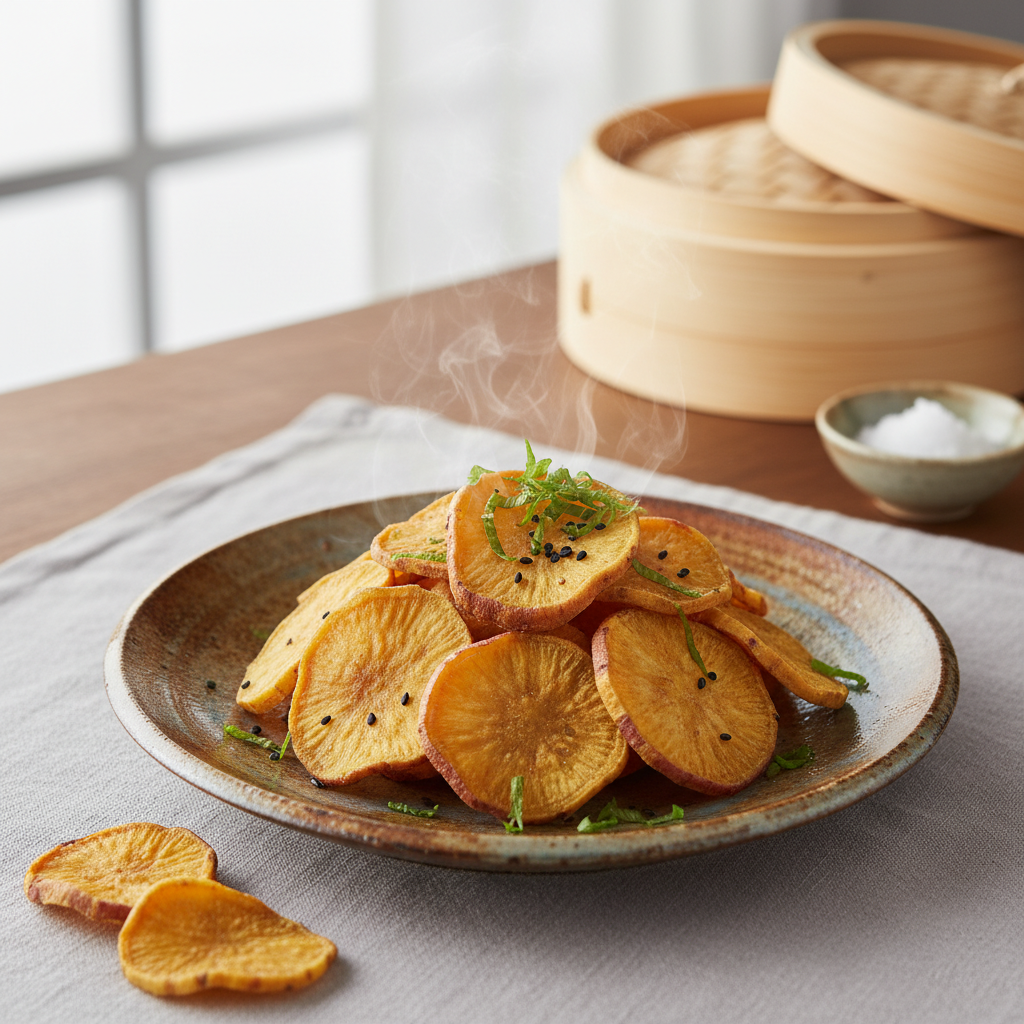
Hoshiimo (dried sweet potato) is a traditional processed food made by steaming and drying sweet potatoes, and is one of Ibaraki Prefecture’s representative local dishes. Loved by people of all ages, this food is characterized by its natural sweetness and unique texture, and is also excellent as a preserved food.
Ibaraki Prefecture boasts the top share in dried sweet potato production nationwide, accounting for over 90% of national production. Three regions in particular—Hitachinaka City, Tokai Village, and Naka City—are known as the main production areas, where the majority of Ibaraki’s dried sweet potatoes are manufactured.
Ibaraki Prefecture’s natural environment is ideal for dried sweet potato production, featuring volcanic ash-derived well-draining soil, mineral-rich sea breezes, and long sunny winter days. These favorable climatic conditions form the foundation for producing high-quality dried sweet potatoes.
Main Traditional Production Areas and Regional Characteristics
Nakaminato District, Hitachinaka City
The Nakaminato district of Hitachinaka City is known as the region where dried sweet potato production began earliest in Ibaraki Prefecture. Many long-established manufacturers from the time when dried sweet potatoes were first introduced have continued to operate here, maintaining traditional production methods.
Nakaminato faces the Pacific Ocean, and sea breezes from the ocean provide ideal conditions for both sweet potato cultivation and the drying process of dried sweet potatoes. The mineral components contained in these sea breezes are said to impart a unique flavor to dried sweet potatoes.
Tokai Village
Tokai Village is also one of Ibaraki Prefecture’s major dried sweet potato production areas. The soil in this region is composed of the Kanto loam layer, which originates from volcanic ash, and is characterized by excellent drainage. These soil conditions are suitable for sweet potato cultivation, enabling the production of high-quality raw potatoes.
In Tokai Village, manufacturing is conducted while maintaining traditional methods, while also incorporating modern quality control techniques, producing dried sweet potatoes of consistent quality.
Naka City
Naka City supports Ibaraki Prefecture’s dried sweet potato production as a major production area alongside Hitachinaka City and Tokai Village. In this region too, dried sweet potato manufacturing is actively conducted, taking advantage of the climate condition of many sunny winter days.
Producers in Naka City actively work on introducing new varieties and improving processing techniques while inheriting traditional skills, contributing to the development of Ibaraki’s dried sweet potato industry.
Main Ingredients and Varieties Used
Sweet Potato Varieties
Multiple varieties of sweet potato are used as raw materials for dried sweet potatoes. Different varieties produce different textures, sweetness levels, and colors in dried sweet potatoes, creating diverse products.
Beniharu is one of the most popular varieties in recent years. It is characterized by very high sugar content and a sticky texture, and when made into dried sweet potato, it offers rich sweetness and a soft, smooth mouthfeel. Many producers use unique techniques such as “sweetness ripening methods” to further increase the sugar content of Beniharu.
Tamayutaka is a traditional variety that has been cultivated in Ibaraki Prefecture for many years. It is characterized by appropriate fiber content and firm crunchiness, allowing one to enjoy the flavor of old-fashioned dried sweet potatoes.
Izumi is a variety developed at Ibaraki Prefecture’s agricultural experiment station and has characteristics suitable for dried sweet potato processing. It is characterized by vibrant color and good appearance after processing.
These varieties differ in cultivation conditions, harvest timing, and processing methods, with producers using long years of experience and knowledge to perform optimal cultivation and processing.
Selection and Preparation of Raw Materials
The selection of sweet potatoes that will be the raw material is extremely important for making high-quality dried sweet potatoes. Producers in Ibaraki Prefecture carefully select potatoes with regular shapes and no damage, and further store them for a certain period after harvest to “ripen” them, bringing out the sweetness of the potatoes.
During this ripening period, the starch contained in the sweet potatoes converts to sugar, increasing sweetness. The ripening period is adjusted according to variety and climate conditions, with the judgment of experienced producers determining quality.
How It’s Made (Traditional Manufacturing Method)
Dried sweet potato manufacturing in Ibaraki Prefecture is based on traditional techniques passed down over many years. The process consists of multiple steps, each requiring skilled craftsmanship.
Washing and Steaming
First, the selected sweet potatoes are washed carefully. Completely removing soil and dirt forms the foundation for hygienic product manufacturing.
After washing, the sweet potatoes are steamed in a large steamer. The steaming time varies depending on the size and variety of the potatoes, but is generally about 1-2 hours. Through this steaming process, the starch in the sweet potatoes gelatinizes, sweetness is brought out, and the potatoes become easier to process in the next step.
The degree of steaming is an important factor that greatly affects the quality of dried sweet potatoes. Insufficient steaming results in hardness, while over-steaming causes the shape to easily crumble, requiring precise judgment based on experience.
Peeling and Slicing
The steamed sweet potatoes are peeled while still warm. Carefully peeling by hand allows processing without damaging the shape of the potatoes.
After peeling, slicing is performed according to the type of dried sweet potato. The most common “flat drying” involves slicing the potatoes to a thickness of about 5-8mm. Hand slicing with a knife requires uniform thickness, which directly affects the uniformity of drying and the quality of the final product.
In the case of “whole drying,” small sweet potatoes are used whole or cut vertically in half. Other shapes of products such as “dice-cut” also exist, and each offers different textures and appearances.
Drying Process
The most important step in dried sweet potato manufacturing is drying. The sliced sweet potatoes are arranged on specialized drying racks and dried either in the sun or in drying rooms.
In traditional sun drying, outdoor drying is performed using winter sunny days. Ibaraki Prefecture’s winter offers many sunny days and dry air, providing ideal climate conditions for dried sweet potato production. The sun-drying period typically lasts about 3-7 days, depending on weather.
During nighttime and rainy periods, the potatoes must be brought indoors. Additionally, while watching the progress of drying, a “kneading” operation is performed where the white powder appearing on the potato surface (crystallized sugar) is worked in by hand. This operation smooths the surface and results in a beautiful finish.
In modern times, an increasing number of producers use drying rooms where temperature and humidity can be controlled. This allows stable quality product manufacturing regardless of weather. However, many producers still value the flavor of traditional sun drying, so both methods are used in combination.
Finishing and Sorting
Once drying is complete, the dried sweet potatoes undergo final sorting and finishing work before becoming a finished product. Grading is performed based on color, shape, softness, and other criteria, then packaged.
Most producers in Ibaraki Prefecture perform careful hand sorting in this final step as well, making unsparing efforts to deliver high-quality products to consumers.
History, Origins, and Related Events
Origins of Dried Sweet Potato
The history of dried sweet potato dates back to the Edo period. The birthplace is said to be present-day Shizuoka Prefecture, and it is said that a person named Kuribayashi Shozō invented the technique of cooking sweet potatoes, slicing them thinly with a knife, and drying them.
This processing method spread rapidly throughout the country because it not only increased the shelf life of sweet potatoes but also had the advantages of being easy to eat and convenient to carry. At the time, sweet potatoes were valued as an emergency food crop, and the development of preservation and processing techniques held great significance.
Transmission and Development in Ibaraki Prefecture
The dried sweet potato manufacturing technology came to Ibaraki Prefecture during the Meiji period. It is said that people in the Nakaminato region learned the technology from Shizuoka Prefecture and began local production.
The favorable climate and geography of Ibaraki Prefecture for dried sweet potato manufacturing—particularly the abundance of sunny winter days and dry air—helped promote development as a production area. It was also discovered that in regions facing the Pacific Ocean, sea breezes promote drying and create unique flavors.
From the Taisho period through the early Showa period, dried sweet potato production in Ibaraki Prefecture expanded rapidly. It became established as a side business for farmers and an important winter income source. Many manufacturers that continue to this day were founded during this period.
Post-War Development and Modern Era
After World War II, Ibaraki Prefecture’s dried sweet potato industry achieved further development. As agricultural technology improved, the quality of sweet potatoes improved, and dried sweet potato quality increased accordingly.
From the 1960s onward, improved transportation networks enhanced distribution, and Ibaraki’s dried sweet potatoes became widely known throughout the nation. Recognition as a health food also increased, raising demand.
Since the start of the Heisei era, development of new varieties and improvement of processing techniques have progressed, and sweeter, softer dried sweet potatoes have been manufactured. The introduction of high-sugar varieties such as “Beniharu” in particular brought significant changes to the dried sweet potato market.
In modern times, with the spread of internet e-commerce, Ibaraki’s dried sweet potatoes have come to be exported not only nationwide but internationally as well. By maintaining traditional methods while incorporating modern marketing techniques, the industry has realized sustainable development as a business.
Related Events and Activities
Various events and activities related to dried sweet potatoes are held in Ibaraki Prefecture. In Hitachinaka City, factory tours and experience events may be conducted in coordination with the dried sweet potato harvest season or manufacturing season.
Additionally, regional agricultural product direct sales outlets and roadside stations regularly hold dried sweet potato sales promotion events, serving as venues for interaction between producers and consumers. These events play an important role in the inheritance and dissemination of dried sweet potato culture.
Occasions and Seasons for Consumption
Manufacturing Period
Dried sweet potato manufacturing in Ibaraki Prefecture is conducted mainly from November through March of the following year during the winter season. There are multiple reasons for choosing this period.
First, sweet potato harvesting is conducted from September through November, and after a ripening period following harvest, the potatoes reach a state suitable for processing around November. Additionally, winter features low temperatures and dry air, providing optimal climate conditions for dried sweet potato drying.
Ibaraki Prefecture’s winter is particularly characterized by many sunny days and dry winds blowing from the Pacific Ocean, making sun drying highly efficient. The natural conditions are the foundation of Ibaraki’s dried sweet potato industry.
When and Where to Eat
Because dried sweet potatoes are highly storable, they can be enjoyed year-round. However, popularity peaks in winter through spring when fresh product becomes available.
Traditionally, dried sweet potatoes were eaten as snacks or light meals during winter’s agricultural slack season, and as energy replenishment between farm work. In modern times, with growing health consciousness, they are enjoyed by people of all ages as healthy snacks with natural sweetness.
During the New Year season, dried sweet potatoes are often served as tea refreshments and have become a standard food for year-end and new year celebrations in Ibaraki Prefecture. Additionally, during exam season, they are popular as gifts for exam takers, alluding to “tenacity.”
Consumption Methods and Ways to Enjoy
Basic Way to Eat
The most basic way to eat dried sweet potatoes is to eat them as is. The convenience of taking them straight from the package and eating them is one of dried sweet potatoes’ greatest attractions.
Different textures can be enjoyed depending on variety. Dried sweet potatoes made from Beniharu are characterized by a sticky texture and rich sweetness, with a taste like dessert. Meanwhile, traditional varieties such as Tamayutaka have moderate bite and sweetness that spreads as you chew.
Arrangement Methods
In recent years, various arrangement methods for dried sweet potatoes have been proposed.
Light grilling: Lightly grilling in a toaster oven or under a grill makes the surface fragrant and the inside even softer. A roasted sweet potato-like flavor is added, allowing you to enjoy a different deliciousness.
Adding butter: Adding a small amount of butter to warmed dried sweet potatoes adds butter’s aroma, creating a richer flavor.
Tea refreshment: The pairing with Japanese tea, particularly green tea or roasted tea, is outstanding. The natural sweetness of dried sweet potatoes and the astringency of tea create an exquisite balance.
Use in cooking: Dried sweet potatoes can be used as an ingredient in dishes, such as by finely chopping and adding to salads or mixing into yogurt. They can also be mixed into bread or cake batter.
Differences by Type
Several types of dried sweet potatoes are manufactured in Ibaraki Prefecture, each offering different textures and flavors.
Flat drying: The most common type, made by slicing sweet potatoes and drying them. It is reasonably priced, easy to handle, and delicious whether eaten plain or arranged.
Whole drying: Small sweet potatoes dried whole or cut vertically in half. Retaining the original shape of the potato, it is satisfying to eat and allows you to feel the potato’s flavor more strongly.
Dice-cut: Sweet potatoes cut into cubes and dried, characterized by being bite-sized and easy to eat.
You can enjoy the diversity of dried sweet potatoes by comparing these types.
Preservation and Inheritance Efforts
Inheritors and Producers
Ibaraki Prefecture’s dried sweet potato industry is supported by family-operated manufacturers whose techniques have been passed down through generations. These producers preserve traditional techniques learned from grandparents and parents while creating products that respond to modern consumer needs.
In Hitachinaka City, Tokai Village, and Naka City, many long-established manufacturers continuing from the Meiji or Taisho periods exist, each with their own unique methods and commitments. In these businesses, technology inheritance to younger generations is actively conducted, with efforts to preserve tradition.
Cooperative and Association Activities
Dried sweet potato producers in Ibaraki Prefecture organize cooperatives and associations by region, working on quality improvement, sales channel expansion, and technical exchange. These organizations contribute to the industry’s overall development by jointly addressing issues that would be difficult for individual producers to handle alone.
Cooperatives conduct experimental cultivation of new varieties, research on processing techniques, establishment of quality standards, and joint sales promotion activities. Nurturing young producers and holding technical training sessions are also important activities.
Government Support
Ibaraki Prefecture and municipalities provide various support to promote and sustain the dried sweet potato industry. Brand development promotion, sales channel development support, and promotion of sixth industry development are the main initiatives.
On the prefecture’s food portal site “Eat Ibaraki,” dried sweet potatoes are actively introduced as an important agricultural product, with efforts to expand consumption. Additionally, dried sweet potatoes are registered in the Ministry of Agriculture, Forestry and Fisheries’ “Our Local Cuisine” project, contributing to increased national recognition.
Contemporary Initiatives
Use of SNS and Internet
Many producers are engaged in information dissemination using SNS and the internet. Through Instagram, Facebook, and other platforms, they share information about the manufacturing process, new products, and recipes, communicating with consumers.
Additionally, an increasing number of producers have opened online shops, selling directly to consumers nationwide. This allows sales without intermediate distribution, also improving producer revenues.
Product Development and Diversification
In addition to traditional dried sweet potatoes, new product development responding to modern consumer needs is progressing.
Various processed products using dried sweet potatoes have been developed, including sweets and gelato made with dried sweet potatoes, dried sweet potato chips, and dried sweet potato powder. These products propose new ways to enjoy dried sweet potatoes and have successfully appealed to younger generations.
Additionally, diverse packaging adapted to various uses has been developed, including luxury gift items and individually wrapped small packages.
Collaboration with Experience-Based Tourism
An increasing number of producers offer experience programs for dried sweet potato manufacturing. Tourists and school excursion students who actually experience dried sweet potato production can deepen their understanding of Ibaraki’s food culture.
This experience-based tourism contributes to regional revitalization and represents a good example of sixth industry development linking agriculture and tourism.
Overseas Expansion
In recent years, Ibaraki’s dried sweet potatoes have been advancing into overseas markets. Against a backdrop of increased health consciousness, interest in Japanese dried sweet potatoes has grown in Asia and Western countries, with export volumes increasing.
In pursuing overseas expansion, producers are also addressing new challenges such as compliance with food safety standards in each country and product development adapted to local preferences.
Health Characteristics and Nutritional Value
Dried sweet potatoes have attracted attention as a health food because of their high nutritional value.
Main Nutritional Components
Dried sweet potatoes are rich in dietary fiber. Dietary fiber improves the intestinal environment and is said to be effective in improving constipation. Additionally, they make you feel full easily, making them suitable as a snack.
As for vitamins, particularly B vitamins and vitamin E are contained. B vitamins are involved in energy metabolism and help with fatigue recovery. Vitamin E has antioxidant effects and is said to be effective in preventing aging.
As for minerals, potassium is abundantly contained. Potassium works to expel excess sodium from the body and helps regulate blood pressure.
Natural Sweetness
The sweetness of dried sweet potatoes is concentrated natural sugar from the sweet potato itself. Because no artificial sweeteners or sugar are added, you can enjoy natural sweetness.
This natural sweetness is said to have the effect of suppressing rapid rises in blood sugar levels, and is valued as a healthy snack.
Additive-Free Preservatives
Dried sweet potatoes made using traditional methods do not use additives such as preservatives or food coloring. They achieve shelf-life through natural drying, so they can be eaten with confidence.
Because of these characteristics, dried sweet potatoes receive strong support from health-conscious consumers and those seeking natural foods.
Current Situation and Challenges of Ibaraki’s Dried Sweet Potato Industry
Production Volume and Market Scale
Ibaraki Prefecture’s dried sweet potato production accounts for over 90% of the national share, a position that is unshakeable. Annual production reaches thousands of tons, with the market scale continuing to expand.
In recent years, the market value has improved due to increased health consciousness and growing demand for high-quality products. In particular, premium dried sweet potatoes using high-sugar varieties such as Beniharu are traded at high prices.
Successor Issues
On the other hand, as in other agricultural sectors, lack of successors is a challenge. Dried sweet potato manufacturing is time-consuming and labor-intensive, with a tendency to be avoided by younger generations.
However, in recent years, young producers taking over family businesses and new entrants have appeared, working on product development and marketing from new perspectives. The activities of these young people are expected to contribute to industry revitalization.
Adaptation to Climate Change
Unstable weather due to climate change is a major challenge for dried sweet potato manufacturing, which is based primarily on sun drying. To cope with reduced sunny winter days and unpredictable weather changes, facility investment in drying rooms becomes necessary.
Conversely, there are strong voices emphasizing the flavor of traditional sun drying, and the question of how to balance technological innovation with tradition preservation is being raised.
Strengthening Brand Power
While Ibaraki’s dried sweet potatoes enjoy high evaluation nationwide, further strengthening of brand power is required. Initiatives to raise the brand value of “Ibaraki dried sweet potatoes” are underway, including utilizing the geographical indication (GI) protection system and establishing unified quality standards.
Additionally, product development with storytelling and sales that show producers’ faces are important ways to increase added value.
Enjoying Ibaraki’s Dried Sweet Potatoes
Purchasing Methods
Ibaraki’s dried sweet potatoes can be purchased in various ways.
Producers’ direct sales outlets: Many agricultural product direct sales outlets in Hitachinaka City, Tokai Village, and Naka City carry fresh dried sweet potatoes made by local producers.
Roadside stations: Dried sweet potatoes from the region are also sold at roadside stations throughout Ibaraki Prefecture.
Online shops: Many producers operate online shops where you can purchase from anywhere in the country.
Department stores and specialty shops: High-quality dried sweet potatoes from Ibaraki Prefecture can be purchased at department stores in major cities like Tokyo and at specialty dried sweet potato shops.
Storage Method
There are several points to keep dried sweet potatoes delicious for a long time.
Before opening, store in a cool place away from direct sunlight. After opening, placing them in an airtight container and storing in the refrigerator helps maintain quality.
Dried sweet potatoes can also be frozen. When freezing, divide into small portions, wrap individually in plastic wrap, place in an airtight bag, and store in the freezer. When eating, thaw naturally or lightly grill before eating for delicious results.
Selection Tips
When selecting dried sweet potatoes, you should pay attention to the following points.
Color: Vibrant yellow or orange color is a sign of good quality.
Softness: Those with appropriate softness and elasticity are fresh.
White powder on the surface: The white powder visible on the surface of dried sweet potatoes is crystallized sugar, a sign of sweetness.
Variety labeling: Since flavor differs by variety, selecting according to preference is recommended.
Conclusion
Ibaraki Prefecture’s dried sweet potato is a local dish with long history and tradition, a regional specialty product representing Japan, boasting over 90% of the national share.
In major production areas centered on Hitachinaka City, Tokai Village, and Naka City, high-quality dried sweet potatoes are produced, taking advantage of a favorable natural environment while maintaining traditional manufacturing methods. The climate and geography of Ibaraki Prefecture—well-draining soil derived from volcanic ash, mineral-rich sea breezes, and long sunny winter days—developed the prefecture into a major dried sweet potato production area.
The dried sweet potato manufacturing technique born in Shizuoka Prefecture in the Edo period came to Ibaraki Prefecture during the Meiji period, subsequently developed, and continues to the present day. The traditional steaming, slicing, and drying manufacturing process continues to be inherited by many producers today, with skilled craftsmanship producing high-quality products.
In recent years, contemporary initiatives are being actively pursued, including introduction of new varieties such as Beniharu, information dissemination using SNS and the internet, new product development, and overseas expansion. By maintaining tradition while continuing innovation, Ibaraki’s dried sweet potato industry realizes sustainable development.
Its value as a health food is also highly recognized, with dried sweet potatoes—rich in dietary fiber, vitamins, and minerals with natural sweetness—receiving support from people of all ages.
Ibaraki’s dried sweet potato is not merely a processed food, but a local dish in which the region’s history, culture, and people’s lives are concentrated. Enjoying its flavor means touching the region’s rich food culture. Please by all means taste authentic Ibaraki dried sweet potatoes and experience their charm.