
Complete Guide to Horse Meat Sashimi (Basashi) from Fukushima Prefecture|Thorough Explanation of Aizu’s History, Culture, and Recommended Restaurants
Horse meat sashimi (basashi), a regional dish enjoyed particularly in the Aizu region of Fukushima Prefecture, is recognized nationwide as one of the “Three Greatest Horse Meat Sashimis in Japan” alongside Kumamoto and Nagano. Aizu’s basashi, with its unique food culture and deep historical background, is a proper culinary heritage of Fukushima Prefecture.
This article provides a thorough explanation of Aizu’s basashi culture, from the history and origins of horse meat in Fukushima Prefecture, to characteristic ways of eating, recommended restaurant information, and ways to enjoy it at home.
History and Origins of Horse Meat Consumption in Fukushima Prefecture
Horse Meat Food Culture Brought by the Boshin War
The spread of horse meat consumption in Fukushima Prefecture, particularly in the Aizu region centered around Aizu-Wakamatsu City, is said to date back to the Boshin War of 1868 (Keio 4 / Meiji 1).
At that time, the Aizu domain was caught in fierce battles with the new government forces, resulting in many casualties. During this period, it is said that horse meat was fed to the wounded brought to the prefecture as a precious source of protein, which marked the beginning of horse meat consumption culture in Aizu.
In the harsh circumstances of wartime, nutritious horse meat greatly contributed to the physical recovery of injured soldiers. This experience became a catalyst for the habit of consuming horse meat to take root in the Aizu region even after the war.
Establishment of Horse Meat as an Everyday Food
Subsequently, horse meat became appreciated in the Aizu-Wakamatsu area as a precious source of protein and became a familiar ingredient eaten in general households like pork and chicken.
Initially, cooked preparations were standard, with horse meat often being consumed in simmered dishes and hot pot dishes. Horse meat, being high in protein and low in calories, and rich in iron and B vitamins, was valued as a nutritionally superior food ingredient.
Spread of Basashi Culture
There is an interesting episode about how the culture of eating raw horse meat, or “basashi,” became widespread in Aizu-Wakamatsu.
The theory is that a popular professional wrestler who visited Aizu-Wakamatsu ate raw horse meat, which triggered the spread of basashi consumption culture in the region. This new way of eating horse meat raw, which was previously unheard of as a cooked ingredient, gradually became accepted among the local people and became established.
Today, basashi is recognized as a proper regional specialty of Aizu-Wakamatsu and is enjoyed by both local residents and tourists.
Characteristics of Horse Meat Sashimi in Fukushima Prefecture (Aizu)
Meat Quality Centered on Lean Cuts
The greatest characteristic of Aizu’s basashi lies in its meat quality centered on lean cuts. In contrast to Kumamoto’s basashi, which features marbled meat and various cuts, Aizu’s basashi primarily uses lean cuts such as the rump (lump) area.
This lean meat stands out for its low calories and high protein characteristics, making it a food ingredient of note in today’s health-conscious era. The thick and moist meat texture allows one to savor the unique texture and umami of fresh horse meat.
Spicy Miso (Karashi Miso) as the Condiment
When discussing horse meat sashimi in the Aizu region of Fukushima Prefecture, the unique condiment “spicy miso (karashi miso)” cannot be overlooked.
This spicy miso, made by mixing garlic and chili peppers into miso, plays an important role in bringing out the umami of basashi. In contrast to Kumamoto, where it is eaten with soy sauce and grated ginger and garlic, Aizu has established spicy miso as the standard way to eat basashi.
The flavor of spicy miso, combined with the sweetness of horse meat, creates a unique taste. This spicy miso not only accompanies basashi but is also an excellent accompaniment to rice, and many Aizu households keep it on hand as a seasoning.
Commitment to Freshness
One characteristic of Aizu’s basashi is its thorough commitment to freshness. Many establishments use Aizu brand-certified domestic horse meat sourced from livestock farmers with their own ranches or trusted suppliers.
Fresh horse meat displays a vivid red color, is free of any unpleasant odors, and allows one to taste the natural sweetness and umami of the meat. This high level of freshness is one of the reasons why Aizu’s basashi is highly evaluated nationwide.
Main Ingredients and Nutritional Value of Horse Meat Sashimi
Cuts of Horse Meat Used
The cuts of horse meat generally used in Aizu basashi are as follows:
Rump (Lump)
The “standard” cut most commonly eaten in the Aizu region of Fukushima Prefecture. Centered on lean meat, it offers appropriate texture and the original flavor of horse meat.
Liver (Horse Liver)
Fresh horse liver sashimi is also popular in Aizu. It is characterized by a rich flavor and the unique texture of liver, and is a cut with very high nutritional value.
Other Cuts
Some restaurants also offer Futaego (belly meat), Tategami, and loin, but lean rump is the most common in Aizu.
Nutritional Value of Horse Meat Sashimi
Horse meat is known as a nutritionally excellent food ingredient:
- High protein, low calorie: Compared to beef and pork, it has less fat and abundant protein
- Rich in iron: Contains about three times the iron of beef, effective for preventing anemia
- B vitamins: Rich in B vitamins that aid energy metabolism
- Glycogen: Contains abundant glycogen effective for fatigue recovery
- Unsaturated fatty acids: Good balance of healthy fatty acids
Due to these nutritional characteristics, horse meat is noted as a healthy food ingredient in modern times.
Recipe for Spicy Miso for Horse Meat Sashimi (Serves 4)
The essential spicy miso for Aizu’s basashi can be easily made at home.
Ingredients (Serves 4)
- Miso: 3 tablespoons
- Grated garlic: 2-3 teaspoons (adjust to taste)
- Chili peppers (ichimi or shichimi): 1-2 teaspoons (adjust to taste)
- Sugar: 1 teaspoon (if adding sweetness)
- Sake or water: 1-2 teaspoons (for easier mixing)
Instructions
- Place miso in a bowl
- Add grated garlic (tube type is also acceptable)
- Add chili peppers (adjust heat to taste)
- Add sugar (if wanting to add depth of flavor)
- Add a small amount of sake or water and mix well
- Taste and adjust garlic, chili peppers, and sweetness as needed
Tips:
- Spicy miso tastes better when left for a while after making, as the flavors blend
- If stored in the refrigerator, it can be used for several days
- It also tastes great as a rice accompaniment or with cucumber sticks
Ways to Eat Horse Meat Sashimi and Dining Occasions
Basic Way of Eating
Aizu’s basashi is generally served in the following manner:
- Thinly sliced basashi is arranged on a plate
- Spicy miso is provided (on a separate plate or directly on top)
- Condiments such as chopped green onions or shiso leaves may be added
- Basashi is eaten by dipping it in spicy miso
Some restaurants also provide soy sauce and ginger, but the Aizu style is to eat it with spicy miso as the standard.
Opportunities and Seasons for Eating
Aizu’s basashi is a regional dish that can be enjoyed year-round, not limited to specific seasons or occasions.
As an everyday meal:
In local households, horse meat is used as an everyday ingredient just like pork and chicken. Horse meat is also sold in supermarkets and butcher shops, and eating basashi at home is a common practice.
As a special occasion:
- Family gatherings and celebrations
- When entertaining guests
- Local festivals and events
- Introduction of regional cuisine to tourists
As part of izakaya culture:
In izakayas in Aizu-Wakamatsu City and Fukushima City, basashi is offered as a standard menu item, and it is common to see local people enjoying it with Japanese sake.
Recommended Restaurants Where Basashi Can Be Enjoyed in Fukushima Prefecture (Aizu)
There are numerous establishments in Aizu-Wakamatsu City and Fukushima City that offer fresh and delicious basashi. Here we introduce some popular local restaurants.
Aizu Regional Cuisine Raku (Fukushima City)
“Raku,” a specialty restaurant for Aizu regional cuisine in Fukushima City, is a popular establishment where basashi and other Aizu regional dishes can be enjoyed.
Features:
- Exceptionally fresh basashi sourced from livestock farmers with their own ranches
- Lean, low-calorie, high-protein Aizu basashi
- Spicy miso made with garlic and chili peppers brings out the flavor of horse meat
- Rich selection of regional dishes including Aizu chicken yakitori and kozuyu
- Abundant selection of delicious Fukushima sake
It is a must-visit restaurant for basashi in Fukushima City, highly valued by both local residents and tourists.
Kago-ta (Aizu-Wakamatsu City)
“Kago-ta,” a popular restaurant serving basashi and regional cuisine in Aizu-Wakamatsu City, is an establishment known for its dishes using locally sourced ingredients.
Features:
- Offering traditional Aizu basashi
- Seasonal dishes using local ingredients
- Calm atmosphere in the restaurant
- Reliable taste loved by local customers
Located in the center of Aizu-Wakamatsu, its convenient location is also attractive for tourists.
Sai-Shoku-Sai-Sake Aizukko (Aizu-Wakamatsu City)
“Sai-Shoku-Sai-Sake Aizukko,” an izakaya in Aizu-Wakamatsu where regional cuisine and local sake can be enjoyed, is an establishment where Aizu’s food culture can be fully experienced.
Features:
- Aizu brand-certified domestic horse meat sashimi
- Diverse menu of Aizu regional dishes
- Abundant lineup of local sake
- Easy-to-understand menu descriptions for tourists
Recommended for those who want to comprehensively experience Aizu’s food culture.
Kura no Mise (Aizu-Wakamatsu City)
“Kura no Mise,” which utilizes a historic building, is an establishment where basashi can be enjoyed while experiencing the Aizu atmosphere.
Features:
- Historic warehouse-style building
- Fresh basashi and Aizu regional cuisine
- Popular as a tourist destination
- Space where one can feel Aizu’s history
A popular spot during Aizu-Wakamatsu sightseeing where both the atmosphere and cuisine can be enjoyed.
Izakaya Bangeya (Aizu-Wakamatsu City)
“Bangeya,” a locally oriented izakaya, is an establishment where Aizu’s basashi can be enjoyed casually.
Features:
- Reasonable prices
- Lively atmosphere filled with local customers
- Fresh basashi and abundant izakaya menu items
- Welcoming service
An approachable establishment loved by both tourists and local people.
Sakura Nabe Yoshita (Aizu-Wakamatsu City)
“Sakura Nabe Yoshita,” a specialty restaurant for horse meat cuisine, is an establishment where not only basashi but also sakura nabe (horse meat hot pot) can be enjoyed.
Features:
- Reliable quality as a horse meat cuisine specialty restaurant
- Wide menu ranging from basashi to cooked dishes
- Can enjoy various cuts of horse meat
- Nostalgic atmosphere of an established restaurant
Especially recommended for those who want to deeply savor horse meat cuisine.
Mail Order and Home Delivery of Basashi
Aizu basashi can be enjoyed without visiting the area, through mail order and home delivery services.
Niku no Okubo (Inawashiro Town)
“Niku no Okubo,” a butcher shop in Inawashiro Town, Fukushima Prefecture, with a history of over 80 years, is a trusted establishment handling Aizu brand-certified domestic horse meat.
Features:
- Aizu brand-certified domestic horse meat
- Tradition and trust spanning over 80 years
- Online mail order service available
- Also carries Takumi no Kokoro Pork and Fukushima Beef
Horse meat raised in the spectacular environment surrounded by Lake Inawashiro and Mount Bandai is known for its high quality. Recommended for those who want to enjoy Aizu basashi at home.
Points to Note When Purchasing Basashi Online
When purchasing basashi through mail order, please note the following:
- Shipment in frozen state: Basashi is typically shipped frozen
- Defrosting method: The basic method is to thaw slowly in the refrigerator
- Expiration date: Consume soon after defrosting
- Storage method: Store properly after opening and consume as soon as possible
- Choosing trusted retailers: It is important to purchase from retailers with proven track records
Preservation and Transmission of Basashi Culture
Practitioners and Regional Efforts
The basashi culture of Aizu has been handed down through generations by local butcher shops, dining establishments, and households.
Role of butcher shops:
Butcher shops like “Niku no Okubo,” with a history spanning over 80 years, support the foundation of basashi culture by continuously supplying high-quality horse meat to the region. By collaborating with livestock farmers with their own ranches, they contribute to maintaining the quality of Aizu brand horse meat.
Role of dining establishments:
Izakayas and regional cuisine restaurants in Aizu-Wakamatsu City and Fukushima City play an important role in introducing Aizu’s basashi culture to tourists. While preserving traditional ways of eating, they also develop menus suited to modern tastes.
Aizu Brand Certification System
In the Aizu region of Fukushima Prefecture, the Aizu Brand Certification System supports the production and distribution of high-quality horse meat. Through this system, consumers can safely purchase and consume Aizu horse meat.
Horse meat that receives certification has cleared strict standards and greatly contributes to maintaining the quality of Aizu’s basashi culture.
Modern Initiatives
Information sharing on social media:
Many restaurants and butcher shops actively use SNS to share information about Aizu’s basashi culture. Photos of delicious basashi, explanations of eating methods, and restaurant information are actively shared on Instagram, Facebook, Twitter, and other platforms.
Product commercialization:
- Vacuum-packed basashi sales
- Bottled spicy miso products
- Gift set development
- Enhanced online mail order services
Through these initiatives, Aizu’s basashi culture is spreading beyond the region.
Use as a tourism resource:
In Aizu-Wakamatsu City’s tourism promotion, basashi is positioned as an important regional cuisine. Its use as a tourism resource is advancing through introduction in tourism brochures and websites, and the creation of food walking maps.
Listing in the Ministry of Agriculture, Forestry and Fisheries “Our Regional Cuisine” Database
Fukushima Prefecture’s basashi is also listed in the “Our Regional Cuisine” database operated by the Ministry of Agriculture, Forestry and Fisheries, and is introduced nationwide as an officially recognized regional dish.
Through this listing, Aizu’s basashi has further increased its recognition as a regional cuisine representative of Fukushima Prefecture, and its cultural value has been officially recognized.
Aizu as One of Japan’s Three Greatest Horse Meat Sashimis
Aizu’s basashi is known as one of the “Three Greatest Horse Meat Sashimis in Japan” alongside Kumamoto and Nagano. It is interesting to note that each region has developed its own unique basashi culture and to compare them.
Kumamoto Basashi
- Culture that enjoys marbled meat and various cuts
- Eaten with soy sauce, grated ginger, and grated garlic
- The most widely known nationally
- Japan’s largest horse meat production volume
Nagano Basashi
- Horse meat culture that developed in the mountainous areas of Shinshu
- Primarily lean cuts eaten with soy-based sauce
- Rich variety of horse meat dishes
Aizu (Fukushima) Basashi
- Meat quality centered on lean cuts
- Unique style of eating with spicy miso (garlic and chili pepper-based miso)
- Historical background stemming from the Boshin War
- Positioning as a familiar food ingredient eaten daily
Each has its own characteristics, and basashi cultures reflecting the history and culture of each region have been formed.
Aizu Regional Dishes to Pair with Basashi
By pairing basashi with other Aizu regional dishes, one can experience Aizu’s food culture more deeply.
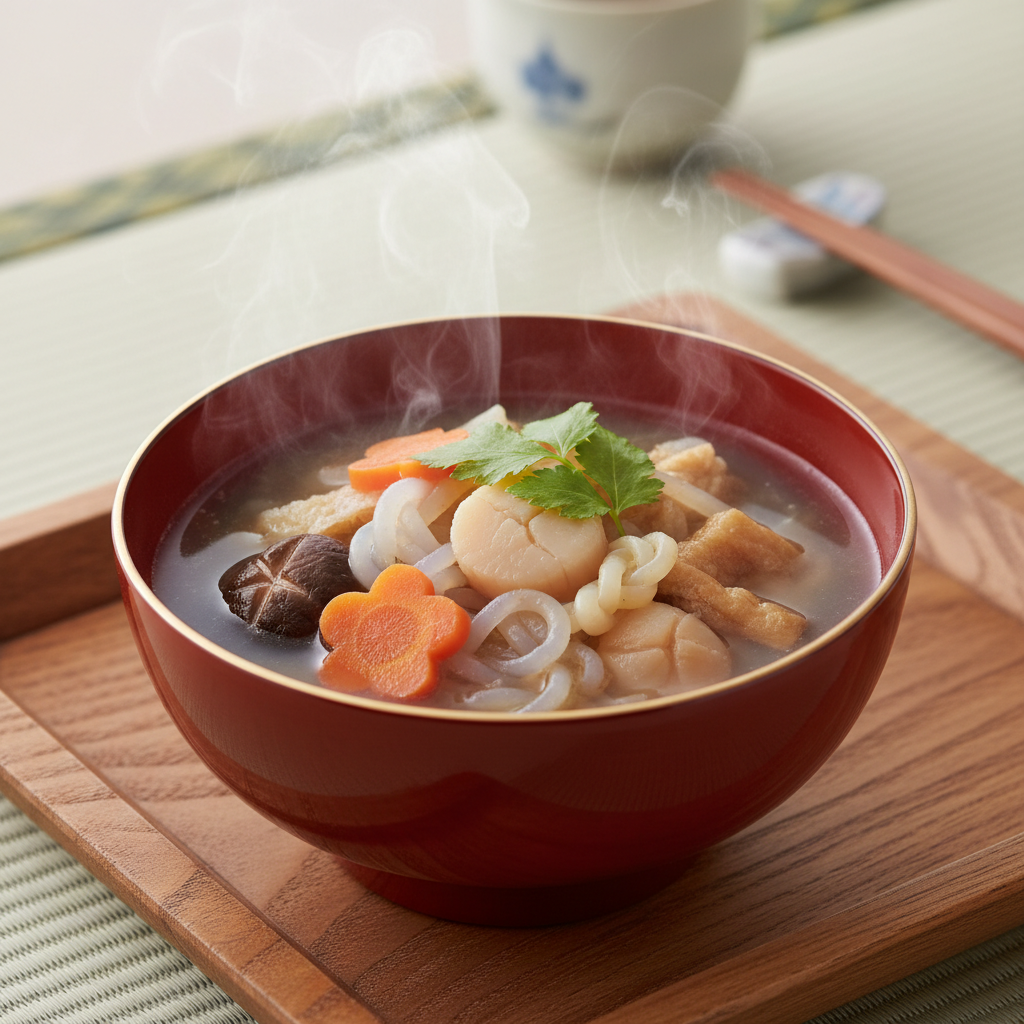
Kozuyu
One of the representative regional dishes of Aizu, this is an elegant soup where dashi is made from dried scallop muscle. Ingredients include taro, carrot, kikurage, shiitake mushroom, and shirataki noodles. It is eaten on special occasions such as celebrations and ceremonies, and is a signature dish of Aizu’s food culture.
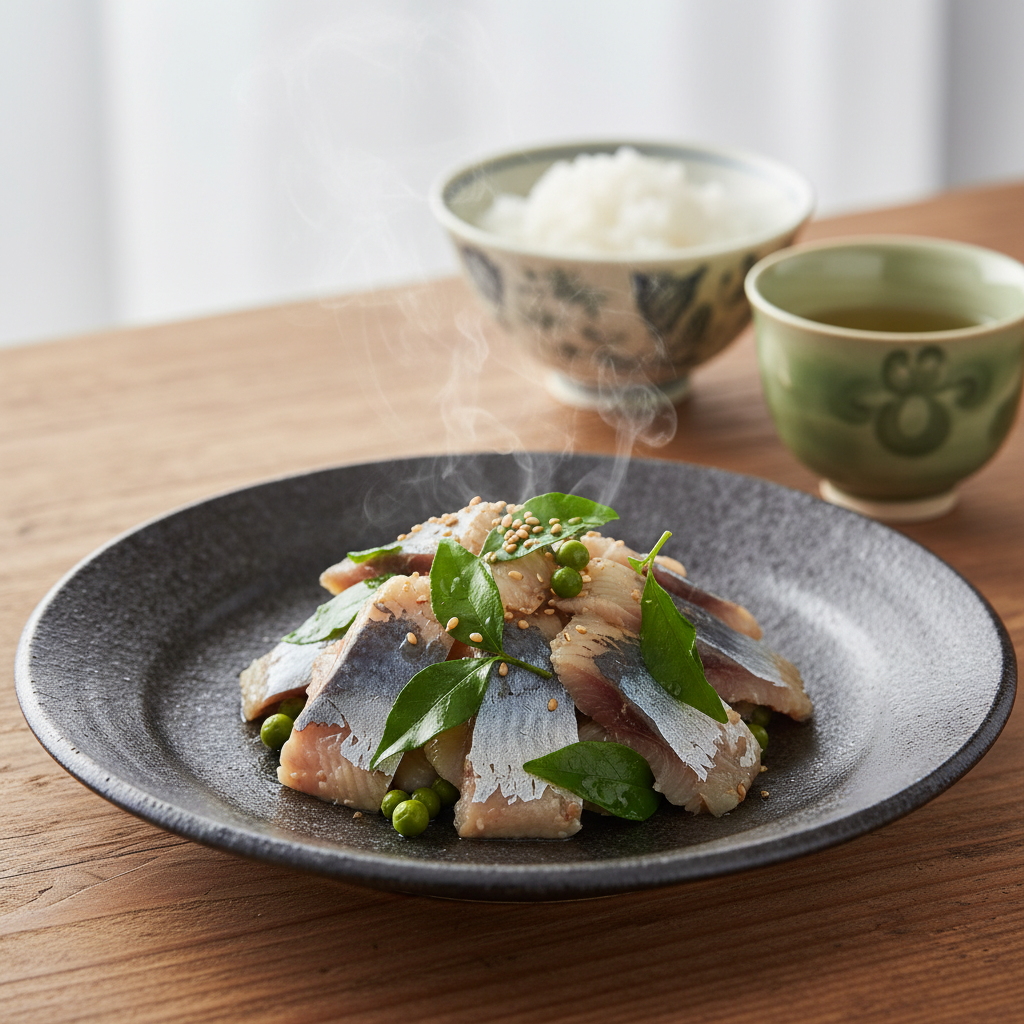
Dried Herring with Sichuan Pepper Leaves Pickle
Dried herring (salted herring) pickled in Sichuan pepper leaves is a representative regional dish of Fukushima Prefecture. It is characterized by the refreshing aroma of Sichuan pepper and the umami of herring, and is enjoyed as a rice accompaniment or sake snack.
Aizu Local Chicken Yakitori
Yakitori made from local chicken raised in the Aizu region is also popular. Carefully grilled over charcoal, Aizu local chicken is characterized by appropriate texture and deep umami.
Aizu Sake
When enjoying basashi, pairing it with Aizu sake is the local style. Aizu is one of Japan’s foremost sake brewing regions, and numerous highly acclaimed brands such as “Hirozumi,” “Sharaku,” and “Suehiro” are produced.
The umami of basashi and the aromatic flavor of sake are perfectly complementary, allowing one to fully savor Aizu’s food culture.
Tourism and Access to Aizu-Wakamatsu
If you want to enjoy basashi in its place of origin, a trip to Aizu-Wakamatsu City is recommended.
Main Access Methods
By Train:
- From Tokyo: About 1 hour 20 minutes on the Tohoku Shinkansen to Koriyama Station, transfer to the Banetsu West Line for about 1 hour 10 minutes to Aizu-Wakamatsu Station
- From Niigata: About 2 hours on the Banetsu West Line
By Car:
- From Tokyo: About 3 hours via the Tohoku Expressway and Banetsu Expressway
- From Sendai: About 2 hours via the Tohoku Expressway and Banetsu Expressway
Main Tourist Attractions in Aizu-Wakamatsu
- Tsuruga Castle: The symbol of Aizu-Wakamatsu, the stage of the Boshin War during the Bakumatsu period
- Iimori Mountain: A historic location known for the tragedy of the Byakkotai
- Nanoka-machi Street: A shopping street with a retro atmosphere
- Higashiyama Hot Spring: Known as the hidden gem hot spring of Aizu
By combining sightseeing with enjoying basashi at local izakayas and regional cuisine restaurants, one can experience Aizu’s history and culture more deeply.
Conclusion: Aizu’s Basashi is a Regional Cuisine Representing Fukushima Prefecture
Horse meat sashimi from the Aizu region of Fukushima Prefecture is a proper regional cuisine born from the historical background of the Boshin War and has continued to be loved by the people of the region.
Characteristics of Aizu Basashi:
- Meat quality centered on lean cuts, low calorie and high protein
- Unique style of eating with spicy miso (garlic and chili pepper-based miso)
- Positioning as a familiar food ingredient eaten daily
- One of the “Three Greatest Horse Meat Sashimis in Japan” alongside Kumamoto and Nagano
There are numerous establishments in Aizu-Wakamatsu City and Fukushima City that offer fresh and delicious basashi, enjoyed by both local residents and tourists. Additionally, Aizu basashi can be enjoyed through mail order and home delivery services, allowing one to easily taste this Fukushima regional dish at home.
Basashi is not merely an ingredient but an important culinary heritage transmitting Aizu’s history and culture to the present day. When visiting Aizu, be sure to savor fresh basashi with spicy miso at a local izakaya or regional cuisine restaurant, and experience the rich food culture of Aizu.