
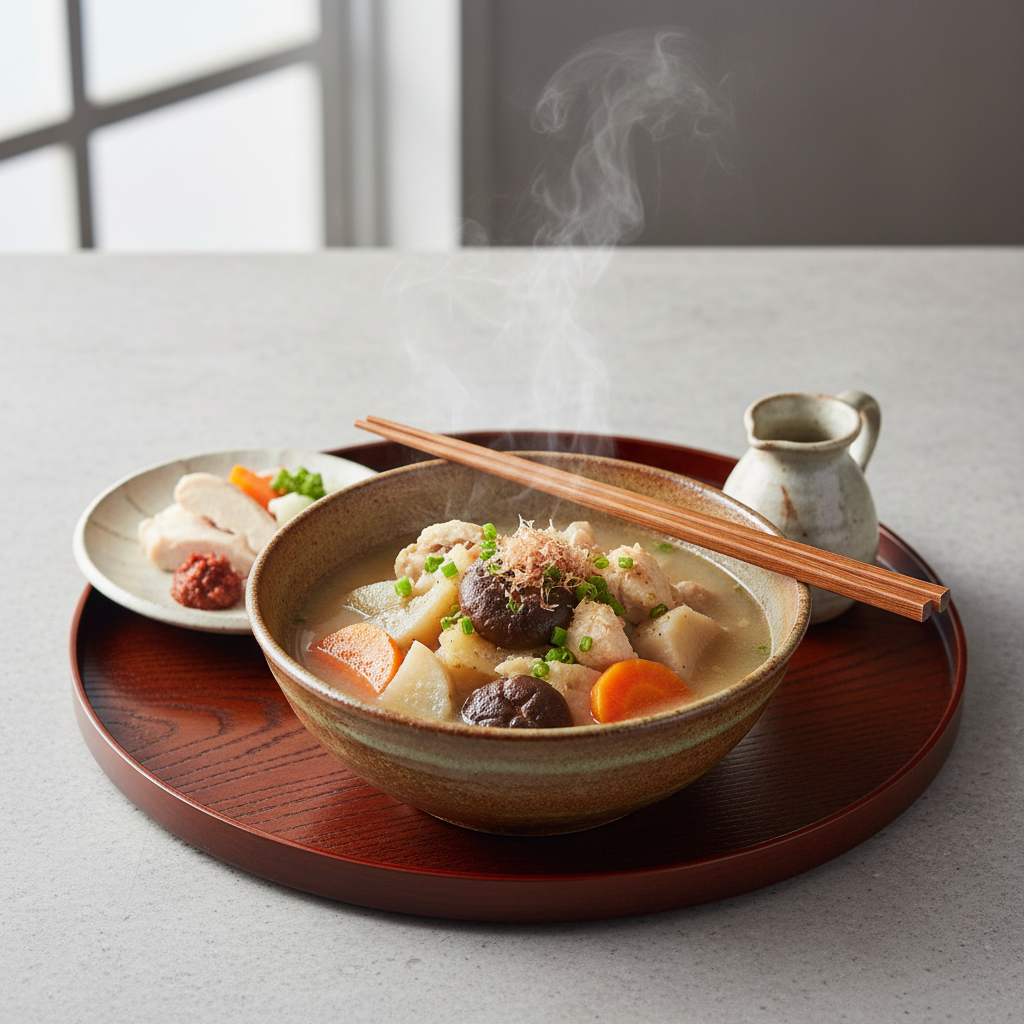
What is Satsuma Soup? A Thorough Explanation of the History, Preparation Methods, and Nutritional Value of Kagoshima Prefecture’s Representative Local Cuisine
“Satsuma soup,” a representative local dish of Kagoshima Prefecture. Many people might imagine a dish containing “sweet potatoes” or “satsuma-age (fried fish cake)” based on its name, but in reality, it is a hearty miso soup with chicken as the main ingredient. This dish, which has continued since the Edo period and was nurtured by the culture of samurai warriors, continues to be beloved by the people of Kagoshima Prefecture today.
This article provides a thorough explanation of the charm of this traditional dish, from the historical background of satsuma soup to specific preparation methods, nutritional value, and efforts for preservation and transmission in modern times.
What is Satsuma Soup (Satsumajiru)?
Satsuma soup is a representative local dish of Kagoshima Prefecture made by simmering chicken and multiple root vegetables in miso. Also called “Kagoshima soup,” it differs from ordinary miso soup in that bone-in chicken is cut into chunks, which is its greatest characteristic.
Origin of the Name
The name “satsuma soup” comes from “Satsuma Province,” the former name of Kagoshima Prefecture. In particular, the name was said to be given because of the use of “satsuma chicken,” a local specialty. It has no direct relation to sweet potatoes or satsuma-age, and the naming is based purely on the regional name.
Characteristics of the Dish
The greatest characteristics of satsuma soup are as follows:
- Use of bone-in chicken: By cutting chicken with the bone into chunks, the umami that comes out of the bone spreads throughout the entire soup
- Hearty ingredients: Multiple root vegetables such as daikon radish, taro, burdock, and carrot are included generously
- Miso-based broth: It is characterized by a rich seasoning using miso from Kagoshima Prefecture, such as barley miso or rice miso
- Bold cooking method: As a field ration-style stew, ingredients cut into large pieces are simmered as is
History, Origin, and Related Events
Cockfighting Culture of the Edo Period
The origins of satsuma soup trace back to the cockfighting culture of Satsuma Domain during the Edo period. According to the “Satsuma Old Transmission Collection,” a tradition of cooking and eating chicken existed long ago in Kagoshima Prefecture.
In Satsuma Domain, cockfighting was actively conducted with the aim of raising the morale of samurai warriors and heightening their warrior spirit. There are records that particularly young men aged 15 to 25, called “heko,” were at the center of organizing these cockfights.
Effective Use of Defeated Roosters
Roosters that lost cockfights were killed on the spot and cooked together with vegetables. This is said to be the beginning of satsuma soup. To enable quick cooking in the field, samurai warriors cut chicken meat into chunks with the bone intact and simmered them in a large pot together with whatever vegetables were available.
This bold cooking method had the character of “field ration cooking” and was served at gatherings and meals among men.
Satsuma Samurai Food Culture
Satsuma samurai warriors valued the spirit of simplicity and strength, and in food, they prioritized practicality and nutritional value. Satsuma soup became an established ideal meal for samurai because it could cook meat and vegetables simultaneously in one pot and had excellent nutritional balance.
Spread to Common People
Although satsuma soup was initially eaten among the warrior class, it gradually spread to the general population. Since chicken raising was popular in Kagoshima Prefecture, it became easy for ordinary households to obtain chicken meat, and the dish began to be made for ceremonial occasions and special events.
Main Transmission Regions
Satsuma soup is a local dish enjoyed throughout Kagoshima Prefecture, but it is particularly actively prepared in the following areas:
Kagoshima City and Surroundings
In the Kagoshima city area, the prefectural capital, it is made daily as a home-cooked meal. It is also frequently served at restaurants and has become a popular menu item among tourists.
Satsuma Peninsula Region
In each area of the Satsuma Peninsula, unique recipes passed down through generations exist in respective households. Subtle differences can be seen in the types of miso used and combinations of ingredients.
Kirishima City
The Kirishima City School Lunch Center provides satsuma soup as part of local cuisine education and is also working to pass it on to younger generations.
Osumi Peninsula Region
It is also widely prepared in the Osumi Peninsula, particularly as a warm dish on the dining table during winter.
Main Ingredients Used
Chicken (Satsuma Chicken)
This is the star ingredient of satsuma soup. Traditionally, bone-in chicken cut into chunks is used.
Characteristics:
- The umami component from the bone spreads throughout the entire soup
- Rich in collagen, which is beneficial to health
- Satsuma chicken has firm meat texture and strong umami
In modern times, chicken thighs or wings are often used for easier preparation.
Root Vegetables
Daikon Radish
Daikon radish is an essential ingredient used almost always. It is cut into large irregular pieces and absorbs the umami of the chicken.
Taro
The creamy texture of taro is distinctive, and it also serves to add body to the broth. Taro cultivation is also popular in Kagoshima Prefecture.
Carrot
Carrot is used to add color and sweetness. It has high nutritional value and is rich in vitamin A.
Burdock
Burdock’s aroma and texture serve as an accent. It is rich in dietary fiber and is excellent from a health perspective.
Other Vegetables
Depending on region and household, the following vegetables may also be added:
- Konnyaku (konjac): Rich in dietary fiber and provides good texture
- Chinese cabbage: Especially used in winter
- Green onion: For seasoning and color
- Shiitake mushroom: To enhance umami
Miso
Barley miso or rice miso are mainly used in Kagoshima Prefecture. Some households use blended miso.
Characteristics of Kagoshima miso:
- Often slightly sweet
- Barley miso has a rich aroma
- Health benefits can be expected as a fermented food
Seasonings
Basically, it is seasoned simply with miso alone, though some households add:
- Brown sugar: Kagoshima’s specialty brown sugar adds sweetness and depth
- Soy sauce: A small amount is added to tighten the flavor
- Broth: Some regions make dashi from kombu seaweed or dried sardines
Ingredients (Serves 4)
Basic Ingredients
Main ingredients:
- Chicken (bone-in chunks or chicken thigh): 300-400g
- Daikon radish: 300g (about 1/3)
- Taro: 200g (4-5 medium pieces)
- Carrot: 100g (1 medium)
- Burdock: 100g (1/2)
- Konnyaku: 150g (1/2 sheet)
Seasonings:
- Miso: 3-4 tablespoons (about 60-80g)
- Water: 1000ml
- Sake: 2 tablespoons
- Kombu seaweed: One 5cm piece (as desired)
For finishing:
- Green onion (thinly sliced): as needed
Points on Selecting Ingredients
- Chicken: Using Kagoshima-produced satsuma chicken when possible will result in a more authentic flavor
- Vegetables: Using fresh seasonal root vegetables will increase sweetness and umami
- Miso: Using barley miso will create an authentic Kagoshima flavor
Preparation Method
Prep Work
- Processing chicken
- If using bone-in meat, cut into bite-sized chunks
- If using chicken thigh, cut into 3-4cm cubes
- To remove odor, blanch with hot water
- Preparing vegetables
- Daikon radish: Peel and cut into 2cm-thick ginkgo or half-moon slices
- Taro: Peel and cut into large bite-sized pieces. To remove sliminess, salt-rub and rinse
- Carrot: Peel and cut irregularly
- Burdock: Lightly scrape the skin and cut diagonally, then soak in water
- Konnyaku: Break apart by hand or into bite-sized pieces with a spoon. Blanch to remove impurities
Cooking Steps
Step 1: Making broth (optional)
Place water and kombu in a pot and let sit for about 30 minutes before heating. Remove the kombu just before boiling. If not using kombu broth, this step can be skipped.
Step 2: Simmering chicken
- Add water (or kombu broth) to a pot, add chicken and sake, and place over medium heat
- Once boiling, carefully remove scum
- Reduce to low heat and simmer for about 10 minutes
Step 3: Adding root vegetables
- Add vegetables in order of cooking time: burdock → daikon radish → carrot → taro
- Simmer 2-3 minutes after each vegetable is added
- Add konnyaku
- Simmer for a total of 15-20 minutes until vegetables are soft
Step 4: Seasoning with miso
- Once vegetables are soft, reduce heat
- Dissolve miso in a small amount of cooking liquid, then add to pot
- Be careful not to boil after adding miso (the aroma will diminish)
- Simmer over low heat for about 5 minutes to blend flavors
Step 5: Finishing
- Taste and add more miso if needed
- Ladle into bowls and sprinkle with thinly sliced green onion
Cooking Tips
- Umami from bone-in meat: When using bone-in meat, slow cooking allows umami to dissolve from the bone
- Vegetable size: Cutting vegetables large makes them more satisfying and less likely to fall apart during cooking
- Removing scum: Carefully removing scum from chicken and vegetables results in a clearer flavor
- Adding miso: Add miso last and avoid boiling to preserve aroma and flavor
Variations
Regional and household differences:
- Sweet version: Add brown sugar for a sweeter, more Kagoshima-style seasoning
- Additional ingredients: Some households add Chinese cabbage, shiitake, or fried tofu
- Chicken cuts: Using wings creates a richer collagen content
- Broth type: Some regions use dried sardine broth
Occasions and Seasons for This Dish
A year-round local dish
Satsuma soup is eaten throughout the year, but it is particularly often made on the following occasions.
A staple winter dish
As a warm soup, it is particularly favored in winter. Although Kagoshima Prefecture has a relatively mild climate, on cold winter days, warm satsuma soup appears on home dining tables.
Reasons for winter popularity:
- Warms the body
- Root vegetables are in season with increased sweetness
- High nutritional value and effective for cold prevention
Role as Ceremonial Food
New Year
Aside from traditional New Year soup, it is sometimes made when relatives gather. It easily accommodates large numbers and has good nutritional balance, so it is served alongside traditional New Year’s foods.
Life Events
In some regions, there is a custom to make it in large pots during weddings and funerals and serve it to attendees. This can be said to be a remnant of Edo period dining culture.
Local Festivals and Events
At festivals and events held throughout Kagoshima Prefecture, satsuma soup is frequently served as a local dish. It has become a popular menu item among tourists.
School Lunch Service
As part of local cuisine education, satsuma soup is regularly served in school lunches throughout Kagoshima Prefecture. It serves as an important opportunity to pass the region’s food culture to children.
How to Eat
Basic Way of Eating
Satsuma soup is eaten as a side dish with rice or as a standalone dish. With its abundant ingredients and good nutritional balance, even a single bowl provides satisfying nourishment.
Service Style
How to Eat at Home
- As a main dish: With its abundant ingredients, it serves as a main course
- With rice: It pairs well with white rice, and the broth can be poured over the rice
- With pickles: It is standard to eat with Kagoshima pickles (takuan, takana pickles, etc.)
Service at Restaurants
In local cuisine restaurants and set-meal shops in Kagoshima Prefecture, it is often served as a main dish. For tourists, it is sometimes served as one item in a “local cuisine set” combined with other Kagoshima dishes (tori-meshi, needlefish sashimi, etc.).
Points When Eating
- Eat piping hot: Freshly made and steaming hot is most delicious
- With bone-in meat: Eat by removing the meat from the bone while eating. The meat around the bone is especially delicious
- Drink the broth completely: Enjoy until the end the broth infused with the umami of chicken and vegetables
Using Leftovers
Enjoying the Next Day
After a night, the flavors meld and offer a different deliciousness. When reheating, be careful not to boil too much.
Repurposing as Other Dishes
- Rice porridge: Add rice to make a rice porridge
- Udon: Add udon to make “satsuma soup udon”
- Curry flavored: Some households add curry powder for an arrangement
Nutritional Value and Health Benefits
Excellent Nutritional Balance
Satsuma soup is an excellent dish allowing intake of many nutrients in a single serving.
Protein
Quality protein is obtained from chicken. Especially when using bone-in meat, it is rich in collagen.
Effects:
- Maintenance and development of muscle
- Health of skin and hair
- Improved immunity
Vitamins
Various vitamins are obtained from root vegetables.
- Vitamin A (carrot): Vision maintenance, skin health
- Vitamin C (daikon radish): Improved immunity, antioxidant action
- B vitamins (chicken, vegetables): Energy metabolism, fatigue recovery
Minerals
- Potassium (taro, vegetables): Blood pressure regulation, reducing edema
- Calcium (bone-in meat): Bone health maintenance
- Iron (chicken): Anemia prevention
Dietary Fiber
Abundant dietary fiber is obtained from root vegetables and konnyaku.
Effects:
- Improved intestinal health
- Constipation relief
- Gradual rise in blood sugar
- Improved cholesterol levels
Health Benefits of Miso as a Fermented Food
Miso, as a fermented food, offers the following health benefits:
- Lactic acid bacteria: Improves intestinal health
- Isoflavones: Antioxidant action, menopausal symptom relief
- Peptides: Blood pressure-lowering action
Low Calorie with High Satiety
Satsuma soup is hearty and satisfying while being relatively low-calorie. It can be considered a suitable dish for those on a diet.
Per serving (approximately 300g) estimate:
- Calories: Approximately 200-250 kcal
- Protein: 15-20g
- Fat: 8-12g
- Carbohydrates: 15-20g
Efforts in Preservation and Transmission
Use in School Lunches
Many school lunch centers in Kagoshima Prefecture regularly serve satsuma soup as part of local cuisine education.
Initiatives at Kirishima City Kirishima School Lunch Center:
- Set aside local cuisine days about once a month
- Distribute materials explaining the history and cultural background of satsuma soup
- Provide recipes so children can make it at home
Through such efforts, young generations are also learning the taste and culture of local cuisine.
Service at Restaurants
Restaurants in Kagoshima Prefecture actively serve satsuma soup to tourists as a local dish.
Main serving establishments:
- Local cuisine specialty restaurants
- Set-meal shops
- Meals at inns and hotels
- Tourist facilities such as roadside stations
By having tourists eat satsuma soup, the experience of Kagoshima’s food culture is shared, spreading its charm nationwide.
Introduction on Recipe Sites and Cookbooks
In recent years, numerous recipe sites online and local cuisine recipe books introduce recipes for satsuma soup.
Main media:
- Ministry of Agriculture, Forestry and Fisheries “Our Local Cuisine” site
- All Japan Miso Industrial Cooperative Federation site
- Official Kagoshima Prefecture Tourism Federation site
- Recipe sites (Cookpad, etc.)
Through these media, people outside Kagoshima Prefecture can learn about satsuma soup and make it at home.
Commercialization by Food Manufacturers
Some food manufacturers have commercialized satsuma soup as retort-packaged or freeze-dried products.
Benefits of commercialization:
- Authentic taste can be easily enjoyed
- Long shelf life
- Available for purchase outside Kagoshima Prefecture
- Popular as a souvenir
Through such commercialization, more people have opportunities to experience satsuma soup.
Sharing on Social Media
In recent years, individuals and restaurants share the appeal of satsuma soup through social media (Instagram, Twitter, Facebook, etc.).
Effects of social media use:
- Visually convey the appeal of the dish
- Easy recipe and method sharing
- Information reaches younger generations more easily
- Searchable through hashtags (#satsumajiru, #kagoshimalocalcuisine, etc.)
Particularly, posts introducing beautiful plating and cooking processes through video have received much attention.
Sharing at Local Events
Satsuma soup is frequently served at various events held throughout Kagoshima Prefecture.
Main events:
- Local festivals
- Food events
- Tourism campaigns
- Product exhibitions
The sight of satsuma soup made in large pots being shared among many people evokes the meals of Edo period samurai warriors.
Transmission Through Cooking Classes
Local civic centers and cooking schools regularly hold local cuisine classes where satsuma soup preparation is taught.
Transmitters include:
- Local elderly people (generations with knowledge of traditional methods)
- Nutritionists and cooks
- Local cuisine researchers
- Restaurant chefs
In such classes, not only recipes are taught, but the history and cultural background of satsuma soup are also shared.
Activities of Preservation Organizations
In some regions, preservation societies for local cuisine have been organized to continue the traditions of satsuma soup and other Kagoshima traditional dishes.
Main activities:
- Regular cooking class hosting
- Creation and distribution of recipe collections
- Visiting lectures at schools
- Demonstrations and serving at events
Through these organizational efforts, the tradition of satsuma soup is surely passed on to future generations.
Places to Enjoy Satsuma Soup
Restaurants in Kagoshima Prefecture
Centered in Kagoshima city, many restaurants serve satsuma soup.
Recommended types:
- Local cuisine specialty restaurants: Authentic taste prepared traditionally
- Set-meal shops: Casual taste at reasonable prices
- Inns and hotels: Served as breakfast or dinner
Tourist Facilities
- Roadside stations: Fresh homemade satsuma soup using local ingredients
- Product halls: Retort and freeze-dried products can be purchased
- Tourist information centers: Information on shops serving satsuma soup can be obtained
Making at Home
It can be made with ingredients available at supermarkets even outside Kagoshima Prefecture. Using the recipe introduced in this article, please try making it at home.
Conclusion
Satsuma soup is a representative local dish of Kagoshima Prefecture born from the cockfighting culture of the Edo period. This hearty miso soup using generous amounts of bone-in chicken and root vegetables is nutritionally rich and warms both body and spirit.
This dish, conveying the bold food culture of satsuma samurai warriors to the present day, is being passed on to future generations in various forms: through school lunches, restaurant menu offerings, social media sharing, and transmission in cooking classes.
When visiting Kagoshima Prefecture, please try authentic satsuma soup. Additionally, it can be made relatively easily at home, so using the recipe in this article, why not enjoy the traditional taste of Kagoshima?
A single bowl of satsuma soup contains hundreds of years of Kagoshima’s history and culture, as well as the wisdom and ingenuity of its people. I hope many of you will experience its deep flavor.

