What is Ikinari Dango? A Thorough Explanation from the History and Origins of Kumamoto Prefecture’s Representative Local Cuisine to How to Make It
If you have ever visited Kumamoto Prefecture, you have likely seen “ikinari dango” at least once. Despite its simple appearance, this local cuisine is packed with the region’s history and culture. It is a nostalgic taste for Kumamoto residents and a beloved local specialty for tourists visiting Kumamoto.
This article comprehensively presents the appeal of this local cuisine, from the history and origins of ikinari dango, traditional preparation methods, to current efforts for preservation and continuation.
What is Ikinari Dango (いきなり団子)?
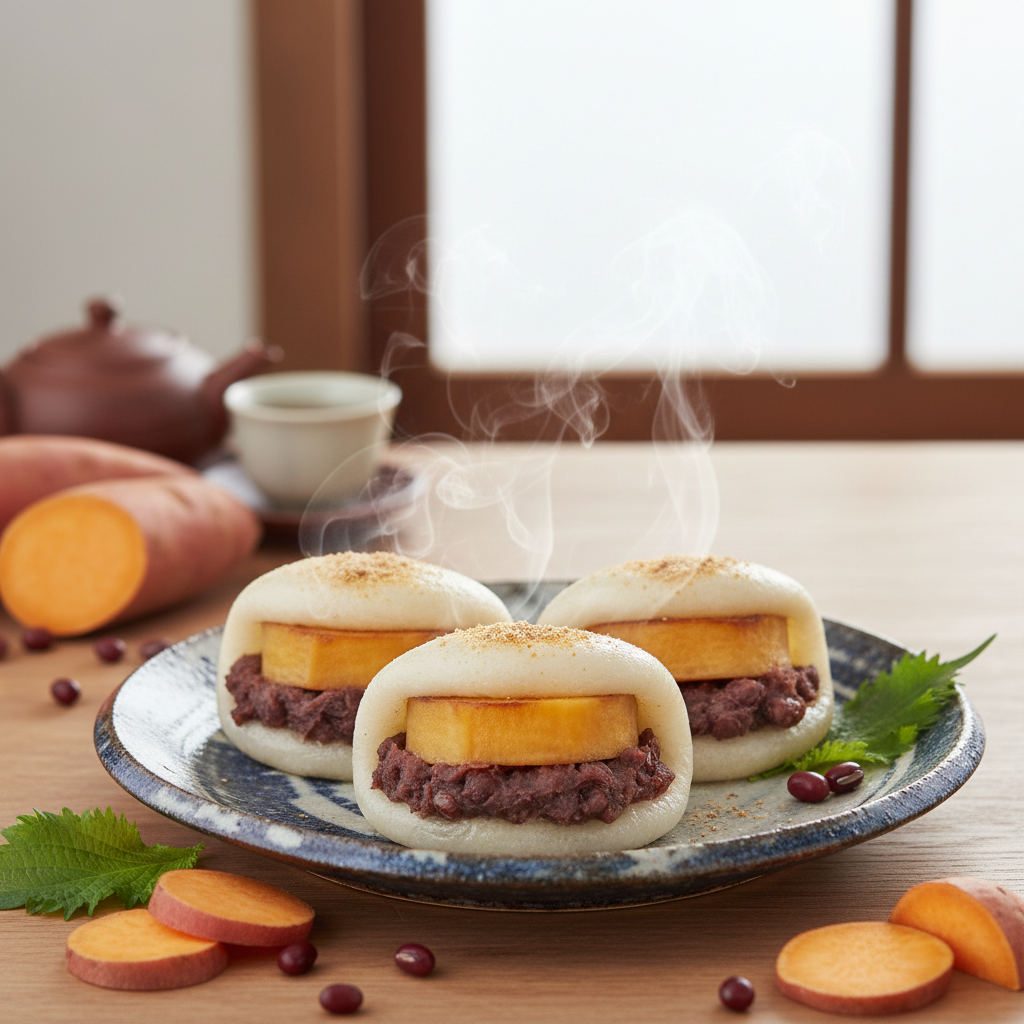
Ikinari dango is a traditional local sweet of Kumamoto Prefecture made by wrapping thinly sliced sweet potato and red bean paste in dough made from wheat flour and steaming it. Despite its simple ingredients and preparation method, it is characterized by a rustic taste where the natural sweetness of sweet potato, the flavor of red bean paste, and the chewy texture of the dough harmonize exquisitely.
Throughout Kumamoto Prefecture, ikinari dango is sold in various places such as Japanese sweet shops, supermarkets, and souvenir stores, and has long been loved as a daily snack for locals and as a hospitality gift for visitors. In recent years, it has become widely known nationwide as a representative local cuisine of Kumamoto, and has also become a popular souvenir among tourists.
The Origin and Meaning of the Name “Ikinari Dango”
The name “ikinari” carries a unique meaning specific to the Kumamoto dialect. In Kumamoto dialect, “ikinari” means “simple, easy, quick,” accurately expressing the characteristics of this dango.
Regarding the origin of the name, two main theories are passed down.
1. Theory Representing Ease
This theory suggests the name comes from the fact that it can be made quickly and easily, meaning “ikinari (quickly)” made dango. Since both the ingredients and preparation method are simple and require no special skills, the ease of making it at home is reflected in the name.
2. Theory of Hospitality
This theory suggests the name originated from the idea that it is a confection that can be quickly prepared and served even when unexpected guests arrive suddenly. In farming communities, it was valued for entertaining sudden visitors.
Additionally, there is also a theory that the name comes from the term “ikinarri” (生き成り), meaning cooking fresh sweet potato directly. The interpretation is that the name stems from the cooking method of wrapping raw sweet potato in dough without pre-heating it first, then steaming.
All of these origin theories express the characteristics of ikinari dango: “ease,” “simplicity,” and “approachability,” illustrating that it is a local cuisine closely connected to the lives of Kumamoto residents.
History and Cultural Background of Ikinari Dango in Kumamoto Prefecture
Main Traditional Areas and Regional Character
While ikinari dango is enjoyed throughout Kumamoto Prefecture, it has been particularly actively made in farming villages around the Aso foothills in the northern part of the prefecture, Oitsu Town, the Kikuchi Plain, and the Kumamoto Plain.
Beginning with Oitsu Town, the prefecture’s leading sweet potato (karaimo) production area, sweet potato cultivation has flourished around the Aso foothills due to the effects of volcanic ash soil. In this region, sweet potatoes, which grow even in volcanic ash soil unsuitable for paddy rice farming, have been treasured as valuable food ingredients and used in various local dishes throughout history.
In farming families of the Kikuchi Plain and Kumamoto Plain, ikinari dango was frequently made as a snack between farm chores during the autumn sweet potato harvest season. The sight of eating freshly steamed ikinari dango during breaks from field work was once part of the rural landscape of Kumamoto.
History, Origins, and Related Events
While no clear historical records of the origins of ikinari dango remain, it is thought to have been born in farming villages of Kumamoto Prefecture from the late Edo period through the Meiji period.
In the Kumamoto Clan, sweet potato cultivation was encouraged as a measure against famine, and sweet potatoes held an important position in the diet of common people. Since wheat flour was also a relatively accessible ingredient, it is presumed that this simple snack was naturally created by combining these two ingredients.
Initially, it was a simple confection with only sweet potato wrapped in dough, but several decades ago, the version with added bean paste became mainstream, resulting in the current form. The addition of bean paste increased sweetness and enhanced the appeal of the confection, allowing it to become widely enjoyed.
Regarding connections to regional events, it was sometimes served at autumn harvest festivals and community festivals, playing a role as a food culture connecting regional communities.
Occasions and Seasons for Food Consumption
Ikinari dango is a local cuisine eaten throughout the year, not limited to specific seasons or occasions. However, traditionally it was particularly frequently made at the following times.
Autumn Harvest Season (September to November)
During the sweet potato harvest season, freshly harvested sweet potatoes were used to actively make ikinari dango. It was valued as nutritional replenishment during farm work and as food for sharing in the joy of harvest.
Daily Snacks
Beyond special occasions, it was homemade in households as a daily snack or tea accompaniment. It was also popular as a children’s snack, and the fluffy texture of freshly steamed ikinari dango remains a cherished memory for many Kumamoto residents.
Entertaining Guests
When unexpected guests arrived, it was used as a hospitality gift since it could be prepared in a short time. Serving it with warm tea was the standard, becoming a food culture symbolizing the warmth of Kumamoto households.
In modern times, it can be purchased year-round at Japanese sweet shops and specialty stores, so it is also used as a gift or souvenir. For tourists from outside Kumamoto Prefecture, it has become one of the local dishes one must taste when visiting Kumamoto.
Ingredients and Traditional Preparation Method of Ikinari Dango
Main Ingredients Used
The appeal of ikinari dango lies in its simple ingredient composition. The basic ingredients are as follows.
Dough Ingredients
- Wheat flour (cake flour or all-purpose flour)
- Water
- Salt (small amount)
Filling
- Sweet potato (called “karaimo” in Kumamoto)
- Red bean paste (coarse paste or smooth paste)
Sweet potato varieties with a fluffy texture are preferred. Sweet potatoes grown in Kumamoto Prefecture in volcanic ash soil have strong sweetness and are considered ideal for ikinari dango. Red bean paste can be store-bought, but traditionally homemade coarse paste was used.
Some variations add mochiko (sweet rice flour) to the dough to create a chewy texture. The ratio varies depending on the region and household, with each family’s distinct “house flavor” being passed down.
Ingredients (Makes 20-25 pieces)
Dough
- Wheat flour: 300g
- Water: 150-180ml (adjust while observing dough consistency)
- Salt: a pinch
Filling
- Sweet potato: 2-3 medium-sized (approximately 400g)
- Coarse red bean paste: 300-400g
These amounts are guidelines and should be adjusted according to sweet potato size and preference.
Preparation Method
Prep Work
- Sweet Potato Preparation
- Wash sweet potatoes thoroughly and slice them crosswise to approximately 1cm thickness with skin on
- Soak the sliced sweet potatoes in water to remove bitterness (5-10 minutes)
- Drain well in a colander
- Bean Paste Preparation
- Divide red bean paste into small portions (approximately 1 tablespoon per sweet potato slice)
Dough Making
- Knead the Dough
- Place wheat flour and salt in a bowl and mix
- Gradually add water while kneading with your hands
- Continue kneading until the dough reaches an earlobe-soft consistency, then cover with a damp cloth and let rest for 15-20 minutes
- Roll Out the Dough
- Divide the dough into 20-25 equal portions
- On a floured surface, use a rolling pin to stretch each portion into a circle approximately 10cm in diameter
- The dough should be about 2-3mm thick; if too thin it breaks easily, if too thick it becomes hard when steamed
Wrapping Method
- Wrap the Filling
- Place one sweet potato slice in the center of the rolled dough
- Place red bean paste on top of the sweet potato
- Gather the edges of the dough toward the center and seal firmly
- Place seam-side down and shape neatly
- Wrapping Tips
- Wrap with enough room so the sweet potato and bean paste don’t protrude from the dough
- Firmly pinch the seam so it stays sealed during steaming
- The shape can be round or half-moon; various shapes exist depending on region and family
Steaming Method
- Prepare the Steamer
- Add water to a steamer and bring to a boil over heat to generate steam
- Line the bottom of the steamer with parchment paper or a damp cloth to prevent sticking
- Steaming
- Arrange ikinari dango in the steamer, leaving space between pieces as they will expand
- Steam over high heat for approximately 20-25 minutes
- The dango is done when a bamboo skewer inserted into the sweet potato goes through easily
- Timing varies depending on sweet potato thickness and heat level, so adjust while observing
- Finishing
- Remove from the steamer immediately after steaming
- Cool briefly before eating, or enjoy while warm
Points and Tips for the Preparation Method
Adjusting Dough Consistency
If the dough is too hard it’s difficult to wrap; if too soft it may collapse while steaming. Aim for an earlobe-soft consistency and adjust water amount accordingly.
Sweet Potato Thickness
If too thick, steaming takes longer; if too thin, the texture becomes unsatisfying. Approximately 1cm is ideal.
Amount of Bean Paste
Too much makes wrapping difficult; too little results in an unsatisfying flavor. Adjust considering the balance with the sweetness of the sweet potato.
Judging Steaming Time
Judge by whether a bamboo skewer goes through the sweet potato easily. When the dough becomes translucent in appearance, it’s a sign that steaming is complete.
How to Eat Ikinari Dango and Ways to Enjoy It
Traditional Way of Eating
Ikinari dango is said to taste best when eaten warm right after steaming. The fluffy sweet potato texture, chewy dough, and gentle sweetness of the bean paste unite into a simple yet deeply satisfying flavor.
In Kumamoto Prefecture, it is typical to eat it with warm green tea or roasted barley tea. The astringency of the tea complements the sweetness of ikinari dango, creating a well-balanced flavor.
Modern Ways to Enjoy It
How to Reheat
Cooled ikinari dango can be reheated using the following methods:
- Microwave: Cover with plastic wrap and heat 30-40 seconds per piece
- Steamer: Steam again for 5-10 minutes
- Toaster oven: Wrap in aluminum foil and bake for 5-7 minutes (surface becomes fragrant)
Enjoying Variations
Various arrangements are enjoyed based on the basic recipe.
- Variations using pumpkin or purple potato
- Westernized arrangements using white bean paste or cream cheese
- Flavorful versions with brown sugar kneaded into the dough
Some people also enjoy eating it chilled, and in summer some enjoy refrigerated ikinari dango.
Storage Methods
Room Temperature Storage
If eating on the same day, wrap individually in plastic wrap and store at room temperature. However, caution is needed in high-temperature seasons as it spoils easily.
Refrigerated Storage
For eating the next day onward, wrap each piece individually in plastic wrap and store in the refrigerator. Consume within 2-3 days.
Frozen Storage
For long-term storage, freezing is possible. Wrap each piece in plastic wrap, then place in a zippered storage bag and freeze; it can be stored for approximately one month. Thaw naturally and reheat before eating.
Famous Ikinari Dango Specialty Shops in Kumamoto Prefecture
Kumamoto Prefecture has numerous specialty shops dedicated to ikinari dango and Japanese sweet shops offering particular versions of ikinari dango.
Musashi Honten
“Musashi Honten,” founded in 2003 as an ikinari dango specialty shop, has maintained its original taste since its founding. The rustic flavor produced through handmade dedication from start to finish has created a stream of customers becoming devoted fans.
Due to its convenient location near the Masiki Kumamoto Airport interchange, many customers from outside the prefecture deliberately exit the highway to purchase here, and it has become a standard Kumamoto souvenir.
Ikinari Dango Specialty Shop Chojuan
“Chojuan,” located in Kasuga, Nishi Ward, Kumamoto City, is an ikinari dango specialty shop loved by locals for many years. While maintaining traditional methods, it has made improvements suited to modern times and is known as a famous shop with many fans.
Other Notable Shops
Most Japanese sweet shops throughout Kumamoto Prefecture manufacture and sell their own versions of ikinari dango. Each shop differs in dough ratio and thickness, type and quantity of bean paste, and comparing various versions is one of the pleasures of sightseeing in Kumamoto.
Easy purchase is possible at supermarkets and convenience stores, making it a daily-life confection for Kumamoto residents.
Preservation and Inheritance Efforts and Modern Development
Successors and Preservation Society Activities
Various efforts are being undertaken in Kumamoto Prefecture to pass ikinari dango traditions to the next generation.
As part of community food education activities, “ikinari dango making classes” are regularly held at elementary schools and community centers. Children learn the importance of local cuisine through the actual experience of kneading dough and wrapping sweet potatoes.
It has been registered with the Ministry of Agriculture, Forestry and Fisheries’ “Our Local Cuisine” project and officially recognized as a representative local dish of Kumamoto Prefecture. Through such efforts, the cultural value of ikinari dango has become widely recognized.
Commercialization and Modern Initiatives
Utilization as a Tourist Resource
Ikinari dango plays an important role in Kumamoto Prefecture’s tourism promotion. Shops selling ikinari dango line the areas around tourist destinations such as Kumamoto Castle and Mount Aso, providing tourists with Kumamoto flavors.
Kumamoto City tourism guides and the Kumamoto Prefecture Product Promotion Association’s websites feature information about ikinari dango and shop locations, allowing tourists to easily enjoy authentic flavors.
Product Development and Variations
Building on traditional ikinari dango, product development suited to modern tastes is advancing.
- Individually packaged products for easy portability
- Long-term frozen storage types
- Mini and bite-sized variations
- Seasonal limited flavors (chestnut, matcha, etc.)
Through such commercialization, shipments to areas outside the prefecture and gift use have increased, and recognition of ikinari dango has grown nationwide.
SNS and Digital Marketing
Recently, specialty shops and Japanese sweet shops have focused on information dissemination via SNS. By posting photos of freshly steamed ikinari dango and manufacturing process videos on Instagram and Facebook, they have successfully appealed to younger generations.
Additionally, shops opening online stores have increased, allowing people anywhere in Japan to order Kumamoto flavors. This enables Kumamoto natives living outside the prefecture to enjoy hometown flavors, and allows those who visited Kumamoto as tourists to purchase again when wanting to taste it once more.
Establishment as a Regional Brand
Ikinari dango is becoming established as a regional brand of Kumamoto Prefecture beyond being merely a local sweet. The image “Kumamoto means ikinari dango” has taken root, and it has become widely recognized by people outside the prefecture.
The Kumamoto Prefecture Product Promotion Association actively promotes ikinari dango as a representative gourmet of Kumamoto, and through sales at product exhibitions and tourism events, works to spread it nationwide.
Through such public-private collaborative efforts, ikinari dango is being sustainably inherited to the next generation while maintaining tradition and adapting to the times.
Ikinari Dango and Kumamoto Food Culture
Relationship with Sweet Potato Culture
To understand ikinari dango, one cannot overlook sweet potato (karaimo) culture in Kumamoto Prefecture.
In Kumamoto Prefecture, particularly in the Aso region, the special environment of volcanic ash soil was ideal for sweet potato cultivation. Sweet potatoes, which grow even in land unsuitable for paddy rice farming, were treasured as valuable food sources and used in various local dishes.
Besides ikinari dango, many local dishes using sweet potatoes exist, such as karaimo tempura, karaimo stew, and karaimo rice. These dishes were born from the wisdom and ingenuity of Kumamoto people’s lives, speaking to the richness of regional food culture.
Richness Within Simplicity
The appeal of ikinari dango lies in its “simplicity.” It requires neither expensive ingredients nor complex techniques, and can be made at home with basic ingredients on hand. Yet it provides deep satisfaction through the harmonious blend of the natural sweetness of sweet potato, the gentle flavor of red bean paste, and the chewy dough texture.
This “richness within simplicity” is the reason ikinari dango has been loved for many years and continues to captivate many people today.
From Health and Food Education Perspectives
Ikinari dango attracts attention from health and food education perspectives.
Sweet potatoes are known as healthy ingredients rich in dietary fiber, vitamin C, and potassium. Red beans contain high-quality protein, iron, and polyphenols, making ikinari dango a nutritionally balanced snack.
Traditional ikinari dango made without additives using simple ingredients is appreciated as a safe snack to eat in an era where food safety is emphasized.
From a food education standpoint, children’s experiences of actually making it serve as educational material for learning the importance of regional food culture and food ingredients through their actions. By experiencing the process of kneading dough, wrapping fillings, and steaming, children can feel both the joy and difficulty of making food, cultivating gratitude for food.
Conclusion: The Heart of Kumamoto That Ikinari Dango Conveys
Ikinari dango is not merely a local sweet, but a symbol of Kumamoto Prefecture’s food culture with the region’s history, culture, and people’s daily lives condensed within it.
The sweet potato cultivation born from volcanic ash soil environment, its role as a snack during farm work, the heart of hospitality to unexpected guests, and the warmth of family gathered at the dinner table—all of these are contained in this single local cuisine.
With simple ingredients and preparation methods, the deep flavor created by regional terrain and people’s wisdom. Ikinari dango, simple yet rich, continues to captivate many people’s hearts across time.
While maintaining tradition, through product development suited to modern needs and active information dissemination, ikinari dango is surely being inherited to the next generation. When visiting Kumamoto, be sure to taste authentic ikinari dango and experience the richness of Kumamoto’s food culture firsthand.
Additionally, by making it at home, you can recreate Kumamoto household flavors and develop a deeper understanding of the appeal of local cuisine. The very process of making it becomes a precious experience of touching Kumamoto’s history and culture.
Ikinari dango will continue to be passed down as a source of pride for Kumamoto residents and as a beloved local cuisine for people nationwide, conveying its simple charm.