Complete Guide to Tofu Chikuwa | History, How to Make, and How to Eat This Traditional Tottori Prefecture Dish
What is Tofu Chikuwa? A Unique Local Cuisine Boasted by Tottori Prefecture
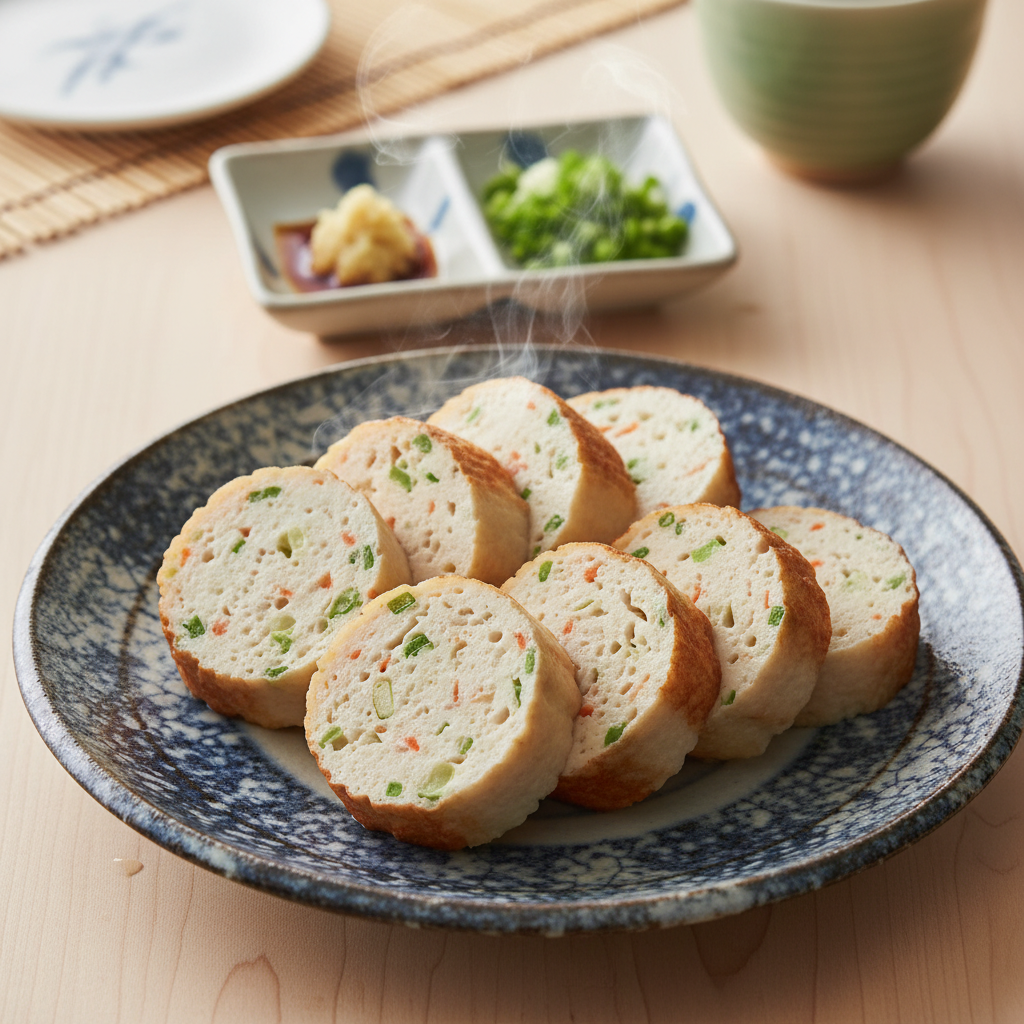
“Tofu chikuwa” is a traditional local dish that has long been cherished in the eastern part of Tottori Prefecture (the Inaba region). While ordinary chikuwa uses minced fish meat as its main ingredient, tofu chikuwa is made by mixing momen tofu (firm tofu) and white fish minced meat in approximately a 7:3 ratio and steaming it—a rare processed food found nationwide.
Characterized by its fluffy texture and the gentle aroma of tofu, this low-calorie, high-protein healthy food has become the soul food of Tottori citizens with many fans outside the prefecture. Tottori City ranks high nationwide in the consumption of “other fish cake products” by prefectural capital according to the Ministry of Internal Affairs and Communications “Family Income and Expenditure Survey,” demonstrating that the region has a deep-rooted culture of fish cake products, with tofu chikuwa at its center.
Basic Information About Tofu Chikuwa
Main traditional region: Eastern Tottori Prefecture (the Inaba region centered on Tottori City)
Main ingredients used:
- Momen tofu (approximately 70%)
- White fish minced meat (approximately 30%)
- Salt
- Other seasonings
Due to the high ratio of momen tofu, tofu chikuwa has a very delicate flavor compared to ordinary chikuwa. When chewed, the aroma of tofu spreads fluffy throughout the mouth, offering a flavor completely different from fish-meat-only chikuwa.
History and Origins of Tofu Chikuwa | Wisdom of Frugality Continuing from the Edo Period
The Birth Was Sparked by the Domain Lord’s Austerity Ordinance
The history of tofu chikuwa dates back to the distant Edo period. During the time of Ikeda Mitsunaka (also written as Ikeda Mitsuoki), who became the domain lord of Tottori in 1648 (Keian 1st year), fish was an extremely precious food in Tottori because the development of fishing ports lagged behind.
At that time, the Tottori Domain’s finances were also in a difficult situation, and Lord Ikeda promoted fiscal reconstruction and frugal living throughout the domain. He recommended that the common people in the castle town “eat tofu instead of fish.” This domain lord’s policy is said to be the catalyst for the birth of tofu chikuwa.
Soybean Cultivation and Castle Town Culture Nurtured This Local Dish
In the Inaba region of eastern Tottori Prefecture, soybean cultivation had long been flourishing. While fish was a precious commodity due to the lag in fishing port development, soybeans were relatively easy to obtain. As Tottori developed as a castle town, a tofu culture took root, and wisdom was born to create a nutritious and delicious food by combining the abundant tofu with the limited fish minced meat.
Tofu chikuwa, born in this way, became deeply ingrained in the daily food life of ordinary people as an ideal food that was modest but efficiently provided protein. This tradition continuing from the Edo period has been passed down in the eastern part of Tottori Prefecture for nearly 400 years to the present day.
Tradition Continuing into Modern Times
After the Meiji period, tofu chikuwa became established as a daily food in eastern Tottori Prefecture. During the post-war food shortage period, it was highly valued as a precious source of protein, and even through the period of high economic growth, it was inherited as a regional food culture. Currently, while maintaining traditional manufacturing methods, it continues to evolve with the times, with proposals for new flavors and ways of eating.
Occasions and Seasons for Eating | From Daily Life to Special Days
A Daily Food Enjoyed Year-Round
Tofu chikuwa is eaten year-round on a daily basis as a traditional local dish in eastern Tottori Prefecture. It is not limited to specific seasons or events but is enjoyed as a familiar food that appears on everyday dining tables. At supermarkets and food stores, it is sold constantly, and for local people, it is positioned as “a standard side dish available anytime.”
Also Appears at Special Occasions
While a daily food, tofu chikuwa also appears at celebration tables such as weddings and special occasions. In traditional wedding ceremonies in eastern Tottori Prefecture, it is sometimes added as a local flavor to the dishes served. Additionally, at times when family gathers such as New Year and Obon, it is provided in various ways of preparation, becoming a taste loved across generations.
As a Special Product for Tourists
In recent years, it has also become a popular specialty product for tourists visiting Tottori. When visiting tourist attractions such as the Tottori Sand Dunes and Tottori Castle ruins, it attracts attention as a product that allows visitors to taste the charm of the region, and the demand as a souvenir is also increasing.
Manufacturing Methods of Tofu Chikuwa | Traditional Techniques and Modern Ingenuity
Basic Manufacturing Process
The manufacturing process of tofu chikuwa differs significantly from ordinary chikuwa.
- Ingredient preparation: Thoroughly drain momen tofu and prepare white fish minced meat
- Mixing: Mix tofu and minced meat in approximately a 7:3 ratio and add salt and other seasonings
- Forming: Traditionally wrapped around bamboo sticks, though modern efficient manufacturing methods are also adopted
- Steaming: Rather than grilling, it is steamed to achieve a fluffy texture
- Cooling: After steaming, cool appropriately to complete
The Unique Texture Created by the Tofu Ratio
While ordinary chikuwa uses fish minced meat at nearly 100%, tofu chikuwa has the very unusual composition of 70% momen tofu. This high tofu ratio creates a unique texture that is elastic while still being fluffy and soft. Compared to fish-meat-only chikuwa, it is softer and has a gentle texture that melts in the mouth.
Ingenuity by Manufacturers
There are multiple tofu chikuwa manufacturers within Tottori Prefecture, each maintaining their own manufacturing methods and mixing ratios. Long-established manufacturers such as “Chimura” value traditional manufacturing methods while introducing modern technology in quality control and sanitation management. They also actively work on developing new variations such as cheese-filled or vegetable-filled versions.
Ways of Eating | Enjoying Tofu Chikuwa in Diverse Ways
Eating It Plain
The simplest way and the best way to enjoy the original taste of tofu chikuwa.
Eating it whole: Taking it straight from the package, tearing it apart by hand, or eating it whole in a wild manner is standard among locals. You can directly feel the fluffy aroma of tofu and its gentle flavor.
Sliced thin: Slice it thin and serve with wasabi soy sauce or mayonnaise, and it becomes a proper appetizer. It pairs excellently with beer and sake.
Enjoying It Through Heat Cooking
Simmering: When added to oden or simmered dishes, it absorbs the broth and becomes even more delicious. Since it is softer than ordinary chikuwa, the key is not to simmer it for too long.
Grilling: When lightly grilled in a frying pan, the surface gains a pleasant aroma while the inside maintains its fluffy texture. Grilled with butter and soy sauce becomes a popular side dish for children.
Deep-frying: When made into tempura or fried, you can enjoy a crispy outside with a fluffy inside. Mixing curry powder into the coating or inserting cheese before frying are also popular variations.
Using It in Salads and Dressed Dishes
Salad topping: Adding thinly sliced tofu chikuwa to a salad allows you to easily supplement protein. It is recommended for those on a diet as it is low in calories.
Vinegared dishes: When made into a vinegared dish with cucumber and wakame, it becomes a refreshing dish.
Using It in Stir-fries and Soups
Vegetable stir-fry: Stir-frying with vegetables creates a voluminous side dish. It works well with oyster sauce or miso flavoring.
Miso soup ingredient: When added to miso soup, you can enjoy a texture different from tofu. Using it instead of fried tofu is also recommended.
Modern Arrangements
Pizza toast: Arranging thinly sliced tofu chikuwa on bread and baking with cheese creates a Japanese-Western pizza toast.
Pasta ingredient: Using it as an ingredient in Japanese-style pasta creates a healthy and delicious dish.
Conservation and Transmission Efforts | Connecting Tradition to the Future
Transmission by Manufacturers
Multiple manufacturers within Tottori Prefecture continue to maintain the traditional manufacturing methods passed down from the Edo period. Notably, the long-established “Chimura” operates as the “Tofu Chikuwa Village” with a facility for viewing the manufacturing process, working to promote food culture. The techniques passed from craftsman to craftsman are truly valuable intangible cultural assets of the region.
Support by Government
Tottori Prefecture and Tottori City position tofu chikuwa as an important food culture of the region and provide various forms of support. It is registered in the Ministry of Agriculture, Forestry and Fisheries’s “Our Local Cuisine” and information dissemination nationwide is progressing. Tottori City’s tourism website also features a special page, and efforts are being made to utilize it as a tourism resource.
Product Development and New Product Innovation
While maintaining tradition, active development of new products matching modern needs is underway.
Expansion of variations: Various flavors have been developed such as “Cheese-cchi” with cheese and “Kome Rice Chikuwa” using rice flour. These products appeal to younger generations and consumers outside the prefecture, contributing to increased awareness of tofu chikuwa.
Packaging innovations: Development of packages that are easy to carry home as souvenirs and products that can be stored at room temperature show commitment to improving convenience.
Information Sharing Using Social Media
Manufacturers and local restaurants actively share the appeal of tofu chikuwa using social media such as Instagram and Twitter. Recipes for delicious ways to eat it and local ways to enjoy it are introduced, and penetration among younger generations is progressing.
Official websites such as the Tottori City tourism site feature special pages about tofu chikuwa with detailed introductions of its history, manufacturing methods, and recommended ways to eat it.
Efforts in Educational Settings
By including tofu chikuwa in school lunches at local schools, opportunities are created for children to experience regional food culture. Additionally, classes where students learn about the history and manufacturing process of tofu chikuwa during social studies and integrated learning sessions are conducted, ensuring transmission to the next generation.
PR Activities at Events
Active participation in product exhibitions and food events held within and outside Tottori Prefecture, spreading the appeal of tofu chikuwa through tastings and sales. Increased awareness outside the prefecture has led to growing demand through mail order, and fans are expanding nationwide.
Nutritional Value and Health Benefits of Tofu Chikuwa
A Healthy Low-Calorie, High-Protein Food
One of the greatest attractions of tofu chikuwa is its excellent nutritional balance. By using momen tofu as the main ingredient, it contains abundant high-quality protein while being lower in calories compared to ordinary fish-meat-only chikuwa.
Main nutritional components:
- High-quality plant-based protein (from tofu)
- Animal protein (from white fish)
- Soy isoflavones
- Calcium
- Iron
Ideal for Dieting and Health Management
Because it is low in calories while providing satisfaction, it is recommended for those on a diet. Additionally, since you can simultaneously consume the nutritional value of both tofu and fish, you can achieve a balanced diet.
For elderly people, its soft and easy-to-eat texture is easy to swallow, and it is an excellent food for consuming high-quality protein without difficulty.
Places Where You Can Enjoy Tofu Chikuwa
Supermarkets in Tottori Prefecture
At supermarkets in eastern Tottori Prefecture, tofu chikuwa is constantly displayed in the fish cake products section. Local people casually purchase it during their regular shopping.
Direct Sales Locations at Manufacturing Sites
At direct sales outlets of manufacturers such as “Tofu Chikuwa Village Chimura,” you can purchase freshly made tofu chikuwa. Some facilities allow factory tours, letting you enjoy shopping while learning about the manufacturing process.
Restaurants
At izakayas and local cuisine restaurants in Tottori City, various dishes using tofu chikuwa are served. You can enjoy unique local ways of eating and creative dishes.
Souvenir Shops and Roadside Stations
At souvenir shops around Tottori Sand Dunes and at roadside stations throughout the prefecture, vacuum-packed tofu chikuwa is sold as a souvenir. Products that can be stored at room temperature are also available, making it convenient for carrying home from distant locations.
Online Shopping
People outside the prefecture can also purchase tofu chikuwa from home using internet shopping. Multiple manufacturers operate online shopping sites, allowing people throughout the country to enjoy Tottori’s taste.
Relationship with Other Local Cuisine of Tottori Prefecture
Center of Food Culture in Eastern Tottori Prefecture
While tofu chikuwa is a representative traditional local dish of eastern Tottori Prefecture (the Inaba region), various other traditional dishes exist.
Ononokome-shi: A rice cooked with wild plants, enjoyed as a spring delicacy.
Ago no yaki: A grilled dish using flying fish (ago), a dish that takes advantage of the bounty of the Japan Sea.
Itadaki: A local-style sushi with sushi rice stuffed inside fried tofu, made for festivals and events.
Together with these regional dishes, tofu chikuwa shapes the rich food culture of eastern Tottori Prefecture.
Combination with Local Ingredients
Tofu chikuwa becomes even more delicious when combined with locally grown vegetables and seafood. Tofu made from soybeans cultivated in the Inaba region, fresh white fish caught in the Japan Sea, and other local ingredients support the quality of tofu chikuwa through their manufacturing methods.
The Future of Tofu Chikuwa | Potential to Expand Globally
Matching the Rise in Health Consciousness
As health consciousness rises worldwide, tofu chikuwa—which is low in calories, high in protein, and uses soybeans—holds potential for international attention. Product development addressing the needs of vegans and vegetarians is also anticipated.
As Part of Japanese Food Culture
With the 2013 registration of “Washoku; Traditional Japanese Food Culture” as a UNESCO Intangible Cultural Heritage, worldwide interest in Japanese regional cuisine has increased. Tofu chikuwa is also being promoted internationally as a representative piece of Japan’s traditional food culture.
As a Sustainable Food
As fish resource conservation becomes a global issue, tofu chikuwa—which reduces fish meat usage while achieving deliciousness and nutritional value—can be considered a model case of sustainable food. The wisdom born from Edo period frugality is providing hints for solving contemporary environmental problems.
Conclusion | Tofu Chikuwa is Tottori’s Pride
Tofu chikuwa is a traditional local dish born from the frugal spirit of the Edo period and loved in eastern Tottori Prefecture for nearly 400 years. Through its unique manufacturing method of mixing momen tofu and white fish minced meat in a 7:3 ratio, it achieves a fluffy texture and gentle flavor.
As a low-calorie, high-protein healthy food that matches modern needs, it is delicious whether eaten plain, simmered, grilled, or fried—a versatile ingredient. As the soul food of Tottori citizens and a popular specialty for tourists, it continues to convey the charm of the region.
Through the efforts of manufacturers, government support, and modern information sharing via social media, tofu chikuwa continues to evolve while maintaining tradition. Its history, culture, and potential for the future serve as a model case for the transmission of regional food culture.
When visiting Tottori, be sure to taste this unique local dish. And while pondering the history and culture and the wisdom of people behind it, savor the profound appeal of tofu chikuwa.