
Complete Guide to Tai Meshi (Hiroshima Prefecture) | Thorough Explanation of History, How to Make It, and Top Restaurants
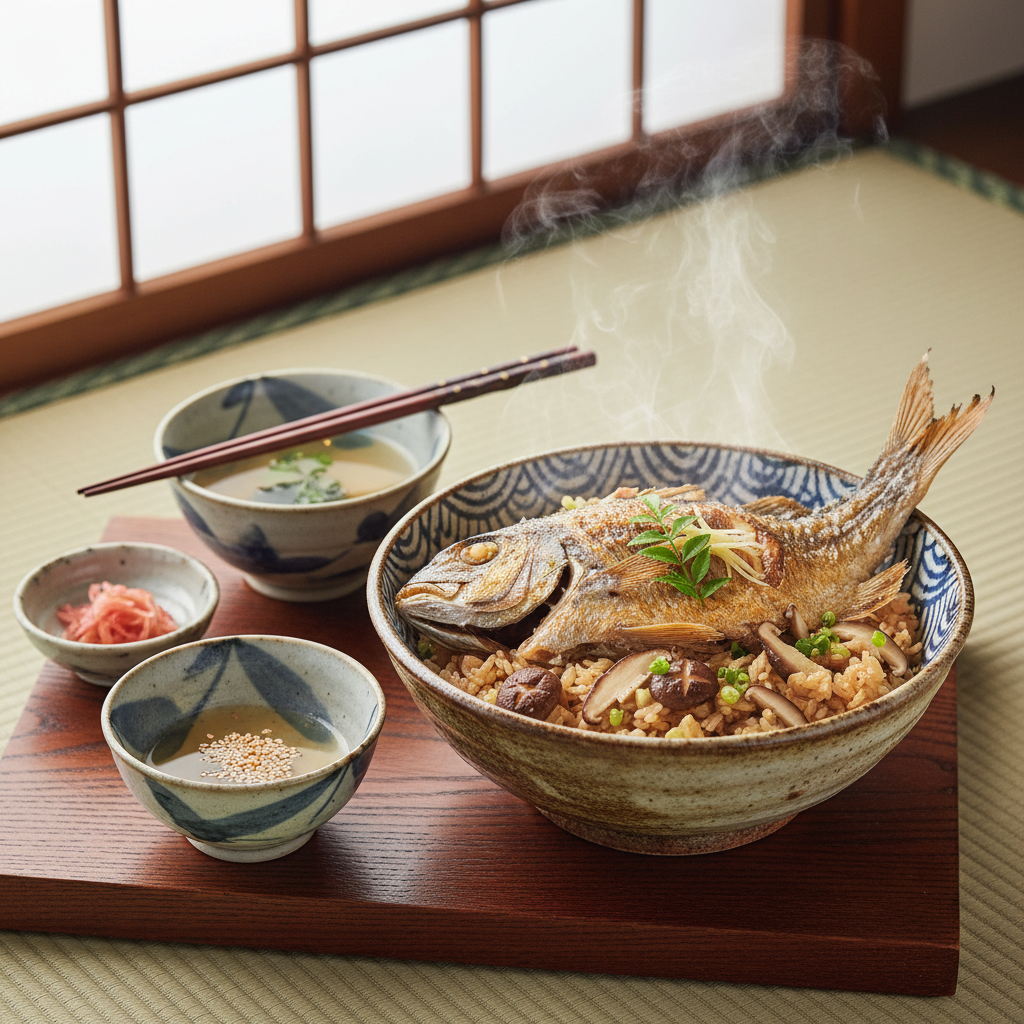
Tai meshi, a local dish loved for many years in Hiroshima Prefecture. This dish, which uses whole red sea bream representing the abundant seafood of the Seto Inland Sea and simmers it together with rice, is cherished as the soul food of Hiroshima residents and as a dish for celebrations and special occasions. In this article, we introduce in detail the history and origins of tai meshi, authentic cooking methods, regional characteristics, and top restaurants in Hiroshima where you can enjoy tai meshi.
What is Hiroshima Prefecture’s Tai Meshi (Sea Bream Rice)?
Hiroshima’s tai meshi is a local dish in which fresh red sea bream is used whole and cooked with rice. It is eaten mainly in areas along the Seto Inland Sea coast, and is particularly a specialty of Fukuyama City, Onomichi City, and Osaki Kamijima Town.
The flavor of the sea bream seeps into each grain of rice, and the fluffy cooked appearance is beautiful to look at and has an extraordinary taste. Red sea bream caught in the Seto Inland Sea has firm flesh and good fat content, which is why it has been highly valued as an ideal ingredient for tai meshi.
Characteristics of Tai Meshi
Hiroshima’s tai meshi has the following characteristics:
- Using whole sea bream: By using the entire fish from head to tail, umami is extracted from the bones and skin
- Simple seasoning: Using basic seasonings such as soy sauce, sake, and mirin, the natural flavor of the sea bream is brought out
- Mixed rice cooking style: By cooking the sea bream and rice together, the umami of the sea bream soaks into the rice
- Beautiful appearance: The cooked sea bream looks luxurious and is appropriate for celebration occasions
History, Origins, and Related Events of Tai Meshi
A tradition dating back to the Edo period
The history of tai meshi in Hiroshima Prefecture is old, dating back to the Edo period. It is said that in Hashijima in Fukuyama City, when a village headman began sea bream net fishing operations, it came to be made by fishermen.
The Seto Inland Sea has long been known as a good fishing ground for sea bream, and during the spring season of cherry blossom sea bream, particularly fatty high-quality sea bream is landed. It is said that fishermen began this tradition by cooking freshly caught sea bream on boats or beaches during work breaks.
Role in celebration occasions
Because of the pun on the word “medetai” (auspicious), sea bream has long been considered an auspicious fish. In Hiroshima Prefecture as well, there is a custom of serving tai meshi at celebrations such as weddings, sixtieth birthday celebrations, and New Year’s.
Particularly in fishing villages along the Seto Inland Sea coast, tai meshi is prepared to celebrate abundant catches and ship launches, and a culture of gathering community members to eat together has taken root.
Connection to regional festivals
In various regions throughout Hiroshima Prefecture, tai meshi is sometimes served at autumn festivals and sea festivals. Particularly in regions where fishing is active, tai meshi is sometimes prepared as an offering to shrines with the meaning of gratitude to the sea and prayers for abundant catches.
Main Traditional Areas
We introduce regions in Hiroshima Prefecture where tai meshi is particularly popular.
Fukuyama City, Hashijima
Hashijima, said to be the birthplace of tai meshi, is an island located offshore from Fukuyama City. With a tradition of sea bream fishing continuing from the Edo period, tai meshi is now cherished as a representative local dish of the island. In island homes, the custom of preparing tai meshi for celebrations and when guests visit remains today.
Onomichi City
Onomichi City is also one of the regions where tai meshi is popular. Tai meshi using fresh sea bream caught in Onomichi Strait is served at restaurants and inns in the city and is popular with tourists. Onomichi’s tai meshi is characterized by a slightly sweet seasoning.
Osaki Kamijima Town
In Osaki Kamijima Town floating in the Seto Inland Sea, fishing is one of the major industries, and tai meshi is a local dish eaten in daily life. Passed down through island households as home cooking, each household preserves its own unique seasoning and preparation methods.
Within Hiroshima City
Even within Hiroshima City, the prefectural capital, tai meshi is popular as a local dish of the Seto Inland Sea. It is served at many Japanese restaurants and local cuisine specialty shops, providing opportunities for tourists and visitors from outside the prefecture to enjoy Hiroshima’s flavors.
Main ingredients used
We introduce the main ingredients used when making tai meshi.
Red sea bream
The red sea bream that becomes the star of tai meshi uses fresh specimens caught in the Seto Inland Sea. The size guideline is about 1 fish (approximately 500g to 800g) for 4 servings. The spring cherry blossom sea bream season (March to May) is said to be particularly fatty and delicious.
Rice
Rice often used is Hiroshima Prefecture varieties such as Koshihikari and Akisakari, with new crop rice that easily absorbs the umami of sea bream being preferred.
Seasonings
- Soy sauce: Dark soy sauce is used to bring out the flavor of the sea bream
- Sake: Japanese sake is used to eliminate the odor of sea bream and bring out its umami
- Mirin: Adds subtle sweetness and shine
- Salt: Used for initial seasoning
- Kombu (kelp): Used as broth or laid out when cooking
Condiments and accompaniments
- Ginger: Sliced thin and cooked in or grated and added
- Mitsuba (Japanese parsley): For aroma and color
- Kinome (Japanese pepper leaves): Particularly preferred in spring
- Lemon: Adds a refreshing flavor
How to Make Tai Meshi
We provide detailed instructions for making authentic tai meshi at home.
Ingredients (Serves 4)
- Red sea bream: 1 fish (approximately 600g, with scales and internal organs removed)
- Rice: 3 cups
- Kombu (kelp): 1 piece (10cm square)
- Sake: 3 tablespoons
- Soy sauce: 2 tablespoons
- Mirin: 2 tablespoons
- Salt: 1 teaspoon
- Water: as needed
- Ginger: 1 piece (sliced thin)
- Mitsuba: as needed (for finishing)
Preparation
- Cleaning the sea bream: Remove the scales and internal organs from the sea bream, and rinse thoroughly with running water. Pat dry with paper towels.
- Salt the sea bream: Sprinkle salt (additional to the amount listed) over the entire surface of the sea bream and let sit for about 15 minutes. This removes any odor and firms up the flesh.
- Rinse the sea bream: Rinse away the water that has come out of the salted sea bream under running water, and pat dry again with paper towels.
- Wash the rice: Wash the rice and soak in water for about 30 minutes, then drain in a colander.
Preparation method
- Make the seasoning liquid: In a bowl, mix together sake, soy sauce, mirin, and salt.
- Add ingredients to rice cooker: Add the washed rice to the rice cooker and add the seasoning liquid. Add water up to the normal 3-cup line and stir lightly.
- Place kombu and sea bream: Lay the kombu on top of the rice, and place the whole sea bream on top. Scatter the sliced ginger.
- Cook: Cook using the normal rice cooking mode. If cooking in a clay pot, bring to a boil over medium heat, then cook over low heat for 15 minutes, finish with high heat for about 10 seconds, remove from heat, and steam for 10 minutes.
- Flake the sea bream: Once cooked, remove the sea bream and flake the flesh while removing bones.
- Mix together: Return the flaked sea bream to the rice and gently mix with a rice paddle.
- Serve: Place in a rice bowl and garnish with mitsuba to finish.
Cooking tips
- Sea bream freshness is important: Using the freshest sea bream possible results in cooking without odor and with delicious results.
- Adjust seasoning to taste: Adjust seasoning based on the saltiness of the sea bream.
- Maintain steaming time: Proper steaming time after cooking results in fluffy rice.
- Don’t overmix: After returning the sea bream flesh, mix gently to avoid crushing the rice.
Eating occasions and seasons
Spring cherry blossom sea bream season
The ideal season for eating tai meshi is the “cherry blossom sea bream” season from March to May. Sea bream during this time of year is before spawning, has good fat content, and thick flesh, making it the most delicious. Because it coincides with the cherry blossom bloom period, it is called “cherry blossom sea bream,” and many households prepare tai meshi during this time.
Celebrations and special occasions
Tai meshi is positioned as a “special occasion” dish and is prepared for the following occasions:
- New Year: As a dish to celebrate the new year
- Weddings: At receptions and celebration gatherings
- Sixtieth birthday celebration: At gatherings to celebrate longevity
- Entrance and graduation celebrations: To celebrate children’s growth
- Housewarming: To celebrate the completion of a home
- Harvest celebrations: In fishing families to celebrate abundant catches
Also in daily meals
In recent years, as fresh sea bream has become easily available at supermarkets, tai meshi is prepared not only for special occasions but also for weekend family meals and entertaining guests.
How to eat
Basic way to eat
Tai meshi is served fresh from cooking in a rice bowl and eaten as is. You can fully enjoy the flavor of rice infused with sea bream umami.
Combination with condiments
The following condiments can be added to vary the taste:
- Grated ginger: Adds a refreshing flavor
- Chopped green onion: Adds aroma and textural accent
- Mitsuba: Adds elegant aroma
- Lemon: Squeeze over to add fresh tartness
- Yuzu: In winter, sprinkle grated yuzu peel
Tea rice style
Leftover tai meshi can be enjoyed the next day as tea rice. Pour hot broth or green tea over it and add wasabi and seaweed for a different flavor experience.
As onigiri
Tai meshi remains delicious when cooled and can be made into onigiri for lunch boxes. It is suitable for outdoor eating occasions such as sports days and field trips.
Differences between Hiroshima’s tai meshi and other regions
Differences from Ehime Prefecture’s tai meshi
Ehime Prefecture, also facing the Seto Inland Sea, also has tai meshi, but the cooking methods differ greatly.
Hiroshima Prefecture’s tai meshi (simmered type):
- Whole sea bream is cooked with rice
- Sea bream umami soaks into the rice
- Eaten warm
Ehime Prefecture’s tai meshi (Uwajima style):
- Uses sea bream sashimi
- Cooked rice topped with sea bream sashimi with special sauce poured over
- Enjoys the texture of raw sea bream
Relationship to other sea bream dishes
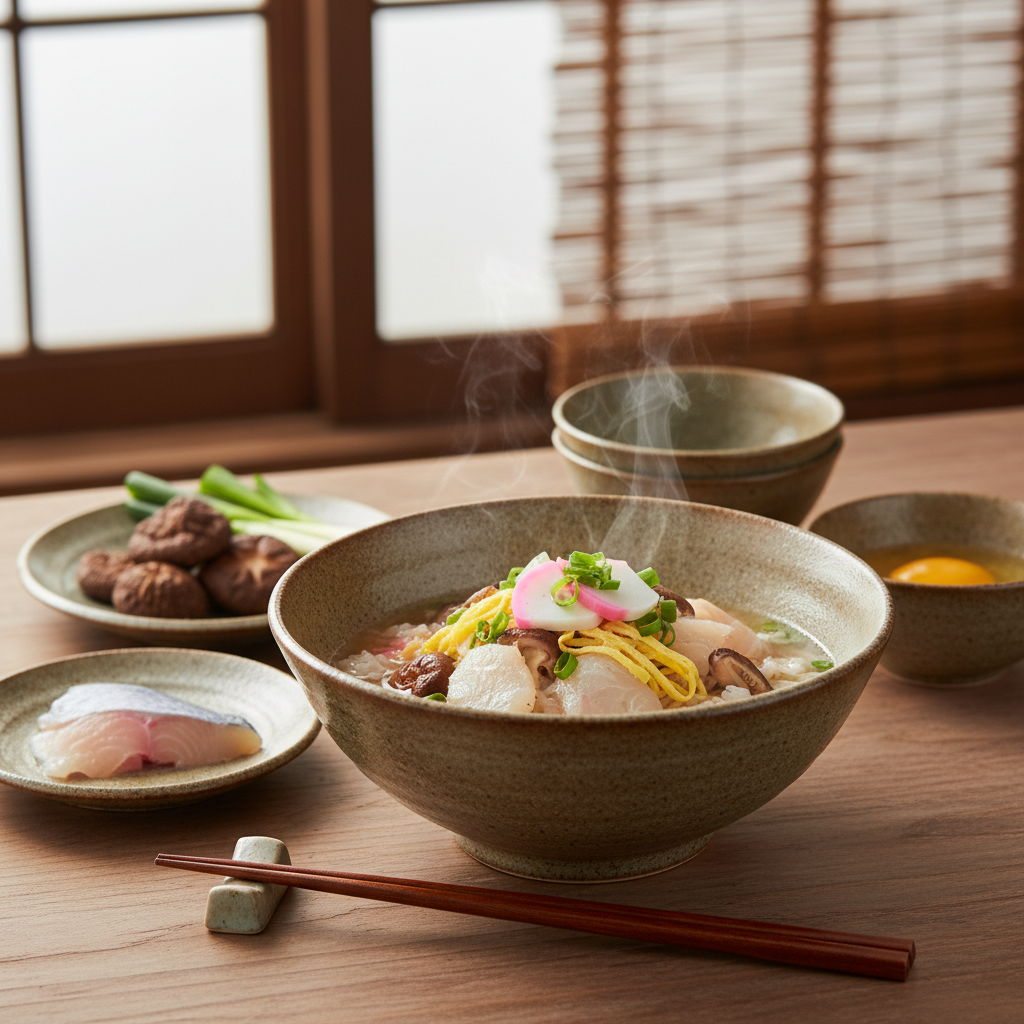
In addition to tai meshi, Hiroshima Prefecture has another local dish called “tai men (sea bream somen).” This is a dish in which cooked somen noodles are arranged in waves on a large plate, topped with a whole sea bream in simmered broth, and garnished with egg strips and shiitake mushrooms, served at celebration gatherings.
Preservation and succession efforts
Regional succession activities
Various efforts are being made throughout Hiroshima Prefecture to pass on the tradition of tai meshi to future generations.
Cooking classes: Cooking classes are regularly held at community centers and local facilities where local elderly people serve as instructors, teaching younger generations how to make tai meshi.
School lunch provision: Some elementary and junior high schools provide tai meshi in school lunches as part of food education to learn about local dishes. It provides an opportunity for children to experience their region’s food culture.
Commercialization efforts
Various products are being commercialized to make tai meshi easier to enjoy.
Tai meshi seasoning mix: A “tai meshi mix” with seasoning and ingredients included is sold at local supermarkets and souvenir shops. It is popular because families can easily make authentic tai meshi at home.
Retort and frozen food: Tai meshi is commercialized as vacuum-packed, retort, and frozen food, with shipping outside the prefecture available. It plays a role in delivering Hiroshima flavors nationwide.
Station bento and airport bento: At Hiroshima Station and Hiroshima Airport, station bento and airport bento using tai meshi are sold and are popular with travelers.
Serving at restaurants
An increasing number of specialty restaurants and local cuisine restaurants serving tai meshi are appearing, centered in Hiroshima City. While maintaining traditional cooking methods, modern arrangements of tai meshi menus are also appearing and being accepted by younger generations.
Information sharing through SNS
In recent years, local restaurants and producers have been using SNS to communicate the appeal of tai meshi. Beautiful plated photos and cooking videos are posted, attracting attention from outside Hiroshima Prefecture. Searching hashtags such as “#Hiroshima tai meshi” and “#Seto Inland Sea tai meshi” yields many posts.
Use as a tourism resource
Hiroshima Prefecture actively uses tai meshi as a tourism resource. It is introduced in tourism pamphlets and websites, and gourmet tours and cooking experience programs are also planned.
Top restaurants where you can enjoy tai meshi in Hiroshima
We introduce representative establishments in Hiroshima Prefecture where you can enjoy authentic tai meshi.
Seto Inland Sea cuisine specialty shops
There are several specialty shops in Hiroshima City that serve cuisine using Seto Inland Sea ingredients. Tai meshi cooked in a clay pot starts cooking after receiving an order, allowing you to enjoy fluffy freshly cooked rice. It is sometimes served as one dish in kaiseki cuisine courses.
Local cuisine specialty shops
Many local cuisine specialty shops serving a wide range of Hiroshima local dishes feature tai meshi as a signature menu. While preserving traditional methods, you can enjoy authentic flavors with a commitment to local ingredients.
Restaurants in tourist areas
In tourist areas such as Onomichi and Tomonoura, there are scattered restaurants serving tai meshi using fresh sea bream landed locally. You can enjoy the region’s flavors combined with sightseeing.
Restaurants and inns
At formal restaurants and hot spring inns, tai meshi is sometimes served as one dish in celebration dinners or kaiseki cuisine. You can enjoy high-quality tai meshi appropriate for special occasions or business entertaining.
Tips for enjoying tai meshi
Choose the season
For the most delicious tai meshi, the spring cherry blossom sea bream season (March to May) is recommended. Sea bream during this time is fatty, has thick flesh, and is ideal for tai meshi.
Reservations may be necessary
At popular restaurants and traditional Japanese restaurants, tai meshi may be offered only by reservation. Particularly when cooking in a clay pot, it takes approximately 30 to 40 minutes to cook, so making a reservation in advance is smooth.
Takeout is also available
Some establishments offer takeout service for tai meshi. It can be used for family meals or as a gift.
Tai meshi events
Food events are held throughout the year in Hiroshima Prefecture, and tai meshi is sometimes served. Check information about local festivals and gourmet festivals.
Conclusion
Hiroshima Prefecture’s tai meshi is a traditional local dish that uses whole red sea bream from the bounty of the Seto Inland Sea and cooks it together with rice. With a history continuing from the Edo period, it is cherished as a dish for celebrations and special occasions, as well as being enjoyed at everyday dining tables.
The deliciousness of rice infused with sea bream umami, the luxurious appearance, and the good fortune of being “auspicious” continue to be loved by many people. When making it at home, the key is to use fresh sea bream and season simply to bring out the natural flavor of the sea bream.
When visiting Hiroshima Prefecture, please try authentic tai meshi. Also, if you would like to try making it at home and enjoying the flavors of the Seto Inland Sea, we would be delighted. Through tai meshi, you will be able to appreciate the importance of preserving regional food culture and passing it on to future generations.