Uzumi – Complete Guide to the History and How to Make This Hidden Local Dish of Fukuyama, Hiroshima Prefecture
What is Uzumi?
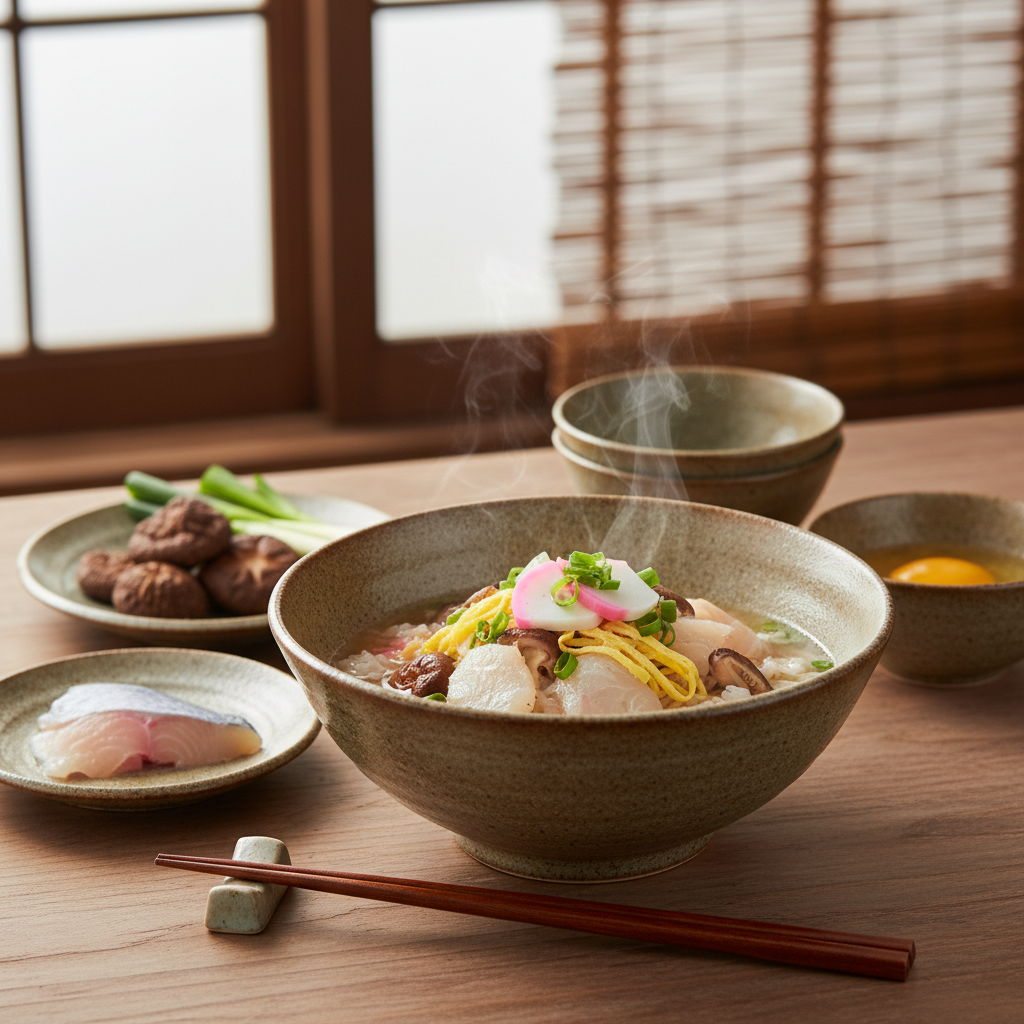
“Uzumi” is a unique local dish that has been passed down for over 400 years since the Edo period in the Fukuyama area in the eastern part of Hiroshima Prefecture. It is characterized by a distinctive cooking method not found in other regions: luxurious ingredients such as sea bream, shrimp, and chicken are placed at the bottom of a bowl, rice is piled on top of them, and then dashi broth is poured over everything.
The name of this dish comes from the word “uzumeru” (to bury), and part of its appeal is the element of surprise—at first glance, the bowl appears to contain only white rice, but in reality, luxurious ingredients are hidden underneath.
In modern times, uzumi is recognized as a representative local dish of Fukuyama City and serves as a symbol of the region’s food culture. It is being utilized as a tourism resource and in community revitalization efforts.
Main Areas of Transmission
Uzumi is a local dish that has primarily been passed down through the Fukuyama area of Hiroshima Prefecture. In particular, it has been eaten in the old town center of Fukuyama and surrounding rural areas as a special dish during autumn harvest festivals and celebrations.
Fukuyama is located at the eastern edge of Hiroshima Prefecture, near the border with Okayama Prefecture, on the Seto Inland Sea coast. During the Edo period, it flourished as a castle town of the Fukuyama Domain, and a unique culture developed under feudal lords such as the Mizuno and Abe families. This historical background became the foundation for creating the unique food culture of uzumi.
Currently, uzumi is being preserved as a restaurant and home-cooked dish within Fukuyama City, and similar dishes can be found in some parts of the Bingo region, including nearby cities such as Fukube and Onomichi.
History, Origins, and Related Events
The Austerity Edicts of the Edo Period and the Birth of Uzumi
The history of uzumi dates back to the early Edo period. During the time when Mizuno Katsunari (1564-1651), the first feudal lord of Fukuyama Domain, ruled, the shogunate issued strict austerity edicts. This austerity policy aimed at financial reconstruction and establishing lifestyles appropriate to one’s social status, severely restricting the luxuries of commoners.
In particular, foods such as chicken, shrimp, and sea bream were considered luxury items, and commoners were not permitted to eat them openly. However, the people of Fukuyama exercised their ingenuity and devised a clever strategy: they “buried” these luxurious ingredients beneath rice, making the meal appear frugal in appearance while actually enjoying a delicious meal.
This act of “hiding” became the origin of the dish’s name and simultaneously became a symbol of the wisdom of Fukuyama’s people and their quiet resistance against authority.
Continuation During the Abe Family Era
After the Mizuno family, during the era when the Abe family ruled Fukuyama Domain, austerity policies continued. During this period, uzumi was quietly passed down among commoners and became established as a dish enjoyed by families on special occasions, particularly during autumn harvest, New Year, and celebrations.
Spread Until the Showa Period
After the Meiji Restoration, uzumi continued to be passed down as a home-cooked dish in the Fukuyama region. Until around the 1960s-1970s (Showa 40s), it was made regularly in many households. Until this period, the traditional method of transmission within families—from grandmother to mother to daughter—was still functioning.
Main Ingredients Used
The ingredients used in uzumi vary somewhat depending on the season and household, but basically the following ingredients are used:
Seafood
- Sea Bream: Fresh sea bream caught in the Seto Inland Sea is a representative ingredient of uzumi
- Small Shrimp: Sweet-flavored small shrimp also add umami to the broth
- Other Seafood: Seasonal fish may be used depending on the time of year
Mountain Bounty
- Chicken: Chicken, once considered a luxury item, remains an important ingredient
- Shiitake Mushrooms: Fragrant shiitake mushrooms enrich the flavor of the broth
- Matsutake Mushrooms: During autumn harvest festivals, matsutake mushrooms are especially used
Root Vegetables
- Burdock: Characterized by earthy aroma and texture
- Taro Root: Its sticky texture adds depth to the dish
- Carrot: Adds color and sweetness
- Radish: Its fresh flavor balances the overall taste
Others
- Tofu: Serves as a source of protein and adds textural accent
- Rice: Freshly cooked white rice is used
- Broth: Broth made from iriko (dried small fish) and kombu kelp is the standard
These ingredients combine the seafood from the Seto Inland Sea and the mountain produce from the Chugoku Mountains, reflecting the geographical characteristics of Fukuyama.
Ingredients (Serves 4)
Main Ingredients
- Sea bream fillets: 200g
- Peeled small shrimp: 100g
- Chicken thigh meat: 150g
- Burdock: 1/2 piece (about 80g)
- Taro root: 4 medium pieces (about 200g)
- Carrot: 1/2 piece (about 80g)
- Radish: 150g
- Dried shiitake mushrooms: 4 pieces
- Firm tofu: 1/2 block (about 150g)
Seasonings
- Broth (iriko and kombu): 800ml
- Soy sauce: 3 tablespoons
- Mirin: 2 tablespoons
- Sake: 2 tablespoons
- Salt: 1/2 teaspoon
Others
- Freshly cooked rice: 4 bowls’ worth (about 600g)
- Trefoil or chopped green onion (for garnish): as needed
Preparation Method
Preparation
- Rehydrating Dried Shiitake Mushrooms: Rehydrate dried shiitake mushrooms in water (reserve the soaking liquid for the broth), remove the hard stems, and cut into bite-sized pieces.
- Processing Root Vegetables:
- Scrape burdock skin and cut diagonally, then soak in water
- Peel taro and cut into bite-sized pieces
- Peel carrot and cut into rough cuts or rounds
- Peel radish and cut into ginkgo leaf shapes
- Processing Seafood, Meat, and Other Ingredients:
- Cut sea bream into bite-sized pieces and lightly salt
- Remove the intestinal vein from shrimp
- Cut chicken into bite-sized pieces
- Drain tofu and cut into cubes
Cooking Steps
- Making Broth: Place iriko, kombu, and the shiitake soaking liquid in a pot of water and slowly extract the broth over low heat (about 15 minutes). Remove the iriko and kombu.
- Simmering Root Vegetables: Add burdock, taro, carrot, and radish to the broth and simmer over medium heat for about 10 minutes. Once a skewer passes through easily, remove and set aside.
- Simmering Shiitake: Add shiitake to the same broth, season with soy sauce, mirin, and sake, and simmer for about 5 minutes.
- Simmering Seafood and Meat: Add sea bream, shrimp, and chicken and simmer over medium heat for 5-7 minutes. Once cooked through, add tofu and simmer for another 2-3 minutes. Adjust seasoning with salt.
- Returning Root Vegetables: Return the previously removed root vegetables to the pot and warm everything through.
Plating
- Arranging Ingredients in Bowl: Arrange the simmered ingredients colorfully in a deep bowl, paying attention to placement to enhance the dining experience.
- Covering with Rice: Cover the ingredients completely with freshly cooked rice, smoothing the surface level.
- Pouring Broth: Gently pour the broth from the simmered ingredients over the rice. The proper amount is enough for the rice to absorb the broth.
- Garnishing: Finally, add a small amount of trefoil or chopped green onion to complete the dish.
How to Eat
Uzumi has its own unique etiquette and way of enjoyment.
Basic Way of Eating
- First Bite: First, taste the white rice on the surface and the broth. At this point, the ingredients are not visible.
- Discovering the Ingredients: As you gently dig with a spoon or ladle, the hidden ingredients gradually appear. This moment of “discovery” is the unique pleasure of uzumi.
- Mixing Everything Together: Once enough ingredients are visible, eat by mixing the rice, ingredients, and broth together.
Tips for Eating
- While Hot: Uzumi is said to taste best while still hot. The rice absorbs the broth, becoming unified with the ingredients’ umami flavor—this is the ideal state.
- Take Your Time: Rather than eating hurriedly, the true way to enjoy uzumi is to savor it slowly while searching for the hidden ingredients.
- Adding More Broth: If the broth runs out as you eat, it is customary to add more warm broth.
Occasions and Seasons for Eating
Uzumi has been eaten at specific occasions and seasons in the Fukuyama region.
Autumn Harvest Festivals
The most traditional occasion for eating uzumi is to celebrate the autumn harvest. Autumn, when new rice is harvested and mountain produce is abundant, is considered the ideal season for making uzumi. Especially during matsutake season, uzumi made with matsutake is prepared and shared as a special treat with the family.
New Year and Celebrations
Uzumi is also served as a special dish during New Year, weddings, and celebrations such as children’s growth festivals. Even in times when people ate simply on ordinary days, such special occasions would feature uzumi made with luxurious ingredients to celebrate family happiness.
Eating in Modern Times
In modern times, uzumi is enjoyed year-round in restaurants and homes throughout Fukuyama City, not limited to specific seasons or events. It is also served to tourists as a local specialty, playing a role in communicating the region’s history and food culture to visitors.
Preservation and Succession Efforts
Community-Based Succession Activities
Fukuyama City is undertaking various efforts to pass uzumi on to future generations.
Cooking Classes: Local community centers and food education centers regularly hold uzumi cooking classes. These provide opportunities for older generations to directly teach traditional cooking methods to younger generations.
School Lunch Programs: In elementary and middle schools throughout Fukuyama City, uzumi occasionally appears on school lunch menus as a local dish. This provides children with a valuable opportunity to experience their region’s food culture.
Commercialization Efforts
Retort Products: Food manufacturers in Fukuyama are developing retort packaged uzumi products that allow families to easily enjoy the dish at home. Products containing ingredients and broth as a set have become popular as tourist souvenirs.
Frozen Foods: Products with pre-processed ingredients sold in frozen form are also available, allowing people to enjoy authentic uzumi while reducing cooking time.
Restaurant Offerings
An increasing number of Japanese and local specialty restaurants in Fukuyama are adding uzumi to their menus. Some restaurants serve creative versions of uzumi that maintain traditional methods while incorporating modern ingredients and cooking techniques, demonstrating new possibilities for local cuisine.
Social Media Information Sharing
Fukuyama City’s tourism association and local restaurants use social media such as Instagram and Facebook to promote the appeal of uzumi. Beautiful photos of plated dishes and videos of the cooking process are posted, capturing the interest of younger generations.
Through hashtags such as “#uzumi,” “#Fukuyama Gourmet,” and “#Hiroshima Local Cuisine,” people inside and outside the region share information about uzumi, contributing to increased awareness of the dish.
Utilization as a Tourism Resource
Fukuyama City positions uzumi as a tourism resource and works to promote the region through “food.” By incorporating local specialty restaurants into sightseeing routes around Fukuyama Castle and introducing uzumi in tourism pamphlets, the city creates opportunities for visitors to experience Fukuyama’s food culture.
Cultural Value of Uzumi
Uzumi holds cultural value beyond that of a simple dish.
Witness to History
It is a precious cultural heritage that demonstrates how commoners created enjoyment in their lives under the harsh social system of the Edo period’s austerity edicts. The philosophy embedded in this dish—not directly opposing authority, but enriching life through wit and ingenuity—reflects the attitudes of our ancestors.
Symbol of Regional Identity
For Fukuyama citizens, uzumi is a dish that symbolizes regional identity. Its unique cooking method and way of eating, found nowhere else, represent Fukuyama’s distinctiveness and play a role in fostering pride and attachment to the region.
Educational Material for Food Studies
Uzumi is also an excellent teaching material for educating children about local history and food culture. The historical episodes behind the dish are intriguing, allowing learning of regional history through food. It also provides opportunities to appreciate the importance of using seasonal ingredients and to cultivate gratitude for food ingredients.
Modern Significance of Uzumi
In modern society, uzumi is beginning to take on new significance.
Value as Slow Food
In an era dominated by fast food, uzumi embodies the value of “slow food”—dishes made with care over time and savored slowly. The cooking process of using diverse ingredients and carefully preparing each one recalls respect for ingredients and the importance of valuing meals.
Practice of Local Production and Consumption
Most of the ingredients used in uzumi are locally produced. By using local seafood and agricultural products, it practices local production and consumption while contributing to regional economic vitalization.
Promotion of Intergenerational Exchange
The act of making and eating uzumi promotes communication between generations. It serves as an opportunity to transmit cooking methods, eating styles, and stories related to the dish from the grandparent generation to the grandchildren generation, deepening family bonds.
Conclusion
Uzumi is a local specialty dish of Fukuyama, Hiroshima Prefecture, with a history spanning over 400 years. Born under the harsh social system of the Edo period’s austerity edicts, this dish conveys to us today the wisdom of Fukuyama’s people and their positive spirit of enjoying life.
Its distinctive cooking method of hiding luxurious ingredients beneath rice is unique to Fukuyama and found nowhere else, and the pleasure of discovering ingredients as one eats brings fresh surprise to modern dining tables.
Through various efforts including community-based succession activities, commercialization, and social media information sharing, uzumi is being passed on to future generations. While maintaining tradition, new ways of enjoying the dish have also emerged to suit modern lifestyles, and the appeal of uzumi as a local specialty continues to expand.
If you have the opportunity to visit Fukuyama City, be sure to taste this historic local dish and experience the wisdom of your ancestors and Fukuyama’s rich food culture embedded in the cooking. Also, by attempting to make uzumi at home, you will be able to more deeply understand the region’s history and culture.