Shoyu Mame: A Complete Guide to Kagawa Prefecture’s Proud Traditional Local Cuisine
Shoyu mame (しょうゆ豆), a representative local dish of Kagawa Prefecture, is a traditional food featuring roasted broad beans pickled in a sweet and savory seasoning liquid, characterized by its fragrant aroma and unique texture. Passed down since the Edo period, this dish has become an indispensable part of the dining tables of prefecture residents as a representative of the food culture of the Sanuki region.
In this article, we will provide comprehensive information about the appeal of this local cuisine, from its historical background to how to make it at home, and the current efforts to preserve and pass it on.
What is Shoyu Mame?
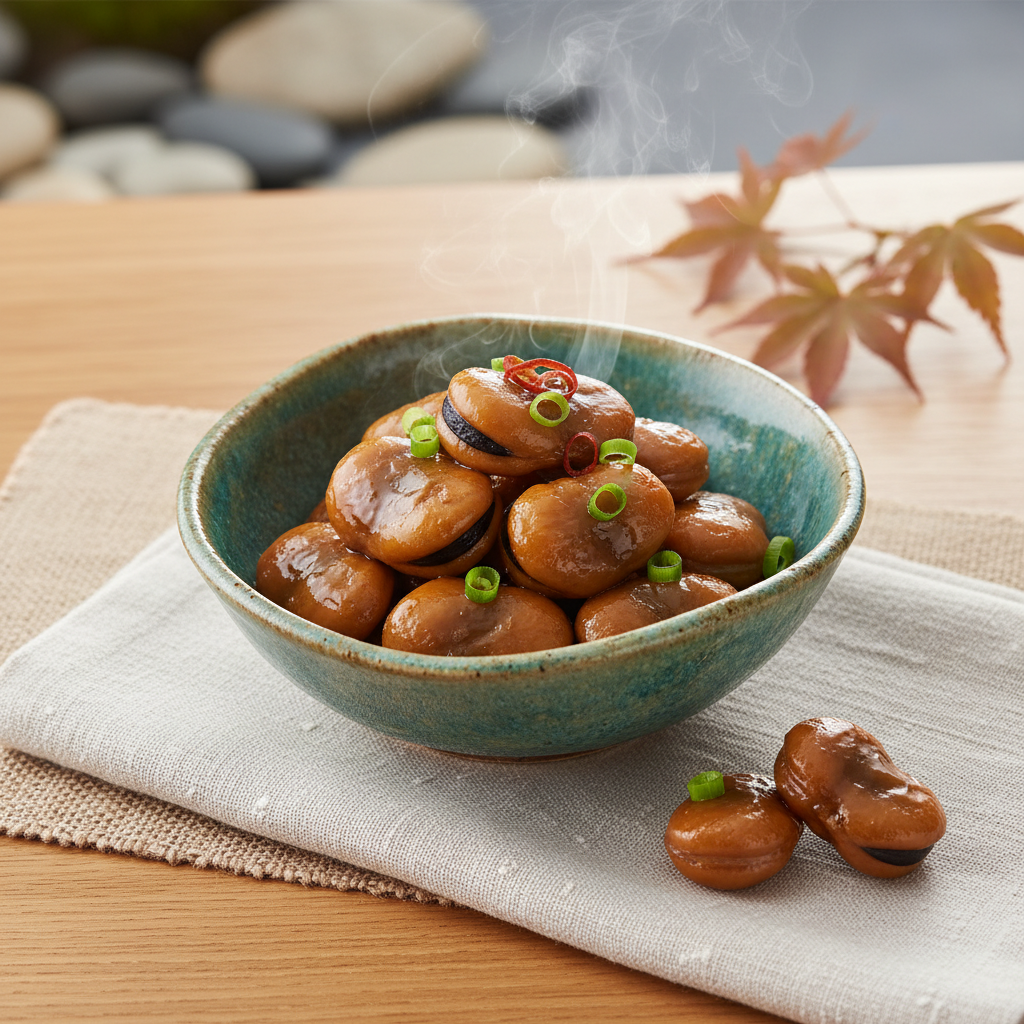
Shoyu mame is a traditional local dish of Kagawa Prefecture made by roasting dried broad beans in a hoaroku (a traditional clay roasting pan) or pot until they brown and become fragrant, then pickling them overnight or longer in a seasoning liquid made from soy sauce, sugar, mirin, and chili peppers.
Unlike ordinary boiled beans, the main feature is that roasting removes moisture from the beans, creating a crispy texture and fragrant aroma. The beans, with the seasoning liquid slowly soaked through, have a sweet and savory exterior and a fluffy interior, creating a memorable and unique taste.
Characteristics of Shoyu Mame
- Fragrant aroma: The natural aroma of beans born from high-heat roasting
- Unique texture: A two-layer texture—crispy on the outside, fluffy on the inside
- Sweet and savory seasoning: An exquisite balance of soy sauce and sugar in the seasoning liquid
- High preservation: Can be kept as a staple side dish with long shelf life
- Versatile ways to eat: Used as a rice topping, sake snack, palate cleanser, and more
It is also registered in the Ministry of Agriculture, Forestry and Fisheries’ “Our Local Cuisine,” officially recognized as representing Kagawa Prefecture’s food culture.
History, Origins, and Related Events
The Legend of Shoyu Mame’s Birth
Several interesting legends about the origin of shoyu mame remain.
The most famous origin story involves traveling Buddhist pilgrims. Long ago, a kind elderly woman was roasting broad beans to entertain a pilgrim when the beans accidentally fell into a nearby soy sauce pot. Thinking it a waste, she retrieved and tasted them, and found them unexpectedly delicious—thus shoyu mame was born, according to this account.
Another theory suggests that during the Edo period in the Sanuki region, farmers created it through trial and error in developing preserved foods. In any case, it is certain that this is a traditional dish continuing from the Edo period, deeply rooted in Sanuki’s food culture through a long history.
Deep Connection with Agriculture
Broad beans have long been widely cultivated in Kagawa Prefecture as a winter crop following rice cultivation. Growing broad beans in the same paddies during winter and spring after rice harvest enabled efficient land use and year-round harvests.
Farmers in every household cultivated broad beans in quantities for year-round consumption, and the wisdom of processing harvested beans as preserved foods led to the creation of shoyu mame. Particularly during busy farming seasons, it was treasured as a convenient staple food that could be eaten quickly, and it was made in individual households.
Present-Day Positioning
Today, shoyu mame remains a familiar local dish enjoyed daily in Kagawa Prefecture. It is served not only in home kitchens but also in restaurants year-round and even appears on school lunch menus, so deeply rooted is it in the region.
Additionally, some households eat shoyu mame instead of black beans in New Year’s osechi (traditional festive food), perpetuating this food habit unique to Kagawa Prefecture.
Main Transmission Areas
Shoyu mame is eaten throughout Kagawa Prefecture, but it has been traditionally made especially in the Sanuki region (the area corresponding to the former province of Sanuki, the old name for Kagawa Prefecture).
Spread Throughout the Prefecture
- Around Takamatsu City: Numerous manufacturers centered on the prefectural capital
- Marugame City and Sakaide City: Regions where many households follow traditional methods
- Eastern Sanuki Region: Areas like Sanuki City and Higashikagawa City where homemade production by farmers is thriving
- Western Sanuki Region: Areas like Kanonji City and Mitoyo City where unique arrangements are seen
Throughout the prefecture, shoyu mame can be easily purchased at supermarkets and souvenir shops, and homemade versions are often sold at roadside stations and agricultural product direct sales outlets, making it completely established as a regional food culture.
Main Ingredients Used
The ingredients for making shoyu mame are simple yet carefully selected.
Main Ingredients
Broad Beans (Dried)
- The star ingredient of shoyu mame
- Large, high-quality beans are preferable
- Kagawa-grown broad beans have traditionally been used
- Drying enhances preservation and processing suitability
Seasoning Liquid Ingredients
Soy Sauce
- The basic seasoning for flavor
- Dark soy sauce is common, though light soy sauce is used in some households
- Since Kagawa has Shodoshima, a renowned soy sauce production area, many households use locally produced soy sauce
Sugar
- Adds sweetness and depth to the flavor
- Households vary in using granulated sugar, sanontou, or brown sugar
- The amount can be adjusted to change the sweet-savory balance
Mirin
- Adds smoothness and gloss
- Using hon-mirin (true mirin) enhances flavor
Chili Pepper
- Adds a spicy accent
- Usually dried chili peppers (such as cayenne) are used in thin rings
- The amount can be adjusted to taste
Additionally, some households add ginger, kombu seaweed, bonito flakes, and other ingredients, with each family having their own unique taste.
How to Make It (Basic Recipe)
We introduce the basic way to make shoyu mame at home.
Ingredients (Serves 4)
- Dried broad beans: 200g
- Soy sauce: 100ml
- Sugar: 3-4 tablespoons
- Mirin: 2 tablespoons
- Water: 100ml
- Chili pepper (cayenne): 1-2 peppers
- Ginger (optional): 2-3 thin slices
Cooking Steps
1. Preparing the Broad Beans
Lightly rinse the dried broad beans and wipe away all moisture. If water remains on the beans, they will not cook evenly when roasting, making this step important.
2. Roasting the Beans
Heat a hoaroku (clay roasting pan) or heavy-bottomed frying pan over medium heat and add the broad beans. Constantly stir with a wooden spatula or rice paddle to prevent sticking, and slowly roast for 15-20 minutes.
The beans are done when the skins show browning, a fragrant aroma rises, and the beans become light and make a crackling sound. If the heat is too strong, the beans will burn, so roasting slowly over medium to low heat is key.
3. Making the Seasoning Liquid
In a pot, add soy sauce, sugar, mirin, and water, and heat. Once the sugar dissolves completely, remove from heat, then add the chili pepper (seeds removed and sliced into rings) and ginger.
4. Pickling
Pour the hot roasted beans into a storage container or sealable jar. Pouring the seasoning liquid while the beans are still hot makes the flavor absorb more easily.
Pour the liquid so that all beans are submerged. If insufficient, add equal parts soy sauce and water.
5. Cooling and Storage
Once cooled slightly, cover and refrigerate for at least one night. Soaking for a minimum of 12 hours, preferably 24 hours or more, allows the flavor to penetrate to the center of the beans, making them more delicious.
Pickling for 2-3 days deepens the flavor as it blends.
Tips and Precautions for Cooking
Bean Roasting is Most Important
How well you roast the beans determines the deliciousness of shoyu mame. Insufficient roasting results in poor texture and difficulty absorbing the seasoning liquid. Be conscious of cooking the beans thoroughly to their centers over time.
Pickle While Hot
Pickling the freshly roasted hot beans in the seasoning liquid makes them absorb it more easily. If you wait until the beans cool, the flavor will not soak in well, so be careful.
Storage Method
Stored in the refrigerator, they keep well for about two weeks. Using a clean container and clean chopsticks or spoon when removing beans extends shelf life.
Occasions and Seasons for Eating
Shoyu mame is eaten year-round in Kagawa Prefecture, but there are particular occasions and seasons when it is especially enjoyed.
Daily Dining Tables
As a Staple Side Dish
The most common way to eat it is as a staple side dish in daily meals. Keeping it in the refrigerator, it appears on the table for breakfast, lunch, or dinner as a rice topping.
Because it can be made in advance and has high preservation, it remains valuable in modern busy households.
Staple Food During Busy Farm Seasons
Traditionally, it served an important role as a convenient staple food during busy farming seasons like rice planting and harvesting, allowing quick nutritional intake. Farm work could be simply sustained with rice balls and shoyu mame between tasks.
New Year’s and Osechi
In some Kagawa households, shoyu mame replaces black beans in New Year’s osechi. It is a Sanuki-unique osechi item made with the wish to “live healthily.”
Broad Bean Harvest Season (Spring)
When broad beans are harvested in Kagawa in spring (around April-May), households make shoyu mame with fresh beans. The shoyu mame made during this period is sometimes preserved as a year’s supply of staple food.
School Lunch
As part of local cuisine education, Kagawa’s school lunches regularly serve shoyu mame, providing children a valuable opportunity to experience regional food culture.
How to Eat
Shoyu mame offers diverse enjoyment in various scenes.
As a Rice Topping
The most popular way is to serve it alongside freshly cooked white rice. The sweet and savory flavor and fragrant aroma complement the rice’s natural sweetness. It becomes irresistible for seconds.
As a Sake Snack
It pairs excellently with all types of alcohol—beer, sake, shochu. Izakayas often serve it as a standard menu item, perfect for eating while drinking.
Its crispy texture and moderate saltiness stimulate the appetite for more sake.
As a Palate Cleanser with Udon
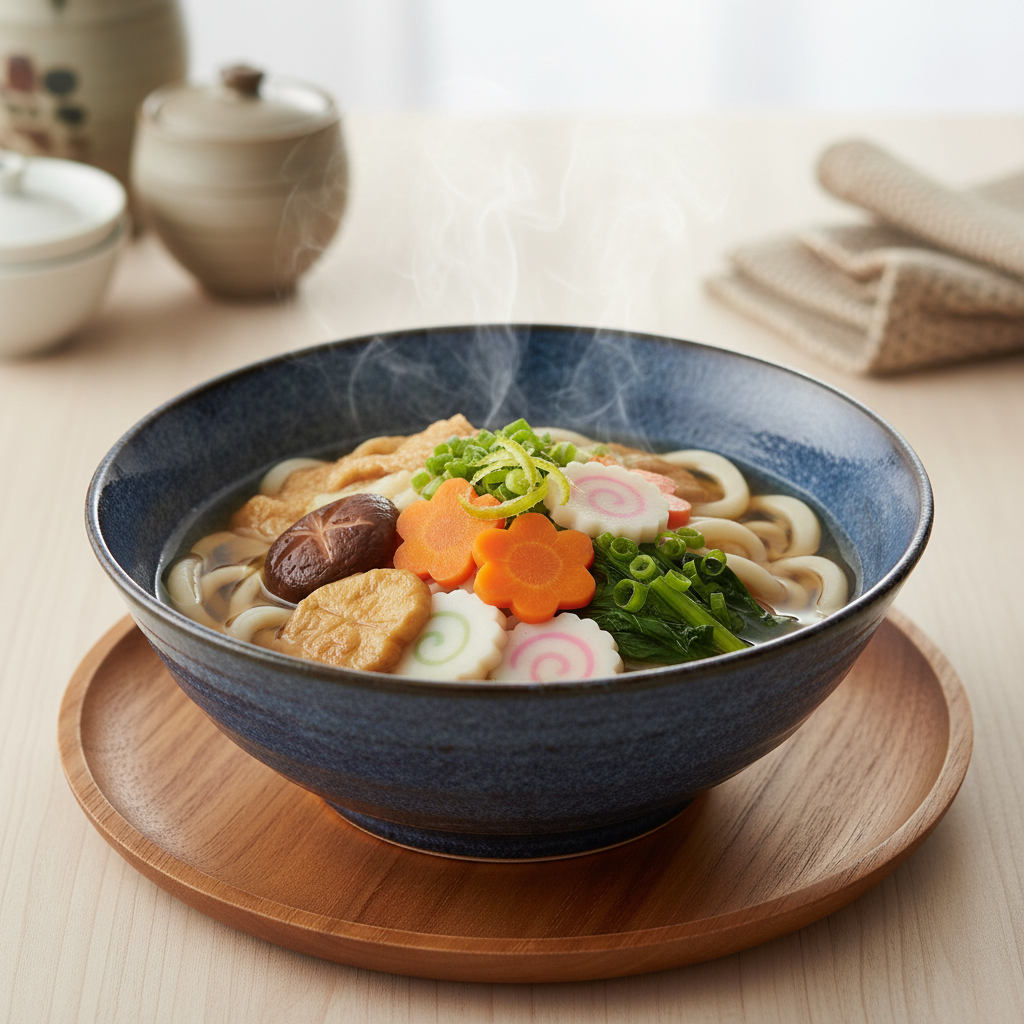
In Kagawa, famous for Sanuki udon, many udon shops serve shoyu mame as a palate cleanser. Eating it between noodles resets the palate, making the udon taste even better.
As a Bento Box Side Dish
With high preservation and little liquid, it works well as a bento box side dish. Placing a small amount in a container makes it a colorful and nutritious accent.
As a Tea Snack
With its sweetness, it can be enjoyed with tea. It is sometimes eaten as a snack with green or regular tea.
Arranged Recipes
Salad Topping
Chopped and scattered on salads, it provides a fragrant accent and textural element.
Fried Rice Ingredient
Finely chopped and mixed into fried rice, it adds distinctive flavor.
Onigiri Filling
Placed inside or mixed into rice balls creates Sanuki-style onigiri.
Preservation and Succession Efforts
Kagawa Prefecture carries out various initiatives to pass the precious local cuisine of shoyu mame to the next generation.
Commercialization and Promotion
Manufacturers like Onishi Food Co., Ltd.
Several food manufacturers in Kagawa have commercialized shoyu mame. Notably, Onishi Food Co., Ltd. maintains traditional manufacturing methods while meeting modern hygiene standards, widely selling products throughout and outside the prefecture.
By marketing packaged products, people without the habit of home cooking can easily enjoy shoyu mame, contributing to the spread of this local cuisine.
Development as Souvenirs
Shoyu mame is sold as a representative Kagawa souvenir at places tourists visit—Takamatsu Airport, JR Takamatsu Station, roadside stations, service areas. It provides opportunities for visitors outside the prefecture to discover Sanuki flavors.
Educational Initiatives
Provision in School Lunch
Many elementary and middle schools in Kagawa provide shoyu mame in school lunches as part of local cuisine education. When children become familiar with regional flavors from a young age, food culture succession is promoted.
Food Education Classes
Some schools conduct hands-on classes where students actually make shoyu mame, allowing them to learn how to prepare the local cuisine and deepen their understanding of regional food culture.
Government Support
Registration in the Ministry of Agriculture, Forestry and Fisheries “Our Local Cuisine”
Shoyu mame is registered as a representative Kagawa local cuisine in the Ministry of Agriculture, Forestry and Fisheries’ “Our Local Cuisine” database, increasing nationwide recognition and making it eligible for public protection and support.
Kagawa Prefecture Agricultural, Livestock, and Fishery Products Support Portal Site
The “Food of Sanuki” portal site operated by Kagawa Prefecture provides information on local cuisines including shoyu mame, offering recipes, history, and manufacturer information.
Use of SNS and Internet
Recipe Site Information
Major recipe sites like Delish Kitchen introduce shoyu mame preparation with videos, making it easier for younger generations to learn how to make it.
Sales Through E-commerce
Through major e-commerce sites like Rakuten, Amazon, and Yahoo! Shopping, as well as manufacturers’ own online shops, shoyu mame can be purchased from anywhere nationwide.
Word-of-Mouth Spread Through SNS
On SNS platforms like Instagram and Twitter, many posts appear with hashtags like “#shoyu mame” and “#Kagawa gourmet,” spreading recognition among people outside the prefecture.
Use in Regional Events
Trade Fairs and Food Events
At trade fairs for Kagawa products held nationwide, shoyu mame is always exhibited, and awareness-building efforts occur through sample tastings.
Cooperation with Tourism PR
Along with Sanuki udon, it is presented as Kagawa’s food culture in tourism brochures and websites, also serving as a tourism resource.
Initiatives by Tradition Bearers
Home Handmade Succession
In many Kagawa households today, shoyu mame-making methods are passed down from grandmother to mother to daughter. Each family’s unique seasoning and techniques are transmitted orally.
Guidance in Cooking Classes
Community centers and cooking schools conduct local cuisine classes teaching shoyu mame preparation, contributing to skill succession and dissemination.
Nutritional Value and Health Benefits of Shoyu Mame
Shoyu mame is not only delicious but also nutritionally excellent.
Main Nutritional Components
Protein
Broad beans are rich in plant-based protein, containing important nutrients that form muscles and blood.
Dietary Fiber
Legumes are abundant in dietary fiber, helping improve intestinal health and relieve constipation.
B-Complex Vitamins
Contains vitamin B1, B2, and others that aid fatigue recovery and metabolism enhancement.
Minerals
Contains iron, potassium, magnesium, and other minerals that contribute to anemia prevention and blood pressure regulation.
Health Considerations
Since shoyu mame uses soy sauce and sugar, it contains relatively high salt and sugar content. Eating too much due to its deliciousness can lead to excessive salt and sugar intake, so moderation is important.
Particularly for those with conditions like high blood pressure or diabetes, attention to portion size is necessary.
Where to Purchase Shoyu Mame
For those outside Kagawa Prefecture wanting to obtain shoyu mame, these options exist:
Purchases in Kagawa Prefecture
- Supermarkets: Available at nearly all supermarkets in the prefecture
- Souvenir Shops: Takamatsu Airport, JR Takamatsu Station, souvenir shops at tourist attractions
- Roadside Stations and Direct Sales Outlets: Homemade products can be purchased
- Manufacturer Direct Sales Shops: Direct stores like Onishi Food
Online Purchases
- Rakuten, Amazon, Yahoo! Shopping: Multiple manufacturer products available
- Manufacturer Official Online Shops: Official sites like Onishi Food
- Kagawa Prefecture Antenna Shops: Antenna shops in major cities like Tokyo
Price Range
Standard packaged products (150g-200g) typically range from 300-600 yen. Gift set assortments are also sold.
Shelf Life
Unopened market products typically have a shelf life of about 3-6 months from manufacturing. After opening, store in the refrigerator and consume within about two weeks.
Conclusion: What Shoyu Mame Conveys About Sanuki Food Culture
Shoyu mame transcends being merely a local dish—it embodies the history, agriculture, and living culture of Kagawa Prefecture.
The traditional manufacturing methods passed down since the Edo period, the agricultural wisdom of growing broad beans as a winter crop following rice cultivation, the ingenuity of daily life treasuring them as busy-season staples, and the unique flavors passed down in individual households—all of this is concentrated in a single grain of shoyu mame.
Even today, various efforts to preserve and succeed the tradition continue through commercialization and dissemination, provision in school lunches, and information sharing via SNS, surely being passed to the next generation.
Fragrant roasted broad beans absorb the sweet and savory seasoning liquid, creating a unique texture and taste. Once tasted, anyone is fascinated by its simple yet profound deliciousness.
When visiting Kagawa Prefecture, be sure to taste authentic shoyu mame. By making it at home, you can more deeply understand and enjoy Sanuki’s food culture.
Why not experience Kagawa’s rich food culture and the wisdom of those who have protected and passed it down through shoyu mame?