Complete Guide to Shippoku Udon | History, Recipe, and Recommended Restaurants of Kagawa Prefecture’s Local Cuisine
Shippoku udon is one of the signature local dishes of Kagawa Prefecture. As a renowned producer of Sanuki udon, Kagawa Prefecture has a dish that is especially beloved by local residents as a winter tradition: shippoku udon. This article presents the complete appeal of this local cuisine, covering its history and characteristics, how to make it at home, and recommended restaurants throughout Kagawa Prefecture.
What is Shippoku Udon?
Shippoku udon is a warm noodle dish that has long been cherished as a local specialty of Kagawa Prefecture. The name “shippoku” derives from the Chinese word “卓袱 (shippoku),” which means arranging various ingredients together in a single bowl.
Basic Characteristics
The defining feature of shippoku udon is that it combines Sanuki udon noodles with abundantly simmered seasonal vegetables and toppings. While typical Sanuki udon emphasizes the simplicity of the broth and the chewy texture of the noodles, shippoku udon is characterized by its generous toppings, high nutritional value, and its role as a warming, soul-satisfying dish.
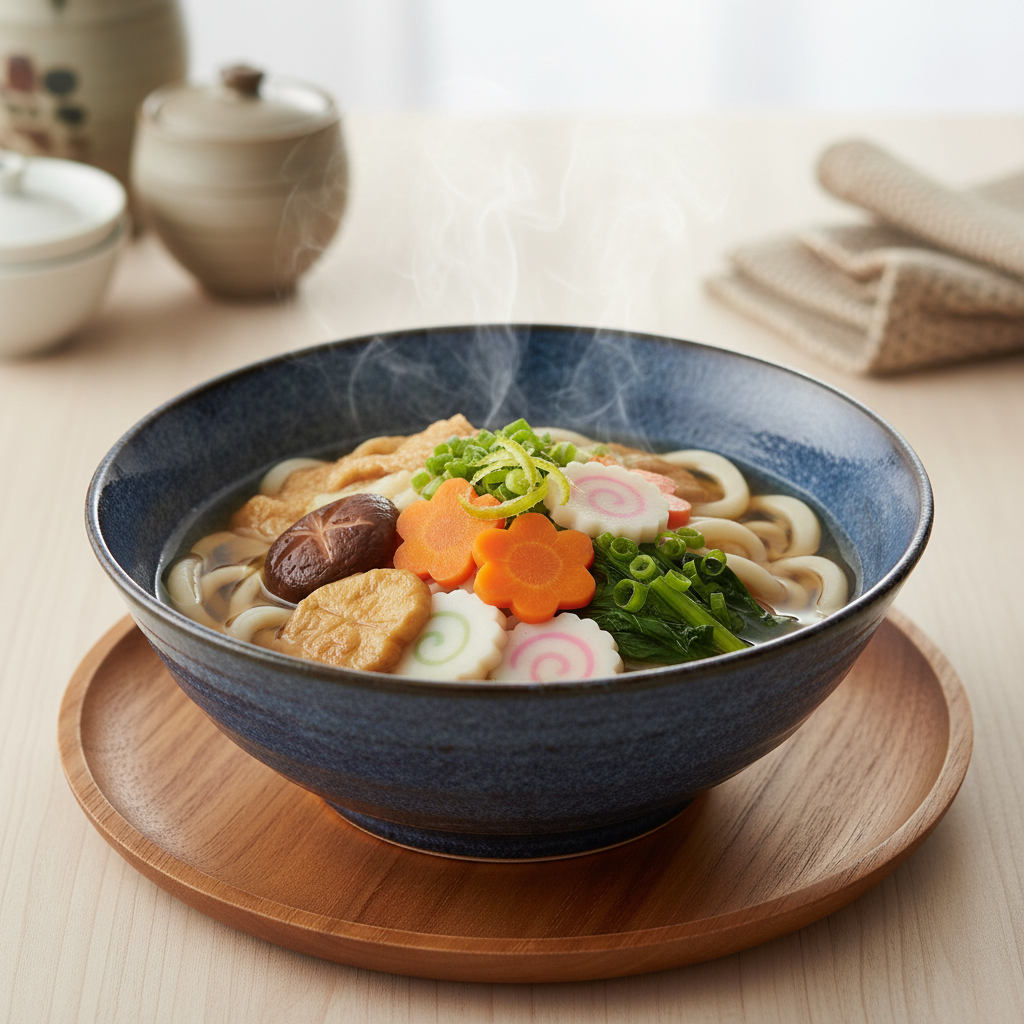
The main ingredients include root vegetables and vegetables such as daikon radish, carrots, taro, fried tofu, burdock, and shiitake mushrooms. These are simmered in broth and generously ladled over Sanuki udon noodles.
Differences from Sanuki Udon
Despite both being part of Kagawa Prefecture’s udon culture, there are distinct differences between regular Sanuki udon and shippoku udon.
Sanuki udon is fundamentally based on enjoying chewy noodles and simple broth. Styles such as kake udon, bukkake udon, and kamaage udon emphasize the texture of the noodles themselves and the flavor of the broth.
In contrast, shippoku udon is characterized by abundant toppings and simmering techniques. The umami of the vegetables dissolves into the broth, and the softly simmered toppings become one with the noodles, creating a more complex and profound flavor.
History and Cultural Background of Shippoku Udon
Origins and Development
There are several theories about the origins of shippoku udon, but it is believed to have developed in Kagawa Prefecture during the Edo to Meiji periods. It is thought to have been influenced by “taku-hōku ryōri,” a Chinese-style banquet cuisine that developed in Nagasaki, with the style of arranging various ingredients in a single bowl merging with Kagawa’s udon culture.
Kagawa Prefecture has long been an active wheat-growing region with a well-established udon-making tradition. Meanwhile, the warm climate facing the Seto Inland Sea was well-suited for vegetable cultivation. The abundance of agricultural products combined with the udon culture gave birth to shippoku udon, a unique local dish.
Relationship with Seasons
Shippoku udon has traditionally been enjoyed particularly as a winter seasonal dish. In Kagawa Prefecture, there is a custom of eating shippoku udon on the winter solstice and during year-end holidays, and it is valued as a family gathering dish during times when relatives gather.
Many of the ingredients, centered on root vegetables, reach their peak in winter and are believed to have warming effects. Additionally, because large quantities can be made in a single pot, it is suitable for large gatherings and has been used as ceremonial food at various occasions such as celebrations and memorial services.
Regional Variations
Even within Kagawa Prefecture, there are subtle differences in how shippoku udon is prepared depending on the region and household. The eastern Sanuki, central Sanuki, and western Sanuki regions each have their own characteristics in the ingredients used, how the broth is prepared, and the seasoning.
Some regions add chicken, while others incorporate seafood. This diversity speaks to the richness of shippoku udon as a local cuisine.
How to Make Shippoku Udon
Basic Recipe (Serves 4)
Here is a basic recipe for making authentic shippoku udon at home.
Ingredients
- Sanuki udon (fresh or cooked noodles): 4 portions
- Daikon radish: 200g
- Carrot: 1
- Taro: 4
- Burdock: 1/2
- Fried tofu: 2 pieces
- Dried shiitake mushrooms: 4
- Green onion: as needed
- Broth (iriko or kombu dashi): 1200ml
- Light soy sauce: 3 tablespoons
- Mirin: 2 tablespoons
- Salt: 1/2 teaspoon
Instructions
- Preparation
- Soak dried shiitake mushrooms in water (reserve soaking liquid for broth)
- Peel daikon radish and carrot, then cut into matchsticks or thin wedges
- Peel taro and cut into bite-sized pieces, then parboil to remove sliminess
- Cut burdock into thin shavings and soak in water
- Pour boiling water over fried tofu to remove excess oil, then cut into thin strips
- Slice green onion into rounds
- Simmer the toppings
- Pour broth into a pot and bring to heat
- Once boiling, add daikon radish, carrot, burdock, and taro
- Simmer over medium heat for 15-20 minutes until vegetables are tender
- Add shiitake mushrooms and fried tofu, then simmer for another 5 minutes
- Season
- Adjust seasoning with light soy sauce, mirin, and salt
- Traditional Kagawa shippoku udon is finished with a slightly subtle flavor
- Cook the udon
- Boil udon in a separate pot
- If using fresh noodles, cook according to package directions
- Once cooked, drain in a colander
- Plating
- Place udon in a bowl and generously ladle toppings over it
- Pour plenty of broth
- Finish by scattering green onion on top
Professional Tips and Variations
How to Make Broth
Traditional shippoku udon in Kagawa Prefecture commonly uses iriko (dried anchovy) broth. Remove the heads and innards from the iriko, soak overnight in water, then heat to create a refined broth without off-flavors.
Using kombu along with iriko creates deeper, more complex flavors. Remove kombu just before boiling to avoid bitterness.
Customizing Toppings
In addition to basic ingredients, you can add:
- Chicken thigh: Cut into bite-sized pieces and simmer to add richness to the broth
- Konnyaku: Tear by hand and add for textural contrast
- Chrysanthemum greens or Chinese cabbage: Seasonal leafy vegetables add color
- Kamaboko: Red and white fish cake adds festive elegance for celebrations
Seasonal Variations
You can enjoy shippoku udon outside of winter by varying ingredients. Spring brings bamboo shoots and rapini blossoms, summer offers eggplant and okra, and fall allows for abundant mushrooms, offering year-round enjoyment of different flavors.
Renowned Shippoku Udon Restaurants in Kagawa Prefecture
Established Udon Shops
Kagawa Prefecture has numerous established restaurants serving traditional shippoku udon. Many offer it seasonally during winter, and locals eagerly anticipate this seasonal flavor.
Popular Restaurants in Takamatsu City
Several century-old udon shops in Takamatsu have preserved the traditional taste passed down through generations. These establishments serve shippoku udon made with house-made noodles, carefully prepared broth, and carefully selected local seasonal vegetables.
Popular Restaurants in the Sanuki Area
Some udon restaurants scattered throughout the Sanuki Plain have direct contracts with local farmers and use fresh vegetables harvested that morning. The shippoku udon at these establishments showcases the natural sweetness and fragrance of vegetables, offering authentic local cuisine unavailable in urban areas.
Shippoku Udon at Self-Service Udon Restaurants
An increasing number of self-service udon restaurants unique to Kagawa Prefecture offer shippoku udon during winter. At these establishments, the common style is for customers to serve themselves from large pots of simmered toppings, and authentic flavors can be enjoyed at reasonable prices.
The appeal of self-service restaurants is their excellent value. For around 500 yen, you can enjoy generous, satisfying portions of shippoku udon.
Nutritional Value and Health Benefits of Shippoku Udon
Nutritional Balance
Shippoku udon is a nutritionally well-balanced dish containing carbohydrates, vegetables, and proteins (such as fried tofu and chicken).
Main Nutrients
- Carbohydrates: Energy source from udon
- Dietary fiber: Abundant in root vegetables, supports intestinal health
- Vitamins: Beta-carotene from carrots, vitamin C from daikon, etc.
- Minerals: Potassium from taro, polyphenols and fiber from burdock
- Protein: From fried tofu and chicken
Health Benefits
Warming Effect
Root vegetables are considered “warming” foods in traditional Eastern medicine. Eating them during cold winter months warms the body from within and is believed to strengthen immunity.
Gentle on Digestion
Udon is easily digestible and gentle on the stomach and intestines. Simmering vegetables until soft makes it even more digestible, making it suitable for those with poor appetite and for elderly diners.
Low-Calorie with High Satiety
With vegetables as the main ingredients, shippoku udon is relatively low-calorie while being rich in dietary fiber that promotes fullness. It is a satisfying dish even for those watching their diet, maintaining nutritional balance.
Tips for Enjoying Shippoku Udon
When to Eat It
Traditionally, shippoku udon has been eaten on these occasions:
- Winter Solstice: To warm the body on the year’s shortest day
- Year-End and New Year: As a family gathering dish
- Cold Evenings: As everyday home cooking
- Celebrations and Memorial Services: When large groups gather
Eating Etiquette and Tips
Eat While Hot
Shippoku udon is said to taste best when piping hot. With toppings and broth at proper temperature, eat carefully while hot to avoid burns.
Balance Toppings and Noodles
Eating a bite of noodles with toppings allows you to enjoy various flavors and textures. Start by savoring the toppings, then focus on the noodles and broth toward the end—varying the eating progression is part of the enjoyment.
Using Condiments
Beyond green onion, adding shichimi togarashi or ginger creates flavor variations. Ginger, in particular, has warming properties and pairs excellently with winter shippoku udon.
Home Cooking Variations
Quick Version
A shortcut recipe for enjoying shippoku udon on busy days:
- Use frozen udon
- Use pre-cut or canned vegetables
- Flavor with store-bought mentsuyu
- Pre-heat vegetables in a microwave
These adjustments allow you to prepare shippoku udon with nearly authentic flavors in under 30 minutes.
Healthy Version
A variation for health-conscious diners:
- Use whole wheat or multigrain udon
- Increase vegetables and reduce noodle quantity
- Substitute chicken breast or tofu for fried tofu
- Use reduced-sodium soy sauce
- Emphasize mushrooms for umami
Western-Style Variation
When you’ve grown tired of the traditional savory flavor:
- Use consommé broth as a base
- Add Western vegetables like tomatoes and paprika
- Top with cheese or butter
- Flavor with herbs such as thyme or rosemary
These variations are popular with children and can be enjoyed by the entire family.
Shippoku Udon and Kagawa Prefecture’s Food Culture
Identity as “Udon Prefecture”
While Kagawa Prefecture is nationally known as “udon prefecture,” shippoku udon plays an important role in its diverse udon culture.
For Kagawa residents, udon is not merely food but culture itself. It is not uncommon for people to eat udon for breakfast, lunch, and dinner. Within this context, shippoku udon holds a special position, existing on the boundary between the everyday and the special.
Practice of Local Production and Consumption
Shippoku udon exemplifies the ideal of local production for local consumption. It utilizes udon made from Kagawa-grown wheat, vegetables cultivated in the prefecture, and broth made from iriko from the Seto Inland Sea—maximizing locally sourced ingredients.
This local production philosophy not only preserves ingredient freshness but also supports local economies and reduces environmental impact. Additionally, using seasonal, local ingredients allows one to feel the passage of seasons at the dining table.
Intergenerational Transmission
The way to make shippoku udon has been passed down in many households from grandmother to mother, from mother to daughter. Through this dish, family bonds and community connections have been strengthened.
In recent years, shippoku udon has increasingly appeared in school lunches, broadening awareness of it as a local dish among younger generations. Through cooking classes and workshops, its appeal is also shared with non-residents and tourists.
Tourism and Shippoku Udon
Udon Tourism
Many tourists visiting Kagawa Prefecture have udon-hopping as one of their goals. For winter visitors especially, experiencing shippoku udon is highly recommended.
Recommended Tourism Plan
- Morning: Enjoy shippoku udon at an established restaurant in Takamatsu
- Afternoon: Visit Kagawa tourist attractions like Ritsurin Garden
- Evening: Sample different udon styles at another restaurant
This “udon-hopping”—visiting multiple udon restaurants in a single day—has become the standard Kagawa tourism style.
Experiential Tourism
Some udon restaurants and tourism facilities offer udon-making and shippoku udon-making experiences. By personally experiencing the process of kneading noodles, cutting ingredients, and simmering, understanding of the local cuisine deepens, and travel memories become richer.
Conclusion: The Charm of Shippoku Udon
Shippoku udon, as a local specialty Kagawa Prefecture is proud of, possesses long history and deep cultural significance. With its simple yet profound flavors, nutritional balance, and its role as a symbol of family and community connections, it continues to be beloved by many today.
The harmony created by Sanuki udon’s firm texture, the gentle broth infused with vegetable umami, and the colorfully arranged toppings truly represents the essence of Kagawa Prefecture’s food culture.
A warm bowl of shippoku udon shared with family and friends on a cold winter day warms not just the body but also the heart. When visiting Kagawa Prefecture, be sure to taste this traditional local cuisine. You might also consider trying to make shippoku udon at home using the recipe in this article.
Cherishing regional food culture and passing it on to future generations—this is how we preserve the richness of our food. Within a single bowl of shippoku udon lies Kagawa Prefecture’s history, culture, and the warmth of its people.