Oshi-nuki Sushi (Kagawa Prefecture) | Complete Explanation from History and Preparation to Modern Transmission
“Oshi-nuki sushi,” a representative local dish of Kagawa Prefecture, is a traditional pressed sushi that has been enjoyed in the Sanuki region from spring through early summer. Made with seasonal Japanese Spanish mackerel (sawara) and broad beans, pressed firmly in a wooden frame, this dish is more than just food—it is deeply connected to the region’s prayers for abundant harvests and good catches.
This article comprehensively presents the appeal of this local dish, covering the history and origins of oshi-nuki sushi, detailed recipes, dining occasions rooted in regional food culture, and efforts to preserve and transmit it in modern times.
What is Oshi-nuki Sushi | Traditional Pressed Sushi of the Sanuki Region, Kagawa Prefecture
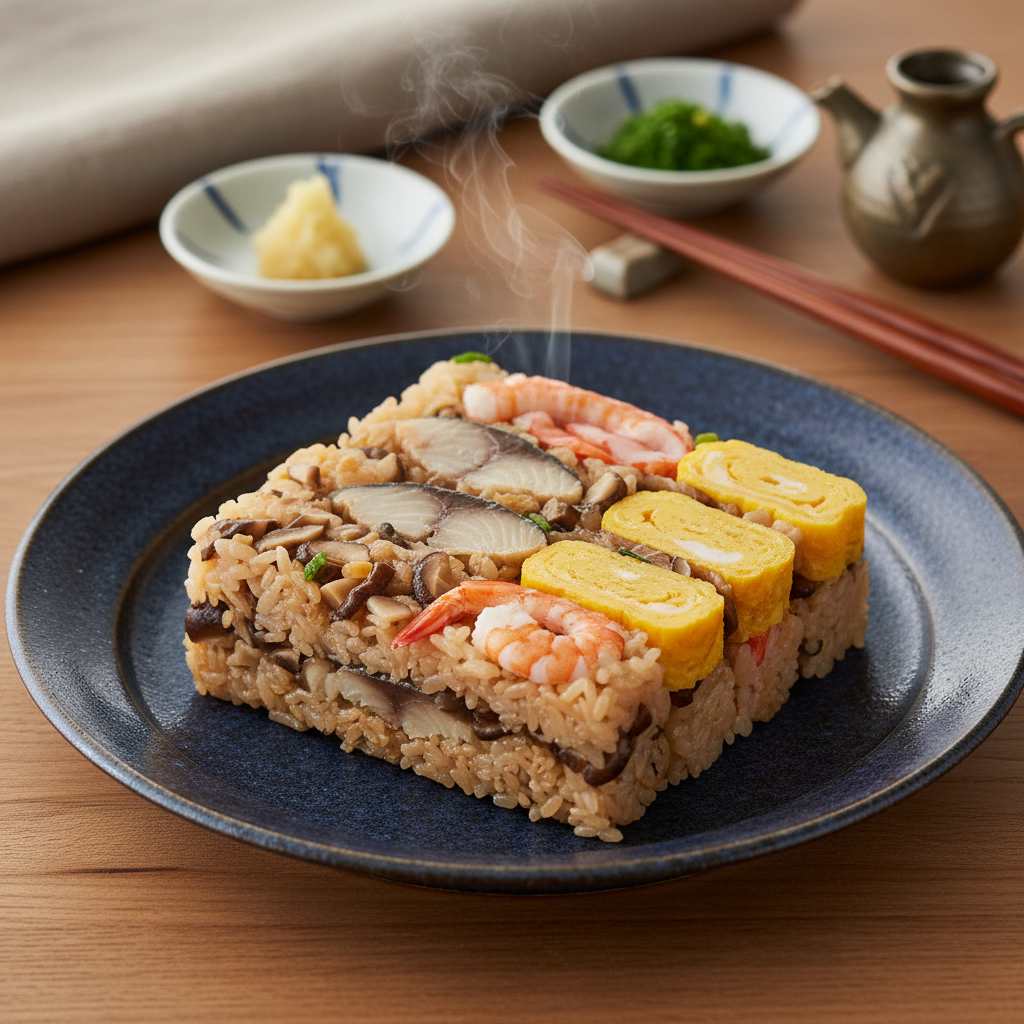
Oshi-nuki sushi (押し抜きずし) is a local dish that has been made for centuries in the Sanuki region of Kagawa Prefecture. The name “oshi-nuki” (literally “pressed-removed”) comes from the method of packing sushi rice and ingredients into a wooden mold, pressing them firmly, and then removing the sushi from the mold to slice it.
The main ingredients are Japanese Spanish mackerel (sawara), which is in season in spring, and broad beans, which mature at the same time. The sawara is seasoned with a sweet and savory sauce and grilled, while the broad beans are boiled and added for their color and textural accent. The addition of Japanese pepper leaves or spruce shoots brings out the fragrance of spring even more.
In the Sanuki region, around the time of the barley harvest (bakushu), farming families have the custom of preparing oshi-nuki sushi and serving it to relatives and friends. This occasion is called “haru-io” (spring celebratory fish), “mugi-urashi,” or “sawara hatsuho.” This practice carries the meaning of taking a rest during the agricultural off-season and praying for safety in upcoming rice planting and farm work.
History, Origins, and Related Events | Sanuki Food Culture Praying for Abundant Harvests and Good Catches
Sawara Fishing and the Bounty of the Seto Inland Sea
The “sawara” (鰆), written with the characters for “fish” and “spring,” is, as its name suggests, a fish whose season is spring. It is considered a spring seasonal reference in haiku poetry and has long been cherished by Japanese people as a fish that announces the arrival of spring. Facing the Seto Inland Sea, Kagawa Prefecture experiences bustling sawara fishing from April to May, when broad beans mature and barley begins to ripen.
During this period, farming families in Sanuki had the custom of purchasing whole sawara and preparing abundant sawara dishes. The centerpiece of these dishes was oshi-nuki sushi. The sawara, with its rich fat content and delicious taste, and being a large fish, was a fitting ingredient for a “hare no hi” (special occasion) meal to which many relatives and friends were invited.
The Regional Custom of “Haru-io,” “Mugi-urashi,” and “Sawara Hatsuho”
The Sanuki region has unique customs called “haru-io” (春祝魚, spring celebratory fish), “mugi-urashi” (麦うらし), and “sawara hatsuho” (鰆初穂). These are events held during the agricultural off-season before barley harvesting and rice planting, where families enjoy seasonal sawara dishes to rest and recuperate, invite relatives and friends to acknowledge their labor, and pray for an abundant harvest to come.
There was also a custom in which young brides would return to their parents’ homes, make oshi-nuki sushi, and bring it back to their husbands’ homes. This was an important opportunity to deepen bonds with the family they had married into and to reaffirm family connections.
The Momote Ritual and Oshi-nuki Sushi
In some areas of Kagawa Prefecture, a religious ritual called “Momote” is performed to pray for abundant harvests, wish for good catches, and ward off misfortune. Oshi-nuki sushi is often served at the meal following this ritual. As a food culture tied to religious practice, oshi-nuki sushi carries meaning beyond that of ordinary cuisine and has become an embodiment of the region’s spirituality.
Main Areas of Transmission | From the Sanuki Region to Throughout the Prefecture
Oshi-nuki sushi has been traditionally made primarily in the Sanuki region of Kagawa Prefecture. The Sanuki region comprises the majority of Kagawa Prefecture, facing the Seto Inland Sea and blessed with a warm climate and abundant marine resources.
While it has been passed down mainly in rural areas, it is now enjoyed throughout the prefecture. The tradition of oshi-nuki sushi is preserved in various areas of the prefecture, including Takamatsu, Marugame, Sakaide, and Kanonji cities, with subtle differences in seasoning and ingredients varying by region.
Main Ingredients Used | Materials Packed with Spring Bounty
The main ingredients for oshi-nuki sushi are as follows.
Main Ingredients
- Sawara (Japanese Spanish mackerel): A white-fleshed fish whose season is spring. It is soft with good fat content and pairs well with sweet and savory seasoning.
- Broad beans: Beans that mature in spring. They are boiled, skinned thinly, and used for their color and textural accent.
- Rice: The foundation of the sushi rice. Local rice such as Sanuki rice is often used.
Seasonings
- Vinegar: Rice vinegar used to make sushi rice.
- Sugar: Used in preparing sushi rice and seasoning sawara.
- Salt: Used to adjust the flavor of sushi rice.
- Soy sauce: An essential seasoning for the sweet and savory flavor of sawara.
- Mirin: Adds luster and sweetness to the sawara.
- Sake: Removes any fishiness from the sawara and brings out its umami.
Other Ingredients
- Japanese pepper leaves (spruce shoots): An aromatic garnish that adds the fragrance of spring.
- Ginger: Sometimes added as sweet vinegar-pickled ginger.
- Egg ribbon omelette: Some regions use this for added color.
Ingredients (for 12 pieces) | Recipe for Homemade Oshi-nuki Sushi
Here are the ingredients for making oshi-nuki sushi at home. This is for 12 pieces (approximately 4–6 servings).
For Sushi Rice
- Rice: 3 cups (540 ml)
- Water: As needed (for cooking rice)
- Vinegar: 4 tablespoons
- Sugar: 3 tablespoons
- Salt: 1 teaspoon
For Sweet and Savory Sawara
- Sawara fillet: 400–500 g (thick pieces)
- Soy sauce: 3 tablespoons
- Sugar: 2 tablespoons
- Mirin: 2 tablespoons
- Sake: 2 tablespoons
Other Ingredients
- Broad beans: 150 g (shelled)
- Japanese pepper leaves (spruce shoots): As needed
- White sesame seeds: 1 tablespoon (optional)
Instructions | Detailed Explanation of Traditional Preparation Methods
Here is a detailed explanation of how to make oshi-nuki sushi, step by step.
1. Prepare the Sushi Rice
Rinse the rice and cook it as usual. Once cooked, pour a mixture of vinegar, sugar, and salt over the rice and mix it with a shamoji (rice paddle) in a cutting motion. Cool the rice by fanning it with a hand fan until it becomes glossy sushi rice. If using white sesame seeds, mix them in at this stage.
2. Prepare the Sawara
Remove the bones from the sawara fillet and cut it into bite-sized pieces. In a frying pan or pot, combine soy sauce, sugar, mirin, and sake and bring to a boil. Add the sawara and simmer over medium heat. Simmer until the cooking liquid reduces and the sawara becomes glossy. Be careful not to overcook it, as it will become dry. Once cooked, let it cool slightly and flake the meat.
3. Boil the Broad Beans
Remove the broad beans from their pods and boil them in salted water for 2–3 minutes. Once boiled, transfer them to cold water and remove the thin skin. The key is not to overcook them in order to maintain their vibrant green color.
4. Fill the Mold
Wet a wooden mold (or use a rectangular container or baking tray as a substitute) and arrange broad beans and Japanese pepper leaves on the bottom. Spread half of the sushi rice on top and flatten it with a shamoji. Next, spread the flaked sawara evenly over this layer and top with the remaining sushi rice.
5. Press Firmly
Place the pressing lid (or a flat board) on top and press firmly by putting your body weight on it. Traditionally, weights were sometimes placed on top and left for a period of time. Pressing firmly helps the ingredients and sushi rice bond together and makes the sushi easier to slice.
6. Remove from the Mold and Slice
Turn the mold over and remove the pressed sushi. Wet the knife and cut the sushi into 12 equal pieces. When you slice it so that the green of the broad beans and the color of the sawara appear beautifully in cross-section, the presentation becomes even more attractive.
7. Plating
Arrange on a plate and garnish with Japanese pepper leaves or spruce shoots to finish. Adding sweet vinegar-pickled ginger provides a palate cleanser and makes the dish even more delicious.
Occasions and Seasons for Eating | A Spring and Early Summer Tradition
Oshi-nuki sushi is primarily eaten from spring through early summer. Specifically, the peak season is from April to May, the time of barley harvest when broad beans mature and barley begins to ripen.
During this season, sawara fishing is busy in the Seto Inland Sea, and delicious fat-rich sawara becomes available. Additionally, for farming families, this is the agricultural off-season before barley harvesting and rice planting, an ideal time for rest and recuperation.
As a Dish for Special Occasions
Oshi-nuki sushi is not everyday food but a dish for “hare no hi” (special occasions). It is served at occasions such as “haru-io” and “mugi-urashi” when relatives and friends are invited, playing a role in deepening the bonds of family and community.
Even today, some families make oshi-nuki sushi during spring events or family gatherings, and the tradition is being passed down.
How to Eat | The Best Way to Enjoy Oshi-nuki Sushi
Oshi-nuki sushi is basically eaten after being sliced. You can savor the combination of sushi rice and the sweet and savory flavor of the sawara, the texture of the broad beans, and the aroma of the Japanese pepper.
Accompaniments
Adding sweet vinegar-pickled ginger or fresh young ginger makes the palate feel refreshed and makes each subsequent bite even more delicious. Adding clear soup and simmered seasonal vegetables as side dishes creates a well-balanced meal.
Storage Method
Oshi-nuki sushi is most delicious when freshly made, but it can also be stored in the refrigerator. However, since the sushi rice tends to harden, it is best to return it to room temperature before eating. It is recommended to eat it the same day it is made.
Conservation and Transmission Efforts | The Hometown Flavor Passed Down to the Modern Era
Family Transmission
The practice of eating oshi-nuki sushi at home continues to this day, centered around farming families, during the season when sawara and broad beans are in season. While fewer families now purchase whole sawara, many still make sawara dishes using fillets, and recipes are passed down from mother to daughter and grandmother to grandchild.
Commercialization and Sales
When the season arrives, pressed sawara sushi is sold in supermarkets throughout Kagawa Prefecture. This provides a valuable opportunity for those without time to cook at home or those who want to easily enjoy the traditional taste.
Additionally, some restaurants offer oshi-nuki sushi, which has become an opportunity for tourists and people from outside the prefecture to learn about Sanuki’s local dishes.
Community Events and Food Education
In food education activities and traditional dish transmission events in Kagawa Prefecture and local communities, cooking classes teaching how to make oshi-nuki sushi are sometimes held. These efforts aim to pass on the traditional taste to children and younger generations and deepen their understanding of the region’s food culture.
Listing in the Ministry of Agriculture, Forestry and Fisheries’ “Our Local Dishes”
Oshi-nuki sushi is also listed in the “Our Local Dishes” database operated by the Ministry of Agriculture, Forestry and Fisheries, where it is introduced to the nation as a local dish of Kagawa Prefecture. As a result, people outside the prefecture have become more widely aware of the existence of oshi-nuki sushi.
Promotion via SNS
In recent years, there has been a movement to promote the appeal of oshi-nuki sushi through social media. By posting photos of homemade oshi-nuki sushi and sharing recipes, interest in local dishes among younger generations has been increasing.
Oshi-nuki Sushi and Other Kagawa Prefecture Local Dishes
Kagawa Prefecture has many other local dishes in addition to oshi-nuki sushi.
Bara-zushi
In Kagawa Prefecture, unique bara-zushi (scattered sushi) is made in different regions for special occasions. Bara-zushi is a type of scattered sushi where various ingredients are mixed into sushi rice, and the ingredients and seasonings differ by region and household. Like oshi-nuki sushi, it is served at celebratory gatherings.
Tako-gohan
Kagawa Prefecture has a thriving octopus fishery, and tako-gohan (octopus rice) is commonly found on dining tables as everyday rice and a local dish. The rice, infused with the umami of octopus, has a deep flavor despite its simplicity.
Shoyu-mame
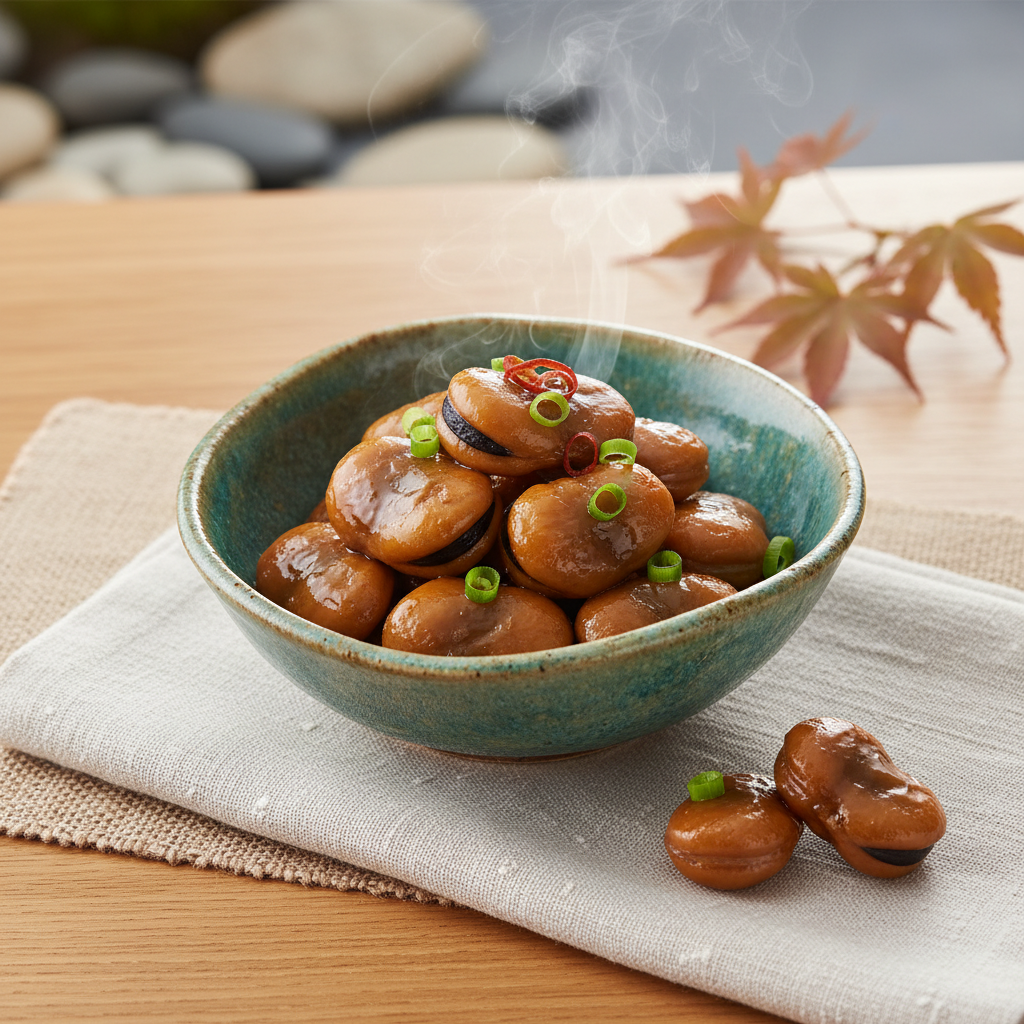
This is a dish of broad beans simmered in a sweet and savory soy sauce-based seasoning and a standard side dish in Kagawa Prefecture. As a dish using broad beans like oshi-nuki sushi, it brightens the spring dinner table.
Understanding Sanuki Food Culture Through Oshi-nuki Sushi
Oshi-nuki sushi is more than just a dish—it is a symbol of food culture that encapsulates the nature, history, and way of life of the Sanuki region.
The abundant marine resources of the Seto Inland Sea, broad beans nurtured in a warm climate, agriculture centered on barley cultivation, and the region’s tradition of valuing relatives and friends. All of these converge in a single dish called oshi-nuki sushi.
The arrival of spring announced by sawara, broad beans approaching harvest, and the barley harvest season and agricultural off-season. The dining customs, where the cycle of nature is beautifully in harmony with the rhythm of people’s lives, are a cultural heritage that should be cherished in modern times.
Conclusion | Sanuki Flavor to Pass On to the Next Generation
Oshi-nuki sushi is a local dish of great pride in the Sanuki region of Kagawa Prefecture. Made with Japanese Spanish mackerel and broad beans, which are in season in spring, pressed firmly in a wooden frame, this dish is deeply connected to the region’s prayers for abundant harvests and good catches.
Oshi-nuki sushi has been passed down together with traditional customs such as “haru-io” and “mugi-urashi,” and in modern times it continues to be enjoyed in homes, supermarkets, and restaurants, being carefully preserved and transmitted as a regional food culture.
When spring arrives, be sure to visit Kagawa Prefecture and savor oshi-nuki sushi. Alternatively, try making it at home. Through Sanuki’s spring flavors, you will be able to touch a rich food culture and the history of the region.