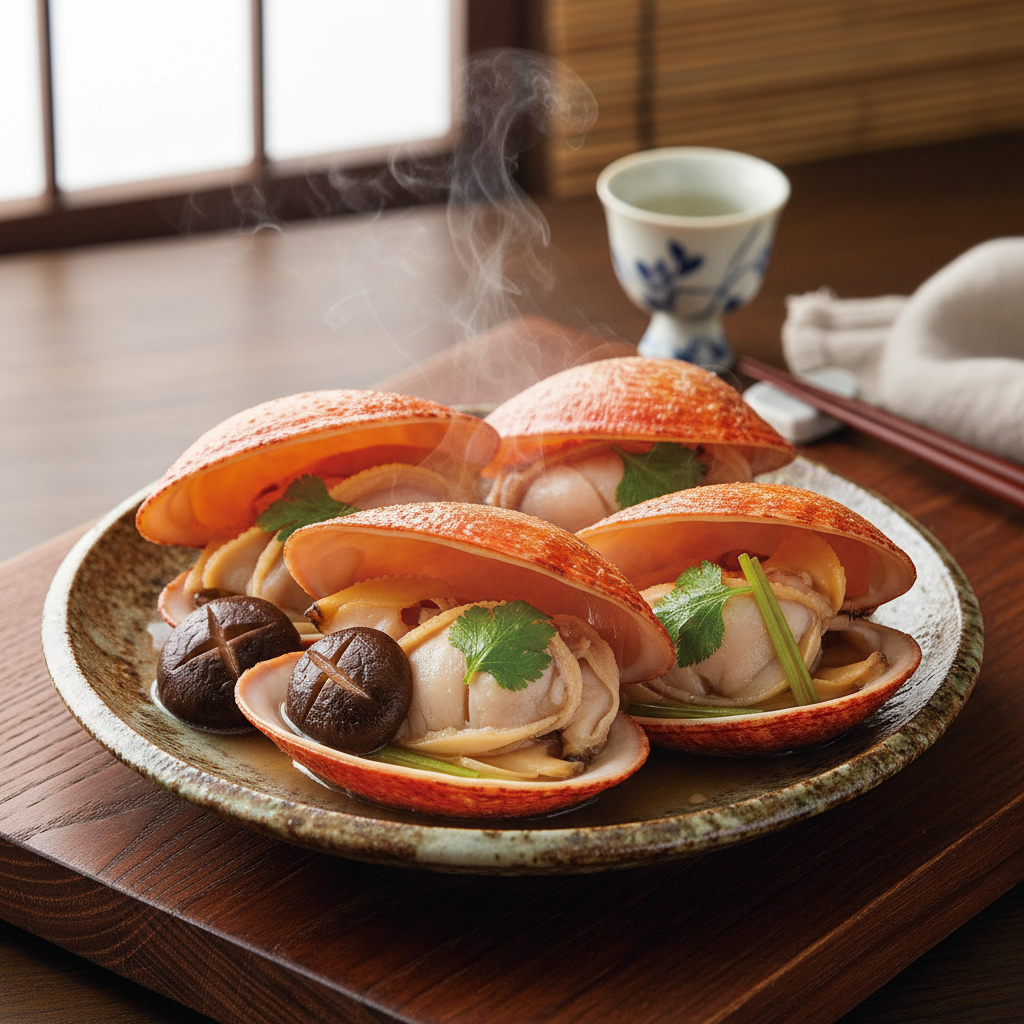

Complete Guide to “Shijimi Soup,” a Local Specialty of Shimane Prefecture|History and Culture of Yamato Clams from Lake Shinji
What is Shijimi Soup|Shimane Prefecture’s Representative Local Cuisine
Shijimi soup is a traditional local dish that has long been cherished in the Izumo region of eastern Shimane Prefecture. It is a soup made with large Yamato clams harvested from Lake Shinji (Shinjiko), and has taken deep root in the region’s food culture as an everyday meal.
Lake Shinji in Shimane Prefecture is the seventh largest lake in Japan, with a circumference of approximately 45 km, and is a brackish lake with a unique environment. This distinctive water quality environment, where freshwater and seawater mix, provides ideal conditions for raising high-quality Yamato clams. The Yamato clams from Lake Shinji boast top-level fishing yields in the nation, and the lake is known as a major production area accounting for approximately one-third of Japan’s total clam catch.
Shijimi soup is counted as one of the “Seven Treasures of Lake Shinji” (Shinjiko Shichichin), featuring representative food ingredients from the lake. The Seven Treasures of Lake Shinji refer to seven types of representative aquatic products caught in Lake Shinji (sea bass, morogebi shrimp, eel, amasagi, Japanese smelt, carp, and clam), serving as a symbolic food group representing the region’s abundant aquatic resources.
Lake Shinji and Yamato Clams|Characteristics and Environment of the Production Area
Geographic Characteristics of Lake Shinji
Lake Shinji is a brackish lake located at the lowest reach of the Hi River (Hiikawa) in eastern Shimane Prefecture. It possesses rare natural conditions where freshwater flowing in from rivers—including the Hii River, a major river originating in the Chugoku Mountains and known as the Izumo great river—mingles with seawater flowing from the Sea of Japan via the Sakai Channel and Lake Nakaumi.
This brackish environment creates optimal conditions for Yamato clam growth. By maintaining appropriate salinity levels, clams thrive on abundant nutrition and develop into individuals with larger bodies and deeper flavor. Although the salinity of Lake Shinji fluctuates with the season and weather, this variation is also thought to contribute to improved clam quality.
Characteristics of Yamato Clams
Yamato clams from Lake Shinji are famous nationwide for their large size and rich flavor. Compared to ordinary clams, they feature larger shells and meat that is firmly packed. The broth extracted from these large clams is rich in umami components and possesses a deep taste.
Clams are abundant in protein, B vitamins, iron, calcium, taurine, and other essential nutrients for maintaining health. In particular, there is a folk saying that “clams eaten during the summer heat wave support the liver,” and they have long been valued as health food. Modern nutritional research has confirmed that ornithine and taurine contained in clams are effective in supporting liver function.
Clam Fishing in Lake Shinji
Clam fishing in Lake Shinji is conducted using traditional methods. Fishermen venture out to the lake at dawn and harvest clams using a specialized tool called a joren. To protect resources, fishing yields, fishing seasons, and the size of tools used are strictly regulated, and sustainable fishing practices are implemented.
In the past, one could see elderly women peddling clams through town pulling carts piled high with boxes of clams. Such scenes of street vending tell of how deeply integrated clams were in the daily lives of local residents.
History and Origins of Shijimi Soup
Historical Background
The history of shijimi soup is ancient, and it is believed to have been consumed since before the Edo period in the Izumo region surrounding Lake Shinji. The abundant aquatic resources of Lake Shinji have been an important food source for local residents since ancient times. Clams in particular were valued as a precious protein source for common people because they were easy to harvest and had relatively good preservation properties.
In the Izumo region, clams were commonly used as everyday ingredients in soup for breakfast, and the soup was passed down through generations as a family-style dish. Despite its simple cooking method, shijimi soup, which can maximize the extraction of the rich umami inherent in clams, became established as a fundamental dish in the region’s food culture.
Occasions and Seasons for Consumption
Shijimi soup is eaten year-round regardless of season, but it is particularly prized as “summer heat wave clams” during the summer heat wave period. The wisdom of eating nutritious clams during the hot summer months to prevent summer exhaustion and maintain health has been passed down.
Additionally, winter “winter clams” are said to have firm meat and be delicious, and a food culture that enjoys different flavors in each season is rooted. In daily life, it is often served as one of the breakfast dishes, and the practice of consuming clam nutrition and umami to start the day has become established.
How to Make Shijimi Soup|Traditional Recipe
Ingredients (Serves 4)
- Yamato clams: 400g–500g
- Water: 800ml
- Kombu seaweed: one 5cm square piece (optional)
- Miso: 2–3 tablespoons (or salt and soy sauce to taste for clear broth)
- Welsh onion: as needed (as garnish)
- Ginger: a small amount (optional)
Preparation|How to Purge Sand
The most important point in making delicious shijimi soup is thorough sand purging.
- Preparing salt water: Make salt water with approximately 1% salinity by adding about 1 teaspoon of salt per liter of water. Since Lake Shinji is brackish, the key is to purge sand with dilute salt water rather than fresh water.
- Purging sand: Place clams in a bowl and add salt water to just cover them. Leave in a dark place for 3–4 hours, preferably overnight. Since clams will breathe and expel sand, placing a strainer at the bottom of the bowl prevents the expelled sand from being re-inhaled.
- Washing: After purging, wash clams thoroughly in running water while rubbing them together. By thoroughly removing surface dirt from the shells, the broth will finish as a clear, clean-tasting soup.
Instructions
Basic clear broth style
- Cooking from cold water: Place washed clams and water in a pot. If using kombu seaweed, add it at this time. By heating slowly from cold water, the umami of clams is fully extracted.
- Adjusting heat: Place over medium heat and reduce to low heat just before boiling. Rapid heating over high heat will harden the clam meat, so caution is necessary.
- Skimming foam: Once clams begin to open, gently skim the foam that rises to the surface. By thoroughly removing foam, the broth will finish with a clear, beautiful color.
- Seasoning: For clear broth style, adjust seasoning with salt and light soy sauce. To bring out the umami of clams, use seasoning sparingly.
- Finishing: Ladle into bowls and garnish with finely chopped Welsh onion or shredded ginger to complete.
Miso style
The basic cooking method is the same, but miso is used at the seasoning stage.
- Once clams have opened, dissolve miso into the broth just before removing from heat. Since miso loses its fragrance when boiled, be careful not to bring to a boil after dissolving.
- In Shimane Prefecture, rice miso and barley miso are commonly used, and families choose their preferred miso.
- The amount of miso is adjusted according to the clams’ natural saltiness, and it is traditional to use sparingly to avoid damaging the clams’ flavor.
Cooking Tips
Using different-sized clams
According to local chefs, large clams are used to enjoy texture and visual richness, while small clams are used to make the broth more concentrated. By combining large and small clams, a shijimi soup with deeper flavor is achieved.
Judging when clams are fully opened
Once all clams have opened, it is important not to heat further. Excessive heating will toughen the clam meat and damage its flavor.
Starting from cold water
Always begin cooking from cold water so that umami components slowly dissolve from the clams, yielding a deep-flavored broth. Cooking from hot water causes clams to heat too rapidly, causing the meat to shrink.
How to Eat and Enjoy
Traditional way of eating
In the Izumo region, shijimi soup is mainly served as a soup dish at breakfast. Combined with rice, pickles, and grilled fish, it is an indispensable part of a typical Japanese breakfast. The abundant nutrients in clams serve as a source of energy for the day and have supported healthy lifestyles.
Clam meat is removed from the shell using chopsticks or a specialized pick and eaten. By eating the meat, all nutrients contained in the clams are fully absorbed. The local way of eating is to savor not just the broth but the meat as well.
Modern Arrangements
Based on traditional shijimi soup, modern arrangements are also enjoyed.
- Shijimi ramen: Creative cuisine using shijimi broth as ramen soup
- Shijimi rice: A dish of cooked rice with clams added
- Shijimi pasta: Using shijimi broth as a base for Japanese-style pasta
- Shijimi hot pot: A winter hot pot dish enjoying clams with vegetables
These arrangements serve as a way to incorporate traditional ingredients into modern dining tables and are accepted by younger generations.
Nutritional Value and Health Benefits
Rich nutrients
Clams contain the following abundant nutrients.
Ornithine: A type of amino acid that supports liver function and is said to be effective for fatigue recovery and hangover prevention.
Taurine: A component that assists the liver’s detoxification functions and is also involved in cholesterol adjustment.
Vitamin B12: Helps red blood cell production and is effective in preventing anemia. Clams are known for particularly high vitamin B12 content among shellfish.
Iron: An essential mineral for anemia prevention and a particularly necessary nutrient for women.
Calcium: A mineral needed for maintaining bone and tooth health.
Traditional Health Perspectives
Folk sayings such as “summer clams are medicine for the belly” and “winter clams keep you from catching colds” remain in Shimane Prefecture. These represent experientially accumulated wisdom and are backed by modern nutritional science.
In particular, eating clams during times of summer exhaustion or seasonal transitions when one is prone to illness represents the wisdom of ancestors in maintaining health, wisdom that is passed down to the present day.
Preservation and Succession Efforts
Community Succession Activities
Shimane Prefecture implements various initiatives to preserve and pass on local dishes including shijimi soup.
Provision in school meals
In local elementary and junior high schools, shijimi soup is regularly incorporated into school lunch menus as local cuisine. By exposing children to local food culture from an early age, understanding and affection for local cuisine are fostered.
Cooking classes
Cooking classes to learn how to make shijimi soup are regularly held at community centers and food education centers in the region. These serve as venues for transmitting traditional cooking methods to the next generation.
Use as a tourism resource
Restaurants around Lake Shinji offer shijimi soup as a menu item for tourists, creating opportunities to experience local food culture. At tourism facilities such as “Shijimi Hall,” visitors can also learn about the history and fishing methods of clams.
Product Development
Retort products
So that households can easily enjoy authentic shijimi soup, retort pouch shijimi soup has been commercialized. Products using Yamato clams from Lake Shinji are popular as souvenirs.
Frozen clams
Pre-purged frozen clams are being developed as products that reduce cooking effort while allowing enjoyment of authentic flavor. Freezing breaks down clam cell walls, making umami components easier to extract.
Instant products
Instant shijimi soup utilizing freeze-dry technology delivers the taste of home to young people living alone and those on business transfers, offering ease and convenience.
Social media and digital utilization
In recent years, efforts to disseminate the appeal of shijimi soup through social media have become more active. Shimane Prefecture’s tourism association and local restaurants post photos and recipes of shijimi soup on Instagram and Twitter to expand awareness among younger generations.
On YouTube, local chefs and fishermen post videos introducing how to make shijimi soup and scenes of clam fishing in Lake Shinji, attempting to convey the appeal of local cuisine visually.
Resource protection efforts
To utilize Lake Shinji’s clam resources in a sustainable manner, resource management is rigorous under the leadership of fishing cooperatives. Fishing size restrictions, closed season settings, and fishing gear regulations are implemented based on scientific data.
Water quality preservation activities for Lake Shinji are also actively conducted, with basin residents, companies, and government agencies cooperating to protect the lake’s environment. The recognition that protecting the environment that nurtures high-quality clams is directly linked to passing on local cuisine is widely shared.
Lake Shinji’s Seven Treasures and Izumo Food Culture
What are the Seven Treasures of Lake Shinji?
Shijimi, the main ingredient of shijimi soup, is counted as one of the “Seven Treasures of Lake Shinji” (Shinjiko Shichichin). The Seven Treasures of Lake Shinji refer to seven representative types of aquatic products caught in Lake Shinji, remembered by taking the first letter of each as “Sumoua Shikoshi.”
- Suzuki (sea bass)
- Morogebi (river shrimp)
- Unagi (eel)
- Amasagi (Japanese smelt)
- Shirauo (Japanese smelt)
- Koi (carp)
- Shijimi (clam)
These ingredients symbolize Lake Shinji’s abundant aquatic resources while representing the diversity of Izumo region’s food culture.
Position in Izumo’s Food Culture
The Izumo region is known as the land of mythology centered on Izumo Taisha, but it is also a region that has fostered a rich food culture. Blessed with two water bodies—Lake Shinji and the Sea of Japan—diverse aquatic products have adorned dining tables.
Among these, shijimi soup stands out as the most everyday and familiar local dish rooted in residents’ lives. Rather than a special occasion dish, its greatest characteristic is that it is a home-cooked meal that appears on daily dining tables.
Places to Enjoy Shijimi Soup in Shimane Prefecture
Famous Establishments in Matsue City
Matsue City, the prefectural capital of Shimane Prefecture, is a castle town facing Lake Shinji with numerous restaurants serving shijimi soup.
Local cuisine restaurants
Several local restaurants in Matsue serve traditional Izumo cuisine and authentic shijimi soup. At establishments such as “Ginza Minami” and “Gassho Izumo,” visitors can enjoy carefully prepared shijimi soup alongside dishes featuring the Seven Treasures of Lake Shinji.
Inns and hotels
Inns and hotels on the shores of Lake Shinji often provide authentic shijimi soup as a breakfast menu item, allowing guests to experience traditional Izumo breakfast.
Direct sales outlets and markets
Matsue Central Wholesale Market
At markets where fresh clams can be purchased, both locals and tourists can buy clams.
Roadside stations
Roadside stations around Lake Shinji sell fresh clams and processed products, and some facilities have dining halls serving shijimi soup.
Shijimi Soup and Shimane Prefecture Tourism
A Hub of Food Culture Tourism
Shijimi soup is an important content in Shimane Prefecture’s food culture tourism. Many tourists visiting the Lake Shinji area have sampling authentic shijimi soup as one of their objectives.
Shijimi Hall
Tourism facilities such as “Lake Shinji Nature Museum Gobius,” where visitors can learn about Lake Shinji’s clams, display information about clam ecology, fishing methods, and food culture, allowing visitors to understand the natural environment and history behind shijimi soup.
Experience programs
Some facilities and fishing cooperatives offer clam-fishing experience programs. The experience of actually going out on the lake to harvest clams and cooking and eating them on the spot is popular with tourists.
Conclusion|What Shijimi Soup Conveys About Shimane’s Food Culture
Shimane Prefecture’s local dish “shijimi soup” is a culmination of the unique natural environment of Lake Shinji, the abundant aquatic resources nurtured there, and the local food culture developed over a long history.
Shijimi soup, simple in cooking method yet capable of maximizing the rich umami and nutrition inherent in clams, has supported the health of local residents as everyday food. Seasonal ways of eating represented by “summer heat wave clams” and traditional wisdom regarding health benefits are now recognized as valuable from a modern nutritional perspective.
Yamato clams from Lake Shinji, boasting top-level fishing yields in the nation, are protected under sustainable resource management. The attitude of society as a whole in the region working on resource protection and food culture succession is an exemplary case of passing on local cuisine to future generations.
Shijimi soup is not a special occasion dish but home-cooked food that appears on daily dining tables. This very ordinariness is proof that shijimi soup is a local dish truly rooted in the region and symbolizes the richness of Shimane Prefecture’s food culture.
Today, the taste of shijimi soup can be enjoyed in various forms including retort products, frozen clams, and instant foods. Information dissemination utilizing social media and digital media is also becoming active, and succession to younger generations is progressing.
When visiting Shimane Prefecture, be sure to taste authentic shijimi soup and experience the depth of Lake Shinji’s natural bounty and Izumo region’s food culture. A single bowl of shijimi soup contains the history, nature, and lives of people in this region.