
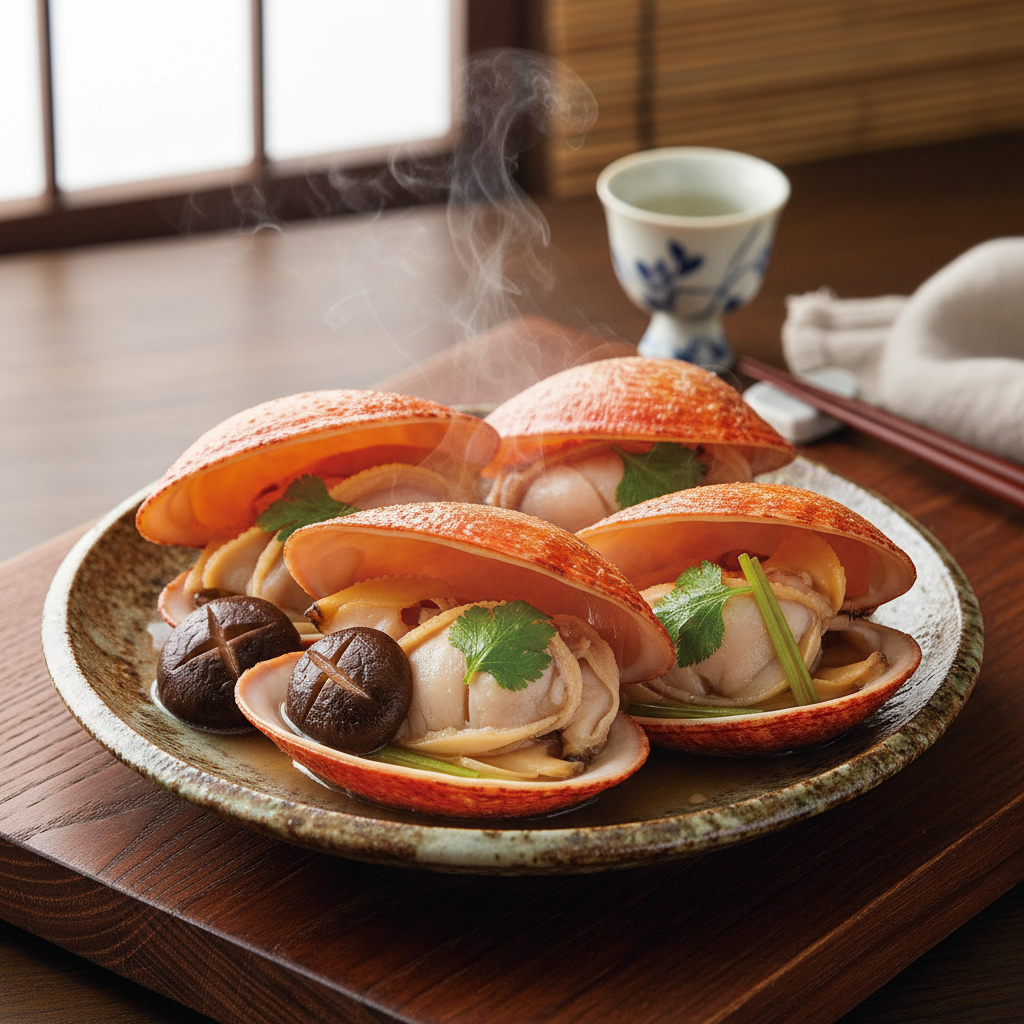
A Complete Guide to Ark Shell Steaming (Garan Steaming) | A Traditional Local Dish of Izumo, Shimane Prefecture
The local dish “ark shell steaming” has been passed down through the Izumo region of Shimane Prefecture since ancient times. Locally known as “akakai no garan-mushi,” it is cherished as a traditional flavor that adorns winter tables. This cooking method, which is simple yet brings out the maximum umami of the ingredients, is a dish that symbolizes the unique food culture of the Izumo region. This article provides detailed explanations of this local dish’s history, preparation methods, and the transmission of its food culture.
What is Red Shell Steaming / Ark Shell Steaming?
Red shell steaming is one of the representative local dishes of the Izumo region in Shimane Prefecture, featuring a unique cooking method of steaming ark shells in their shells. Locally, it is affectionately called “akakai no garan-mushi,” and the name “garan” has a fascinating origin.
The Origin of “Garan” and the Background of Its Name
The origin of the name “garan” has various theories and speaks to the depth of Izumo’s food culture. The most plausible theory is that the word “kara” (shell) became corrupted into “garan.” In the Izumo dialect, such phonetic changes are sometimes observed, reflecting the region’s linguistic culture.
Another theory derives from the preparation process before cooking. Ark shells have grooves on their surface, and when sand trapped in these grooves is washed away by shaking the shells on a strainer, they make a distinctive “garan garan” sound. This theory about the name “garan steaming” deriving from this sound is also widely transmitted in the local area.
Scapharca subcrenata – The True Identity of the “Red Shell”
What is commonly called a “red shell” has the formal scientific name “Scapharca subcrenata” (学名:Scapharca subcrenata). Scapharca subcrenata belongs to the class Bivalvia, order Arcida, and family Arcidae. It is a different species from the “Anadara broughtonii,” known as a high-class sushi ingredient.
Scapharca subcrenata is a small bivalve with a shell length of approximately 3-4 cm, characterized by radial grooves on its shell surface. The meat is a vivid red color, which is the reason it is called a “red shell.” This red color is due to hemoglobin, and it is highly nutritious, containing abundant iron.
Main Transmission Areas and Production Regions
The Food Culture Sphere of the Izumo Region
Red shell steaming has been transmitted as a local dish centered in the Izumo region of Shimane Prefecture. The Izumo region refers to the eastern part of Shimane Prefecture, including the current cities of Izumo, Matsue, and Yasugi. This region has a history of nurturing its own unique culture as the ancient Izumo Province, and its food culture has also developed distinctively.
The Special Environment of Brackish Water Lakes
When discussing the food culture of the Izumo region, one cannot overlook the existence of “brackish water lakes” (汽水湖) that contain water with intermediate salinity between saltwater and freshwater. Japan has 18 brackish water lakes, one of which is “Lake Nakaumi” (中海) spanning Shimane and Tottori Prefectures.
Lake Nakaumi is Japan’s fifth-largest lake, with an area of approximately 86.8 square kilometers. The unique environment where saltwater and freshwater mix nurtures diverse biota and serves as a treasure trove of rich aquatic resources, including Scapharca subcrenata. This special brackish water lake environment has supported the unique food culture of the Izumo region.
Relationship with the Shinji Lake Seven Delicacies
Another brackish water lake in the Izumo region, Lake Shinji, is known for the “Shinji Lake Seven Delicacies” (宍道湖七珍), seven representative aquatic products. The seven delicacies refer to Japanese sea bass, rough shrimp, eel, Ayu, Japanese ice fish, common carp, and freshwater clams. While red shells (Scapharca subcrenata) are not included in the seven delicacies, they are an important aquatic resource nurtured in the same brackish water environment and are a familiar presence in the food culture of the Izumo region.
Main Ingredients Used and Nutritional Value
Characteristics of Scapharca subcrenata
Scapharca subcrenata is a bivalve that prefers brackish water environments and lives on muddy or sandy-muddy bottoms. It is harvested from brackish water lakes such as Lake Nakaumi and Lake Jinishi, with the winter season (November to March) being considered prime season. During this period, Scapharca subcrenata has firm meat with concentrated umami.
Nutritional Components and Health Benefits
Scapharca subcrenata is known as a highly nutritious ingredient. The following nutrients are particularly abundant:
Iron: Iron derived from hemoglobin, which is the source of the meat’s red color, is abundant and effective in preventing anemia. It is especially recommended for women and children in their growth periods.
Taurine: Taurine, an amino acid, is abundantly contained and is expected to provide effects such as improved liver function, fatigue recovery, and blood pressure normalization.
Vitamin B12: Vitamin B12, which aids in red blood cell formation and maintains normal nerve function, is abundantly contained.
Zinc: Zinc, which is important for maintaining immune function and normalizing taste, is also contained.
Low Calorie: As is true for bivalves in general, it is low in calories while containing high-quality protein, gaining attention as a healthy ingredient.
Seasonings and Auxiliary Materials
The following seasonings are used in cooking ark shell steaming:
- Sake (Japanese rice wine): Removes the smell of the shells and brings out umami
- Soy sauce: Adds saltiness and fragrance
- Sugar or mirin: Adds subtle sweetness and depth
- Dashi stock: Some regions or households add kombu or bonito dashi stock
The characteristic of this local dish is that it uses only simple seasonings while bringing out the taste of the ingredients.
Ingredients (Serves 2)
The standard portions for making ark shell steaming at home are as follows:
- Scapharca subcrenata (in shell): 300-400g (approximately 20-30 shells)
- Sake: 2-3 tablespoons
- Soy sauce: 1-1.5 tablespoons
- Sugar: 1-2 teaspoons (or 1 tablespoon mirin)
- Water: Approximately 50ml (adjust depending on the type of steamer)
※Please adjust the amount of seasonings depending on the size and freshness of the Scapharca subcrenata.
Preparation Method – Traditional Cooking Technique
The Importance of Preparation
Careful preparation is essential for making delicious ark shell steaming.
1. Purging Sand
After purchasing the shells, first purge them of sand. Soak the shells in salt water of sea water concentration (approximately 30g salt per 1 liter of water), place them in a dark location for 2-3 hours. During this time, the shells expel sand.
2. Shell Cleaning
After purging, wash each shell thoroughly under running water. Use a brush to scrub away sand and dirt trapped in the grooves of the shells. At this time, rubbing the shells together on a strainer produces a distinctive “garan garan” sound. This moment is said to be one of the origins of the name “garan steaming.”
3. Selection
Remove shells that are cracked or remain open without closing. Fresh shells are tightly closed.
Basic Cooking Procedure
Step 1: Prepare the Steamer
Fill a steamer with water, place it over heat, and raise steam. If you don’t have a steamer, you can substitute by placing a steaming stand in a deep frying pan or pot.
Step 2: Prepare Seasonings
In a steaming plate or shallow heat-resistant container, mix sake, soy sauce, and sugar (or mirin).
Step 3: Arrange the Shells
Place the washed shells on the steaming plate. The key is to arrange them flat so they don’t overlap. Pour the seasonings over them.
Step 4: Steaming
Set the steaming plate in the steamer, cover it, and steam over medium heat. Steaming time is approximately 5-8 minutes. When the shells open, that’s the signal the shells are cooked.
Step 5: Finishing
Once all shells have opened, remove from heat. Serve the shells with the steaming liquid. This liquid contains the umami of the shells, so enjoy it together without discarding.
Cooking Tips and Points
Adjusting heat: Strong heat will toughen the shells, so steaming slowly over medium heat is the key.
Steaming time: Steaming too long will shrink and toughen the meat, so it’s important to stop the heat as soon as the shells open.
Seasoning balance: While the seasoning mixture varies by region and household, a mild flavor is the basic principle to bring out the shell’s character.
Confirming freshness: Shells that don’t open even after steaming may be dead and should be removed without eating.
History, Origin, and Related Events
The Fishing History of the Izumo Region
The shellfish food culture in the Izumo region is ancient, with shells of Scapharca subcrenata having been discovered in shell mounds from the Jomon period. Since ancient times, people have utilized the blessings of brackish water lakes, making shellfish an important protein source.
Scapharca subcrenata fishing in Lake Nakaumi and Lake Jinishi is said to have been practiced as early as the Edo period. Documents from that era mention shellfish as specialty products of the Izumo region, suggesting they were an important regional industry.
The Establishment of the Shell Steaming Cooking Method
The “shell steaming” cooking method is unique to the Izumo region. Why did this cooking method develop in this area?
One reason is that Scapharca subcrenata is a small shell. It would be laborious to remove the meat from the shell, so cooking and eating the shells whole was more efficient. Also, steaming with the shell keeps the shell’s umami from escaping, concentrating the flavor in the steaming liquid.
Another reason is shelf life. In an era without refrigeration technology, cooking with shells intact likely made it easier to maintain freshness.
Regional Events and Food Culture
Red shell steaming is not a dish particularly tied to specific events but rather has been enjoyed as an everyday winter dish. However, during the prime season, it is often served at family gatherings and when entertaining guests, and is considered one of the dishes that represents the “spirit of hospitality” in the Izumo region.
In recent years, with movements to reconsider regional food culture, it has become more common for the dish to be incorporated into school lunches or introduced at regional events.
Opportunities to Eat and Seasons
Prime Season
The prime season for Scapharca subcrenata is late autumn to winter, particularly from November to March. During this period, water temperatures drop, the shells’ meat becomes firm, and umami increases. As shells approach their spawning period, they accumulate nutrients and are considered the most delicious.
In the Izumo region, it is enjoyed as a “winter delicacy” and is symbolically the center of family gatherings as people gather around a warm steaming dish during cold seasons.
Eating Occasions
Everyday Tables: During prime season, ark shell steaming appears on dinner tables in Izumo region homes regularly. It is enjoyed as one dish for dinner or as a sake accompaniment.
Entertainment Dish: It is often provided as a local flavor when entertaining guests or when family gathers.
Regional Events: The dish may be provided at events that introduce food culture and at regional festivals.
Restaurants: Dining establishments in the Izumo region that serve local cuisine may offer it as a winter menu item. You can enjoy it at Japanese restaurants and izakayas in Matsue and Izumo cities.
Eating Method and Ways to Enjoy
Basic Way of Eating
Red shell steaming is best enjoyed piping hot right after steaming. Hold the shell in your hand and use chopsticks to remove the meat. Because the shell is small, some people place it in their mouth whole and extract the meat with their teeth.
The steaming liquid contains the shell’s umami and seasonings dissolved in it, and this liquid is enjoyed alongside the meat in the Izumo way. You can scoop up the liquid with a small spoon to savor it, or pour it over rice.
Compatible Pairings
Japanese Sake: The Izumo region is also known for sake production. It pairs excellently with local sake, with the shell’s umami and the sake’s rich aroma complementing each other.
Rice: Pouring the steaming liquid over rice creates an exquisite takikomi gohan-style rice dish infused with the shell’s umami.
Miso Soup: In the Izumo region, it is often eaten alongside clam miso soup, creating an all-shellfish dining table.
Pickled Vegetables: Adding crisp pickled vegetables refreshes the palate and allows you to enjoy the shell’s flavor more fully.
Arranged Recipes
Beyond the traditional cooking method, modern arrangements are being attempted:
Butter Flavor: Adding a small amount of butter to the seasonings creates a Western-style flavor.
Ginger Flavor: Adding julienned ginger while steaming adds a refreshing taste.
Green Onion Topping: Scattering thinly sliced green onion on the finished dish improves color and aroma.
Sake Steaming: Using only sake as the seasoning brings out the maximum flavor of the ingredients.
Preservation and Transmission Efforts
Transmitters and Regional Initiatives
Various efforts are being made in the Izumo region to transmit this local cuisine to the next generation.
Cooking Classes: Cooking classes on local cuisine are regularly held at community centers and food education centers in the region. Opportunities are created where seniors serve as instructors, passing on cooking methods to younger generations.
School Education: Curriculum is designed to teach about local cuisine during home economics classes and integrated studies in elementary and junior high schools. Some schools conduct actual cooking practice.
School Lunch Integration: Incorporating local cuisine into school lunches creates opportunities for children to experience the region’s food culture.
Government Support
Shimane Prefecture and Izumo City, among other municipalities, are actively working on the preservation and transmission of local cuisine.
Recipe Collection Creation: Shimane Prefecture has created a recipe collection called “Recipes of Shimane We Want to Pass Down” and made it publicly available on its website. It includes recipes for many local dishes, including ark shell steaming.
Food Culture Promotion Projects: As food culture promotion projects, they hold events and provide information dissemination.
Ministry of Agriculture, Forestry and Fisheries Initiatives: The Ministry of Agriculture, Forestry and Fisheries’ “Our Local Cuisine” project creates a database of local cuisine throughout the country, with ark shell steaming also introduced.
Commercialization and Modern Initiatives
Retort Products: Some food manufacturers have developed ark shell steaming in retort pouches and sell them as souvenirs.
Frozen Foods: Frozen products combining pre-processed Scapharca subcrenata and seasonings have also been developed, allowing families to enjoy authentic flavors at home.
Online Sales: Local fishing companies and food companies sell Scapharca subcrenata and prepared dishes through internet shopping, making them available for purchase from anywhere in Japan.
Social Media Information Sharing: Local restaurants and tourism associations disseminate information about the charm of ark shell steaming through SNS platforms (Instagram, Facebook, Twitter, etc.). Efforts to appeal to younger generations through beautiful photographs and videos are progressing.
Utilization as a Tourism Resource
Local Cuisine Restaurants: Specialty restaurants serving local cuisine exist in Matsue and Izumo cities, serving as places where tourists can experience regional food culture.
Food Culture Tourism: Tourism plans themed around food are being developed, incorporating cooking experience and production area visits.
Roadside Station Sales: Fresh Scapharca subcrenata and processed products are sold at roadside stations in the region, making them popular with tourists.
Connection with Other Local Dishes of the Izumo Region
Red shell steaming is part of the rich food culture of the Izumo region. This region has many other local dishes.
Clam Cuisine: Lake Shinji’s clams are nationally famous, with clam soup and clam rice cooked together being commonly enjoyed.
Sea Bass Wrapped in Ceremonial Paper: Sea bass, one of the seven delicacies of Lake Shinji, is wrapped in ceremonial paper and grilled. This is a court cuisine.
Izumo Soba: Characterized by black buckwheat noodles ground with the shell, enjoyed as warikorisoba or kama-age soba.
Uzu-ni: A vegetarian dish of tofu and wakame stewed together, known as Buddhist vegetarian cuisine served at Izumo Taisha.
Box Sushi: A pressed sushi essential to celebrations in the Izumo region.
These local dishes all reflect the region’s natural environment, history, and culture, demonstrating the diversity of the Izumo region’s food culture.
The Significance of Red Shell Steaming in Modern Times
Local Production and Consumption and Sustainability
Red shell steaming is an ideal model of local production and consumption. Consuming locally produced food in the region reduces energy consumption from transportation and decreases environmental burden. It also supports the region’s fishing industry.
Scapharca subcrenata fishing is conducted as sustainable fishing with environmental consideration. To manage resources, prohibited fishing seasons are set and catch limits are imposed, with ongoing efforts to preserve abundant aquatic resources for future generations.
Food Education and Regional Identity
Through local cuisine, children can learn about the natural environment, history, and culture of their home region. The experience of preparing and eating red shell steaming cultivates attachment to the region and contributes to identity formation.
Additionally, understanding the seasons of ingredients and learning cooking techniques are important elements of food education. For modern children, such hands-on experiences are valuable learning opportunities.
Healthy Eating Habits
Red shell steaming is a nutritious, low-calorie, and healthy dish. Rich in iron and vitamin B12, which are often lacking in modern diets, it contributes to balanced eating habits.
The cooking method that brings out ingredient flavors using only simple seasonings allows one to avoid excessive salt and oil, making it suitable for health-conscious modern eating habits.
Protection of Cultural Diversity
In an era of advancing globalization, protecting region-specific food cultures contributes to protecting cultural diversity. Local dishes like ark shell steaming demonstrate the uniqueness of the Izumo region and support elements that sustain the richness of Japanese food culture overall.
Conclusion
“Red shell steaming (garan steaming),” a local dish of the Izumo region in Shimane Prefecture, is a traditional cuisine that enjoys Scapharca subcrenata, nurtured in the special environment of brackish water lakes, steamed in their shells using a unique cooking method.
This simple yet ingredient-flavor-maximizing dish is the crystallization of wisdom and ingenuity in the Izumo region’s food culture. The local nickname “garan,” the history behind the cooking method, and ongoing efforts to transmit the tradition to the next generation—a single dish contains many stories.
The warmth of red shell steaming shared by family on a cold winter day holds meaning beyond a simple meal. It represents gratitude for the region’s nature, respect for ancestral wisdom, and a shared time of hope for the future.
If you have an opportunity to visit the Izumo region, be sure to taste this local dish. Also, if you can obtain the ingredients at home, by all means try making it. Through ark shell steaming, you will be able to rediscover the richness of the Izumo region’s food culture and the excellence of Japanese local cuisine.
Protecting regional food culture and transmitting it to future generations is a responsibility shared by each of us. A small dish like red shell steaming leads to the transmission of a great culture.


