Complete Guide to Okinawa Soba | History, How to Make, and Regional Variations of Okinawa’s Representative Local Cuisine
Okinawa soba is a representative local dish loved throughout Okinawa Prefecture. Despite being called “soba,” it contains no buckwheat flour whatsoever; instead, the unique noodles are made with wheat flour and kansui (alkaline solution), symbolizing Okinawa’s food culture and deeply rooted in the daily lives of its residents. Approximately 190,000 to 200,000 servings are consumed daily throughout Okinawa Prefecture, making it an indispensable soul food for local people.
This article comprehensively explains everything about Okinawa soba, from its historical background and manufacturing methods to regional variations, how to prepare it at home, and modern preservation and inheritance efforts.
What is Okinawa Soba | Characteristics of Okinawa’s Local Cuisine
Basic Definition of Okinawa Soba
Okinawa soba (Okinawan: すば/suba/, うちなーすば/ʔuchinaasuba/) is a local dish of Okinawa Prefecture that uses noodles derived from Chinese noodle-making techniques. Its greatest characteristic is that despite being called “soba,” it contains no buckwheat flour whatsoever; instead, it is made entirely from wheat flour and kansui (an alkaline solution such as sodium carbonate or potassium carbonate).
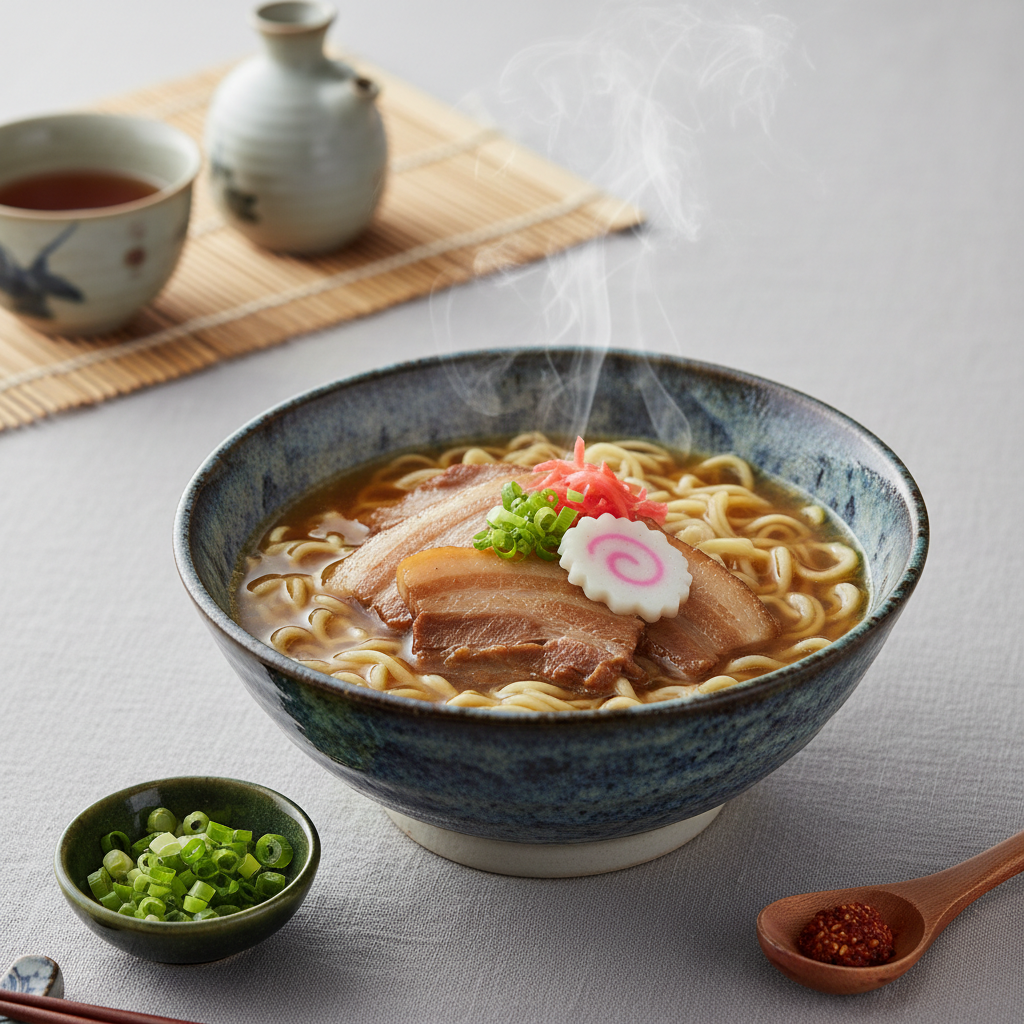
The noodles are characteristically thick and slightly wavy, resembling udon in appearance, but have a chewy, unique texture with strong bite. The broth, primarily made from pork bone and bonito flakes, has a rich yet light flavor that pairs perfectly with the noodles.
Main Ingredients and Components
The main ingredients that compose Okinawa soba are as follows:
Noodles
- Wheat flour (medium or strong flour)
- Kansui (traditionally made from wood ash dissolved in water)
- Salt
- Water
Broth
- Pork bones (pork bones and pork feet)
- Bonito flakes
- Kelp
- Salt
- Soy sauce or fish sauce (iyumaasu)
Toppings
- Braised pork belly (kakuni)
- Soki (pork spare ribs)
- Soft-bone soki
- Kamaboko (fish cake bar)
- Green onions (small or regular green onions)
- Red pickled ginger
These ingredient combinations create Okinawa soba’s unique flavor. The extensive use of pork particularly reflects Okinawa’s food culture dating back to the Ryukyu Kingdom era.
History, Origins, and Related Events of Okinawa Soba
History from the Ryukyu Kingdom Era
The origins of Okinawa soba date back approximately 400 to 500 years. During the 15th to 16th centuries, when the Ryukyu Kingdom actively traded with China (Ming Dynasty), noodle dishes transmitted from China are considered the roots of Okinawa soba.
Initially, it was a court cuisine of the Ryukyu Kingdom, consumed only by the royal family and nobility—a luxury food eaten by limited social classes. Ordinary citizens rarely had the opportunity to eat it, as it was served exclusively at special ceremonies and celebrations.
Popularization Among Common People and Post-War Development
After the Meiji-era Ryukyu Disposition (1879), Okinawa soba gradually spread among the common people. Specialty shops appeared in urban areas such as the Tsuji and Makishi districts of Naha, and from the Taisho period through the early Showa period, it became available in food stalls and restaurants.
After World War II, particularly during the American occupation period (1945–1972), large quantities of wheat flour arrived as American aid supplies, rapidly expanding the production and consumption of Okinawa soba. It was during this period that the basic form of present-day Okinawa soba was established.
History Surrounding the Name “Okinawa Soba”
In 1976, the Fair Trade Commission pointed out that “displaying noodles that do not contain buckwheat flour as ‘soba’ constitutes false labeling.” The Okinawa Prefecture Fresh Noodle Cooperative Association argued that Okinawa soba had long been cherished as a local dish by the people of Okinawa Prefecture and continued tenacious negotiations.
As a result, on October 17, 1978, the use of the name “Authentic Okinawa Soba” was formally approved. To commemorate this date, October 17 is designated annually as “Okinawa Soba Day,” with commemorative events and campaigns held throughout the prefecture.
Occasions and Seasons for Consuming Okinawa Soba
Okinawa soba is eaten year-round as an everyday food, but it also has connections to specific events and seasons:
- Year-End Noodles: Many Okinawan families eat Okinawa soba instead of traditional buckwheat soba for year-end noodles
- October 17 (Okinawa Soba Day): Many establishments throughout the prefecture offer special menus and discount services
- Memorial Services and Celebrations: There is a custom of preparing and serving large quantities when relatives gather
- Tourism Season: Consumption tends to increase with higher tourist numbers during summer
Okinawa soba is most commonly eaten as lunch in daily life, and the habit of “lunch is Okinawa soba” has become established among the prefecture’s residents.
How to Make Okinawa Soba | Ingredients and Manufacturing Methods
Ingredients (Serves 4)
Noodles (for homemade version)
- Wheat flour (medium flour): 400g
- Kansui: 2 teaspoons (or wood ash water)
- Salt: 1 teaspoon
- Water: 160–180ml
Broth
- Pork bones: 500g
- Pork feet: 1 piece (approximately 300g)
- Bonito flakes: 50g
- Kelp: 1 piece, 10cm square
- Water: 2 liters
- Salt: 2 teaspoons
- Soy sauce: 3 tablespoons
- Awamori or Japanese sake: 2 tablespoons
Braised Pork Belly
- Pork belly block: 600g
- Soy sauce: 100ml
- Brown sugar or sugar: 3 tablespoons
- Awamori or Japanese sake: 3 tablespoons
- Sliced ginger: 3–4 pieces
- Water: as needed
Toppings
- Kamaboko bar: 1 piece
- Small green onion: to taste
- Red pickled ginger: to taste
How to Make the Noodles
- Prepare dough: Add wheat flour to a bowl, gradually mixing in kansui and salt dissolved in water
- Knead: Once the dough comes together, knead thoroughly on a work surface for 10–15 minutes until the surface becomes smooth
- Rest: Wrap the dough in plastic wrap and let it rest at room temperature for 1–2 hours
- Roll out: Roll out to 2–3mm thickness with a rolling pin. Using a noodle maker will yield more uniform results
- Cut: Dust with flour and cut into 3–4mm width strips. Thick noodles are characteristic of Okinawa soba
- Boil: Boil in water for 2–3 minutes. Immediately cool in cold water after boiling
How to Make the Broth
- Prepare ingredients: Boil pork bones and pork feet in water for 5 minutes to remove scum, then rinse with water
- Begin simmering: Place pork bones, pork feet, and water in a pot and bring to a boil over high heat
- Remove scum: Once boiling, reduce to low heat and carefully remove scum
- Long simmering: Simmer over low heat for 3–4 hours. Add water as needed if it reduces
- Add bonito and kelp: Add kelp 30 minutes before turning off heat, and add bonito flakes right before turning off the heat
- Strain: Strain through a colander or gauze to obtain clear broth
- Season: Adjust flavor with salt, soy sauce, and awamori. The key is to finish with a light taste
How to Make Braised Pork Belly
- Preliminary boiling: Boil the pork belly block for 10 minutes to remove excess fat
- Simmering: In a pot, add pork, water (enough to cover the meat), ginger, and awamori, and simmer for 1 hour
- Season: Add soy sauce and brown sugar, then simmer for an additional 30–40 minutes until the broth reduces and the meat absorbs the flavors
- Finish: Turn off heat and let cool as is, which further allows flavors to penetrate
- Slice: Slice to an easy-to-eat thickness (7–8mm)
Serving and Finishing
- Place boiled noodles in a bowl
- Pour hot broth over the noodles
- Top with braised pork belly and sliced kamaboko
- Scatter green onions and red pickled ginger
- Serve with koleagusu (island chili pepper in awamori) on the side if desired
Regional Variations of Okinawa Soba
Okinawa soba styles vary by region within Okinawa Prefecture, each with its own characteristics.
Southern Main Island (Naha and Shuri Areas)
The southern region centered on Naha is said to be the birthplace of Okinawa soba. Characteristics of this area:
- Noodles: Slightly thin, straight, or loosely wavy noodles
- Broth: Good balance of pork bone and bonito flakes, light taste
- Toppings: Pork belly and kamaboko are basic; soki soba is also popular
- Representative types: Shuri soba, tebichi soba (braised pork feet)
Central Main Island (Okinawa City and Uruma City Areas)
A region that developed its own style near American military bases after the war:
- Noodles: Thick noodles with strong bite
- Broth: Rich, heavy-flavored taste
- Toppings: Soki (including soft-bone soki) is popular
- Characteristics: Full-portion offerings with visible American cultural influence
Northern Main Island (Nago Area)
Okinawa soba from the natural northern region:
- Noodles: Flat noodles characteristic of “Kishimoto Shokudo” style
- Broth: Light pork bone-based broth
- Toppings: Simply pork belly and kamaboko
- Characteristics: Traditional flavor that highlights ingredient quality
Yaeyama Islands (Ishigaki Island, Taketomi Island)
A region that has developed independently as Yaeyama Soba:
- Noodles: Thin, round, straight noodles
- Broth: Light pork bone-based broth
- Toppings: “Hidden toppings” style—toppings are placed beneath the noodles. Finely sliced pork belly and kamaboko
- Characteristics: Unique style where toppings are placed under noodles so the dish stays warm until the end
Miyako Islands (Miyako Island)
Known independently as Miyako Soba:
- Noodles: Flat, thin noodles, somewhat softer
- Broth: Light pork bone-based broth
- Toppings: Finely sliced pork belly placed on top of noodles. Kamaboko also sliced flat
- Characteristics: Unique ingredient cutting and plating style with beautiful presentation
Kume Island
- Noodles: Thick noodles with strong bite
- Broth: Some shops add miso for a unique flavor
- Characteristics: Actively uses locally produced ingredients
Types and Variations of Okinawa Soba
Classification by Toppings
Soki Soba
Features pork spare ribs (soki) braised in a sweet-salty sauce. Available with bone-in soki and soft-bone soki, with soft-bone soki particularly popular among women due to its collagen content.
Soft-Bone Soki Soba
Soft-bone portions braised for extended periods to achieve a creamy texture. Soft enough to eat the bone.
Tebichi Soba
Features braised pork feet (tebichi) as a topping. Rich in collagen with expected beauty benefits.
Pork Belly Soba
Braised pork belly used as a topping—the most standard style.
Yushi Tofu Soba
Features Okinawan soft tofu (“yushi tofu”) as a topping. A light, healthy dish.
Vegetable Soba
Stir-fried vegetables as a topping. Hearty portions with balanced nutrition.
Asa Soba
Features Okinawan seaweed “asa” (aonori) as a topping. Characterized by oceanic aroma.
Classification by Noodles
Flat Noodles
Flat-cut noodles resembling kishimen. Used in Miyako soba and some Nago establishments.
Round Noodles
Noodles with round cross-section. Common in Yaeyama soba.
Square Noodles
Noodles with angular cross-sections. Widely seen around Naha.
Wavy Noodles
Noodles with undulating waves. Broth clings easily to these noodles.
Wood Ash Soba
Made using traditional methods with kansui created from wood ash. Distinctive flavor and bite.
Main Heritage Areas and Current Manufacturing Status
Transmission Throughout Okinawa Prefecture
Okinawa soba is manufactured and consumed throughout Okinawa Prefecture, becoming a prefectural food not limited to specific regions. Main manufacturing and heritage areas:
Naha City
As the prefectural capital, the greatest concentration of Okinawa soba restaurants. Establishments range from long-established shops to new ventures.
Okinawa City and Uruma City
As the central region’s hub, this area has developed its own independent style.
Nago City
As the northern center, many shops maintain traditional manufacturing methods.
Ishigaki City (Yaeyama Islands)
The authentic location for Yaeyama soba, preserving unique culture.
Miyako Island City (Miyako Islands)
Maintains Miyako soba traditions and unique style.
Manufacturers and Distribution
Multiple noodle manufacturers throughout Okinawa Prefecture support fresh noodle production and distribution:
Fresh Noodle Manufacturers
- Approximately 30 companies affiliated with the Okinawa Prefecture Fresh Noodle Cooperative Association form the core
- Diverse range from large-scale operations producing tens of thousands daily to small family operations
- Increasing number of restaurants emphasizing homemade noodles
Broth Manufacturers
- Specialized manufacturers producing concentrated and powdered broths
- Supplies range from commercial/business use to household consumption
Distribution Channels
- Supermarkets throughout the prefecture sell fresh noodle, broth, and topping sets
- Sold at airports and souvenir shops for tourists
- Active mail-order sales to other regions
- Improved freezing technology has expanded distribution to mainland Japan
Current State of Restaurants
An estimated 1,000 or more Okinawa soba specialty and offering restaurants exist throughout the prefecture:
Specialty Shops
- Soba specialty shops serving only Okinawa soba scattered throughout the prefecture
- Diverse range from small family-run operations to chain-operated establishments
Canteens and Restaurants
- Okinawa soba is a standard menu item even in restaurants serving general Okinawan cuisine
- Often served as a set meal offering
Tourist Facilities
- Provided at hotels, roadside stations, and tourist facility restaurants
- Menus for tourists include explanatory descriptions
Consumption Methods and Eating Etiquette for Okinawa Soba
Basic Way to Eat
Okinawa soba has no particular eating rules, but there is a general local way of eating:
- Taste the broth first: Take a sip of broth before eating noodles to confirm the flavor
- Noodles and toppings together: Slurp noodles while eating toppings simultaneously
- Flavor change with koleagusu: Midway through, add a few drops of island chili pepper in awamori (koleagusu) to change the flavor
- With jushi: Common practice is to order jushi (Okinawan mixed rice) alongside and alternate eating both
Condiments and Seasonings
Koleagusu (Island Chili Pepper in Awamori)
An essential condiment for Okinawa soba. Adds spiciness and awamori flavor.
Red Pickled Ginger
Cleanses the palate. Serves as a palate cleanser.
Seven-Spice Powder
Some shops provide this. Use when additional spiciness is desired.
Side Dishes
Jushi (Mixed Rice)
The most common side dish. Mixed rice with pork and hijiki seaweed.
Inari Sushi
Pairs well with Okinawa soba and is popular as a set menu option.
Jushi Onigiri (Mixed Rice Balls)
Used for take-out or light meals.
Mozuku Vinegar
Served as a light appetizer.
Preservation and Inheritance Efforts
Administrative Initiatives
Okinawa Prefecture Measures
- Establishment and promotion of “Okinawa Soba Day” (October 17)
- Event planning such as “Uchina Cuisine Contests”
- Promotion of Okinawa soba as a tourism resource
- Encouragement of local ingredient use
Ministry of Agriculture, Forestry and Fisheries Initiatives
- Registration in the “Our Local Cuisine” database
- Support as a target of regional food culture protection and inheritance projects
- Information dissemination as local cuisine
Industry Association Efforts
Okinawa Prefecture Fresh Noodle Cooperative Association
- Training sessions for noodle-making techniques
- Maintenance and improvement of quality standards
- Trademark management for “Authentic Okinawa Soba”
- Support for new product development
Okinawa Soba Association
- Technical training for restaurants
- Sanitation management instruction
- Planning and operation of events and fairs
Successor Development
Craftsman Technique Inheritance
- Apprenticeship systems at established shops for technique transmission
- Inheritance of noodle-making techniques, broth preparation, and ingredient cooking methods
- Preservation of traditional methods such as wood ash soba
Cooking Classes and Experience Programs
- Okinawa soba-making experience classes for tourists
- Community center cooking classes
- School lunch program introductions for youth popularization
Product Development and Contemporary Initiatives
Product Innovation
- Development and sales of instant Okinawa soba
- Commercialization of cup noodle versions
- Frozen Okinawa soba set mail-order sales
- Development of new types such as gluten-free Okinawa soba
SNS and Digital Utilization
- Information sharing on Instagram and Twitter
- YouTube video distribution of preparation methods
- Restaurant information sharing on gourmet websites
- Online shop sales expansion
Tourism Collaboration
- Planning of Okinawa soba tour routes
- Stamp rally campaigns
- Multi-language menus for foreign tourists
- Development of halal-compliant Okinawa soba
Regional Revitalization Contribution
- Agricultural and livestock industry support through local ingredient use
- New business opening support for remote islands
- Increasing new businesses by relocating residents
Preservation of Cultural Value
Documentation and Research
- Academic publication of Okinawa soba history research
- Documentation preservation of regional variations
- Oral history interviews with long-established shops
Media Coverage
- Television program specials
- Magazine and gourmet site introductions
- Movie and drama appearances
Nutritional Value and Health Aspects of Okinawa Soba
Nutritional Components
Typical nutritional components for one bowl of Okinawa soba (approximately 500g):
- Energy: approximately 500–600kcal
- Protein: approximately 25–30g
- Fat: approximately 15–20g
- Carbohydrates: approximately 70–80g
- Salt equivalent: approximately 5–7g
Health Benefits
Rich in Protein
Quality protein can be obtained from pork and bonito flakes.
Collagen
Soki and tebichi contain abundant collagen with expected beauty benefits.
B-Complex Vitamins
Vitamin B1 in pork is effective for fatigue recovery.
Precautions
Sodium Content
Consuming all the broth increases sodium intake, so consider leaving some broth.
Calories
Some toppings increase calorie content, so those dieting may prefer vegetable soba.
Okinawa Soba and Tourism
Value as a Tourism Resource
Okinawa soba is an important food culture experience element in Okinawa tourism. Many tourists cite it as a must-eat gourmet experience during their Okinawa stay, contributing to expanded tourism spending.
Famous Shops in Popular Tourist Areas
- International Street Vicinity: Popular with tourists for convenient access
- Shuri Castle Area: Enjoyed as part of historical sightseeing
- Churaumi Aquarium Vicinity: Dining spot for northern region tourism
- Remote Islands: Visited by tourists seeking Yaeyama and Miyako soba
How to Enjoy Okinawa Soba Tours
Themed Tours
- Comparison eating by region (Naha, Yaeyama, Miyako, etc.)
- Tasting by topping type (soki, tebichi, pork belly, etc.)
- Historic shop tours (visiting established shops over 50 years old)
- Homemade noodle shop tours
Stamp Rallies
Some regions conduct Okinawa soba stamp rallies with rewards available for visiting multiple shops.
Summary | Charm and Future of Okinawa Soba
Okinawa soba, with 400 to 500 years of history, has evolved from a Ryukyu Kingdom court cuisine to an everyday food of the prefecture, representing Okinawa’s signature local dish. The unique noodles made without buckwheat flour, the deep broth of pork bone and bonito flakes, and regional variations symbolize Okinawa’s rich food culture.
Currently, approximately 190,000 to 200,000 servings are consumed daily in Okinawa Prefecture and provided at over 1,000 establishments, making Okinawa soba far more than a local dish—it has become a crucial element supporting the regional economy and tourism industry. While maintaining traditional manufacturing methods, continuous evolution continues through development of new toppings and cooking techniques, instant product commercialization, and information sharing via SNS.
The preservation and inheritance efforts of the Okinawa Prefecture Fresh Noodle Cooperative Association, industry organizations, administrative bodies, and individual craftsmen ensure that Okinawa soba traditions are reliably passed to the next generation. As its value as a tourism resource increases, Okinawa soba will continue to remain central to Okinawa’s food culture, beloved by many.
When visiting Okinawa, be sure to compare regional variations of Okinawa soba and experience its profound appeal. Additionally, why not challenge yourself to make authentic Okinawa soba at home using the preparation methods introduced in this article?