Complete Guide to Jimami Tofu | History, How to Make, and How to Eat Okinawa’s Traditional Local Cuisine
If you’ve ever visited Okinawa Prefecture, you may have heard of “Jimami Tofu.” This local dish, characterized by its chewy unique texture and gentle peanut flavor, is a treasure of Okinawan food culture passed down since the Ryukyu Kingdom era. This article provides a comprehensive explanation from every angle, covering the history of Jimami Tofu, how to make it, its nutritional value, and efforts for preservation and transmission in modern times.
What is Jimami Tofu?
Basic Definition and Characteristics
Jimami Tofu (じーまーみどうふ) is a traditional local dish of Okinawa Prefecture and the Amamii region of Kagoshima Prefecture, made primarily from peanuts. “Jimami” means “ground beans” (地豆) in the Ryukyuan language, named after the characteristic of peanuts bearing fruit in the ground. Depending on the region, it is also called “Jimamii” or “Chii-mamii.”
Unlike tofu made from regular soybeans, the manufacturing method and texture are quite different, and it is actually closer to “sesame tofu.” While smooth, it has a very strong structure and is characterized by its chewy, elastic texture, making it a dish that can also be enjoyed as a dessert.
Main Ingredients and Materials
The basic ingredients for Jimami Tofu are as follows (example for one small can):
- Peanuts: 200-250g (raw or roasted)
- Potato starch (umu kuji): 80-100g (sweet potato starch)
- Water: As needed (for squeezing peanuts and dissolving potato starch)
- Salt: A small amount
Sauce ingredients:
- Soy sauce: 3-4 tablespoons
- Mirin: 2-3 tablespoons
- Sugar: 1-2 tablespoons
- Dashi broth: As needed
Potato starch is a traditional Okinawan ingredient made from sweet potatoes. On the mainland, it is sometimes replaced with potato starch or cornstarch, but using genuine potato starch creates the unique chewy texture.
History, Origins, and Related Events
Birth as Court Cuisine During the Ryukyu Kingdom Era
The origin of Jimami Tofu dates back to the Ryukyu Kingdom era. Initially, it was prepared as a high-class court dish enjoyed by the royal family and nobility. The Ryukyu Kingdom engaged in active trade with China and Southeast Asia, and various food cultures flowed in. Jimami Tofu is believed to have been born during this cultural exchange.
The theory that the method of making “sesame tofu” used in Chinese vegetarian cuisine was transmitted to Ryukyu and then adapted using peanuts, which were abundantly cultivated in Okinawa, is the most prominent. With its high protein and high calorie content and nutritional value, it was valued as a precious source of nutrition.
Spread to Common People and Transmission to Modern Times
After the Ryukyu Kingdom became Okinawa Prefecture in the Meiji era, Jimami Tofu, which had been court cuisine, gradually spread among the common people. Initially, it was made on special occasions and celebrations, but gradually became established as a home-cooked dish.
During the post-war food shortage period, nutritionally rich Jimami Tofu played an important role as a precious protein source. In modern times, it is served as a standard menu item in Okinawan izakayas and restaurants, and packaged products are sold in supermarkets, making it a local dish deeply rooted in the daily lives of Okinawan residents.
Occasions and Seasons for Eating
Jimami Tofu is eaten throughout the year and is not limited to specific seasons or events. However, it is particularly favored in the following situations:
- Everyday dining: As home cooking and as a snack at izakayas
- Celebrations: May also be served at weddings and memorial services
- Tourism: As a local dish for tourists visiting Okinawa
- Souvenirs: Vacuum-packed and cup products are popular
Since it is often eaten chilled, it tends to be especially favored during summer months in Okinawa’s hot climate.
Major Transmission Areas and Regional Differences
Distribution Throughout Okinawa Prefecture
Jimami Tofu is made and eaten throughout Okinawa Prefecture. It is particularly popular in the following areas:
- Naha and surrounding areas: Commercial manufacturing is active with many manufacturers
- Miyako Island: Many producers have their own methods, branded as “Miyako Island Jimami Tofu”
- Ishigaki Island: Traditionally made in the Yaeyama region
- Northern main island: Areas where home-cooking traditions remain strong
Transmission in Amami Region of Kagoshima Prefecture
Not only in Okinawa Prefecture but also in the Amami and other southwest islands of Kagoshima Prefecture, Jimami Tofu is cherished as a local dish. Due to the historical background of belonging to the Ryukyuan cultural sphere, it is made using similar methods to Okinawa, but the seasoning and texture vary slightly by region.
Regional Differences in Names
Even within Okinawa Prefecture, there are slight variations in names by region:
- Jimami Tofu (most common)
- Jimamii Tofu
- Chii-mamii Tofu
On the mainland, it is sometimes called “peanut tofu,” “peanut tofu,” or “dakkisho tofu.”
How to Make It (Traditional Method)
Basic Manufacturing Process
Here is a detailed explanation of the traditional way to make Jimami Tofu.
1. Peanut Preparation
If using raw peanuts, first soak them in water overnight (8-12 hours) to soften them. If using roasted peanuts, also soak them in water for 2-3 hours.
2. Peanut Crushing and Squeezing
Drain the peanuts and finely grind them in a blender or mortar. Add water gradually while turning into a paste-like consistency, then add more water to create a thick peanut milk-like liquid. Filter this liquid through cheesecloth or gauze to extract the peanut juice (peanut milk). Squeezing thoroughly yields a rich flavor.
3. Potato Starch Preparation
Dissolve potato starch (sweet potato starch) in water. The trick is to mix it with a small amount of water first to avoid lumps, then gradually add more water.
4. Heating and Mixing
Pour the peanut juice into a pot and heat over medium heat. Once warm, gradually add the dissolved potato starch while constantly stirring with a wooden spatula. This process is the most important—pay careful attention to avoid burning while thoroughly mixing.
Add a small amount of salt to taste and continue stirring for 10-15 minutes until it becomes thick and chewy. Once it becomes translucent, remove from heat.
5. Molding and Cooling
Pour the mixed paste into a mold or container and flatten the surface. Once it cools to room temperature, refrigerate for 2-3 hours until set. Once completely cooled and firm, it’s complete.
How to Make the Sauce
Bring soy sauce, mirin, sugar, and dashi broth to a boil in a pot and let cool. It has a sweet and salty flavor that brings out the gentle taste of Jimami Tofu.
Modern Manufacturing Methods and Commercialization
Currently, there are many Jimami Tofu manufacturers in Okinawa Prefecture who, while maintaining traditional methods, implement various innovations in hygiene management and quality stabilization.
- Vacuum-packed products: Can be stored at room temperature and are popular as souvenirs
- Cup products: Come with sauce for convenient eating
- Homemade kits: Powdered type for easy home preparation
Through this commercialization, Jimami Tofu has become widely known outside Okinawa Prefecture.
How to Eat and Enjoy
Basic Way of Eating
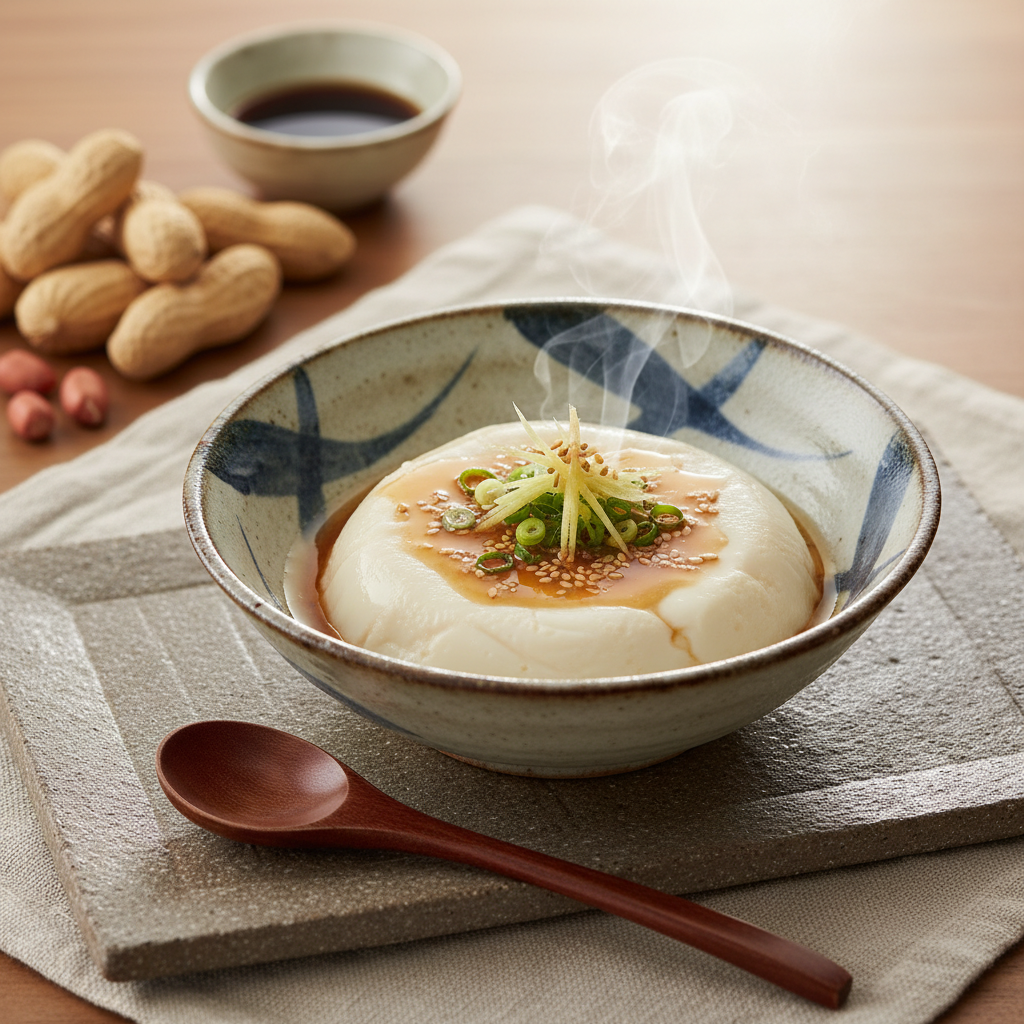
The most common way to eat Jimami Tofu is to cut the chilled tofu into bite-sized pieces and pour sweet and salty soy sauce-based sauce over it. The combination of the chewy texture, peanut flavor, and sweet and salty sauce is exquisite.
Arranged Recipes and Applications
Various arrangements can be enjoyed beyond the traditional way:
As a snack
- With wasabi soy sauce: Sophisticated adult flavor
- With chili oil: Spicy arrangement
- With garnishes: Green onion, ginger, Japanese pepper
Dessert-style
- With black molasses and soybean powder: As Japanese sweets
- With fruit sauce: As Western-style dessert
- With matcha syrup: Refined flavor
As a dish
- Salad topping: Adds textural accent
- Fried-out style: Breaded and fried
- Gratin-style: Combined with cheese and baked
Serving Styles at Izakayas and Restaurants
In Okinawan izakayas, Jimami Tofu is favored as a standard menu item. It is often served as an appetizer or snack, and pairs excellently with awamori spirits. At high-end restaurants, it may be served as a plated dish with careful attention to presentation and dishware.
Nutritional Value and Health Benefits
High-Protein, High-Calorie Nutritious Food
Since Jimami Tofu uses peanuts as its main ingredient, it is a highly nutritious food. The main nutrients are as follows:
- Protein: Rich in high-quality protein that becomes building blocks for muscles and cells
- Fat: Contains abundant unsaturated fatty acids, a healthy fat source
- Vitamin E: Has antioxidant properties effective for preventing aging
- Niacin: B-group vitamin that aids energy metabolism
- Minerals: Magnesium, phosphorus, iron, etc.
Calories and Precautions
Jimami Tofu is also a high-calorie food. At approximately 200-250 kcal per 100g, it is considerably higher compared to regular tofu (about 70 kcal). While nutritionally dense, caution is needed against overeating.
Also, those with peanut allergies must never eat it. With increased awareness of food allergies in recent years, allergen labeling is mandatory on product packaging.
Preservation and Transmission Efforts
Efforts by Transmission Holders and Manufacturers
There are many long-established manufacturers in Okinawa Prefecture who have passed down Jimami Tofu making as a family business. While maintaining traditional methods, these manufacturers adapt to modern hygiene standards and quality control, contributing to the transmission of local cuisine.
Main efforts include:
- Documentation of methods: Recording methods passed down orally for reliable transmission to the next generation
- Technical training sessions: Workshops for young craftspeople and home cooking enthusiasts
- Introduction in school meals: Efforts to convey hometown flavors to children
- Demonstrations at tourism facilities: Operating facilities where the manufacturing process can be viewed
Commercialization and Tourism Resource Development
Jimami Tofu is positioned as an important tourism resource of Okinawa Prefecture.
Development as souvenir
- Sales at airports and tourism facilities
- Full-country shipping through online shops
- Commercialization as gift sets
- Sales of homemade kits
Tourism experience programs
- Jimami Tofu making experience classes
- Factory tour programs
- Local cuisine courses at cooking schools
Information Dissemination Using SNS and Media
Modern efforts also include active information dissemination using SNS and the internet.
- Instagram: Appealing to younger generations through beautiful plating photos
- YouTube: Promoting home recreation through cooking instruction videos
- Blogs and websites: Detailed explanations of history and cultural background
- Email newsletters: Distribution of new product information and recipes
Through these efforts, recognition from outside Okinawa Prefecture and from overseas has increased, and “JIMAMI TOFU” is becoming known internationally.
Recognition as “Our Local Cuisine” by the Ministry of Agriculture, Forestry and Fisheries
Jimami Tofu has been officially recognized as a representative local dish of Okinawa Prefecture in the Ministry of Agriculture, Forestry and Fisheries’ “Our Local Cuisine” project. This makes it a target for preservation and transmission at the national level, and its value as a Japanese food culture heritage is acknowledged.
Places to Purchase and Recommended Products
Purchasing in Okinawa Prefecture
In Okinawa Prefecture, Jimami Tofu can be purchased at the following locations:
Supermarkets
- Major supermarkets in the prefecture such as San-A, Kanehide, and Union
- Cup and vacuum-packed products sold in refrigerated sections
- Price range: Around 150-500 yen
Souvenir shops and airports
- Naha Airport souvenir section
- Souvenir shops in Kokusai Street and tourist areas
- Vacuum-packed and gift set products are the center
Direct sales and farmers’ markets
- Direct sales shops of manufacturers
- Regional product sections of farmers’ markets and roadside stations
- Fresh, freshly made products are available
Izakayas and restaurants
- Offered at many Okinawan cuisine restaurants
- Vary by shop using unique methods and sauces
Mail Order from Outside the Prefecture
Jimami Tofu can be obtained from outside Okinawa Prefecture using the following methods:
Online shops
- Online shopping sites specializing in Okinawa products
- Major EC sites such as Amazon and Rakuten Ichiba
- Official online shops of manufacturers
Antenna shops
- Okinawa Prefecture antenna shops nationwide such as Ginza Washita Shop (Tokyo)
Department store product exhibitions
- Regularly held Okinawa product exhibitions
Popular Manufacturers and Products
Major manufacturers in Okinawa Prefecture and popular products:
- Ryu no Tsuki: Ryukyu Jimami Tofu (cup with sauce)
- Nuchimasu: Products with focus on no additives
- Miyako Island Shima Tofu: Made with Miyako Island peanuts
- Kaihow Shoji: Also sells homemade kit powder
Creative Dishes Using Jimami Tofu
Fusion of Tradition and Innovation
In recent years, chefs in and outside Okinawa Prefecture have been developing creative dishes using Jimami Tofu. Attempts are being made to add new interpretations to traditional local cuisine to appeal to younger generations and international tourists.
Fusion with French cuisine
- Jimami Tofu mousse
- Pairing with foie gras
- High-end appetizers using truffle oil
Fusion with Italian cuisine
- Jimami Tofu Caprese-style
- Application to pasta sauce
- As risotto topping
Fusion with Chinese cuisine
- Mapo Jimami Tofu
- Chinese-style sauce
- As dim sum filling
Easy Arrangements for Home Cooking
Arrangement recipes that can be enjoyed at home without special techniques:
Jimami Tofu rice bowl
Top warm rice with Jimami Tofu, pour sauce over it, and garnish with seaweed. A simple, nutritionally complete dish.
Jimami Tofu miso soup
Use instead of regular tofu. The addition of peanut flavor creates a unique miso soup.
Jimami Tofu sandwich
Place thinly sliced Jimami Tofu with vegetables between bread. A healthy lunch menu.
Jimami Tofu and Okinawan Food Culture
Richness of Tofu Culture
Okinawa Prefecture is sometimes called “the island of tofu,” with such rich tofu culture. Besides Jimami Tofu, there are other unique types of tofu:
- Island tofu (shima dofu): Hard, resilient traditional Okinawan tofu
- Yushi tofu: Soft, flake-like tofu
- Tofu yo: Fermented tofu, an Okinawan delicacy
These tofus together with Jimami Tofu are sometimes called “Okinawa’s four great tofus.”
Position in Ryukyuan Cuisine
Jimami Tofu is positioned as an “appetizer” or “drinking snack” in the Ryukyuan cuisine system. Ryukyuan cuisine, which developed as court cuisine, was strongly influenced by Chinese cuisine, and has distinctive characteristics in the composition of course meals and cooking methods.
Jimami Tofu, while a relatively simple dish, is a dish where a chef’s skill is tested, requiring advanced technique and careful work.
Position in Modern Okinawa Food
In modern Okinawa Prefecture, Jimami Tofu is both an everyday accessible food and recognized as a special occasion dish. While fewer people make it at home, it remains frequently on dining tables because it can be easily purchased at supermarkets.
It also plays an important role in the tourism industry, popular with tourists as “a taste only available in Okinawa.”
Conclusion
Jimami Tofu is a local dish that has been loved by Okinawan residents for over 600 years, from the Ryukyu Kingdom era to the present. The rich peanut flavor and unique chewy texture of Jimami Tofu is a taste that, once experienced, is unforgettable.
It is high in protein and nutritional value, serving as a health food while also being flexible enough to be enjoyed as a dessert. It is a good example of the transmission and development of Okinawan food culture, with traditional methods being maintained while also progressing in modern commercialization and application to creative cuisine.
When visiting Okinawa, be sure to taste authentic Jimami Tofu. You can also enjoy Okinawan flavors at home using vacuum-packed products or mail order. Homemade kits allow you to challenge authentic Jimami Tofu making at home.
As a local dish representing Okinawa Prefecture’s rich food culture, it will surely continue to be loved by many people and passed on to future generations. We hope you will feel the Ryukyuan history and culture, as well as the passion for food of the people of Okinawa, through Jimami Tofu.