Imoni: Complete Guide to Yamagata Prefecture’s Local Cuisine | Thorough Explanation of History, How to Make It, and Regional Differences
Imoni, a local dish representative of Yamagata Prefecture, is a traditional dish prepared in large pots when residents of the prefecture gather on riverbanks during the autumn harvest season. The warm flavor of fluffy taro and the umami of beef melting into the broth is a taste loved across generations. This article provides a thorough explanation of the charm of this local cuisine, from its history to regional characteristics and authentic cooking methods.
What is Imoni | Characteristics of Yamagata Prefecture’s Representative Local Dish
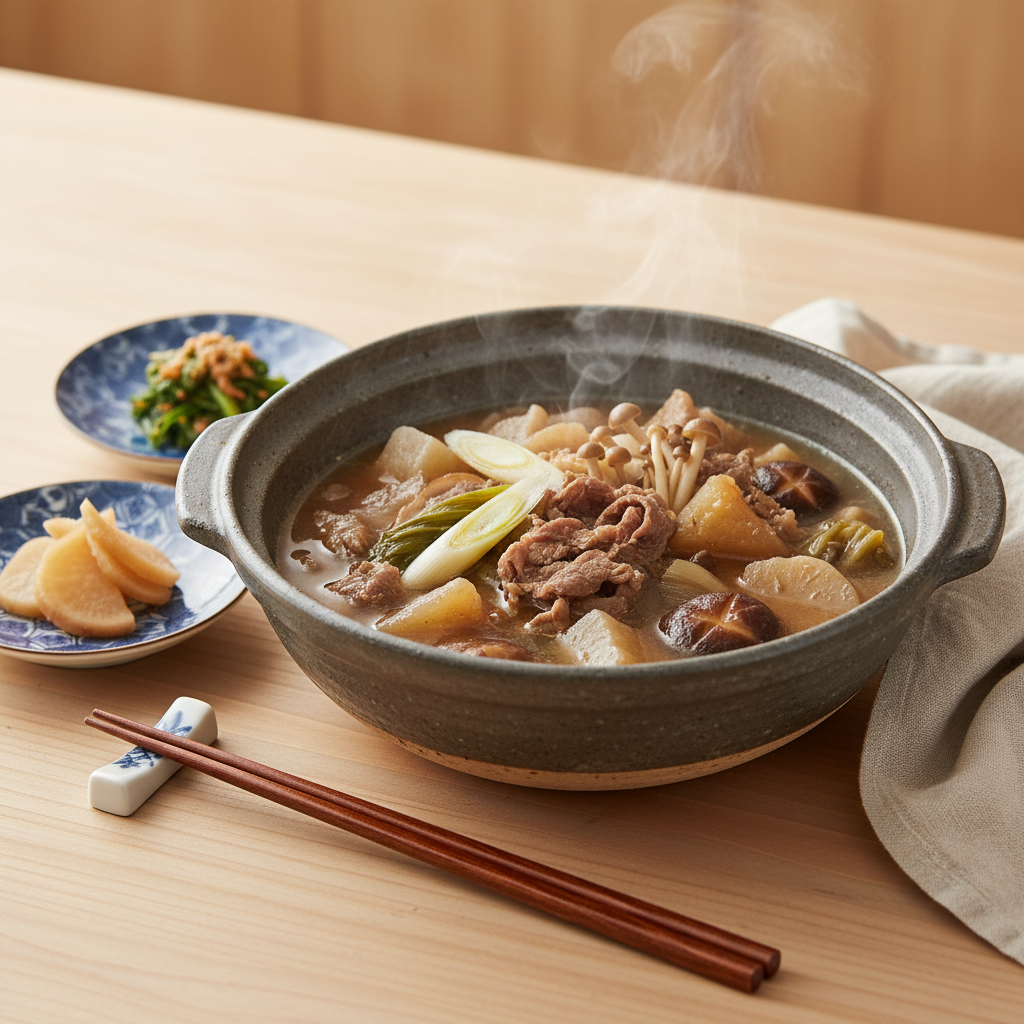
Imoni is a local dish enjoyed throughout Yamagata Prefecture and is a hot pot dish featuring taro as the main ingredient. The basic ingredients are taro, beef, konjac, and green onion, with soy sauce-based seasoning being common, though ingredients and seasonings vary by region and household.
Basic Characteristics of Imoni
The greatest characteristic of imoni is that it is a seasonal dish eaten from autumn through winter, when taro is harvested. It is characterized by the fluffy texture of taro and the gentle flavor of beef umami seeping into the broth, and each household has its own traditional taste passed down through generations.
Yamagata Prefecture has a unique food culture called “imoni-kai” (imoni gathering), where families and friends gather outdoors at riverbanks and parks to cook and enjoy imoni in large pots. This imoni-kai is positioned as one of the annual events alongside New Year’s parties and year-end parties, making it an indispensable part of the prefecture’s family gatherings and community life.
Main Ingredients Used
The main ingredients used in imoni are as follows:
- Taro: The starring ingredient, characterized by its sticky texture
- Beef: Sliced beef is common in inland areas
- Konjac: Black konjac is frequently used
- Green onion: Long green onions sliced diagonally
- Burdock: Added for flavor and texture
- Mushrooms: Maitake, shiitake, and similar varieties
The basic seasonings are soy sauce, sugar, sake, and mirin, though some regions use miso.
History and Origins of Imoni | A Tradition Beginning with Mogami River Shipping
The Roots of Imoni
The origins of imoni trace back to the mid-1600s during the Edo period. Nagasaki near the northwest of Yamagata City was the terminal point of the Mogami River shipping route at that time. It is said that boatmen who had transported cargo from Kyoto and Osaka, while waiting for their next shipment, hung pots from a nearby old pine tree and held outdoor banquets to pass the time—this is the origin of imoni.
The boatmen cooked local taro and dried cod from their cargo in their pots. This simple dish gradually spread through the region and eventually developed into a local cuisine representative of Yamagata Prefecture.
How Beef Became Used
In current imoni, beef is a standard ingredient, but beef was actually only incorporated from the Showa period onward. In the long history of imoni, this is a relatively new form. Previously, dried cod, pork, and in some regions chicken were used.
The introduction of beef greatly changed the flavor of imoni, evolving it into a dish with richer umami. Particularly in the inland areas of Yamagata, the beef and soy sauce-based imoni has become mainstream.
Regional Differences in Yamagata Prefecture’s Imoni
Yamagata Prefecture is large, and imoni varies in seasoning and ingredients by region. Broadly divided into four regions—Murayama, Shonai, Okitama, and Mogami—different imoni cultures have developed.
Murayama Region (Yamagata City Area) Imoni
The Murayama region is located in the inland central part of Yamagata Prefecture and includes Yamagata City, the prefectural capital. Imoni in this region is characterized by beef and soy sauce base, and is known as the most common “Yamagata imoni.”
Characteristic ingredients and seasoning:
- Uses sliced beef
- Seasoned sweetly and salty with soy sauce, sugar, sake, and mirin
- Frequently uses black konjac
- Generously includes long green onions
The “Japan’s Largest Imoni-kai Festival” held in mid-September each year serves this Murayama-style imoni. The sight of cooking 30,000 servings of imoni in a large pot 6.5 meters in diameter is known nationwide as an autumn spectacle.
Shonai Region Imoni
In the Shonai region facing the Japan Sea, pork and miso-based imoni is mainstream. It is characterized by a completely different flavor from inland areas.
Characteristic ingredients and seasoning:
- Uses pork (belly or sliced)
- Seasoned with miso (mainly rice miso)
- May include thick fried tofu
- Rich variety of vegetables
Shonai-region imoni is characterized by the fat of pork and the richness of miso, resulting in a more robust flavor.
Okitama Region Imoni
The Okitama region is located in southern Yamagata Prefecture and is centered on Yonezawa City. In this region, beef and soy sauce base is the standard, but it has subtle differences from the Murayama region.
Characteristic ingredients and seasoning:
- May use high-quality beef such as Yonezawa beef
- Slightly lighter soy sauce flavor
- Wide variety of vegetables
- Some households add miso depending on the area
Mogami Region Imoni
The Mogami region is located in northern Yamagata Prefecture and is centered on Shinjo City. Imoni in this region also has its own unique characteristics.
Characteristic ingredients and seasoning:
- Uses beef or pork
- Soy sauce-based as standard, though some households use miso
- Tends to include more mushrooms
- May include regional wild vegetables
How to Make Imoni | Detailed Authentic Recipe
Ingredients (for 4-5 people)
Main ingredients:
- Taro: 400-500g (cut into bite-sized pieces)
- Sliced beef: 300g
- Black konjac: 1 sheet (about 250g)
- Long green onion: 1 stalk (sliced diagonally)
- Burdock: 1/2 stalk (shaved into thin strips)
- Maitake: 100g (torn by hand)
Seasonings:
- Dashi broth: 800ml-1L (kombu and bonito flakes)
- Soy sauce: 4-5 tablespoons
- Sugar: 2-3 tablespoons
- Sake: 3 tablespoons
- Mirin: 2 tablespoons
Preparation Tips
- Taro preparation: Peel the taro and cut into bite-sized pieces. If the sliminess is bothersome, rub with salt and rinse with water. However, the sliminess contains nutritional components, so it is not necessary to remove it completely.
- Konjac preprocessing: Tear the konjac by hand or scoop into bite-sized pieces with a spoon. This creates larger surface area than cutting with a knife, allowing seasoning to absorb better. Pre-boil to remove any off-flavors.
- Burdock preparation: Shave the burdock into thin strips and soak in water to remove its astringency. Be careful not to soak too long to preserve its flavor.
- Beef preparation: If the beef pieces are large, cut them into manageable sizes.
Cooking Steps
Step 1: Season the beef
Heat a small amount of oil in the pot and stir-fry the beef. Once the meat changes color, add 1 tablespoon of sake and 1 tablespoon of soy sauce to season. This step is the key to making imoni delicious. By infusing the beef thoroughly with flavor, umami spreads throughout the entire broth.
Step 2: Add dashi broth
Add dashi broth to the pot with the seasoned beef. Once it comes to a boil, carefully remove any scum.
Step 3: Add taro and konjac
Add the taro and konjac and simmer over medium heat for 15-20 minutes. It is important to cook slowly until the taro becomes tender.
Step 4: Add other ingredients
Add the burdock and maitake and simmer for another 10 minutes or so.
Step 5: Adjust the seasoning
Add soy sauce, sugar, and mirin to taste. Taste as you adjust to your preference. Yamagata imoni is characterized by a sweetly-savory seasoning.
Step 6: Finish with green onion
Finally, add the long green onion and simmer for 2-3 minutes until done. If the onion is overcooked, it loses its texture, so adding it at the end is key.
Tips for Delicious Results
- Seasoning the beef is important: Pre-seasoning the beef spreads the meat’s umami throughout.
- Adjust heat: Simmering the taro over medium-low heat results in a fluffy texture.
- Remove scum frequently: Thoroughly removing scum, especially at the beginning, creates a clear and delicious broth.
- Season gradually: Rather than adding all seasonings at once, adjust while tasting to achieve your preferred flavor.
Recipe Arrangements | Enjoying Variations at Home
Shonai-Style Miso Preparation
Replace the beef with pork belly or sliced pork, and season with miso (4-5 tablespoons) instead of soy sauce. Adding thick fried tofu makes it closer to Shonai-region imoni. The richness of miso and pork fat match perfectly.
Mushroom-Rich Imoni
In addition to maitake, use multiple mushrooms such as shiitake, enoki, and oyster mushrooms. The umami components of the mushrooms add depth to the flavor. This arrangement allows you to fully enjoy autumn’s tastes.
Wild Vegetable Imoni
An arrangement with wild vegetables (bracken, ostrich fern, bamboo shoots, etc.) is also popular in early spring. By incorporating nature’s bounty, you can enjoy imoni year-round.
Finishing Arrangements
Finishing off the remaining broth after eating the imoni is also an enjoyable part:
- Curry udon: Add curry powder to the remaining broth and add udon noodles. This is a favorite finishing touch among Yamagata residents.
- Rice soup: Add rice and beaten egg to make ochazuke.
- Ramen: Add Chinese noodles to make imoni ramen.
Imoni-kai Culture | Autumn Spectacle
What is Imoni-kai
Imoni-kai is an outdoor event where large pots are used to cook imoni at riverbanks and parks, enjoyed together with family and friends. In Yamagata Prefecture, it has become established as an autumn spectacle and has become an essential annual event for residents.
Occasions and Seasons
Imoni-kai is most actively held from September through November, when taro is harvested. Particularly from late September through October, groups enjoying imoni-kai can be seen at riverbanks throughout the prefecture.
Imoni-kai is held on various occasions: after athletic meets and community events, company gatherings, school class reunions, and family get-togethers. It functions as an important venue for socializing, comparable to New Year’s parties and year-end parties.
Japan’s Largest Imoni-kai Festival
“Japan’s Largest Imoni-kai Festival” held in mid-September each year in Yamagata City symbolizes imoni culture. The sight of cooking imoni for approximately 30,000 people in a pot 6.5 meters in diameter is spectacular, and many tourists from across the country visit.
The scale of ingredients used in the large pot is also astounding:
- Taro: approximately 3 tons
- Beef: approximately 1.2 tons
- Konjac: approximately 3,500 sheets
- Green onions: approximately 3,000 stalks
The sight of using heavy machinery to stir the ingredients is truly worthy of the “Japan’s Largest” name.
Yamagata City Restaurants Where You Can Enjoy Imoni Year-Round
Recommended Izakayas for Tourists
In Yamagata City, there are restaurants that serve imoni year-round. Particularly popular with tourists are izakayas and local cuisine specialty shops such as “Yamagata Nagaya Izakaya.” Some of these establishments offer menus where you can compare four types of imoni from the Murayama, Shonai, Okitama, and Mogami regions.
Enjoying Each Region’s Imoni
The opportunity to experience imoni from different regions all at once is precious for tourists. By actually tasting the differences between soy sauce and miso bases and beef and pork, you can gain understanding of Yamagata Prefecture’s diverse food culture.
Preservation and Succession Efforts | Passing Down to the Next Generation
School Education Initiatives
In elementary and junior high schools throughout Yamagata Prefecture, imoni is taught as a local cuisine in classes. Through cooking practice where students actually prepare imoni, the region’s food culture is passed on to children.
Succession Through Community
Town associations and municipal councils throughout each region hold autumn imoni-kai as regular events and use them as venues for intergenerational exchange. These are important opportunities to pass on the cooking methods and ways to enjoy imoni to younger generations.
Popularization Through Commercialization
In recent years, imoni has been commercialized in retort-pouch and canned forms, making it possible to enjoy Yamagata’s flavors outside the prefecture as well. Additionally, imoni-no-moto (seasoning sets) are sold, allowing authentic imoni to be made anywhere in the country.
Information Sharing on Social Media
Among younger generations, there is active posting on social media of imoni-kai gatherings and homemade imoni recipes. Posts using hashtags like “#imoni” and “#imonokai” are frequently seen on Instagram and Twitter, drawing attention to this as a new method of inheriting traditional culture.
Nutritional Value and Health Benefits of Imoni
Nutritional Components of Taro
Taro, the star ingredient of imoni, is a highly nutritious ingredient. It is rich in dietary fiber, and its unique slimy component has the following benefits:
- Galactan: Improves immunity, lowers cholesterol
- Mucin: Protects gastric and intestinal mucous membranes, promotes protein digestion and absorption
- Potassium: Prevents high blood pressure, relieves swelling
Well-Balanced Nutrition
Imoni allows you to get a well-balanced intake of carbohydrates (taro), protein (beef), dietary fiber (burdock, konjac), and vitamins and minerals (vegetables, mushrooms). As a dish that provides diverse nutrients in one course, it is excellent as a healthy meal.
Conclusion | Local Cuisine Connecting the Hearts of Yamagata Residents
Imoni is not merely a dish but an important food culture that shapes the identity of Yamagata residents. The history continuing from the Edo period, individuality by region, differences in taste from household to household, and the unique social culture of imoni-kai—this local cuisine condenses Yamagata Prefecture’s rich food culture.
The scene of gathered families and friends around a large pot on an autumn riverbank, enjoying imoni while conversing, is a landscape truly symbolic of Yamagata’s autumn. The fluffy texture of taro and the warm flavor of beef umami have connected people’s hearts across generations.
When making imoni at home, you can enjoy it while following basic recipes but also adding your own arrangements. By trying regional variations or adding seasonal ingredients, you can discover new appeal in imoni.
Should you have the opportunity to visit Yamagata Prefecture, be sure to taste authentic imoni. And if possible, visit during autumn imoni-kai season to experience gathering with local people around imoni on a riverbank. That warm atmosphere and delicious flavor will surely become an unforgettable memory.