Tama Konnyaku: Yamagata’s Signature Local Dish! Thorough Explanation of History, How to Make, and Tourist Spots
Tama konnyaku, a local dish representing Yamagata Prefecture, is a round konnyaku simmered in soy sauce-based broth. It is a soul food of Yamagata that can be seen at festivals and tourist attractions throughout the prefecture. Tama konnyaku skewered on bamboo sticks is a nostalgic taste from childhood for Yamagata residents and has become a popular item among tourists from outside the prefecture.
This article provides a thorough explanation of the appeal of tama konnyaku, Yamagata’s local dish, covering everything from its history and cultural background to how to make it at home and ways to enjoy it at tourist destinations.
What is Tama Konnyaku? Basic Knowledge of Yamagata’s Local Cuisine
Characteristics of Tama Konnyaku
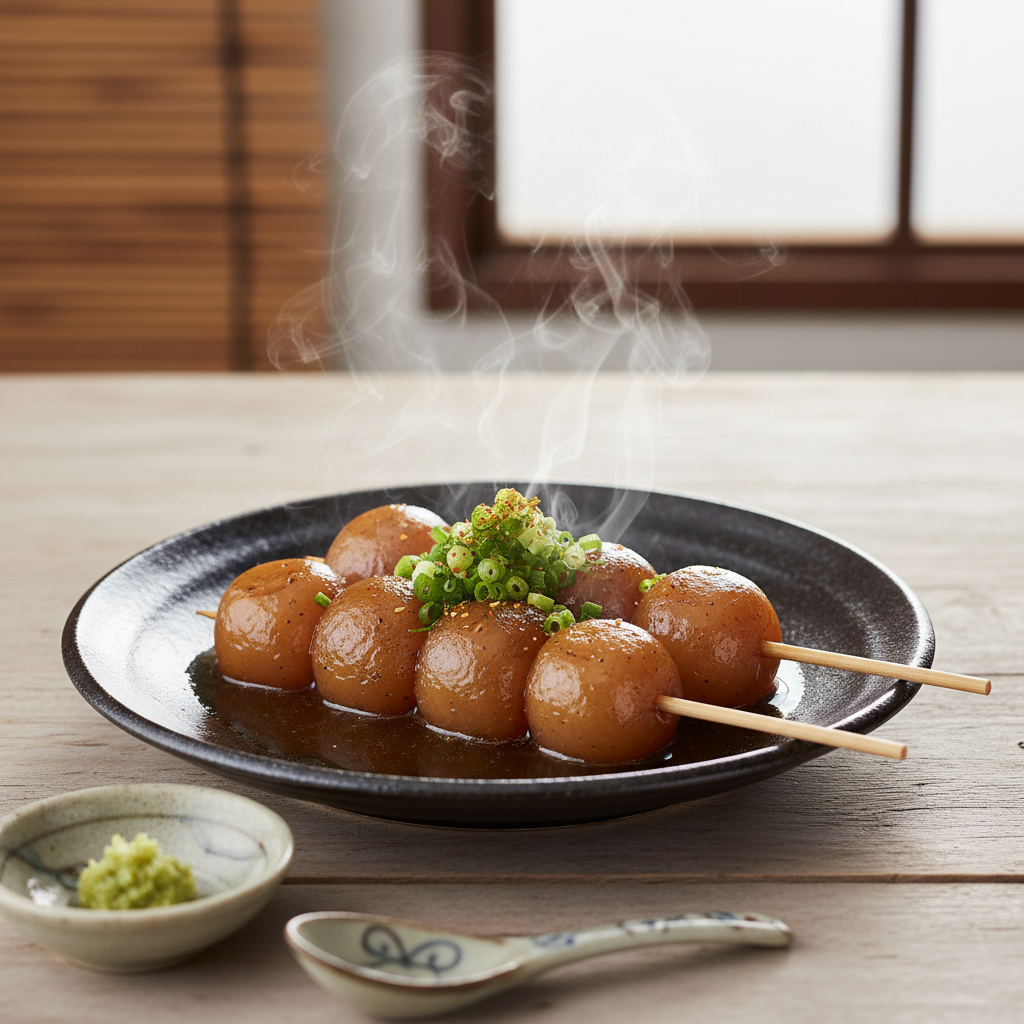
Tama konnyaku is a local dish of Yamagata Prefecture made by simmering spherical konnyaku about 3-4 centimeters in diameter in soy sauce-based broth. Unlike ordinary konnyaku, it is characterized by its round shape and is typically skewered on bamboo sticks or wooden chopsticks for eating.
The surface is dyed brown by the soy sauce, and the tama konnyaku with flavor soaked all the way through offers a chewy texture and fragrant soy sauce aroma. In the Yamagata style, it is eaten with mustard, and the sharp spiciness brings out the umami of the konnyaku.
Differences from Regular Konnyaku
The most significant difference between tama konnyaku and regular slab or thread konnyaku is its shape. Being molded into a sphere makes it easier for flavor to soak in evenly when simmered and easier to skewer. Additionally, tama konnyaku manufactured within Yamagata Prefecture is often made using local water and konnyaku potato, making it a food item with strong regional characteristics. The texture is also typically softer than regular konnyaku, making it easy to eat for both children and elderly people.
History and Cultural Background of Tama Konnyaku
Why Tama Konnyaku Developed in Yamagata Prefecture
Several factors contributed to the spread of tama konnyaku in Yamagata Prefecture. First, Yamagata Prefecture has long been a region where konnyaku potato cultivation thrived, making konnyaku a familiar food item. Additionally, located in the inland region, Yamagata Prefecture valued preserved foods, and konnyaku was utilized as a substitute protein source.
The round shape of tama konnyaku is believed to have been devised for easier sales skewered on sticks at festivals and street fairs. From the early to mid-Showa period, it became established as a staple menu item at festival food stalls held in various locations throughout Yamagata Prefecture.
Tama Konnyaku for Yamagata Residents
For Yamagata residents, tama konnyaku is more than just food. Memories of eating it at festivals in childhood, stopping by a shop on the way home from school for a stick, and the taste at tourist destinations where families ventured out—memories of tama konnyaku are intertwined with various scenes throughout life.
Affectionately called “tama kon,” it has become established as an everyday food item, with supermarkets throughout the prefecture selling prepared tama konnyaku packaged for sale. During the cold winter months, warm tama konnyaku is cherished by many residents as a local taste that warms the body.
Deep Connection Between Festivals and Tama Konnyaku
At festivals and street fairs held throughout Yamagata Prefecture, tama konnyaku food stalls almost invariably appear. At major festivals across the prefecture such as the Yamagata Hanagasa Festival, Shinjo Festival, and Sakata Festival, the fragrant aroma of soy sauce-flavored tama konnyaku fills the venue.
At festival stalls, tama konnyaku simmered in large pots steams, and it is skewered and served on the spot. The reasonable price of about 100 to 200 yen per stick is one reason tama konnyaku became a festival standard. For children, it is the pleasure of purchasing something with their allowance, while for adults, it is a moment to enjoy a nostalgic taste.
How to Make Tama Konnyaku and Recipes
Basic Tama Konnyaku Recipe
Here is a method for making authentic tama konnyaku at home.
Ingredients (serves 4)
- Tama konnyaku: 400g (about 20 pieces)
- Soy sauce: 4 tablespoons
- Mirin: 2 tablespoons
- Sugar: 1 tablespoon
- Sake: 2 tablespoons
- Broth (bonito or kelp broth): 400ml
- Mustard: as needed
Directions
- Remove the tama konnyaku from the package and rinse lightly with water. If you are concerned about odor, blanch for 2-3 minutes in boiling water.
- Place broth, soy sauce, mirin, sugar, and sake in a pot and heat over medium heat.
- Once the broth comes to a boil, add the tama konnyaku and bring to a boil again, then reduce to low heat.
- Place a drop lid on top and simmer slowly for 30 minutes to 1 hour. As the broth reduces, occasionally shake the pot to distribute the flavor evenly.
- Once the tama konnyaku has absorbed the flavor and the broth has reduced, remove from heat.
- Skewer 2-3 pieces and serve with mustard to complete.
Tips and Pointers for Delicious Preparation
Thorough preliminary treatment
It is important to properly blanch the tama konnyaku to remove the characteristic odor of konnyaku. Salt rubbing before boiling makes odor removal even easier.
Simmer slowly
The secret to delicious tama konnyaku is simmering it over time. Boiling quickly over high heat flavors only the surface, with the flavor not soaking into the center. Simmering slowly over low heat ensures the flavor soaks all the way to the center, resulting in delicious tama konnyaku.
Even more delicious when cooled once
After simmering, completely cooling the tama konnyaku allows the flavor to soak in further. Making it the day before and letting it sit overnight, then reheating before eating, results in an even deeper flavor.
Variation Recipes
Spicy Tama Konnyaku
This variation adds chili peppers or bean paste to the basic recipe for a spicy finish. It is perfect as a beer snack.
Miso-Flavored Tama Konnyaku
This variation uses miso instead of soy sauce. In some areas of Yamagata Prefecture, miso-based tama konnyaku is also made. Simmer in a broth made from miso, sugar, mirin, and broth.
Western-Style Tama Konnyaku
Sauté tama konnyaku sliced thinly with garlic in olive oil and season with balsamic vinegar for a Western variation. It becomes a dish that pairs well with wine.
Places to Enjoy Tama Konnyaku in Yamagata Prefecture
Tama Konnyaku Stalls at Tourist Attractions
Yamadera (Risshakuji Temple)
At Yamadera, Yamagata Prefecture’s representative tourist destination, multiple shops selling tama konnyaku are located along the approach and near the temple gate. Eating warm tama konnyaku before and after climbing is a common pleasure for many tourists. Especially during the cold season, warm tama konnyaku is particularly special for warming the body.
Zao Hot Spring
Many shops in Zao Hot Spring town also serve tama konnyaku. Walking through the hot spring town and eating skewered tama konnyaku is a standard Zao sightseeing course.
Ginzan Hot Spring
Ginzan Hot Spring, popular for its retro streetscape, also has shops selling tama konnyaku. Eating tama konnyaku in the midst of Taisho-era romantic scenery has a special flavor.
Rest Areas and Farm Shops
Tama konnyaku is sold at almost every rest area in Yamagata Prefecture. A variety of products are available, from prepared tama konnyaku to raw tama konnyaku for home simmering.
Tendo Hot Spring Rest Area
At this rest area in Tendo City, famous for shogi pieces, locally made tama konnyaku is popular. Warm tama konnyaku can be eaten in the rest space.
Sagae Rest Area
This rest area in Sagae City, known as a cherry fruit production area, also features tama konnyaku as a standard product. Locally produced products using Yamagata-grown konnyaku potatoes are displayed.
Specialty Shops and Famous Establishments
Tanno Konnyaku (Kaminoyama City)
One of the most well-known konnyaku specialty shops in Yamagata Prefecture. It manufactures and sells various konnyaku products including tama konnyaku. A factory tour and dining area are also available, where you can enjoy a full course of konnyaku cuisine.
Konnyaku Bansho (Yamagata City)
A konnyaku specialty shop in Yamagata City where tama konnyaku simmered on-site can be purchased. It is a long-established favorite among local people.
Nutritional Value and Health Benefits of Tama Konnyaku
Nutritional Components of Konnyaku
Konnyaku, the main ingredient of tama konnyaku, is a healthy food ingredient with very low calories while being rich in dietary fiber. At approximately 5-7 calories per 100g, it is extremely low and is attracting attention as a diet food.
The main component of dietary fiber found in konnyaku is “glucomannan,” a soluble dietary fiber that helps improve intestinal health. It also contains calcium, which helps maintain bone health.
Health Benefits
Constipation Relief Effect
Glucomannan has the property of absorbing water and expanding, which promotes intestinal peristalsis. This is effective for relieving constipation.
Moderate Rise in Blood Sugar Levels
Konnyaku, rich in dietary fiber, has the effect of suppressing sharp spikes in blood sugar after eating. It is helpful for diabetes prevention and blood sugar management.
Improvement of Cholesterol Levels
Research has shown that glucomannan has the effect of suppressing cholesterol absorption.
Notes When Eating
While tama konnyaku is a healthy food, overconsumption should be avoided. Konnyaku is difficult to digest, so consuming large amounts carries a risk of intestinal obstruction. It is especially important for small children and elderly people to chew thoroughly. Additionally, since tama konnyaku is seasoned with soy sauce, attention should be paid to salt intake. For those with high blood pressure, it is recommended to limit consumption or prepare with less seasoning.
Cooking Ideas Using Tama Konnyaku
As an Oden Ingredient
Tama konnyaku is also an excellent ingredient for oden. Its round shape is cuter than regular konnyaku, making for an enjoyable-looking oden. While it can be simmered still on the skewer, removing the skewer and simmering it with other ingredients is also recommended.
Using in Stir-Fries
Slicing tama konnyaku thinly and stir-frying it with vegetables and meat is another cooking method. It can be finished kinpira-style or prepared as a Chinese-style stir-fry, expanding the range of arrangements.
As a Salad Topping
Using cooled tama konnyaku as a salad topping adds texture accent. It pairs especially well with Japanese dressing, completing a healthy salad.
As a Bento Box Side Dish
Tama konnyaku is also convenient as a bento box side dish. If prepared the day before, the flavor soaks in further by the next day, making it even more delicious. Placing skewered tama konnyaku in a bento box makes it easy to eat and creates a cute-looking side dish.
Tama Konnyaku Souvenirs and Online Shopping Information
Tama Konnyaku as a Souvenir
Tama konnyaku is extremely popular as a souvenir when visiting Yamagata Prefecture. Prepared tama konnyaku in vacuum or retort packs can be stored at room temperature, making it an easy souvenir to take home. Various manufacturers’ tama konnyaku are sold at Yamagata Airport, Yamagata Station, and souvenir shops at major tourist attractions throughout the prefecture. In addition to standard soy sauce flavoring, there is a rich variety including spicy and miso flavors.
Purchasing Tama Konnyaku Online
Even for those living outside Yamagata Prefecture or without the opportunity to visit, tama konnyaku can be purchased through online shops. Major EC sites such as Rakuten Ichiba, Amazon, and Yahoo! Shopping sell tama konnyaku from multiple Yamagata manufacturers.
Shopping Tips
- Confirm whether it is prepared or unprepared
- Check expiration date and storage method
- Use reviews and ratings as reference
- Compare multiple products and choose your preferred seasoning
Recommended Manufacturers and Brands
Tanno Konnyaku
One of the most well-known konnyaku manufacturers in Yamagata Prefecture. It manufactures high-quality tama konnyaku and is available for online purchase.
Maruhatchi
A konnyaku manufacturer widely distributed within Yamagata Prefecture with extensive supermarket availability.
Local Small-Scale Producers
Many small-scale konnyaku producers rooted in local communities exist throughout Yamagata Prefecture. Locally produced tama konnyaku sold at rest areas and farm shops each have unique flavors and can be enjoyed through comparison.
Tama Konnyaku and Other Yamagata Local Dishes
Connection to Imoni
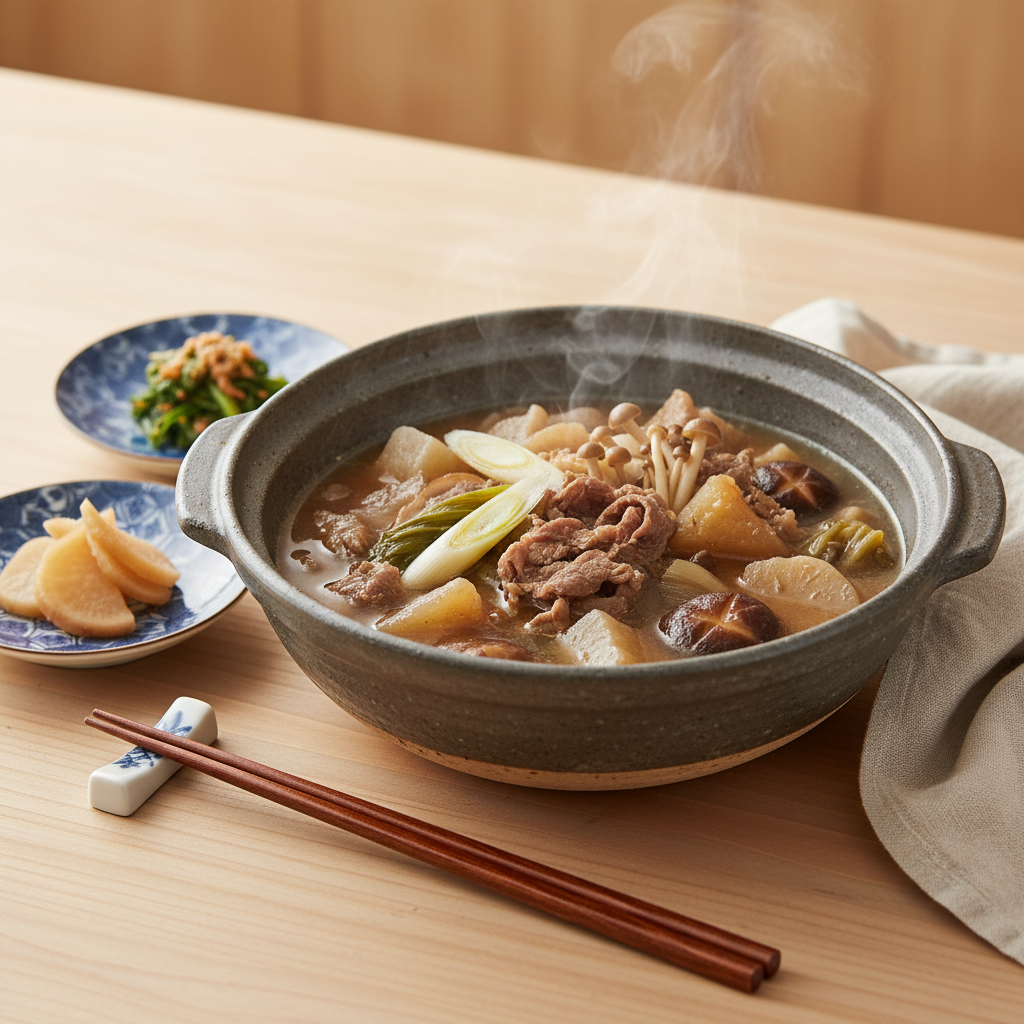
Imoni, another representative local dish of Yamagata Prefecture, sometimes uses tama konnyaku as an ingredient. Imoni is a hot pot dish featuring taro as the main ingredient, and “imoni gatherings” are held at riversides in autumn as traditional Yamagata events.
Adding tama konnyaku as an ingredient to imoni increases texture variety and creates a more satisfying dish. It pairs particularly well with soy sauce-based inland-style imoni and has become a standard ingredient in many households.
Tama Konnyaku and Other Yamagata Gourmet
Yamagata Prefecture has diverse local cuisine beyond tama konnyaku.
Chilled Ramen
Chilled ramen, originating in Yamagata City, is a summer staple. Enjoying it along with tama konnyaku allows for a deeper taste of Yamagata food culture.
Dashi
Finely chopped summer vegetables seasoned with soy sauce, “dashi” is a summer staple dish in Yamagata. It is eaten over rice or cold tofu.
Dondonyaki
An okonomiyaki-like dish favored throughout Yamagata Prefecture, it is popular at festival stalls. Along with tama konnyaku, it represents Yamagata’s street food culture.
Manufacturing Process of Tama Konnyaku
From Konnyaku Potato to Tama Konnyaku
Manufacturing tama konnyaku begins with processing konnyaku potato. Konnyaku potato powder is mixed with water and coagulant (such as calcium hydroxide), then kneaded together. The kneaded dough is molded into spheres using specialized machinery or by hand. After molding, it is boiled in hot water to set, then rinsed in water to remove impurities. This completes the tama konnyaku.
Manufacturing Sites in Yamagata Prefecture
Many producers in Yamagata Prefecture manufacture tama konnyaku while preserving traditional methods. Some facilities offer factory tours where visitors can observe the manufacturing process of tama konnyaku.
Tanno Konnyaku’s factory features a display corner where visitors can learn about konnyaku history and manufacturing methods, making it a popular educational tourist spot.
Storage Methods and Expiration Dates of Tama Konnyaku
Unopened Tama Konnyaku
Market-sold tama konnyaku, often packaged in vacuum or retort packs, can be stored at room temperature for several months when unopened. Store in a cool place away from direct sunlight.
Raw tama konnyaku (uncooked) should be stored according to the method indicated on the package, typically requiring refrigeration.
Storage After Opening
After opening, store tama konnyaku in an airtight container in the refrigerator. Storing it with the cooking broth allows flavor to continue soaking in and enhances taste. It is recommended to consume within 2-3 days after opening.
Is Freezing Possible?
Freezing changes konnyaku’s texture significantly. After thawing, it becomes sponge-like and loses its original texture, so freezing is generally not recommended. However, this textural change can be utilized in some dishes, and intentional freezing before cooking is a method some use.
Trivia About Tama Konnyaku
Tama Konnyaku Day
In Yamagata Prefecture, various events are held for the promotion and cultural succession of tama konnyaku. Depending on the area, events such as “tama konnyaku festivals” are held, where many people enjoy tama konnyaku.
Yamagata Residents’ Love for Tama Konnyaku
Yamagata residents’ affection for tama konnyaku is deep, with many who moved outside the prefecture listing tama konnyaku as a taste they “miss.” Many make sure to eat tama konnyaku when returning home.
On social media, many Yamagata residents and Yamagata fans post photos and memories of tama konnyaku using the hashtag “#tamako.”
Economic Impact of Tama Konnyaku
Tama konnyaku plays an important role in Yamagata Prefecture’s tourism industry. Sales at tourist attractions, purchases as souvenirs, online sales—the economic activity related to tama konnyaku contributes to the prefecture’s economy.
Conclusion: Enjoy Yamagata’s Flavor with Tama Konnyaku
Tama konnyaku has long been cherished by Yamagata residents as a representative local dish of the prefecture. Round konnyaku simmered in soy sauce-based broth is simple yet profound in flavor and is familiar to a wide range of generations from children to elderly people.
Tama konnyaku eaten on a skewer at festivals and tourist attractions is one of the pleasures of Yamagata sightseeing, while homemade tama konnyaku brightens the daily dinner table. With the added benefit of being low-calorie and rich in dietary fiber, it matches modern health-conscious trends.
When visiting Yamagata Prefecture, please be sure to taste authentic tama konnyaku. Additionally, it is available for purchase through online shops, allowing you to enjoy Yamagata flavors at home. When making it at home, the basic recipe is simple, and by simmering slowly, you can recreate authentic flavors.
Through tama konnyaku, we hope you will experience the rich food culture of Yamagata Prefecture and the food traditions rooted in the region. One stick of tama konnyaku contains the lives and history of Yamagata residents.